Dutch School Prints and Multiples

to
12
1
1
Overall Width
to
Overall Height
to
20,799
19,867
10,656
6,062
5,290
2,700
1,632
1,608
1,452
944
893
505
387
187
5
1
1
1
8
2
4
1
1
2
9
5
10
5
3
3
2
2
1
1
1
1
1
1
1
1
1
1
1
1
1
1
9
7
5
4
3
5
5
14
Style: Dutch School
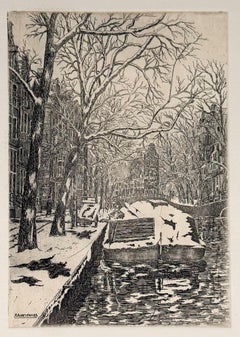
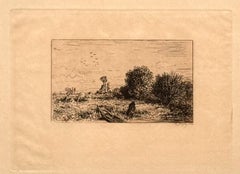
Reguliersracht during winter, Amsterdam

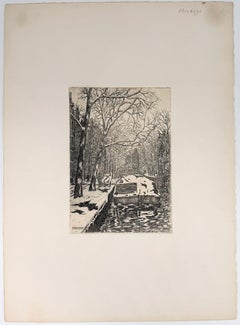
Reguliersracht during winter, Amsterdam

Located in Middletown, NY

Etching with drypoint on cream wove paper with a deckle edge, 6 7/8 x 4 7/8 inches (200 x 125 mm); sheet 15 x 11 inches (380 x 280 mm), full margins. In excellent condition with mino...

Category

Early 20th Century Dutch School Prints and Multiples

Materials

Drypoint, Etching

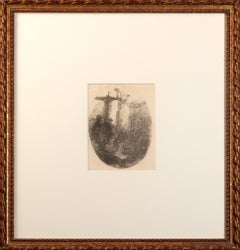
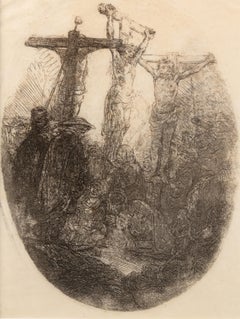
17th century etching Rembrandt biblical scene crucifixion figures

17th century etching Rembrandt biblical scene crucifixion figures

By Rembrandt van Rijn

Located in Milwaukee, WI

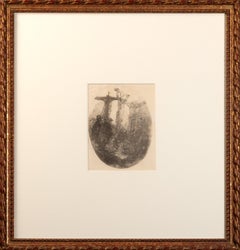
Rembrandt's print 'Christ Crucified Between Two Thieves: an oval plate' is one of the most captivating of the artist's oeuvre. Etched to an oval rather than a rectangular plate and t...

Category

1640s Dutch School Prints and Multiples

Materials

Paper, Etching, Printer's Ink, Drypoint

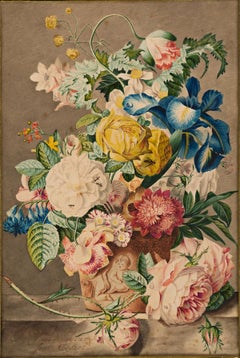
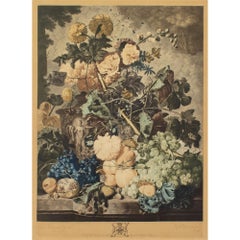
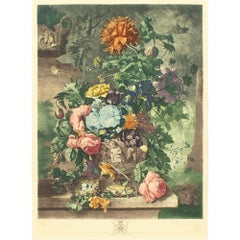
Bouquet of Flowers
Bouquet of Flowers

Bouquet of Flowers

By Cornelis Ploos van Amstel

Located in New York, NY

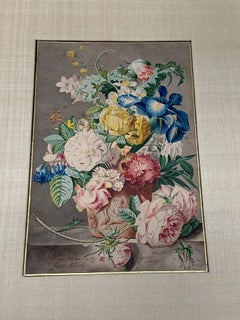
A supberb impression of this extremely scarce and early color etching after Jan van Huysum. With the artist's ink stamp.

Category

1770s Dutch School Prints and Multiples

Materials

Color, Etching

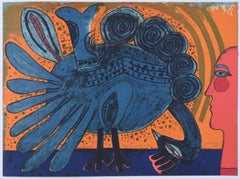
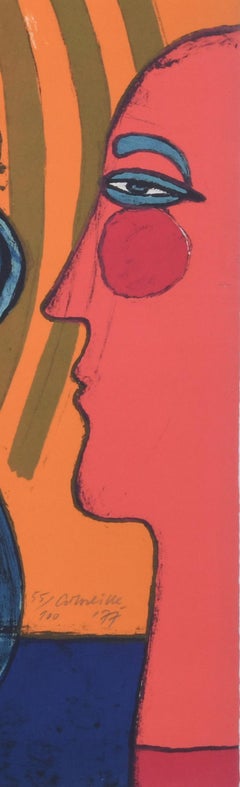
CoBra lithograph by Corneille, 1977, Tete et grand oiseau

CoBra lithograph by Corneille, 1977, Tete et grand oiseau

By Corneille

Located in Fairlawn, OH

Corneille (1922-2010) Tete et grand oiseau Color lithograph, 1977 Signed numbered and dated lower right (see photo) Titled center (see photo) Edition: 100 (55/100) Published by Édit...

Category

1970s Dutch School Prints and Multiples

Materials

Lithograph

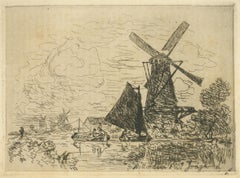
Moulins de Hollande

Moulins de Hollande

By Johan Barthold Jongkind

Located in Middletown, NY

Etching on cream laid paper. 5 7/16x7 7/16 inches (137 x 188 mm). Scattered toning, age stain, and scattered minor defects consistent with age. Second state (of 3). [Delteil 14] Jo...

Category

19th Century Dutch School Prints and Multiples

Materials

Laid Paper, Etching

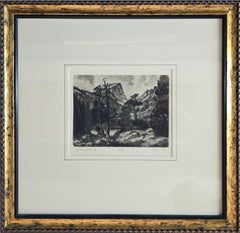
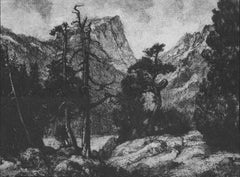
Dream Lake II (Contemporary Realism, Dutch Master Influence)

Dream Lake II (Contemporary Realism, Dutch Master Influence)

Located in Kansas City, MO

Doug Osa Dream Lake II Intaglio on Paper 1994 Image Size: 4.25 x 5.5 inches (10.8 × 14.0 cm) Framed Size: 13 x 13.75 inches (33.0 × 34.9 cm) Edition: 6 of 50 Signed, dated and number...

Category

1990s Dutch School Prints and Multiples

Materials

Intaglio

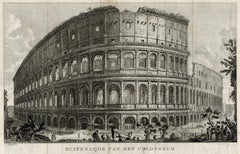
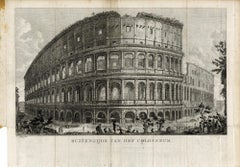
Buitenzijde Van Het Colosseum (Exterior of the Colosseum)

Buitenzijde Van Het Colosseum (Exterior of the Colosseum)

Located in Middletown, NY

The Hague: circa 1799. Engraving with burin on cream laid paper, 7 7/8 x 13 inches (198 x 330 mm) full margins. Octavo fold with additional hard creases with an associated loss in t...

Category

Late 18th Century Dutch School Prints and Multiples

Materials

Laid Paper, Engraving

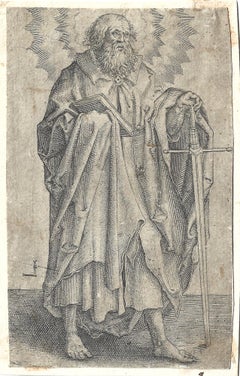
Saint Paul, from the series of Standing Saints

Saint Paul, from the series of Standing Saints

By Lucas van Leyden

Located in Middletown, NY

Engraving on cream laid paper laid down to wove paper, 4 1/4 x 2 5/8 inches (109 x 68), trimmed inside the platemark. Scattered discoloration and uniform age tone, all consistent wit...

Category

16th Century Dutch School Prints and Multiples

Materials

Laid Paper, Engraving

Related Items
Chester Cathedral - Drypoint Etching in Ink on Paper

Chester Cathedral - Drypoint Etching in Ink on Paper

Located in Soquel, CA

Chester Cathedral - Drypoint Etching in Ink on Paper Dramatic drypoint etching by J. Alphege Brewer (British, 1881-1946). This composition shows the interior of Chester Cathedral in Brewer's characteristic style - highly detailed and with strong contrast. The scene encompasses the cathedral from floor to ceiling, capturing the immense size of the building. There are several people in the scene which contribute to the sense of scale. Signed by hand "J. Alphege Brewer" in the lower right corner. Titled "Chester Cathedral" in plate, lower left corner. Includes original card with artist's name. Presented in a new black mat with foamcore backing. Mat size: 16"H x 12"W Paper size: 10.75"H x 7.75"W James Alphege Brewer was well known in the early 20th century as a producer of color etchings of European cathedrals and other scenes of church, college, and community. He was born July 24, 1881, in the Kensington section of London, England, the son of Henry W. Brewer, noted artist of historical architecture and prominent convert to the Catholic Church, and the grandson of John Sherren Brewer, Jr., “the brilliant editor of the Calendar of Letters of Henry VIII.” His great uncle was E. Cobham Brewer, the polymath who compiled Brewer’s Dictionary of Phrase and Fable. Among his older siblings were the artist Henry C. Brewer and the organist and writer John Francis Brewer. Brewer attended the Westminster School of Art in London, where his brother Henry also trained. In 1910, he married Florence Emma Lucas, an accomplished painter in oil and watercolor, whose father was the noted landscape artist George Lucas and whose great uncle was David Lucas, the famous engraver for John Constable. Florence's brothers Edwin and George assisted Brewer in the printing of Brewer's etchings. Brewer exhibited at the Royal Academy (RA) and the Royal Institute of Painters in Watercolour (RI), at the Paris Salon of the Académie des Beaux-Arts, and in the shows of the Royal Cambrian Academy (RCA). He became an associate of the Royal Cambrian Academy in 1929 and a full member in the last two years of his life. He was also a member of the Hampstead Society of Artists, the Society of Graphic Art, and the Ealing Arts Club, where he was first Honorary Art Secretary and then Honorary Art Chairman. Most of Brewer's larger etchings were published by Alfred Bell...

Category

Early 20th Century Dutch School Prints and Multiples

Materials

Paper, Ink, Drypoint

"King of the Friendly Islands" (Tonga); Engraving from Captain Cook's 3rd Voyage

"King of the Friendly Islands" (Tonga); Engraving from Captain Cook's 3rd Voyage

By John Webber

Located in Alamo, CA

"Poulaho, King of the Friendly Islands, Drinking Kava" is an engraving created by William Sharp (1749-1824), from a drawing by John Webber (1752-1793), who was the artist on Captain James Cook's 3rd and final voyage of discovery. It was published in the atlas of "A Voyage to the Pacific Ocean Undertaken by the Command of His Majesty, for Making Discoveries in the Northern Hemisphere", the official British Admirality sanctioned journal published upon completion of the voyage in London in 1784 by Strahan & Cadell. Captain Cook visited Tonga on his 3rd voyage, which he named The Friendly Islands because of the warm welcome he and his crew received, unlike some of the other more hostile Pacific islands. The engraving depicts Cook and his men observed a kava ceremony at the village of Mu’a on Tongatapu. King Paulaho sits in the centre foreground, his back to the spectator with a man kneeling before him. The ceremonial mat depicted behind Paulaho indicates that nobody was allowed to sit behind him. The figure in the centre holds a single cup, referring to the Tongan custom of offering the cup to the king first. Kava is native to the islands of the South Pacific and was first described for English readers in 1768 by Captain James Cook. The kava root has been used for centuries as a central feature of ceremonies and celebrations because it was able to bring about a calming and pleasant social atmosphere. The root was crushed and processed into coconut milk to become the focal ceremonial beverage, simply referred to as kava. This engraving is presented in a Koa wood frame and a white mat. Koa wood is legendary in Hawaii. There are occasional faint spots, but the print is otherwise in very good condition. This amazing Koa wood is native to Hawaii and it is known for the deep rich colors and varied grain pattern. Koa has an honored heritage in Hawaii and is highly revered and sacred. The word “koa” means “warrior” in Hawaiian. The warriors of King Kamehameha the Great, created canoes and weapons from a wood plentiful on the Big Island of Hawaii. This wood became synonymous with the warriors themselves, and it became known as koa. There are three other engravings listed from the official journal of Captain Cook's 3rd voyage available that are presented in identical Koa wood frames and mats (LU117324682422, LU117324684052, LU117324684032). They would make a wonderful grouping for a display of 2, 3 or 4 prints. A discount is available for a grouping depending on the number of items included. Captain Cook is remembered as one of the greatest explorers and navigators in history. His explorations included Australia, New Zealand and islands of the South Pacific and the northwest coast of North America. Hawaii was discovered by Captain Cook during this voyage. Hawaii was originally called The Sandwich Islands in honor of The Earl of Sandwich...

Category

1780s Dutch School Prints and Multiples

Materials

Engraving

Le Cocu Magnifique - Complete Suite of Etchings by Pablo Picasso - 1968

Le Cocu Magnifique - Complete Suite of Etchings by Pablo Picasso - 1968

By Pablo Picasso

Located in Roma, IT

In-folio Oblong Dimensions : 29x39 cm. Paris Atelier Crommelynck 1968 Edition 35 of 200 copies including 12 original out-of-text etchings (7 etchings, 4 etchings and acquatint and ...

Category

1960s Dutch School Prints and Multiples

Materials

Drypoint, Etching, Aquatint

Le Modèle et son Peintre - Etching by Pablo Picasso - 1963

Le Modèle et son Peintre - Etching by Pablo Picasso - 1963

By Pablo Picasso

Located in Roma, IT

Etching, burin and Aquatint. Edition of 24/50 prints, numbered and hand signed. Rare and in very good conditions. Bibliography: G. Bloch, Picasso: Catalog of the Printed Graphic wor...

Category

1960s Dutch School Prints and Multiples

Materials

Etching

La Boullie (The Porridge), Old Masters Drypoint Etching by Jean Francois Millet

La Boullie (The Porridge), Old Masters Drypoint Etching by Jean Francois Millet

By Jean François Millet

Located in Long Island City, NY

Etching printed in brownish black on light tan Chine collé, 1861. Image measures 6 x 5 inches, displayed in a 15.5 x 12.5 inch frame. Etched signature and date lower left. A very goo...

Category

1860s Dutch School Prints and Multiples

Materials

Drypoint, Etching, Intaglio
Ancient Roman Architecture: Original Framed 18th C. Etching by G. Piranesi

Ancient Roman Architecture: Original Framed 18th C. Etching by G. Piranesi

By Giovanni Battista Piranesi

Located in Alamo, CA

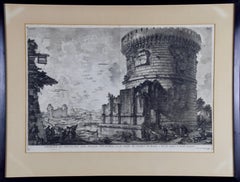
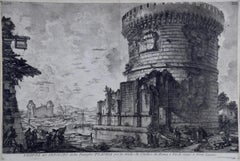
"Veduta del Sepolcro della Famiglia Plauzia per la Strada Che Conduce da Roma a Tivoli vicino a Ponte Lugano" from "Le Antichità Romane" (Roman Antiquities), one of the most famous works by Piranesi. "Antichita" illustrates the tombs along the Appian Way...
Category

Early 18th Century Dutch School Prints and Multiples

Materials

Etching, Engraving, Drypoint

Winter Tracery (Milford Connecticut)

Winter Tracery (Milford Connecticut)

Located in San Francisco, CA

This artwork titled 'Winter Tracery (Milford Connecticut)" is an original drypoint etching by noted American artist Philip Kappel, 1901-1981. It is hand signed and titled in pencil by the artist. The plate mark (Image) size is 9 x 12 inches, framed size is 17.25 x 21.25 inches. Custom framed in a wooden light grey frame, with light grey matting and black color fillet. It is in excellent condition. About the artist: Philip Kappel — painter, illustrator, printer, writer, and lecturer — was born on February 10, 1901 in Hartford, CT and died in 1981. Kappel is best remembered for his landscapes, portraits, figures, marine, lithography, and etching. He held a teaching position with H. B. Snell, Boothbay, ME Studios, 1923 and 1924. His addresses in 1929 were 500 Fifth Avenue in New York City and, for the summer, care of Philip Little, 10 Chestnut Street, Salem, MA; and in 1935, Sarasota, FL. Kappel was a pupil of the Pratt Institute Art School in Brooklyn, NY and Philip Little (1857-1942) and held memberships with the North Shore Artists Association in Gloucester, MA; the Marblehead...

Category

Mid-20th Century Dutch School Prints and Multiples

Materials

Drypoint, Etching

Rent Day, English antique engraving after Sir David Wilkie

Rent Day, English antique engraving after Sir David Wilkie

By Sir David Wilkie

Located in Melbourne, Victoria

'Rent Day' Engraving by Abraham Raimbach (1776-1843) after Sir David Wilkie RA (1785-1841). Circa 1820. 'Second Plate' printed under engraver's name. Wilkie was an important Scot...

Category

Mid-19th Century Dutch School Prints and Multiples

Materials

Engraving

Interiors VII: The Train from Munich

Interiors VII: The Train from Munich

By Peter Milton

Located in Middletown, NY

Interiors VII: The Train from Munich Robert E. Townsend, 1991. Resist ground etching and engraving with hand refinement in charcoal, pencil, stabilo, and eraser on BFK Rives white wove paper, 20 x 36 inches (507 x 914 mm), full margins. Signed, titled, dated and numbered 51/175 by the artist in pencil, lower margin. A brilliant, inky impression with luminous light and gradient tones. In excellent condition with one extremely minor and superficial spot of light tan adhesive residue on the verso, unobtrusive and not visible on the recto, with no other visible defects. With the blind stamp of the printer, Robert E. Townsend in the lower left margin. An especially fine impression in superb condition. [Milton 113]. When asked about this work in particular, Milton expressed that his favorite images were his darkest images, in theme, mood, and in ink. Milton, who has said that his work is infused with a postmodern awareness of the past, has focused here in a deeply personal way on a segment of history that continues to haunt us all. The work, published in 1991, evokes one of the darkest periods of European history, the eroding and erasing of European culture under fascism, and the eventual total loss of humanity. The Train from Munich is an especially relevant and emotional work for Milton, who created the piece for his wife, Edith, who escaped Munich in 1939 as a child on the fabled Kinderstransport. The Kinderstransport was a desperate rescue effort on the part of the British government to save as many Jewish children as possible by railway before borders closed on the precipice of the Second World War. Children left their parents behind, and boarded the trains alone, leaving the impending doom of Nazi Germany, they arrived in Great Britain as refugees. More than 10,000 children escaped the holocaust via the Kinderstransport. In Train from Munich, the image itself holds an almost immeasurable amount of symbolism; each inch of the matrix is a successful effort to confront this history in a way that is poignant through a series of motifs. We see the Café disappearing into a ghostlike memory of the past, an allegory to the disintegration of culture, while through the windows we can see a rampant, snarling dog; a portrait of Hitler's shepherd, Blondi. Blondi isn't the only notable figure in the composition. Milton has pointed out that the fading figure of the doorman at the Hotel Metropole is modeled after the artist and intellectual Marcel Duchamp, and the face of the young girl peering...

Category

1990s Dutch School Prints and Multiples

Materials

Charcoal, ABS, Engraving, Etching

Previously Available Items
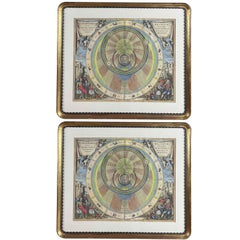
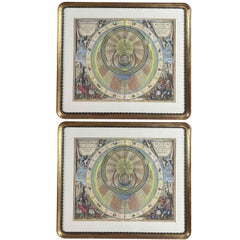
Pair of Celestial Maps  18th Century by Harmonia Macrocosmica Set of Two

Pair of Celestial Maps 18th Century by Harmonia Macrocosmica Set of Two

By Andreas Cellarius

Located in Milano, IT

Cellarius Andreas Pair of 18th Century Watercolor Celestial Maps entitled: Planisphaerivm Aratevm sive Compages Orbivm Mvndanorvm ex Hypothesi Aratea in Plano Expressa e Planisphaeri...

Category

Early 18th Century Dutch School Prints and Multiples

Materials

Wood, Watercolor, Laid Paper, Etching

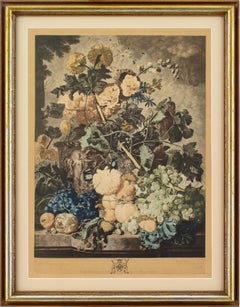
18th-Century Mezzotint Print, Flower Bouquet (After Jan van Huysum)

18th-Century Mezzotint Print, Flower Bouquet (After Jan van Huysum)

By Richard Earlom

Located in Cheltenham, GB

US buyers pay no import tariffs on this item. This beautiful early 20th-century aquatint is after an 18th-century engraving by Richard Earlom (1743-1822) of a work by the Dutch master, Jan Van Huysum...

Category

1910s Dutch School Prints and Multiples

Materials

Paper, Aquatint

Smiling Together, 1978 by Karel Appel, CoBrA, Wool Tapestry

Smiling Together, 1978 by Karel Appel, CoBrA, Wool Tapestry

By Karel Appel

Located in Zug, CH

Karel Appel Smiling Together, 1978 Wool Tapestry Edition of 10 246 x 196 cm Woven signature, Copyright Appel woven verso The artwork is offered unframed. Edition number might vary fr...

Category

1970s Dutch School Prints and Multiples

Materials

Tapestry

Smiling Together, 1978 by Karel Appel, CoBrA, Wool Tapestry

Smiling Together, 1978 by Karel Appel, CoBrA, Wool Tapestry

By Karel Appel

Located in Zug, CH

Karel Appel Smiling Together, 1978 Wool Tapestry Edition of 10 246 x 196 cm Woven signature, Copyright Appel woven verso The artwork is offered unframed. Edition number might vary fr...

Category

1970s Dutch School Prints and Multiples

Materials

Tapestry

Smiling Together, 1978 by Karel Appel, CoBrA, Wool Tapestry

Smiling Together, 1978 by Karel Appel, CoBrA, Wool Tapestry

By Karel Appel

Located in Zug, CH

Karel Appel Smiling Together, 1978 Wool Tapestry Edition of 10 246 x 196 cm Woven signature, Copyright Appel woven verso The artwork is offered unframed. Edition number might vary fr...

Category

1970s Dutch School Prints and Multiples

Materials

Tapestry

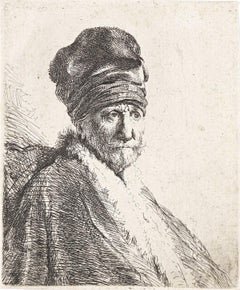
Bust of a Man Wearing a High Cap, Three-Quarters Right (The Artist's Father ?)

Bust of a Man Wearing a High Cap, Three-Quarters Right (The Artist's Father ?)

By Rembrandt van Rijn

Located in New York, NY

A very good, dark impression of this etching, with strong contrasts and little to no sign of wear. Biörklund's second state (of 2); Usticke's fifth state (of 7); New Hollstein's sixt...

Category

1630s Dutch School Prints and Multiples

Materials

Etching

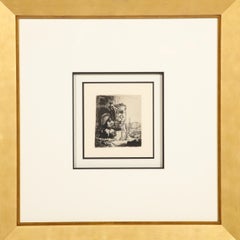
Rembrandt, Christ and the Woman of Samaria, Among Ruins

Rembrandt, Christ and the Woman of Samaria, Among Ruins

By Rembrandt van Rijn

Located in New York, NY

This stunning etching was realized by the baroque master Rembrandt van Rijs in Holland, 1634. The composition pictures Jesus Christ with a hand outstretched, identified with his long flowing locks, donning a robe with a his hand outstretched as he addressed the female figure next to him. The lady holds the well chain with the bucket of freshly drawn water resting on the edge of the cobbled rock well. The lady looks on in rapt attention, one hand resting on the crumbling edge of a embankment. In the background there are a series of archways, and two men in the midst of gossiping (perhaps at the sight of Jesus). Rembrandt executed the etching in delicate chiaroscuro that masterfully illustrates the light, perspective and emotion of the scene as only he is able to. The work depicts Jesus Christ and the woman of Samaria recalling the passage from the biblical verse John 4:5-30 in which Jesus speaks to a peasant Samaritan woman fetching water from a well. "There came a woman of Samaria to draw water. Jesus said to her, 'Give me a drink.' For his disciples had gone away into the city to buy food. The Samaritan woman said to him, 'How is it that you, a Jew, ask a drink of me, a woman of Samaria?' For Jews have no dealings with Samaritans. The parable demonstrates Jesus' kind regard for all peoples regardless of social stature. With its elegant composition and incredible artistry (by one of the most influential and celebrated artists of all time), this work promises to delight discerning collectors of historically important works. It represents a winning acquisition for lovers of fine art (especially those with an interest in first rate Renaissance works), and also those with a penchant for religious and biblical art...

Category

17th Century Dutch School Prints and Multiples

Materials

Etching

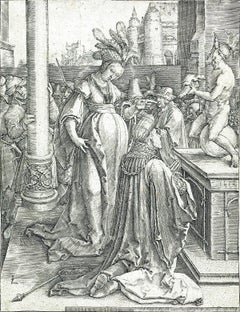
Solomon's Idolatry
Solomon's Idolatry

Solomon's Idolatry

By Lucas van Leyden

Located in New York, NY

An excellent boldly-inked impression of this scarce engraving by van Leyden. Trimmed on the plate mark.

Category

16th Century Dutch School Prints and Multiples

Materials

Engraving

Dutch School prints and multiples for sale on 1stDibs.

Find a wide variety of authentic Dutch School prints and multiples available for sale on 1stDibs. Works in this style were very popular during the 20th Century, but contemporary artists have continued to produce works inspired by this movement. Many Pop art paintings were created by popular artists on 1stDibs, including Rembrandt van Rijn, Johan Barthold Jongkind, and Cornelis Ploos van Amstel. Frequently made by artists working with Engraving, and Etching and other materials, all of these pieces for sale are unique and have attracted attention over the years. Not every interior allows for large Dutch School prints and multiples, so small editions measuring 0.44 inches across are also available. Prices for prints and multiples made by famous or emerging artists can differ depending on medium, time period and other attributes. On 1stDibs, the price for these items starts at $250 and tops out at $160,000, while the average work sells for $1,650.