Cubist Art

CUBIST STYLE

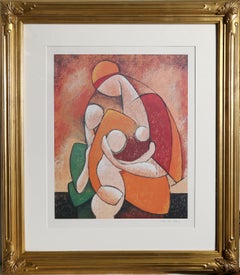
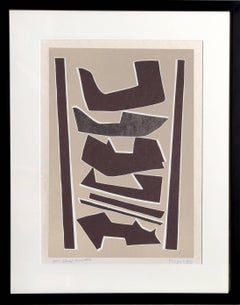
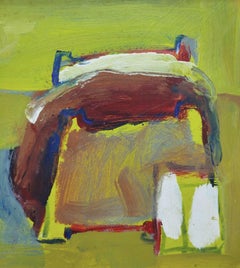
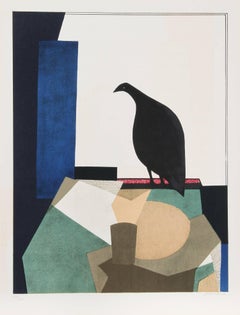
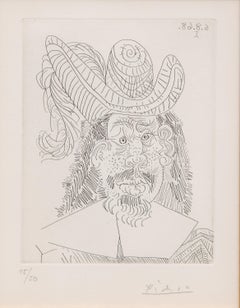
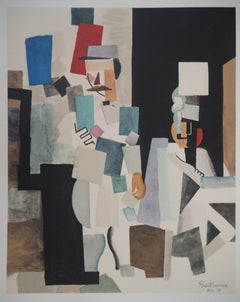
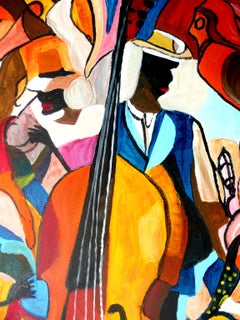
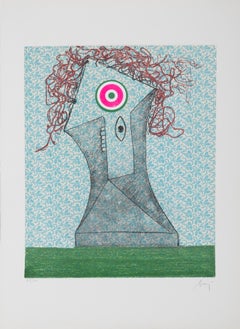
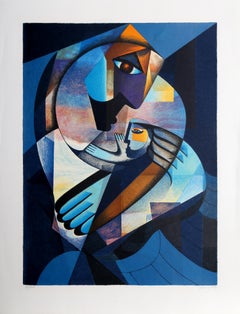
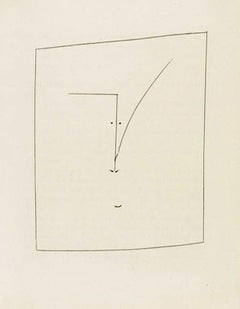
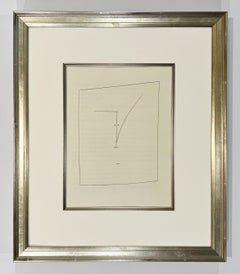
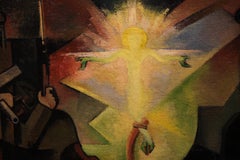
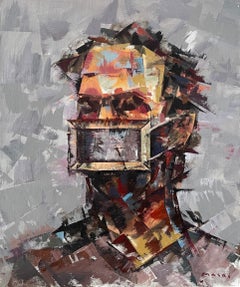
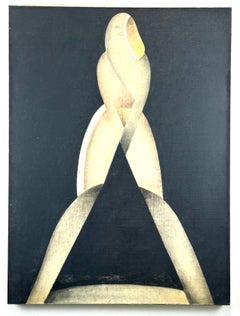
Inspired by the nontraditional ways Postimpressionists like Paul Cézanne and Georges Seurat depicted the world, Pablo Picasso and Georges Braque pioneered an even more abstract style in which reality was fragmented into flat, geometric forms. Cubism majorly influenced 20th-century Western art as it radically broke with the adherence to composition and linear perspectives that dated back to the Renaissance. Its watershed moments are considered Picasso’s 1907 Les Demoiselles d’Avignon, in which nude figures are fractured into angular shapes, and Georges Braque’s 1908 painting show, which prompted a critic to describe his visual reductions as “cubes.”

Although Cubism was a revolutionary art movement for European culture, it was informed by African masks and other tribal art. Its artists, which included Fernand Léger, Alexander Archipenko, Marcel Duchamp, Juan Gris and Jean Metzinger, experimented with compressing space and playing with the tension between solid and void forms in their work. While their subjects were often conventional, such as still lifes, nudes and landscapes, they were distorted without any illusion of realism.

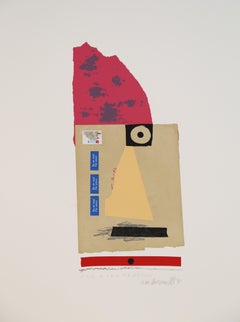
Cubist art evolved through different distinct phases. In Analytic Cubism, from 1908 to 1912, figures or objects were “analyzed” into pieces that were reassembled in paintings and sculptures, as if presenting the same subject matter from many perspectives at once. The palette was usually monochromatic and muted, giving attention to the overlapping planes. Synthetic Cubism, dating from 1912 to 1914, moved to brighter colors and a further flattening of images. This unmooring from formal ideas of art would shape numerous styles that followed, from Dada to Surrealism.

Find a collection of authentic Cubist paintings, prints and multiples, sculptures and more art on 1stDibs.

to
684
696
371
465
230
163
Overall Width
to
Overall Height
to
2
1,477
472
4
40
60
88
146
281
236
132
74
40
114,012
62,459
57,479
27,306
14,599
9,382
6,651
5,655
4,323
3,098
2,419
2,351
2,152
604
1,175
609
72
703
534
399
246
246
232
134
123
61
50
42
34
29
27
26
26
25
25
24
23
898
562
549
345
341
171
61
39
32
29
504
256
1,224
665
Style: Cubist
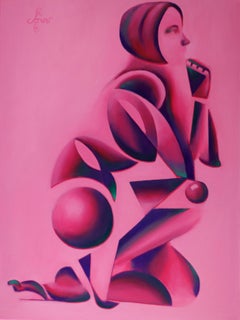
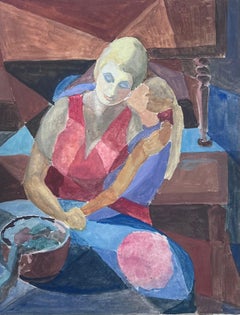
'Attente' 1950's Cubist Abstract Portrait, Oil Painting, Signed

'Attente' 1950's Cubist Abstract Portrait, Oil Painting, Signed

Located in Cirencester, Gloucestershire

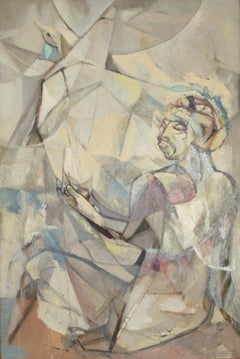
'Attente' Cubist Abstract Portrait, Oil Painting, Signed By French artist, Mid 20th Century Signed and dated '1952' by the artist on the lower right hand corner The artist has signed...

Category

Mid-20th Century Cubist Art

Materials

Oil

Geometric Abstract Painting Josette Cayol Oil Purple Green Red Composition

Geometric Abstract Painting Josette Cayol Oil Purple Green Red Composition

By Josette Cayol

Located in Cirencester, Gloucestershire

Artist: Josette Cayol (French, circa 2000) Title: Violette Medium: Oil on canvas Size: 20 x 16 inches Frame: Unframed Signature: Signed (lower right) Condition: Good condition, minor...

Category

21st Century and Contemporary Cubist Art

Materials

Oil

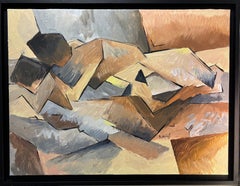
John Hatch American Cubist Landscape Oil Painting Massachusetts Seascape 1952

John Hatch American Cubist Landscape Oil Painting Massachusetts Seascape 1952

By John W. Hatch

Located in Buffalo, NY

An original oil on board painting by American modernist John W. Hatch. This incredible cubist landscape was created in 1952. Estate stamped and dated on the reverse. Titled, "Nahant Rocks, Lynn, MA " with a partial exhibition label on the reverse. The painting comes housed in a black wood frame presentation. John Woodsum Hatch 1919-1998 During his fifty-year career as an artist, John Woodsum Hatch explored the people, the landscape, and the seascape around him. From his extensive travels to his years in New Hampshire, he developed a body of work that captures a sense of place. Through watercolor, ink and sand, he depicted the grandeur of the White Mountains. The crisp light and distinct topography of the Isles of Shoals and Great Bay Estuary are precisely and clearly documented in acrylic and tempera paintings. His ability to convey the sheer scale and longevity of the mountains and sea, and by comparison the fleeting nature of human life, conveys in a not-so-subtle way that the natural environment is to be revered and preserved. Hatch took his first teaching job at the University of New Hampshire in 1949, the same year he graduated from Yale University. He never left. A former student, Sam Cady, described his contributions: “He was a wonderful mix of jokester and sage. A teacher who obviously loved people, loved teaching, and had a great gift for it.” After retiring in 1985, he was made an honorary Professor Emeritus at UNH. Hatch contributed to New Hampshire's cultural life in three areas: his teaching, his art, and his community service. His effectiveness in these three areas can be traced his commitment to give something of himself to help others. Many artists teach by necessity and resent it as a drain on their creative energies but Hatch found his greatest fulfillment from a combination of teaching, making art, and being deeply involved with his community as an art historian and as an environmentalist. Hatch’s work can be seen in numerous public collections, including: the Addison Gallery of American Art; DeCordova Museum; Pennsylvania Academy of Fine Arts; State of New Hampshire's Living Treasures Collection, and the Portland Museum of Art in Maine. John Woodsum Hatch, New Hampshire's 1997 Living Treasure Award recipient, died on August 6, 1998, at the age of 78. Hatch was a draftsman, an artist and a muralist. His works can be found in public and private collections throughout the region. He exhibited at the New Hampshire Art...

Category

1950s Cubist Art

Materials

Canvas, Oil

Suzanne Benton, Soft Thunder, 2021, oil on canvas, Spiritualism

Suzanne Benton, Soft Thunder, 2021, oil on canvas, Spiritualism

By Suzanne Benton

Located in Darien, CT

In this ninth decade of life, and as a working artist for nearly70 years, Suzanne Benton has become interested in the concept of Late Style as described by the literary theorist Edward Said. “Each of us can supply evidence of late works, which crown a lifetime of aesthetic endeavor,” Matisse had it with his renowned paper cuts. While nearly blind, Monet created the water lily paintings as his final legacy to the history of art.  Benton's Late Style arrived as a surprise during the Covid pandemic. The resultant aloneness from sheltering in place brought her to an uncanny level of solitude that only painting could voice. She reached for the purest of colors, and entered a celebratory world to create the Neo-Transcendental paintings titled All About Color. The disappeared narrative came as a surprise. It had been the mainstay of the masks and mask tale performances, monoprints and paintings. This time though, the artist needed to bring a vibrancy to canvas, and to make tangible this sense of sheer essence that had pressed into her inner self in that time of stillness. Well educated in color by John Ferren, the abstract expressionist painter who’d taught the year’s color study at Queen College. The sensitivity developed further through four lengthy art-working journeys to India, starting in 1976-77, continuing with a 1992-1993 Fulbright, and additional South Asia residencies in 1995, and 2011. Those and others in Africa brought an ever more attuned palette to decades of monoprints with Chine collé that featured imagery from world culture, as well as her Americana of 19th and 20th century women writers, educators, suffragists, and feminists. These Late Style artworks explore the cosmic realm. Its deceptive simplicity reminds Benton of Buffie Johnson’s late work. She, an early celebrator of Great Goddess imagery turned to circles in her latter years. similarly, Benton had drawn on rich Goddess imagery since the 1970’s...

Category

2010s Cubist Art

Materials

Oil

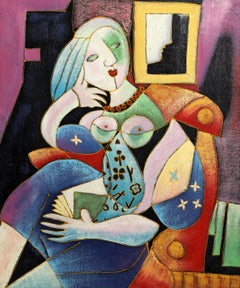
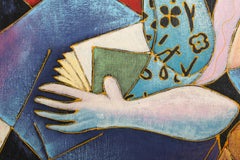
Homage to Woman with Book by Picasso, Cubist Giclee & Acrylic Painting on Canvas

Homage to Woman with Book by Picasso, Cubist Giclee & Acrylic Painting on Canvas

Located in Long Island City, NY

Unknown Artist - Homage to Woman with Book by Picasso, Medium: Giclee and Acrylic on Canvas, Size: 24.5 x 20.25 in. (62.23 x 51.44 cm)

Category

Mid-20th Century Cubist Art

Materials

Acrylic, Giclée

Progress
Progress

Progress

Located in Los Angeles, CA

PASCAL JARRION "PROGRESS" OIL ON PANEL, SIGNED 2024 36 X 30 INCHES _____________________________________________________________ __________ Pascal Jarrion was born in Perpigna...

Category

21st Century and Contemporary Cubist Art

Materials

Oil, Panel

Fernand Leger, Woman Holding a Flower, from Derriere le miroir, 1955 (after)

Fernand Leger, Woman Holding a Flower, from Derriere le miroir, 1955 (after)

By Fernand Léger

Located in Southampton, NY

This exquisite lithograph after Fernand Leger (1881–1955), titled Femme tenant une fleur (Woman Holding a Flower), from the folio Derriere le miroir, No. 79-81, originates from the 1955 edition published by Maeght Editeur, Paris, and printed by Mourlot Freres, Paris, 1955. This composition exemplifies Leger’s rhythmic balance of color, form, and movement, translating the mechanical vitality of modern life into a harmonious, humanized geometry. Executed as a lithograph on velin paper, this work measures 15 x 11 inches. Signed in the plate and unnumbered as issued. The edition exemplifies the superb craftsmanship of Mourlot Freres, Paris. Artwork Details: Artist: After Fernand Leger (1881–1955) Title: Femme tenant une fleur (Woman Holding a Flower), from the folio Derriere le miroir, No. 79-81 Medium: Lithograph on velin paper Dimensions: 15 x 11 inches (38.1 x 27.94 cm) Inscription: Signed in the plate and unnumbered as issued Date: 1955 Publisher: Maeght Editeur, Paris Printer: Mourlot Freres, Paris Condition: Well preserved, consistent with age and medium Provenance: From the folio Derriere le miroir, No. 79-81, published by Maeght Editeur, Paris; printed by Mourlot Freres, Paris, 1955 About the Publication: Derriere le miroir (Behind the Mirror) was one of the most important art publications of the 20th century, created and published by Maeght Editeur in Paris from 1946 to 1982. Founded by the visionary art dealer and publisher Aime Maeght, the series served as both an exhibition catalogue and a work of art in its own right, uniting original lithographs by leading modern and contemporary artists with critical essays, poetry, and design of the highest quality. Printed by master lithographers such as Mourlot Freres and Arte, Derriere le miroir became synonymous with the artistic vanguard of postwar Europe. Each issue was devoted to a single artist or theme and published to accompany exhibitions at the Galerie Maeght in Paris, featuring works by Pablo Picasso, Henri Matisse, Georges Braque, Joan Miro, Marc Chagall, Alexander Calder, Fernand Leger, and Alberto Giacometti, among others. The publication reflected Maeght's belief that art should be both accessible and elevated—an ideal realized through its luxurious production values, meticulous printing, and collaboration with the greatest creative minds of its time. About the Artist: Fernand Leger (1881–1955) was a visionary French painter, sculptor, designer, and filmmaker whose groundbreaking fusion of modern industry, vivid color, and geometric form transformed the course of 20th-century art. Born in Argentan, Normandy, Leger began as an architectural draftsman before studying at the Academie Julian and the Ecole des Beaux-Arts in Paris, where he absorbed the lessons of Paul Cezanne’s structural rigor and the revolutionary ideas of Cubism. Alongside Pablo Picasso and Georges Braque, he became one of the leading innovators of the avant-garde, yet his work stood apart through its embrace of mechanical rhythm, bold contrasts, and industrial modernity—earning him the title “the painter of the machine age.” His art celebrated the beauty of technology, urban life, and the human form rendered in dynamic, interlocking cylinders and planes, evoking the pulse of the modern world. Immersed in the vibrant Parisian art scene, Leger worked in dialogue with peers and contemporaries such as Alexander Calder, Alberto Giacometti, Salvador Dali, Joan Miro, Wassily Kandinsky, Marcel Duchamp, and Man Ray, all of whom shared his commitment to innovation and the reimagining of artistic expression. Beyond painting, Leger’s creative reach extended into film, design, and monumental public art—his 1924 collaboration on Ballet Mecanique with Dudley Murphy and Man Ray remains a landmark of avant-garde cinema. His later works evolved toward greater clarity and monumentality, celebrating the unity of form, color, and humanity through large-scale murals and mosaics that bridged fine art and architecture. Leger’s synthesis of Cubism, Futurism, and abstraction paved the way for movements such as Pop Art and influenced generations of artists including Roy Lichtenstein, Ellsworth Kelly, Robert Indiana, and Alexander Calder, who admired his fusion of structure, energy, and optimism. Today, his works are prized by major museums and collectors worldwide for their bold visual power and enduring modernity. His highest auction record was achieved by La femme en rouge et vert (1914), which sold for 39,241,000 USD at Sotheby’s, New York, on May 7, 2008. After Fernand Leger Femme tenant une fleur 1955, Leger Derriere le miroir No. 79-81, Leger Mourlot...

Category

1950s Cubist Art

Materials

Lithograph

Georges Braque, Bird at Sunset, from Le Solitaire, XXe siecle, 1959 (after)

Georges Braque, Bird at Sunset, from Le Solitaire, XXe siecle, 1959 (after)

By Georges Braque

Located in Southampton, NY

This exquisite lithograph and pochoir after Georges Braque (1882–1963), titled Oiseau au couchant (Bird at Sunset), from the album Georges Braque, Le Solitaire (The Solitary), originates from the 1959 edition published by XXe siecle, Paris, in collaboration with Fernand Hazan, Paris; rendered by Daniel Jacomet, Paris; and printed by Daniel Jacomet et Cie, Paris, 1959. Oiseau au couchant (Bird at Sunset) reflects Braque’s meditative engagement with the motif of the bird—an enduring symbol of transcendence, freedom, and poetic solitude in his mature work. Through simplified form and muted harmony, the composition evokes the quiet passage of twilight, translating nature’s fleeting beauty into a timeless visual poem. Braque’s masterful integration of geometric abstraction with lyrical rhythm captures the balance between motion and stillness, light and silence. Executed as a lithograph and pochoir on velin d’Arches paper, this work measures 7.25 x 9.375 inches. Unsigned and unnumbered as issued. The edition exemplifies the technical excellence of Daniel Jacomet et Cie, Paris, produced in close collaboration with XXe siecle and Fernand Hazan, Paris. Artwork Details: Artist: After Georges Braque (1882–1963) Title: Oiseau au couchant (Bird at Sunset), from the album Georges Braque, Le Solitaire (The Solitary), 1959 Medium: Lithograph and pochoir on velin d’Arches paper Dimensions: 7.25 x 9.375 inches (18.42 x 23.81 cm) Inscription: Unsigned and unnumbered as issued Date: 1959 Publisher: XXe siecle, Paris, in collaboration with Fernand Hazan, Paris Printer: Daniel Jacomet et Cie, Paris Condition: Well preserved, consistent with age and medium Provenance: From the album Georges Braque, Le Solitaire, published by XXe siecle, Paris, in collaboration with Fernand Hazan, Paris; rendered by Daniel Jacomet, Paris; and printed by Daniel Jacomet et Cie, Paris, 1959 Notes: Excerpted from the album (translated from French): XXX examples of this work were printed on Arches paper, containing an original engraving by Georges Braque, numbered from I to XXX. CM examples, constituting the original edition, including CCC for F. Hazan, publisher in Paris, CCC for A. Zwemmer, publisher in London, and CCC for the New York Graphic Society, LX examples, marked H.C., are reserved for the Author and the Publisher. About the Publication: Georges Braque, Le Solitaire (The Solitary) was published in Paris in 1959 by XXe siecle in collaboration with Fernand Hazan and printed by the Atelier Daniel Jacomet et Cie. Conceived as both a visual and literary homage to one of the founding figures of Cubism, the volume represents one of the most refined art book productions of the postwar era. The publication was issued in conjunction with the journal XXe siecle, under the direction of G. di San Lazzaro, a central figure in promoting modern art through his collaborations with artists such as Picasso, Miro, Chagall, and Calder. Le Solitaire brought together Braque’s mature reflections on nature, still life, and metaphysical quietude, accompanied by critical essays and reproductions of his work. The pochoir and lithographic plates—executed by Daniel Jacomet, whose atelier was renowned for its exceptional color pochoirs—capture the texture and tonal depth of Braque’s original paintings with rare precision. About the Artist: Georges Braque (1882–1963) was a French painter, sculptor, and printmaker whose pioneering vision transformed the course of 20th-century art. A central figure in modernism and the co-founder of Cubism alongside Pablo Picasso, Braque redefined visual perception by breaking objects into geometric forms and reassembling them from multiple perspectives, creating a new visual language that bridged the gap between abstraction and reality. His early work was influenced by the vibrant colors and expressive energy of the Fauvist painters Henri Matisse and Andre Derain, before evolving toward the more analytical and structured compositions inspired by Paul Cezanne’s theories of form and perspective. Braque’s collaboration with Picasso between 1908 and 1914 marked one of the most fertile and revolutionary periods in art history, resulting in works that challenged traditional notions of space, depth, and illusion. Throughout his career, Braque maintained a deep interest in harmony, rhythm, and balance, infusing his still lifes, landscapes, and later reliefs with poetic subtlety and intellectual rigor. He moved among a brilliant circle of contemporaries including Pablo Picasso, Henri Matisse, Marc Chagall, Juan Gris, Fernand Leger, and Amedeo Modigliani—artists united in their pursuit of new modes of artistic expression. Braque’s influence extended well beyond his own era, shaping the creative approaches of later modernists such as Alexander Calder, Alberto Giacometti, Salvador Dali, Joan Miro, Wassily Kandinsky, Marcel Duchamp, and Man Ray, all of whom drew inspiration from his structural innovations and aesthetic integrity. His works are held in major museum collections worldwide, including the Museum of Modern Art, the Centre Pompidou, the Tate, and the Guggenheim, where they continue to embody the essence of modern artistic thought and visual poetry. The highest price ever paid for a Georges Braque artwork is approximately 15 million USD, achieved in 2013 at Christie’s New York for Paysage a la Ciotat (1907). Georges Braque Oiseau...

Category

1950s Cubist Art

Materials

Lithograph

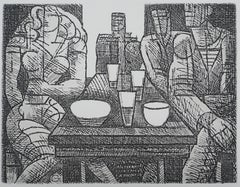
Au Cafe
Au Cafe

Au Cafe

By Elizabeth Ronget

Located in Los Angeles, CA

Frame size 42 x 52.5 inches ELISABETH RONGET "AU CAFE” OIL ON CANVAS, SIGNED FRANCE, C.1940 Elisabeth Ronget 1886-1962 Elisabeth Boehm Ronget was born in 1896 in Conitz, Polan...

Category

1940s Cubist Art

Materials

Canvas, Oil

Green Forrest

Green Forrest

By Robert McIntosh

Located in West Hollywood, CA

Presenting a just discovered master level abstract painting, Green Forrest, by American artist Robert McIntosh (1916-2010.) Green Forrest is an original mixed media painting on hea...

Category

1940s Cubist Art

Materials

Mixed Media

Fernand Leger, Still Life, from Derriere le miroir, 1955 (after)

Fernand Leger, Still Life, from Derriere le miroir, 1955 (after)

By Fernand Léger

Located in Southampton, NY

This exquisite lithograph after Fernand Leger (1881–1955), titled Nature morte (Still Life), from the folio Derriere le miroir, No. 79-81, originates from the 1955 edition published by Maeght Editeur, Paris, and printed by Mourlot Freres, Paris, 1955. This composition exemplifies Leger’s rhythmic balance of color, form, and movement, translating the mechanical vitality of modern life into a harmonious, humanized geometry. Executed as a lithograph on velin paper, this work measures 15 x 11 inches. Signed in the plate and unnumbered as issued. The edition exemplifies the superb craftsmanship of Mourlot Freres, Paris. Artwork Details: Artist: After Fernand Leger (1881–1955) Title: Nature morte (Still Life), from the folio Derriere le miroir, No. 79-81 Medium: Lithograph on velin paper Dimensions: 15 x 11 inches (38.1 x 27.94 cm) Inscription: Signed in the plate and unnumbered as issued Date: 1955 Publisher: Maeght Editeur, Paris Printer: Mourlot Freres, Paris Condition: Well preserved, consistent with age and medium Provenance: From the folio Derriere le miroir, No. 79-81, published by Maeght Editeur, Paris; printed by Mourlot Freres, Paris, 1955 About the Publication: Derriere le miroir (Behind the Mirror) was one of the most important art publications of the 20th century, created and published by Maeght Editeur in Paris from 1946 to 1982. Founded by the visionary art dealer and publisher Aime Maeght, the series served as both an exhibition catalogue and a work of art in its own right, uniting original lithographs by leading modern and contemporary artists with critical essays, poetry, and design of the highest quality. Printed by master lithographers such as Mourlot Freres and Arte, Derriere le miroir became synonymous with the artistic vanguard of postwar Europe. Each issue was devoted to a single artist or theme and published to accompany exhibitions at the Galerie Maeght in Paris, featuring works by Pablo Picasso, Henri Matisse, Georges Braque, Joan Miro, Marc Chagall, Alexander Calder, Fernand Leger, and Alberto Giacometti, among others. The publication reflected Maeght's belief that art should be both accessible and elevated—an ideal realized through its luxurious production values, meticulous printing, and collaboration with the greatest creative minds of its time. About the Artist: Fernand Leger (1881–1955) was a visionary French painter, sculptor, designer, and filmmaker whose groundbreaking fusion of modern industry, vivid color, and geometric form transformed the course of 20th-century art. Born in Argentan, Normandy, Leger began as an architectural draftsman before studying at the Academie Julian and the Ecole des Beaux-Arts in Paris, where he absorbed the lessons of Paul Cezanne’s structural rigor and the revolutionary ideas of Cubism. Alongside Pablo Picasso and Georges Braque, he became one of the leading innovators of the avant-garde, yet his work stood apart through its embrace of mechanical rhythm, bold contrasts, and industrial modernity—earning him the title “the painter of the machine age.” His art celebrated the beauty of technology, urban life, and the human form rendered in dynamic, interlocking cylinders and planes, evoking the pulse of the modern world. Immersed in the vibrant Parisian art scene, Leger worked in dialogue with peers and contemporaries such as Alexander Calder, Alberto Giacometti, Salvador Dali, Joan Miro, Wassily Kandinsky, Marcel Duchamp, and Man Ray, all of whom shared his commitment to innovation and the reimagining of artistic expression. Beyond painting, Leger’s creative reach extended into film, design, and monumental public art—his 1924 collaboration on Ballet Mecanique with Dudley Murphy and Man Ray remains a landmark of avant-garde cinema. His later works evolved toward greater clarity and monumentality, celebrating the unity of form, color, and humanity through large-scale murals and mosaics that bridged fine art and architecture. Leger’s synthesis of Cubism, Futurism, and abstraction paved the way for movements such as Pop Art and influenced generations of artists including Roy Lichtenstein, Ellsworth Kelly, Robert Indiana, and Alexander Calder, who admired his fusion of structure, energy, and optimism. Today, his works are prized by major museums and collectors worldwide for their bold visual power and enduring modernity. His highest auction record was achieved by La femme en rouge et vert (1914), which sold for 39,241,000 USD at Sotheby’s, New York, on May 7, 2008. After Fernand Leger Nature morte 1955, Leger Derriere le miroir No. 79-81, Leger Mourlot...

Category

1950s Cubist Art

Materials

Lithograph

Suzanne Benton, Hope,  2023, oil on linen, Spiritualism

Suzanne Benton, Hope, 2023, oil on linen, Spiritualism

By Suzanne Benton

Located in Darien, CT

In this ninth decade of life, and as a working artist for nearly70 years, Suzanne Benton has become interested in the concept of Late Style as described by the literary theorist Edward Said. “Each of us can supply evidence of late works, which crown a lifetime of aesthetic endeavor,” Matisse had it with his renowned paper cuts. While nearly blind, Monet created the water lily paintings as his final legacy to the history of art.  Benton's Late Style arrived as a surprise during the Covid pandemic. The resultant aloneness from sheltering in place brought her to an uncanny level of solitude that only painting could voice. She reached for the purest of colors, and entered a celebratory world to create the Neo-Transcendental paintings titled All About Color. The disappeared narrative came as a surprise. It had been the mainstay of the masks and mask tale performances, monoprints and paintings. This time though, the artist needed to bring a vibrancy to canvas, and to make tangible this sense of sheer essence that had pressed into her inner self in that time of stillness. Well educated in color by John Ferren, the abstract expressionist painter who’d taught the year’s color study at Queen College. The sensitivity developed further through four lengthy art-working journeys to India, starting in 1976-77, continuing with a 1992-1993 Fulbright, and additional South Asia residencies in 1995, and 2011. Those and others in Africa brought an ever more attuned palette to decades of monoprints with Chine collé that featured imagery from world culture, as well as her Americana of 19th and 20th century women writers, educators, suffragists, and feminists. These Late Style artworks explore the cosmic realm. Its deceptive simplicity reminds Benton of Buffie Johnson’s late work. She, an early celebrator of Great Goddess imagery turned to circles in her latter years. similarly, Benton had drawn on rich Goddess imagery since the 1970’s...

Category

2010s Cubist Art

Materials

Gesso, Birch, Oil, Board

Jacques Villon, Woman’s Head, from XXe Siecle, 1952

Jacques Villon, Woman’s Head, from XXe Siecle, 1952

By Jacques Villon

Located in Southampton, NY

This exquisite etching by Jacques Villon (1875–1963), titled Tete de Femme (Woman’s Head), from the album XXe Siecle, Nouvelle serie N°3 (double), Juin 1952, originates from the 1952...

Category

1950s Cubist Art

Materials

Etching

Lines And Shadows

Lines And Shadows

By Paul Dempsey

Located in East Hampton, NY

Lines & Shadows , Long Island, New York 20"x30" 16x24 on metal - 20x30 on metal - on paper: ***can come as large as 40"x60" 36"x24" on metal: on paper: 10 day turnaround Abo...

Category

2010s Cubist Art

Materials

Photographic Paper

Juan Gris, Bottle, from Au Soleil du Plafond, 1955 (after)

Juan Gris, Bottle, from Au Soleil du Plafond, 1955 (after)

By Juan Gris

Located in Southampton, NY

This exquisite lithograph after Juan Gris (1887–1927), titled Bouteille (Bottle), from the folio Au Soleil du Plafond (In the Sunlight of the Ceiling), originates from the 1955 editi...

Category

1950s Cubist Art

Materials

Lithograph

Cubist Renaissance Woman - Oil on Canvas

Cubist Renaissance Woman - Oil on Canvas

Located in Soquel, CA

Abstracted portrait of a renaissance era woman by Sonia Gichner (20th Century). This piece is painted with splashes of bright colors, contrasting nicely with skin tones and black lin...

Category

1980s Cubist Art

Materials

Gesso, Canvas, Oil

Fernand Leger, Green Leaves and Orange Background, from XXe siecle, 1971 (after)

Fernand Leger, Green Leaves and Orange Background, from XXe siecle, 1971 (after)

By Fernand Léger

Located in Southampton, NY

This exquisite lithograph after Fernand Leger (1881–1955), titled Feuilles vertes et fond orange (Green Leaves and Orange Background), from the album XXe Siecle, numero special hors abonnement, Cahiers d'art publies sous la direction de G. di San Lazzaro, Hommage a Fernand Leger, originates from the 1971 edition published by Societe Internationale d'Art XXe siecle, Paris, under the direction of Gualtieri di San Lazzaro, editeur, Paris, and printed by Mourlot Freres, Paris, 1971. Feuilles vertes et fond orange exemplifies Leger’s mastery of modern form and color, uniting bold geometry and organic vitality in a celebration of rhythm, balance, and the harmony between nature and mechanized abstraction. Executed as a lithograph on velin paper, this work measures 9.75 x 12.5 inches. Unsigned and unnumbered, as issued. The edition exemplifies the superb craftsmanship of Mourlot Freres, Paris. Artwork Details: Artist: After Fernand Leger (1881–1955) Title: Feuilles vertes et fond orange (Green Leaves and Orange Background), from the album XXe Siecle, numero special hors abonnement, Cahiers d'art publies sous la direction de G. di San Lazzaro, Hommage a Fernand Leger Medium: Lithograph on velin paper Dimensions: 9.75 x 12.5 inches (24.77 x 31.75 cm) Inscription: Unsigned and unnumbered, as issued Date: 1971 Publisher: Societe Internationale d'Art XXe siecle, Paris, under the direction of Gualtieri di San Lazzaro, editeur, Paris Printer: Mourlot Freres, Paris Catalogue raisonne reference: Leger, Fernand, and Lawrence Saphire. Fernand Leger: The Complete Graphic Work. Blue Moon Press, 1978, illustration 120. Condition: Well preserved, consistent with age and medium Provenance: From the album XXe Siecle, numero special hors abonnement, Cahiers d'art publies sous la direction de G. di San Lazzaro, Hommage a Fernand Leger, published by Societe Internationale d'Art XXe siecle, Paris; printed by Mourlot Freres, Paris, 1971 About the Publication: Gualtieri di San Lazzaro's XXe Siecle (Twentieth Century) was one of the most influential art journals of the modern era, founded in Paris in 1938 as a platform for the greatest painters, sculptors, and writers of the 20th century. San Lazzaro, a visionary editor, critic, and champion of modernism, believed that art and literature should coexist as expressions of a shared human imagination. Under his direction, XXe Siecle became a cultural bridge between Europe and the wider world, publishing special issues devoted to leading figures such as Picasso, Matisse, Chagall, Braque, Calder, Miro, Kandinsky, and Leger. Each edition combined essays by renowned critics and poets with original lithographs printed by the foremost ateliers of Paris, London, and New York, including Mourlot, Curwen, and Universal Graphics, creating a uniquely rich dialogue between text and image. Through XXe Siecle, San Lazzaro preserved the creative spirit of the avant-garde during and after World War II, championing freedom of expression and the evolution of abstraction, surrealism, and modern thought. Over nearly four decades, the journal shaped international taste and defined the intellectual landscape of postwar art publishing. Today, XXe Siecle remains celebrated for its extraordinary synthesis of art, literature, and design, an enduring testament to Gualtieri di San Lazzaro's belief that the visual arts are the soul of the modern age. About the Artist: Fernand Leger (1881–1955) was a French painter, sculptor, and filmmaker whose pioneering fusion of modern life, mechanization, and visual abstraction made him one of the most influential artists of the 20th century. Emerging from the Cubist movement, Leger developed a highly personal style distinguished by bold contrasts, cylindrical forms, and rhythmic compositions that celebrated the beauty of industrial progress and the vitality of modern urban life. Deeply influenced by the innovations of Paul Cezanne and the structural experimentation of Pablo Picasso and Georges Braque, Leger transformed Cubism’s fragmented perspective into a dynamic, machine-age aesthetic that bridged fine art, architecture, and design. His work often depicted workers, machinery, and everyday objects as monumental symbols of harmony between humanity and technology, reflecting both his optimism for modernity and his belief in the democratization of art. During his career, Leger was part of an extraordinary artistic circle that included Henri Matisse, Marc Chagall, Alexander Calder, Alberto Giacometti, Salvador Dali, Joan Miro, Wassily Kandinsky, Marcel Duchamp, and Man Ray—visionaries who shared his commitment to pushing the boundaries of artistic form and expression. A leading figure in the international avant-garde, Leger also explored large-scale murals, public art, and film, expanding the reach of modern art beyond the gallery. His works are represented in major museum collections worldwide, including the Museum of Modern Art, the Centre Pompidou, the Tate, and the Guggenheim, where they continue to inspire admiration for their bold geometry, humanist vision, and timeless modernity. The highest price ever paid for a Fernand Leger artwork is approximately $70 million USD, achieved in 2017 at Christie's New York for Contraste de formes (1913). Fernand Leger Feuilles vertes et fond orange, Leger Green Leaves and Orange Background, Leger 1971 XXe siecle, Leger Mourlot...
Category

1970s Cubist Art

Materials

Lithograph

Juan Gris, The Soup Tureen, from Au Soleil du Plafond, 1955 (after)

Juan Gris, The Soup Tureen, from Au Soleil du Plafond, 1955 (after)

By Juan Gris

Located in Southampton, NY

This exquisite lithograph after Juan Gris (1887–1927), titled La Soupiere (The Soup Tureen), from the folio Au Soleil du Plafond (In the Sunlight of the Ceiling), originates from the...

Category

1950s Cubist Art

Materials

Lithograph

Woman with Cello, Cubist Screenprint by Linda Le Kinff

Woman with Cello, Cubist Screenprint by Linda Le Kinff

By Linda Le Kinff

Located in Long Island City, NY

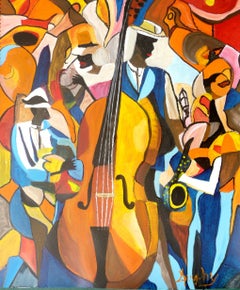
A bright cubist screenprint of a woman seated with a cello. She wears a long red skirt and blue blouse and is posed in front of a background composed of intersecting geometric shapes. This piece is signed and numbered in pencil by the artist and is floating in an ornate burnished gold frame. Woman with Cello...

Category

Early 2000s Cubist Art

Materials

Screen

1974 After Pablo Picasso 'Tapestries at Pace' Vintage

1974 After Pablo Picasso 'Tapestries at Pace' Vintage

By Pablo Picasso

Located in Brooklyn, NY

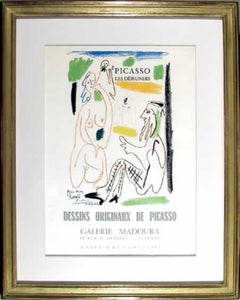
This original lithograph was designed for the Tapestries at Pace exhibition held at Pace Columbus in 1974. Though the exhibition featured works connected to Pablo Picasso, this litho...

Category

1970s Cubist Art

Materials

Lithograph

Midcentury Modern Mixed Media Painting on Canvas Art shape colors 21-40-0

Midcentury Modern Mixed Media Painting on Canvas Art shape colors 21-40-0

By Irena Orlov

Located in Los Angeles, CA

One of a kind Mixed Medium on Canvas Artwork: Original abstract mixed media work on canvas, which combines new media - digital original hand painting, printed on canvas, then hand p...

Category

2010s Cubist Art

Materials

Canvas, Varnish, Archival Ink, Mixed Media, Acrylic

Cubist art for sale on 1stDibs.

Find a wide variety of authentic Cubist art available for sale on 1stDibs. Works in this style were very popular during the 21st Century and Contemporary, but contemporary artists have continued to produce works inspired by this movement. If you’re looking to add art created in this style to introduce contrast in an otherwise neutral space in your home, the works available on 1stDibs include elements of blue, orange, purple, yellow and other colors. Many Pop art paintings were created by popular artists on 1stDibs, including Pablo Picasso, (after) Pablo Picasso, Borja Guijarro, and Corne Akkers. Frequently made by artists working with Paint, and Lithograph and other materials, all of these pieces for sale are unique and have attracted attention over the years. Not every interior allows for large Cubist art, so small editions measuring 1.5 inches across are also available. Prices for art made by famous or emerging artists can differ depending on medium, time period and other attributes. On 1stDibs, the price for these items starts at $1 and tops out at $265,000, while the average work sells for $2,400.