Expressionist Art

EXPRESSIONIST STYLE

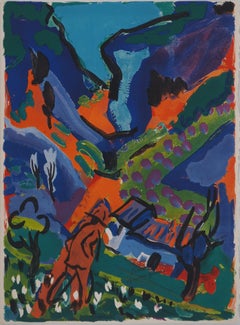
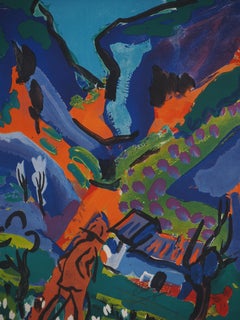
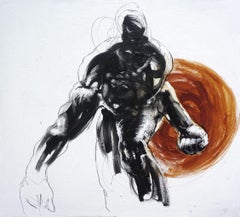
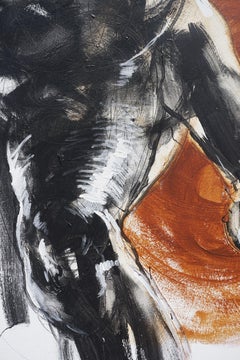
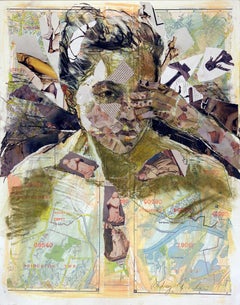
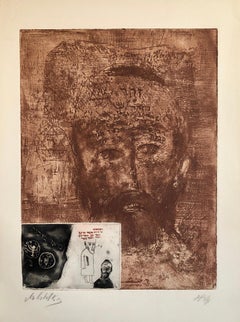
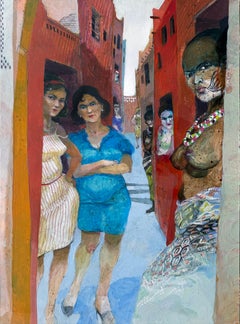
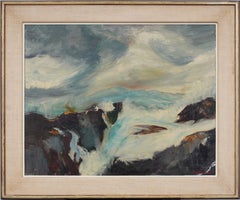
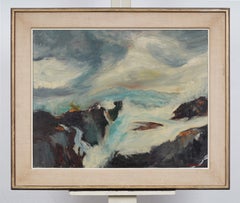
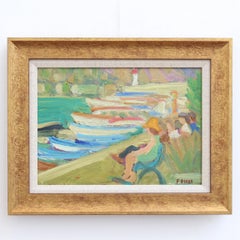
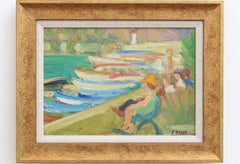
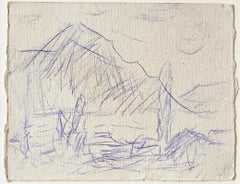
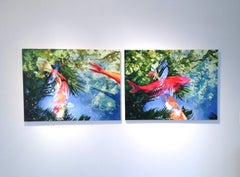
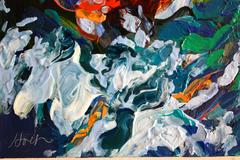
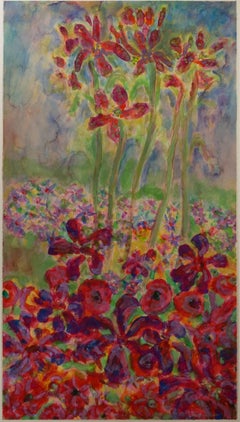
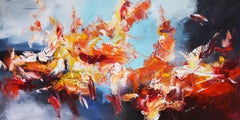
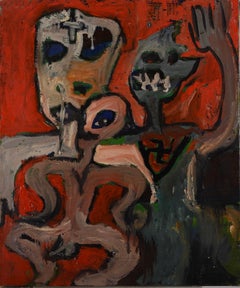
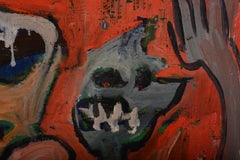
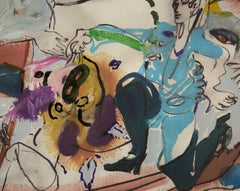
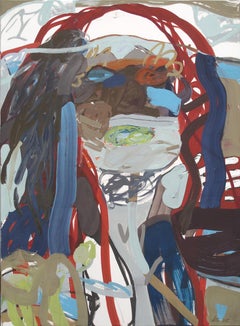
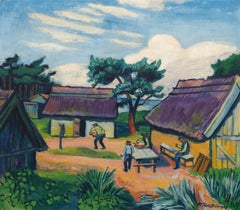
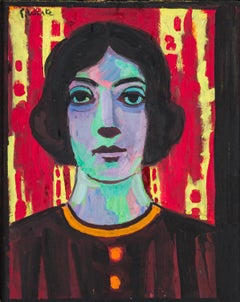
While “expressionist” is used to describe any art that avoids naturalism and instead employs a bold use of flattened forms and intense brushwork, Expressionist art formally describes early-20th-century work from Europe that drew on Symbolism and confronted issues such as urbanization and capitalism. Expressionist artists experimented in paintings and prints with skewed perspectives, abstraction and unconventional, bright colors to portray how isolating and anxious the world felt rather than how it appeared. 

Between 1905 and 1920, Austrian and German artists, in particular, were inspired by Postimpressionists such as Paul Gauguin and Vincent van Gogh in their efforts to strive for a new authenticity in their work. In its geometric patterns and decorative details, Expressionist art was also marked by eclectic sources like German and Russian folk art as well as tribal art from Africa and Oceania, which the movement’s practitioners witnessed at museums and world’s fairs.

Groups of artists came together to share and promote the themes now associated with Expressionism, such as Die Brücke (The Bridge) in Dresden, which included Erich Heckel, Ernst Ludwig Kirchner and Karl Schmidt-Rottluff and investigated alienation and the dissolution of society in vivid color. In Munich, Der Blaue Reiter (The Blue Rider), a group led by Wassily Kandinsky and Franz Marc, instilled Expressionism with a search for spiritual truths. In his iconic painting The Scream, prolific Norwegian painter Edvard Munch conveyed emotional turmoil through his depiction of environmental elements, such as the threatening sky.

Expressionism shifted around the outbreak of World War I, with artists using more elements of the grotesque in reaction to the escalation of unrest and violence. Printmaking was especially popular, as it allowed artists to widely disseminate works that grappled with social and political issues amid this time of upheaval. Although the art movement ended with the rise of Nazi Germany, where Expressionist creators were labeled “degenerate,” the radical ideas of these artists would influence Neo-Expressionism that emerged in the late 1970s with painters like Jean-Michel Basquiat and Francesco Clemente.

​​Find a collection of authentic Expressionist paintings, sculptures, prints and more art on 1stDibs.

to
1,549
1,923
1,053
1,019
836
926
Overall Width
to
Overall Height
to
1
46
2,692
3,025
98
136
362
108
78
171
397
275
238
183
1
115,289
62,877
57,490
27,594
14,591
9,411
6,655
4,334
3,107
2,460
2,349
2,145
608
3,116
1,923
623
2,531
1,570
1,549
983
723
434
403
384
366
320
287
271
261
232
197
157
137
117
110
96
3,586
2,139
1,859
1,795
1,332
303
85
73
47
46
1,175
395
2,910
2,065
Style: Expressionist
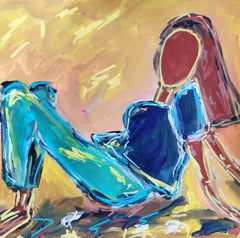
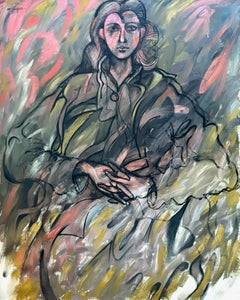
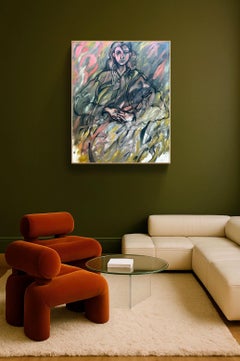
Abike 2 -21st Century Contemporary Figurative Portrait of Modern Woman, Umbrella

Abike 2 -21st Century Contemporary Figurative Portrait of Modern Woman, Umbrella

Located in Ibadan, Oyo

Shipping Procedure Ships in a well-protected tube from Nigeria This work is unique, not a print or other type of copy. Accompanied by a Certificate of Authenticity. About Artist Ogu...

Category

21st Century and Contemporary Expressionist Art

Materials

Canvas, Acrylic

Estate No. 044059

Estate No. 044059

By Otto Neumann

Located in New Orleans, LA

Signed and dated "55" in pencil. Otto Neumann (1895-1975) was a German Expressionist painter and printmaker. His monotypes evolved from sharp, angular, black and whites to late abst...

Category

1950s Expressionist Art
Materials

Monotype

Ghosts of Philadelphia 2

Ghosts of Philadelphia 2

By Tom Bennett

Located in Brooklyn, NY

Monotype Dramatic imagery from Tom Bennett’s series of black and white monotypes, blending surrealistic mindscapes with stark realism About Tom Bennett: With quick brushstrokes, Tom...

Category

2010s Expressionist Art
Materials

Monotype, Archival Ink

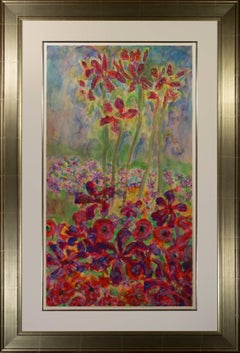
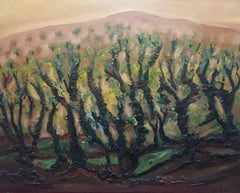
Cherries bloom. 2010, acrylic on paper, 49x70 cm

Cherries bloom. 2010, acrylic on paper, 49x70 cm

Located in Riga, LV

Cherries bloom. 2010, acrylic on paper, 49x70 cm Dzidra Bauma (1930) Dzidra Bauma works in watercolor technique. She paint figural compositions, portraits, landscapes, flowers and ...

Category

2010s Expressionist Art
Materials

Paper, Acrylic

Central Park
Central Park

Central Park

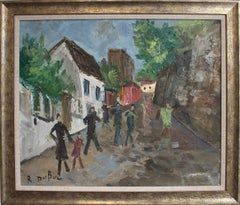
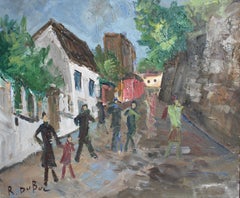
By Denes de Holesch

Located in Sheffield, MA

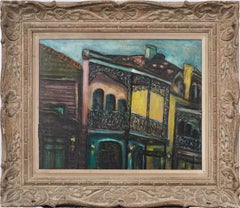
Denes Holesch Hungarian, 1910-1983 City Skyline Oil on board 21 ¾ by 26 in, w/ frame 30 by 34 in Signed lower left Denes Holesch (Denes de Holesch) was born in 1910 in Beszterceban...

Category

Mid-20th Century Expressionist Art
Materials

Oil

Regarding the Sky, Oil Painting

Regarding the Sky, Oil Painting

By Ronda Waiksnis

Located in San Francisco, CA

Artist Comments
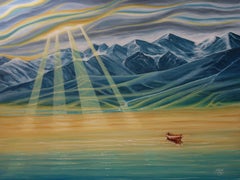
This painting captures a tranquil scene where a body of water reflects the sky. The muted, distant horizon suggests an endless expanse, inviting contemplation...

Category

21st Century and Contemporary Expressionist Art
Materials

Oil

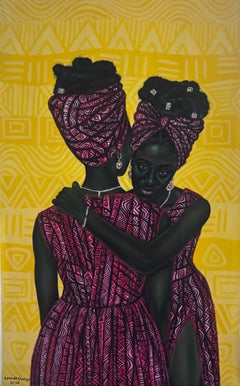
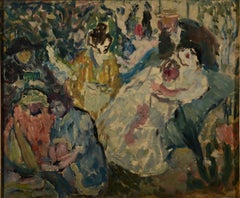
Ties That Binds Us 1 - 21st Century, Contemporary, Portrait Painting, Oil, Women

Ties That Binds Us 1 - 21st Century, Contemporary, Portrait Painting, Oil, Women

Located in Ibadan, Oyo

Shipping Procedure Ships in a well-protected tube from Nigeria This work is unique, not a print or other type of copy. Accompanied by a Certificate of Authenticity (Issued by the Gal...

Category

21st Century and Contemporary Expressionist Art
Materials

Canvas, Oil

Blue Testament 3 -21st Century, Contemporary, Figurative Portrait, Modern Africa

Blue Testament 3 -21st Century, Contemporary, Figurative Portrait, Modern Africa

Located in Ibadan, Oyo

Shipping Procedure Ships in a well-protected tube from Nigeria This work is unique, not a print or other type of copy. Accompanied by a Certificate of Authenticity. About Artist Dan...

Category

21st Century and Contemporary Expressionist Art
Materials

Canvas, Oil, Acrylic

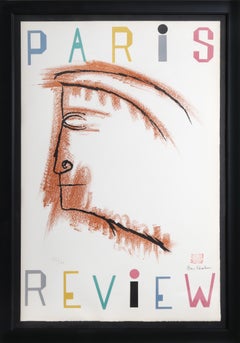
Marc Chagall, The Green Eiffel Tower, from Chagall, 1957

Marc Chagall, The Green Eiffel Tower, from Chagall, 1957

By Marc Chagall

Located in Southampton, NY

This exquisite lithograph by Marc Chagall (1887–1985), titled La Tour Eiffel Verte (The Green Eiffel Tower), from the album Chagall, originates from the 1957 edition published by Mae...

Category

1950s Expressionist Art
Materials

Lithograph

H.O. Miethke Das Werk folio "Pond in the Morning" collotype print

H.O. Miethke Das Werk folio "Pond in the Morning" collotype print

DAS WERK GUSTAV KLIMTS, a portfolio of 50 prints, ten of which are multicolor collotypes on chine colle paper laid down on hand-made heavy cream wove paper with deckled edges; under ...

Category

Early 1900s Expressionist Art
Materials

Paper

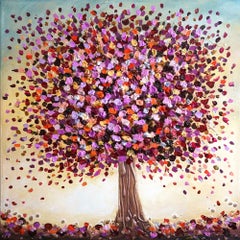
Martenita Tribute to Picasso Murano Glass Sculpture

Martenita Tribute to Picasso Murano Glass Sculpture

By Walter Furlan

Located in Lake Worth Beach, FL

Martenita Omaggio To Picasso, Signed, artist logo stamp, and title. Walter Furlan was born (1931-2018) in Chioggia, a small town near Venice. He started to work in a furnace calle...

Category

Early 2000s Expressionist Art
Materials

Glass, Blown Glass

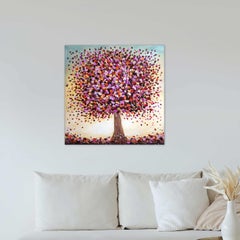
She Still Loves to Feel the Pages

She Still Loves to Feel the Pages

By Todd White

Located in Toronto, ON

23" x 22.75" Unframed Hand Embellished Giclée on Paper of 14 Hand Signed by Todd White COA Included Todd white captures restaurant, night and Hollywood scenes with contrasting color...

Category

2010s Expressionist Art
Materials

Giclée

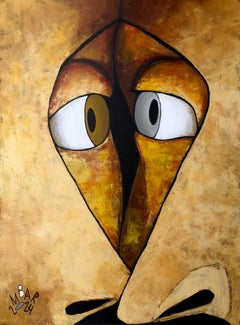
In The Stillness of Thoughts -21st Century, Expressionist Modern, Child, Balloon

In The Stillness of Thoughts -21st Century, Expressionist Modern, Child, Balloon

Located in Ibadan, Oyo

Shipping Procedure Ships in a well-protected tube from Nigeria This work is unique, not a print or other type of copy. Accompanied by a Certificate of Authenticity (Issued by the Gal...

Category

21st Century and Contemporary Expressionist Art
Materials

Canvas, Acrylic

Earth Angel, Painting, Acrylic on Canvas

Earth Angel, Painting, Acrylic on Canvas

By Dara Daniel

Located in Yardley, PA

My angel painting is a 40 by 30-inch, gallery-wrapped Acrylic on Canvas and a personal vision from my imagination. It depicts what I feel an angel to be, mystical and vaguely present...

Category

2010s Expressionist Art
Materials

Acrylic

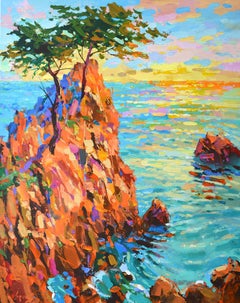
"Yellow sunset" seascape in oil of Volskya Lilyа

"Yellow sunset" seascape in oil of Volskya Lilyа

Located in Zofingen, AG

Yellow sunset" seascape in oil of Volsky Lily. Inspiring unforgettable view of the sea. He has thousands of them.And everyone is special. Everyone is unique. The painting is painted ...

Category

2010s Expressionist Art
Materials

Canvas, Oil

I have no time, Painting, Oil on Canvas

I have no time, Painting, Oil on Canvas

Located in Yardley, PA

Original oil on canvas on wooden stretchers, signed on the front. Certificate of authenticity included. :: Painting :: Expressionism :: This piece comes with an official certificate ...

Category

2010s Expressionist Art
Materials

Oil

Kostume, Plakate, und Dekorationen, "Anne Lemans"

Kostume, Plakate, und Dekorationen, "Anne Lemans"

By Walter Schnackenberg

Located in Palm Beach, FL

Walter Schnackenberg’s style changed several times during his long and successful career. Having studied in Munich, the artist traveled often to Paris where he fell under the spell of the Henri de Toulouse-Lautrec’s colorful and sensuous posters depicting theatrical and decadent subjects. Schnackenberg became a regular contributor of similar compositions to the German magazines Jugend and Simplicissimus before devoting himself to the design of stage scenery and costumes. In the artist’s theatrical work, his mastery of form, ornamentation, and Orientalism became increasingly evident. He excelled at combining fluid Art Nouveau outlines, with spiky Expressionist passages, and the postures and patterns of the mysterious East. In his later years, Schnackenberg explored the unconscious, using surreal subject matter and paler colors that plainly portrayed dreams and visions, some imbued with political connotations. His drawings, illustrations, folio prints, and posters are highly sought today for their exceedingly imaginative qualities, enchanting subject matter, and arresting use of color. SCHNACKENBERG: KOSTUME, PLAKATE UND DEKORATIONEN, a cardboard bound art book consisting of 43 prints of work by Walter Schnackenberg, 30 of which are color lithographs that are signed and some are titled and dated in the plate, as well as black and white prints and photographs with accompanying text by Oskar Bie; lithographs printed at Kunstanstalt Oskar Consee in Munich, other images printed by Gesellschaft Pick & Co. in Munich, the text and cover with color images by Schnackenberg front and verso printed by R. Oldenbourg in Munich; published by Musarion Verlag, Munich, 1920. The majority of Walter Schnackenberg’s artistic output was destroyed by bomb attacks in Munich in 1944. The highly publicized 2013 auction in New York of the recovered pre-war poster collection once belonging to German poster aficionado, Hans Sachs has reintroduced the world to Walter Schnackenberg’s graphic genius and priceless ephemeral art from a lost era. Besides the museum world, designer Karl Lagerfeld is one of the most prodigious collectors of Schnackenberg. Flipping through the pages of Kostume, Plakate und Dekorationen, it becomes quite clear that Schnackenberg’s collection is ground zero at the crossroads of early modern fashion where the cult of celebrity meets up with dance, music, theater and cabaret, film and the graphic medium. Berlin and Munich under Germany’s Weimar Republic in the first quarter of the 20th century produced just the atmosphere to feed this burgeoning industry. Rising inflation sparked a recklessness to live large for the moment and heightened a desire for escapism. An influx of Indian and East Asian dancers and musicians added to the artsy bohemian cultural mix. A new decadence and tolerance resulted. Film boldly featured provocative subject matter. Cabarets became popular venues giving rise to the demi-monde in which people from all social stations mixed more freely in a thriving underground economy and culture where there was a blurring of boundaries and of social codes. Noted art historian and cultural doyen, Oskar Bie astutely observes in his introduction to Schnackenberg’s publication that what unites the images is fantasy and advertisement. Schnackenberg uses the eye as an instrument to brilliantly construct and convey this double message. His personages never directly confront the viewer. Their eyes gaze off in the distance like those of the screenplayer and film star Hedamaria Scholz in Schnackenberg’s “Die Rodelhexe” movie poster. Their eyes follow the path of a dance composition or become a transfixed and ogling male gaze such as the iconic 1911 Odeon Casino...

Category

1910s Expressionist Art
Materials

Lithograph

What Lies Ahead, Painting, Oil on Canvas

What Lies Ahead, Painting, Oil on Canvas

By Debbie Pacheco

Located in Yardley, PA

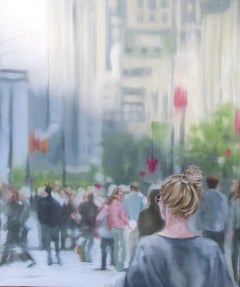
Heading into the crowd we see what lies ahead and where the crowd in front of us has been. It's a memory, a blur for them for us there is time to take notice, see things clearly, not...

Category

2010s Expressionist Art
Materials

Oil

Kostume, Plakate, und Dekorationen, "Shadows & Light"

Kostume, Plakate, und Dekorationen, "Shadows & Light"

By Walter Schnackenberg

Located in Palm Beach, FL

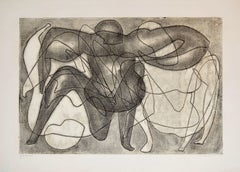
Walter Schnackenberg’s style changed several times during his long and successful career. Having studied in Munich, the artist traveled often to Paris where he fell under the spell of the Henri de Toulouse-Lautrec’s colorful and sensuous posters depicting theatrical and decadent subjects. Schnackenberg became a regular contributor of similar compositions to the German magazines Jugend and Simplicissimus before devoting himself to the design of stage scenery and costumes. In the artist’s theatrical work, his mastery of form, ornamentation, and Orientalism became increasingly evident. He excelled at combining fluid Art Nouveau outlines, with spiky Expressionist passages, and the postures and patterns of the mysterious East. In his later years, Schnackenberg explored the unconscious, using surreal subject matter and paler colors that plainly portrayed dreams and visions, some imbued with political connotations. His drawings, illustrations, folio prints, and posters are highly sought today for their exceedingly imaginative qualities, enchanting subject matter, and arresting use of color. SCHNACKENBERG: KOSTUME, PLAKATE UND DEKORATIONEN, a cardboard bound art book consisting of 43 prints of work by Walter Schnackenberg, 30 of which are color lithographs that are signed and some are titled and dated in the plate, as well as black and white prints and photographs with accompanying text by Oskar Bie; lithographs printed at Kunstanstalt Oskar Consee in Munich, other images printed by Gesellschaft Pick & Co. in Munich, the text and cover with color images by Schnackenberg front and verso printed by R. Oldenbourg in Munich; published by Musarion Verlag, Munich, 1920. The majority of Walter Schnackenberg’s artistic output was destroyed by bomb attacks in Munich in 1944. The highly publicized 2013 auction in New York of the recovered pre-war poster collection once belonging to German poster aficionado, Hans Sachs has reintroduced the world to Walter Schnackenberg’s graphic genius and priceless ephemeral art from a lost era. Besides the museum world, designer Karl Lagerfeld is one of the most prodigious collectors of Schnackenberg. Flipping through the pages of Kostume, Plakate und Dekorationen, it becomes quite clear that Schnackenberg’s collection is ground zero at the crossroads of early modern fashion where the cult of celebrity meets up with dance, music, theater and cabaret, film and the graphic medium. Berlin and Munich under Germany’s Weimar Republic in the first quarter of the 20th century produced just the atmosphere to feed this burgeoning industry. Rising inflation sparked a recklessness to live large for the moment and heightened a desire for escapism. An influx of Indian and East Asian dancers and musicians added to the artsy bohemian cultural mix. A new decadence and tolerance resulted. Film boldly featured provocative subject matter. Cabarets became popular venues giving rise to the demi-monde in which people from all social stations mixed more freely in a thriving underground economy and culture where there was a blurring of boundaries and of social codes. Noted art historian and cultural doyen, Oskar Bie astutely observes in his introduction to Schnackenberg’s publication that what unites the images is fantasy and advertisement. Schnackenberg uses the eye as an instrument to brilliantly construct and convey this double message. His personages never directly confront the viewer. Their eyes gaze off in the distance like those of the screenplayer and film star Hedamaria Scholz in Schnackenberg’s “Die Rodelhexe” movie poster. Their eyes follow the path of a dance composition or become a transfixed and ogling male gaze such as the iconic 1911 Odeon Casino poster...
Category

1910s Expressionist Art
Materials

Lithograph

"Artist Painting Still Life" Expressionistic Style Oil Painting on Canvas

"Artist Painting Still Life" Expressionistic Style Oil Painting on Canvas

By Michael Baxte

Located in New York, NY

A strong modernist oil painting depicted in the Mid Centruy by Russian painter Michael Baxte. Mostly known for his abstracted figures on canvas or street scenes, this piece is a wonderful representation of his interior scenes with expressive use of color, shape, and form. Later in his career, Baxte explores Expressionism, infusing both European and North American stylistic trends. This painting measures 32 x 25.5 inches Michael Posner Baxte was born in 1890 in the small town of Staroselje Belarus, Russia. For the first half of the 19th century, it was a center of the Chabad movement of Hasidic Jews, but this group was gone by the middle of the 19th century. By the time the Baxte family immigrated to the United States at the beginning of the 20th century, the Jewish population numbered only on the hundreds. The native language of the Baxte family was Yiddish. It is likely that the death of Michael Baxte’s father triggered the family’s immigration. Three older brothers arrived in New York between 1903 and 1905. Michael and his mother, Rebecca, arrived in 1907. By 1910 Michael, his mother, and brother, Joseph, were living in New Orleans and may have spent some time on a Louisiana plantation...

Category

Mid-20th Century Expressionist Art

Materials

Oil, Canvas

Lübeck - German Expressionism Lithograph

Lübeck - German Expressionism Lithograph

Located in London, GB

This original lithograph is hand signed in pencil b artist "Ulrich Hubner" at the lower left cotner. It is also signed and dated in the plate. The work is hand numbered in pencil No...

Category

1910s Expressionist Art
Materials

Lithograph

A Shady Table

A Shady Table

By Todd White

Located in Toronto, ON

17" x 40" Unframed Limited Edition Giclee with Hand Embellishment of 195 Hand Signed by Todd White Todd white captures restaurant, night and Hollywood scenes with contrasting colors...

Category

2010s Expressionist Art
Materials

Giclée

Big Head  - Offset and Lithograph by G. Grosz - 1923

Big Head - Offset and Lithograph by G. Grosz - 1923

By George Grosz

Located in Roma, IT

Big head from Ecce Homo is an original offset lithograph, realized by George Grosz. The artwork is the plate n. 15 from the porfolio Ecce Homo published between 1922/1923,edition of...

Category

1920s Expressionist Art

Materials

Lithograph, Offset

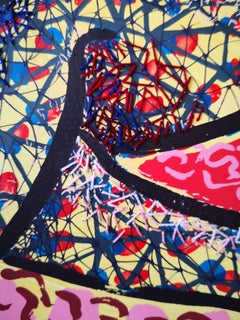
Musical Figurative Abstract

Musical Figurative Abstract

By Michael William Eggleston

Located in Soquel, CA

Bold, bright and earthy colors all play a role in this figurative abstract by Michael William Eggleston (American, 20th c.). Signed with monogram and dated "MWE '01" lower right. Unframed. Image, 42"H x 42"W. A musician is serenading a woman in her bath with the San Francisco cityscape...

Category

1990s Expressionist Art
Materials

Canvas, Oil

Georges Braque (French, 1882-1963) - Nature Morte au Pot

Georges Braque (French, 1882-1963) - Nature Morte au Pot

By Georges Braque

Located in Dallas, TX

Georges Braque (French, 1882-1963) - Nature Morte au Pot Signed ‘G Braque' (underlined) bottom right Oil on canvas Canvas: 18 x 21.75 in. (45.7 x 55.2cm) Framed: 26 x 30 inches Executed circa 1959 Provenance: Galerie Beyeler, Basel, Switzerland. Galerie de l'Élysée (Alex Maguy...

Category

1950s Expressionist Art
Materials

Paint

Kostume, Plakate, und Dekorationen, "Läderlappen"

Kostume, Plakate, und Dekorationen, "Läderlappen"

By Walter Schnackenberg

Located in Palm Beach, FL

Walter Schnackenberg’s style changed several times during his long and successful career. Having studied in Munich, the artist traveled often to Paris where he fell under the spell of the Henri de Toulouse-Lautrec’s colorful and sensuous posters depicting theatrical and decadent subjects. Schnackenberg became a regular contributor of similar compositions to the German magazines Jugend and Simplicissimus before devoting himself to the design of stage scenery and costumes. In the artist’s theatrical work, his mastery of form, ornamentation, and Orientalism became increasingly evident. He excelled at combining fluid Art Nouveau outlines, with spiky Expressionist passages, and the postures and patterns of the mysterious East. In his later years, Schnackenberg explored the unconscious, using surreal subject matter and paler colors that plainly portrayed dreams and visions, some imbued with political connotations. His drawings, illustrations, folio prints, and posters are highly sought today for their exceedingly imaginative qualities, enchanting subject matter, and arresting use of color. SCHNACKENBERG: KOSTUME, PLAKATE UND DEKORATIONEN, a cardboard bound art book consisting of 43 prints of work by Walter Schnackenberg, 30 of which are color lithographs that are signed and some are titled and dated in the plate, as well as black and white prints and photographs with accompanying text by Oskar Bie; lithographs printed at Kunstanstalt Oskar Consee in Munich, other images printed by Gesellschaft Pick & Co. in Munich, the text and cover with color images by Schnackenberg front and verso printed by R. Oldenbourg in Munich; published by Musarion Verlag, Munich, 1920. The majority of Walter Schnackenberg’s artistic output was destroyed by bomb attacks in Munich in 1944. The highly publicized 2013 auction in New York of the recovered pre-war poster collection once belonging to German poster aficionado, Hans Sachs has reintroduced the world to Walter Schnackenberg’s graphic genius and priceless ephemeral art from a lost era. Besides the museum world, designer Karl Lagerfeld is one of the most prodigious collectors of Schnackenberg. Flipping through the pages of Kostume, Plakate und Dekorationen, it becomes quite clear that Schnackenberg’s collection is ground zero at the crossroads of early modern fashion where the cult of celebrity meets up with dance, music, theater and cabaret, film and the graphic medium. Berlin and Munich under Germany’s Weimar Republic in the first quarter of the 20th century produced just the atmosphere to feed this burgeoning industry. Rising inflation sparked a recklessness to live large for the moment and heightened a desire for escapism. An influx of Indian and East Asian dancers and musicians added to the artsy bohemian cultural mix. A new decadence and tolerance resulted. Film boldly featured provocative subject matter. Cabarets became popular venues giving rise to the demi-monde in which people from all social stations mixed more freely in a thriving underground economy and culture where there was a blurring of boundaries and of social codes. Noted art historian and cultural doyen, Oskar Bie astutely observes in his introduction to Schnackenberg’s publication that what unites the images is fantasy and advertisement. Schnackenberg uses the eye as an instrument to brilliantly construct and convey this double message. His personages never directly confront the viewer. Their eyes gaze off in the distance like those of the screenplayer and film star Hedamaria Scholz in Schnackenberg’s “Die Rodelhexe” movie poster. Their eyes follow the path of a dance composition or become a transfixed and ogling male gaze such as the iconic 1911 Odeon Casino poster...

Category

1910s Expressionist Art
Materials

Lithograph

Expressionistic landscape oil painting 'Colors in the Breeze IV'

Expressionistic landscape oil painting 'Colors in the Breeze IV'

By Ken Elliott

Located in White Plains, NY

Available at Madelyn Jordon Fine Art. 'Colors in the Breeze IV' 2023 by American artist, Ken Elliott. Oil on canvas, 36 x 36 in. / Frame: 37.75 x 37.75 in. This painting of a forest incorporates a palette of colors in green, purple, yellow, pink, and blue. Framed in a gold painted frame. Colorado based artist Ken Elliott, focuses on the western landscape and its rich store of ideas and inspiration. Painting rural scenery, the artist does not try to recreate nature or attempt storytelling but instead, wields color boldly, creating vibrant, contemporary landscapes that are both animated and peaceful. Early in his career, he was a student of Wolf Kahn, who inspired his work. Since 1988, Elliott’s work has been exhibited in numerous galleries nationwide. His work is collected in corporate art collections such as Hewlett Packard...

Category

2010s Expressionist Art
Materials

Canvas, Oil

Woven Identities 10 - 21st Century, Contemporary, Figurative Portrait, Africa

Woven Identities 10 - 21st Century, Contemporary, Figurative Portrait, Africa

Located in Ibadan, Oyo

Woven Identities is a body of work that explores the intersection of indigenous African heritage and modern global culture. In these paintings, I focus on hairstyle, tribal marks, dr...

Category

21st Century and Contemporary Expressionist Art
Materials

Canvas, Oil, Acrylic

"White dream"
"White dream"

"White dream"

Located in Edinburgh, GB

As a child, I really loved dogs. I liked that I could play with them, stroke them, hug them.. I also loved lying on the grass and watching the birds fly. But I was very sorry that I ...

Category

21st Century and Contemporary Expressionist Art
Materials

Canvas, Oil

Dream Mystique
Dream Mystique

Dream Mystique

By Wallace Bassford

Located in Lake Worth Beach, FL

Dream Mystique Artist signed and titled, new frame canvas 24x20 Wallace Bassford was an American painter and illustrator, born in 1900 in St. Louis Missouri, he attended the St. Loui...

Category

1970s Expressionist Art
Materials

Canvas, Oil

Expressionist art for sale on 1stDibs.
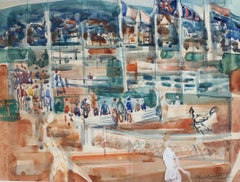
Find a wide variety of authentic Expressionist art available for sale on 1stDibs. Works in this style were very popular during the 21st Century and Contemporary, but contemporary artists have continued to produce works inspired by this movement. If you’re looking to add art created in this style to introduce contrast in an otherwise neutral space in your home, the works available on 1stDibs include elements of orange, blue, purple, green and other colors. Many Pop art paintings were created by popular artists on 1stDibs, including Iryna Kastsova, George Grosz, Stephen Basso, and Marc Chagall. Frequently made by artists working with Paint, and Oil Paint and other materials, all of these pieces for sale are unique and have attracted attention over the years. Not every interior allows for large Expressionist art, so small editions measuring 1 inches across are also available.