Expressionist Art

EXPRESSIONIST STYLE

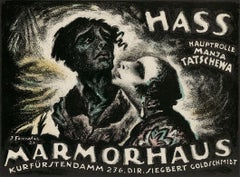
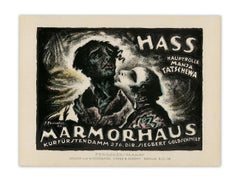
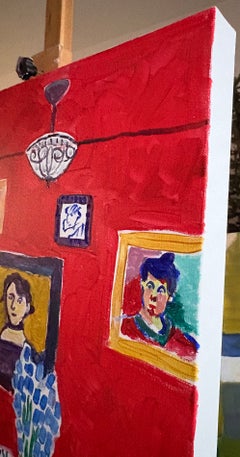
While “expressionist” is used to describe any art that avoids naturalism and instead employs a bold use of flattened forms and intense brushwork, Expressionist art formally describes early-20th-century work from Europe that drew on Symbolism and confronted issues such as urbanization and capitalism. Expressionist artists experimented in paintings and prints with skewed perspectives, abstraction and unconventional, bright colors to portray how isolating and anxious the world felt rather than how it appeared. 

Between 1905 and 1920, Austrian and German artists, in particular, were inspired by Postimpressionists such as Paul Gauguin and Vincent van Gogh in their efforts to strive for a new authenticity in their work. In its geometric patterns and decorative details, Expressionist art was also marked by eclectic sources like German and Russian folk art as well as tribal art from Africa and Oceania, which the movement’s practitioners witnessed at museums and world’s fairs.

Groups of artists came together to share and promote the themes now associated with Expressionism, such as Die Brücke (The Bridge) in Dresden, which included Erich Heckel, Ernst Ludwig Kirchner and Karl Schmidt-Rottluff and investigated alienation and the dissolution of society in vivid color. In Munich, Der Blaue Reiter (The Blue Rider), a group led by Wassily Kandinsky and Franz Marc, instilled Expressionism with a search for spiritual truths. In his iconic painting The Scream, prolific Norwegian painter Edvard Munch conveyed emotional turmoil through his depiction of environmental elements, such as the threatening sky.

Expressionism shifted around the outbreak of World War I, with artists using more elements of the grotesque in reaction to the escalation of unrest and violence. Printmaking was especially popular, as it allowed artists to widely disseminate works that grappled with social and political issues amid this time of upheaval. Although the art movement ended with the rise of Nazi Germany, where Expressionist creators were labeled “degenerate,” the radical ideas of these artists would influence Neo-Expressionism that emerged in the late 1970s with painters like Jean-Michel Basquiat and Francesco Clemente.

​​Find a collection of authentic Expressionist paintings, sculptures, prints and more art on 1stDibs.

to
1,566
1,918
1,077
1,052
856
935
Overall Width
to
Overall Height
to
1
47
2,696
3,101
99
130
361
109
78
171
396
267
257
182
1
116,602
63,506
56,320
28,296
14,612
9,483
6,633
4,182
3,139
2,476
2,311
2,136
600
3,151
1,949
644
2,530
1,570
1,562
981
726
426
405
385
367
320
292
272
265
228
201
154
137
110
108
98
3,644
2,165
1,882
1,819
1,361
303
86
72
47
46
1,181
420
2,929
2,115
Style: Expressionist
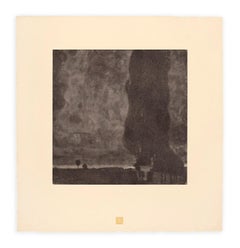
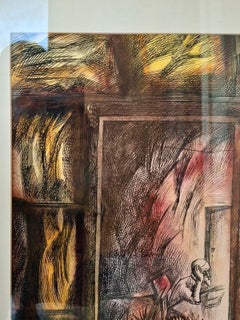
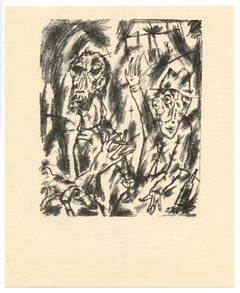
EVENING (SELF PORTRAIT with the Battenbergs)

EVENING (SELF PORTRAIT with the Battenbergs)

By Max Beckmann

Located in Santa Monica, CA

MAX BECKMANN (German 1884 - 1950) EVENING (Self-Portrait with the Battenbergs) 1916, (Hofmaier 90: Gallwitz 67) Etching and drypoint, Plate 10 from the portfolio Gesichter (Faces)...

Category

1910s Expressionist Art

Materials

Drypoint, Etching

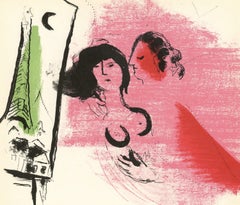
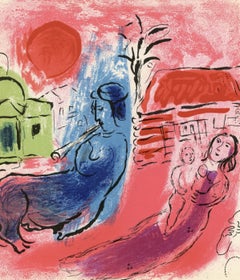
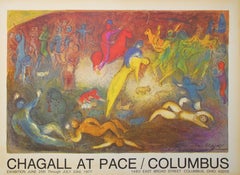
Marc Chagall, Blue Horse with Couple, from Derriere le Miroir, 1982

Marc Chagall, Blue Horse with Couple, from Derriere le Miroir, 1982

By Marc Chagall

Located in Southampton, NY

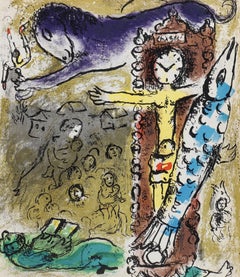
This exquisite lithograph by Marc Chagall (1887–1985), titled Cheval bleu au couple (Blue Horse with Couple), originates from the historic 1982 folio Derriere le Miroir, No. 250, Hommage a Aime et Marguerite Maeght (Tribute to Aime and Marguerite Maeght). Published by Maeght Editeur, Paris, under the direction of Aime Maeght, and printed by Imprimerie Moderne du Lion, Paris, this vibrant composition reflects Chagall’s lyrical fusion of color, dream, and devotion. In Cheval bleu au couple, ethereal figures and a radiant blue horse float within a luminous space of poetic imagination, evoking love, memory, and transcendence. The image captures the artist’s timeless ability to unite fantasy and emotion within the expressive language of modernism. Executed on velin paper, this lithograph measures 15 x 11 inches (38.1 x 27.9 cm). As issued, it is unsigned and unnumbered, consistent with the authorized publication format. The edition exemplifies Chagall’s mastery of color lithography and his lifelong exploration of faith, folklore, and the human spirit. Artwork Details: Artist: Marc Chagall (1887–1985) Title: Cheval bleu au couple (Blue Horse with Couple), from Derriere le Miroir, No. 250, Hommage a Aime et Marguerite Maeght (Tribute to Aime and Marguerite Maeght), 1982 Medium: Lithograph on velin paper Dimensions: 15 x 11 inches (38.1 x 27.9 cm) Inscription: Unsigned and unnumbered, as issued Date: 1982 Publisher: Maeght Editeur, Paris Printer: Imprimerie Moderne du Lion, Paris Catalogue raisonne references: Chagall, Marc, et al. Chagall Lithographe VI, 1980–1985. Andre Sauret, Editeur, 1986, illustration 993. Cramer, Patrick, and Meret Meyer. Marc Chagall: Catalogue Raisonne Des Livres Illustres. P. Cramer ed., 1995, illustration 113. Condition: Well preserved, consistent with age and medium Provenance: From the 1982 folio Derriere le Miroir, No. 250, published by Maeght Editeur, Paris Notes: Excerpted from the folio (translated from French), This special issue of Derriere le Miroir was designed and defined by Aime Maeght in the fall of 1980. He envisioned its publication as a celebration with which artists and writers published since 1946 were to be associated. He also chose Francois Chapon, president of the Reverdy Committee, to write the presentation. This Derriere le Miroir number 250 took the form, after its disappearance on September 5, 1981, of a tribute to Aime Maeght and his wife Marguerite Maeght who died four years earlier. 24 artists agreed to create an original graphic work for this issue which includes the general table of all issues as well as excerpts from texts by 32 writers. Finished printing on June 2, 1982 on the presses of the l'Imprimerie moderne du Lion in Paris. CL examples were printed on velin d'Arches, numbered from I to CL, and some non-commercial examples constituting the original edition. About the Publication: Derriere le Miroir (translated as "Behind the Mirror") was an iconic French art periodical published from 1946 to 1982 by Maeght Editeur, one of the most influential art publishers of the 20th century. Founded by Aime Maeght in Paris, the publication was conceived as a visual and literary collaboration between leading modern artists, poets, and critics. Each issue functioned as both an exhibition catalogue and a work of art in itself—featuring original lithographs printed directly from the artists' stones or plates, alongside essays, poems, and critical commentary. Over the course of 36 years, Derriere le Miroir produced more than 250 issues and showcased an extraordinary roster of artists including Henri Matisse, Marc Chagall, Joan Miro, Georges Braque, Alexander Calder, Fernand Leger, Pierre Bonnard, Alberto Giacometti, Eduardo Chillida, Ellsworth Kelly, Francis Bacon, Paul Rebeyrolle, Claude Garache, Antoni Tapies, Bram van Velde, Pierre Alechinsky, Pol Bury, Shusaku Arakawa, and Gerard Titus-Carmel. Printed in the ateliers of Mourlot, Arte, and Imprimerie Moderne du Lion, the periodical set new standards for quality in color lithography, combining fine art printing with elegant typography and poetic text. Beyond its visual brilliance, Derriere le Miroir also became a cultural chronicle of postwar European modernism. Each issue coincided with exhibitions held at Galerie Maeght, providing a collectible and widely accessible record of groundbreaking shows. Its integration of image, text, and philosophy created a dialogue between art and literature that elevated the modern art book to new aesthetic heights. Today, Derriere le Miroir remains one of the most sought-after and historically significant art publications, prized by collectors and scholars alike for its craftsmanship, influence, and its role in defining the visual language of 20th-century modernism. The Maeght Foundation in Saint-Paul-de-Vence continues to honor this legacy through exhibitions and archival preservation of the series, affirming Derriere le Miroir's enduring place in the history of modern art and fine art publishing. About the Artist: Marc Chagall (1887–1985) was a Belarus-born French painter, printmaker, and designer whose visionary use of color and poetic symbolism made him one of the most beloved and influential artists of the 20th century. Rooted in the rich imagery of his Jewish heritage and childhood in Vitebsk, Chagall’s dreamlike compositions fused memory, folklore, faith, and romance with the expressive innovations of modern art. His work evolved alongside and in dialogue with the great modern masters—Pablo Picasso, Henri Matisse, Alexander Calder, Salvador Dali, Joan Miro, Georges Braque, Wassily Kandinsky, Marcel Duchamp, and Man Ray—artists who, like Chagall, redefined artistic language for a new century. Spanning painting, printmaking, stained glass, ceramics, stage design, and illustration, Chagall’s career reflected both his deep spirituality and his boundless imagination. His works are held in major museum collections worldwide, including the Museum of Modern Art, the Guggenheim, the Tate, and the Centre Pompidou. The highest price ever paid for a Marc Chagall artwork is approximately $28.5 million USD, achieved in 2017 at Sotheby’s New York for Les Amoureux (1928). Marc Chagall Cheval bleu au couple, Marc Chagall lithograph, Chagall Derriere le Miroir, Chagall Maeght...

Category

1980s Expressionist Art

Materials

Lithograph

Mushrooms in the Forest" is an oil painting by Volskaya Liliуa.

Mushrooms in the Forest" is an oil painting by Volskaya Liliуa.

Located in Zofingen, AG

"Mushrooms in the Forest" is an oil painting by Volskaya Liliуa. Have you been to a forest where there are so many trees that it becomes dark under their canopy? How does it feel? I ...

Category

2010s Expressionist Art

Materials

Canvas, Oil

"Krankes Mädchen" original woodcut

"Krankes Mädchen" original woodcut

By Erich Heckel

Located in Henderson, NV

Medium: original woodcut. Printed in 1920 for the Deutsche Graphiker der Gegenwart portfolio, and published in Leipzig by Klinkhardt & Biermann in an edition of 500. Catalogue re...

Category

1920s Expressionist Art

Materials

Woodcut

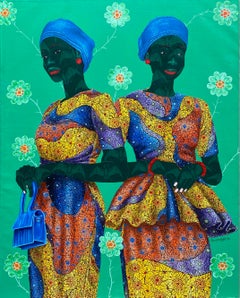
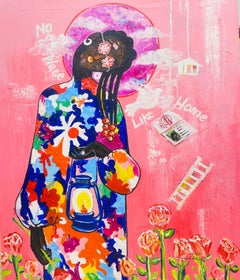
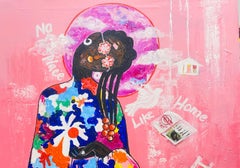
Don't Be Perfect, Be Real -21st Century, Contemporary, Figurative Portrait Women

Don't Be Perfect, Be Real -21st Century, Contemporary, Figurative Portrait Women

Located in Ibadan, Oyo

Shipping Procedure Ships in a well-protected tube from Nigeria This work is unique, not a print or other type of copy. Accompanied by a Certificate of Authenticity. About Artist Eli...

Category

21st Century and Contemporary Expressionist Art

Materials

Canvas, Oil, Acrylic

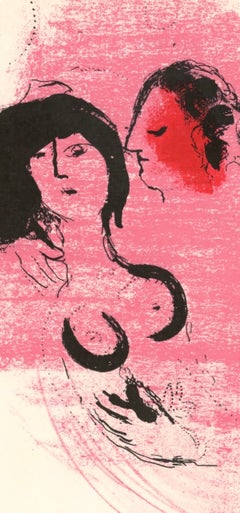
Marc Chagall, The Lovers under the Moon, from Tales of Boccaccio, 1950

Marc Chagall, The Lovers under the Moon, from Tales of Boccaccio, 1950

By Marc Chagall

Located in Southampton, NY

This exquisite lithograph by Marc Chagall (1887–1985), titled Les Amoureux sous la Lune (The Lovers under the Moon), from Contes de Boccace, peintures du manuscrit des ducs de Bourgogne, Bibliotheque de l'Arsenal (Ms. no. 5193) (Tales of Boccaccio, Paintings from the Manuscript of the Dukes of Burgundy, Library of the Arsenal), Lavis de Marc Chagall, from Verve, Revue Artistique et Litteraire, Vol. VI, No. 24, originates from the 1950 issue published by Editions de la revue Verve, Paris, under the direction of Teriade, Editeur, Paris, and printed by Draeger Freres, Maitres-Imprimeurs, Paris, 1950. This tender and poetic composition exemplifies Chagall’s lifelong fascination with love, dream, and transcendence. Les Amoureux sous la Lune radiates intimacy and serenity, its nocturnal palette and floating forms capturing the timeless romance between lovers united under the moon’s luminous gaze. Executed as a lithograph on velin du Marais paper, this work measures 14 x 10.5 inches. Unsigned and unnumbered as issued. The edition exemplifies the exquisite craftsmanship of the Draeger Freres atelier, celebrated for its precision and tonal richness in printing fine artworks. Artwork Details: Artist: Marc Chagall (1887–1985) Title: Les Amoureux sous la Lune (The Lovers under the Moon), from Contes de Boccace (Tales of Boccaccio), Verve, Revue Artistique et Litteraire, Vol. VI, No. 24, 1950 Medium: Lithograph on velin du Marais paper Dimensions: 14 x 10.5 inches Inscription: Unsigned and unnumbered as issued Date: 1950 Publisher: Editions de la revue Verve, Paris, under the direction of Teriade, Editeur, Paris Printer: Draeger Freres, Maitres-Imprimeurs, Paris Condition: Well preserved, consistent with age and medium Provenance: From Verve, Revue Artistique et Litteraire, Vol. VI, No. 24, published by Editions de la revue Verve, Paris, 1950 Notes: Excerpted from the album (translated from French), This Verve issue contains the lavis that Marc Chagall composed to illustrate Tales of Boccaccio's Decameron and the paintings on the same theme of the Manuscript of the Dukes of Burgundy preserved in the Arsenal Library. Marc Chagall executed the cover of this work which was completed printing on April 20, 1950 on the presses of Maitres-Imprimeurs, the Draeger Freres. About the Publication: This 1950 issue of Verve, Revue Artistique et Litteraire, titled Contes de Boccace (Tales of Boccaccio), was devoted to the great Italian humanist Giovanni Boccaccio and illuminated manuscripts from the 15th century, interpreted and revived through the eyes of modern artists. Under the artistic direction of Teriade, Marc Chagall contributed a series of lyrical paintings and lavis that reimagined these Renaissance themes with his signature dreamlike color, tenderness, and spiritual symbolism. The issue juxtaposed Chagall’s contemporary vision with the rich heritage of medieval illumination, bridging centuries of artistic imagination. Printed by the master craftsmen of Draeger Freres, the publication stands as a testament to Verve’s tradition of uniting art, literature, and history in one luxurious volume that celebrates the continuity of human creativity from the Middle Ages to modernity. About the Artist: Marc Chagall (1887–1985) was a Belarus-born French painter, printmaker, and designer whose visionary imagination, radiant color, and deeply poetic symbolism made him one of the most beloved and influential artists of the 20th century. Rooted in the imagery of his Jewish heritage and the memories of his childhood in Vitebsk, Chagall’s art wove together themes of faith, love, folklore, and fantasy with a dreamlike modern sensibility. His unique style—merging elements of Cubism, Fauvism, Expressionism, and Surrealism—defied categorization, transforming ordinary scenes into lyrical meditations on memory and emotion. Influenced by Russian icon painting, medieval religious art, and the modern innovations of artists such as Pablo Picasso, Henri Matisse, and Georges Braque, Chagall developed a profoundly personal visual language filled with floating figures, vibrant animals, musicians, and lovers that symbolized the transcendent power of imagination and love. During his early years in Paris, he became an integral part of the Ecole de Paris circle, forming friendships with Amedeo Modigliani, Fernand Leger, and Sonia Delaunay, and his creative spirit resonated with that of his peers and successors—Alexander Calder, Alberto Giacometti, Salvador Dali, Joan Miro, Wassily Kandinsky, Marcel Duchamp, and Man Ray—artists who, like Chagall, sought to push the boundaries of perception, emotion, and form. Over a prolific career that spanned painting, printmaking, stained glass, ceramics, and stage design, Chagall brought an unparalleled poetic sensibility to modern art, infusing even the most abstract subjects with human warmth and spiritual depth. His works are held in the most prestigious museums around the world, including the Museum of Modern Art, the Centre Pompidou, the Tate, and the Guggenheim, where they continue to inspire generations of artists and collectors. The highest price ever paid for a Marc Chagall artwork is approximately $28.5 million USD, achieved in 2017 at Sotheby’s New York for Les Amoureux (1928). Marc Chagall Les...

Category

1950s Expressionist Art
Materials

Lithograph

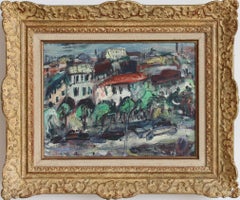
'The Port of Honfleur' by Julien Varlet (1958)

'The Port of Honfleur' by Julien Varlet (1958)

Located in London, GB

'The Port of Honfleur, France', oil on canvas, by Julien Varlet (1958). A vibrant and evocative harbour scene from the historic port city of Honfleur in Normandy, France. Colourful, ...

Category

1950s Expressionist Art
Materials

Canvas, Oil

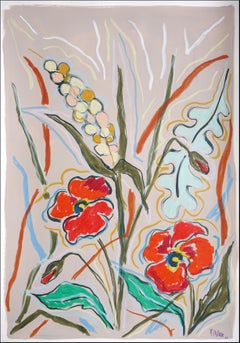
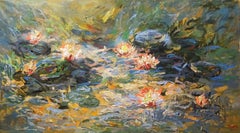
Flowers in the morning dew, Painting, Acrylic on Canvas

Flowers in the morning dew, Painting, Acrylic on Canvas

Located in Yardley, PA

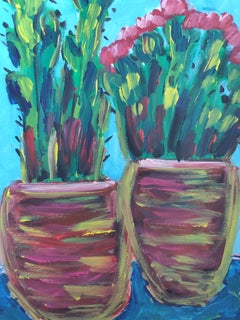
Flowers in the morning dew The most beautiful flowers are in the early morning. When the dawn just dawned, the petals began to gradually bloom, with the water lily, the lotus in th...

Category

2010s Expressionist Art

Materials

Acrylic

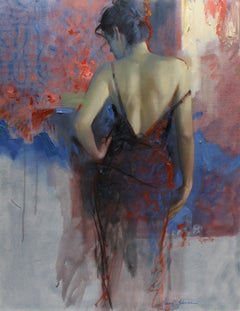
Away From The Lens 1 - 21st Century, Contemporary, Portrait, Oil, Women, Fashion

Away From The Lens 1 - 21st Century, Contemporary, Portrait, Oil, Women, Fashion

Located in Ibadan, Oyo

Shipping Procedure Ships in a well-protected tube from Nigeria This work is unique, not a print or other type of copy. Accompanied by a Certificate of Authenticity (Issued by the Gal...

Category

21st Century and Contemporary Expressionist Art

Materials

Canvas, Oil

"Begrüssung" original etching

"Begrüssung" original etching

By Käthe Kollwitz

Located in Henderson, NV

Medium: original etching. Catalogue reference: Klipstein 10. A very rich impression on cream wove paper of this Kollwitz etching, with plate tone. Plate size: 118 x 88mm (4 5/8 x 3 1...

Category

1890s Expressionist Art

Materials

Etching

Togetherness - 21st Century, Contemporary, Figurative Abstraction, Africa, Love

Togetherness - 21st Century, Contemporary, Figurative Abstraction, Africa, Love

Located in Ibadan, Oyo

Shipping Procedure Ships in a well-protected tube from Nigeria This work is unique, not a print or other type of copy. Accompanied by a Certificate of Authenticity. About Artist Ola...

Category

21st Century and Contemporary Expressionist Art

Materials

Canvas, Acrylic

"Stars" original lithograph

"Stars" original lithograph

By Wassily Kandinsky

Located in Henderson, NV

Medium: original lithograph. Printed in 1938 and published in Paris by Teriade for the art revue Verve (volume 1, number 2). Kandinsky was invited to contribute an original compositi...

Category

1930s Expressionist Art

Materials

Lithograph

Joelle de dos au coussin vert 1995 original lithograph by Jean Jansem handsigned

Joelle de dos au coussin vert 1995 original lithograph by Jean Jansem handsigned

By Jean Jansem

Located in Les Acacias GE, GE

Jean Jansem (1920-2013) Joelle de dos au coussin vert, 1995 Lithographie sur papier Arches Signée et justifiée 56 x 76 cm Album: La danse, 1999 Imprimeur: Arts-Litho, Paris Editeur ...

Category

Late 20th Century Expressionist Art

Materials

Lithograph

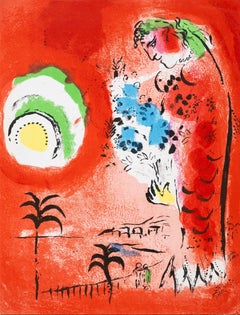
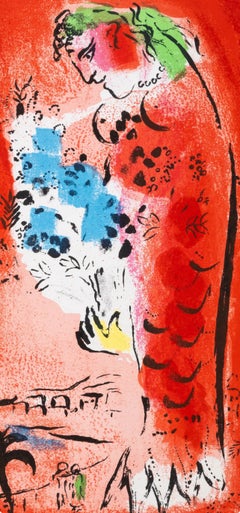
French Riviera : View of Cagnes - Lithograph, Mourlot

French Riviera : View of Cagnes - Lithograph, Mourlot

Located in Paris, IDF

Chaim SOUTINE (1893-1943) French Riviera : View of Cagnes Stone lithograph after a painting (Mourlot workshop) Unsigned On Arches vellum 50 x 65 cm (c. 20 x 26 inch) Excellent cond...

Category

1970s Expressionist Art

Materials

Lithograph

Hommage to Debussy: Contemporary Abstract Acrylic on Paper, 145x105 cm

Hommage to Debussy: Contemporary Abstract Acrylic on Paper, 145x105 cm

Located in Cotignac, FR

A large contemporary abstract expressionist acrylic on paper by French artist, Christian Manoury. Signed bottom right. Inspired by the wonderful music of Debussy, a beautifully ligh...

Category

21st Century and Contemporary Expressionist Art

Materials

Paper, Acrylic

Marc Chagall, Bercy Quay, from Derriere le miroir, 1954

Marc Chagall, Bercy Quay, from Derriere le miroir, 1954

By Marc Chagall

Located in Southampton, NY

This exquisite lithograph by Marc Chagall (1887–1985), titled Quai de Bercy (Bercy Quay), from the folio Derriere le miroir, No. 67–68, originates from the 1954 edition published by Maeght Editeur, Paris, and printed by Mourlot Freres, Paris, 1954. Quai de Bercy captures Chagall’s poetic vision of Paris as a dreamlike landscape where memory, color, and emotion converge. The work’s lyrical composition and radiant palette embody Chagall’s deep affection for the city that shaped his artistic identity, blending reality and reverie in perfect harmony. Executed as a lithograph on velin paper, this work measures 15 x 22 inches, with centerfold as issued. Unsigned and unnumbered as issued. The edition exemplifies the superb craftsmanship of Mourlot Freres, Paris. Artwork Details: Artist: Marc Chagall (1887–1985) Title: Quai de Bercy (Bercy Quay), from the folio Derriere le miroir, No. 67–68 Medium: Lithograph on velin paper Dimensions: 15 x 22 inches (38.1 x 55.88 cm), with centerfold as issued Inscription: Unsigned and unnumbered as issued Date: 1954 Publisher: Maeght Editeur, Paris Printer: Mourlot Freres, Paris Catalogue raisonne reference: Cramer, Patrick, and Meret Meyer. Marc Chagall: Catalogue Raisonne des Livres Illustres. Patrick Cramer Editeur, 1995, illustration 24; Mourlot, Fernand, and Marc Chagall. Chagall Lithographe I: 1922–1957. Andre Sauret, 1960, illustration 93. Condition: Well preserved, consistent with age and medium Provenance: From the folio Derriere le miroir, No. 67–68, published by Maeght Editeur, Paris; printed by Mourlot Freres, Paris, 1954 Notes: On the occasion of the ‘Paris’ exhibition, Marc Chagall created for this triple issue of Derriere Le Miroir XII pages of Lithography. About the Publication: Derriere le miroir (Behind the Mirror) was one of the most important art publications of the 20th century, created and published by Maeght Editeur in Paris from 1946 to 1982. Founded by the visionary art dealer and publisher Aime Maeght, the series served as both an exhibition catalogue and a work of art in its own right, uniting original lithographs by leading modern and contemporary artists with critical essays, poetry, and design of the highest quality. Printed by master lithographers such as Mourlot Freres and Arte, Derriere le miroir became synonymous with the artistic vanguard of postwar Europe. Each issue was devoted to a single artist or theme and published to accompany exhibitions at the Galerie Maeght in Paris, featuring works by Pablo Picasso, Henri Matisse, Georges Braque, Joan Miro, Marc Chagall, Alexander Calder, Fernand Leger, and Alberto Giacometti, among others. The publication reflected Maeght’s belief that art should be both accessible and elevated—an ideal realized through its luxurious production values, meticulous printing, and collaboration with the greatest creative minds of its time. About the Artist: Marc Chagall (1887–1985) was a Belarus-born French painter, printmaker, and designer whose visionary imagination, radiant color, and deeply poetic symbolism made him one of the most beloved and influential artists of the 20th century. Rooted in the imagery of his Jewish heritage and the memories of his childhood in Vitebsk, Chagall’s art wove together themes of faith, love, folklore, and fantasy with a dreamlike modern sensibility. His unique style—merging elements of Cubism, Fauvism, Expressionism, and Surrealism—defied categorization, transforming ordinary scenes into lyrical meditations on memory and emotion. Influenced by Russian icon painting, medieval religious art, and the modern innovations of artists such as Pablo Picasso, Henri Matisse, and Georges Braque, Chagall developed a profoundly personal visual language filled with floating figures, vibrant animals, musicians, and lovers that symbolized the transcendent power of imagination and love. During his early years in Paris, he became an integral part of the Ecole de Paris circle, forming friendships with Amedeo Modigliani, Fernand Leger, and Sonia Delaunay, and his creative spirit resonated with that of his peers and successors—Alexander Calder, Alberto Giacometti, Salvador Dali, Joan Miro, Wassily Kandinsky, Marcel Duchamp, and Man Ray—artists who, like Chagall, sought to push the boundaries of perception, emotion, and form. Over a prolific career that spanned painting, printmaking, stained glass, ceramics, and stage design, Chagall brought an unparalleled poetic sensibility to modern art, infusing even the most abstract subjects with human warmth and spiritual depth. His works are held in the most prestigious museums around the world, including the Museum of Modern Art, the Centre Pompidou, the Tate, and the Guggenheim, where they continue to inspire generations of artists and collectors. The highest price ever paid for a Marc Chagall artwork is approximately 28.5 million USD, achieved in 2017 at Sotheby’s New York for Les Amoureux (1928). Marc Chagall Quai de Bercy 1954, Chagall Derriere le miroir No. 67–68, Chagall Mourlot lithograph, Chagall Maeght...

Category

1950s Expressionist Art
Materials

Lithograph

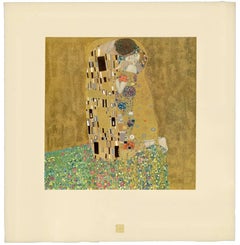
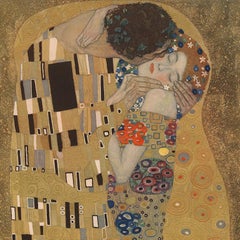
H.O. Miethke Das Werk folio "The Kiss" collotype print

H.O. Miethke Das Werk folio "The Kiss" collotype print

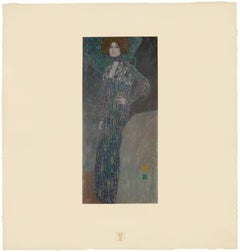
The Kiss, no. 1 from the fifth installment of Das Werk Gustav Klimts Undoubtedly Klimt’s best known and most reproduced images, this printed version of The Kiss is the only one with which Klimt was directly involved. Unveiled at Vienna’s Kunstschau 1908, and saved for the fifth and final delivery of Das Werk, The Kiss marks a triumph in Klimt’s career and represents a culmination of many themes in his oeuvre up to that point. After all of the controversy surrounding the State’s prior rejection of the University murals commissioned from Klimt, the Ministry of Education reversed their policy toward the artist with a show of wholehearted support by purchasing for the Osterreichische Galerie BelvedereThe Kiss while it still hung in the Kunstschau exhibit. Considered in relation to the eight multicolored collotypes which preceded its print debut in the Das Werk portfolio, The Kiss literally embraces all which came before it. The golden seaweed dangling in tresses from the lovers’ feet harkens back to Water Snakes I and II. The bed of flowers evokes the settings Klimt created in both The Golden Knight and The Sunflower. In fact, this image sprung out of a particularly happy summer spent in the company of Klimt’s lover, Emilie Floge...

Category

Early 1900s Expressionist Art
Materials

Handmade Paper

Solitude - 21st Century, Contemporary, Portrait, Expressionism, Africa

Solitude - 21st Century, Contemporary, Portrait, Expressionism, Africa

Located in Ibadan, Oyo

Shipping Procedure Ships in a well-protected tube from Nigeria This work is unique, not a print or other type of copy. Accompanied by a Certificate of Authenticity About Artist Emma...

Category

21st Century and Contemporary Expressionist Art

Materials

Canvas, Acrylic

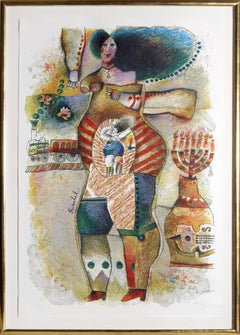
Fruit Market in Haiti, Expressionist Oil on Canvas, Framed, Circa 1990

Fruit Market in Haiti, Expressionist Oil on Canvas, Framed, Circa 1990

Located in Sitges, Barcelona

Title: Fruit Market in Haiti Artist: JM Gary Delly Medium: Oil on canvas Dimensions (unframed): 9.8 x 7.9 in Dimensions (framed): 15 x 13 in Period: Approx. 1990-1999 Origin: Haiti Condition: Good, with frame included Description of the Artwork This painting captures a lively Haitian market scene, embodying the essence of Haitian primitivist art with its vibrant colors and thick impasto brushstrokes. The scene depicts a bustling marketplace where vendors and buyers interact, surrounded by piles of tropical fruits arranged in baskets. The figures are dressed in bright, contrasting tones, enhancing the painting’s dynamic and energetic atmosphere. The artist’s expressive, thick strokes and saturated colors create a sense of movement and liveliness. The composition is carefully balanced, with figures arranged in different planes, providing depth and perspective in an intuitive manner. The lush vegetation in the background and the bright blue sky add further context to the scene, situating it in the Caribbean setting. Haitian art, influenced by its African and Caribbean heritage, is known for its naïve style and depictions of everyday life. JM Gary Delly follows this tradition, celebrating the vibrancy of Haitian culture in his work. Comparable Artists This artwork shares stylistic similarities with renowned Haitian artists, including: Wilson Bigaud (1931-2010): A master of Haitian art, famous for his detailed depictions of everyday life and folklore. André Normil (1934-2015): Known for his naïve style and colorful representations of Haitian life. Laurent Casimir...

Category

1990s Expressionist Art
Materials

Canvas, Oil

La commode, 1986, original lithograph by Jean Jansem, handsigned

La commode, 1986, original lithograph by Jean Jansem, handsigned

By Jean Jansem

Located in Les Acacias GE, GE

Jean Jansem (1920-2013) La commode, 1986 Lithographie sur papier Arches Signée en bas à droite et justifiée en bas à gauche 51 x 70 cm / 54 x 76 cm D'une édition à 30 exemplaires d...

Category

Late 20th Century Expressionist Art
Materials

Lithograph

Full Calm
Full Calm

Full Calm

Located in Zofingen, AG

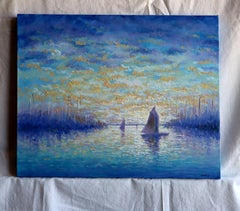
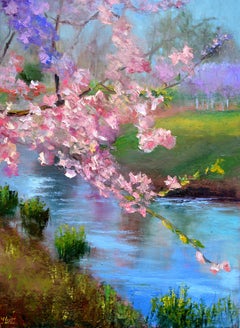
In crafting this piece, I explored the tranquil interplay of light and texture over the serene expanse of water, reflecting a quiet sunset. The gentle blending of acrylic and oil in ...

Category

2010s Expressionist Art
Materials

Oil, Acrylic, Cardboard

The Joshua Tree in the Canyon, Oil Painting

The Joshua Tree in the Canyon, Oil Painting

By Crystal DiPietro

Located in San Francisco, CA

Artist Comments
A Joshua tree stands among yellow desert bushes, its leaves appearing to glow under the bright sun. In the distance, a blue ridge and a mountain rise. Rugged fo...

Category

21st Century and Contemporary Expressionist Art
Materials

Oil

In the Company of Hills, Original Painting

In the Company of Hills, Original Painting

By Crystal DiPietro

Located in San Francisco, CA

Artist Comments
From a high vantage point, rugged desert ridges and mountains unfold in vibrant spring colors. Loose washes of pink, green, yellow, and blue flow together, echo...

Category

21st Century and Contemporary Expressionist Art
Materials

Watercolor

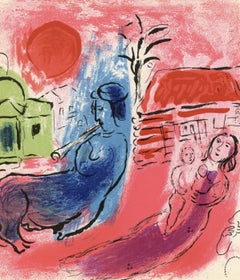
Marc Chagall, Romeo and Juliet, The Ceiling of the Paris Opera, 1965 (after)

Marc Chagall, Romeo and Juliet, The Ceiling of the Paris Opera, 1965 (after)

By Marc Chagall

Located in Southampton, NY

This exquisite lithograph after Marc Chagall (1887–1985), titled Romeo et Juliette (Romeo and Juliet), from the album Le plafond de l’Opera de Paris par Marc Chagall (The Ceiling of the Paris Opera by Marc Chagall), originates from the 1965 edition published by Andre Sauret, Editeur, Monte Carlo, rendered by Charles Sorlier, Paris, and printed by Mourlot Freres, Paris, October 6, 1965. This romantic and luminous composition pays homage to Charles Gounod’s opera Romeo et Juliette, one of the works celebrated in Chagall’s magnificent ceiling design for the Palais Garnier. Romeo et Juliette radiates with the tenderness, tragedy, and transcendent beauty of Shakespeare’s tale, reimagined through Chagall’s poetic symbolism and vivid color. Floating lovers, celestial forms, and musical motifs intertwine in a lyrical vision of eternal love and harmony, reflecting the artist’s lifelong fascination with the union of art, music, and emotion. The composition captures the very spirit of Gounod’s music—lyrical, passionate, and filled with grace. Executed as a lithograph on velin paper, this work measures 13 x 9.5 inches (33.02 x 24.13 cm). Unsigned and unnumbered as issued. The edition exemplifies the technical mastery of the Mourlot Freres atelier and the enduring collaboration between Marc Chagall and Charles Sorlier. Artwork Details: Artist: After Marc Chagall (1887–1985) Title: Romeo et Juliette (Romeo and Juliet), from Le plafond de l’Opera de Paris par Marc Chagall (The Ceiling of the Paris Opera by Marc Chagall) Medium: Lithograph on velin paper Dimensions: 13 x 9.5 inches (33.02 x 24.13 cm) Inscription: Unsigned and unnumbered as issued Date: 1965 Publisher: Andre Sauret, Editeur, Monte Carlo Rendered by: Charles Sorlier, Paris Printer: Mourlot Freres, Paris Catalogue raisonne references: Cain, Julien, and Fernand Mourlot. Chagall Lithographe III, 1962–1968. Andre Sauret, Editeur, 1969, illustration 434. Cramer, Patrick, and Meret Meyer. Marc Chagall: Catalogue Raisonne Des Livres Illustres. P. Cramer ed., 1995, illustration 61. Condition: Well preserved, consistent with age and medium Provenance: From the album Le plafond de l’Opera de Paris par Marc Chagall (The Ceiling of the Paris Opera by Marc Chagall), published by Andre Sauret, Editeur, Monte Carlo, October 6, 1965, in an edition of V̅ Notes: Excerpted from the album, This work could not have been made without the valuable collaboration of Madame Marc Chagall to whom we extend our warmest thanks. This work, made by Andre Sauret, was completed to print on October 6, 1965 on the presses of l’imprimerie du Lion in Paris. Jacques Lassaigne’s texts were composed by hand in Romain du Roi in the workshops of l’imprimerie nationale. The VI color lithographies and all the black and white drawings were set on stone by Charles Sorlier, based on Marc Chagall’s original models. The original lithography and color lithographs were drawn on the presses of Mourlot Freres. The binding is by Maurice Busenhart in Lausanne. About the Publication: Le plafond de l’Opera de Paris par Marc Chagall (The Ceiling of the Paris Opera by Marc Chagall), published in October 1965 by Andre Sauret, Editeur, Monte Carlo, commemorates one of the most ambitious and celebrated artistic commissions of the 20th century. Created under the direction of Charles Sorlier, the album documents Chagall’s magnificent ceiling design for the Palais Garnier in Paris, unveiled in 1964. The publication includes color lithographs based on the artist’s preparatory studies and painted maquettes, executed with exceptional fidelity by Mourlot Freres. Chagall’s ceiling—divided into segments representing musical masters such as Mozart, Wagner, Berlioz, Ravel, and Debussy—blends myth, music, and emotion into a vibrant celestial composition. The album captures this visionary synthesis through luminous lithography, allowing viewers to experience the grandeur and intimacy of the artist’s monumental work. Produced with the collaboration of Madame Marc Chagall, Charles Sorlier, and Fernand Mourlot, and printed with the precision and artistry for which Andre Sauret’s editions were renowned, this publication stands as both a tribute to Chagall’s genius and a celebration of French art’s enduring dialogue between tradition, innovation, and the divine. About the Artist: Marc Chagall (1887–1985) was a Belarus-born French painter, printmaker, and designer whose visionary imagination, radiant color, and deeply poetic symbolism made him one of the most beloved and influential artists of the 20th century. Rooted in the imagery of his Jewish heritage and the memories of his childhood in Vitebsk, Chagall’s art wove together themes of faith, love, folklore, and fantasy with a dreamlike modern sensibility. His unique style—merging elements of Cubism, Fauvism, Expressionism, and Surrealism—defied categorization, transforming ordinary scenes into lyrical meditations on memory and emotion. Influenced by Russian icon painting, medieval religious art, and the modern innovations of artists such as Pablo Picasso, Henri Matisse, and Georges Braque, Chagall developed a profoundly personal visual language filled with floating figures, vibrant animals, musicians, and lovers that symbolized the transcendent power of imagination and love. During his early years in Paris, he became an integral part of the Ecole de Paris circle, forming friendships with Amedeo Modigliani, Fernand Leger, and Sonia Delaunay, and his creative spirit resonated with that of his peers and successors—Alexander Calder, Alberto Giacometti, Salvador Dali, Joan Miro, Wassily Kandinsky, Marcel Duchamp, and Man Ray—artists who, like Chagall, sought to push the boundaries of perception, emotion, and form. Over a prolific career that spanned painting, printmaking, stained glass, ceramics, and stage design, Chagall brought an unparalleled poetic sensibility to modern art, infusing even the most abstract subjects with human warmth and spiritual depth. His works are held in the most prestigious museums around the world, including the Museum of Modern Art, the Centre Pompidou, the Tate, and the Guggenheim, where they continue to inspire generations of artists and collectors. The highest price ever paid for a Marc Chagall artwork is approximately $28.5 million USD, achieved in 2017 at Sotheby’s New York for Les Amoureux (1928). Marc Chagall Romeo...

Category

1960s Expressionist Art
Materials

Lithograph

Mountain Range, Oil Painting on Canvas by Jalal Gharbi

Mountain Range, Oil Painting on Canvas by Jalal Gharbi

Located in Long Island City, NY

A large oil painting of a dramatic Mountain Range by Tunisian-born artist, Jalal Gharbi (1920 - 2005). The painting measures 30 x 40 inches and the frame 37.5 x 47.5 inches.

Category

Late 20th Century Expressionist Art
Materials

Canvas, Oil

2Pac and Snoop
2Pac and Snoop

2Pac and Snoop

Located in Ibadan, Oyo

"2Pac and Snoop" by James Ogamba Tochukwu is a striking artwork that pays homage to the iconic figures of 2Pac and Snoop Dogg, two influential fi...

Category

21st Century and Contemporary Expressionist Art
Materials

Canvas, Oil

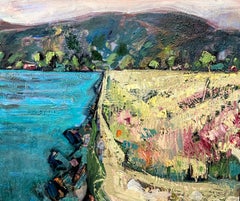
Afternoon Colors, Oil Painting

Afternoon Colors, Oil Painting

By James Hartman

Located in San Francisco, CA

Artist Comments
A path leads to Mt. Diablo in this Fauvist landscape. Artist James Hartman used thick layers of oil paint to create an expressive and textured outdoor scene. In...

Category

21st Century and Contemporary Expressionist Art
Materials

Oil

Be Bold
Be Bold

Adewuyi TheophilusBe Bold, 2023

$1,500Sale Price|25% Off

Be Bold

Located in Ibadan, Oyo

"Be Bold" is a striking piece that demands attention from the moment one sets eyes on it. The central figure, a woman with flowing blue hair, exudes an air of confidence and resilience. The blue hue not only serves as an aesthetic choice but also carries deeper significance, representing the freedom to break societal norms and embrace personal identity without fear. The composition is masterfully crafted, with bold brushstrokes and intricate details that draw the viewer into the artwork. The woman's piercing gaze locks with the observer, inviting them to explore their own journey of self-discovery and empowerment. Each stroke of Theophilus's brush seems to radiate energy and passion, capturing the spirit of the subject and infusing the artwork with a powerful presence. "Be Bold" serves as a powerful symbol of embracing individuality and embracing one's true self. The woman with blue hair stands as a representation of those who dare to be different, challenging societal expectations and norms. The vibrant blue color symbolizes freedom, confidence, and the courage to break free from conformity. In a world that often pressures individuals to fit into predefined molds, Theophilus's artwork is a reminder of the beauty and strength found in embracing one's unique qualities. "Be Bold" calls on viewers to celebrate their differences, encouraging them to step out of their comfort zones and express their true selves without hesitation or fear of judgment. The power of "Be Bold" lies in its ability to evoke a strong emotional response in those who experience it. The artwork serves as a catalyst for introspection, urging viewers to reflect on their own lives and choices. The confident and defiant gaze of the woman with blue hair prompts individuals to question their own limitations and seek the courage to break free from them. By inspiring viewers to be bold, Theophilus encourages self-empowerment and personal growth. Through his art, he instills a sense of pride and confidence, reminding us that our uniqueness is a strength to be celebrated, not hidden away. The artwork's impact extends beyond the confines of the gallery walls, inspiring individuals to embrace their authentic selves and pursue their passions with unwavering determination. "Be Bold" by Adewuyi Theophilus...

Category

21st Century and Contemporary Expressionist Art

Materials

Canvas, Oil

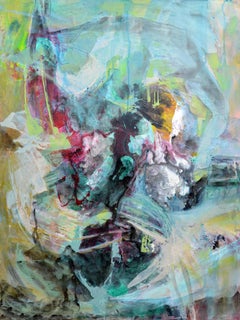
Woman in a Red Dress

Woman in a Red Dress

By Béla Czóbel

Located in Chicago, IL

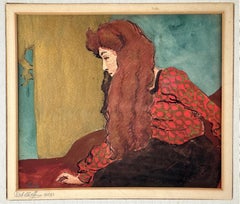
In an article published in Le Figaro (Paris, March 19, 1964), Raymond Cogniat comments on Czóbel’s unique artistic style. He writes: “...Czóbel, who arrived Paris in the first years...

Category

1940s Expressionist Art
Materials

Canvas, Oil

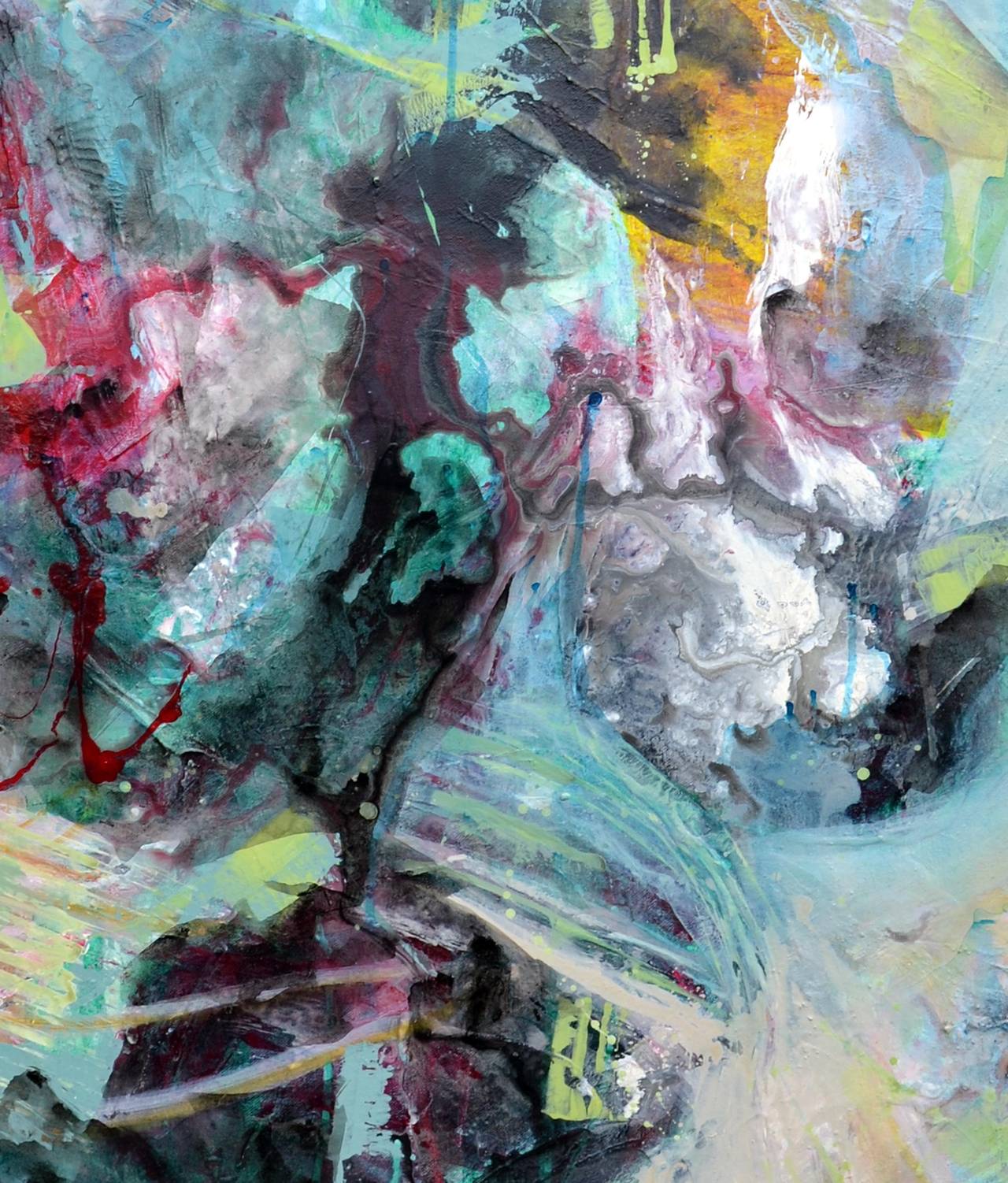
Mid Century Expressionist Matador

Mid Century Expressionist Matador

Located in San Francisco, CA

Beautiful mid century mystery painting. Expressionist bull fighting oil on canvas with fabulous fauvist colors. It is signed upper right corner, but I cannot make it out. Painting me...

Category

Mid-20th Century Expressionist Art
Materials

Oil

Expressionist art for sale on 1stDibs.
Find a wide variety of authentic Expressionist art available for sale on 1stDibs. Works in this style were very popular during the 21st Century and Contemporary, but contemporary artists have continued to produce works inspired by this movement. If you’re looking to add art created in this style to introduce contrast in an otherwise neutral space in your home, the works available on 1stDibs include elements of orange, blue, purple, green and other colors. Many Pop art paintings were created by popular artists on 1stDibs, including Iryna Kastsova, George Grosz, Stephen Basso, and Marc Chagall. Frequently made by artists working with Paint, and Oil Paint and other materials, all of these pieces for sale are unique and have attracted attention over the years. Not every interior allows for large Expressionist art, so small editions measuring 1 inches across are also available.