Fauvist Art

1,216 Results
to
498
745
197
186
81
69
Overall Width
to
Overall Height
to
10
1,121
147
15
14
26
37
235
380
74
116
48
34
120,019
64,185
57,072
29,165
14,517
9,702
6,975
6,231
4,223
3,195
2,539
2,341
2,120
582
765
477
33
519
296
276
233
233
146
130
126
73
49
39
38
37
31
31
31
29
27
20
17
547
429
268
195
190
34
25
21
19
18
232
40
944
332
Style: Fauvist
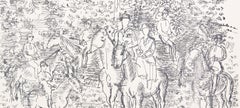
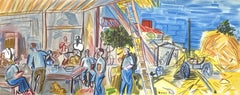
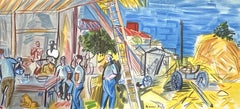
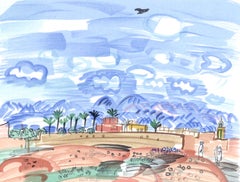
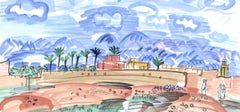
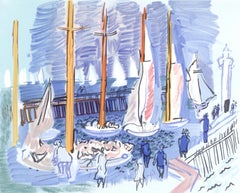
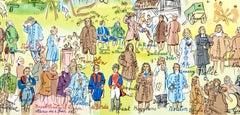
Raoul Dufy, Riders Beneath the Trees, 1965 (after)

Raoul Dufy, Riders Beneath the Trees, 1965 (after)

By Raoul Dufy

Located in Southampton, NY

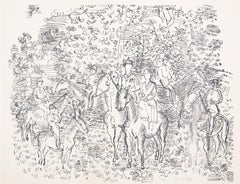
This exquisite lithograph after Raoul Dufy (1877–1953), titled Les Cavaliers sous les arbres (Riders Beneath the Trees), from the folio Lettre a mon peintre Raoul Dufy (Letter to My ...

Category

1960s Fauvist Art

Materials

Lithograph

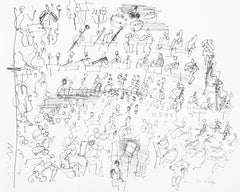
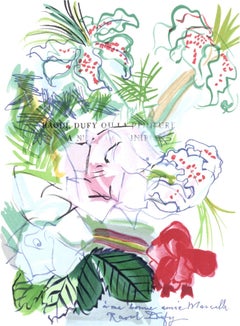
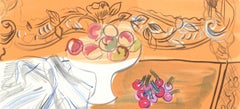
Raoul Dufy, Studies, History of Electricity, 1965 (after)

Raoul Dufy, Studies, History of Electricity, 1965 (after)

By Raoul Dufy

Located in Southampton, NY

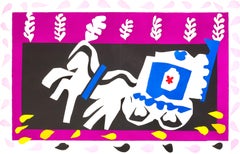
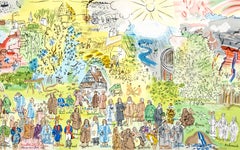
This exquisite lithograph after Raoul Dufy (1877–1953), titled Etudes, «Histoire de l'Electricite» (Studies, “History of Electricity”), from the folio Lettre a mon peintre Raoul Dufy...

Category

1960s Fauvist Art

Materials

Lithograph

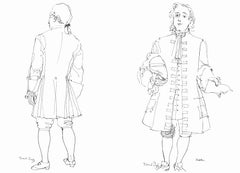
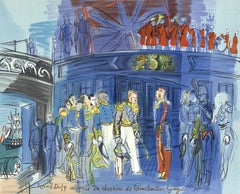
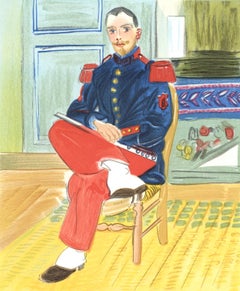
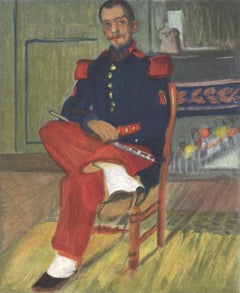
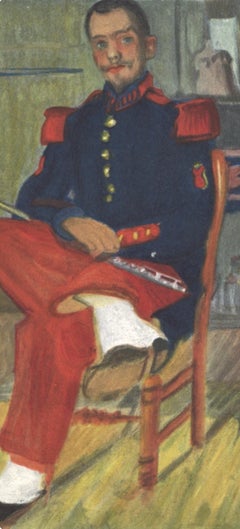
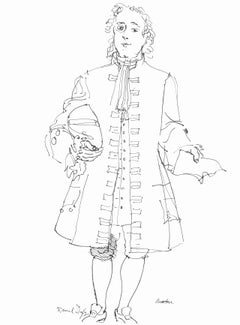
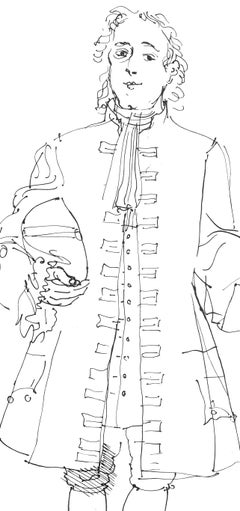
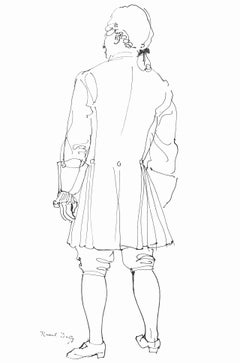
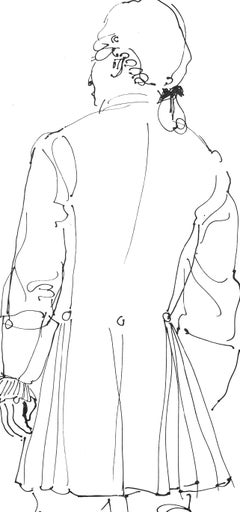
Raoul Dufy, The Prince of Joinville, 1965 (after)

Raoul Dufy, The Prince of Joinville, 1965 (after)

By Raoul Dufy

Located in Southampton, NY

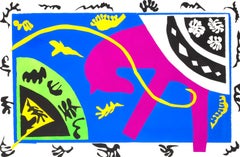
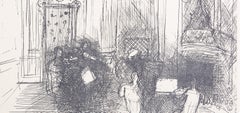
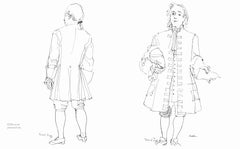
This exquisite lithograph after Raoul Dufy (1877–1953), titled Le Prince de Joinville (The Prince of Joinville), from the folio Lettre a mon peintre Raoul Dufy (Letter to My Painter ...

Category

1960s Fauvist Art

Materials

Lithograph

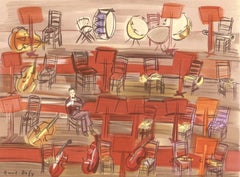
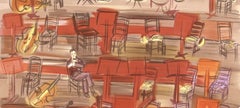
Raoul Dufy, The Flautist II (after)

Raoul Dufy, The Flautist II (after)

By Raoul Dufy

Located in Southampton, NY

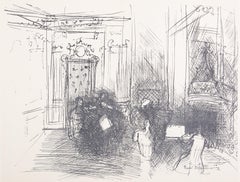
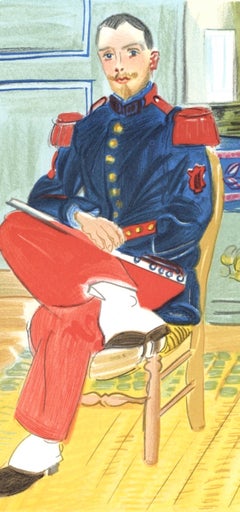
This exquisite lithograph after Raoul Dufy (1877–1953), titled Le Flutiste, replique (The Flautist II), from the folio Lettre a mon peintre Raoul Dufy (Letter to My Painter Raoul Duf...

Category

1960s Fauvist Art

Materials

Lithograph

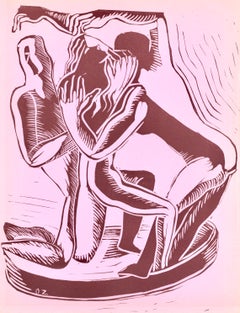
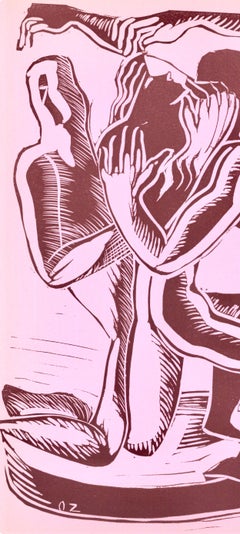
Ossip Zadkine, The Three Graces, from XXe siecle, 1938

Ossip Zadkine, The Three Graces, from XXe siecle, 1938

By Ossip Zadkine

Located in Southampton, NY

This exquisite linocut by Ossip Zadkine (1890–1967), titled Les trois graces (The Three Graces), from the album XXe siecle, Chroniques du jour, 13 rue Valette (5e), Directeur G. di S...

Category

1930s Fauvist Art

Materials

Linocut

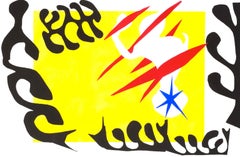
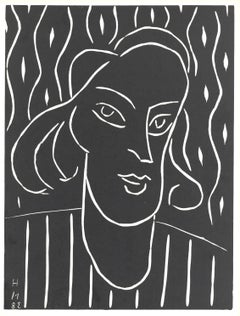
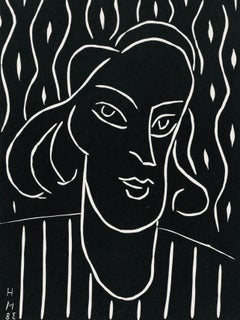
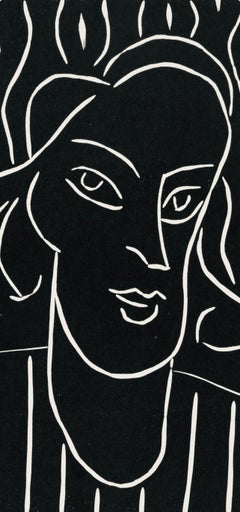
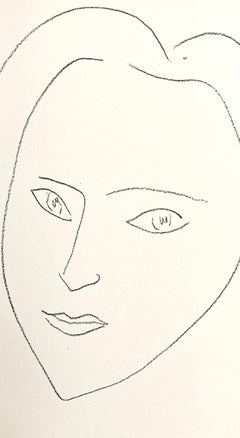
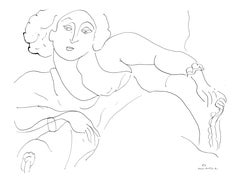
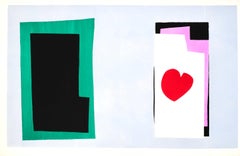
Henri Matisse, Teeny, from XXe siecle, 1938

Henri Matisse, Teeny, from XXe siecle, 1938

By Henri Matisse

Located in Southampton, NY

This exquisite linocut by Henri Matisse (1869–1954), titled Teeny, from the album XXe siecle, Chroniques du jour, 13 rue Valette (5e), Directeur G. di San Lazzaro, Sommaire du no. 4,...

Category

1930s Fauvist Art

Materials

Linocut

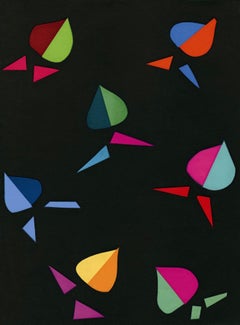
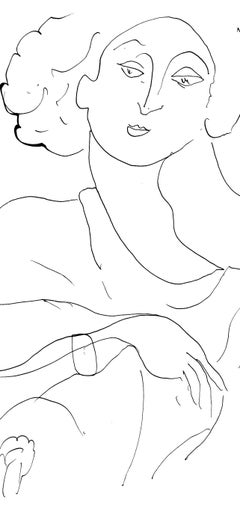
Henri Matisse, Teeny, from XXe Siecle, 1959 (after)

Henri Matisse, Teeny, from XXe Siecle, 1959 (after)

By Henri Matisse

Located in Southampton, NY

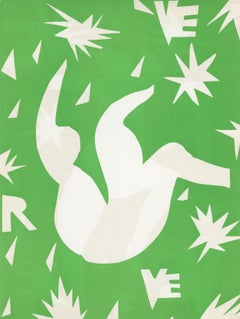
This exquisite linocut after Henri Matisse (1869–1954), titled Teeny (Teeny), from the album XXe Siecle, Nouvelle serie, XXIe Annee, No. 13, Noel 1959, originates from the 1959 edition published by Societe Internationale dArt XXe Siecle, Paris, under the direction of Gualtieri di San Lazzaro, editeur, Paris, and printed by Mourlot Freres, Paris, 1959. Teeny reflects Matisses continuing exploration of distilled form, graphic clarity, and expressive contour during his late career. Executed as a linocut on velin paper, this work measures 12.5 x 9.75 inches. Unsigned and unnumbered as issued. The edition exemplifies the superb craftsmanship of Mourlot Freres, Paris Artwork Details: Artist: After Henri Matisse (1869–1954) Title: Teeny (Teeny) Medium: Linocut on velin paper Dimensions: 12.5 x 9.75 inches (31.75 x 24.77 cm) Inscription: Unsigned and unnumbered as issued Date: 1959 Publisher: Societe Internationale dArt XXe Siecle, Paris, under the direction of Gualtieri di San Lazzaro, editeur, Paris Printer: Mourlot Freres, Paris Catalogue raisonne reference: Matisse, Henri, et al. Henri Matisse: Catalogue Raisonne de Loeuvre Grave Etabli Avec La Collaboration de Francoise Garnaud. C. Duthuit, 1983, illustration 723 Condition: Well preserved, consistent with age and medium Provenance: From the album XXe Siecle, Nouvelle serie, XXIe Annee, No. 13, Noel 1959, published by Societe Internationale dArt XXe Siecle, Paris; printed by Mourlot Freres, Paris, 1959 About the Publication: Gualtieri di San Lazzaros XXe Siecle (Twentieth Century) was one of the most influential art journals of the modern era, founded in Paris in 1938 as a platform for the greatest painters, sculptors, and writers of the 20th century. San Lazzaro, a visionary editor, critic, and champion of modernism, believed that art and literature should coexist as expressions of a shared human imagination. Under his direction, XXe Siecle became a cultural bridge between Europe and the wider world, publishing special issues devoted to leading figures such as Picasso, Matisse, Chagall, Braque, Calder, Miro, Kandinsky, and Leger. Each edition combined essays by renowned critics and poets with original lithographs, linocuts, and woodcuts printed by the foremost ateliers of Paris, Milan, and New York, including Mourlot, Curwen, Atelier Lacouriere, and Amilcare Pizzi, creating a uniquely rich dialogue between text and image. The 1959 issue, XXIe Annee, No. 13, presented a remarkable selection of original prints that showcased the vitality of European modernism at mid century. Today, XXe Siecle remains an essential record of 20th century modernism, celebrated for its seamless integration of fine art, literature, and design. About the Artist: Henri Matisse (1869–1954) was a French painter, sculptor, draughtsman, and printmaker whose revolutionary vision redefined modern art through his daring use of color, line, and form. Celebrated as one of the greatest artists of the 20th century, Matisse led the Fauvist movement and devoted his life to the pursuit of balance, beauty, and emotional expression in visual art. His early works burst with vibrant hues and liberated brushwork, while his later cut out compositions achieved a poetic simplicity that transformed the relationship between color and space. Deeply influenced by the work of Paul Cezanne, Vincent van Gogh, and Georges Seurat, as well as by the rhythmic patterns of Islamic art, Byzantine mosaics, and Japanese prints, Matisse forged a new visual language that celebrated joy, movement, and serenity. He was part of an extraordinary generation of artists who shaped the evolution of modernism, maintaining lifelong dialogue and friendly rivalry with contemporaries such as Pablo Picasso, Georges Braque, Marc Chagall, Andre Derain, Albert Marquet, and Raoul Dufy peers who, like him, sought to expand the expressive potential of color and composition. Matisses influence extended across generations, inspiring modern and contemporary masters including Alexander Calder, Alberto Giacometti, Salvador Dali, Joan Miro, Wassily Kandinsky, Marcel Duchamp, and Man Ray, each of whom drew upon his fearless experimentation and refined visual harmony. His paintings, sculptures, and works on paper are held in the most prestigious museums in the world, including the Museum of Modern Art, the Centre Pompidou, the Tate, and the Hermitage Museum, where his art continues to symbolize the essence of creativity and human emotion. The highest price ever paid for a Henri Matisse artwork is approximately 80.8 million USD, achieved in 2018 at Christies New York for Odalisque couchee aux magnolias (1923). Henri Matisse linocut...

Category

1950s Fauvist Art
Materials

Linocut

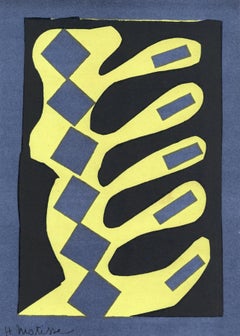
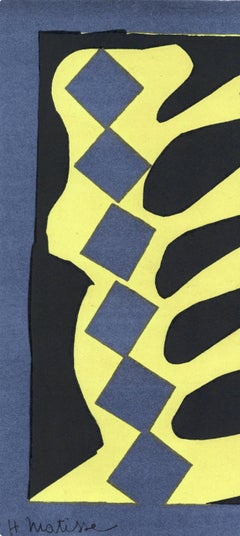
Henri Matisse, Decoupage, from XXe Siecle 1954 (after)

Henri Matisse, Decoupage, from XXe Siecle 1954 (after)

By Henri Matisse

Located in Southampton, NY

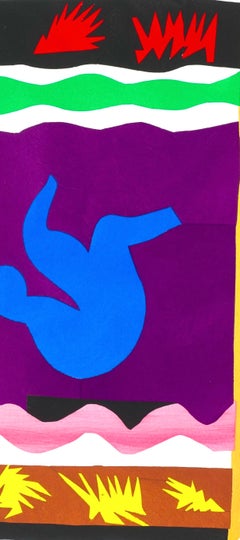
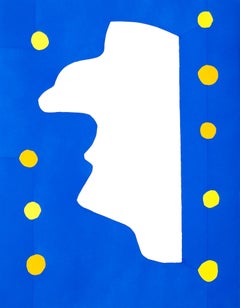
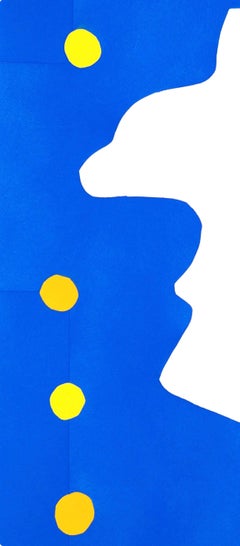
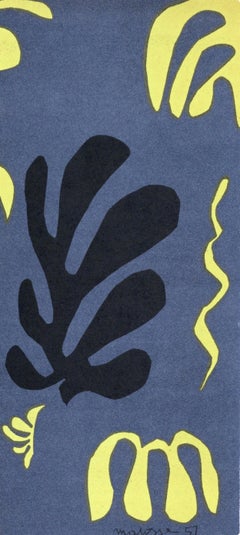
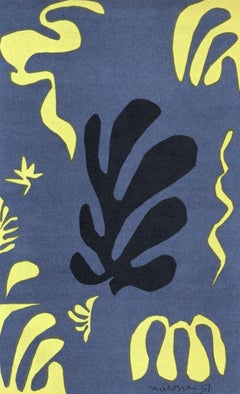
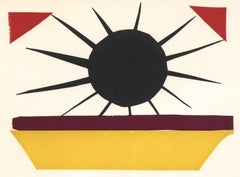
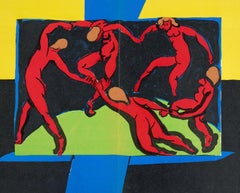
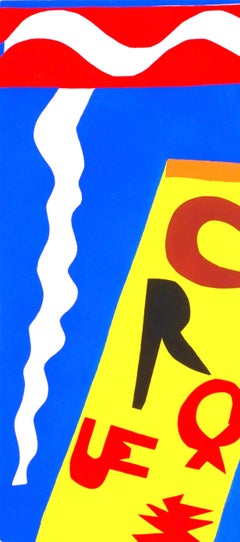
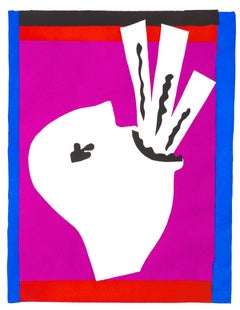
This exquisite lithograph after Henri Matisse (1869–1954), titled Decoupage (Decoupage), from the album XXe Siecle, Nouvelle serie N°4 (double) Janvier 1954, originates from the 1954 edition published by Societe Internationale dArt XXe Siecle, Paris, under the direction of Gualtieri di San Lazzaro, editeur, Paris, and printed by Mourlot Freres, Paris, 1954. Decoupage reflects Matisses late career mastery of distilled form, harmonious contour, and poetic abstraction. Executed as a lithograph on velin paper, this work measures 12.5 x 9.75 inches. Signed in the plate and unnumbered as issued. The edition exemplifies the superb craftsmanship of Mourlot Freres, Paris Artwork Details: Artist: After Henri Matisse (1869–1954) Title: Decoupage (Decoupage) Medium: Lithograph on velin paper Dimensions: 12.5 x 9.75 inches (31.75 x 24.77 cm) Inscription: Signed in the plate and unnumbered as issued Date: 1954 Publisher: Societe Internationale dArt XXe Siecle, Paris, under the direction of Gualtieri di San Lazzaro, editeur, Paris Printer: Mourlot Freres, Paris Condition: Well preserved, consistent with age and medium Provenance: From the album XXe Siecle, Nouvelle serie N°4 (double) Janvier 1954, published by Societe Internationale dArt XXe Siecle, Paris; printed by Mourlot Freres, Paris, 1954 About the Publication: Gualtieri di San Lazzaros XXe Siecle (Twentieth Century) was one of the most influential art journals of the modern era, founded in Paris in 1938 as a platform for the greatest painters, sculptors, and writers of the 20th century. San Lazzaro, a visionary editor, critic, and champion of modernism, believed that art and literature should coexist as expressions of a shared human imagination. Under his direction, XXe Siecle became a cultural bridge between Europe and the wider world, publishing special issues devoted to leading figures such as Picasso, Matisse, Chagall, Braque, Calder, Miro, Kandinsky, and Leger. Each edition combined essays by renowned critics and poets with original lithographs, linocuts, and pochoirs printed by the foremost ateliers of Paris, Milan, and New York, including Mourlot, Curwen, Atelier Lacouriere, and Amilcare Pizzi, creating a uniquely rich dialogue between text and image. The 1954 issue, Nouvelle serie N°4 (double), stands among the journals landmark mid century editions. Today, XXe Siecle remains an essential record of 20th century modernism, celebrated for its seamless integration of fine art, literature, and design. About the Artist: Henri Matisse (1869–1954) was a French painter, sculptor, draughtsman, and printmaker whose revolutionary vision redefined modern art through his daring use of color, line, and form. Celebrated as one of the greatest artists of the 20th century, Matisse led the Fauvist movement and devoted his life to the pursuit of balance, beauty, and emotional expression in visual art. His early works burst with vibrant hues and liberated brushwork, while his later cut out compositions achieved a poetic simplicity that transformed the relationship between color and space. Deeply influenced by the work of Paul Cezanne, Vincent van Gogh, and Georges Seurat, as well as by the rhythmic patterns of Islamic art, Byzantine mosaics, and Japanese prints, Matisse forged a new visual language that celebrated joy, movement, and serenity. He was part of an extraordinary generation of artists who shaped the evolution of modernism, maintaining lifelong dialogue and friendly rivalry with contemporaries such as Pablo Picasso, Georges Braque, Marc Chagall, Andre Derain, Albert Marquet, and Raoul Dufy peers who, like him, sought to expand the expressive potential of color and composition. Matisses influence extended across generations, inspiring modern and contemporary masters including Alexander Calder, Alberto Giacometti, Salvador Dali, Joan Miro, Wassily Kandinsky, Marcel Duchamp, and Man Ray, each of whom drew upon his fearless experimentation and refined visual harmony. His paintings, sculptures, and works on paper are held in the most prestigious museums in the world, including the Museum of Modern Art, the Centre Pompidou, the Tate, and the Hermitage Museum, where his art continues to symbolize the essence of creativity and human emotion. The highest price ever paid for a Henri Matisse artwork is approximately 80.8 million USD, achieved in 2018 at Christies New York for Odalisque couchee aux magnolias (1923). Henri Matisse Decoupage...

Category

1950s Fauvist Art
Materials

Lithograph

Henri Matisse, Decoupage, from XXe Siecle 1954 (after)

Henri Matisse, Decoupage, from XXe Siecle 1954 (after)

By Henri Matisse

Located in Southampton, NY

This exquisite lithograph after Henri Matisse (1869–1954), titled Decoupage (Decoupage), from the album XXe Siecle, Nouvelle serie N°4 (double) Janvier 1954, originates from the 1954 edition published by Societe Internationale dArt XXe Siecle, Paris, under the direction of Gualtieri di San Lazzaro, editeur, Paris, and printed by Mourlot Freres, Paris, 1954. Decoupage reflects Matisses late career mastery of distilled form, harmonious contour, and poetic abstraction. Executed as a lithograph on velin paper, this work measures 12.5 x 9.75 inches. Signed in the plate and unnumbered as issued. The edition exemplifies the superb craftsmanship of Mourlot Freres, Paris Artwork Details: Artist: After Henri Matisse (1869–1954) Title: Decoupage (Decoupage) Medium: Lithograph on velin paper Dimensions: 12.5 x 9.75 inches (31.75 x 24.77 cm) Inscription: Signed in the plate and unnumbered as issued Date: 1954 Publisher: Societe Internationale dArt XXe Siecle, Paris, under the direction of Gualtieri di San Lazzaro, editeur, Paris Printer: Mourlot Freres, Paris Condition: Well preserved, consistent with age and medium Provenance: From the album XXe Siecle, Nouvelle serie N°4 (double) Janvier 1954, published by Societe Internationale dArt XXe Siecle, Paris; printed by Mourlot Freres, Paris, 1954 About the Publication: Gualtieri di San Lazzaros XXe Siecle (Twentieth Century) was one of the most influential art journals of the modern era, founded in Paris in 1938 as a platform for the greatest painters, sculptors, and writers of the 20th century. San Lazzaro, a visionary editor, critic, and champion of modernism, believed that art and literature should coexist as expressions of a shared human imagination. Under his direction, XXe Siecle became a cultural bridge between Europe and the wider world, publishing special issues devoted to leading figures such as Picasso, Matisse, Chagall, Braque, Calder, Miro, Kandinsky, and Leger. Each edition combined essays by renowned critics and poets with original lithographs, linocuts, and pochoirs printed by the foremost ateliers of Paris, Milan, and New York, including Mourlot, Curwen, Atelier Lacouriere, and Amilcare Pizzi, creating a uniquely rich dialogue between text and image. The 1954 issue, Nouvelle serie N°4 (double), stands among the journals landmark mid century editions. Today, XXe Siecle remains an essential record of 20th century modernism, celebrated for its seamless integration of fine art, literature, and design. About the Artist: Henri Matisse (1869–1954) was a French painter, sculptor, draughtsman, and printmaker whose revolutionary vision redefined modern art through his daring use of color, line, and form. Celebrated as one of the greatest artists of the 20th century, Matisse led the Fauvist movement and devoted his life to the pursuit of balance, beauty, and emotional expression in visual art. His early works burst with vibrant hues and liberated brushwork, while his later cut out compositions achieved a poetic simplicity that transformed the relationship between color and space. Deeply influenced by the work of Paul Cezanne, Vincent van Gogh, and Georges Seurat, as well as by the rhythmic patterns of Islamic art, Byzantine mosaics, and Japanese prints, Matisse forged a new visual language that celebrated joy, movement, and serenity. He was part of an extraordinary generation of artists who shaped the evolution of modernism, maintaining lifelong dialogue and friendly rivalry with contemporaries such as Pablo Picasso, Georges Braque, Marc Chagall, Andre Derain, Albert Marquet, and Raoul Dufy peers who, like him, sought to expand the expressive potential of color and composition. Matisses influence extended across generations, inspiring modern and contemporary masters including Alexander Calder, Alberto Giacometti, Salvador Dali, Joan Miro, Wassily Kandinsky, Marcel Duchamp, and Man Ray, each of whom drew upon his fearless experimentation and refined visual harmony. His paintings, sculptures, and works on paper are held in the most prestigious museums in the world, including the Museum of Modern Art, the Centre Pompidou, the Tate, and the Hermitage Museum, where his art continues to symbolize the essence of creativity and human emotion. The highest price ever paid for a Henri Matisse artwork is approximately 80.8 million USD, achieved in 2018 at Christies New York for Odalisque couchee aux magnolias (1923). Henri Matisse Decoupage...

Category

1950s Fauvist Art
Materials

Lithograph

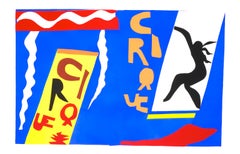
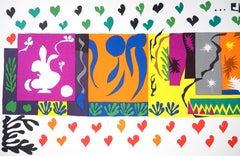
Matisse, Mille et une Nuit, Derrière le miroir (after)

Matisse, Mille et une Nuit, Derrière le miroir (after)

By Henri Matisse

Located in Southampton, NY

Lithograph on vélin paper. Paper Size: 15 x 33 inches, with bifold, as issued. Inscription: Signed in the plate and unnumbered, as issued. Notes: From the folio, Derrière le miroir, ...

Category

1950s Fauvist Art
Materials

Lithograph

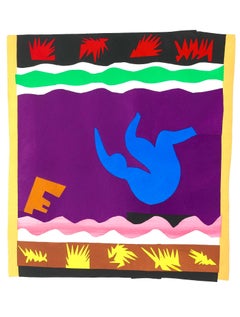
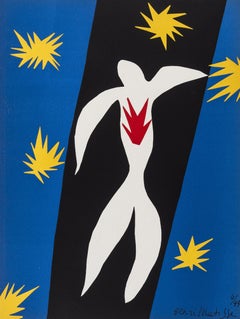
The Fall of Icarus, from Verve, Revue Artistique, 1945

The Fall of Icarus, from Verve, Revue Artistique, 1945

By Henri Matisse

Located in Southampton, NY

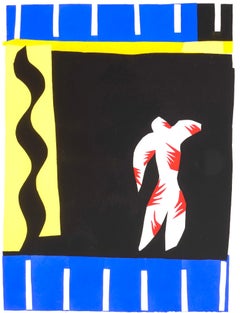
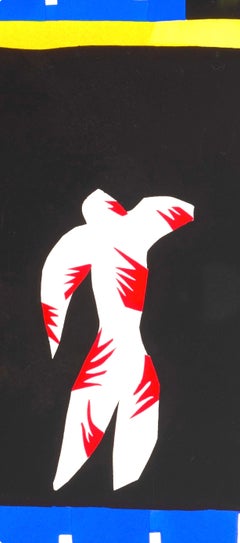
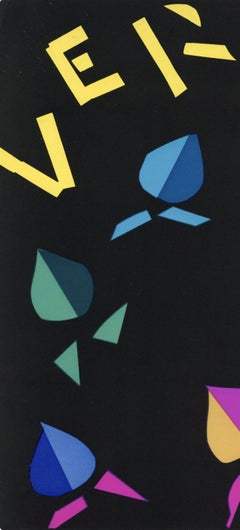
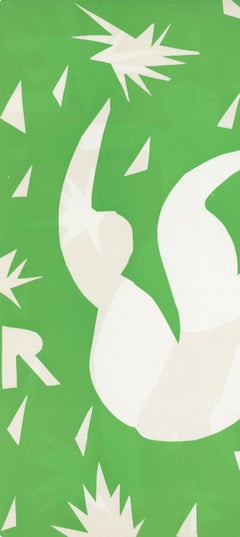
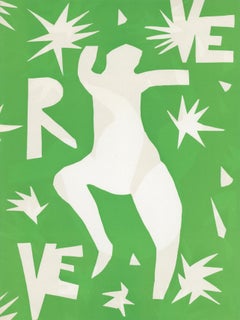
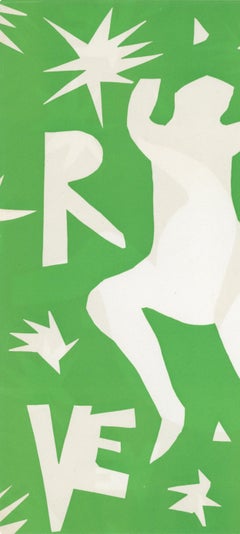
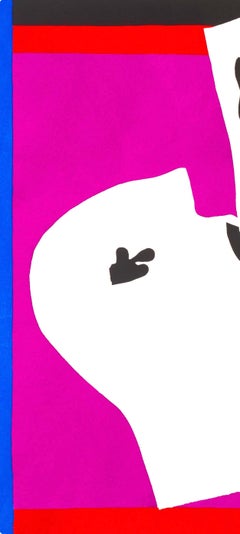
This exquisite lithograph by Henri Matisse (1869–1954), titled La Chute d’Icare (The Fall of Icarus), from Verve, Revue Artistique et Litteraire, Vol. IV, No. 13, originates from the...

Category

1940s Fauvist Art
Materials

Lithograph

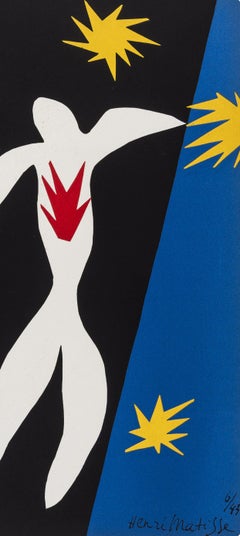
Henri Matisse, Icarus, from Verve, Revue Artistique, 1945

Henri Matisse, Icarus, from Verve, Revue Artistique, 1945

By Henri Matisse

Located in Southampton, NY

This exquisite lithograph by Henri Matisse (1869–1954), titled Icarus, from Verve, Revue Artistique et Litteraire, Vol. IV, No. 13, originates from the 1945 issue published by Editio...

Category

1940s Fauvist Art
Materials

Lithograph

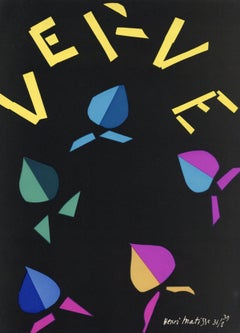
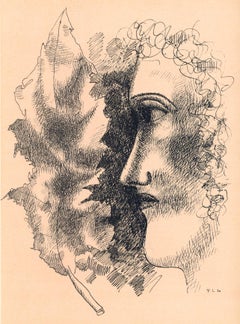
Fernand Leger, Head and Leaf, from Verve, Revue Artistique, 1939

Fernand Leger, Head and Leaf, from Verve, Revue Artistique, 1939

By Fernand Léger

Located in Southampton, NY

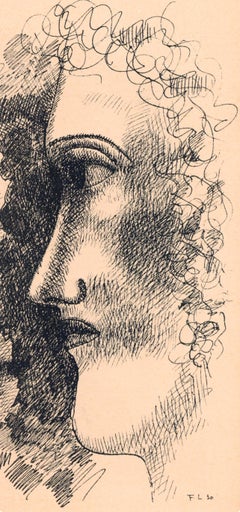
This exquisite lithograph by Fernand Leger (1881–1955), titled Tete et Feuille (Head and Leaf), from Verve, Revue Artistique et Litteraire, Vol. II, No. 5–6, originates from the 1939 issue published by Editions de la revue Verve, Paris, under the direction of Teriade, Editeur, Paris, and printed by Mourlot Freres, Paris, 1939. This striking composition epitomizes Leger’s distinct synthesis of mechanical precision and organic vitality. Tete et Feuille demonstrates his fascination with the interplay between geometry and the human figure—translating natural forms into bold, dynamic arrangements of line and color. The juxtaposition of the stylized head and leaf form reveals Leger’s mastery in uniting abstraction with humanism, a hallmark of his mature modernist vision. Through rhythmic design and rich tonal contrast, the work captures the harmony between nature and the machine age that defined much of Leger’s career. Executed as a lithograph on velin du Marais paper, this work measures 14 x 10.5 inches (35.56 x 26.67 cm). Signed in the plate and unnumbered as issued. The edition reflects the exceptional quality of the Mourlot Freres atelier, renowned for its collaborations with the foremost modern masters of the 20th century. Artwork Details: Artist: Fernand Leger (1881–1955) Title: Tete et Feuille (Head and Leaf), from Verve, Revue Artistique et Litteraire, Vol. II, No. 5–6, 1939 Medium: Lithograph on velin du Marais paper Dimensions: 14 x 10.5 inches (35.56 x 26.67 cm) Inscription: Signed in the plate and unnumbered as issued Date: 1939 Publisher: Editions de la revue Verve, Paris, under the direction of Teriade, Editeur, Paris Printer: Mourlot Freres, Paris Condition: Well preserved, consistent with age and medium Provenance: From Verve, Revue Artistique et Litteraire, Vol. II, No. 5–6, published by Editions de la revue Verve, Paris, 1939 About the Publication: Verve, Revue Artistique et Litteraire was one of the most influential art periodicals of the 20th century, founded in Paris in 1937 by the visionary Greek-born publisher Teriade (Stratis Eleftheriades). Conceived as a union of art and literature, Verve featured original lithographs and writings by the foremost artists and thinkers of its time, including Henri Matisse, Pablo Picasso, Marc Chagall, Georges Braque, Joan Miro, and Fernand Leger. Each issue represented a collaboration between artists, poets, and master printers, notably Mourlot Freres, whose exceptional craftsmanship brought color lithography to new aesthetic heights. The 1939 double issue, Vol. II, No. 5–6, is among the most distinguished editions, reflecting both the intellectual vigor and artistic experimentation that defined the pre-war Parisian avant-garde. About the Artist: Fernand Leger (1881–1955) was a visionary French painter, sculptor, designer, and filmmaker whose groundbreaking fusion of modern industry, vivid color, and geometric form transformed the course of 20th-century art. Born in Argentan, Normandy, Leger began as an architectural draftsman before studying at the Academie Julian and the Ecole des Beaux-Arts in Paris, where he absorbed the lessons of Paul Cezanne’s structural rigor and the revolutionary ideas of Cubism. Alongside Pablo Picasso and Georges Braque, he became one of the leading innovators of the avant-garde, yet his work stood apart through its embrace of mechanical rhythm, bold contrasts, and industrial modernity—earning him the title “the painter of the machine age.” His art celebrated the beauty of technology, urban life, and the human form rendered in dynamic, interlocking cylinders and planes, evoking the pulse of the modern world. Immersed in the vibrant Parisian art scene, Leger worked in dialogue with peers and contemporaries such as Alexander Calder, Alberto Giacometti, Salvador Dali, Joan Miro, Wassily Kandinsky, Marcel Duchamp, and Man Ray, all of whom shared his commitment to innovation and the reimagining of artistic expression. Beyond painting, Leger’s creative reach extended into film, design, and monumental public art—his 1924 collaboration on Ballet Mecanique with Dudley Murphy and Man Ray remains a landmark of avant-garde cinema. His later works evolved toward greater clarity and monumentality, celebrating the unity of form, color, and humanity through large-scale murals and mosaics that bridged fine art and architecture. Leger’s synthesis of Cubism, Futurism, and abstraction paved the way for movements such as Pop Art and influenced generations of artists including Roy Lichtenstein, Ellsworth Kelly, Robert Indiana, and Alexander Calder, who admired his fusion of structure, energy, and optimism. Today, his works are prized by major museums and collectors worldwide for their bold visual power and enduring modernity. His highest auction record was achieved by La femme en rouge et vert (1914), which sold for $39,241,000 at Sotheby’s, New York, on May 7, 2008. Fernand Leger Tete et Feuille, Leger Verve, Leger Mourlot...

Category

1930s Fauvist Art
Materials

Lithograph

Fauvist art for sale on 1stDibs.
Find a wide variety of authentic Fauvist art available for sale on 1stDibs. Works in this style were very popular during the 21st Century and Contemporary, but contemporary artists have continued to produce works inspired by this movement. If you’re looking to add art created in this style to introduce contrast in an otherwise neutral space in your home, the works available on 1stDibs include elements of blue, orange, purple, green and other colors. Many Pop art paintings were created by popular artists on 1stDibs, including Charles Cobelle, (after) André Derain, Evelyne Ballestra, and (after) Pierre Bonnard. Frequently made by artists working with Paint, and Oil Paint and other materials, all of these pieces for sale are unique and have attracted attention over the years. Not every interior allows for large Fauvist art, so small editions measuring 3.94 inches across are also available. Prices for art made by famous or emerging artists can differ depending on medium, time period and other attributes. On 1stDibs, the price for these items starts at $1 and tops out at $2,835,000, while the average work sells for $1,532.