Fauvist Art

1,229 Results
to
731
746
206
190
85
68
Overall Width
to
Overall Height
to
11
1,134
150
17
15
23
39
235
382
88
119
45
33
120,459
65,033
58,035
29,905
14,559
10,030
6,948
6,712
4,305
3,301
2,597
2,244
2,017
589
541
307
281
246
245
147
137
130
72
52
38
38
37
32
30
30
28
27
19
18
957
337

Use search to find more

33
21
21
18
17

Use search to find more

Style: Fauvist
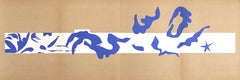
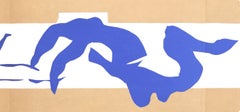
Henri Matisse, The Swimming Pool II, from Last Works of Matisse, 1958 (after)

Henri Matisse, The Swimming Pool II, from Last Works of Matisse, 1958 (after)

By Henri Matisse

Located in Fairfield, CT

Artist: Henri Matisse (1869–1954) (after) Title: The Swimming Pool II (La Piscine II) Year: July 28, 1958 Medium: Lithograph on velin du Marais paper Paper Size: 14 x 42 inches (35.56 x 106.68 cm), with trifold and stitch perforations as issued Condition: Well preserved, consistent with age and medium Inscription: Unsigned and unnumbered as issued Publisher: Editions de la revue Verve, Paris, under the direction of Teriade, Editeur, Paris Printer: Mourlot Freres, Paris Catalogue raisonne reference: Duthuit, Claude. Henri Matisse: Catalogue raisonne des ouvrages illustres. Editions Claude Duthuit, Paris, 1988, illustration 139 Notes: Excerpted from the album (translated from French), This double issue of VERVE is entirely devoted to the last works of Henri Matisse-1950-1954. These works, rendered in color litbography, were made by the artist, in gouache papers, cut with scissors and glued. They are accompanied by drawings executed during the same period or before. Matisse specially composed the cover of this album. Under his direction were drawn, during the year 1954, the first of these lithographic plates. The work was completed on July 28, 1958 by Mourlot Freres for lithography and by Master Printers Draeger Freres for heliogravures and typography. Additional notes: This exquisite lithograph after Henri Matisse (1869–1954), titled La Piscine II (The Swimming Pool II), from Dernieres Oeuvres de Matisse 1950-1954 (Last Works of Matisse 1950-1954), Verve: Revue Artistique et Litteraire, Vol. IX, No. 35-36, originates from the July 28, 1958 issue published by Editions de la revue Verve, Paris, under the direction of Teriade, Editeur, Paris, and printed by Mourlot Freres, Paris, 1958. This visionary composition reflects Matisse’s late mastery of form and color, translating his celebrated cut-out aesthetic into the lithographic medium with remarkable clarity and vibrancy. Dernieres Oeuvres de Matisse 1950-1954 (Last Works of Matisse 1950-1954), published as Verve Vol. IX, No. 35-36 on July 28, 1958, represents one of the most important posthumous tributes to Henri Matisse’s final period of artistic production. Conceived and directed by the visionary publisher Teriade, this issue of Verve is entirely dedicated to the works Matisse created between 1950 and 1954, a period defined by his pioneering cut-out technique. Produced in Paris with exceptional technical precision, the publication brings together color lithographs faithfully rendering Matisse’s gouache cut-outs alongside a selection of drawings executed during the same period or earlier. The lithographs were printed by Mourlot Freres, while Draeger Freres oversaw the heliogravures and typography, ensuring the highest level of craftsmanship. The project was initiated under Matisse’s direct supervision in 1954, with the artist guiding the early stages of translation from original cut paper compositions into lithographic form. As part of the broader legacy of Verve, one of the most influential artistic and literary publications of the twentieth century, this issue stands as a monumental record of Matisse’s final innovations, preserving the essence of his late style and affirming his enduring impact on modern art. HENRI MATISSE (1869–1954) was a French painter, sculptor, draughtsman, and printmaker whose revolutionary vision redefined modern art through his daring use of color, line, and form. Celebrated as one of the greatest artists of the 20th century, Matisse led the Fauvist movement and devoted his life to the pursuit of balance, beauty, and emotional expression in visual art. His early works burst with vibrant hues and liberated brushwork, while his later “cut-out” compositions achieved a poetic simplicity that transformed the relationship between color and space. Deeply influenced by the work of Paul Cezanne, Vincent van Gogh, and Georges Seurat, as well as by the rhythmic patterns of Islamic art, Byzantine mosaics, and Japanese prints, Matisse forged a new visual language that celebrated joy, movement, and serenity. He was part of an extraordinary generation of artists who shaped the evolution of modernism, maintaining lifelong dialogue and friendly rivalry with contemporaries such as Pablo Picasso, Georges Braque, Marc Chagall, Andre Derain, Albert Marquet, and Raoul Dufy—peers who, like him, sought to expand the expressive potential of color and composition. Matisse’s influence extended across generations, inspiring modern and contemporary masters including Alexander Calder, Alberto Giacometti, Salvador Dali, Joan Miro, Wassily Kandinsky, Marcel Duchamp, and Man Ray, each of whom drew upon his fearless experimentation and refined visual harmony. His paintings, sculptures, and works on paper are held in the most prestigious museums in the world, including the Museum of Modern Art, the Centre Pompidou, the Tate, and the Hermitage Museum, where his art continues to symbolize the essence of creativity and human emotion. The highest price ever paid for a Henri Matisse artwork is approximately $80.8 million USD, achieved in 2018 at Christie’s New York for Odalisque couchee aux magnolias (1923). Henri Matisse La Piscine...

Category

1950s Fauvist Art

Materials

Lithograph

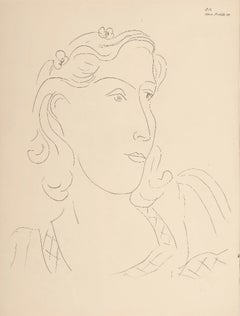
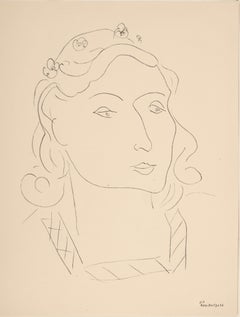
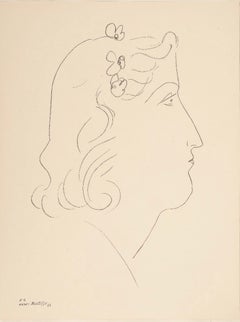
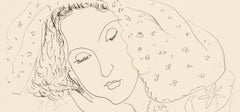
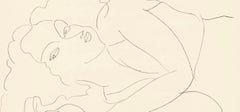
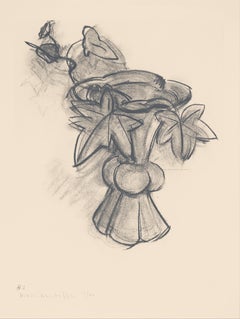
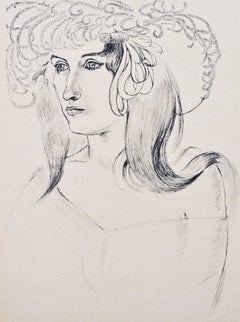
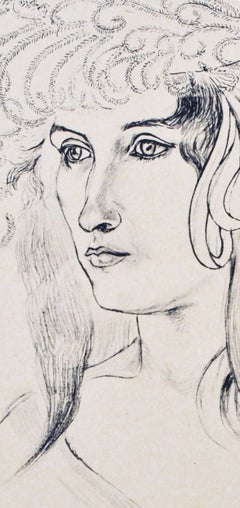
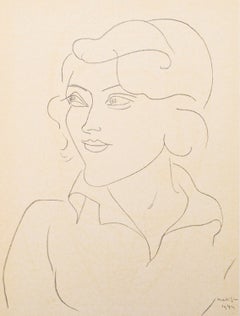
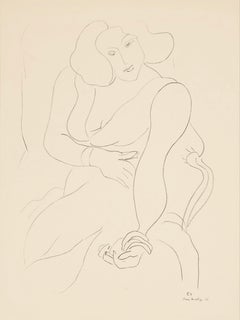
"Portrait" lithograph

"Portrait" lithograph

By (after) André Derain

Located in Henderson, NV

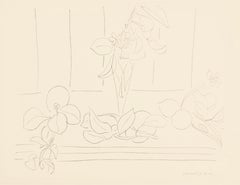
Medium: lithograph. Medium: lithograph. Printed in 1939 by Mourlot Freres and published by Teriade for Verve (Volume 1, Number 5-6). Size: 13 3/4 x 10 1/8 inches (347 x 257 mm). Ther...

Category

1930s Fauvist Art
Materials

Lithograph

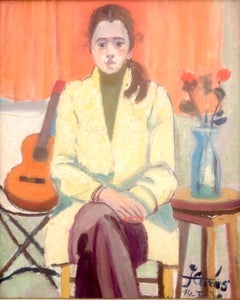
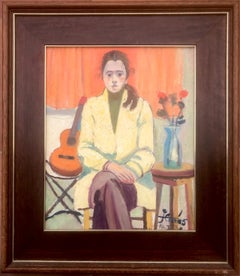
Spanish Modernist Portrait of a Woman with Guitar, Catalan Fauvist Interior Oil

Spanish Modernist Portrait of a Woman with Guitar, Catalan Fauvist Interior Oil

By Jordi Curos

Located in Sitges, Barcelona

Spanish Modernist Portrait of a Woman with Guitar, Catalan Fauvist Interior Artist: Jordi Curós Ventura (Spanish, 1930–2017) Title: Woman with Guitar Date: 1980 Medium: Oil on panel Dimensions: 46 × 38 cm (18.11 × 14.96 in) Framed dimensions: 64 × 56 cm (25.20 × 22.05 in) Signature: Signed and dated lower right Period: Late 20th century Style: Spanish Modernism, Catalan Modern Art, Figurative Expressionism, Fauvist influence Subject: Female portrait, woman, guitar, interior, flowers Condition: Good vintage condition, consistent with age Frame: Framed Description A striking 1980 oil painting by Catalan artist Jordi Curós Ventura, depicting a seated young woman in an intimate interior accompanied by a Spanish guitar and a vase of red flowers. The composition is constructed through large areas of warm, expressive color. The intense coral-orange background establishes an immediate chromatic presence, while the woman's pale yellow jacket, dark violet trousers, blue-green vase and orange guitar create a carefully balanced yet deliberately unconventional palette. Curós simplifies forms without abandoning figuration, giving the painting the visual immediacy associated with postwar European modernism and the coloristic freedom of Fauvism. The sitter occupies the center of the composition, frontal and still, her crossed legs and folded hands producing an almost sculptural stability. Behind her, the guitar introduces an unmistakably Mediterranean and Spanish note, while the vase and small table transform the portrait into an intimate domestic scene. Rather than functioning merely as accessories, these objects divide the composition into chromatic zones and establish a rhythmic dialogue between figure, still life and interior. The painting is signed and dated lower right and retains its substantial period frame. Biography Jordi Curós Ventura (Olot, Girona, 1930–2017) was an important Catalan painter associated with the renewal of Spanish figurative painting during the second half of the 20th century. He trained at the Escola d'Arts i Oficis of Olot, a city with one of Catalonia's most distinguished landscape-painting traditions. His first solo exhibition took place at Galerías Jardín in Barcelona in 1950, and from 1951 he participated in the influential Salons d'Octubre, which played an important role in introducing new artistic languages into postwar Catalan art. Curós exhibited at prominent Barcelona galleries including Sala Caralt, Galerías Layetanas, Galería Syra and Sala Vayreda. His Madrid debut took place at Galerías Biosca in 1953, and he also exhibited internationally. In 1952 he was selected by the influential Catalan intellectual and critic Eugeni d'Ors for the X Salón de los Once. The following year he participated in the II Bienal Hispanoamericana de Arte in Havana. Curós received scholarships that enabled him to work in Paris, first from the Institut Français de Barcelona in 1954 and later from Barcelona City Council in 1958. Contact with the Parisian art world contributed to the development of the increasingly experimental language that characterized his work during the following years. Between approximately 1958 and 1963, his painting moved toward abstraction and Informalism, with strongly textured surfaces, arabesques and enamel-like areas of color. He later returned to figuration, developing a highly personal style characterized by luminous color, simplified forms and an interest in capturing the immediacy of everyday life. From 1965 to 1989 he exhibited repeatedly at Barcelona's historic Sala Parés, one of Spain's oldest and most prestigious commercial galleries. His career also included participation in major exhibitions of contemporary Spanish art in Havana, Rio de Janeiro, Montevideo, Lisbon, Porto and Brussels. The Museu d'Art Modern de Barcelona acquired one of his paintings as early as 1953. Today Curós is regarded as a distinctive representative of postwar Catalan painting, occupying a fascinating territory between Mediterranean figuration, Expressionism, abstraction and the legacy of French modernism. Artistic Inspiration and Context This painting belongs to Curós's mature return to figuration after his experiments with abstraction and Informalism. Its saturated palette and simplified construction recall the great colorist tradition of 20th-century European painting, particularly Henri Matisse, Kees van Dongen and Raoul Dufy, while its psychological directness and deliberately economical drawing place it firmly within Spanish and Catalan postwar figurative art. There is also a subtle connection with the intimate interiors of the School of Paris: a solitary figure, ordinary domestic objects and an apparently simple setting transformed through color into something psychologically charged. The guitar is especially significant. Beyond its decorative function, it introduces a distinctly Spanish cultural symbol into an otherwise cosmopolitan modernist composition. Together with the flowers and intensely colored background, it gives the work a warm Mediterranean character highly characteristic of Curós's mature figurative vocabulary. The result is both portrait and interior, combining Spanish identity, Catalan postwar modernism and the chromatic freedom inherited from Fauvism. Jordi Curós Ventura Spanish Modern Art Catalan Modern Art Catalan Painting Spanish Figurative Painting Spanish Expressionism Fauvist Painting Fauvism Postwar European Art Postwar Spanish Art Mid-Century European Art 20th Century Spanish Painting Modernist Portrait Female Portrait Woman Portrait Painting Woman with Guitar Guitar Painting Spanish Guitar Art...

Category

1980s Fauvist Art
Materials

Oil, Board

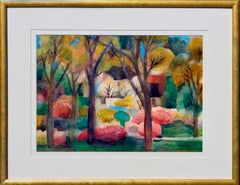
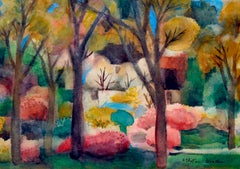
Autumn Forest - Mid Century Abstracted Fauvist Landscape

Autumn Forest - Mid Century Abstracted Fauvist Landscape

By Emily Shotwell Goeller-Wood

Located in Soquel, CA

Gorgeous mid century fauvist watercolor landscape with lush, vivid trees and distant houses by Emily Shotwell Goeller-Wood (American, 1887-1965). Presented in a rustic giltwood frame...

Category

1940s Fauvist Art
Materials

Paper, Watercolor

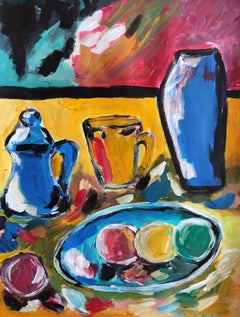
Mediterranean Fruit Market Fauvist Figurative Oil Painting Spain French Hippie

Mediterranean Fruit Market Fauvist Figurative Oil Painting Spain French Hippie

Located in Sitges, Barcelona

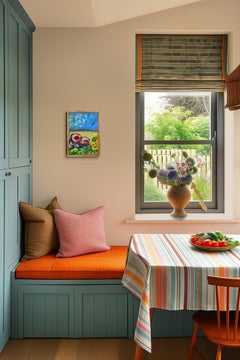
Mediterranean Fruit Market Fauvist Figurative Oil Painting Artist: Unknown Date: Circa 1980 Medium: Oil on board Dimensions: 41 × 33 cm (16.1 × 13 in) Framed dimensions: 56 × 48 cm ...

Category

1980s Fauvist Art
Materials

Oil, Board

Fauvist art for sale on 1stDibs.
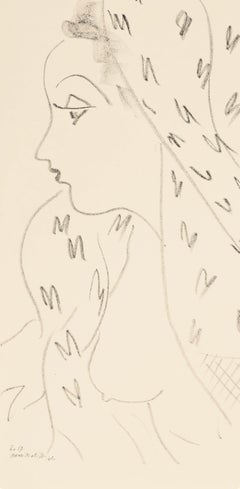
Find a wide variety of authentic Fauvist art available for sale on 1stDibs. Works in this style were very popular during the 21st Century and Contemporary, but contemporary artists have continued to produce works inspired by this movement. If you’re looking to add art created in this style to introduce contrast in an otherwise neutral space in your home, the works available on 1stDibs include elements of blue, orange, purple, green and other colors. Many Pop art paintings were created by popular artists on 1stDibs, including Charles Cobelle, (after) André Derain, Evelyne Ballestra, and (after) Pierre Bonnard. Frequently made by artists working with Paint, and Oil Paint and other materials, all of these pieces for sale are unique and have attracted attention over the years. Not every interior allows for large Fauvist art, so small editions measuring 3.94 inches across are also available. Prices for art made by famous or emerging artists can differ depending on medium, time period and other attributes. On 1stDibs, the price for these items starts at $1 and tops out at $2,835,000, while the average work sells for $1,532.