Fauvist Art

1,213 Results
to
786
739
202
187
81
67
Overall Width
to
Overall Height
to
10
1,118
148
18
14
24
38
235
380
81
113
46
33
119,252
63,819
57,486
29,539
14,484
9,718
6,931
6,391
4,273
3,200
2,510
2,323
2,120
585
766
474
34
521
298
276
234
233
145
132
126
71
51
40
38
37
31
31
30
29
27
19
17
552
429
265
191
186
34
21
21
19
17
236
41
946
328
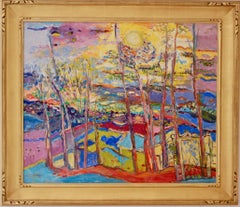
Style: Fauvist
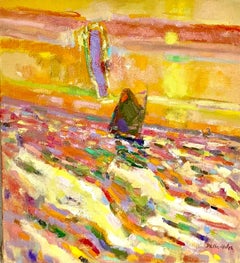
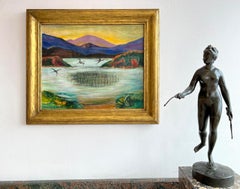
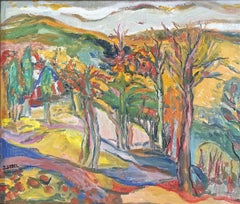
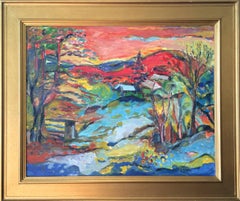
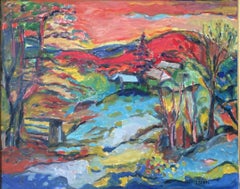
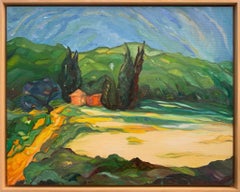
Vibrant Landscape With Sun

Vibrant Landscape With Sun

By Jehudith Sobel

Located in Lake Worth Beach, FL

Vibrant Landscape with Sun. Artist signed lower right corner, oil on canvas 36"x30" in 22K gold leaf Motyka frame 45"x39"x1"5 Judith Sobel was born in Lwow Poland in 1924. After Wor...

Category

1960s Fauvist Art

Materials

Canvas, Oil

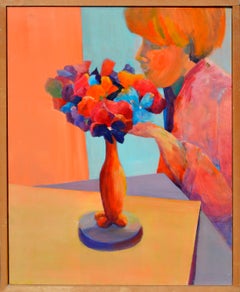
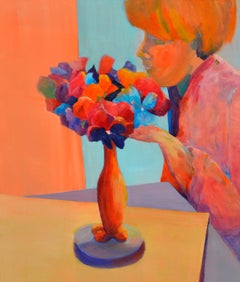
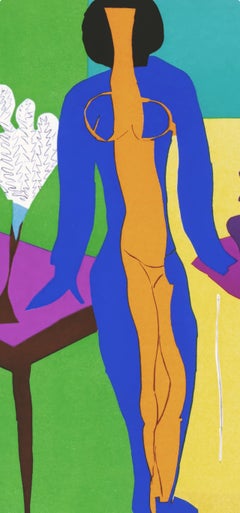
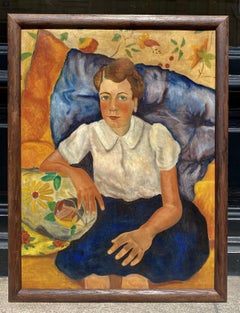
Fauvist Figure with Flowers

Fauvist Figure with Flowers, 1980

$1,032Sale Price|30% Off

Fauvist Figure with Flowers

Located in Soquel, CA

Bright, colorful Fauvist figurative painting of a woman with vase of flowers in a vibrant interior space, by an unknown Bay Area artist (American, 20th...

Category

1980s Fauvist Art

Materials

Canvas, Oil

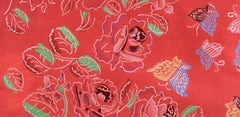
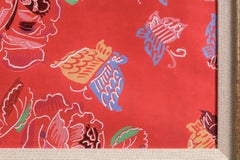
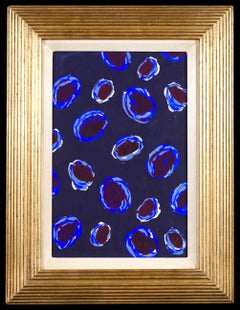
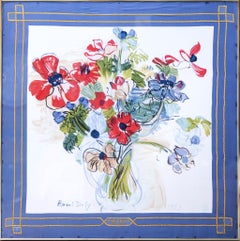
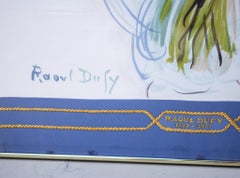
Fleurs et Papillons - Fauvist Flowers Watercolor & Gouache by Raoul Dufy

Fleurs et Papillons - Fauvist Flowers Watercolor & Gouache by Raoul Dufy

By Raoul Dufy

Located in Marlow, Buckinghamshire

Botanical watercolour and gouache on paper circa 1920 by French fauvist painter Raoul Dufy. The work depicts flowers in red and butterflies in blues, yellows, black and white. This work was executed by Dufy as a fabric design. Dimensions: Framed: 17"x27" Unframed: 10"x20" Provenance: Private collection of works by Raoul Dufy for Bianchini Ferier Bianchini Ferrier Collection - Christie's London - July 2001 SF Fall Show Raoul Dufy was one of a family of nine children, including five sisters and a younger brother, Jean Dufy, also destined to become a painter. Their father was an accountant in the employ of a major company in Le Havre. The Dufy family was musically gifted: his father was an organist, as was his brother Léon, and his youngest brother Gaston was an accomplished flautist who later worked as a music critic in Paris. Raoul Dufy's studies were interrupted at the age of 14, when he had to contribute to the family income. He took a job with an importer of Brazilian coffee, but still found time from 1892 to attend evening courses in drawing and composition at the local college of fine arts under Charles Marie Lhullier, former teacher of Othon Friesz and Georges Braque. He spent his free time in museums, admiring the paintings of Eugène Boudin in Le Havre and The Justice of Trajan in Rouen. A municipal scholarship enabled him to leave for Paris in 1900, where he lodged initially with Othon Friesz. He was accepted by the École des Beaux-Arts, where he studied under Léon Bonnat, whose innate conservatism prompted Dufy to remark later that it was 'good to be at the Beaux-Arts providing one knew one could leave'. And leave he did, four years later, embarking with friends and fellow students on the rounds of the major Paris galleries - Ambroise Vollard, Durand-Ruel, Eugène Blot and Berheim-Jeune. For Dufy and his contemporaries, Impressionism represented a rejection of sterile academism in favour of the open-air canvases of Manet, the light and bright colours of the Impressionists, and, beyond them, the daringly innovative work of Gauguin and Van Gogh, Seurat, Cézanne, Toulouse-Lautrec and others. Dufy was an out-and-out individualist, however, and was not tempted to imitate any of these artists. He produced, between 1935 and 1937, Fée Electricité (Spirit of Electricity), the emblem for the French utilities company Electricité de France (EDF). Dufy visited the USA for the first time in 1937, as a member of the Carnegie Prize jury. In 1940, the outbreak of war (and his increasingly rheumatic condition) persuaded him to settle in Nice. When he eventually returned to Paris 10 years later, his rheumatism had become so debilitating that he immediately left for Boston to follow a course of pioneering anti-cortisone treatment. He continued working, however, spending time first in Harvard and then in New York City before moving to the drier climate of Tucson, Arizona. The cortisone treatment was by and large unsuccessful, although he did recover the use of his fingers. He returned to Paris in 1951 and decided to settle in Forcalquier, where the climate was more clement. Within a short time, however, he was wheelchair-bound. He died in Forcalquier in March 1953 and was buried in Cimiez. Between 1895 and 1898, Raoul Dufy painted watercolours of landscapes near his native Le Havre and around Honfleur and Falaise. By the turn of the century, however, he was already painting certain subjects that were to become hallmarks of his work - flag-decked Parisian cityscapes, Normandy beaches teeming with visitors, regattas and the like, including one of his better-known early works, Landing Stage at Ste-Adresse. By 1905-1906 Friesz, Braque, Matisse, Derain, Vlaminck, Van Dongen and Rouault were described collectively as Fauves (the wild beasts). What they had in common was a desire to innovate, but they felt constrained nonetheless to meet formally to set out the guiding principles of what promised to be a new 'movement'. Dufy quickly established that those principles were acceptable; moreover, he was most impressed by one particular painting by Henri Matisse ( Luxury, Calm and Voluptuousness) which, to Dufy, embodied both novelty and a sense of artistic freedom. Dufy promptly aligned himself with the Fauves. Together with Albert Marquet in particular, he spent his time travelling the Normandy coast and painting views similar...

Category

1920s Fauvist Art

Materials

Paper, Watercolor, Gouache

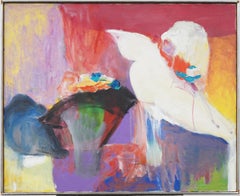
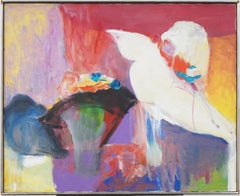
Vintage American Modernist Summer Hats Fauvist Still Life Framed Oil Painting

Vintage American Modernist Summer Hats Fauvist Still Life Framed Oil Painting

Located in Buffalo, NY

Vintage fauvist hat still life oil painting. Oil on canvas. Framed. Measuring: 27 by 33 inches overall, and 26 by 32 painting alone.. In excellent original condition. Handsomely fr...

Category

1960s Fauvist Art

Materials

Oil, Canvas

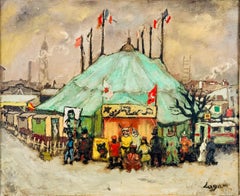
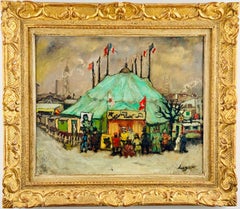
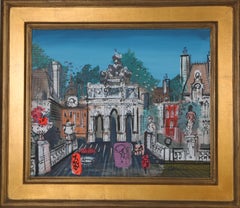
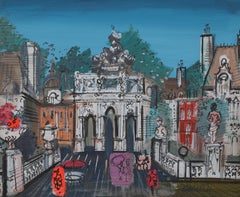
Celso Lagar, Pavillon de Cirque

Celso Lagar, Pavillon de Cirque

By Celso Lagar

Located in Madrid, ES

CELSO LAGAR Spanish, 1891 - 1966 PAVILLON DE CIRQUE signed "Lagar" (lower right) oil on canvas 15 x 18 inches (38 x 46 cm.) framed: 21-1/2 x 24-1/2 inches (54 x 62 cm.) NOTE: THIS W...

Category

1930s Fauvist Art

Materials

Oil, Canvas

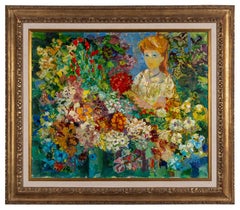
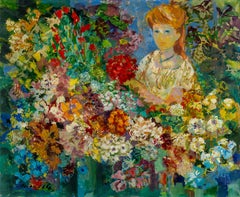
Marchande de Fleurs
Marchande de Fleurs

Marchande de Fleurs

By Emilio Grau Sala

Located in Sheffield, MA

Emilio Grau-Sala Spanish, 1911-1975 Marchande de Fleurs Oil on Canvas 23 ¾ by 29 in, w/ frame 32 ½ by 37 ½ in Signed lower left Son of the draughtsman Juan Grau Miró, Grau Sala com...

Category

Mid-20th Century Fauvist Art

Materials

Oil

Modernity - Lithograph - After Raoul Dufy

Modernity - Lithograph - After Raoul Dufy

By (after) Raoul Dufy

Located in Collonge Bellerive, Geneve, CH

(after) Raoul Dufy Lithograph after a watercolor, published in the book "Lettre à mon peintre Raoul Dufy." Paris, Librairie Académique Perrin, 1965. Printed signature Dimensions: 30...

Category

1940s Fauvist Art

Materials

Lithograph

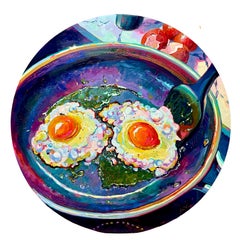
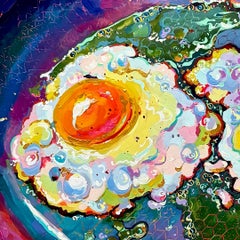
"Crispy Eggs" - Round Oil and Acrylic Still Life, 50 cm Tondo Artwork

"Crispy Eggs" - Round Oil and Acrylic Still Life, 50 cm Tondo Artwork

Located in Denver, CO

Alai Ganuza’s “Crispy Eggs” is a captivating round oil and acrylic still life painting on a solid birch wooden panel, created in 2025. Measuring approximately 19.69 cm in diameter (7...

Category

2010s Fauvist Art

Materials

Wood, Oil

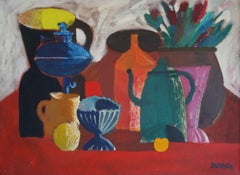
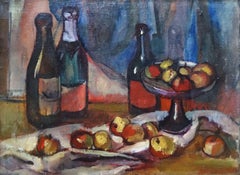
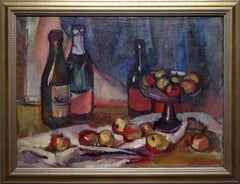
Colorful Still life. 1981. Canvas, oil, tempera, 65x88 cm

Colorful Still life. 1981. Canvas, oil, tempera, 65x88 cm

By Aija Zarina

Located in Riga, LV

Aija Zariņa is a prominent personality in Latvian art, actively advocating for idealism and personal freedom, against conformism. Her main theme is human existence, its fundamental c...

Category

1980s Fauvist Art

Materials

Canvas, Oil, Tempera

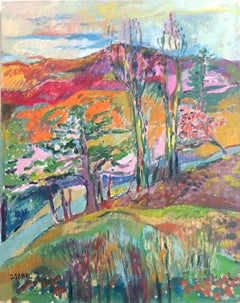
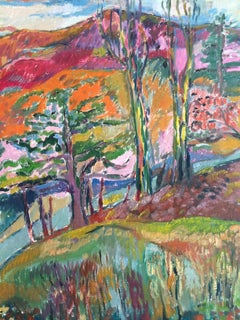
View Of The Hudson Valley, Oil On Canvas, 1970s

View Of The Hudson Valley, Oil On Canvas, 1970s

By Jehudith Sobel

Located in Lake Worth Beach, FL

View Of The Hudson Valley Size 30x24 artist signed lower left corner. Jehudith Sobel The painting portrays a vibrant landscape view of the Catskill Mountains. In 1960s, Jehudith ...

Category

1970s Fauvist Art

Materials

Canvas, Oil

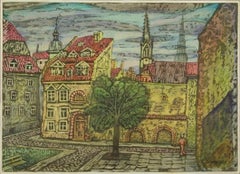
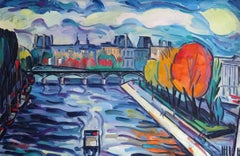
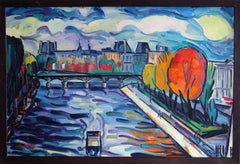
Paris. Oil on cardboard, 42, 4x64 cm

Paris. Oil on cardboard, 42, 4x64 cm

By Adamia Rezo

Located in Riga, LV

Paris. Oil on cardboard, 42,4x64 cm Paris landscape. View on the river from the top. Colorful painting with yellow-orange trees, dominant color blue

Category

20th Century Fauvist Art

Materials

Oil, Cardboard

Landscape View Of the Catskill Mountains, Fauvist Oil Painting On Canvas Framed

Landscape View Of the Catskill Mountains, Fauvist Oil Painting On Canvas Framed

By Jehudith Sobel

Located in Lake Worth Beach, FL

Catskill New York Mountain View Size 20"x24" framed 26"x30" artist signed lower left corner. Jehudith Sobel The painting portrays a vibrant landscape view of the Catskill Mountains. In 1960s, Jehudith Sobel purchased a summer house in Woodstock NY, where she would spend every summer. This location proved to be one of her favorite spots to paint. Using both Expressionistic and Fauvist styles that she strove to perfect, Sobel explores her imagination and the use of colors with such freedom that one is captivated by the euphoric dance of nature that she was able to encapsulate. Judith Sobel was born in Lwow Poland in 1924. After World War II, she attended the Academy of Fine Arts in Lodz, Poland. There she studied with the famous abstract...

Category

1970s Fauvist Art

Materials

Canvas, Oil

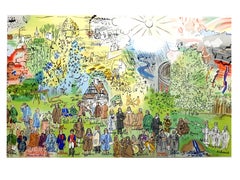
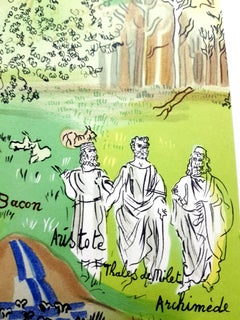
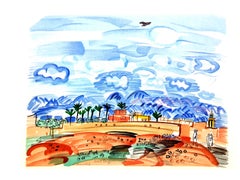
Raoul Dufy (after) - Landscape - Lithograph

Raoul Dufy (after) - Landscape - Lithograph

By Raoul Dufy

Located in Collonge Bellerive, Geneve, CH

(after) Raoul Dufy Lithograph after a watercolor, published in the book "Lettre à mon peintre Raoul Dufy." Paris, Librairie Académique Perrin, 1965. Printed signature Dimensions: 30...

Category

1940s Fauvist Art

Materials

Lithograph

Still Life - Lithograph

Still Life - Lithograph

By (after) Raoul Dufy

Located in Collonge Bellerive, Geneve, CH

(after) Raoul Dufy Lithograph after a watercolor, published in the book "Lettre à mon peintre Raoul Dufy." Paris, Librairie Académique Perrin, 1965. Printed signature Dime...

Category

1940s Fauvist Art

Materials

Lithograph

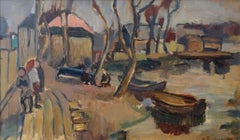
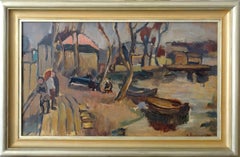
Boats by the river  Oil on cardboard, 47.5x80 cm

Boats by the river Oil on cardboard, 47.5x80 cm

By Biruta Baumane

Located in Riga, LV

Boats by the river Oil on cardboard, 47.5x80 cm The main focus of the artwork is a fauvistic stylized landscape featuring boats by the river. The artist's intention is to convey the landscape in bold and vivid earth tones, characteristic of the fauvist style. Biruta Baumane...

Category

1950s Fauvist Art

Materials

Oil, Cardboard

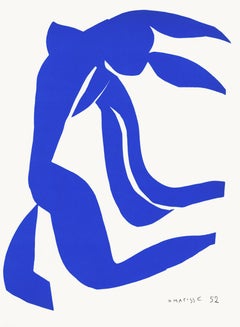
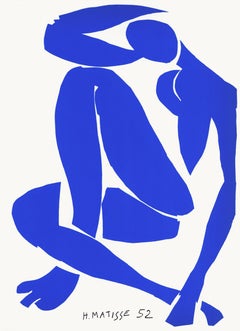
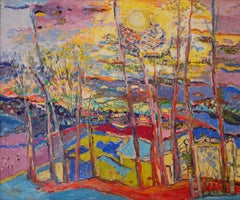
Henri Matisse, Christmas Night, from Last Works of Matisse, 1958 (after)

Henri Matisse, Christmas Night, from Last Works of Matisse, 1958 (after)

By Henri Matisse

Located in Fairfield, CT

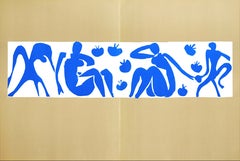
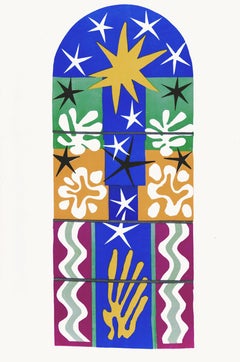
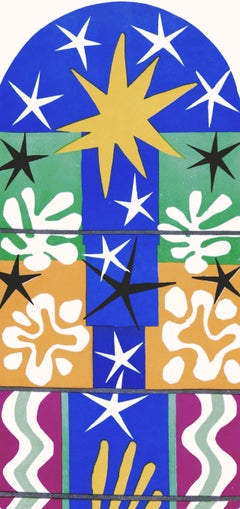
Artist: Henri Matisse (1869–1954) (after) Title: Christmas Night (Nuit de Noel) Year: July 28, 1958 Medium: Lithograph on velin du Marais paper Paper Size: 14 x 10.5 inches (35.56 x 26.67 cm) Condition: Well preserved, consistent with age and medium Inscription: Unsigned and unnumbered as issued Publisher: Editions de la revue Verve, Paris, under the direction of Teriade, Editeur, Paris Printer: Mourlot Freres, Paris Catalogue raisonne reference: Duthuit, Claude. Henri Matisse: Catalogue raisonne des ouvrages illustres. Editions Claude Duthuit, Paris, 1988, illustration 139 Notes: Excerpted from the album (translated from French), This double issue of VERVE is entirely devoted to the last works of Henri Matisse-1950-1954. These works, rendered in color litbography, were made by the artist, in gouache papers, cut with scissors and glued. They are accompanied by drawings executed during the same period or before. Matisse specially composed the cover of this album. Under his direction were drawn, during the year 1954, the first of these lithographic plates. The work was completed on July 28, 1958 by Mourlot Freres for lithography and by Master Printers Draeger Freres for heliogravures and typography. Additional notes: This exquisite lithograph after Henri Matisse (1869–1954), titled Nuit de Noel (Christmas Night), from Dernieres Oeuvres de Matisse 1950-1954 (Last Works of Matisse 1950-1954), Verve: Revue Artistique et Litteraire, Vol. IX, No. 35-36, originates from the July 28, 1958 issue published by Editions de la revue Verve, Paris, under the direction of Teriade, Editeur, Paris, and printed by Mourlot Freres, Paris, 1958. This visionary composition reflects Matisse’s late mastery of form and color, translating his celebrated cut-out aesthetic into the lithographic medium with remarkable clarity and vibrancy. Dernieres Oeuvres de Matisse 1950-1954 (Last Works of Matisse 1950-1954), published as Verve Vol. IX, No. 35-36 on July 28, 1958, represents one of the most important posthumous tributes to Henri Matisse’s final period of artistic production. Conceived and directed by the visionary publisher Teriade, this issue of Verve is entirely dedicated to the works Matisse created between 1950 and 1954, a period defined by his pioneering cut-out technique. Produced in Paris with exceptional technical precision, the publication brings together color lithographs faithfully rendering Matisse’s gouache cut-outs alongside a selection of drawings executed during the same period or earlier. The lithographs were printed by Mourlot Freres, while Draeger Freres oversaw the heliogravures and typography, ensuring the highest level of craftsmanship. The project was initiated under Matisse’s direct supervision in 1954, with the artist guiding the early stages of translation from original cut paper compositions into lithographic form. As part of the broader legacy of Verve, one of the most influential artistic and literary publications of the twentieth century, this issue stands as a monumental record of Matisse’s final innovations, preserving the essence of his late style and affirming his enduring impact on modern art. HENRI MATISSE (1869–1954) was a French painter, sculptor, draughtsman, and printmaker whose revolutionary vision redefined modern art through his daring use of color, line, and form. Celebrated as one of the greatest artists of the 20th century, Matisse led the Fauvist movement and devoted his life to the pursuit of balance, beauty, and emotional expression in visual art. His early works burst with vibrant hues and liberated brushwork, while his later “cut-out” compositions achieved a poetic simplicity that transformed the relationship between color and space. Deeply influenced by the work of Paul Cezanne, Vincent van Gogh, and Georges Seurat, as well as by the rhythmic patterns of Islamic art, Byzantine mosaics, and Japanese prints, Matisse forged a new visual language that celebrated joy, movement, and serenity. He was part of an extraordinary generation of artists who shaped the evolution of modernism, maintaining lifelong dialogue and friendly rivalry with contemporaries such as Pablo Picasso, Georges Braque, Marc Chagall, Andre Derain, Albert Marquet, and Raoul Dufy—peers who, like him, sought to expand the expressive potential of color and composition. Matisse’s influence extended across generations, inspiring modern and contemporary masters including Alexander Calder, Alberto Giacometti, Salvador Dali, Joan Miro, Wassily Kandinsky, Marcel Duchamp, and Man Ray, each of whom drew upon his fearless experimentation and refined visual harmony. His paintings, sculptures, and works on paper are held in the most prestigious museums in the world, including the Museum of Modern Art, the Centre Pompidou, the Tate, and the Hermitage Museum, where his art continues to symbolize the essence of creativity and human emotion. The highest price ever paid for a Henri Matisse artwork is approximately $80.8 million USD, achieved in 2018 at Christie’s New York for Odalisque couchee aux magnolias (1923). Henri Matisse Nuit de Noel...

Category

1950s Fauvist Art
Materials

Lithograph

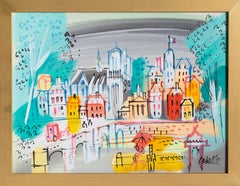
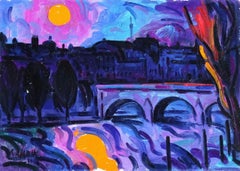
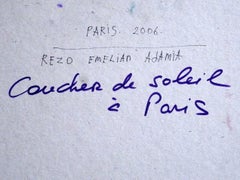
Sunset in Paris. 2006, oil on cardboard, 33x45, 8 cm

Sunset in Paris. 2006, oil on cardboard, 33x45, 8 cm

Located in Riga, LV

Sunset in Paris. 2006, oil on cardboard, 33x45,8 cm Paris evening cityscape. View on the bridge. Colorful painting with yellow-pink sun, dominant color blue-lilac

Category

20th Century Fauvist Art

Materials

Oil, Cardboard

Early Morning

Early Morning

By Armine Bozhko

Located in Fairfield, CT

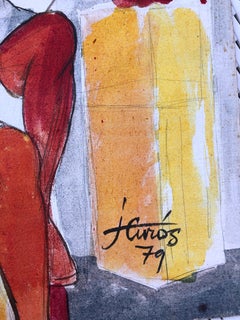
Armine Bozhko works on the crossroads of different cultures- she was born in Ukrainian-Armenian family of writers and diplomats, studied in Republican art school by Taras Shevchenko,...

Category

2010s Fauvist Art
Materials

Canvas, Oil

Fauvist art for sale on 1stDibs.
Find a wide variety of authentic Fauvist art available for sale on 1stDibs. Works in this style were very popular during the 21st Century and Contemporary, but contemporary artists have continued to produce works inspired by this movement. If you’re looking to add art created in this style to introduce contrast in an otherwise neutral space in your home, the works available on 1stDibs include elements of blue, orange, purple, green and other colors. Many Pop art paintings were created by popular artists on 1stDibs, including Charles Cobelle, (after) André Derain, Evelyne Ballestra, and (after) Pierre Bonnard. Frequently made by artists working with Paint, and Oil Paint and other materials, all of these pieces for sale are unique and have attracted attention over the years. Not every interior allows for large Fauvist art, so small editions measuring 3.94 inches across are also available. Prices for art made by famous or emerging artists can differ depending on medium, time period and other attributes. On 1stDibs, the price for these items starts at $1 and tops out at $2,835,000, while the average work sells for $1,532.