Horse Art

to
441
1,242
801
693
503
760
Overall Width
to
Overall Height
to
127
736
1,545
1,594
34
24
65
159
75
108
76
191
133
76
90
885
549
237
127
82
52
52
44
38
26
22
11
3
2,512
998
271
4,003
154,004
80,754
50,732
42,346
36,821
35,358
30,216
26,837
25,676
24,790
20,719
18,101
15,825
14,606
13,797
13,162
11,310
10,641
10,200
1,596
1,185
692
668
665
192
110
81
62
29
1,441
1,192
2,289
1,606
Art Subject: Horse
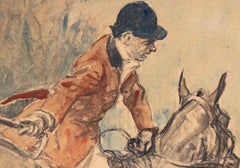
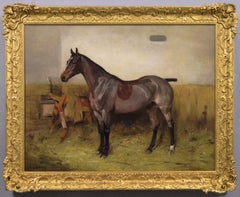
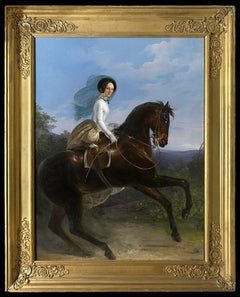
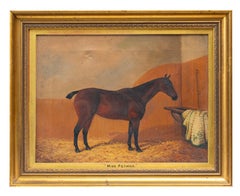
A Racehorse with Owner and Jockey, 19th Century Equine Oil Painting

A Racehorse with Owner and Jockey, 19th Century Equine Oil Painting

By Harry Hall

Located in London, GB

Oil on canvas Image size: 25 1/2 x 19 1/2 inches (40 x 50 cm) 19th century gilt pierced frame This is a wonderful scene featuring a dark bay racehorses mounted by its jockey. The pa...

Category

Mid-19th Century Victorian Animal Paintings

Materials

Canvas, Oil

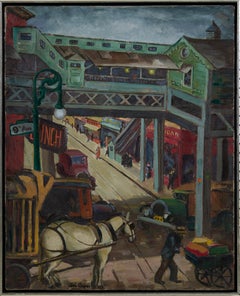
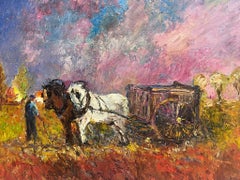
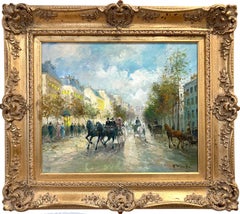
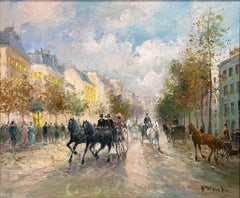
"Carriages at Grands Boulevards" Post-Impressionist Parisian City Street Scene

"Carriages at Grands Boulevards" Post-Impressionist Parisian City Street Scene

By Te Pencke

Located in New York, NY

A beautiful oil on canvas painting by the French artist, Te Pencke. Pencke was a Parisian painter known for his colorful cityscapes depicting the times of his generation. His work is...

Category

20th Century Post-Impressionist Landscape Paintings

Materials

Canvas, Oil

The Remuda

The Remuda

By Mark Maggiori

Located in Draper, UT

Giclee print on 300 gsm archival cotton rag with dimensions of 30 x 40 in. Released in 2021 from an edition of 254. Signed and numbered by Mark Maggiori. Large format stunning print.

Category

2010s American Modern Prints and Multiples

Materials

Archival Paper

Lonesome Cowboy
Lonesome Cowboy

Lonesome Cowboy

By Dylan Gordon

Located in New York, NY

Born and raised on the Central Coast of California, Dylan was brought up raising horses, surfing and skating throughout his youth. The pursuit to tell stories came naturally when he began pointing his camera towards what and who he loved most. Now known for his work in the Outdoor and Editorial realms Dylan travels the globe shooting with Top Athletes and brands. Dylan now resides in Ventura...

Category

2010s Color Photography

Materials

Photographic Paper

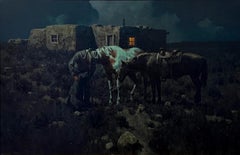
"A FINE WELCOME" WESTERN COWBOY ARTISTS OF AMERICA 38 X 50 FRAMED NOCTURNAL

"A FINE WELCOME" WESTERN COWBOY ARTISTS OF AMERICA 38 X 50 FRAMED NOCTURNAL

By Gary Niblett

Located in San Antonio, TX

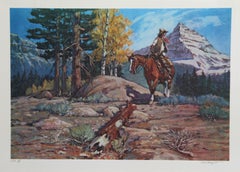
Gary Niblett (Born 1943) New Mexico Artist Image Size: 24 x 36 Frame Size: 38 x 50 Medium: Oil "A Fine Welcome" Nocturnal Western Biography Gary Niblett (Born 1943) Born and raised in Carlsbad, New Mexico and living with his wife, Monika in Santa Fe, Gary Niblett is a painter, primarily with oil, of western scenes especially Navajo and Pueblo Indians, cowboys on horses in landscape, and frontier genre. He has also done paintings from his travels such as Streets of Warsaw and Women of Golondrinas, and during these travels exhibited work in Moscow, Taiwan, Beijing and the Royal Watercolor Society in London. From birth, Niblett grew up with the American West as a part of his daily life. Recognizing his talent, local ranchers paid him to do portraits of his horses. After high school graduation, he attended the Art Center School of Design* in California and then spent eight years in Los Angeles with Hanna-Barbera* animation studios as a background and animation artist. There he met his wife, Monika, and they married in 1970. Deciding to focus on western art, Niblett left commercial art in 1973. He and his wife, Monica, returned to New Mexico where they live in an adobe style home. In New Mexico, he has received much attention for the quality of his painting. In 1990, he was named "Distinguished Calendar Artist" for New Mexico Magazine, and one of his oil paintings is in the collection of the New Mexico state capitol building. He has also been featured in magazines such as International Fine Art Collector, Time, Saturday Review and New Mexico Magazine. In 1976, Niblett was voted into the Cowboy Artists of America...

Category

1980s Impressionist Landscape Paintings
Materials

Oil

"At the Gates of Pinehurst" by J.E. Mansfield

"At the Gates of Pinehurst" by J.E. Mansfield

Located in San Francisco, CA

This charming 1880s American genre scene, “At the Gates of Pinehurst,” depicts a couple driven by a coachman in horse-drawn Phaeton carriage approaching the gates of an estate just g...

Category

1880s Impressionist Landscape Paintings
Materials

Canvas, Oil

An Olive Grove Facing the Sea

An Olive Grove Facing the Sea

By Sila Sehrazat Yucel

Located in New York, NY

Sila Sehrazat Yucel is a talented artist based in Istanbul. Her background in landscape and interior architecture shapes her creative vision. With experience as an art director in ci...

Category

2010s Contemporary Animal Prints

Materials

Archival Pigment

Horses in a paddock
Horses in a paddock

Horses in a paddock

By Donald Grant

Located in Stoke, Hampshire

Donald Grant (1924-2001) Horses in a paddock Signed lower left Oil on canvas Canvas size - 24 x 36 in Donald Currie Grant was born in 1930 in North Shiel...

Category

20th Century Modern Animal Paintings

Materials

Oil

Suzdal. Horse riding

Suzdal. Horse riding

By Simon Kozhin

Located in Zofingen, AG

This piece captures the serene harmony between tradition and nature. Using oil, I sought to evoke the peaceful rhythm of horse riding against the historic backdrop, blending impressi...

Category

Early 2000s Impressionist Landscape Paintings
Materials

Canvas, Oil

Turn of the century parade Ringling Bros. and Barnum & Bailey Circus

Turn of the century parade Ringling Bros. and Barnum & Bailey Circus

Located in Middletown, NY

Gelatin silver print, 7 1/2 x 9 1/2 in. (190 x 241 mm) from the Roland Butler Collection, Press Agent, Ringling Bros. and Barnum & Bailey Circus (1930s-1960s) Roland Butler Collectio...

Category

Early 20th Century American Modern Portrait Photography

Materials

Photographic Paper

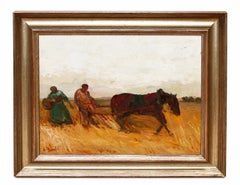
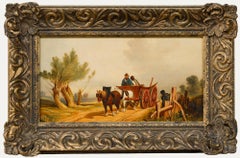
Framed Early 20th Century Oil - Ploughing Team in a Landscape

Framed Early 20th Century Oil - Ploughing Team in a Landscape

Located in Corsham, GB

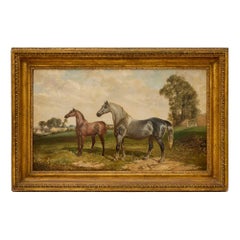
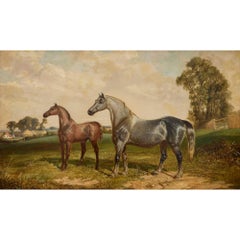
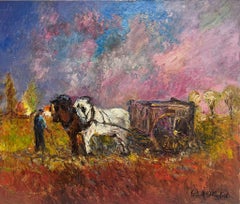
A large pastoral landscape in oil, depicting two working draught horses, one dark and one dappled grey, standing in harness against a rural landscape. The composition captures the st...

Category

20th Century Animal Paintings

Materials

Oil

"HORSE TAMER" BRONZE SCULPTURE

"HORSE TAMER" BRONZE SCULPTURE

By John Bennett 1

Located in San Antonio, TX

John Bennett (Born 1952) Fredericksburg, Texas Artist Image Size: 22 x 39 across x 11 Medium: Bronze "Horse Tamer" John Bennett (Born 1952) John Bennett was designated Texas State Ar...

Category

20th Century Modern Figurative Sculptures

Materials

Bronze

Antique Horse Bronze Trotting Stallion Isidore Jules Bonheur (France, 1827-1901)

Antique Horse Bronze Trotting Stallion Isidore Jules Bonheur (France, 1827-1901)

By Isidore Jules Bonheur

Located in SANTA FE, NM

Antique Horse Bronze Portrait of a Trotting Stallion Isidore Jules Bonheur (France, 1827-1901) Cast bronze mounted on a rectangular plinth with dark brown patina, Signed: I. BONHEUR 17 x 11 3/4 A brilliant exploration of a stallion in full trot. The patina is a deep, warm walnut brown with honey-colored tones. Isidore Bonheur was best known and the most distinguished of the 19th century French animalier sculptors. Isidore, the younger brother of Rosa Bonheur and older brother of Auguste, began his studies of painting initially with his father, who was friends with Francisco Goya. By 1848 he debuted at the Paris Salon having discontinued animal and landscape painting to concentrate on creating sculptures and in 1849, Bonheur enrolled at the Ecole des Beaux Arts. He won medals at the Paris Salon in 1859 and did so again in 1865 and in 1869. After entering the Exposition Universelle 1855, he won the Gold Medal in 1889. In the 1870s exhibited in the London at the Royal Academy of Arts where he earned great prestige and won the coveted Medaille d’Or. After winning numerous other medals and prizes, Bonheur was awarded the Legion d' Honneur in 1895 and he was Knighted in Portugal, Spain and France. Bonheur continued exhibiting at the Paris Salon until 1899. Many of his bronzes were fabricated at the foundry owned by Hippolyte Peyrol, Bonheur's brother-in-law by marriage to Isidore’s youngest sister Juliette Bonheur. The Peyrol casts for both Rosa and Isidore are exceptionally well executed which suggests a strong working relationship between the founder and sculptor. There is little doubt that Isidore Bonheur was an acute observer of nature; his animals were not anthropomorphized but modelled to catch movement or posture characteristics of the particular species he was sculpting. He achieved this most successfully with his sculptures of horses which are usually depicted as relaxed rather than spirited. These figures are among his most renowned works and his equestrian models became very popular, particularly among the British aristocracy. An acute observer of nature, his sculptures reflect his commitment to the Realist school - with precise detailing of the movements of animals in their natural habitats. Ultimately, His naturalistic studies of animals are now some of the most highly sought after works by any of the animalier. He was possibly inspired by his many visits to the Buffalo Bill Wild West Show...

Category

1870s Realist Figurative Sculptures

Materials

Bronze

Giddyup Cowboy
Giddyup Cowboy

Giddyup Cowboy

By Dylan Gordon

Located in New York, NY

Born and raised on the Central Coast of California, Dylan was brought up raising horses, surfing and skating throughout his youth. The pursuit to tell stories came naturally when he began pointing his camera towards what and who he loved most. Now known for his work in the Outdoor and Editorial realms Dylan travels the globe shooting with Top Athletes and brands. Dylan now resides in Ventura...

Category

2010s Color Photography

Materials

Photographic Paper

I Call Your Name
I Call Your Name

I Call Your Name

By Sila Sehrazat Yucel

Located in New York, NY

Sila Sehrazat Yucel is a talented artist based in Istanbul. Her background in landscape and interior architecture shapes her creative vision. With experience as an art director in ci...

Category

2010s Contemporary Animal Prints

Materials

Archival Pigment

Take Heart, Oil Painting

Take Heart, Oil Painting

By Alana Clumeck

Located in San Francisco, CA

Artist Comments
Artist Alana Clumeck’s distinctive style comes through in this contemporary equestrian painting, marked by her signature patterns. A group of brown horses for...

Category

21st Century and Contemporary Contemporary Animal Paintings

Materials

Oil

The Meet and the Kill

The Meet and the Kill

By John Frederick Herring Jr

Located in Lexington, KY

Known to his contemporaries as “Fred,” the junior Herring painted farm and equestrian scenes similar in subject matter and style to those of his father. His paintings are chiefly dis...

Category

19th Century Animal Paintings

Materials

Oil

Venetian painter - 19th century Venice oil painting - Giovanni Paolo square

Venetian painter - 19th century Venice oil painting - Giovanni Paolo square

Located in Varmo, IT

Venetian painter (19th century) - Venice, view of Campo Santi Giovanni e Paolo. 38.5 x 55 cm (without frame) - 47 x 63 cm (with frame). Oil on canvas, in carved and gilded wood...

Category

Early 19th Century Realist Landscape Paintings

Materials

Canvas, Oil

Arrow Creek Horses
Arrow Creek Horses

Arrow Creek Horses

By Theodore Waddell

Located in Bozeman, MT

Waddell's paintings are a combination of rough marks, thick paint, transparent elegant strokes, and, on a few occasions a slow, hard line scratched into the canvas. You can feel the ...

Category

1990s Contemporary Landscape Paintings

Materials

Canvas, Encaustic, Oil

Three Horses in the Green Grass Meadow Large 20th Century Oil Landscape

Three Horses in the Green Grass Meadow Large 20th Century Oil Landscape

Located in Cirencester, Gloucestershire

Horses in the Meadow signed and dated 85' by Sven Erik HELLQVIST (Swedish, 1916-1997) oil on canvas, framed framed: 22 x 29 inches canvas : 16 x 23 inches Provenance: private collect...

Category

20th Century Impressionist Animal Paintings

Materials

Oil, Canvas

Soulmates (brown pet dog, lady, vintage, animal, surrealist oil painting)

Soulmates (brown pet dog, lady, vintage, animal, surrealist oil painting)

By Rudolf Kosow

Located in Quebec, Quebec

Soulmates," a poignant work by Rudolf Kosow, tenderly illustrates the profound bond shared between a dog and a human. In this intimate portrayal, the dog's gaze is imbued with an emotional depth that transcends the boundaries between species. Its eyes, rendered with striking clarity, convey a world of understanding and companionship. The lady, is nestled against the dog's face in a pose that suggests a mutual trust and shared existence. This closeness speaks to a relationship that goes beyond the conventional pet-owner dynamic, hinting at a deeper, spiritual connection—a true meeting of souls. In Kosow's vision, the concept of soulmates expands, encompassing the idea that our most understanding and compassionate partners may not be human at all. The painting's title, "Soulmates," encapsulates the notion that kindred spirits are connected not by words, but by the heart and soul, through gestures of love and moments of silent understanding. With "Soulmates," Kosow invites us to contemplate the essence of connection and the forms it can take. It's a celebration of the unspoken bond that animals and humans can share, an acknowledgment that the purest forms of love and understanding sometimes require no language. This piece serves as a beautiful reminder of the loyalty, comfort, and unconditional acceptance that define the most precious of life's relationships. keywords; painting on canvas, surrealist painting, animal vs human, americana, nature, man, man vs nature, surrealism, giant animal...

Category

2010s Surrealist Animal Paintings

Materials

Canvas, Oil

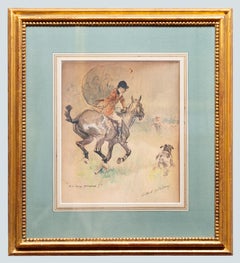
British Impressionist Watercolor of a Rider, Horse and Dog in the Countryside

British Impressionist Watercolor of a Rider, Horse and Dog in the Countryside

By Anthony Avery

Located in Cirencester, Gloucestershire

Title: British Impressionist Watercolor of a Rider, Horse and Dog in the Countryside By Anthony Avery (British 1946-2023) Original watercolor on artists paper, unframed Signed: Yes D...

Category

Early 2000s Impressionist Landscape Paintings
Materials

Watercolor

American West by Anouk Krantz 2021

American West by Anouk Krantz 2021

By Anouk Krantz

Located in Chicago, IL

American West (B&W) 2021 ARCHIVAL PIGMENT PRINT Unframed Sizes: 40 x 60 in (101.6 x 152.4 cm) - Edition of 10 + 2 AP (Artist Proofs) SILVER GELATIN PRINT Unframed Size: 11.3 x 17 i...

Category

21st Century and Contemporary Contemporary Black and White Photography

Materials

Archival Pigment, Silver Gelatin

Set of 4 William Rowland British Hunting Scene Oil Paintings Framed

Set of 4 William Rowland British Hunting Scene Oil Paintings Framed

Located in Cirencester, Gloucestershire

Title Set of 4 William Rowland British Hunting Scene Oil Paintings Framed Key Details Artist: William Rowland, British, 20th century Subject: Set of four British hunting scenes Mediu...

Category

20th Century Animal Paintings

Materials

Oil

Pair of Vintage Chinese Cloisonne Horses

Pair of Vintage Chinese Cloisonne Horses

Located in Palm Beach, FL

Striking pair of Chinese cloisonne or enamel on brass horses crafted in classic form featuring colorful Symbolic, floral and geometric designs on an alluring blue background. Left: ...

Category

20th Century Folk Art Figurative Sculptures

Materials

Brass, Enamel

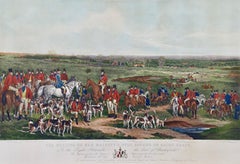
19th century color lithograph landscape figures horseback house scene trees sky

19th century color lithograph landscape figures horseback house scene trees sky

By Nathaniel Currier

Located in Milwaukee, WI

The present print is one of several examples produced for Nathaniel Currier by his longtime collaborator Frances F. "Fanny" Palmer. Harry T. Peters wrote of her: "There is no more interesting and appealing character among the group of artists who worked for Currier & Ives than Fanny Palmer. In an age when women, well-bred women in particular, did not generally work for a living Fanny Palmer for years did exacting, full-time work in order to support a large and dependent family ... Her work ... had great charm, homeliness, and a conscientious attention to detail." One of a series of four prints showing American country life in different seasons, the image presents the viewer with a picturesque view of a successful American farm. In the foreground, a gentleman rides a horse with a young boy before a respectable Italianate country house. Two women and a young girl pick flowers in the garden and several farm workers attend to their duties. Beyond are other homes and a city on the coast. 16.63 x 23.75 inches, artwork 28.13 x 33.38 inches, frame Entitled bottom center "American Country Life - May Morning" Signed in the stone, lower left "F.F. Palmer, Del." Signed in the stone, lower right "Lith. by N. Currier" Copyrighted lower center "Entered according to Act of Congress in the year 1855 by N. Currier in the Clerk's office of the Southern District of N.Y." Inscribed bottom center "New York, Published by N. Currier 152 Nassau Street" Framed to conservation standards using silk-lined 100 percent rag matting and Museum Glass with a gold gilded liner, all housed in a stained wood moulding. Nathaniel Currier was a tall introspective man with a melancholy nature. He could captivate people with his piercing stare or charm them with his sparkling blue eyes. Nathaniel was born in Roxbury, Massachusetts on March 27th, 1813, the second of four children. His parents, Nathaniel and Hannah Currier, were distant cousins who lived a humble yet spartan life. When Nathaniel was eight years old, tragedy struck. Nathaniel’s father unexpectedly passed away leaving Nathaniel and his eleven-year-old brother Lorenzo to provide for the family. In addition to their mother, Nathaniel and Lorenzo had to care for six-year-old sister Elizabeth and two-year-old brother Charles. Nathaniel worked a series of odd jobs to support the family, and at fifteen, he started what would become a life-long career when he apprenticed in the Boston lithography shop of William and John Pendleton. A Bavarian gentleman named Alois Senefelder invented lithography just 30 years prior to young Nat Currier’s apprenticeship. While under the employ of the brothers Pendleton, Nat was taught the art of lithography by the firm’s chief printer, a French national named Dubois, who brought the lithography trade to America. Lithography involves grinding a piece of limestone flat and smooth then drawing in mirror image on the stone with a special grease pencil. After the image is completed, the stone is etched with a solution of aqua fortis leaving the greased areas in slight relief. Water is then used to wet the stone and greased-ink is rolled onto the raised areas. Since grease and water do not mix, the greased-ink is repelled by the moisture on the stone and clings to the original grease pencil lines. The stone is then placed in a press and used as a printing block to impart black on white images to paper. In 1833, now twenty-years old and an accomplished lithographer, Nat Currier left Boston and moved to Philadelphia to do contract work for M.E.D. Brown, a noted engraver and printer. With the promise of good money, Currier hired on to help Brown prepare lithographic stones of scientific images for the American Journal of Sciences and Arts. When Nat completed the contract work in 1834, he traveled to New York City to work once again for his mentor John Pendleton, who was now operating his own shop located at 137 Broadway. Soon after the reunion, Pendleton expressed an interest in returning to Boston and offered to sell his print shop to Currier. Young Nat did not have the financial resources to buy the shop, but being the resourceful type he found another local printer by the name of Stodart. Together they bought Pendleton’s business. The firm ‘Currier & Stodart’ specialized in "job" printing. They produced many different types of printed items, most notably music manuscripts for local publishers. By 1835, Stodart was frustrated that the business was not making enough money and he ended the partnership, taking his investment with him. With little more than some lithographic stones, and a talent for his trade, twenty-two year old Nat Currier set up shop in a temporary office at 1 Wall Street in New York City. He named his new enterprise ‘N. Currier, Lithographer’ Nathaniel continued as a job printer and duplicated everything from music sheets to architectural plans. He experimented with portraits, disaster scenes and memorial prints, and any thing that he could sell to the public from tables in front of his shop. During 1835 he produced a disaster print Ruins of the Planter's Hotel, New Orleans, which fell at two O’clock on the Morning of the 15th of May 1835, burying 50 persons, 40 of whom Escaped with their Lives. The public had a thirst for newsworthy events, and newspapers of the day did not include pictures. By producing this print, Nat gave the public a new way to “see” the news. The print sold reasonably well, an important fact that was not lost on Currier. Nat met and married Eliza Farnsworth in 1840. He also produced a print that same year titled Awful Conflagration of the Steamboat Lexington in Long Island Sound on Monday Evening, January 18, 1840, by which melancholy occurrence over One Hundred Persons Perished. This print sold out very quickly, and Currier was approached by an enterprising publication who contracted him to print a single sheet addition of their paper, the New York Sun. This single page paper is presumed to be the first illustrated newspaper ever published. The success of the Lexington print launched his career nationally and put him in a position to finally lift his family up. In 1841, Nat and Eliza had their first child, a son they named Edward West Currier. That same year Nat hired his twenty-one year old brother Charles and taught him the lithography trade, he also hired his artistically inclined brother Lorenzo to travel out west and make sketches of the new frontier as material for future prints. Charles worked for the firm on and off over the years, and invented a new type of lithographic crayon which he patented and named the Crayola. Lorenzo continued selling sketches to Nat for the next few years. In 1843, Nat and Eliza had a daughter, Eliza West Currier, but tragedy struck in early 1847 when their young daughter died from a prolonged illness. Nat and Eliza were grief stricken, and Eliza, driven by despair, gave up on life and passed away just four months after her daughter’s death. The subject of Nat Currier’s artwork changed following the death of his wife and daughter, and he produced many memorial prints and sentimental prints during the late 1840s. The memorial prints generally depicted grief stricken families posed by gravestones (the stones were left blank so the purchasers could fill in the names of the dearly departed). The sentimental prints usually depicted idealized portraits of women and children, titled with popular Christian names of the day. Late in 1847, Nat Currier married Lura Ormsbee, a friend of the family. Lura was a self-sufficient woman, and she immediately set out to help Nat raise six-year-old Edward and get their house in order. In 1849, Lura delivered a son, Walter Black Currier, but fate dealt them a blow when young Walter died one year later. While Nat and Lura were grieving the loss of their new son, word came from San Francisco that Nat’s brother Lorenzo had also passed away from a brief illness. Nat sank deeper into his natural quiet melancholy. Friends stopped by to console the couple, and Lura began to set an extra place at their table for these unexpected guests. She continued this tradition throughout their lives. In 1852, Charles introduced a friend, James Merritt Ives, to Nat and suggested he hire him as a bookkeeper. Jim Ives was a native New Yorker born in 1824 and raised on the grounds of Bellevue Hospital where his father was employed as superintendent. Jim was a self-trained artist and professional bookkeeper. He was also a plump and jovial man, presenting the exact opposite image of his new boss. Jim Ives met Charles Currier through Caroline Clark, the object of Jim’s affection. Caroline’s sister Elizabeth was married to Charles, and Caroline was a close friend of the Currier family. Jim eventually proposed marriage to Caroline and solicited an introduction to Nat Currier, through Charles, in hopes of securing a more stable income to support his future wife. Ives quickly set out to improve and modernize his new employer’s bookkeeping methods. He reorganized the firm’s sizable inventory, and used his artistic skills to streamline the firm’s production methods. By 1857, Nathaniel had become so dependent on Jims’ skills and initiative that he offered him a full partnership in the firm and appointed him general manager. The two men chose the name ‘Currier & Ives’ for the new partnership, and became close friends. Currier & Ives produced their prints in a building at 33 Spruce Street where they occupied the third, fourth and fifth floors. The third floor was devoted to the hand operated printing presses that were built by Nat's cousin, Cyrus Currier, at his shop Cyrus Currier & Sons in Newark, NJ. The fourth floor found the artists, lithographers and the stone grinders at work. The fifth floor housed the coloring department, and was one of the earliest production lines in the country. The colorists were generally immigrant girls, mostly German, who came to America with some formal artistic training. Each colorist was responsible for adding a single color to a print. As a colorist finished applying their color, the print was passed down the line to the next colorist to add their color. The colorists worked from a master print displayed above their table, which showed where the proper colors were to be placed. At the end of the table was a touch up artist who checked the prints for quality, touching-in areas that may have been missed as it passed down the line. During the Civil War, demand for prints became so great that coloring stencils were developed to speed up production. Although most Currier & Ives prints were colored in house, some were sent out to contract artists. The rate Currier & Ives paid these artists for coloring work was one dollar per one hundred small folios (a penny a print) and one dollar per one dozen large folios. Currier & Ives also offered uncolored prints to dealers, with instructions (included on the price list) on how to 'prepare the prints for coloring.' In addition, schools could order uncolored prints from the firm’s catalogue to use in their painting classes. Nathaniel Currier and James Merritt Ives attracted a wide circle of friends during their years in business. Some of their more famous acquaintances included Horace Greeley, Phineas T. Barnum, and the outspoken abolitionists Rev. Henry Ward, and John Greenleaf Whittier (the latter being a cousin of Mr. Currier). Nat Currier and Jim Ives described their business as "Publishers of Cheap and Popular Pictures" and produced many categories of prints. These included Disaster Scenes, Sentimental Images, Sports, Humor, Hunting Scenes, Politics, Religion, City and Rural Scenes, Trains, Ships, Fire Fighters, Famous Race Horses, Historical Portraits, and just about any other topic that satisfied the general public's taste. In all, the firm produced in excess of 7500 different titles, totaling over one million prints produced from 1835 to 1907. Nat Currier retired in 1880, and signed over his share of the firm to his son Edward. Nat died eight years later at his summer home 'Lion’s Gate' in Amesbury, Massachusetts. Jim Ives remained active in the firm until his death in 1895, when his share of the firm passed to his eldest son, Chauncey. In 1902, faced will failing health from the ravages of Tuberculosis, Edward Currier sold his share of the firm to Chauncey Ives...

Category

Mid-19th Century Romantic Figurative Prints

Materials

Watercolor, Lithograph

Framed 19th Century Oil - Cavalier Resting at Camp

Framed 19th Century Oil - Cavalier Resting at Camp

Located in Corsham, GB

A nineteenth-century oil on metal sheet depicting a man approaching a military camp, where a cavalier lounges in a chair with his helmet positioned on the table beside him. Beautiful...

Category

19th Century Figurative Paintings
Materials

Oil

Look, I exist! (From the Series  “Fantasy” )

Look, I exist! (From the Series “Fantasy” )

By Svitlana Zezekalo

Located in Zofingen, AG

The unicorn appears as naturally as the silence of the night. In this enchanted forest, fairy tales aren’t invented — they simply return to those who are ready to hear them. The “Fa...

Category

2010s Post-Impressionist Animal Paintings
Materials
Canvas, Acrylic

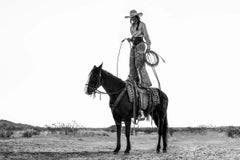
California Cowgirl by Anouk Krantz 2022

California Cowgirl by Anouk Krantz 2022

By Anouk Krantz

Located in Chicago, IL

California Cowgirl (B&W) 2022 ARCHIVAL PIGMENT PRINT Unframed Sizes: 30 x 45 in (76.2 x 114.3 cm) - Edition of 15 + 2 AP (Artist Proofs) SILVER GELATIN PRINT Unframed Size: 11.3 x ...

Category

21st Century and Contemporary Contemporary Black and White Photography

Materials
Archival Pigment, Silver Gelatin