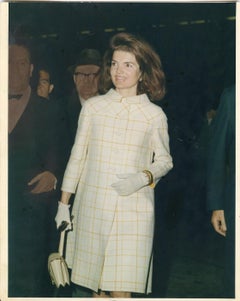
1960s Press Photo

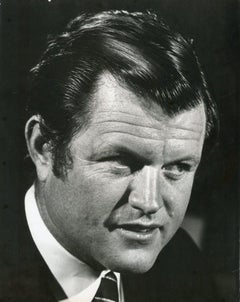
Portrait of Ted Kennedy - Press Photo by Ron Galella - 1960s

Portrait of Ted Kennedy - Press Photo by Ron Galella - 1960s

By Ron Galella

Located in Roma, IT

Portrait of Ted Kennedy is a black and white press photograph by Ron Galella dating back to the

Category

1960s Modern Black and White Photography

Materials

Photographic Paper

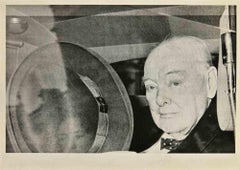
Winston Churchill - Vintage b/w Photo - 1960s

Winston Churchill - Vintage b/w Photo - 1960s

Located in Roma, IT

Winston Churchill - Vintage b/w Photo realized in the 1960s. Copyright by Associated Press Photo

Category

1960s Modern Black and White Photography

Materials

Photographic Paper

Recent Sales

Get Updated with New Arrivals
Save "1960s Press Photo", and we’ll notify you when there are new listings in this category.

1960s Press Photo For Sale on 1stDibs

Find the exact 1960s press photo you’re shopping for in the variety available on 1stDibs. Find Contemporary versions now, or shop for Contemporary creations for a more modern example of these cherished works. You’re likely to find the perfect 1960s press photo among the distinctive items we have available, which includes versions made as long ago as the 20th Century as well as those made as recently as the 20th Century. If you’re looking to add a 1960s press photo to create new energy in an otherwise neutral space in your home, you can find a work on 1stDibs that features elements of black, gray, beige, silver and more. Creating a 1960s press photo has been a part of the legacy of many artists, but those crafted by Stanley Einzig, Henry Grossman, Eve Arnold, Inge Morath and Ron Galella are consistently popular. Artworks like these — often created in paper, photographic paper and silver gelatin print — can elevate any room of your home.

How Much is a 1960s Press Photo?

The average selling price for a 1960s press photo we offer is $454, while they’re typically $119 on the low end and $2,200 for the highest priced.

Finding the Right Black-white-photography for You

There’s a lot to love about black and white photography.

The unique and timeless quality of a black and white photograph accentuates any room. Some might argue that we’re naturally drawn to color photography because it’s the world we know best. This is a shared belief, particularly in the era of camera-phone photography, editing apps and the frenetic immediacy of sharing photos on social media. But when we look at black and white photography, we experience deep, rich shadows and tonal properties in a way that transfixes us. Composition and textures are crisp and engaging. We’re immediately drawn to the subjects of vintage street photography and continue to feel the emotional impact of decades-old photojournalism. The silhouettes of mountains in black and white landscape photography are particularly pronounced, while portrait photography and the skylines of urban cityscapes come to life in monochrome prints.

When decorating with fine photography, keep in mind that some color photographs may not be suitable for every space. However, you can be more daring with black and white photos. The gray tones are classic, sophisticated and generally introduce elegance to any corner of your home, which renders black and white prints amazingly versatile.

Black and white photography adapts to its surroundings like a chameleon might. A single large-scale black and white photograph above the sofa in your living room is going to work with any furniture style, and as some homeowners and designers today are working to introduce more muted tones and neutral palettes to dining rooms and bedrooms, the integration of black and white photography — a hallmark of minimalist decor — is a particularly natural choice for such a setting.

Another advantage to bringing black and white photography into your home is that you can style walls and add depth and character without worrying about disrupting an existing color scheme. Black and white photographs actually harmonize well with accent colors such as yellow, red and green. Your provocative Memphis Group lighting and bold Pierre Paulin seating will pair nicely with the black and white fine nude photography you’ve curated over the years.

Black and white photography also complements a variety of other art. Black and white photos pair well with drawings and etchings in monochromatic hues. They can also form part of specific color schemes. For example, you can place black and white prints in colored picture frames for a pop of color. And while there are no hard and fast rules, it’s best to keep black and white prints separate from color photographs. Color prints stand out in a room more than black and white prints do. Pairing them may detract attention from your black and white photography. Instead, dedicate separate walls or spaces to each.

Once you’ve selected the photography that best fits your space, you’ll need to decide how to hang the images. If you want to hang multiple photos, it’s essential to know how to arrange wall art. A proper arrangement can significantly enhance a living space.

On 1stDibs, explore a vast collection of compelling black and white photography by artists such as Mark Shaw, Jack Mitchell (a photographer you should know), Berenice Abbott and David Yarrow.
Questions About 1960s Press Photo
  • 1stDibs ExpertFebruary 13, 2023
    Yes, there were watches in the 1960s. The first recorded wristwatch dates back to 1868, when Patek Philippe, a watchmaker founded in Geneva in 1839 by Polish expats Antoni Patek and Franciszek Czapek, designed a timepiece for Countess Koscowicz of Hungary. Shop a collection of vintage watches from some of the world’s top sellers on 1stDibs.
  • 1stDibs ExpertFebruary 13, 2023
    A caftan from the 1960s or any other era refers to a long ankle-length variation on a robe or a tunic. Caftans, which are sometimes referred to as kaftans, feature full sleeves and usually have a deep, open neck. While these garments can be made from any fabric, most caftans are made of wool, silk or cotton. Find a selection of caftans from top fashion boutiques around the world on 1stDibs.
  • 1stDibs ExpertFebruary 22, 2021
    Fashion in the 1960s progressed toward a more casual look for men and for women during the decade. For women, the skirt suits of the 1950s prevailed during the early ‘60s and eventually miniskirts came along. Late-1960s fashion included ponchos, peace signs, chain belts, puffed “bubble” sleeves, frayed bell-bottom jeans for men and women, tie-dyed shirts, work shirts, sandals, headbands and moccasins.
  • 1stDibs ExpertApril 26, 2024
    What men wore in the 1960s varied over the course of the decade. At the start of the ’60s, when the Mod style was all the rage, men often sported boxy Italian-style suits with tight-fitting trousers for work and dressier occasions and polo shirts and turtlenecks paired with fitted trousers for casual dress. As the decade progressed, the Peacock Revolution occurred, with menswear becoming flashier with bright colors and bold prints. Fedoras and trilby hats were common in the early ’60s, but by the start of the 1970s, hats for men were much less common, marking a major departure from the style conventions of the 1930s, ’40s and ’50s. Explore an assortment of 1960s men's apparel and accessories on 1stDibs.
  • 1stDibs ExpertFebruary 13, 2023
    Furniture from the 1960s is often called mid-century modern. This style emphasizes the importance of good design that looks attractive and performs its function well. Notable mid-century modern designers include Eero Saarinen, George Nelson, Florence Knoll and Charles and Ray Eames. On 1stDibs, shop a selection of mid-century modern furniture.
  • 1stDibs ExpertFebruary 21, 2024
    The dresses they wore in the 1960s varied depending on the time of day and the occasion. For everyday wear, many women opted for simply tailored frocks called shift dresses. They often featured bold geometric prints in eye-catching colors. In the evening, women tended to opt for gowns with plunging necklines, fitted waists and flowing full skirts. On 1stDibs, shop a diverse assortment of vintage dresses from the 1960s.
  • 1stDibs ExpertApril 5, 2022
    To tell if a dress is from the 1960s or 1970s, first look for a label. You may be able to determine the approximate date of the dress simply by researching the designer using reputable online sources. Also, check the zippers. Dresses from the 1960s will usually have metal or nylon zippers. Ones from the 1970s are more likely to be plastic. You'll find a large selection of vintage dresses on 1stDibs.
  • 1stDibs ExpertApril 5, 2022
    Go-go boots were fashionable in the late 1960s through the 1970s. A calf-length to knee-length boot became synonymous with 1960s and 1970s fashion and is still highly coveted today by fashion enthusiasts. Shop a wide range of vintage go-go boots on 1stDibs.
  • 1stDibs ExpertFebruary 21, 2024
    Who the most famous fashion designer of the 1960s was is open to debate. Many designers helped define the looks of the decade, each influencing style in their own way. Among these notable designers were Mary Quant, André Courrèges, Pierre Cardin, Yves Saint Laurent, Bonnie Cashin, Hubert de Givenchy, Emilio Pucci, Paco Rabanne and Ossie Clark. On 1stDibs, shop a variety of vintage apparel and accessories from the 1960s.
  • 1stDibs ExpertFebruary 1, 2024
    Generally, 1960s-style furniture is called mid-century modern. The style, which emerged primarily in the years following World War II, is characterized by pieces that were conceived and made in an energetic, optimistic spirit by creators who believed that good design was an essential part of good living. Some of the most notable furniture designers of the time include Charles and Ray Eames, Arne Jacobsen, Eero Saarinen and Hans J. Wegner. On 1stDibs, shop a variety of mid-century modern furniture.
  • 1stDibs ExpertSeptember 27, 2024
    What the dress style was called in the 1960s varied, as there were several types of dresses that were fashionable during the decade. At the start of the 1960s, many women wore swing dresses featuring fitted bodices and full skirts. Collared, button-up belted dresses called shirtwaist dresses were also popular, as were loose-fitting, flowy shift dresses. By the late 1960s, new styles emerged, such as flared, flowing tent dresses, sleeveless jumpers usually styled over sweaters and blouses and drop-waist dresses, which had their waist seams at the hips rather than the natural waist. Find a variety of 1960s dresses and other vintage dresses on 1stDibs.
  • 1stDibs ExpertJanuary 27, 2025
    Frank Stella is the artist who became famous for his series of black paintings in the late 1950s and early 1960s. These works featured bands of black paint separated by thin, precise stripes of bare canvas. At a time when contemporary painting was all about wild gestures, thick paint and formal abandon, the “Black Paintings” created a sensation. Explore a range of Frank Stella art on 1stDibs.