Berlin - Art

746 Results
to
127
185
181
168
106
145
Overall Width
to
Overall Height
to
20
116
237
412
16
17
12
13
13
11
12
13
16
19
14
220
102
66
64
19
19
14
8
7
3
2
1
314
251
132
369
201
150
126
125
63
51
50
48
47
46
41
36
31
29
29
28
26
26
25
548
345
344
271
254
37
22
12
11
147
4
233,284
170,097
Item Ships From: Berlin
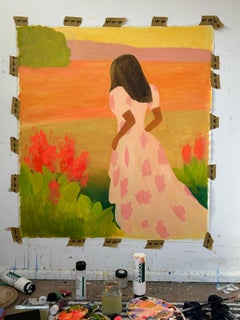
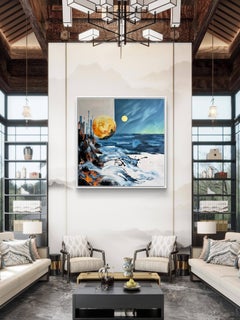
Golden Hour (The Meeting)

Golden Hour (The Meeting)

By Olena Kishkurno

Located in Zofingen, AG

Golden Hour (The Meeting) is a luminous contemporary impressionist painting that explores the emotional power of human connection through expressive brushwork, radiant color, and atm...

Category

2010s Abstract Expressionist Berlin - Art

Materials

Canvas, Acrylic

Were the Light Stays

Were the Light Stays

By Olena Kishkurno

Located in Zofingen, AG

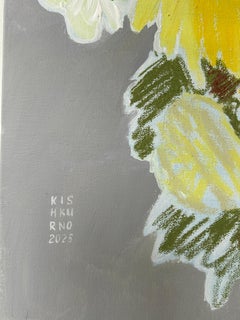
shipped in roll “Where the Light Stays” captures the warmth of late summer — that moment when the sun grows softer, yet its radiance continues to live in everything it touches. The s...

Category

2010s Modern Berlin - Art

Materials

Canvas, Acrylic

Spring. Awakening
Spring. Awakening

Spring. Awakening

By Olena Kishkurno

Located in Zofingen, AG

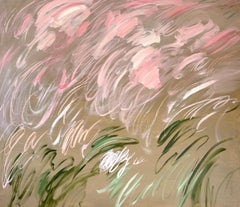
shipped in roll “Spring. Awakening” reflects the first quiet shift of the season — a moment when light, color, and space begin to open. Soft layers of pale tones, subtle pinks, and g...

Category

2010s Abstract Expressionist Berlin - Art

Materials

Canvas, Acrylic

Desert Goddess / - Transcendental Realism -

Desert Goddess / - Transcendental Realism -

Located in Berlin, DE

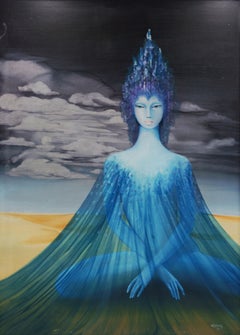
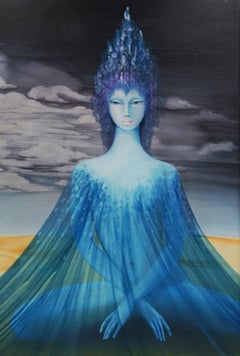
Karin Hauke, Desert Goddess, 1976. Oil on wood, 70 x 50 cm (image size), 73 cm x 53 cm (frame), signed “K. HAUKE” lower right and dated “[19]76.” - Small flaking in the lower area, o...

Category

1970s Surrealist Berlin - Art

Materials

Oil

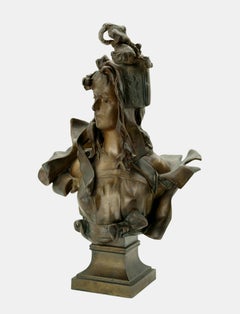
Bust of a young woman / - The Opulence of Beauty -

Bust of a young woman / - The Opulence of Beauty -

Located in Berlin, DE

Anton Nelson (i.e. Antoine Joseph van den Kerckhoven) (1849 Brussels - after 1910 ibid.), Bust of a young woman, c. 1890. Patinated bronze on cast base, 30 cm (total height) x 20 cm ...

Category

1890s Art Nouveau Berlin - Art

Materials

Bronze

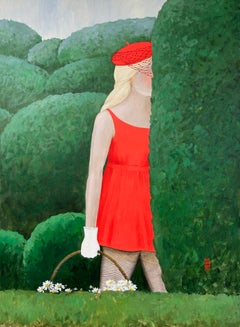
A new adventure
A new adventure

A new adventure

By Olena Kishkurno

Located in Zofingen, AG

shipped in roll A New Adventure She knows how to draw attention — red dress, stockings, veil. Too bold? Exactly as planned. Naivety is a carefully staged role, and mystery is part ...

Category

2010s Modern Berlin - Art

Materials

Canvas, Acrylic

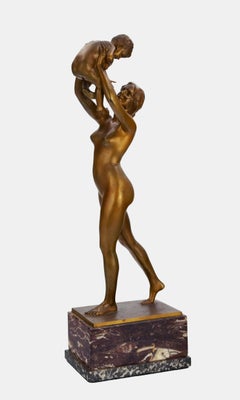
Mother Happiness / - The ecstasy of maternal joy -

Mother Happiness / - The ecstasy of maternal joy -

Located in Berlin, DE

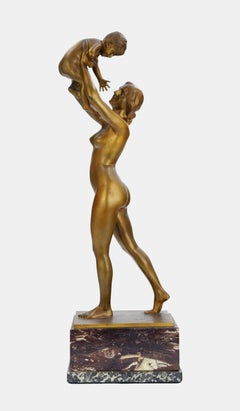
Johannes Boese (1856 Ostrog - 1917 Berlin), Mutterglück, um 1910. Goldbraun patinierte Bronze auf gegossener rechteckiger Plinthe, montiert auf zweifarbigem Marmorsockel (9,5 cm Höhe...

Category

1910s Art Nouveau Berlin - Art

Materials

Bronze

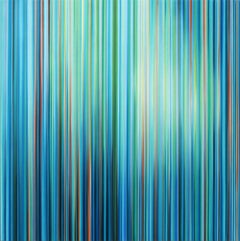
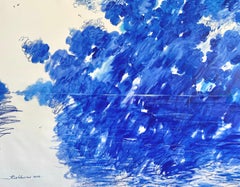
Blue VR779
Blue VR779

Blue VR779

By Kseniya Rai

Located in Zofingen, AG

Presented at Bakerhouse Gallery, Graz, Austria, this work was exhibited alongside another painting from the same series, which became a finalist in the ScanArt Prize competition. Phi...

Category

2010s Abstract Expressionist Berlin - Art

Materials

Canvas, Oil

Early Morning
Early Morning

Early Morning

By Olena Kishkurno

Located in Zofingen, AG

This work is part of the Inner Landscapes series, in which the landscape becomes part of a memory, a lived state, or emotions that cannot be expressed in words and can only be felt. ...

Category

2010s Abstract Expressionist Berlin - Art

Materials

Canvas, Acrylic

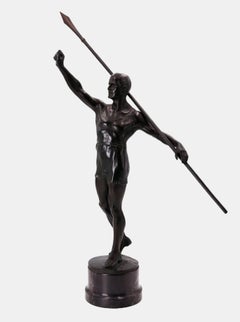
Javelin thrower / - Roman present -

Javelin thrower / - Roman present -

By Franz Iffland

Located in Berlin, DE

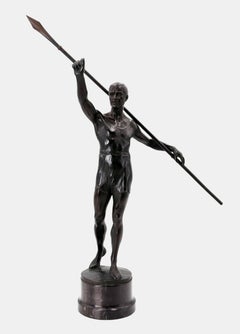
Franz Iffland (1862 Tempelhof - 1935 Berlin), Javelin thrower, after 1910. Olive-black patinated bronze with cast plinth mounted on a white-veined black marble base (7 cm high). Tota...

Category

1910s Art Deco Berlin - Art

Materials

Bronze

Flow of Freedom
Flow of Freedom

Flow of Freedom

By Olena Kishkurno

Located in Zofingen, AG

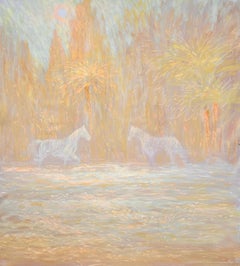
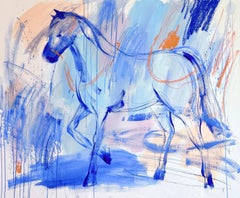
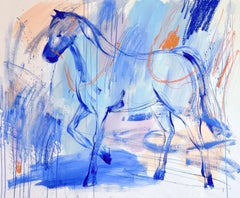
Freedom is always about pure energy and inner strength, and since ancient times, the horse has been its most powerful archetype. In this work, the image of the horse becomes a condui...

Category

2010s Abstract Expressionist Berlin - Art

Materials

Canvas, Acrylic, Oil Crayon

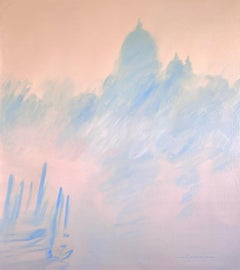
Soft Morning in Venice

Soft Morning in Venice

By Olena Kishkurno

Located in Zofingen, AG

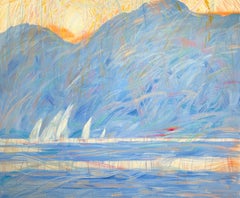
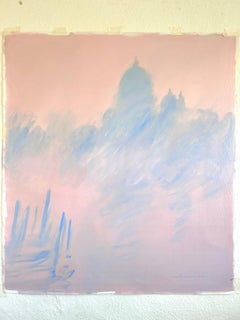
Soft Morning in Venice from the Inner Landscapes series Abstract impressionist painting inspired by the quiet atmosphere of Venice in the early morning - a moment when the city app...

Category

2010s Abstract Expressionist Berlin - Art

Materials

Canvas, Oil

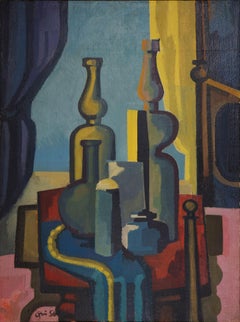
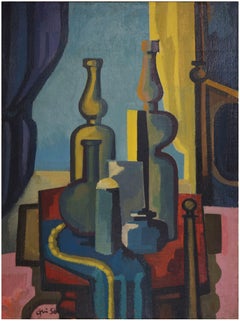
Still Life with Bottles / - The figuration of the objects -

Still Life with Bottles / - The figuration of the objects -

By Ev Grüger

Located in Berlin, DE

Ev Grüger (1928 Altenburg - 2017 Hofheim), Still Life with Bottles, 1956. Oil on canvas in gallery stretcher, 80 cm x 60 cm (image size), signed “Grü[ger]” lower left and dated “[19]...

Category

1950s Abstract Berlin - Art

Materials

Oil

Colored bird
Colored bird

Colored bird

By Svetlana Saratova

Located in Zofingen, AG

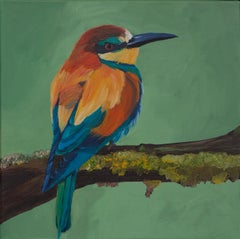
A vivid, almost tropical-feeling bird is captured in a moment of quiet contemplation. Its plumage is a painterly symphony of warm ochres, golden yellows, turquoise, and deep blues. T...

Category

2010s Abstract Berlin - Art

Materials

Canvas, Acrylic

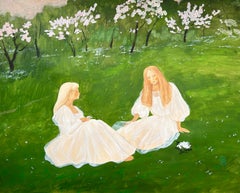
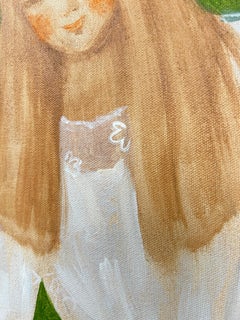
Spring Bloom II
Spring Bloom II

Spring Bloom II

By Olena Kishkurno

Located in Zofingen, AG

shipped in roll “Spring Bloom II” captures a quiet moment of connection between two young women surrounded by blooming spring trees. Soft dresses, fresh greens, and gentle light crea...

Category

2010s Abstract Expressionist Berlin - Art

Materials

Canvas, Acrylic

Time to Bloom
Time to Bloom

Time to Bloom

By Olena Kishkurno

Located in Zofingen, AG

Time to Bloom from the Inner Landscapes series Acrylic on canvas Contemporary Abstract Landscape Painting Time to Bloom is a contemporary abstract landscape acrylic painting from th...

Category

2010s Abstract Expressionist Berlin - Art

Materials

Canvas, Acrylic, Oil Pastel

Source of Renewal
Source of Renewal

Source of Renewal

By Olena Kishkurno

Located in Zofingen, AG

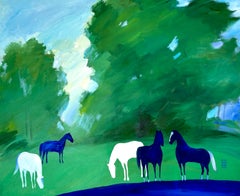
This work captures a moment of absolute tranquility-a private paradise bathed in light and hidden behind a dense veil of emerald greenery. Horses gathered at the water's edge in the ...

Category

2010s Abstract Expressionist Berlin - Art

Materials

Canvas, Acrylic

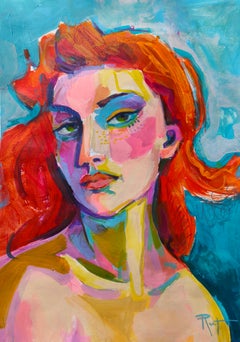
Portrait of a Woman with Red Hair

Portrait of a Woman with Red Hair

By Julia Ruf

Located in Zofingen, AG

An expressive contemporary portrait of a red-haired woman where emotions and feelings, conveyed entirely through color, take center stage. The artwork focuses on capturing an inner s...

Category

2010s Impressionist Berlin - Art

Materials

Paper, Oil Pastel, Acrylic

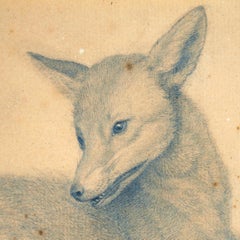
Vigilant Fox - The psyche of the fox -

Vigilant Fox - The psyche of the fox -

By Carl Friedrich Deiker

Located in Berlin, DE

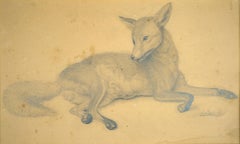
Carl Friedrich Deiker (1838 Wetzlar - 1892 Düsseldorf). Vigilant fox. Pencil drawing on brown paper, 18 × 29.5 cm (inside measurement), 31.5 x 43.5 cm (mount), signed and dated "Deiker [18]54" at lower right. - a little bit stained, with a light water stain at lower right About the artwork Carl Friedrich Deiker's consummate ability to depict animals is already evident in this early work. He brought a whole new psychological dimension to animal painting, so that one could literally speak of animal portraits. The naturalistic appearance of the fox alone makes it seem alive. Every strand of muscle, even every hair, is captured, which requires an intensive artistic study of animal anatomy and physiology. But the fox's real liveliness comes not from its natural appearance, but from its internal movement: Stretched out, it has been brought out of rest. It turns around and, with its ears pricked up, looks intently in the direction from which it has seen something. His mouth is slightly open and his pointed teeth are bared, as if he were growling. Tension gradually takes hold of his whole body. While the hind legs were still in a relaxed position, closely observed by Deiker, one front leg was already raised, ready to begin a rising movement. The fox seems so alarmed with all its senses that one gets the impression that, at any moment, its tail will move jerkily and the animal will jump up. While wild animals have traditionally been portrayed as beasts or anthropomorphised, often for caricatural purposes, Deiker explores their inherent nature by attempting to capture their psychic impulses. The wild animal is neither bestial nor human, but a creature in its own right, valued by Deiker for its own sake. In this way, he brought the dignity of the animal into representation and raised animal painting to a whole new artistic level. About the artist Carl Friedrich Deiker was the son of the drawing teacher Christian Friedrich Deiker and the younger brother of the animal painter Johannes Deiker. In addition to the family art lessons, Christian Friedrich shared a studio with his brother Johannes at Braunfels Castle, Deiker attended the drawing academy in Hanau, and from 1858 he was a student at the Karlsruhe Art Academy, where he studied under the landscape painter Johann Wilhelm Schirmer. Carl Friedrich Deiker was already in demand as an artist during his first year: Grand Duke Frederick I of Baden, Margrave Max of Baden and Grand Duke Michael of Russia bought hunting scenes by him. In 1859 he went on a study trip to the Reinhardswald. Just as the Barbizon School had rediscovered the landscape, Deiker opened up the forest for animal painting. From 1861-64 Deiker had his own studio in Karlsruhe, then moved to Düsseldorf, where his brother Johannes followed four years later. Deiker married a daughter of the landscape painter Karl Hilger and remained in Düsseldorf until his death. In 1868 he finally achieved international fame with his painting 'Pursued Noble Deer' and was regarded as a virtuoso new founder of animal painting. "Deiker brought for the first time a truly great artistic quality to animal painting [...]". - Hans Vollmer From 1870 he participated in the academic art exhibitions in Berlin, Dresden, Munich and Hanover. He was also very busy as an illustrator. He drew for the Gartenlaube, the Salon, the Universum, and produced many of the finely illustrated hunting and animal books of the period. He also worked as a printmaker, while his oil paintings circulated as reprints by Franz Dinger. From 1865 to 1892 Deiker was a member of the artists' association Malkasten. Carl Friedrich Deiker's life's work was honoured with a large posthumous memorial exhibition at the Düsseldorf Kunsthalle in 1892. His son Carl Deiker, born in 1879, also became a painter. Selection of art museums that own works by Carl Friedrich Deiker: Hamburger Kunsthalle / Kunsthalle Karlsruhe / Kunstmuseum Düsseldorf / Wallraff Richartz Cologne. Selected Bibliography H. Schmidt: Johannes and...

Category

1850s Naturalistic Berlin - Art

Materials

Pencil

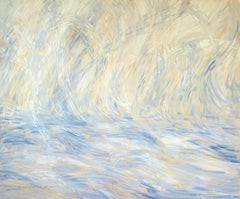
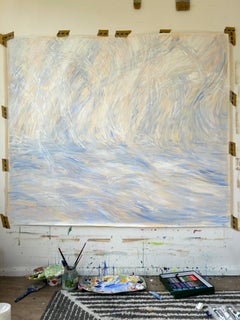
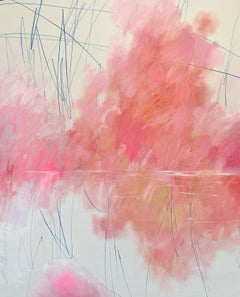
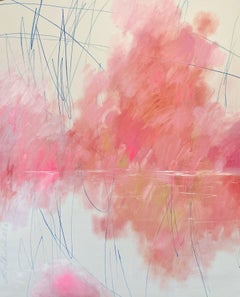
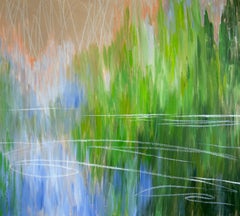
Where Water Holds the Evening

Where Water Holds the Evening

By Olena Kishkurno

Located in Zofingen, AG

Where Water Holds the Evening From the series Inner Landscapes There are evenings by the water you never quite let go of. Where Water Holds the Evening is painted from exactly that ...

Category

2010s Abstract Expressionist Berlin - Art

Materials

Canvas, Acrylic

Late Summer River Landscape / - Realistic Impression -

Late Summer River Landscape / - Realistic Impression -

By Jan Hillebrand Wijsmüller

Located in Berlin, DE

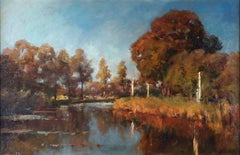
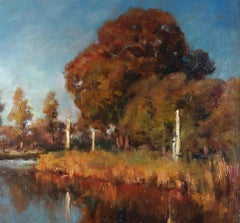
Jan Hillebrand Wijsmuller (1855 Amsterdam - 1925 ibid.), Late Summer River Landscape, oil on canvas, relined, 34 x 56 cm (inside measurement), 43 x 64 cm (frame), signed J[an] H[illebrand] Wijsmuller at lower right. - in good condition, the frame with isolated bumped spots - Realistic Impression - About the artwork The panoramic landscape format shows a river landscape, with the course of the river, which curves to the right, leading the eye into the depths of the picture and tempting it to continue the landscape in the imagination beyond the visible area. At the same time, however, the fact that the landscape is not visible through the bend in the river focuses our gaze on the entirety of the landscape depicted, without prompting us to focus on distant details. Accordingly, the brushstroke is not designed to render details with realistic precision. In the front left area of the river there is even a completely free brushwork, trained by Impressionism, which nevertheless remains committed to representational and convincingly suggests the movement of the water. Regardless of the distance of the observer, the entire picture is painted with the same broad brushstroke, so that the landscape is given as an impression. And yet this impression is not ephemeral, as in the case of French Impressionism, to put it exaggeratedly, but reveals to us the essence of the landscape in all its richness. This is why the Dutch variant of Impressionism is always also a realism, although the pictures appear less progressive, but still contain a dimension of landscape painting that is lost with progress. In the impression, the reality of the landscape is revealed, and this happens as we experience the landscape in the visual impression. Wijsmuller does not depict houses or people in order to allow the experience of the landscape to fully unfold. The experience is determined first and foremost by the river, which does not flow into the picture from our point of view, but towards us. Where the river begins to bend, the water is churned by a rapids. Toward us, the riverbed widens and the water comes to rest, covering the entire width of the foreground like a mirror. The stillness of the water corresponds to the evening mood of the late summer landscape, in which the warm tones of the evening light blend with the yellow and brown tones of the plants. A gentle, almost idyllic reality, carried by the brushstroke, yet animated by a liveliness that is also made visible by the brushstroke. The broad, dynamically placed brushstrokes evoke the movement of the treetops and animate even the immobile reeds, while the trunks on the right bank, executed in virtuoso white strokes that seem like markings, make the sunlight shine. On the other bank, a carpet of light also spreads out, its energetic effect again expressed in the brushstroke. The dynamic of the landscape is further enhanced by the complementary color contrasts between the greens, yellows, and browns on the one hand and the blue of the all-encompassing sky on the other. A contrast that is intensified by the reflection in the water. The evening coming to rest of the landscape is thus at the same time an all-encompassing contrasting and yet in itself harmonious movement. This reality becomes accessible to us as an experience in the impression of the landscape. About the artist Jan Hillebrand Wijsmuller entered the Royal Academy of Arts in Amsterdam in 1876 and studied under the innovative Professor August Allebé, who was famous for the Amsterdam Impressionism, also known as the Allebé School. In 1877, Wijsmuller transferred to the Hague Academy of Art, and thus to the Hague School, and then completed his studies at the Brussels Academy of Art. Returning to the Netherlands, Wijsmuller opened his own studio in Amsterdam. In 1883 he won the prestigious Young Artist Award, donated by Willink van Collen, which made Wijsmuller a well-known and sought-after artist. Wijsmuller was a member of the Societät Arti et Amicitiae Amsterdam and the Pulchri Studio in The Hague. Wijsmuller belongs to the second generation of the Hague School. While Vincent van Gogh described the protagonists of the first generation to his brother Theo as "the great gray people," the second generation, and Wijsmuller in particular, used a much more colorful palette. His oeuvre makes him a major player in Dutch Impressionism...

Category

1890s Impressionist Berlin - Art

Materials

Canvas

The Air Feels New
The Air Feels New

The Air Feels New

By Olena Kishkurno

Located in Zofingen, AG

shipped rolled in a tube. The Air Feels New from the series “Inner Landscapes” This painting is part of the Inner Landscapes series, where landscape becomes a reflection of memory, ...

Category

2010s Abstract Expressionist Berlin - Art

Materials

Canvas, Acrylic

Pink Fantasy. Abstraction.

Pink Fantasy. Abstraction.

By Svetlana Saratova

Located in Zofingen, AG

The work is created in the fluid art technique using acrylic on canvas. The composition is built on the soft, flowing interweaving of pink, coral, and milky white tones, creating a s...

Category

2010s Abstract Berlin - Art

Materials

Canvas, Acrylic

Morning in the Garden

Morning in the Garden

By Olena Kishkurno

Located in Zofingen, AG

Morning in the Garden from the Gardens series Acrylic on canvas Morning in the Garden captures the quiet atmosphere of a garden at dawn, when the first light begins to reveal the co...

Category

2010s Abstract Expressionist Berlin - Art

Materials

Canvas, Acrylic

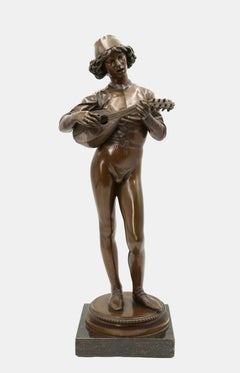
Florentine singer / - The Renaissance of the Renaissance -

Florentine singer / - The Renaissance of the Renaissance -

By Paul Dubois

Located in Berlin, DE

Paul Dubois (1829 Nogent-sur-Seine - 1905 Paris), Florentine singer, 1865. Light brown patinated bronze with cast round plinth mounted on a square marble base (3.5 cm high). Total height 53 cm. Bronze dimensions: 49.5 cm (height) x 20 cm (length) x 10 cm (width), weight 5.6 kg. Inscribed on the plinth "P.[aul] DUBOIS", dated "1865", with the foundry's mark "F. BARBEDIENNE FONDEUR" and the signet "REDUCTION MECANIQUE A. COLLAS". - Patina very occasionally darkened, lute with loss of one tuning peg, otherwise in excellent condition. - The renaissance of the Renaissance - The bronze is a precisely executed and masterfully cast contemporary reduction of Paul Dubois 155 cm tall masterpiece "Florentine Singer", which is exhibited in the Musée d'Orsay and for which the artist was awarded the Medal of Honor at the Paris Salon in 1865. The work acted as a beacon, and was followed by a plethora of depictions of juveniles. Inspired by Donatello and Luca della Robbia, but also by painters such as Piero della Francesca, Benozzo Gozzoli, and Pinturicchio, the "Florentine Singer" is not an epigonal work that pays homage to a vanished era, but a successful attempt to draw vitality from the art of the past and thus give it new life. The effect of vitality is the core of Italian Renaissance art theory. In order to fulfill itself as art, art had to appear like nature. This naturalism also characterizes the "Florentine Singer". The young man appears to have been taken from life, which is reinforced by the momentary nature of his action. He has just struck a now fading chord. In addition, the natural appearance is enhanced by the detailed shaping of the figurative details, such as the laces with the slightly curved leather of the shoes, the belt buckle, or the ornamentation on the body of the lute. Even the fingernails are clearly defined. Unlike the Renaissance, however, the effect of liveliness here is not based on the "discovery" of nature and the human body, but primarily on the rediscovery of the art of the Quattrocento. The liveliness of the artwork is therefore at the same time a revitalization of this art, so that we can speak of a Renaissance of the Renaissance, just as the Pre-Raphaelites in England at the same time transferred the Quattrocento to contemporary art. Dubois takes on the most difficult of all subjects, the depiction of singing through silent sculpture. He was preceded in this by Luca della Robbia and Donatello with their pulpits of singers created in the 1430s in the Museo dell'Opera del Duomo in Florence. Compared to these works, the physiognomy of Dubois singer is far less animated, yet he also depicts singing in a convincing manner. He uses the whole body. He takes the ancient contrapposto, which was essential to Renaissance sculpture, and transforms the standing leg-playing posture into a late medieval S-swing, giving the body an elegant beauty and at the same time setting it in melodic motion. In the equally elegant finger position, the music is expressed in a much more literal way with the beating of the lute. Finally, the musicality of the sculpture culminates in the face with the mouth open to sing. Through the act of singing, which is a great challenge to the artistic will to depict perfect beauty, the gracefulness of the classical face is not diminished, but enhanced. Starting from the face with the singing mouth and the gaze absorbed by the sounds, the inner vitality spreads, giving the bronze sculpture an intense aura, enhanced by the music. Dubois transfers the beauty of the Renaissance to the musical, sublimating the visible sculpture to the invisible of music. He took up the challenge of transcending the Renaissance with the Renaissance, thus responding to the Querelle des Anciens et des Modernes, which arose at the end of the 17th century around the French Academy and remained virulent into the 19th century, in which antiquity was regarded either as an unattainable ideal or as a standard to be surpassed. With his work, Dubois proved that the Renaissance, which had championed the art of the ancients, could lead to a new renaissance of art. About the artist Paul Dubois' great-uncle was the famous French Baroque sculptor Jean-Baptiste Pigalle, in whose footsteps the talented great-nephew followed. When he debuted at the Paris Salon in 1858, he signed his work "Dubois-Pigalle". At his father's request, however, he first studied law before devoting himself to sculpture under the tutelage of François Christophe Armand Toussaint in 1856 and entering the École des Beaux-Arts in 1858. From 1859 to 1863, he lived in Rome and traveled to Naples and Florence. Inspired by Florentine art of the quattrocento, Dubois initiated a school-forming neo-Florentine style that combined the elegantly simple forms of youthful grace with a precise wealth of detail.Two purchases by the French state (“envois de Rome”) were made during his stay in Rome, which brought him recognition in Paris. After his return there, he quickly became an internationally sought-after artist. Dubois was also active as a creator of monuments. His most famous work is the equestrian statue of Joan of Arc (1896) on the forecourt of Reims Cathedral. He was also a sought-after portraitist who produced around 50 busts and - Dubois was also a passionate painter - around 100 portraits in oil. From 1873 to 1878 he was curator of the Museum du Luxembourg, in 1876 he became a member of the Institut de France and from 1878 to 1905 he was director of the École des Beaux-Arts. In 1865, Dubois was awarded the Paris Salon Medal of Honor for his “Florentine Singer”. In 1867 he became Chevalier, in 1874 Officier, in 1886 Commandeur of the Légion d'honneur, which awarded Dubois the Grande Croix in 1896. Selected Bibliography Stole, Elmar: Paul Dubois. In: Saur. Allgemeines Künstlerlexikon, vol. 30, Munich - Leipzig 2001, pp. 677-678. GERMAN VERSION Paul Dubois (1829 Nogent-sur-Seine - 1905 Paris), Florentinischer Sänger, 1865. Hellbraun patinierte Bronze mit gegossener runder Plinthe auf quadratischem Marmorsockel montiert (3,5 cm Höhe). Gesamthöhe 53 cm. Maße der Bronze: 49,5 cm (Höhe) x 20 cm (Länge) x 10 cm (Breite), Gewicht 5,6 kg. Auf der Plinthe mit „P.[aul] DUBOIS“ bezeichnet, auf „1865“ datiert, mit dem Gießereistempel „F. BARBEDIENNE FONDEUR“ und dem Signet „REDUCTION MECANIQUE A. COLLAS“ versehen. - Patina sehr vereinzelt nachgedunkelt, Laute mit Verlust eines Stimmwirbels, ansonsten ausgezeichnet erhalten. - Die Renaissance...

Category

1860s Realist Berlin - Art
Materials

Bronze

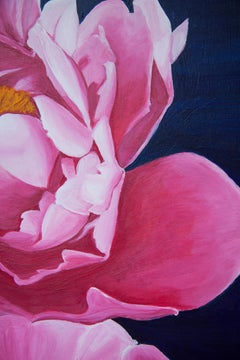
Pink peony on a golden background

Pink peony on a golden background

By Svetlana Saratova

Located in Zofingen, AG

A delicate close-up of a blooming pink peony, built on a subtle play of light and tonal transitions. The petals appear to glow from within, shifting from pale blush to richer raspber...

Category

2010s Abstract Berlin - Art

Materials

Canvas, Acrylic

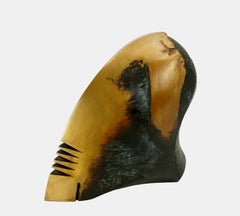
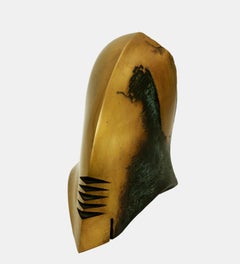
Helmet Head / - Futuristic Archaism -

Helmet Head / - Futuristic Archaism -

Located in Berlin, DE

Karl-Heinz Deutsch (*1940 Karlsruhe), Helmet Head, around 2003. Polished and patinated bronze, 23.5 cm (height) x 25.5 cm (length) x 16 cm (depth), weight 4.9 kg. Monogrammed on the ...

Category

Early 2000s Surrealist Berlin - Art

Materials

Bronze

Golden tulips on a green background

Golden tulips on a green background

By Svetlana Saratova

Located in Zofingen, AG

This artwork is created with acrylic on canvas and enhanced with gold leaf. On a deep emerald-green background, stylized tulips are depicted. Their petals and leaves are rendered in...

Category

2010s Abstract Berlin - Art

Materials

Canvas, Acrylic

We were happy that day

We were happy that day

By Kseniya Rai

Located in Zofingen, AG

shipped in roll We Were Happy That Day This painting is not a statement, but a memory. It speaks not about constant happiness, but about a moment when happiness already existed — qu...

Category

2010s Abstract Expressionist Berlin - Art

Materials

Canvas, Oil

Christ with Crown of Thorns / - Seeing gaze -

Christ with Crown of Thorns / - Seeing gaze -

Located in Berlin, DE

Hans Thoma (1839 Bernau - 1924 Karlsruhe), Christ with Crown of Thorns, 1902. Brass relief plate in niello technique with raised sections, 38 cm x 40 cm. Monogrammed and dated “hTh 1...

Category

Early 1900s Realist Berlin - Art
Materials

Brass

Wild Red Flowers
Wild Red Flowers

Wild Red Flowers

By Olena Kishkurno

Located in Zofingen, AG

Wild Red Flowers Acrylic and oil sticks on canvas Wild Red Flowers is a vibrant contemporary painting from the Inner Landscapes series, where landscape becomes less a depiction of a ...

Category

2010s Abstract Expressionist Berlin - Art

Materials

Canvas, Acrylic

Juggler / - Artistic naturalness -

Juggler / - Artistic naturalness -

Located in Berlin, DE

Claire Jeanne Robertine Colinet (1880 Brussels - 1950 Asnières-sur-Seine), Juggler, around 1920. Brownish patinated bronze with gilded balls on a round, multi-profiled stone base (10...

Category

1920s Art Deco Berlin - Art

Materials

Bronze

Astra, abstract.
Astra, abstract.

Astra, abstract.

By Svetlana Saratova

Located in Zofingen, AG

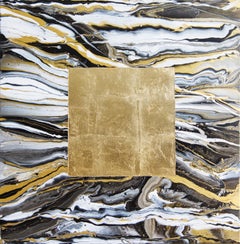
“Astra” is created on a round canvas using the acrylic pouring technique. The composition is built on the interplay of deep black, white, blue, and brown tones, enriched by two shad...

Category

2010s Abstract Berlin - Art

Materials

Canvas, Acrylic

Le Secret
Le Secret

Le Secret

By Olena Kishkurno

Located in Zofingen, AG

(Series: Le Jardin Privé / Your Private Paradise) “Some doors lead not to rooms, but to states of grace — hidden havens where the soul finally feels at home.” This contemporary paint...

Category

2010s Abstract Expressionist Berlin - Art

Materials

Canvas, Oil Crayon, Acrylic

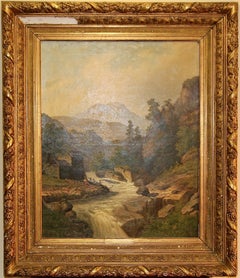
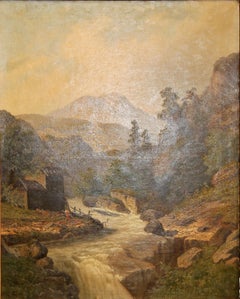
Oil painting, 19th century, river and mountain landscape.

Oil painting, 19th century, river and mountain landscape.

Located in Berlin, DE

Oil painting, 19th century, river and mountain landscape. Oil on canvas. Illegibly signed. Frame damaged. Free shipping only without frame. 76 cm x 94.5 cm without frame.

Category

19th Century Berlin - Art

Materials

Canvas, Oil

Superposition
Superposition

Superposition

By Kseniya Rai

Located in Zofingen, AG

Superposition from the series “Zero Thinking” This work explores the state where opposite realities coexist. “Superposition” is a moment before the mind chooses. Before logic separat...

Category

2010s Abstract Expressionist Berlin - Art

Materials

Canvas, Oil, Linen

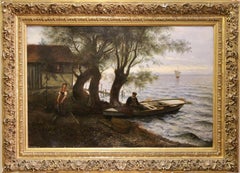
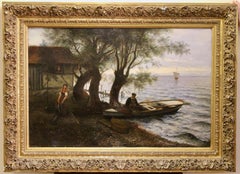
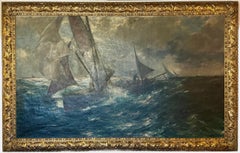
Antique oil Painting, atmospheric Seascape. 19th Century. Oil on canvas.

Antique oil Painting, atmospheric Seascape. 19th Century. Oil on canvas.

Located in Berlin, DE

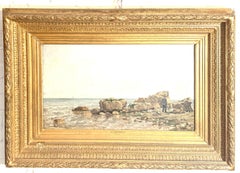
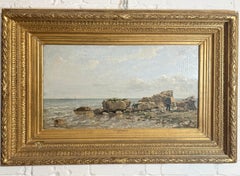
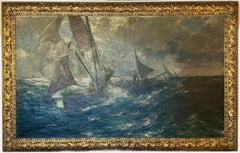
Antique oil painting, atmospheric seascape. 19th century. Oil on canvas. Unsigned. Dimensions without frame 80 cm x 122 cm. The painting and the frame are in an age-appropriate co...

Category

19th Century Romantic Berlin - Art

Materials

Canvas, Oil

Le Promenade
Le Promenade

Le Promenade

By Olena Kishkurno

Located in Zofingen, AG

La Promenade shipped in roll (Series: Le Jardin Privé / Your Private Paradise) “Some paths are not meant to lead us somewhere, but to bring us back to ourselves.” This work, titled ...

Category

2010s Abstract Expressionist Berlin - Art

Materials

Canvas, Acrylic

Just a perfect Day
Just a perfect Day

Just a perfect Day

By Olena Kishkurno

Located in Zofingen, AG

shipped in roll “Just a Perfect Day” reflects the symbols and rituals of contemporary life — the small pleasures that have become part of our visual language of comfort and control. ...

Category

2010s Modern Berlin - Art

Materials

Canvas, Acrylic, Oil Pastel

Antique Still Life with Grapes and Peaches by A. Rudolphi, Oil on Canvas

Antique Still Life with Grapes and Peaches by A. Rudolphi, Oil on Canvas

Located in Berlin, DE

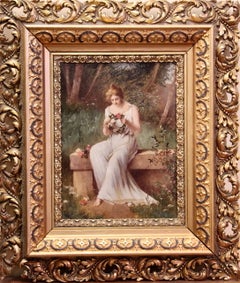
Elegant oil on canvas still life by A. Rudolphi, signed lower left and dating from around 1900. The composition features a delicate arrangement of grapes in a silver bowl, halved pea...

Category

19th Century Realist Berlin - Art
Materials

Canvas, Oil

Forest idyll / - Soulmate -

Forest idyll / - Soulmate -

By Rudolf Kaesbach

Located in Berlin, DE

Rudolf Kaesbach (1873 Gladbach - 1955 Berlin), Forest idyll, around 1915. Bronze, gold and golden brown patina, with cast plinth, mounted on a marble base (5 cm high), total height 36 cm, dimensions of the bronze: 31 cm (height) x 17 cm (length) x 12 cm (width). Weight 4,6 kg, signed on the plinth "R.[udolf] KAESBACH". - a few rubbed areas, overall in excellent condition for its age - Soulmate - The bronze sculpture depicts a young woman in an intimate exchange with a deer that accompanies her. The animal pauses to turn toward her, while the nude beauty slows her pace to look into the deer's eyes and tenderly caress it with her hand. The woman and the deer are in inner harmony. Even though her lips remain motionless, she speaks the language of the animal with which she is deeply connected. The golden patina, which contrasts with the more naturalistic coloring of the deer, gives the young woman the appearance of a saint, even if she cannot be identified as such. At the same time, she evokes memories of Diana, the goddess of the hunt, or a nymph. But she lacks the ferocity. In her innocent naivety, she is more like a vestal virgin, who is not at home in the solitude of the forest. And yet, the young beauty, moving unclothed in the heart of nature, looks like a priestess with her hair tied up and a carefully carried bowl on her way to a sacred grove. In order to open up the above-mentioned associations, Kaesbach deliberately designed the female figure in such a way that she cannot be identified as a specific person. He has created an allegory of natural femininity, characteristic of Art Nouveau, in which the deer is far more than a companion animal. It displays the same gracefulness as the young woman, and the inner resemblance between the two makes the deer appear as her other self. In animal terms, it embodies her inner being, which also gives the deer an allegorical character. About the artist Rudolf Kaesbach studied sculpture at the Hanau Academy and worked in a bronze foundry in Paris in 1900. In order to work as an independent artist, he opened a workshop in Düsseldorf, where he cast bronzes from models he designed. In 1902 he made his debut at the German National Art Exhibition in Düsseldorf. The following year Kaesbach went to the academy in Brussels. There he was inspired by contemporary Belgian sculpture, especially the work of Constantin Meunier. He moved to Berlin, where he opened a studio in the villa district of Grunewald and devoted himself to life-size marble sculptures and the design of bronzes. From 1911, he regularly presented his works at the major art exhibitions in Berlin, as well as in Düsseldorf and Malmö. Between 1936 and 1939, he also created models for the Rosenthal porcelain factory. From 1939 to 1944, Kaesbach was represented at the major German art exhibitions in Munich. GERMAN VERSION Rudolf Kaesbach (1873 Gladbach - 1955 Berlin), Waldidyll, um 1915. Gold und goldbraun patinierte Bronze mit gegossener Plinthe, auf einem Marmorsockel montiert (5 cm Höhe), Gesamthöhe 36 cm, Maße der Bronze: 31 cm (Höhe) x 17 cm (Länge) x 12 cm (Breite). Gewicht 4,6 kg, auf der Plinthe mit „R.[udolf] KAESBACH“ signiert. - vereinzele beriebene Stellen, insgesamt in einem altersgemäß ausgezeichneten Zustand - Seelenverwandtschaft - Die Bronzeplastik veranschaulicht eine junge Frau im innigen Austausch mit einem sie begleitenden Reh. Das Tier hält inne, um sich zu ihr hochzuwenden, während die nackte Schönheit ihren Schritt verlangsamt, um dem Reh ebenfalls in die Augen zu schauen und es zärtlich mit der Hand zu liebkosen. Die Frau und das Reh sind in einem inneren Gleichklang. Auch wenn ihre Lippen unbewegt bleiben, spricht sie die Sprache des Tieres, mit dem sie auf eine tief empfundene Weise verbunden ist. Die im Kontrast zur naturalistischeren Einfärbung des Rehs aufstrahlende goldfarbene Patina lässt die junge Frau wie eine Heilige erscheinen, auch wenn sich nicht als Heilige identifizierbar ist. Zugleich ruft sie Erinnerungen an die Jagdgöttin Diana oder eine Nymphe hervor. Dafür fehlt ihr allerdings die Wildheit. In ihrer unschuldigen Naivität gemahnt sie vielmehr an eine Vestalin, die freilich nicht in der Waldeinsamkeit zu Hause ist. Und doch wirkt die sich unbekleidet im Herzen der Natur bewegende junge Schönheit wie eine Priesterin, die sich mit hochgebundenem Haar und der vorsichtig getragenen Schale und dem Wege zu einem Heiligen Hain befindet. Um die gennannten Assoziationen zu eröffnen, hat Kaesbach die Frauenfigur bewusst so gestaltet, dass sie nicht als konkrete Person identifizierbar ist. Damit hat er eine für den Jugendstil charakteristische Allegorie natürlicher Weiblichkeit geschaffen, bei der das Reh weit mehr als ein Begleittier ist. Es weist dieselbe grazile Anmut wie die junge Frau auf und der innere Gleichklag der beiden lässt das Reh als ihr anderen Ich erscheinen. Es verkörpert – ins Animalische übertragen - ihr inneres Wesen, wodurch auch dem Reh ein allegorischer Charakter zukommt. zum Künstler Rudolf Kaesbach studierte an der Akademie Hanau Bildhauerei und war im Jahr 1900 in einer Pariser Bronzegießerei tätig. Um sich als eigenständiger Künstler betätigen zu können, eröffnete er in Düsseldorf eine Werkstatt, in der er Bronzen nach selbstentworfenen Modellen goss. 1902 debütierte er auf der Deutschen Nationalen Kunstaustellung in Düsseldorf. Im Folgejahr ging Kaesbach an die Akademie nach Brüssel. Dort wurde er von der zeitgenössischen belgischen Bildhauerei, insbesondere vom Werk Constantin Meuniers, inspiriert. Zurückgekehrt zog er nach Berlin, wo er im Villenviertel Grunewald ein Atelier eröffnete und sich neben dem Entwurf für Bronzen der lebensgroßen Marmorbildhauerei widmete. Ab 1911 präsentierte er seine Werke regelmäßig auf den Großen Berliner Kunstausstellungen, aber auch in Düsseldorf und Malmö. Zwischen 1936 und 1939 fertigte er zudem Modelle für die Porzellan-Manufaktur Rosenthal an. Von 1939 bis 1944 war...

Category

1910s Jugendstil Berlin - Art

Materials

Bronze

Lady with a dog for a walk

Lady with a dog for a walk

By Svetlana Saratova

Located in Zofingen, AG

The painting depicts an elegant woman in a light jacket with voluminous hair, sitting in a relaxed pose. Her image is rendered in muted shades of gray, turquoise, and pink, which len...

Category

2010s Aesthetic Movement Berlin - Art

Materials

Canvas, Acrylic

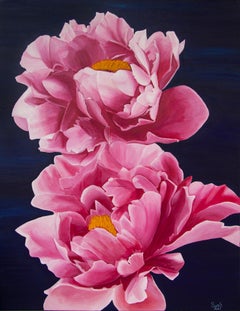
Love (Peonies)
Love (Peonies)

Love (Peonies)

By Svetlana Saratova

Located in Zofingen, AG

Two delicate peonies on a deep navy-blue background. It feels as if these two flowers have merged into one — this is love! The painting is created with acrylic on canvas: layered br...

Category

2010s Abstract Berlin - Art

Materials

Canvas, Acrylic

Apple Garden Latte
Apple Garden Latte

Apple Garden Latte

By Olena Kishkurno

Located in Zofingen, AG

shipped in roll Apple Garden Latte (from the Inner Landscapes series) This work is a visual embodiment of a May morning, a moment when space fills with light, fragrance, and movement...

Category

2010s Abstract Expressionist Berlin - Art
Materials

Canvas, Acrylic

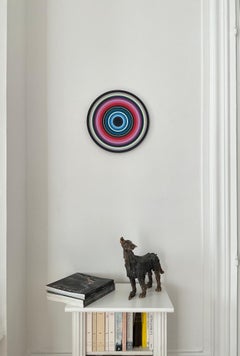
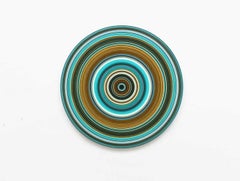
Blue Edition No.02m by Doris Marten - Oil on vinyl, music, circle, lines

Blue Edition No.02m by Doris Marten - Oil on vinyl, music, circle, lines

By Doris Marten

Located in Paris, FR

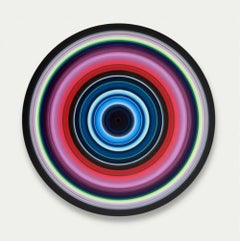
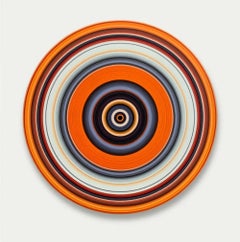
Blue Edition No.02m is a unique oil on vinyl painting by German contemporary artist Doris Marten, dimensions are 25 × 25 cm (9.8 × 9.8 in). The artwork is signed, sold unframed and ...

Category

2010s Contemporary Berlin - Art

Materials

Oil

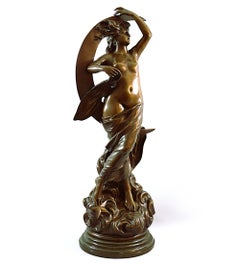
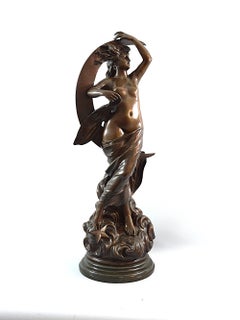
Edouard Drouot (1859 – 1945) Bronze Art Nouveau Signed Stamped 40cm France

Edouard Drouot (1859 – 1945) Bronze Art Nouveau Signed Stamped 40cm France

By Edouard Drouot

Located in Berlin, DE

Edouard Drouot, 1859 Sommevoire – 1945 Paris Bronze signed 40 cm high Subject: A young woman standing in flowing robes (an allegory of Spring or a flower gatherer), holding a small b...

Category

Early 20th Century Art Nouveau Berlin - Art

Materials

Bronze

View of planet earth-6

View of planet earth-6

By Svetlana Saratova

Located in Zofingen, AG

An abstract composition is presented on the canvas, created using the fluid acrylic technique. The painting is built on the flowing movement of paint, creating a sense of depth, text...

Category

2010s Abstract Berlin - Art

Materials

Canvas, Acrylic

Midnight Bloom
Midnight Bloom

Midnight Bloom

By Olena Kishkurno

Located in Zofingen, AG

acrylic on canvas shipped in roll Two bouquets left after the evening. They carry traces of conversation, the breath of night, the freshness of air that still remembers warmth. A few...

Category

2010s Modern Berlin - Art

Materials

Canvas, Acrylic

A little bird on a lettuce background.

A little bird on a lettuce background.

By Svetlana Saratova

Located in Zofingen, AG

An exotic bird is depicted on a 40×40 cm canvas, painted with acrylics. Its plumage shimmers with vibrant shades of green, blue, turquoise, and yellow, creating a sense of living ra...

Category

2010s Abstract Berlin - Art

Materials

Canvas, Acrylic

Portrait of a young boy, impressionist painting.

Portrait of a young boy, impressionist painting.

Located in Berlin, DE

Portrait of a young boy, impressionist painting. Dimensions WITHOUT frame in cm 32 x 42

Category

20th Century Impressionist Berlin - Art
Materials

Pastel, Oil, Board

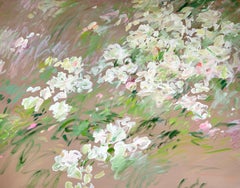
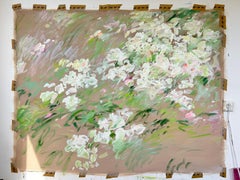
Dreamline
Dreamline

Dreamline

By Olena Kishkurno

Located in Zofingen, AG

shipped in roll “Dreamline” captures the moment a woman steps into a journey driven not by directions, but by desire. She’s not following a map — she’s drawing her own invisible lin...

Category

2010s Modern Berlin - Art
Materials

Canvas, Acrylic

Familiar. Color photography

Familiar. Color photography

By Michaela Haider

Located in Miami Beach, FL

Starting with photographic base elements, such as the figure or the landscape, Haider transforms the scenery into a surreal world through heavy post-production. She uses photographs,...

Category

2010s Contemporary Berlin - Art
Materials

Archival Pigment