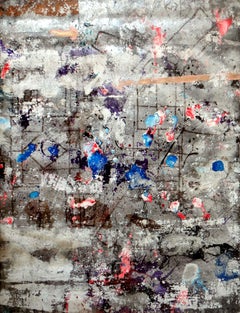
Berlin - Art

to
123
204
194
180
104
146
Overall Width
to
Overall Height
to
20
116
252
440
19
19
14
11
14
14
14
14
19
19
14
230
106
68
60
21
15
14
8
7
3
2
1
325
265
138
386
209
154
130
120
67
58
54
52
49
47
47
40
33
33
31
31
30
28
27
548
350
349
267
267
39
23
17
12
11
155
8
231,177
153,121
Item Ships From: Berlin
Mother Happiness / - The ecstasy of maternal joy -

Mother Happiness / - The ecstasy of maternal joy -

Located in Berlin, DE

Johannes Boese (1856 Ostrog - 1917 Berlin), Mutterglück, um 1910. Goldbraun patinierte Bronze auf gegossener rechteckiger Plinthe, montiert auf zweifarbigem Marmorsockel (9,5 cm Höhe...

Category

1910s Art Nouveau Berlin - Art

Materials

Bronze

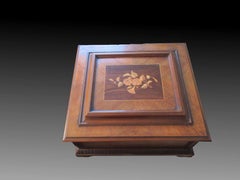
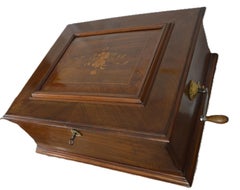
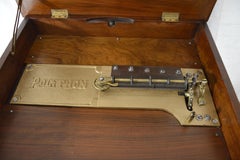
Polyphon Record Machine 1890-1900 Music

Polyphon Record Machine 1890-1900 Music

Located in Berlin, DE

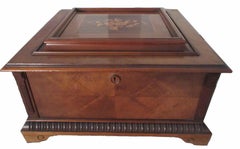
Polyphon Record Automaton 1890-1900 Music Large luxury model Sounds beautiful in its original condition and has been retuned. Records are approximately 40 cm in diameter. Polyphon ...

Category

Late 19th Century Jugendstil Berlin - Art

Materials

Metal

Study for an allegory of victory /  - A virtuoso victory -

Study for an allegory of victory / - A virtuoso victory -

By Arthur Kampf

Located in Berlin, DE

Arthur Kampf (1864 Aachen - 1950 Castorp-Rauxel), Study to an allegory of victory, around 1900. Pencil on paper, 21 cm x 18 cm, signed lower left "A. Kampf". - slightly darkened, otherwise in good condition - A virtuoso victory - About the artwork The vertical-format sketch illustrates a plateau to which a staircase leads up from the right. Arthur Kampf thus takes up a typical baroque disposition for the depiction of allegories. And indeed, a female figure climbs the steps to hand the palm of victory to a figure that is probably also female. Other persons standing on the plateau pay homage to her, whereby the figure on the left edge of the picture may represent a warrior. The scene is framed by an ornamentally decorated arch field, which additionally emphasizes the allegorical-historical content of the depiction. An arch can also be seen under the staircase, suggesting that this may be a design for a supraport. The sheet could have been created in the wake of Arthur Kampf's appointment in 1899 as head of the studio for history painting at the Berlin Art Academy. The drawing style, which only outlines the idea of the picture and yet is determined by concise lines, corresponds to the sketchiness of the Baroque and testifies to Arthur Kampfs intensive study of this heyday of history painting. About the artist Arthur Kampf was the son of the Aachen painter and imperial court photographer August Kampf. His older brother Eugen and his son Herbert were also painters. Arthur Kampf studied at the Düsseldorf Academy of Art from 1879 under Eduard von Gebhardt and Peter Janssen the Elder, whose master pupil he was from 1883 to 1891. Influenced by the naturalistic paintings of Jules Bastien-Lepage, which Kampf saw on a trip to Paris in 1885, he created the painting "The Last Statement" in 1886, which was based on a personal experience. It shows a man mortally wounded by knife wounds. The oppressive drasticness of the almost life-size depiction caused a sensation and controversial criticism. The first successes were achieved: At the Berlin Jubilee Exhibition of 1886, Kampf received an honorable mention, and at the Munich Annual Exhibition of 1890, he was awarded a gold medal. Between 1886 and 1936, Kampf participated in all the major German exhibitions. In 1887 the artist painted his first fresco, which was the beginning of a series of monumental compositions. With the highly successful painting "The Burial of the Corpse of Kaiser Wilhelm I in the Berlin Cathedral" (1888), Kampf established himself as a painter of contemporary history, following in the footsteps of Adolph von Menzel, whose oeuvre he immediately took up with the painting "Speech by Frederick the Great to His Generals in Koeben" (1893). The pictures of his Liberation War cycle were included in school textbooks and distributed in large editions as postcards. As for his academic career, Kampf became an assistant professor at the Düsseldorf Academy of Art in 1887, and in 1894 he was appointed professor of the class for antiquities and nature, and in 1897 he became head of the painting class. In 1899 Kampf was appointed director of the history painting studio at the Berlin Academy of Art. In 1901 he became a full member of the academy and was its president from 1907 to 1912. As Anton von Werner's successor, Kampf directed the Academy of Fine Arts in Charlottenburg from 1915 to 1925. Among his monumental works is the painting of the assembly hall of the Aachen town hall, done between 1898 and 1902. It focuses on the social welfare of the state and the work of the people. Important subsequent commissions include the painting of the reading room of the new Royal Library in Berlin and the new auditorium of the University of Berlin with "Fichte's Speech to the German Nation". During World War I, at the request of General Ewald von Lochow, Kampf traveled to the Western theaters of war, including Warsaw in 1916. In addition to painting, Kampf was also intensively involved in printmaking and, together with his brother Eugen and artist friends such as Alexander Frenz and Olof Jernberg, was considered an innovator of lithography in Düsseldorf. From 1913 on, he worked continuously as an illustrator of historical works and literary classics such as Shakespeare and Goethe. Kampf remained a recognized artist after 1933. On the occasion of the retrospective of his complete works at the "Great German Art Exhibition", he was awarded the "Eagle Shield of the German Reich". During the final phase of World War II, Kampf was placed on Hitler's "Gottbegnadetenliste," which protected him from military service. After World War II, Kampf, whose work was largely destroyed, fell into obscurity. Arthur Kampf belonged to numerous artists' associations. He was a member of the "Rheinisch-Westfälischer Künstlerbund", the "Society of German Watercolorists", the "Association of German Illustrators", the "Malkasten", the "Künstlerclub St. Lucas", the "Düsseldorfer Künstlerbund", the "Freie Vereinigung Düsseldorfer Künstler" and the "Berliner Künstlerbund". Arthur Kampf's sister was married to the painter Alexander Frenz. "Kampf's public recognition in the German Empire later led to his being one-sidedly labeled as a history painter and representative of the Wilhelmine era. This classification does not do justice to the artist's oeuvre as a whole. His early talent did not experience a rapid development later on, but it reached an ever greater mastery in the sense of an impressively relaxed realism and extended thematically beyond history. Kampf was also an excellent draughtsman, etcher and lithographer. Many of his works have been destroyed or lost, and some lead a shadowy existence in museum storerooms." - Otto Zirk "His importance as a Wilhelminian painter and cultural politician has been forgotten in favor of an exaggerated reception of his work during the Third Reich. - Andreas Schroyen Selection of public collections that own works by Arthur Kampf: Altonaer Museum Hamburg, Berlinische Galerie, Burg Frankenberg Aachen, Busch-Reisinger Museum Cambridge/Mass., Deutsches Historisches Museum Berlin, Government Art Collection London, Kulturhistorisches Museum Magdeburg, Kunsthalle Hamburg, Museum für Kunst- und Kulturgeschichte Dortmund, Museum Kunstpalast Düsseldorf, Neue Nationalgalerie Berlin, Suermondt-Ludwig-Museum Aachen, Van der Heydt-Museum Wuppertal. Selected Bibliography Hans W...

Category

Early 20th Century Realist Berlin - Art

Materials

Paper

Clay jug on a bench - The essence of the clay jar revealed by the sunlight -

Clay jug on a bench - The essence of the clay jar revealed by the sunlight -

By Hans Richard von Volkmann

Located in Berlin, DE

Hans Richard von Volkmann (1860 Halle (Saale) - 1927 ibid.), Clay jug on a bench. Pencil and Watercolour on paper. 20 x 26,7 cm (visible size), 37 x 45 cm (frame), dated and monogrammed lower left "Februar 1890 - HR. V. V." - Minimally tanned. Framed behind glass in a passepartout. About the artwork Using the technique of his early youth - pencil and watercolour - Hans Richard von Volkmann depicts a still life. However, this is not a conventional indoor still life, but an open-air depiction, painted outdoors and not in the studio. It is therefore an open-air painting, characteristic of von Volkmann's oeuvre, which could have been painted in the Willingshausen colony of painters, where open-air painting was programmatically practised there and the artist stayed there that year. And indeed, this painting is a manifesto of open-air painting. Von Volkmann demonstrates that leaving the studio for the light of nature leads to an entirely new quality of art. To prove this, he uses the genre of still life, which can be described as the studio subject par excellence. Moreover, light plays an essential role in the classical still life. It is the real protagonist of the still life. And it is precisely this moment, essential to the still life, that von Volkmann exploits to demonstrate the potential of plein-air painting: He presents the objects as they appear in the sunlight. The date of February and the bare branches in the foreground make it clear that this is a clear winter day in bright sunlight. The delicate plant in the foreground casts a clearly defined shadow, as does the jug. However, the shadow is most pronounced on the jug itself: The underside of the handle appears almost black, making the top, and therefore the jug itself, shine all the more brightly. The shining of the objects in the sunlight is also visible on the bench. As complementary phenomena to the shadow zones, light edges can be seen on the boards of the seats and the upper foot of the bench shines entirely in the light. To achieve this intensity of light, von Volkmann activated the bright white of the painting ground. By depicting the objects in glistening sunlight, von Volkmann demonstrates that this quality of light is only to be found outdoors. And this light leads to a new way of looking at the objects themselves. The jug on the bench seems like an accidental arrangement, as if the artist had stumbled upon this unintentional still life and captured it with fascination. And in this fascination there is a moment of realisation that refers to the objects themselves. It is only when they shine brightly in the sunlight that their true nature is revealed. In this way, sunlight allows the objects to come into their own, so to speak. Sunlight, which is not present in the studio, gives the still life an entirely new dimension of reality, which is also reflected in the colours interwoven by the sunlight: The bench and the jug stand in a harmonious grey-pink contrast to the green of the implied meadow. The emphasis on the jug as the central subject of the picture also implies that the watercolour has not been completed. This non finito inscribes a processuality into the picture, making it clear that something processual has been depicted, the temporality of which has been made artistically permanent. This is why von Volkmann signed the painting and dated it to the month. About the Artist Von Volkmann made his first artistic attempts at the age of 14. He painted many watercolours of his home town of Halle. This laid the foundation for his later outdoor painting. In 1880 his autodidactic beginnings were professionalised with his admission to the Düsseldorf Art Academy. There he studied under Hugo Crola, Heinrich Lauenstein, Johann Peter Theodor Janssen and Eduard von Gebhardt until 1888. Von Volkmann then moved to the Karlsruhe Academy, where he was Gustav Schönleber's master pupil until 1892. In 1883 he came for the first time to Willingshausen, Germany's oldest painters' colony, at the suggestion of his student friend Adolf Lins...

Category

1890s Naturalistic Berlin - Art

Materials

Watercolor

Collage with metal application / - Rhythm and Reflection -

Collage with metal application / - Rhythm and Reflection -

Located in Berlin, DE

Hermann Goepfert (1926 Bad Nauheim - 1982 Antwerp), Collage with metal application, 1965. Contribution no. 14 from the anthology 'La lune en rodage II' published by Editions Panderma...

Category

1990s Abstract Berlin - Art

Materials

Paper

Louis Auguste Moreau children Bronze

Louis Auguste Moreau children Bronze

By Louis Auguste Moreau

Located in Berlin, DE

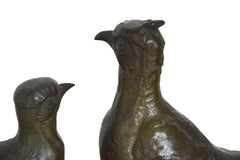
Bronze 54 x 23 cm signed Auguste Moreau (1834–1917) was a French sculptor known for his romantic and decorative style, often working in the tradition of the Belle Époque. He was p...

Category

Early 20th Century Jugendstil Berlin - Art

Materials

Bronze

Vigilant Fox - The psyche of the fox -

Vigilant Fox - The psyche of the fox -

Located in Berlin, DE

Carl Friedrich Deiker (1838 Wetzlar - 1892 Düsseldorf). Vigilant fox. Pencil drawing on brown paper, 18 × 29.5 cm (inside measurement), 31.5 x 43.5 cm (mount), signed and dated "Deiker [18]54" at lower right. - a little bit stained, with a light water stain at lower right About the artwork Carl Friedrich Deiker's consummate ability to depict animals is already evident in this early work. He brought a whole new psychological dimension to animal painting, so that one could literally speak of animal portraits. The naturalistic appearance of the fox alone makes it seem alive. Every strand of muscle, even every hair, is captured, which requires an intensive artistic study of animal anatomy and physiology. But the fox's real liveliness comes not from its natural appearance, but from its internal movement: Stretched out, it has been brought out of rest. It turns around and, with its ears pricked up, looks intently in the direction from which it has seen something. His mouth is slightly open and his pointed teeth are bared, as if he were growling. Tension gradually takes hold of his whole body. While the hind legs were still in a relaxed position, closely observed by Deiker, one front leg was already raised, ready to begin a rising movement. The fox seems so alarmed with all its senses that one gets the impression that, at any moment, its tail will move jerkily and the animal will jump up. While wild animals have traditionally been portrayed as beasts or anthropomorphised, often for caricatural purposes, Deiker explores their inherent nature by attempting to capture their psychic impulses. The wild animal is neither bestial nor human, but a creature in its own right, valued by Deiker for its own sake. In this way, he brought the dignity of the animal into representation and raised animal painting to a whole new artistic level. About the artist Carl Friedrich Deiker was the son of the drawing teacher Christian Friedrich Deiker and the younger brother of the animal painter Johannes Deiker. In addition to the family art lessons, Christian Friedrich shared a studio with his brother Johannes at Braunfels Castle, Deiker attended the drawing academy in Hanau, and from 1858 he was a student at the Karlsruhe Art Academy, where he studied under the landscape painter Johann Wilhelm Schirmer. Carl Friedrich Deiker was already in demand as an artist during his first year: Grand Duke Frederick I of Baden, Margrave Max of Baden and Grand Duke Michael of Russia bought hunting scenes by him. In 1859 he went on a study trip to the Reinhardswald. Just as the Barbizon School had rediscovered the landscape, Deiker opened up the forest for animal painting. From 1861-64 Deiker had his own studio in Karlsruhe, then moved to Düsseldorf, where his brother Johannes followed four years later. Deiker married a daughter of the landscape painter Karl Hilger and remained in Düsseldorf until his death. In 1868 he finally achieved international fame with his painting 'Pursued Noble Deer' and was regarded as a virtuoso new founder of animal painting. "Deiker brought for the first time a truly great artistic quality to animal painting [...]". - Hans Vollmer From 1870 he participated in the academic art exhibitions in Berlin, Dresden, Munich and Hanover. He was also very busy as an illustrator. He drew for the Gartenlaube, the Salon, the Universum, and produced many of the finely illustrated hunting and animal books of the period. He also worked as a printmaker, while his oil paintings circulated as reprints by Franz Dinger. From 1865 to 1892 Deiker was a member of the artists' association Malkasten. Carl Friedrich Deiker's life's work was honoured with a large posthumous memorial exhibition at the Düsseldorf Kunsthalle in 1892. His son Carl Deiker, born in 1879, also became a painter. Selection of art museums that own works by Carl Friedrich Deiker: Hamburger Kunsthalle / Kunsthalle Karlsruhe / Kunstmuseum Düsseldorf / Wallraff Richartz Cologne. Selected Bibliography H. Schmidt: Johannes and...

Category

1850s Naturalistic Berlin - Art

Materials

Pencil

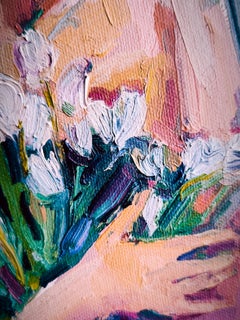
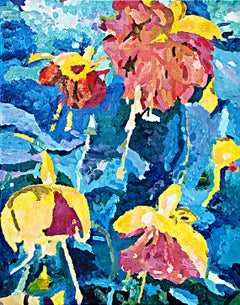
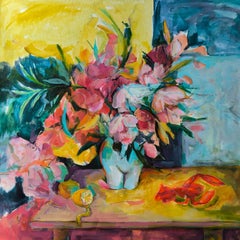
Eternal spring in the garden of my soul

Eternal spring in the garden of my soul

Located in Zofingen, AG

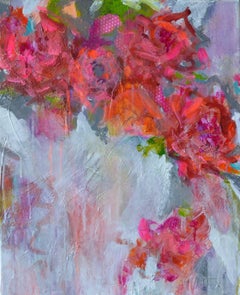
"Eternal Spring in the Garden of My Soul" is an ode to inner renewal and endless life energy. The painting features geraniums — a symbol of resilience and beauty — set against a shim...

Category

2010s Modern Berlin - Art

Materials

Canvas, Acrylic

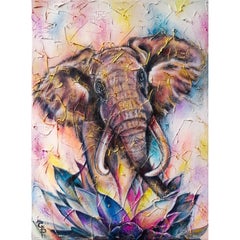
Elephant. Thousand and first petal

Elephant. Thousand and first petal

Located in Zofingen, AG

In "Thousand and First Petal," an elephant emerges from the heart of a lotus, creating a striking contrast between strength and fragility. The background, though predominantly white,...

Category

2010s Impressionist Berlin - Art

Materials

Canvas, Acrylic

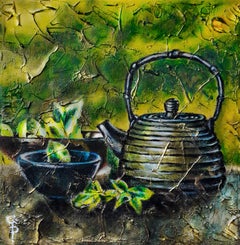
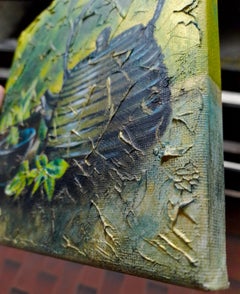
Green tea. original painting

Green tea. original painting

Located in Zofingen, AG

In the painting, a dark teapot, shimmering with gold, stands gracefully to one side, while two modest bowls, each cradling delicate green leaves, rest quietly on the other. A dialogu...

Category

2010s Impressionist Berlin - Art

Materials

Acrylic, Canvas

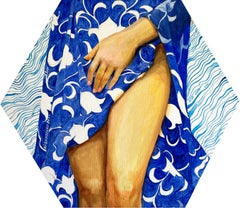
Robe 4

Robe 4

By Fides Becker

Located in Morongo Valley, CA

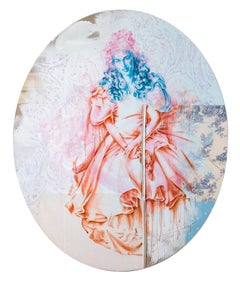
'Robe 4' by Fides Becker Acrylic and Egg Tempura on Canvas and Deco Fabric 160 x 140 cm, 2005 The leading theme of the artist’s interventions is the staging of temporality, transi...

Category

Early 2000s Contemporary Berlin - Art

Materials

Canvas, Acrylic, Egg Tempera

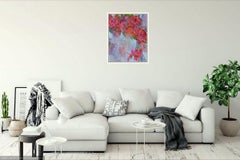
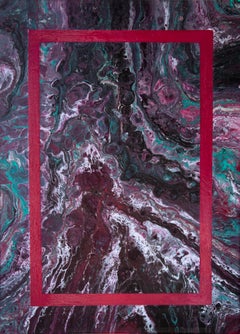
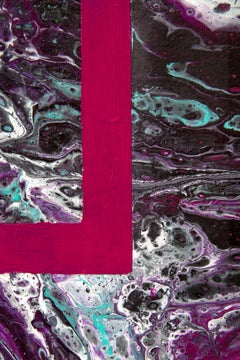
Feminine spring. Abstract painting

Feminine spring. Abstract painting

Located in Zofingen, AG

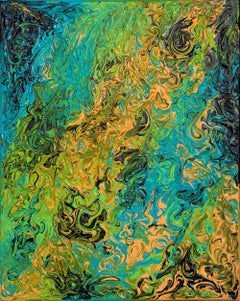
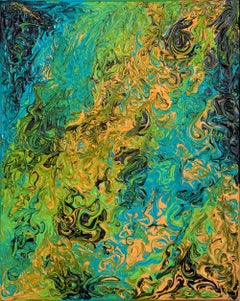
The painting **"Feminine Spring"** is created in the fluid art technique, conveying a sense of lightness, movement, and renewal inherent in spring. The composition resembles a cross-...

Category

2010s Abstract Berlin - Art

Materials

Canvas, Acrylic

My treasure, my sanctuary / - A Tortured Treasure -

My treasure, my sanctuary / - A Tortured Treasure -

Located in Berlin, DE

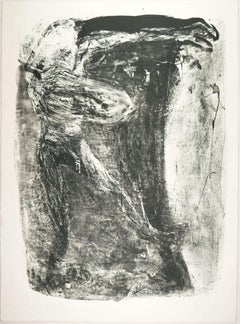
Johannes Heisig (*1953 Leipzig), "My treasure, my sanctuary" - To the Christmas Oratorio by Johann Sebastian Bach. Lithograph on strong yellowish laid paper with watermark, 53 x 39.5...

Category

1980s Abstract Expressionist Berlin - Art

Materials

Lithograph

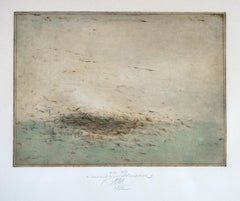
View of a coastal town / - The Pilgrim's View -

View of a coastal town / - The Pilgrim's View -

Located in Berlin, DE

Albert Ernst (1909 Fronhofen - 1996 Hamburg), View of a Coastal Town, etching, 30 x 37 cm (picture), 45 x 50.5 cm (frame), signed in pencil lower right "Albert Ernst", framed under g...

Category

Mid-20th Century Realist Berlin - Art

Materials

Etching

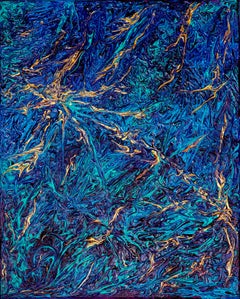
Kaleidoscope 3. Abstract painting

Kaleidoscope 3. Abstract painting

Located in Zofingen, AG

The painting is made in the technique of liquid acrylic on a square canvas. I chose a pale blue background, a combination of bright colors and the addition of golden acrylic, like a ...

Category

2010s Abstract Impressionist Berlin - Art

Materials

Canvas, Acrylic

Spring, abstract.
Spring, abstract.

Spring, abstract.

Located in Zofingen, AG

The picture is made on canvas, in three-dimensional style. I used light green acrylic, in different shades, which symbolizes the birth of a new life. I also added a golden color as a...

Category

2010s Abstract Impressionist Berlin - Art

Materials

Canvas, Acrylic

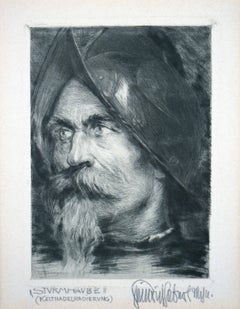
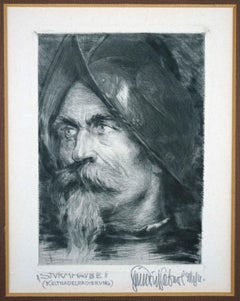
Balaclava - The target in sight -

Balaclava - The target in sight -

Located in Berlin, DE

Heinrich Haberl (1869 Passau to 1934 Munich), Sturmhaube, c. 1900. drypoint, 14 x 10 cm (platemark), 28 x 21 cm (sheet size), 39 x 29 cm (passe-partout), titled "Sturmhaube" in lead at lower left and inscribed "Kaltnadelradierung", signed and locally inscribed "Heinrich Haberl Mchn. [Munich]" at lower right, inscribed again in lead on verso and with old collection stamp. - slightly darkened, fixed and mounted - The target in sight - About the artwork The theatrical "role-portrait" is to be seen against the background of the Rembrandt cult, which reached its climax at the end of the 19th century. The soldier seems to have stepped straight out of Rembrandt's Night Watch (1642) to fix something outside the picture with an alert and ready gaze. The steeply rising brim of the morion frames the gaze and thus perspectivises it as the actual 'pictorial action'. The gaze represents both the vigilant defence and the visionary goal of the battle. Not only the subject, but also the style of the etching needle reflect Rembrandt's understanding of the times. Strong contrasts of light and dark are created in a virtuoso free stroke, without losing the effect of the reflections on the helmet and in the eyes. This shows a kinship with the early prints of Lovis Corinth, who also saw himself as an artist in the role of the knight. Against this background, Haberl's picture can also be seen as a representation of his artistic self-image. About the artist Heinrich Haberl first attended the art school in Nuremberg and from 1892 studied at the Munich Academy. There he was a master student of Johann Leonhard von Raab, Rudolf von Seitz, Franz von Defregger...

Category

Early 19th Century Realist Berlin - Art
Materials

Etching

Rudolf v. Rittner as Florian Geyer - Last man standing -

Rudolf v. Rittner as Florian Geyer - Last man standing -

By Lovis Corinth

Located in Berlin, DE

Lovis Corinth (1858 Tapiau - 1925 Zandvoort), Rudolf von Rittner as Florian Geyer, 1924 (Müller 854), drypoint signed in pencil. 20.4 × 14.2 (plate size), 37.7 × 30.6 cm (sheet size). Published by Karl Nierendorf, Berlin. Framed in a passepartout. - Strong, precise impression. Frame a little bit rubbed and with two small damages. About the artwork The knight is a leitmotif in Lovis Corinth's work, culminating in his Self-Portrait in Armour of 1914. Of all the paintings on this theme, Corinth most often depicted Florian Geyer. Descended from a Franconian noble family, he fought for the freedom of the peasants during the peasant wars of the Reformation, first diplomatically and then militarily, leading the legendary Schwarzen Haufen (Black Troops). The name derives from the black uniforms with which Geyer dressed the peasants willing to fight. During the Napoleonic occupation, the freedom fighter Florian Geyer was sung about by the Romantics, and the free corps Die Schwarze Schaar, founded in 1813 by Major von Lützow, succeeded the Schwarzer Haufen. It was against this historical background that Gerhard Hauptmann wrote the revolutionary drama Florian Geyer, which premiered at the Deutsches Theater in Berlin in 1896. While the actor Rudolf Rittner, who would later appear in Fritz Lang's films, initially played the role of Schäferhans, he took over the leading role in the new production at Berlin's Lessing Theatre in 1904, again directed by Emil Lessing, which established his fame as an actor. Hauptmann himself praised the acting. He wrote to Hugo von Hofmannsthal: "It went quite well with Florian Geyer. In any case, I had the great pleasure of seeing the play again in an admirable performance". And Lovis Corinth was so taken with Rittner's performance that he painted an oil portrait of him in the role of Florian Geyer in 1906. After two further graphic versions in 1915 and 1920/21, Corinth returned to the painting a year before his death and almost twenty years after the oil painting to create this graphic version in 1924. Even the inscription in the picture was taken over. This proves all the more the importance of the knight and freedom fighter for Corinth's self-image. The oil painting, in particular, proclaims the single-minded determination to fight to the last for the values defended, manifested in the oil painting by the tattered flag held out to the enemy. There is a parallel with Rainer Maria Rilke's 1899 story The Cornet, in which the protagonist goes down with the flag that he first saved at the risk of his life. Consequently, the portrait is also a self-portrait, and the knight's armour is not an academic costume or an ironic refraction, but an expression of Corinth's self-image, which also includes his self-representation as an artist. The Secession poster...

Category

1920s Expressionist Berlin - Art

Materials

Etching

Lake at Himmelpfort, Painting, Watercolor on Watercolor Paper

Lake at Himmelpfort, Painting, Watercolor on Watercolor Paper

By Marko Fenske

Located in Yardley, PA

Painted plein air in Himmelpfort with watercolor and reservage. :: Painting :: Expressionism :: This piece comes with an official certificate of authenticity signed by the artist :: ...

Category

2010s Expressionist Berlin - Art

Materials

Watercolor

Threatening to defeat me once and for all / - A Christmas Pietà -

Threatening to defeat me once and for all / - A Christmas Pietà -

Located in Berlin, DE

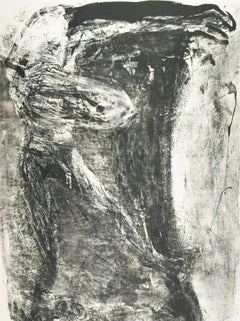
Johannes Heisig (*1953 Leipzig), "Threatening to defeat me once and for all" - To the Christmas Oratorio by Johann Sebastian Bach. Lithograph on strong yellowish laid paper with wate...

Category

1980s Abstract Expressionist Berlin - Art

Materials

Lithograph

Your love is better than any heaven

Your love is better than any heaven

Located in Zofingen, AG

"Your Love is Better Than Any Paradise" depicts a woman serenely immersed in the profound emotion of love. Adorned with a stunning crown of flowers and accompanied by a white dove, s...

Category

2010s Modern Berlin - Art

Materials

Canvas, Oil

Black form surfaces on red painterly ground / - The Double Origin of Painting -

Black form surfaces on red painterly ground / - The Double Origin of Painting -

Located in Berlin, DE

Jürgen Möbius (*1939 Großenhain), Black form surfaces on red painterly ground. Oil on hardboard, 50 x 60 cm, 51 x 61 cm (frame), signed "Möbius" and dated "[19]81". - Small paint chip in upper right corner, otherwise good condition. Gallery frame with slight signs of wear. - The Double Origin of Painting - About the artwork In the painting black, optically dominant forms can be seen, which in their arrangement at right angles to each other have a proto-architectural character. They are, so to speak, always already given original forms. At the same time, however, the forms are surfaces of color, and thus genuine painting. In order to make the painterly character of the painting clearly visible, Jürgen Möbius has applied red-toned strokes that have preserved the brushstroke. These are traces of an act of painting. The diagonal layers of red strokes merge into the upper white area, which oscillates between brushwork and homogeneous flatness, while the central white field, into which a black bar protrudes, has a decidedly planar character. The sharp contrast between the autonomous black surface forms, reminiscent of Kasimir Malevich, and the free brushstroke, which is not bound to any motif, creates an enormous pictorial tension, which is conveyed by the white, but at the same time is intensified by the virulent black-and-white contrast. In addition to the tense contrast of form and color, there is also a contrast between the dynamic of the brushstroke and the static of the black surface forms, whereby the diagonal alignment of these forms also gives the static a dynamic, while at the same time the layered brushstrokes have something static about them. Added to this structure of tension is the fact that the painting ground, the unprepared hardboard, is clearly present as such in the picture. In this way, it becomes clear once again that we are not dealing with an autonomous cosmos of form and color, as in Suprematism, but with a painting created by the artist's hand. With this work, Jürgen Möbius explores the possibilities of painting and thematizes painting in terms of its twofold origin, the trace of the guided brush and the painterly form, which gains its independence precisely by absorbing the brushstroke into itself. About the artist From 1959 to 1965 Jürgen Möbius studied painting at the University Institute for Art and Work Education in Mainz. He also studied philosophy and art history at the University of Mainz. Afterwards he worked as a freelance artist in Mainz. At first, Möbius created material reliefs and installations, then, around 1974, he turned increasingly to conceptual art and added cinematic means. During this phase he wrote the manifesto-like essay "Principles of Supranatural Landscape" (1979). From 1981 on, Möbius concentrated on painting and searched for artistic ways to "treat intellectual and sensual perception equally in the fusion of representational and abstract pictorial elements" (Wolfgang Zemter). He found inspiration on his study trips to Thailand and Sri Lanka. "The pure painting of Jürgen Möbius flows through us as a timeless expression of memory and energy, ploughing our perception and bringing us the happiness of seeing authentic, immovable form. - Philippe Büttner Selection of solo exhibitions 1969 Galerie Würzner, Düsseldorf / Galerie Gurlitt, Mainz 1972 Städtische Galerie, Mainz 1973 Galerie Schloss Ringenberg Rathaus, Kleve 1974 Röderhausmuseum, Wuppertal 1976 Galerie Glasing, Osnabrück / Städtische Galerie, Herne 1977, 1997, 2004 Märkisches Museum, Witten 1979 Studio M, Bamberg / Staatstheater, Darmstadt 1980 Galerie Stolànovà, Wiesbaden / Mittelrheinmuseum, Koblenz 1982 Galerie Dornhöfer, Mainz 1984 Galerie Neumühle, Schlangenbad 1985 Landesmuseum, Mainz / Kunstverein, Ludwigshafen / Nassauischer Kunstverein, Wiesbaden 1986 Museum, Bochum / Galerie der Stadt Iserlohn 1987, 1990 Galerie Klaus Kiefer, Essen 1987, 2000 Galerie Ulrike Buschlinger, Wiesbaden 1988 Kunsthalle Darmstadt 1988, 1992, 1996, 1999 Galerie Leonhard, Basel 1992, 2002 Galerie Zulauf, Freisheim 1994 Galerie Remy, Vallendar 1995 Sendezentrum des Zweiten Deutschen Fernsehens, Mainz 2001 Collegium oecumenicum, Bamberg / MVB Forum für Kultur und Wirtschaft, Mainz 2006 Adam Gallery, London Selection of group exhibitions 1969 ‘International Graphic Arts’, Galerie Dalléas Bordeaux, Paris 1975 ‘Deutscher Künstler-Bund’, Dortmund 1979 ‘Man and man’s Images’, Märkisches Museum Witten 1980 ‘Love-Dokuments of our Time’, Art Hall Darmstadt and Art Association Hannover 1982 ‘Work - Progress – Position’, Nassau Art Association Wiesbaden 1983 ‘Principle Hope – Utopic Aspects in Art and Culture of the 20th Century’, Museum Bochum 1986 ‘Selfportraits’, Gallery Klaus Kiefer Essen 1987 ‘The Dying and Death’, Gallery Klaus Kiefer Essen 1989 ‘Where are You, Revolution – Freedom, Liberty, Egality, Fraternity to-day’, Museum Bochum 1990 ‘Flight – a Problem within the Memory of Man’, Kunsthalle Darmstadt ‘Art and War 1939 – 89’, House of Cultures Berlin 1991 ‘Material and Form’, Pillnitz Castle Dresden and Pfalz Gallery Kaiserslautern 1995 20 Years Exhibitions, Chrämerhuus Langenthal, Schweiz 1998 ‘Works on Paper’, Klaus Kiefer Gallery Essen 2000 ‘Acquisitions 1900 – 2000’, Mittelrhein-Museum Koblenz 2001 ‘Strange Pictures’, Klaus Kiefer Gallery Essen 2002 ‘10 Years Buschlinger Gallery’, Buschlinger Gallery Wiesbaden 2004 ‘Eternal Space – Pictures and Sculptures’, Dome of Bamberg 2005 Art Fair Chicago, Adam Gallery, London Selected Bibliography Mittelrheinisches Landesmuseum (Hrsg.): Jürgen Möbius - Neue Bilder, Mainz 1985. Kunstverein Darmstadt (Hrsg.): Jürgen Möbius. Bilder 1985 - 1988. Kunsthalle Darmstadt, 26. Juni - 14. August 1988. Red. Dorit Marhenke, Lyrik Marcus Schiltenwolf, Düsseldorf 1988. Gabriele Prusko (Hrsg.): Jürgen Möbius. Mit Texten von Philippe Büttner und Ralph Mieritz, Basel 1992. Wolfgang Zemter (Hrsg.): Jürgen Möbius - Aktuelle Arbeiten. Märkisches Museum der Stadt Witten, Bönen 1999. Wolfgang Zemter (Hrsg.): Jürgen Möbius. Flieger in meinem Zimmer und Beruhigte Zone, Bönen 2004. Dama Gallery...

Category

1980s Abstract Berlin - Art

Materials

Oil

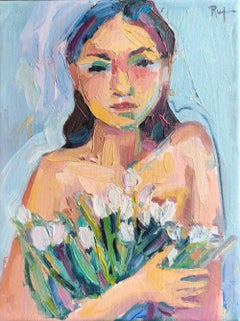
Portrait of a woman. Flora

Portrait of a woman. Flora

Located in Zofingen, AG

The painting “Flora” depicts a young woman in a serene and contemplative state with her eyes closed, symbolizing inner peace and connection with nature. Inspired by the Roman goddess...

Category

2010s Modern Berlin - Art

Materials

Canvas, Oil

LES ADIEUX DUN SEX SYMBOL

LES ADIEUX DUN SEX SYMBOL

Located in Berlin, DE

Signed in gold and numbered on '2/5' on the recto. Edition of 5 impressions + AP. On Japanese gampi, printed in 2021.

Category

2010s Berlin - Art

Materials

Platinum

Fire
Fire

Fire

Located in Zofingen, AG

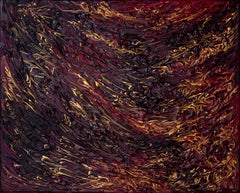
The picture is painted with acrylic and gold paint. The picture is made in a special technique, so the strokes look volumetric.The image of fire is always expression, movement, life,...

Category

2010s Pop Art Berlin - Art

Materials

Canvas, Acrylic

"The village assembly" 1961 Russian art Oil Painting. Landscape.

"The village assembly" 1961 Russian art Oil Painting. Landscape.

By Ivan Sorokin

Located in Berlin, DE

Honoured Artist of the RSFSR, People’s Artist of the USSR, Member of the USSR Academy of Arts, Winner of the I. E. Repin State prize.

Category

1960s Impressionist Berlin - Art

Materials

Oil

Man sitting in the studio - Thinking about art -

Man sitting in the studio - Thinking about art -

Located in Berlin, DE

Adolph Eduard Otto von Faber du Faur (1828 Ludwigsburg - 1901 Munich). Man sitting in the studio. Watercolour painting, 43 x 27 cm (visible size), 73 x 53 cm (frame), monogrammed at lower right, estate stamp. Upper right corner neatly repaired, small tear in the wall to the left of the sitter. - Thinking about art - About the artwork The sitter, an elderly man, is seated in a studio on a pedestal reminiscent of an academy hall. The earthy, dark tones give the scene a weighty quality. The lightest tones are found in the incarnate parts of the figure, which do not stand out from the other colours of the picture, but are linked to them. As a result, the sitter's face is both part of and the highlight of the colour references in the picture. The colour of the sitter's skin is reflected in his pink coat, while his white-grey hair matches the colour of the wall next to him. This almost monochrome wall surface, in turn, is connected across the portrait to the framed picture standing on the floor, which seems to have been erased by this correspondence with the empty wall surface. Through the palette, which is positioned directly behind the sitter's head, the reference to painting, which is already given by the studio space, is explicitly linked to the sitter, who thus seems to be contemplating the question of the meaning of art. This raises the question of whether Faber Du Faur, who had become lonely in his old age, might have painted a self-portrait here in his later years. In addition to the studio setting, the sitter's explicit reference to the palette and the fact that the picture was part of his estate, the only summary elaboration of the body suggests a self-portrait, while the representation of the face is concretised with the wide-open eyes typical of a self-portrait. This concentration on the face gives the impression of the artist's melancholy introspection, captured by the palette and related to the meaning of painting, whose dark character is reinforced by the concealment of the palette hanging on the right of the picture in the light tones so characteristic of Faber Du Faur. In the course of this resignation, Faber du Faur advises his son Hans, who has also become a painter: "Promise me one thing: never move to Munich, they'll kill you here!" Whoever the sitter may be, the references to painting make the portrait a resigned self-contemplation by Faber Du Faur, focused on art. About the artist After leaving school, Otto Faber du Faur entered the service of the Württemberg army, at the same time cultivating his artistic talent. In 1851, on the recommendation of his father Christian Wilhelm, who was himself a battle painter, he spent six months in Munich as an apprentice to Alexander von Kotzebue. In 1852 he was granted a year's leave of absence from military service to study battle painting in the studio of Adolphe Yvon...

Category

1890s Realist Berlin - Art
Materials

Watercolor

Cosmic Cloud, Painting, Acrylic on Canvas

Cosmic Cloud, Painting, Acrylic on Canvas

By Karin Goeppert

Located in Yardley, PA

"Cosmic Cloud" is a very atmospheric painting, done as a diptych. There are two canvases, each is 90 cm x 30 cm. In cm the work is 60 x 90 x 1.5 if both canvases are hung directly ne...

Category

2010s Abstract Berlin - Art

Materials

Acrylic

Inner peace
Inner peace

Inner peace

Located in Zofingen, AG

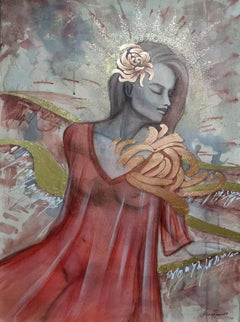
The painting, executed in a mixed technique, depicts a beautiful young woman. Her closed eyes emphasize the overall atmosphere of relaxation. Natural beauty, graceful figure, and the...

Category

2010s Art Deco Berlin - Art

Materials

Gold

I Had a Dream  The Meeting of the Moon and the Sun

I Had a Dream The Meeting of the Moon and the Sun

Located in Zofingen, AG

The painting depicts a young woman immersed in sleep. Her peaceful face reflects tranquility and serenity. In the background, an ornamental representation of the sun can be seen, sym...

Category

2010s Art Deco Berlin - Art

Materials

Gold

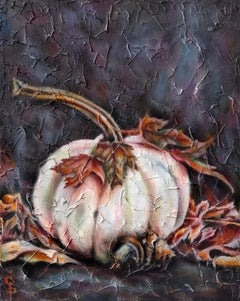
Ordinary autumn magic. original painting

Ordinary autumn magic. original painting

Located in Zofingen, AG

Amid the muted tones of autumn’s twilight, a white pumpkin rests at the center, radiating a quiet, pure beauty. The dark gray background, with hints of deep purples and petrol blue, ...

Category

2010s Impressionist Berlin - Art

Materials

Acrylic, Cardboard

A Coffee with Autumn. original painting

A Coffee with Autumn. original painting

Located in Zofingen, AG

In this still life, autumn invites you in like an old friend, offering warmth and comfort. A simple white cup of hot coffee sits beside a vase filled with vibrant red leaves, and the...

Category

2010s Impressionist Berlin - Art
Materials

Acrylic, Cardboard

Madonna del Dito - Heavenly beauty down to the fingertip -

Madonna del Dito - Heavenly beauty down to the fingertip -

Located in Berlin, DE

KPM, Madonna del Dito, oval, slightly curved porcelain picture plate by KPM Berlin in fine polychrome onglaze painting, 27 x 22 cm (plate size), 33 x 28.5 cm (frame), unsigned, press...

Category

1880s Academic Berlin - Art

Materials

Porcelain, Oil

Karl Eduard Onken Jever Oldenburg 1846 - 1934 Wien Landscape

Karl Eduard Onken Jever Oldenburg 1846 - 1934 Wien Landscape

Located in Berlin, DE

oli on canvas signed bottom left 34x44 cm Karl Eduard Onken (also known as Carl Eduard Onken) was an Austrian landscape painter and etcher of German origin. Here are some key ...

Category

1920s Land Berlin - Art

Materials

Oil

Jerry Hall, New York City 1985

Jerry Hall, New York City 1985

By Annie Leibovitz

Located in Berlin, DE

Printed in 2011. Signed in pencil; titled, dated, inscribed and with the photographers black copyright stamp, on the verso. Number 10 from a limited edition of 25.

Category

1880s Contemporary Berlin - Art

Materials

Archival Pigment

"A Cozy Conversation Without Words"

"A Cozy Conversation Without Words"

Located in Zofingen, AG

The painting evokes a quiet, cozy atmosphere, where a young woman enjoys the peace of a home evening in the company of her beloved cat. Her gaze, turned to the side, seems to catch i...

Category

2010s Modern Berlin - Art

Materials

Canvas, Acrylic

Warm Evening with Tea

Warm Evening with Tea

Located in Zofingen, AG

Warm Evening with Tea" is a painting permeated with soft light and the aroma of a summer garden. Lush flowers in a vase seem to whisper stories of quiet evenings, and a cup of tea s...

Category

2010s Modern Berlin - Art

Materials

Canvas, Acrylic

Evening tea
Evening tea

Evening tea

Located in Zofingen, AG

Evening Tea" is a painting permeated with soft light and the aroma of a summer garden. Lush flowers in a vase seem to whisper stories of quiet evenings, and a cup of tea standing ne...

Category

2010s Modern Berlin - Art

Materials

Canvas, Acrylic

Evening Temptation
Evening Temptation

Evening Temptation

Located in Zofingen, AG

Evening Temptation" is a painting that captures the sensual notes of a cozy evening. At the heart of the composition lies a vase with flowers, sculpted in the form of a woman's body...

Category

2010s Modern Berlin - Art

Materials

Canvas, Acrylic

Still Life with Crab

Still Life with Crab

Located in Zofingen, AG

The painting “Still Life with Crab” combines elements of piquancy and intrigue. The central place is occupied by a vase of flowers, depicted in the fo...

Category

2010s Modern Berlin - Art

Materials

Canvas, Acrylic

Contemplation and Purring

Contemplation and Purring

Located in Zofingen, AG

"Contemplation and Purring" captures a serene moment of harmony between a relaxed young woman and two playful cats. The woman, in gentle repose, embodies tranquility and introspecti...

Category

2010s Modern Berlin - Art

Materials

Canvas, Acrylic

Soul mates
Soul mates

Soul mates

Located in Zofingen, AG

The majestic presence of a lion, depicted with a vibrant, expressive palette and bold brushstrokes, captures the essence of deep mental and emotional connections. The lion's command...

Category

2010s Modern Berlin - Art

Materials

Canvas, Oil

1221, Painting, Acrylic on Other

1221, Painting, Acrylic on Other

Located in Yardley, PA

acrylics, house paint, spray paint, tempera, marker, oil pastels and red wine marks on primed polyester fabric the work can be hanged as a tapestry or framed :: Painting :: Abstra...

Category

2010s Abstract Berlin - Art
Materials

Acrylic

FARMACIA

FARMACIA

Located in Berlin, DE

Signed, titled, dated and numbered '1/3' on the verso.

Category

Early 2000s Berlin - Art
Materials

C Print

I LOVE TEAM BUILDING 1

I LOVE TEAM BUILDING 1

Located in Berlin, DE

From the series 'Visual Guide to Social Life'. On-going series since 2019. Inspired by "The Musicians" of Caravaggio, this photo is a humorous take on how certain groups place the su...

Category

2010s Berlin - Art
Materials

Inkjet