Berlin - Art

to
124
205
192
180
98
143
Overall Width
to
Overall Height
to
21
118
248
431
18
18
13
11
13
14
14
14
19
19
15
228
99
68
60
19
15
14
8
8
3
2
1
322
257
138
381
206
154
126
119
65
57
55
53
49
46
46
39
33
32
32
30
29
27
27
545
347
346
264
264
39
23
19
12
11
155
8
231,094
152,001
Item Ships From: Berlin
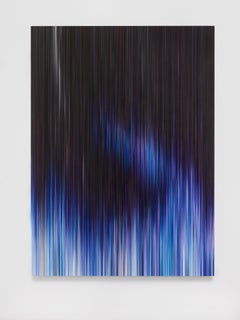
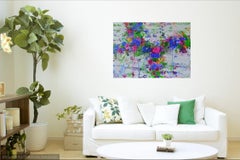
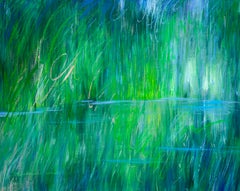
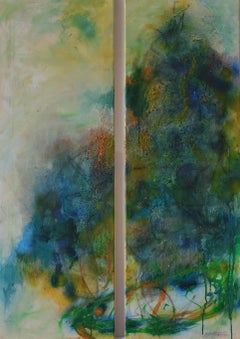
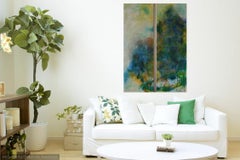
Luminous Union (Two Swans)

Luminous Union (Two Swans)

Located in Zofingen, AG

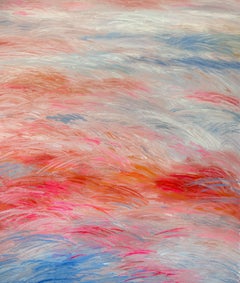
shipped in roll "Luminous Union (Two Swans)" is an evocative contemporary work that masterfully balances on the edge of Abstract Impressionism and Lyrical Abstraction. Through a rhyt...

Category

2010s Abstract Expressionist Berlin - Art

Materials

Canvas, Acrylic

Death and Life / - United in Laughter -

Death and Life / - United in Laughter -

By Hans Frank

Located in Berlin, DE

Hans Frank (1884 Vienna - 1948 Salzburg), Death and Life, 1911. Lithograph, 18 cm x 31 cm (depiction), 25.5 cm x 38.7 cm (sheet size), signed “H.[ans] Frank” in pencil lower right and inscribed “Tod und Leben” lower left. - darkened, remains of an old mounting on the verso - United in Laughter - Here, Hans Frank refers to the skull as a vanitas motif. In Renaissance and Baroque portraits, this motif symbolizes the transience of the sitter, whose head has become a skull over time. Penitents, such as St. Jerome, often hold skulls in melancholy contemplation. Here, however, the boy stands up for life itself. He boldly grabs the skull and laughs at the absurdity of life and death. The laughter of death joins the laughter of life, and vice versa. The child's thumb penetrates the skull's cheekbone to illustrate the inseparable connection between death and life. About the artist Hans Frank studied at the Vienna School of Applied Arts from 1902 to 1906 and then studied painting under Franz Rumpler at the Vienna Academy of Fine Arts from 1907 to 1911. In 1911, he received a substantial travel grant from the emperor, which he used to travel to Switzerland, Paris, London, Belgium, the Netherlands, and Germany. After serving in World War I, Frank moved to St. Marein im Mürztal, returning to Vienna in 1925. He took further study trips to Italy, southern France, and the Austrian countryside. In 1927, Frank became a member of the London Society of Color Printers. An exhibition of his work at the Medici Gallery in London brought him international recognition. He joined the Pasadena Printmakers Society of California and established contacts in Canada. In addition to his highly regarded paintings, Frank primarily worked as a graphic artist. He created over 300 prints and developed a new gradient technique for the fern woodcut with his twin brother, Leo Frank...

Category

1910s Jugendstil Berlin - Art

Materials

Paper

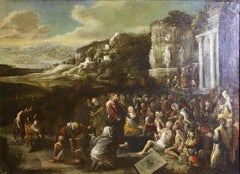
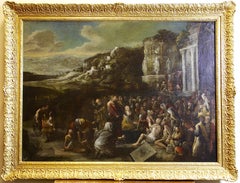
The Raising of Lazarus

The Raising of Lazarus

Located in Berlin, DE

J.Strebele oil on canvas signed lower left 110 x 98 cm The raising of Lazarus is one of the best-known and most significant miracle stories in the New Testament. Source: It is...

Category

Early 18th Century Old Masters Berlin - Art

Materials

Oil

Summer Forest Landscape, 1915 / - The Forest Walk -

Summer Forest Landscape, 1915 / - The Forest Walk -

Located in Berlin, DE

Stanislas Warnie (1879-1958), Summer Forest Landscape, 1915. Watercolor, 31.5 cm x 45 cm (passepartout), 50.5 cm x 63.5 cm (frame), signed "S. Warnie" at lower left and dated "1915"....

Category

1910s Art Nouveau Berlin - Art

Materials

Watercolor

Gladioli / - The figurativeness of abstraction -

Gladioli / - The figurativeness of abstraction -

Located in Berlin, DE

Klaus Fußmann (*1938 Velbert), Gladiolen, 1983. Color etching, WVZ 116.5, 14.5 cm x 18.5 cm (depiction), 20 cm x 21 cm (sheet size), signed “Fuß[mann]” in pencil lower right and insc...

Category

1970s Abstract Impressionist Berlin - Art

Materials

Paper

Antique Painting, 19th Century, European Monogrammist, "The Emigration".

Antique Painting, 19th Century, European Monogrammist, "The Emigration".

Located in Berlin, DE

Signed and dated. Dimensions are without frame. Including certificate of authenticity. Frame has slight damage in places.

Category

19th Century Realist Berlin - Art

Materials

Canvas, Oil

Topology of Space
Topology of Space

Topology of Space

Located in Zofingen, AG

The composition exists between abstraction and recognizability, inviting the viewer to enter a space that is both boundless and intimate. The work is based on the state of zero thin...

Category

2010s Abstract Expressionist Berlin - Art

Materials

Canvas, Oil

Silver Butterfly on the Wall

Silver Butterfly on the Wall

Located in Zofingen, AG

The painting, created with acrylic on canvas, presents a striking decorative image of a butterfly set against an ornamental background. A large butterfly with outstretched wings occu...

Category

2010s Abstract Berlin - Art

Materials

Canvas, Acrylic

Vigilant Fox - The psyche of the fox -

Vigilant Fox - The psyche of the fox -

Located in Berlin, DE

Carl Friedrich Deiker (1838 Wetzlar - 1892 Düsseldorf). Vigilant fox. Pencil drawing on brown paper, 18 × 29.5 cm (inside measurement), 31.5 x 43.5 cm (mount), signed and dated "Deiker [18]54" at lower right. - a little bit stained, with a light water stain at lower right About the artwork Carl Friedrich Deiker's consummate ability to depict animals is already evident in this early work. He brought a whole new psychological dimension to animal painting, so that one could literally speak of animal portraits. The naturalistic appearance of the fox alone makes it seem alive. Every strand of muscle, even every hair, is captured, which requires an intensive artistic study of animal anatomy and physiology. But the fox's real liveliness comes not from its natural appearance, but from its internal movement: Stretched out, it has been brought out of rest. It turns around and, with its ears pricked up, looks intently in the direction from which it has seen something. His mouth is slightly open and his pointed teeth are bared, as if he were growling. Tension gradually takes hold of his whole body. While the hind legs were still in a relaxed position, closely observed by Deiker, one front leg was already raised, ready to begin a rising movement. The fox seems so alarmed with all its senses that one gets the impression that, at any moment, its tail will move jerkily and the animal will jump up. While wild animals have traditionally been portrayed as beasts or anthropomorphised, often for caricatural purposes, Deiker explores their inherent nature by attempting to capture their psychic impulses. The wild animal is neither bestial nor human, but a creature in its own right, valued by Deiker for its own sake. In this way, he brought the dignity of the animal into representation and raised animal painting to a whole new artistic level. About the artist Carl Friedrich Deiker was the son of the drawing teacher Christian Friedrich Deiker and the younger brother of the animal painter Johannes Deiker. In addition to the family art lessons, Christian Friedrich shared a studio with his brother Johannes at Braunfels Castle, Deiker attended the drawing academy in Hanau, and from 1858 he was a student at the Karlsruhe Art Academy, where he studied under the landscape painter Johann Wilhelm Schirmer. Carl Friedrich Deiker was already in demand as an artist during his first year: Grand Duke Frederick I of Baden, Margrave Max of Baden and Grand Duke Michael of Russia bought hunting scenes by him. In 1859 he went on a study trip to the Reinhardswald. Just as the Barbizon School had rediscovered the landscape, Deiker opened up the forest for animal painting. From 1861-64 Deiker had his own studio in Karlsruhe, then moved to Düsseldorf, where his brother Johannes followed four years later. Deiker married a daughter of the landscape painter Karl Hilger and remained in Düsseldorf until his death. In 1868 he finally achieved international fame with his painting 'Pursued Noble Deer' and was regarded as a virtuoso new founder of animal painting. "Deiker brought for the first time a truly great artistic quality to animal painting [...]". - Hans Vollmer From 1870 he participated in the academic art exhibitions in Berlin, Dresden, Munich and Hanover. He was also very busy as an illustrator. He drew for the Gartenlaube, the Salon, the Universum, and produced many of the finely illustrated hunting and animal books of the period. He also worked as a printmaker, while his oil paintings circulated as reprints by Franz Dinger. From 1865 to 1892 Deiker was a member of the artists' association Malkasten. Carl Friedrich Deiker's life's work was honoured with a large posthumous memorial exhibition at the Düsseldorf Kunsthalle in 1892. His son Carl Deiker, born in 1879, also became a painter. Selection of art museums that own works by Carl Friedrich Deiker: Hamburger Kunsthalle / Kunsthalle Karlsruhe / Kunstmuseum Düsseldorf / Wallraff Richartz Cologne. Selected Bibliography H. Schmidt: Johannes and...

Category

1850s Naturalistic Berlin - Art

Materials

Pencil

S. Anton Patenkirchen / - The Home of the Landscape -

S. Anton Patenkirchen / - The Home of the Landscape -

Located in Berlin, DE

Hans Thoma (1839 Bernau - 1924 Karlsruhe), S. Anton Patenkirchen, 1895. Algraph on strong wove paper, published by Breitkopf und Härtel in Leipzig as ‘Zeitgenössisches Kunstblatt Nr....

Category

1890s Realist Berlin - Art

Materials

Paper

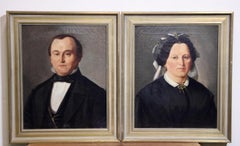
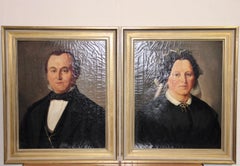
Biedermeier portrait pendants of a couple

Biedermeier portrait pendants of a couple

Located in Berlin, DE

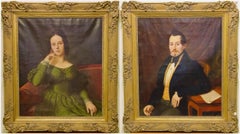
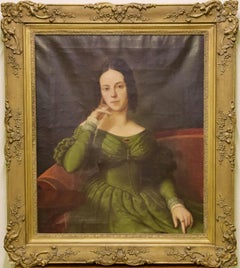
oil on canvas no signature restored condition piece 47 x 55 cm The Biedermeier era emphasized the domestic, bourgeois, middle‑class life: comfortable, inward‑facing rather than gr...

Category

Late 19th Century Realist Berlin - Art

Materials

Oil

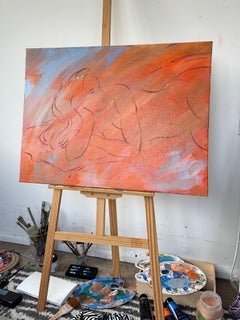
Expression 2, abstraction

Expression 2, abstraction

Located in Zofingen, AG

The work is created in the fluid art technique on canvas, where the primary expressive element is the movement of paint. The composition is structured around a dynamic diagonal flow ...

Category

2010s Abstract Berlin - Art

Materials

Canvas, Acrylic

Mother Happiness / - The ecstasy of maternal joy -

Mother Happiness / - The ecstasy of maternal joy -

Located in Berlin, DE

Johannes Boese (1856 Ostrog - 1917 Berlin), Mutterglück, um 1910. Goldbraun patinierte Bronze auf gegossener rechteckiger Plinthe, montiert auf zweifarbigem Marmorsockel (9,5 cm Höhe...

Category

1910s Art Nouveau Berlin - Art

Materials

Bronze

SIMON PETER TILEMANN, Family Portrait, 1658, Old Master. Baroque Rococo Painting

SIMON PETER TILEMANN, Family Portrait, 1658, Old Master. Baroque Rococo Painting

By Simon Peter Tilemann

Located in Berlin, DE

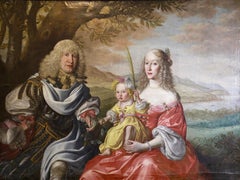
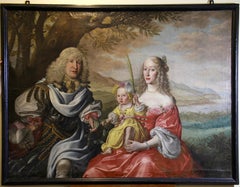
Extremely decorative and large oil painting from the 17th century. Restored in places.   Signed and dated Simon Peter Tileman 1658 fecit 'lower right Dimensions without frame. From Wikipedia, the free encyclopedia: Simon Peter Tilemann (1601, Lemgo – 1668, Vienna), was a German Baroque painter who was active Bremen, Kassel and Italy. According to Houbraken he first learned to paint flowers and he had a daughter who could paint flowers in watercolors. He was a good landscape painter who spent many years in Italy, but later switched to portrait painting and who painted the portrait of Ferdinand...

Category

1650s Old Masters Berlin - Art

Materials

Canvas, Oil

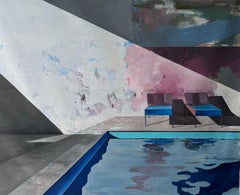
Blue VR779
Blue VR779

Blue VR779

Located in Zofingen, AG

Presented at Bakerhouse Gallery, Graz, Austria, this work was exhibited alongside another painting from the same series, which became a finalist in the ScanArt Prize competition. Phi...

Category

2010s Abstract Expressionist Berlin - Art

Materials

Canvas, Oil

Wettersteinkamm - The blue of the mountains -

Wettersteinkamm - The blue of the mountains -

Located in Berlin, DE

Adalbert Holzer (1881 Munich - 1966 Munich). Wettersteinkamm. Watercolour, 29 x 34.5 cm (visible size), 37.5 x 43 cm (frame), signed and dated at lower right 'ADALBERT HOLZER [19]23'. Framed behind glass. Frame shows signs of wear. - The blue of the mountains - About the artwork The Wetterstein ridge is revealed to the viewer from a gentle, snow-covered hill. In contrast to conventional depictions of mountains, the painting is composed entirely of shades of blue, which condense into the blue-grey of the rock or fade into the white of the snow. As a complementary colour to the blue, Holzer virtuously activates the ochre ground. The uniform yet exciting polarity of the colours emphasises the massive majesty of the mountains and at the same time underlines the special character of the Wetterstein ridge. Holzer transferred the translucency of glass painting, in which he was originally trained, to watercolour and developed a pictorial language related to the art of Ferdinand Hodler, which earned him the nickname 'Master of Blue' and led to the appreciation of his watercolours in particular. About the artist After an apprenticeship as a stained glass painter at the Kunstgewerbeschule, Adalbert Holzer studied at the Munich Art Academy under Carl von Marr...

Category

1920s Realist Berlin - Art

Materials

Watercolor

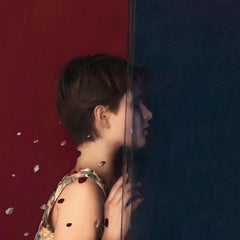
Demi Moore, Los Angeles 1992

Demi Moore, Los Angeles 1992

By Annie Leibovitz

Located in Berlin, DE

Printed in 2011. Signed in pencil, titled, dated, inscribed and with the photographer's black copyright stamp, on the verso. Number 7 from a limited edition of 25.

Category

21st Century and Contemporary Berlin - Art

Materials

Archival Pigment

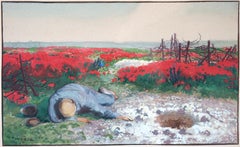
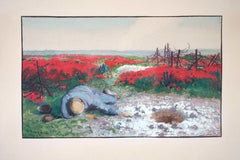
Red blooming war landscape with dead soldier - Bleeding flowers -

Red blooming war landscape with dead soldier - Bleeding flowers -

Located in Berlin, DE

Johannes Friedrich Heinrich Hänsch (1875-1945), Red blooming war landscape with dead soldier, 1918. Watercolor and gouache on paper, 15 x 24.5 cm (image), 27 x 37 cm (sheet size / frame), monogrammed and dated "19JH18" at lower left. - Paper slightly darkened About the artwork Despite the relatively small format, the watercolor with an internal frame depicts a panoramic view of a flat landscape stretching to the horizon. As far as the eye can see, the poppies bloom in flaming red. The flowers are not rendered individually, however, creating an almost cohesive red surface. The bright red is interspersed with vegetal green. A complementary contrast that creates an intense color effect. In this color contrast, a white area breaks through from the middle ground, widening towards the foreground and surrounding a brown hole. Next to it, in blue, is the actual protagonist of the painting, the first thing that catches the eye: a dead soldier. Next to him is his helmet, revealing the empty interior. The brown, hollow shape corresponds to the hole in the ground. A shell funnel is surrounded by bright ash, which, like the inverted helmet, becomes a sign of death. The soldier's arms point to the funnel, while the empty helmet paraphrases the calotte of the skull and, like the funnel, thematizes the empty darkness of death. The soldier's body, however, is intact and not - as in Otto Dix's triptych "The War" - a dismembered corpse. Instead, Johannes Hänsch activates the landscape, especially the color, to illustrate a blooming landscape of death that extends from the shell funnel in the foreground to the rising column of smoke on the horizon. If the soldier's body is intact, the tangle of barbed wire emblematically placed over the empty helmet also appears tattered. On the right side of the picture, the barbed wire even seems to stretch its arms to the sky in horror. Against the background of this allegory, the content of the bright red also becomes clear: the landscape is drenched in blood, literally a sea of blood, and the single unknown soldier stands pars pro toto for all those who died on the battlefield. Dying in war is not dying in community, but in solitude. In order to emphasize the isolation in death, Johannes Hänsch has set the blue of the soldier in the axis given by his body in the middle ground of the picture into the red sea. A master of landscape painting, Hänsch succeeds in creating a natural-looking landscape allegory that illustrates the horror and death of war, without depicting the brutality of war itself. This singular 'war memorial' of the unknown soldier is the opposite of heroization and yet the dignity of the deceased soldier is preserved through the integrity of his body. About the artist As the son of the sculptor Adolf Haensch, the young Johannes received his first artistic training in his father's Berlin studio. However, he eventually decided to become a painter, and in 1897 he entered the Berlin Academy of Arts. He initially studied under Paul Vorgang and Eugen Bracht, and was particularly influenced by Bracht's increasingly colourful landscape painting. In 1901 he moved to the class of Friedrich Kallmorgen, with whom he spent several weeks on excursions into nature. In 1905 he became a master pupil of Albert Hertel, who taught him watercolour painting. From 1903 to 1933 he exhibited annually at the Great Berlin Art Exhibition, the exhibitions of the Berlin Artists' Association and the Munich Glaspalast. In 1905 he was awarded the Carl Blechen...

Category

1910s Realist Berlin - Art
Materials

Watercolor

Norwegian Pine Grove - The inner glow of the trees -

Norwegian Pine Grove - The inner glow of the trees -

Located in Berlin, DE

Themistokles von Eckenbrecher (1842 Athens - 1921 Goslar), Norwegian pine grove, 1901. Watercolor on blue-green paper, 30 x 22 cm. Signed, dated and inscribed in his own hand "TvE. Fagermes [i.e. Fagermes]. 26.6.[19]01." - Slight crease throughout at left margin, otherwise in good condition. About the artwork Themistokles von Eckenbrecher often traveled to Norway to study the nature that fascinated him there. On June 26, 1901, near the southern Norwegian town of Fagernes, in the summer evening sun, he saw a small pine grove, which he immediately captured in a watercolor. He exposed the trees growing on a small hill in front of the background, so that the pines completely define the picture and combine to form a tense motif. The tension comes from the contrast of form and color. The trunks, growing upward, form a vertical structure that is horizontally penetrated by the spreading branches and the pine needles, which are rendered as a plane. This structural tension is further intensified by the color contrast between the brown-reddish iridescent trunks and branches and the green-toned needlework. Themistokles von Eckenbrecher, however, does not use the observed natural scene as an inspiring model for a dance of color and form that detaches itself from the motif and thus treads the path of abstracting modernism. Its inner vitality is to be brought to light and made aesthetically accessible through the work of art. It is precisely in order to depict the inner vitality of nature that von Eckenbrecher chooses the technique of watercolor, in which the individual details, such as the needles, are not meticulously worked out, but rather a flowing movement is created that unites the contrasts. The trees seem to have formed the twisted trunks out of their own inner strength as they grew, creatingthose tense lineations that the artist has put into the picture. The inner strength continues in the branches and twigs, culminating in the upward growth of the needles. At the same time, the trunks, illuminated by the setting sun, seem to glow from within, adding an almost dramatic dimension to the growing movement. Through the artwork, nature itself is revealed as art. In order to make nature visible as art in the work, von Eckenbrecher exposes the group of trees so that they are bounded from the outside by an all-encompassing contour line and merge into an areal unity that enters into a figure-ground relationship with the blue-greenish watercolor paper. The figure-ground relationship emphasizes the ornamental quality of the natural work of art, which further enforces the artwork character of the group of trees. With the presentation of Themistokles von Eckenbrecher's artistic idea and its realization, it has become clear that the present watercolor is not a study of nature in the sense of a visual note by the artist, which might then be integrated into a larger work context, but a completely independent work of art. This is why von Eckenbrecher signed the watercolor. In addition, it is marked with a place and a date, which confirms that this work of nature presented itself to him in exactly this way at this place at this time. At the same time, the date and place make it clear that the natural work of art has been transferred into the sphere of art and thus removed from the time of the place of nature. About the artist Themistocles' parents instilled a life of travel in their son, who is said to have spoken eleven languages. His father, who was interested in ancient and oriental culture, was a doctor and had married Francesca Magdalena Danelon, an Italian, daughter of the British consul in Trieste. During a stay in Athens - Gustav von Eckenbrecher was a friend of Heinrich von Schliemann and is said to have given him crucial clues as to the location of Troy - Themistokles saw the light of day in 1842. After an interlude in Berlin, where Themistokles was educated at the English-American School, the journey began again. From 1850 to 1857 the family lived in Constantinople, after which the father opened a practice in Potsdam, where Themistokles, who wanted to become a painter, was taught by the court painter Carl Gustav Wegener. In 1861 the von Eckenbrechers left Potsdam and settled in Düsseldorf. There Themistokles received two years of private tuition from Oswald Aschenbach, who greatly admired the talented young artist. After his artistic training, he undertook extensive travels, often accompanied by Prince Peter zu Sayn-Wittgenstein, which took him to northern and eastern Europe, but above all to the Middle East and even to South America. The paintings that resulted from these journeys established his artistic reputation and led to his participation in large panoramas such as the 118 x 15 metre Entry of the Mecca Caravan into Cairo, painted for the City of Hamburg in 1882. 1882 was also the start of a total of 21 study trips to Scandinavia, most of them to Norway, and the unique Norwegian landscape with its rugged fjords became a central motif in his work. Along with Anders Askevold and Adelsteen Normann...

Category

Early 1900s Naturalistic Berlin - Art

Materials

Watercolor

Still Life with Sculpture, Flute, and Painting Supplies / The foundation of art

Still Life with Sculpture, Flute, and Painting Supplies / The foundation of art

Located in Berlin, DE

Ev Grüger (1928 Altenburg - 2017 Hofheim), Still Life with Sculpture, Flute, and Painting Supplies, 1956. Oil on canvas in gallery frame, 60 cm x 80 cm (image size), signed “Grü[ger]...

Category

1950s Abstract Berlin - Art

Materials

Oil

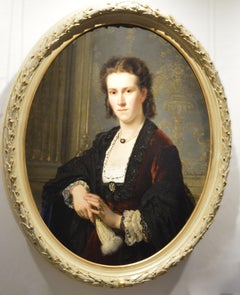
Attributed to MILLOT, Henri Portrait of a Lady

Attributed to MILLOT, Henri Portrait of a Lady

Located in Berlin, DE

Attributed to MILLOT, Henri. Portrait of a Lady. Oil on canvas. Unsigned, inscribed Millot on the reverse. 18th century. 85 x 69 cm. Framed. 85 x 69 cm. Portrait of a young woman in ...

Category

1720s Baroque Berlin - Art

Materials

Oil

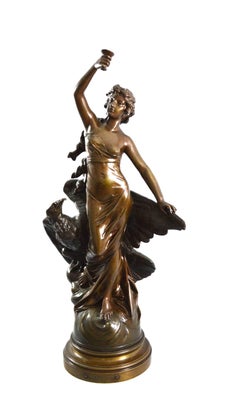
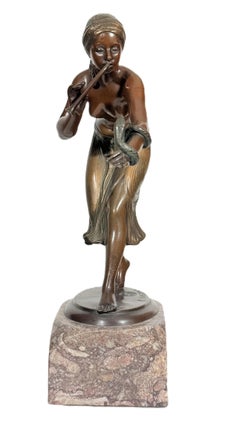
L'Abondance Art Nouveau

L'Abondance Art Nouveau

Located in Berlin, DE

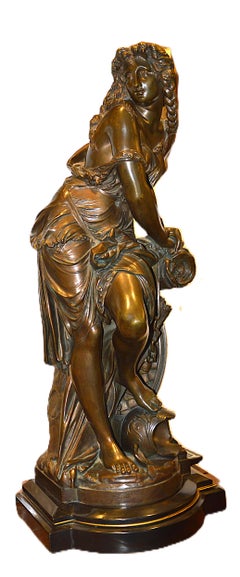
Regule / a metal casting alloy 73 cm signed Vincent Désiré Faure de Broussé, "L'Abondance", large Art Nouveau sculpture, reguleVincent Désiré Faure de Broussé, 1834 - Paris - 19...

Category

Early 20th Century Jugendstil Berlin - Art

Materials

Other Medium

thunderstorm
thunderstorm

thunderstorm

Located in Berlin, DE

Woodcut on handmade paper. 1974. 43 x 33 cm hand signed Wolfgang Mattheuer was a German painter, graphic artist, and sculptor. Alongside Werner Tübke and Bernhard Heisig, he is c...

Category

1970s Abstract Berlin - Art

Materials

Handmade Paper

The gift of flowers / - The depth of allegory -

The gift of flowers / - The depth of allegory -

By Conrad Kiesel

Located in Berlin, DE

Conrad Kiesel (1846-1921), The gift of flowers. Oil on wood, 43 x 35 cm, 69 x 61 cm (frame), signed at lower left "Conrad Kiesel pxt [pinxit]", about 1900. In a magnificent gilt stuc...

Category

1890s Academic Berlin - Art

Materials

Oil

KPM View cup with the Altes Museum, c. 1830 / - The birth of the Spree-Athens -

KPM View cup with the Altes Museum, c. 1830 / - The birth of the Spree-Athens -

Located in Berlin, DE

Königliche Porzellan-Manufaktur (KPM), View cup with Berlin veduta of the Altes Museum, circa 1830. Bell-shaped cup with raised handle ending in a shell palmette. The front with gold...

Category

1830s Realist Berlin - Art
Materials

Porcelain

Self-portrait - Homo nudus -

Self-portrait - Homo nudus -

Located in Berlin, DE

Bruno Paul (1874 Seifhennersdorf - 1968 Berlin). Self-portrait, c. 1895. Pencil on paper, mounted on cardboard, 53.5 x 35 cm, signed 'Paul' at upper left. - Homo nudus - About the artwork In a mirrored situation, Bruno Paul looks at himself in the picture. While his body, which is the size of the format, is shown in profile parallel to the picture, he turns his head into the picture in order to become aware of himself there, whereby the lighter use...

Category

1890s Realist Berlin - Art
Materials

Pencil

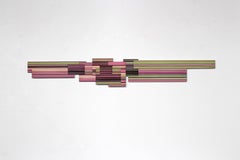
Graphics. Magenta-black-gold

Graphics. Magenta-black-gold

Located in Zofingen, AG

The painting presents a dynamic abstract composition built from intersecting geometric shapes and rhythmic graphic elements. Wide diagonal bands and angular lines create a strong sen...

Category

2010s Abstract Berlin - Art

Materials

Canvas, Acrylic

Autumn Landscape in Sunlight - Indian Summer -

Autumn Landscape in Sunlight - Indian Summer -

Located in Berlin, DE

Frederick Vezin (1859 Torresdale Philadelphia - 1933 Düsseldorf), Autumn Landscape in the Sunlight, oil on canvas, mounted on cardboard, 32 x 41 cm (inside measurement), 44 x 51 cm (frame), signed and dates lower right "F. Vezin. [19]05". - Cardboard slightly curved, small inconspicuous retouch at the centre of the upper edge of the picture. About the artwork Although the painting appears to be a sketch, Frederick Vezin considered it to be a finished work of art, as evidenced by his signature on the lower right. And it is precisely this sketchy quality that leads to an understanding of the painting, which was certainly created in the landscape itself: the natural phenomena were to be depicted artistically at the moment of their observation. This is not done by meticulously sketching nature, but - and here Vezin follows the teaching of French Impressionism - by illustrating nature in its visual fullness. The artist's eye is, as it were, immersed in the visuality of nature, which is made visible by his hand. The painting is therefore not a reflection of the landscape, but its artistic intensification. This intensification also includes the fact that the foreground of the painting - corresponding to the field of vision - eludes a detail-oriented close-up view. Instead, the spatula-like application of paint, the vertical structure of which corresponds to the structure of the floral growth, has the effect of making nature tangible in its colourful substance. At the same time, the foreground, which remains indeterminate in its concrete objectivity, creates an atmospheric space that connects with the actual protagonist of the picture, the group of trees, which flares up in shades of red and brown. Here, too, the leaves are more speckled than clearly outlined. It is precisely this 'sketchiness' that opens up a visual experience that makes the landscape accessible in its visual fullness, thus revealing its essence. In addition to this abundance, the landscape is presented as a structure of order in that the composition of the picture makes the composition of the landscape visible. For example, the group of trees forms a distinct dark green shadow, which is repeated in the shadows cast by the trees behind it. A patterned diagonal axis is created in the picture, which is composed in this way by the landscape itself. Strictly speaking, this is a cultivated landscape: a fence at the bottom and a low stone wall at the top, running from left to right, are two elements that also have a strong compositional effect. And on the top of the hill, a stone house is embedded in the landscape as the brightest surface in the picture. Nature and culture here form a harmonious synthesis, giving the painting an Arcadian touch. In order to give the landscape as much space as possible, the horizon line is raised, but the design of the sky is also crucial. The clouds, combined with the shapes of the trees, create a bright blue sky. To the European eye, such a sky is reminiscent of a summer landscape. Accordingly, within the seasonal cycle, the blue sky is reserved for summer, and French Impressionism is also primarily an ode to summer. In Vezin's painting, however, the brilliant blue sky stands above an autumnal landscape, some of the trees even defoliated. It can therefore be assumed that the painting was made not in Europe but in the United States, and that it illustrates the proverbial Indian summer, making Frederick Vezin a pioneer of American landscape painting. About the artist Frederick Vezin was the son of a French immigrant to the United States and a German-born mother. This predestined him to promote artistic exchange between the old and new worlds. Having spent part of his schooling in Germany, in 1876, at the age of 20, he enrolled at the Düsseldorf Academy of Art, where he studied with Peter Janssen the Elder, Eduard von Gebhardt and Wilhelm Sohn, among others. He graduated in 1883, settled in Munich and returned to Düsseldorf in 1895, where he lived until his death in 1933. A native of the United States, he travelled to the country frequently and became a popular portrait and society painter. His artistic talent, however, was most evident in his landscape paintings. Trained in French Impressionism, he developed a virtuoso use of colour and a free brushwork that remained tied to the landscape motif, opening up the landscape itself in a new way. Frederick Vezin turned his attention primarily to the landscape of his homeland, becoming a pioneer of modern American landscape...

Category

Early 1900s Impressionist Berlin - Art

Materials

Oil, Cardboard

Graphic arts. Black-yellow

Graphic arts. Black-yellow

Located in Zofingen, AG

The painting presents a bold geometric abstract composition built on the contrast between yellow and black. Wide diagonal bands form sharp angular shapes that intersect across the ca...

Category

2010s Abstract Berlin - Art

Materials

Canvas, Acrylic

The Silk Road
The Silk Road

The Silk Road

Located in Zofingen, AG

The Silk Road (Reflections series) A woman’s hair has been associated with silk throughout time: celebrated in ancient treatises and felt deeply in the rhythm of modern life. This go...

Category

2010s Abstract Expressionist Berlin - Art

Materials

Canvas, Acrylic

Polyphon Automat
Polyphon Automat

Polyphon Automat

Located in Berlin, DE

Polyphon Perforated Plate Christmas Tree Stand Completely overhauled. Approx. Width 46 cm Depth 27 cm Height 31 cm The automaton has been completely overhauled and tuned. Spri...

Category

Late 19th Century Jugendstil Berlin - Art

Materials

Metal

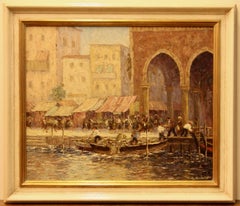
Rudolf Hellwag  Venedig 1895

Rudolf Hellwag Venedig 1895

Located in Berlin, DE

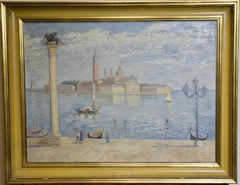
Rudolf Hellwag (* 14. September 1867 in Innsbruck; † 24. Februar 1942 in Berlin Oil on cardboard, signed lower right R. Hellwag A warmly coloured Venice street scene with strollers...

Category

Early 20th Century Impressionist Berlin - Art

Materials

Oil

Seifert, Victor Heinrich. 1870 Wien - 1953 Berlin “Young athlete with slingshot”

Seifert, Victor Heinrich. 1870 Wien - 1953 Berlin “Young athlete with slingshot”

Located in Berlin, DE

Seifert, Victor Heinrich. 1870 Vienna - 1953 Berlin "Young Athlete with Slingshot" "David" Large bronze, dark patinated, signed: Prof. V.H. Seifert Height: 71.5 cm, approx. 85 cm h...

Category

Early 20th Century Jugendstil Berlin - Art

Materials

Bronze

Reclining Female Nude / - Original body landscape -

Reclining Female Nude / - Original body landscape -

Located in Berlin, DE

Karl Josef Dierkes (1924 Dalhausen - 2008 ibid.), Reclining Female Nude, circa 1960. Bronze 26.5 cm (length), x 11 cm (height) x 7 cm (depth), signed “K.[arl] J.[osef] Dierkes” on th...

Category

1960s Abstract Berlin - Art

Materials

Bronze

Small Nude / - Abstract Figurativity -

Small Nude / - Abstract Figurativity -

Located in Berlin, DE

Gustl Stark (1917 Mainz - 2009 ibid.), Small Nude, 1946. Oil on canvas, marouflaged, 54 x 25 cm (picture), 30 x 60 cm (frame), signed "Stark" top left, verso twice signed "Gustav Stark", inscribed by hand as "Small Nude" and dated by hand "1946". With label of the exhibition of the Bundeshaus Bonn from 1956. - Rubbed area in the lower third of the body, at the same level a retouch in the ochre background. I provisional frame. - Abstract Figurativity - About the artwork During the war, Gustl Stark suffered a particularly severe blow for an artist: he lost his right arm. Nevertheless, he continued to devote himself to art, and the painting, created in 1946, immediately after the end of the Nazi reign of terror, testifies to the dawn of a new era. At the same time, the work is a rare example of the artist's early figurative work, as Stark turned entirely to abstract painting as early as 1950. And even this painting is by no means purely figurative; rather, it already illustrates Stark's turn toward abstraction. We see a female nude, but one that remains faceless. This can be read symbolically and in relation to the immediate past epoch, which, in the face of horrors, silences and blinds - literally renders faceless. In this sense, the figure is positioned to 'look back'. But she does not look. While this meaning may resonate and make the painting an important work of the immediate postwar period, Gustl Stark is primarily concerned with something else here, namely art itself. The absence of the face leads to the body becoming something flat. Due to the de-individualization, we do not see a concrete person with his individual features, but a body surface. And indeed, the body is constructed through an extremely planar design. Even the contour lines that form the corporeality have a planar rather than a linear character, especially where they merge into shadow zones of almost the same color. And the surfaces themselves are not modeled. The incarnate parts do not show any plastic gradations; the corporeality is completely withdrawn into the plane, which is also true for the hair. In addition, there is no uniform background against which the figure could appear; rather, the area next to the hair is kept bluish, creating a succession of earth-toned colored areas, which again binds the figure to the surface. Last but not least, the flatness is also forced by the painting technique. Gustl Stark paints directly, a la prima, onto the coarse canvas, whereby the structure of the painting support remains visible in the picture, and in places - around the hair, for example - the canvas itself can be seen. This structural all-over lends the picture a certain flatness. Gustl Stark thus uses the very motif that stands for the corporeality of art par excellence - the female nude - to transform the spatiality of the traditional picture into a flatness characteristic of modern art. And yet, a strong impression of corporeality is created, without being produced by a painterly modeling of the body. The oscillation between flatness and corporeality creates the intense tension of this groundbreaking painting. In Gustl Stark's oeuvre, as a consequence of the abstraction we see here, the figurative is completely stripped away in a further step, which is also a loss when looking at this early key work. About the artist Gustl Stark was the son of a woodcarver and, after an apprenticeship as a decorative painter, attended the State School of Arts and Crafts in Mainz from 1936 to 1937. Although he was severely wounded in the war and lost his right arm, he studied at the Würzburg School of Painting and Drawing from 1943-1944 and then at the Academy of Fine Arts in Nuremberg from 1944-1948. He won a state scholarship at the state art competition in Bad Ischl. Numerous study trips to Sylt, Paris, Switzerland, Austria, Italy, Holland and Belgium followed. Gustl Stark worked in Mainz and was the first artist there to focus on abstract painting. His work quickly gained international recognition, including the Salon Réaliés Nouvelles in Paris. From 1963-1970 he taught at the State University Institute for Art and Work Education in Mainz and from 1970-1975 at the Johannes Gutenberg University. Gustl Stark became particularly famous for his color embossed prints, for which he invented his own technique. Gustl Stark received numerous awards for his work. He received the Art Prize for Painting of the City of Mainz in 1962, the State Prize of Rhineland-Palatinate in 1984, and the Gutenberg Bust of the City of Mainz in 1987. Selected Bibliography Hans Vollmer (Hrsg.): Allgemeines Lexikon der bildenden Künstler des XX. Jahrhunderts, Vierter Band, Leipzig 1958, S. 344. Hans H...

Category

1940s Realist Berlin - Art
Materials

Canvas

Bronze Beauty
Bronze Beauty

Bronze Beauty

Located in Berlin, DE

Bronze 28 cm signed Andrea Carlo Lucchesi (1859–1925) was an Anglo-Italian sculptor, associated with the “New Sculpture” movement, known for naturalistic and symbolist works.

Category

20th Century Art Nouveau Berlin - Art

Materials

Bronze

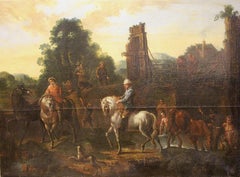
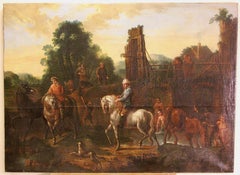
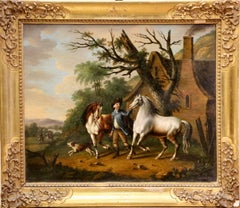
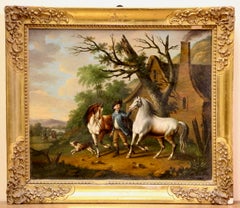
17th Century, Old Master Painting, Oil on Canvas, "The Rest with the Horses".

17th Century, Old Master Painting, Oil on Canvas, "The Rest with the Horses".

Located in Berlin, DE

17th century, old master painting, oil on canvas, "The rest with the horses". Relined canvas. The stretcher was also renewed once. The painting is rather dark, like i.a. on photo n...

Category

17th Century Old Masters Berlin - Art

Materials

Canvas, Oil

Expressive flower still life

Expressive flower still life

Located in Berlin, DE

Oil on canvas 67,5 x52 cm unsigned attribute Hedwig Hausmann-Hoppe was a German painter (born June 29, 1865 in Gumbinnen; died after 1922) specializing in still life, flower, and l...

Category

1890s Expressionist Berlin - Art

Materials

Oil

Cactus, Oil Painting on Canvas

Cactus, Oil Painting on Canvas

By Nikolai Kraneis

Located in Yardley, PA

This is a beautiful one-of-a-kind original contemporary painting. The piece ships ready to hang with artist signature on the bottom. The item ships from the Germany.

Category

2010s Contemporary Berlin - Art

Materials

Oil

Blue 777
Blue 777

Blue 777

Located in Zofingen, AG

This painting won First Place at the Blue Koi Gallery “True Blue” competition (December 2025) for Artistic Excellence. The work explores themes of inner strength and collective ident...

Category

2010s Abstract Expressionist Berlin - Art

Materials

Canvas, Oil

Statuette femme bronze art nouveau Edouard Drouot "Souvenir" sculpture

Statuette femme bronze art nouveau Edouard Drouot "Souvenir" sculpture

By Edouard Drouot

Located in Berlin, DE

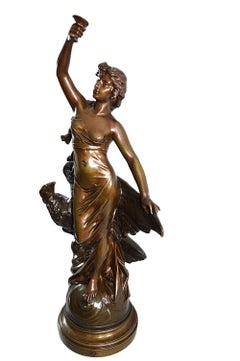
Edouard Drouot, 1859 Sommevoire – 1945 Paris Bronze signed 40 cm hoch Very good state of preservation, expressive design. Édouard Drouot (1859–1945) was a French sculptor known for ...

Category

Early 20th Century Jugendstil Berlin - Art

Materials

Bronze

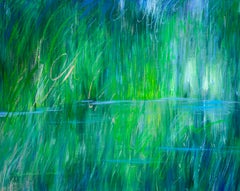
Becoming water. Color photography

Becoming water. Color photography

Located in Miami Beach, FL

Starting with photographic base elements, such as the figure or the landscape, Haider transforms the scenery into a surreal world through heavy post-production. She uses photographs,...

Category

2010s Contemporary Berlin - Art

Materials

Archival Pigment

At the pond / - The longing of the landscape -

At the pond / - The longing of the landscape -

Located in Berlin, DE

Hans Thoma (1839 Bernau - 1924 Karlsruhe), At the pond, 1897. Algraph on strong wove paper, published by Breitkopf und Härtel in Leipzig as ‘Zeitgenössisches Kunstblatt Nr. 148’, 23....

Category

1890s Realist Berlin - Art
Materials

Paper

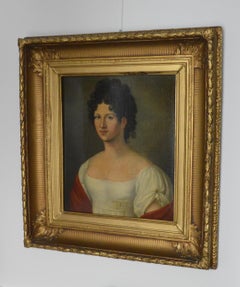
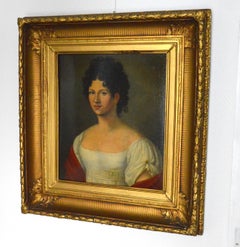
the portrait of Henriette Charlotte Plantier, 1821

the portrait of Henriette Charlotte Plantier, 1821

Located in Berlin, DE

The picture is oil on canvas. The picture is signed. Friedrich Wilhelm Ternite Friedrich Wilhelm Ternite (1786-1871) was a German portrait and miniature painter, as well as a litho...

Category

1820s Realist Berlin - Art
Materials

Oil

Horst Miesler, View of the Berlin Cathedral and the Spree.

Horst Miesler, View of the Berlin Cathedral and the Spree.

Located in Berlin, DE

Horst Miesler, View of the Berlin Cathedral and the Spree. Dimensions without frame 60.5 cm x 85 cm Dimensions with frame 73.5 cm 98.5 cm

Category

20th Century Berlin - Art
Materials

Canvas, Oil