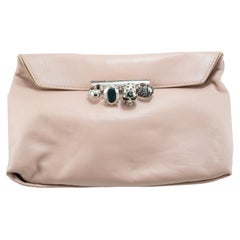
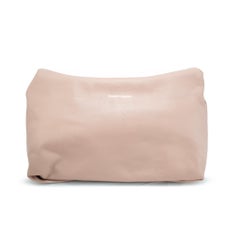
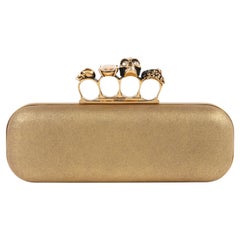
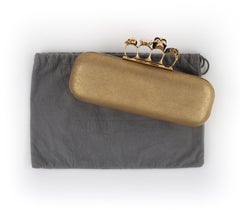
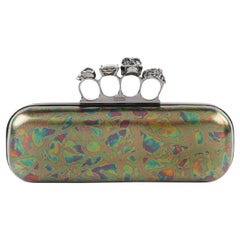
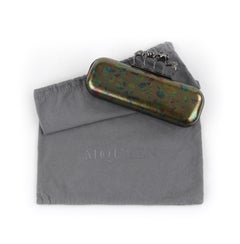
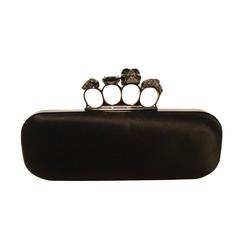
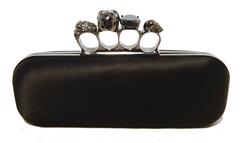
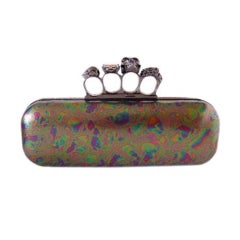
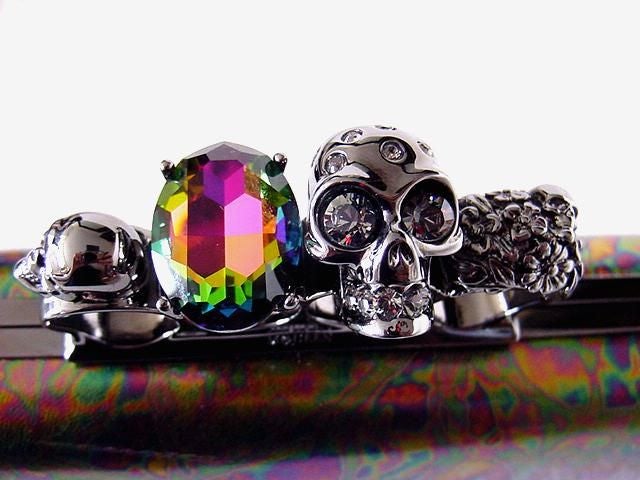
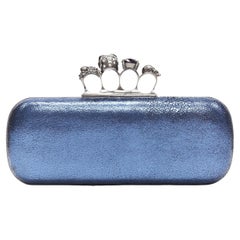
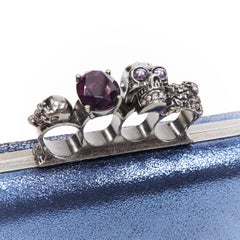
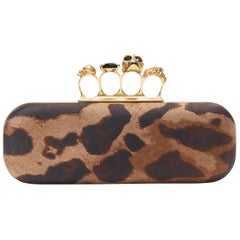
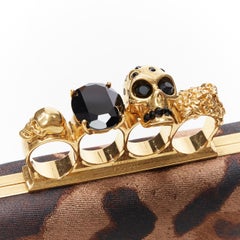
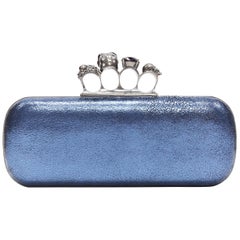
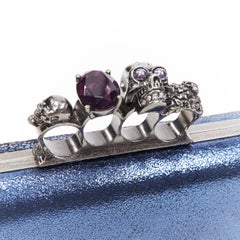
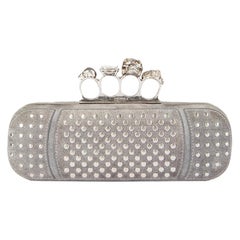
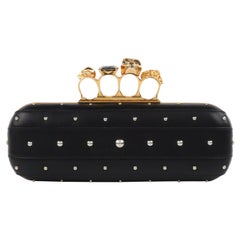
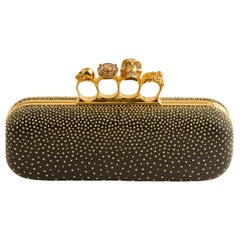
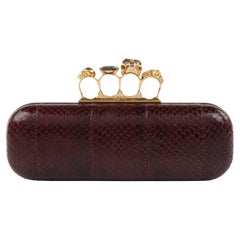
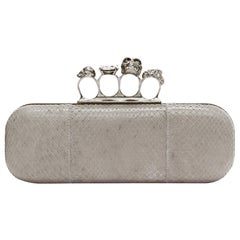
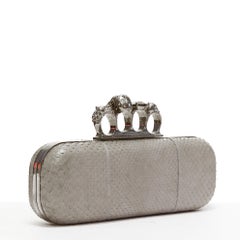
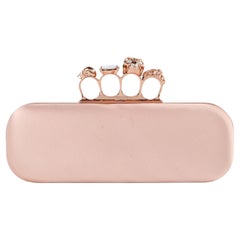
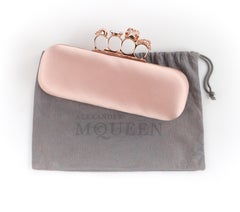
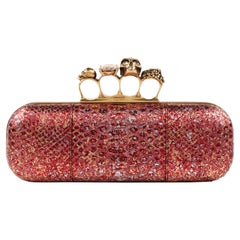
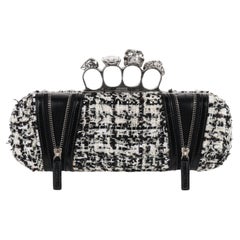
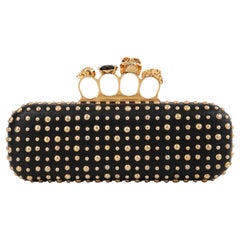
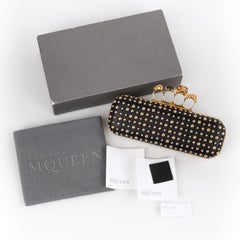
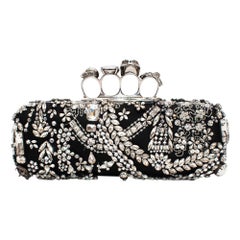
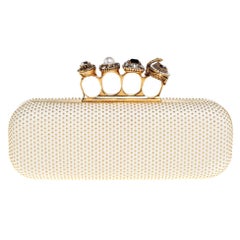
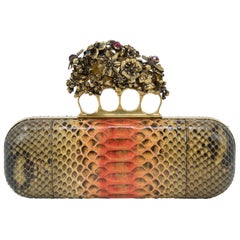
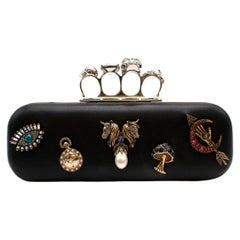
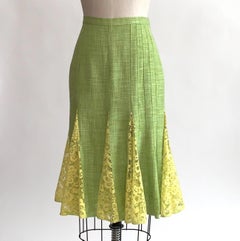
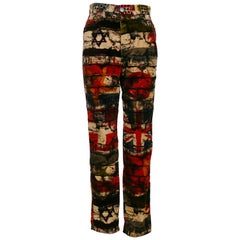
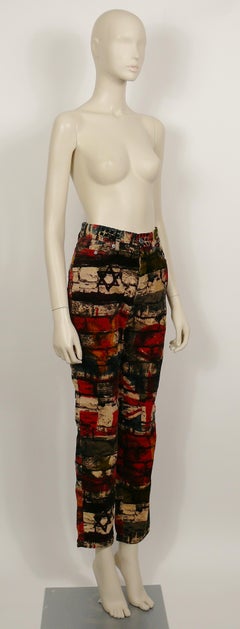
The subversive minaudiere known as the Four-Ring Clutch, introduced in 2009, captures the essence of the contradictions that Alexander McQueen so powerfully expressed: glamour and goth, elegance and edge. An artist, a visionary, a genius — McQueen was all these things. He was also, indisputably, a rebel, often referred to as l’enfant terrible by the French press. The bag’s row of skull rings takes its inspiration from knuckle dusters, a functional clasp with a whiff of danger.
McQueen used skulls (and bones) throughout his work, starting with his 1992 graduate collection, which focused on Jack the Ripper and his victims.
The skull, of course, is a memento mori, a reminder of death. McQueen frequently juxtaposed the glamour of the catwalk with intimations of our coming doom. His skull scarf appeared in his Spring 2003 collection. Inspired by the 1986 Roland Joffé film The Mission, the collection featured pirate looks and a shipwreck theme. The scarf soon became a must-have for celebrities and tastemakers, and it was reproduced by counterfeiters worldwide. The designer's handbags are equally edgy and chic, and his skull-clasp Four-Ring Clutch and other clutches featuring skull motifs have become iconic McQueen accessories.
Find a range of vintage Alexander McQueen Four-Ring Clutches and other handbags and accessories on 1stDibs.
British fashion designer Lee Alexander McQueen, the original creative engine behind the Alexander McQueen label, was beloved for his expert tailoring and theatrical runway shows. After his suicide in 2010, fans left tributes to the man and his talents outside Alexander McQueen boutiques worldwide. Record-breaking crowds visited the posthumous retrospective of the designer’s work at the Metropolitan Museum of Art in New York City and the Victoria and Albert in London.
The inspirations for vintage Alexander McQueen bags, dresses, jackets and other items came from many quarters — film, music, current events, history, his heritage and fashions of the past. The designer's runway presentations were not just displays of clothing but were personal expressions of the zeitgeist, often touching on our cultural anxieties and concerns. McQueen’s own thoughts and feelings about love, death, gender, genocide, colonialism, global warming and the extinction of species all appear in his pieces.
McQueen certainly shook up fashion; he was a born Rottweiler. His upbringing on a council estate in north London played a part, but his family was close and supportive, not dysfunctional. He was proud of his Scottish heritage: He was a defiant fashion warrior. His historical themes and shows — such as “Highland Rape,” 2002, which was inspired by England’s “rape of Scotland,” as McQueen called it — always invoked powerful reactions from his audience of fashion pros.
“What you see in the work is the person himself. And my heart is in my work,” McQueen told Harper’s Bazaar in 2007.
It is perhaps this heart, and the heart’s exposure, that drew the crowds and made McQueen's creations both popular and emotionally resonant. Because the work was personal and thus layered with feeling, the motifs — decorative embellishments and fabric choices — have meaning. In other words, in McQueen’s oeuvre, plaid is more than simply a pattern.
Find vintage Alexander McQueen fashion and accessories — including the designer's coveted bags and comfortable, stretchy jersey knit dresses and gowns — on 1stDibs.
Vintage and designer clutches are the perfect size to hold exactly what you need. While they’re typically small purses, Chanel clutches, Gucci clutches and other kinds of clutches can make a big impact on an outfit. They also have a fascinating history.
Clutches are handbags without handles that are carried by hand. One of the oldest known clutches was made in Mosul, Iraq, in the 14th century. It was made of brass and inlaid with gold and silver in geometric patterns. Although the loops on the side indicate it likely had handles to wear as a shoulder bag, manuscripts show a similar example being carried by hand.
Fashion designers often made clutches to reflect the wealth of the holder. In Medieval Europe, men and women securely carried items in small bags hidden inside their clothing as tie-on pockets. Women carried their possessions, scented and secreted, in the folds of their voluminous skirts. Pockets eventually became integral to garment design, but bigger sacks were needed to carry books and documents. When women’s clothing became lighter, consisting of fewer layers, it could no longer easily hide their handbags or pockets.
Changes in fashion led to handbags becoming a popular fashion accessory, and today, even as we’re overwhelmed by options from a variety of high-end brands, iconic luxury handbags still rule. The highly decorative bags of the 19th century faded from popularity when women entered the workforce and the clutch became the dominant business accessory. Flappers in the 1920s, clad in the dazzling Art Deco jewelry of the era, also loved the freedom of carrying clutches as they didn’t get in the way of dancing.
The simplicity of the clutch remains stylish today. Once made to be carried on special occasions, they are now an accessory for everyday use. Find a collection of vintage and designer clutches from Dior, Hermès, Louis Vuitton and more on 1stDibs.