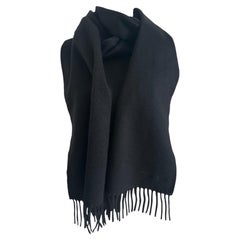
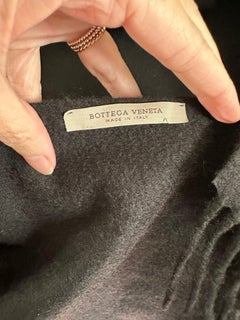
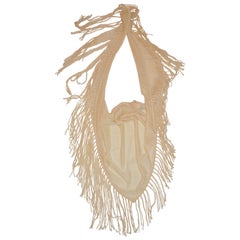
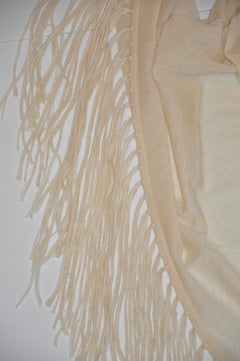
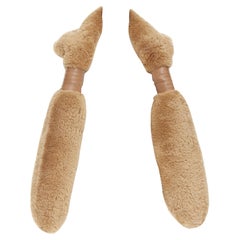
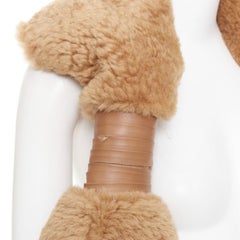
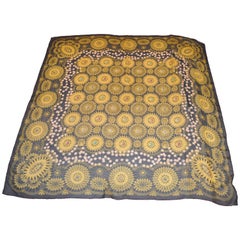
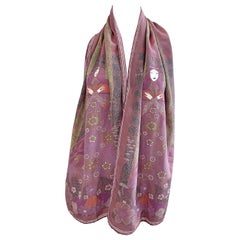
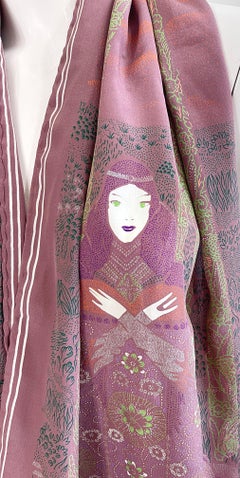
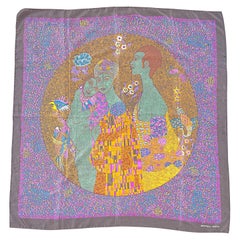
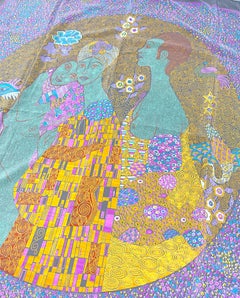
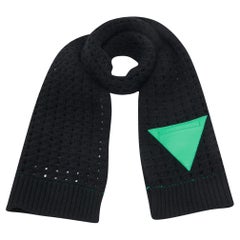
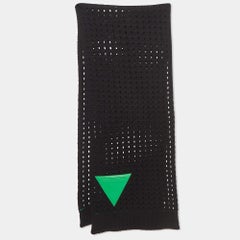
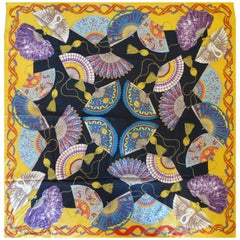
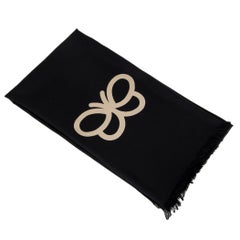
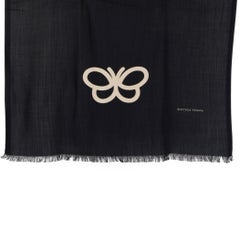
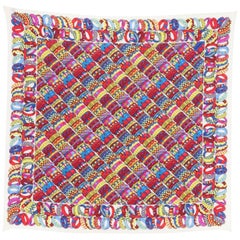
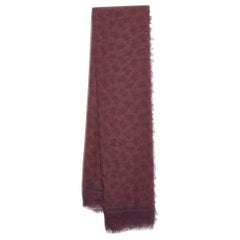
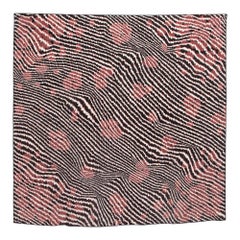
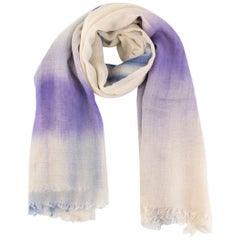
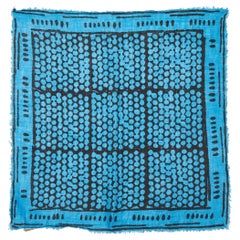
Find the exact vintage or contemporary bottega veneta scarf you’re shopping for in the variety available on 1stDibs. Many people prefer
beige, but fashion is all about individuality — you can find
black,
gray and more options on these pages. You’re likely to find the perfect bottega veneta scarf among the distinctive accessories we have available, which includes versions made as long ago as the 20th Century as well as those produced as recently as the 21st Century. Making an accessory such as this has likely been a part of the legacy of many fashion designers, but those produced by
Bottega Veneta,
Boutique Moschino and
Chanel are consistently popular. Finding a bottega veneta scarf for sale for
women should be easy, but there are 6 pieces available to browse for
men as well.
Bottega Veneta has garnered acclaim over the course of its long history for impeccable quality and unassuming elegance. Known for its signature intrecciato weave as well as the overall superb craftsmanship that characterizes its handbags, jackets, shoes and other items, the Italian luxury fashion house is revered all over the world.
Bottega Veneta was launched in 1966 in Vicenza, Italy, by Michele Taddei and Renzo Zengiaro. Its artisans worked to produce by hand what were primarily leather goods, and from the start, the label’s focus on traditional craft techniques became integral to its now-global reputation for exceptional design.
Developed by Bottega Veneta in the late 1960s, the intrecciato weaving technique gives the brand’s bags their suppleness and strength. The northeastern Italian region where the label was founded was largely associated with clothing back then, and sewing machines at the local ateliers weren’t intended to be used with the strong leather with which Bottega’s artisans were working in order to create the house’s coveted bags, wallets and other accessories.
The precise weaving technique, which sees strips of fine leather woven by hand into a durable and robust pattern, was a practical solution. The resulting style has become a Bottega Veneta signature, making products such as its iconic Intrecciato Hobo handbag instantly recognizable.
Zengiaro left Bottega Veneta during the late 1970s, and Taddei then turned the brand over to his ex-wife, Laura Moltedo, and her second husband, Vittorio Moltedo. Designs took on a bolder look and the traditional craft approach was prioritized. The brand found success in the United States and expanded rapidly throughout the 1980s, becoming popular with celebrities and the cultural elite. American artist Andy Warhol often frequented the house’s Manhattan boutique and even made a short film for the company.
As competition increased during the 1990s, Bottega Veneta’s popularity declined. The company began to see an upswing after Gucci, which is owned by luxury group Kering, acquired them in 2001. Tomas Maier was appointed creative director by Gucci’s Tom Ford and worked to return to the understated beginnings that had defined the brand’s design ethos.
Maier’s celebrated Knot clutch, which was based on a 1978-era design and debuted in 2001, was a result of his enthusiasm for pared-back design as well as his efforts to showcase the house’s legacy of meticulous craftsmanship. In 2006, Bottega opened Scuola della Pelletteria to train the next generation of leatherworking artisans.
In 2018, British designer Daniel Lee took the role of creative director and earned a number of awards and accolades for the label. Before he left in 2021, Lee introduced an array of universally lauded designs such as Bottega Veneta Tire boots, the Cassette bag and the Mini Jodie, which is named after actress Jodie Foster. Matthieu Blazy was named creative director in 2021 following a history of design work for Celine, Maison Martin Margiela, Calvin Klein and other brands.
Find vintage Bottega Veneta footwear, accessories and clothing on 1stDibs.
We’ve long had a love affair with vintage and designer scarves. Every glamorous go-to ensemble deserves the lightweight finishing touch that can be added with this stylish, versatile accessory.
Scarves have held a distinctive place in the evolution of formal and casual wear for centuries. And although now firmly entrenched in western culture, the origins of this neckwear are global.
Egyptian Queen Nefertiti is known to have worn a finely woven scarf with a headdress, and Emperor Cheng of the Chinese Han dynasty presided over an army of warriors whose scarves denoted their rank. The idea of scarves as status symbols still persists; for example, silk scarves, which were favored by the upper class during the reign of Queen Victoria, are an out-of-reach luxury item, cost prohibitive for many consumers. However, the increasing diversity of available materials over the years has rendered this adornment more accessible since their early days.
Luxury houses and various designers helped elevate scarves and long, flowing wraps as a desirable fashion accessory during the 20th century.
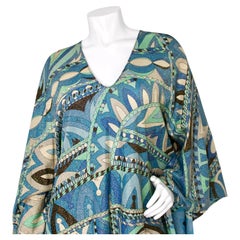
Visionary Italian designer Emilio Pucci — the first fashion designer to enter the lifestyle market — introduced abstractions and dazzling psychedelic elements to scarves, while mid-century era multidisciplinary American artist Vera Neumann drew on Japanese techniques to create exuberant textile designs based on her paintings and drawings.
Established in Paris in 1837, Hermès didn’t start creating their famously decorative scarves until 100 years later, in 1937. Before long, the Hermès scarf, then crafted from strong imported Chinese silk, became an iconic work favored by actresses such as Audrey Hepburn and Grace Kelly, a lifetime enthusiast of the family-owned brand. Hermès has produced over 2,000 different scarf designs in the decades since Robert Dumas, Émile-Maurice Hermès’s son-in-law, crafted the first one.
On 1stDibs, find a broad selection of vintage scarves that includes flamboyant and colorful accessories designed by Chanel, Yves Saint Laurent and more.