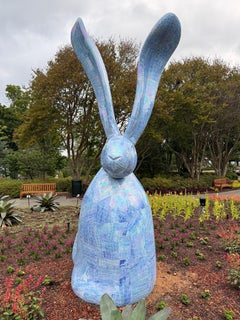
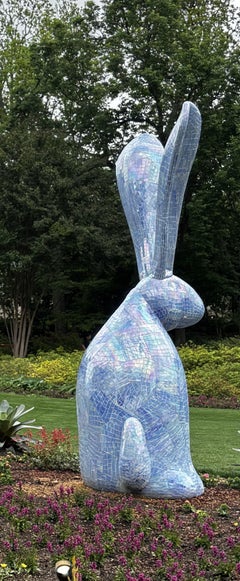
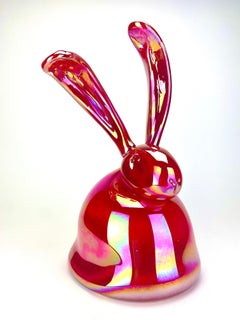
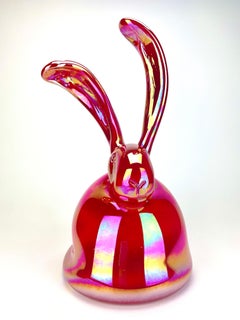
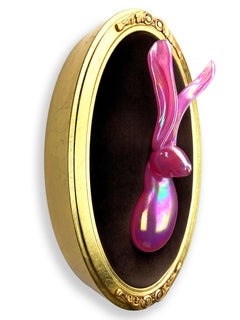
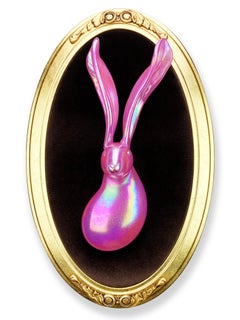
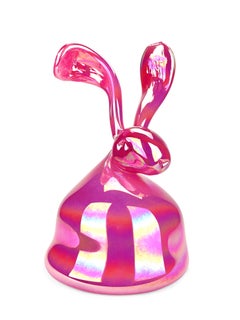
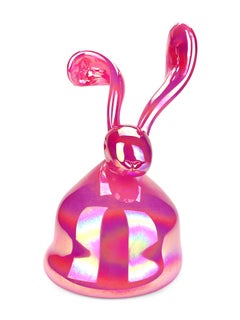
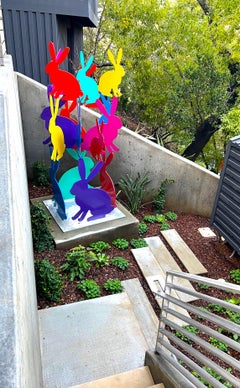
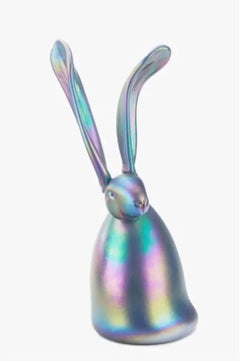
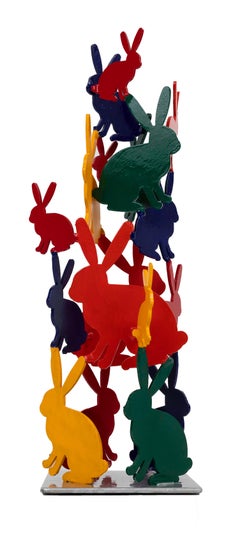
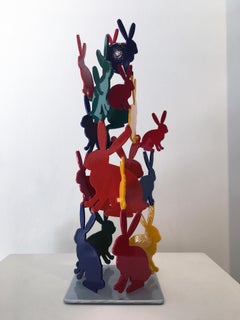
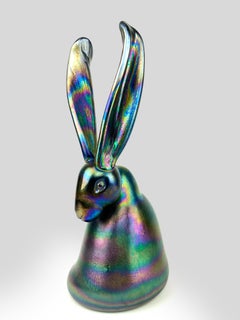
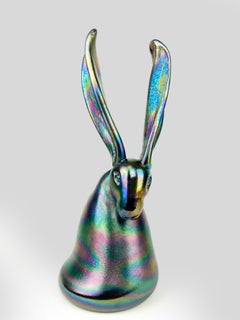
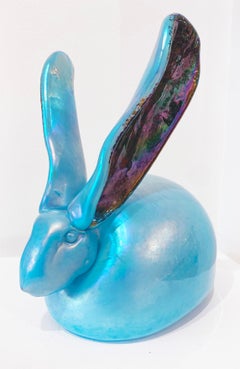
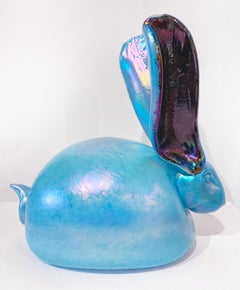
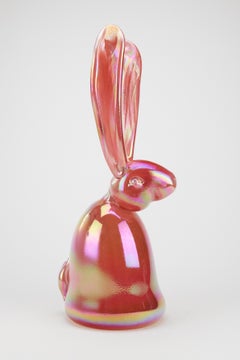
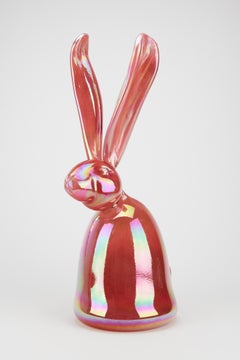
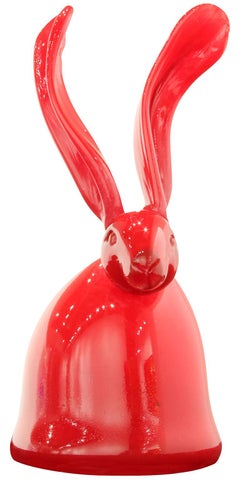
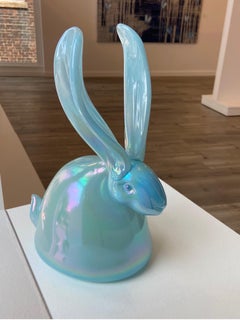
Surely you’ll find the exact bunny sculpture hunt slonem you’re seeking on 1stDibs — we’ve got a vast assortment for sale. Finding the perfect bunny sculpture hunt slonem may mean sifting through those created during different time periods — you can find an early version that dates to the 21st Century and a newer variation that were made as recently as the 21st Century. When looking for the right bunny sculpture hunt slonem for your space, you can search on 1stDibs by color — popular works were created in bold and neutral palettes with elements of
black,
brown,
red and
gold. Artworks like these — often created in
glass,
blown glass and
metal — can elevate any room of your home. If space is limited, you can find a small bunny sculpture hunt slonem measuring 10.5 high and 5 wide, while our inventory also includes works up to 60 across to better suit those in the market for a large bunny sculpture hunt slonem.
The price for an artwork of this kind can differ depending upon size, time period and other attributes — a bunny sculpture hunt slonem in our inventory may begin at $8,500 and can go as high as $9,100, while the average can fetch as much as $8,500.
Hunt Slonem has mastered the art of repetition in his exuberant Neo-Expressionist paintings. Some of his favorite subjects are bunnies, butterflies and the tropical birds that live in the private aviary nestled within his 30,000-square-foot studio complex in Brooklyn, New York.
“I believe in repetition like a holy mantra or rosary,” Slonem told Introspective, referring to his artistic method. “I am slightly influenced by Pop art, like the repetition of soup cans, postage stamps and celebrities. It’s something I have been doing my whole life.”
Slonem’s depictions of birds — which are often rendered in thick, gestural brushstrokes and arranged in a loose grid — owe to a fascination with tropical avian life that he developed during a childhood spent in Hawaii and Nicaragua. Today, along with the aviary, his studio contains a personal garden, a collection of antiques and walls and walls of artworks.
“I am a collector of things. My primary focus is color and objects. I love to make them work in a space,” Slonem says. “Sometimes I define a space with color.”
Besides birds, Slonem has painted so many bunnies that they’ve become a signature. Limned in expressive, urgent strokes on flat, vibrantly colored backgrounds, these creatures fascinate through their subtle variations. “I have painted hundreds of rabbits, but each one is different,” the artist has explained. “Each has its own personality, and it just comes through me.”
The multitalented Slonem also sculpts, makes prints, creates installations and restores historic spaces. His work has achieved cult status among collectors and is represented in the permanent collections of such esteemed institutions as the Metropolitan Museum of Art. Slonem has even made an appearance on Real Housewives of New York.
Find original Hunt Slonem paintings, prints and other art for sale on 1stDibs.
The history of sculpture as we know it is believed to have origins in Ancient Greece, while small sculptural carvings are among the most common examples of prehistoric art. In short, sculpture as a fine art has been with us forever. A powerful three-dimensional means of creative expression, sculpture has long been most frequently associated with religion — consider the limestone Great Sphinx in Giza, Egypt — while the tradition of collecting sculpture, which has also been traced back to Greece as well as to China, far precedes the emergence of museums.
Technique and materials in sculpture have changed over time. Stone sculpture, which essentially began as images carved into cave walls, is as old as human civilization itself. The majority of surviving sculpted works from ancient cultures are stone. Traditionally, this material and pottery as well as metal — bronze in particular — were among the most common materials associated with this field of visual art. Artists have long sought new ways and materials in order to make sculptures and express their ideas. Material, after all, is the vehicle through which artists express themselves, or at least work out the problems knocking around in their heads. It also allows them to push the boundaries of form, subverting our expectations and upending convention. As an influential sculptor as much as he was a revolutionary painter and printmaker, Pablo Picasso worked with everything from wire to wood to bicycle seats.
If you are a lover of art and antiques or are thinking of bringing a work of sculpture into your home for the first time, there are several details to keep in mind. As with all other works of art, think about what you like. What speaks to you? Visit local galleries and museums. Take in works of public art and art fairs when you can and find out what kind of sculpture you like. When you’ve come to a decision about a specific work, try to find out all you can about the piece, and if you’re not buying from a sculptor directly, work with an art expert to confirm the work’s authenticity.
And when you bring your sculpture home, remember: No matter how big or small your new addition is, it will make a statement in your space. Large- and even medium-sized sculptures can be heavy, so hire some professional art handlers as necessary and find a good place in your home for your piece. Whether you’re installing a towering new figurative sculpture — a colorful character by KAWS or hyperreal work by Carole A. Feuerman, perhaps — or an abstract work by Won Lee, you’ll want the sculpture to be safe from being knocked over. (You’ll find that most sculptures should be displayed at eye level, while some large busts look best from below.)
On 1stDibs, find a broad range of exceptional sculptures for sale. Browse works by your favorite creator, style, period or other attribute.