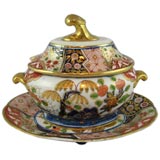
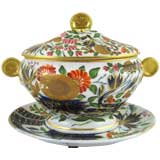
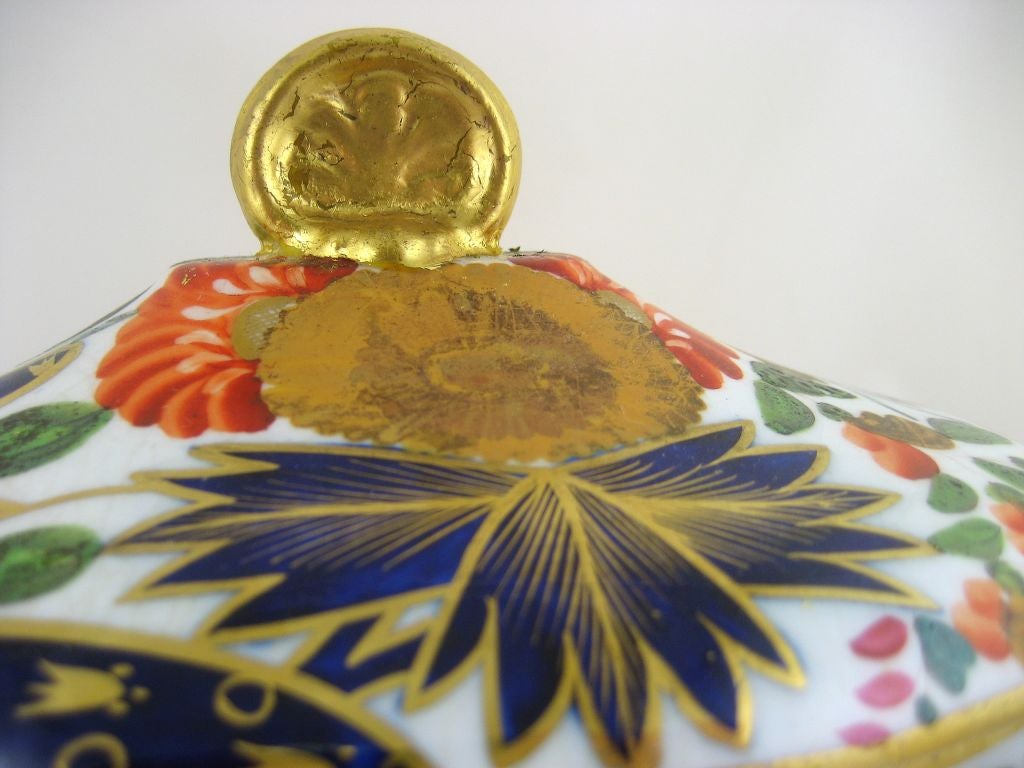
Coalport Sauce Tureen

Recent Sales

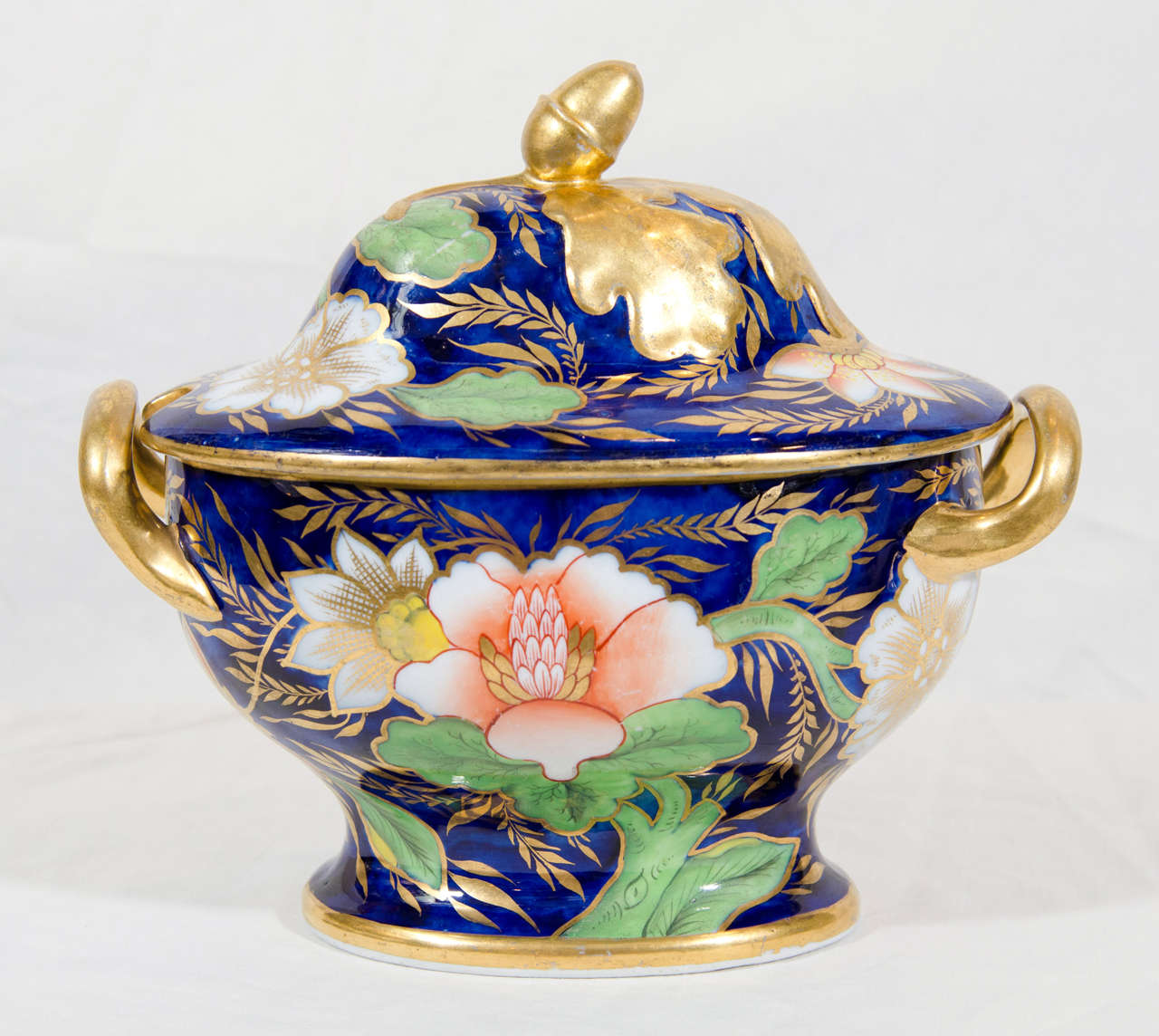
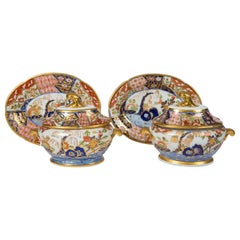
A Pair of Coalport Sauce Tureens with Cobalt Blue Ground
By Coalport Porcelain
Located in Katonah, NY
A fine pair of Coalport sauce tureens richly decorated in cobalt blue showing a water lily with
Category

Antique 19th Century English Neoclassical Soup Tureens

Materials

Porcelain

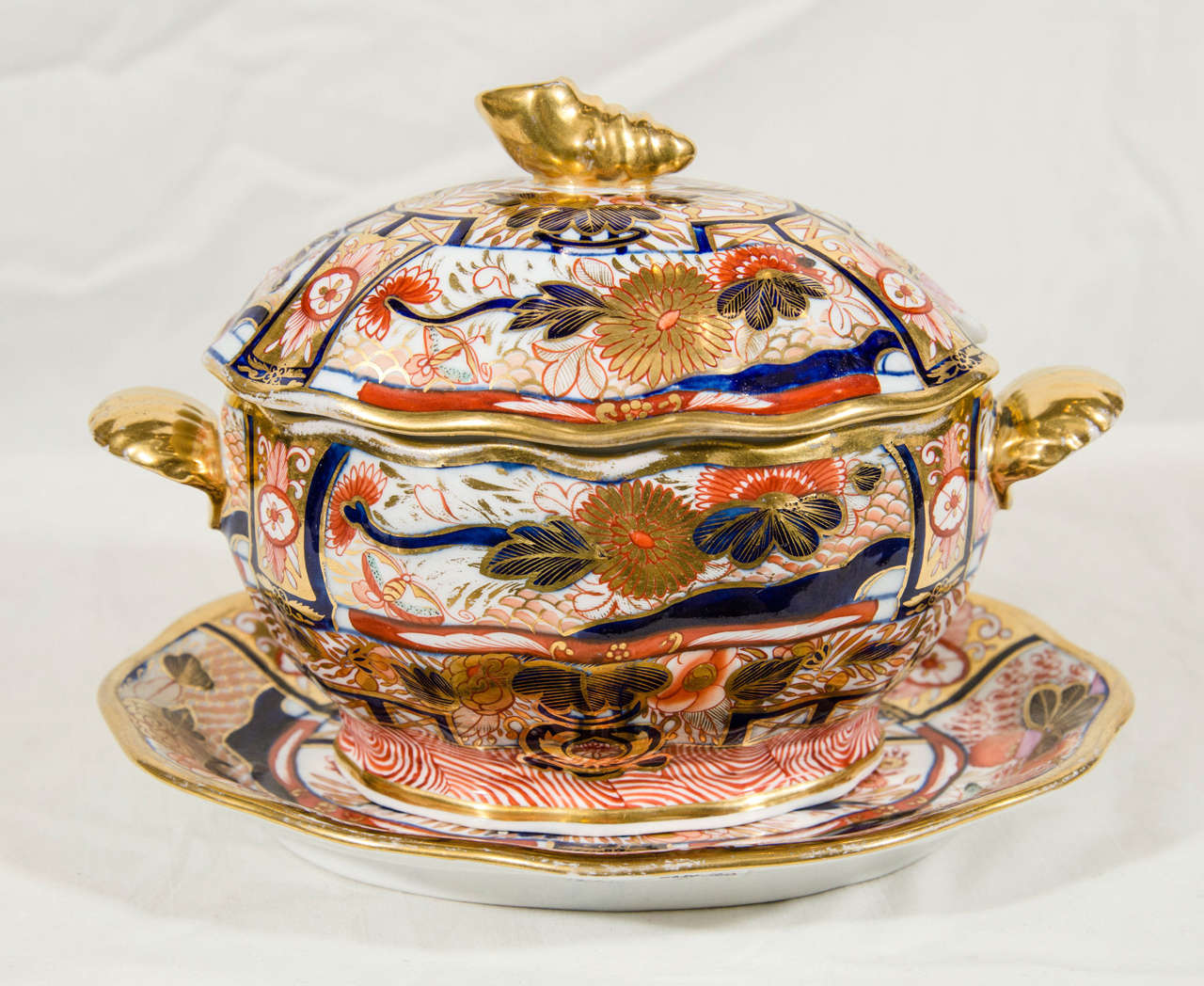
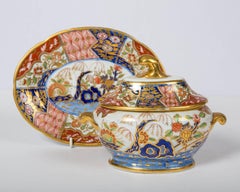
Coalport Imari Sauce Tureen in the "Admiral Nelson" Pattern
By Coalport Porcelain
Located in Katonah, NY
Decorated with cobalt blue and iron red in the richly gilded "Admiral Nelson" pattern. The tureen
Category

Antique 1810s English Regency Soup Tureens

Materials

Porcelain

Pair of Coalport Rock and Tree Pattern Sauce Tureens, England, circa 1820
By Coalport Porcelain
Located in Katonah, NY
Coalport Rock and Tree pattern sauce tureens. They were hand painted in England, circa 1820. The pattern
Category

Antique Early 19th Century English Regency Porcelain

Materials

Porcelain

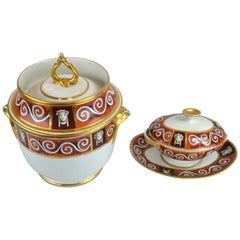
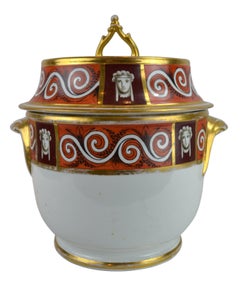
Regency Coalport Fruit Cooler and Lidded Sauce Tureen
By Coalport Porcelain
Located in Vancouver, British Columbia
Early 19th century English Caolport fruit cooler complete with lid and a matching sauce turreen
Category

Antique Early 19th Century English Regency Porcelain

Materials

Porcelain

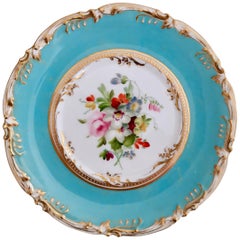
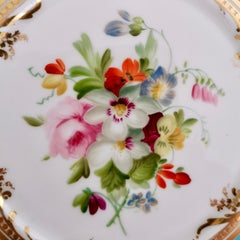
Coalport Small Porcelain Plate, Sky Blue with Flowers by Thomas Dixon, 1845-1850
By Coalport Porcelain
Located in London, GB
service and it probably served as a stand for a small footed sauce tureen. Coalport was one of the
Category

Antique 1840s English Victorian Dinner Plates

Materials

Porcelain

Coalport Sauce Tureen, "Sevres Feuillet des Choux"*
By Coalport Porcelain
Located in Stamford, CT
Coalport Sauce Tureen, "Sevres Feuillet des Choux," Server and Stand
Category

Antique 19th Century English Serving Pieces

Materials

Porcelain

Coalport "Vineyard" Sauce Tureen, Cover, & Stand, c. 1805
Located in Atlanta, GA
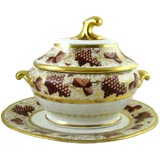
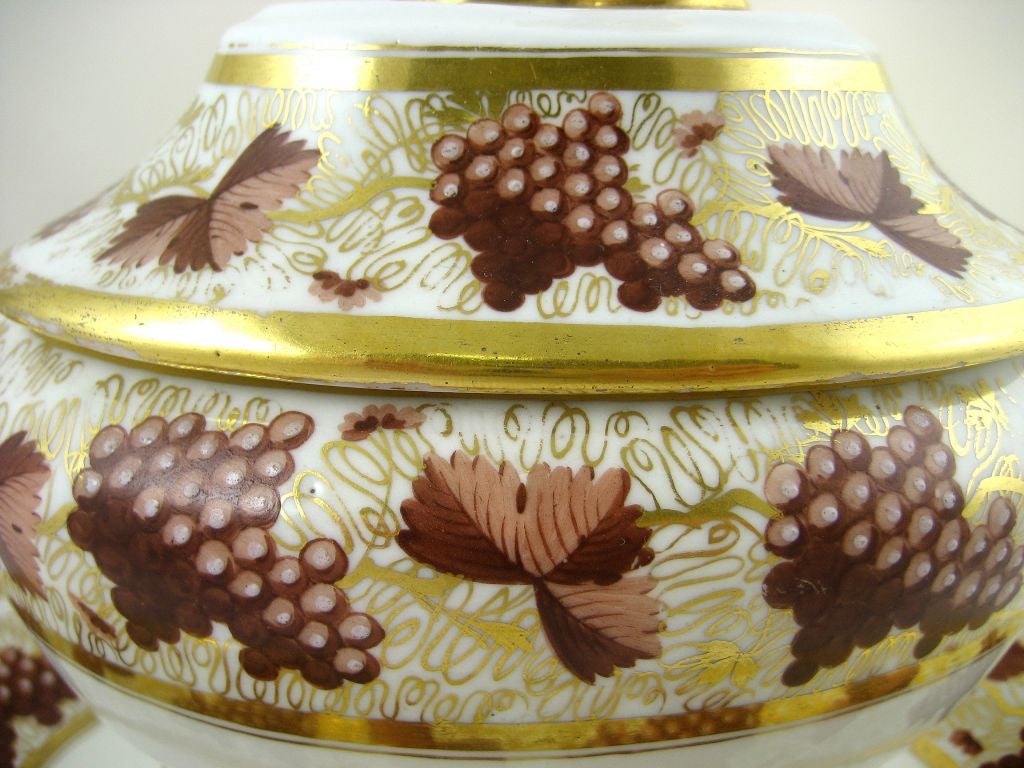
A superb Coalport sauce tureen set in the "Vineyard" pattern, with puce-colored bunches of grapes
Category

Antique 19th Century English Porcelain

Antique Pair of Coalport Porcelain Sauce Tureens
By Coalport Porcelain
Located in Baltimore, MD
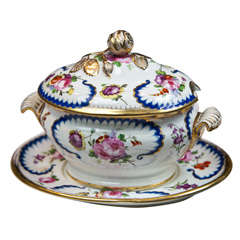
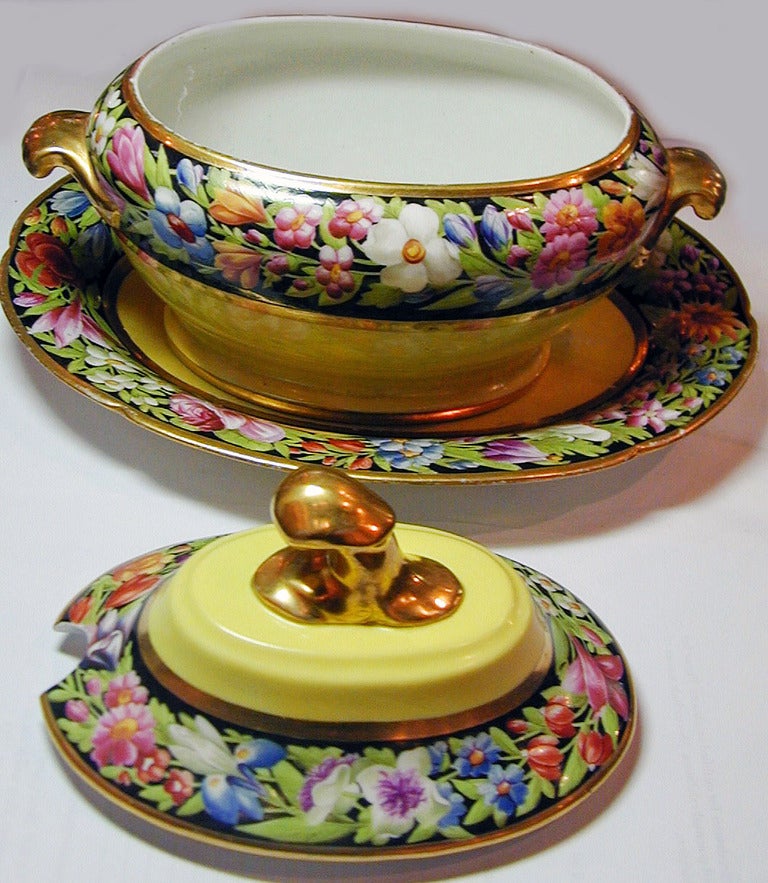
Pair of yellow ground Coalport porcelain sauce tureens with bands of beautifully painted flowers
Category

Antique 19th Century English Serving Pieces

Materials

Porcelain

Coalport Church Gresley Sauce Tureen, Cover & Stand
Located in Atlanta, GA
19th century Coalport Church Gresley sauce tureen, cover and stand.
Category

Antique 19th Century English Porcelain

Materials

Porcelain

Exquisite Coalport "Moneytree" Sauce Tureen, c. 1805
Located in Atlanta, GA
Decorated in the beautiful "Moneytree" design, this Imari-influenced Sauce Tureen, Cover, & Stand
Category

Antique 19th Century English Porcelain

Materials

Porcelain

Coalport "Thumb & Finger" Sauce Tureen, Cover, & Stand, c. 1805
Located in Atlanta, GA
A unusual form of the period sauce tureen, by the Coalport factory in their earliest period of
Category

Antique 19th Century English Porcelain

Materials

Porcelain

Get Updated with New Arrivals
Save "Coalport Sauce Tureen", and we’ll notify you when there are new listings in this category.

Coalport Sauce Tureen For Sale on 1stDibs

At 1stDibs, there are many versions of the ideal coalport sauce tureen for your home. Frequently made of ceramic, porcelain and earthenware, every coalport sauce tureen was constructed with great care. Whether you’re looking for an older or newer coalport sauce tureen, there are earlier versions available from the 19th Century and newer variations made as recently as the 19th Century. Each coalport sauce tureen bearing Regency, Georgian or neoclassical hallmarks is very popular. Coalport Porcelain and John Rose each produced at least one beautiful coalport sauce tureen that is worth considering.

How Much is a Coalport Sauce Tureen?

Prices for a coalport sauce tureen can differ depending upon size, time period and other attributes — at 1stDibs, they begin at $750 and can go as high as $60,000, while the average can fetch as much as $5,850.

Finding the Right Porcelain for You

Today you’re likely to bring out your antique and vintage porcelain in order to dress up your dining table for a special meal.

Porcelain, a durable and nonporous kind of pottery made from clay and stone, was first made in China and spread across the world owing to the trade routes to the Far East established by Dutch and Portuguese merchants. Given its origin, English speakers called porcelain “fine china,” an expression you still might hear today. "Fine" indeed — for over a thousand years, it has been a highly sought-after material.

Meissen Porcelain, one of the first factories to create real porcelain outside Asia, popularized figurine centerpieces during the 18th century in Germany, while works by Capodimonte, a porcelain factory in Italy, are synonymous with flowers and notoriously hard to come by. Modern porcelain houses such as Maison Fragile of Limoges, France — long a hub of private porcelain manufacturing — keep the city’s long tradition alive while collaborating with venturesome contemporary artists such as illustrator Jean-Michel Tixier.

Porcelain is not totally clumsy-guest-proof, but it is surprisingly durable and easy to clean. Its low permeability and hardness have rendered porcelain wares a staple in kitchens and dining rooms as well as a common material for bathroom sinks and dental veneers. While it is tempting to store your porcelain behind closed glass cabinet doors and reserve it only for display, your porcelain dinner plates and serving platters can safely weather the “dangers” of the dining room and be used during meals.

Add different textures and colors to your table with dinner plates and pitchers of ceramic and silver or a porcelain lidded tureen, a serving dish with side handles that is often used for soups. Although porcelain and ceramic are both made in a kiln, porcelain is made with more refined clay and is stronger than ceramic because it is denser. 

On 1stDibs, browse an expansive collection of antique and vintage porcelain made in a variety of styles, including Regency, Scandinavian modern and other examples produced during the mid-century era, plus Rococo, which found its inspiration in nature and saw potters crafting animal figurines and integrating organic motifs such as floral patterns in their work.