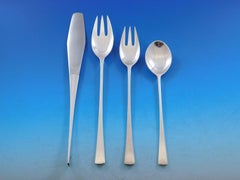
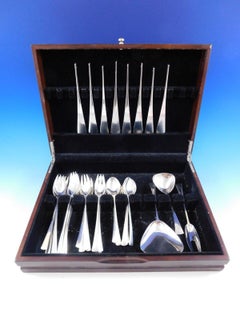
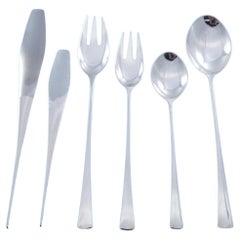
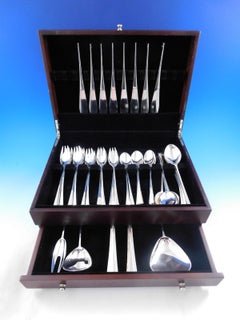
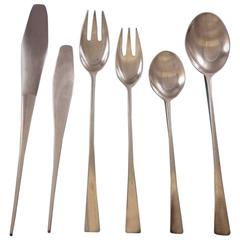
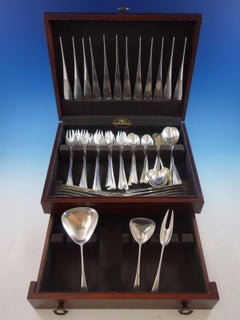
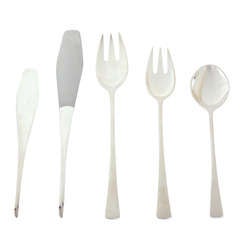
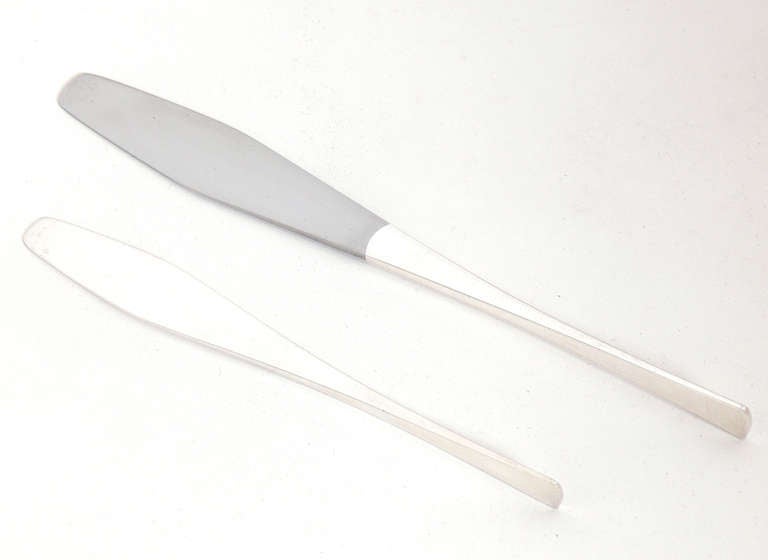
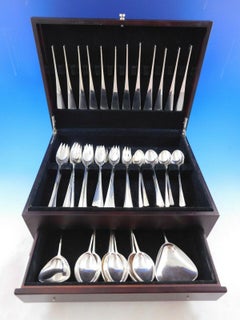
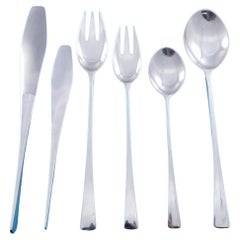
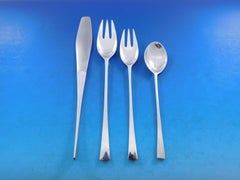
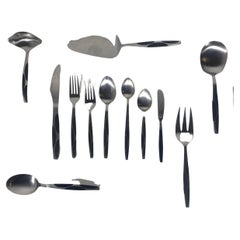
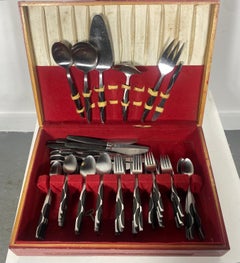
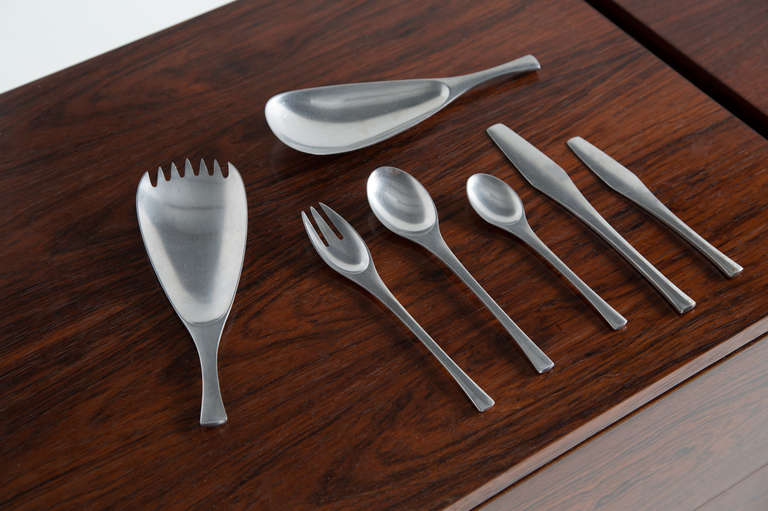
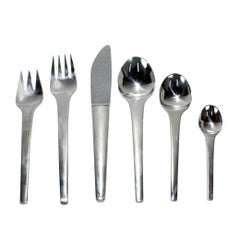
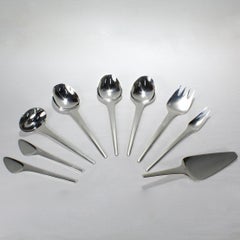
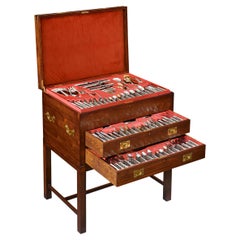
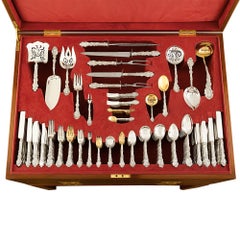
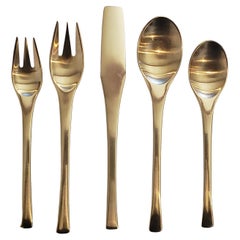
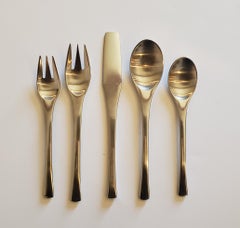
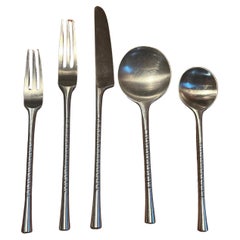
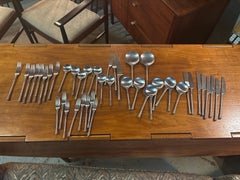
Choose from an assortment of styles, material and more in our collection of dansk sterling silver flatware on 1stDibs. A piece of dansk sterling silver flatware — often made from
metal,
silver and
sterling silver — can elevate any home. There are many kinds of the item from our selection of dansk sterling silver flatware you’re looking for, from those produced as long ago as the 20th Century to those made as recently as the 20th Century. A choice in our collection of dansk sterling silver flatware made by
Mid-Century Modern designers — as well as those associated with
Scandinavian Modern — is very popular. Many designers have produced at least one well-made object in our assortment of dansk sterling silver flatware over the years, but those crafted by
Dansk Designs and
Jens Harald Quistgaard are often thought to be among the most beautiful.
Ironically, Dansk Designs, the tableware company practically synonymous with Danish design (“Dansk,” in fact, translates to “Danish”), was the brainchild of an American couple, Ted and Martha Nierenberg.
The Nierenbergs, who founded the business in 1954, initially worked out of the garage of their Great Neck, Long Island, home and marketed their serveware, tables, decorative objects and other products largely in the United States. But they had a secret weapon: Jens Quistgaard.
After demonstrating artistic talent at a young age, the Copenhagen native was gifted a forge and anvil so that he could work in his mother’s kitchen. Quistgaard built toys, jewelry and hunting knives under his father’s tutelage. Later, he spent years learning from local artisans how to produce wood, metal, ceramic and glass models. Quistgaard’s career path solidified during his apprenticeship as a silversmith with legendary Danish silver firm Georg Jensen.
The Nierenbergs discovered the sculptor and designer on their honeymoon, which they’d spent traveling through Europe searching for top-quality goods that might form the basis of a business.
After they hired Quistgaard and launched Dansk, their products swiftly came to epitomize the best of accessible Scandinavian design for mid-century American consumers, who fell for the firm’s staved-teak salad bowls, colorful casseroles and stainless-steel flatware, all of which managed to look handmade despite being mass-produced.
The long-distance relationship flourished for 30 years, during which millions of Quistgaard pieces were manufactured in the company's factories.
The designs for Quistgaard’s Købenstyle line and other collections during the mid-1950s were revolutionary, with bowls built like barrels and charming, lightweight monochrome tableware in enameled steel. Quistgaard’s work married function with striking, sophisticated form. He utilized exceptional materials in the creation of his coveted cookware, barware and serving pieces, opting for warm teak and exotic woods and reintroducing steel as a go-to option for kitchen wares.
Quistgaard’s postwar-era Scandinavian modernist work is still exceedingly popular in living rooms, dining rooms and kitchens in the United States, Europe and Japan, particularly in the homes of mid-century design enthusiasts.
Find vintage Dansk Designs furniture and decorative objects on 1stDibs.
Dining and entertaining changed drastically when we began to set our tables with sterling silver for holiday gatherings, wedding receptions, engagement parties and, in some of today’s homes, everyday meals.
Often called the “Queen of metals,” silver has been universally adored for thousands of years. It is easy to see why it has always been sought after: It is durable, strong and beautiful. (Louis XIV had tables made entirely of silver.) Sterling silver is an alloy that is made of 92.5 percent silver — the “925” stamp that identifies sterling-silver jewelry refers to this number. The other 7.5 percent in sterling silver is typically sourced from copper.
Neoclassical-style sterling-silver goods in Europe gained popularity in the late 18th century — a taste for sterling-silver tableware as well as tea sets had taken shape — while in the United States, beginning in the 19th century, preparing the dinner table with sterling-silver flatware had become somewhat of a standard practice. Indeed, owning lots of silver goods during the Victorian era was a big deal. Back then, displaying fine silver at home was a status symbol for middle-class American families. And this domestic silver craze meant great profitability for legendary silversmith manufacturers such as Reed & Barton, Gorham Manufacturing Company and the International Silver Company, which was incorporated in Meriden, Connecticut, in 1898, a major hub of silver manufacturing nicknamed “Silver City.”
Today, special occasions might call for ceremonial silver designed by Tiffany & Co. or the seductive sterling-silver cutlery from remarkable Danish silversmith Georg Jensen, but there really doesn’t have to be an event on the calendar to trot out your finest tableware.
Event- and wedding-planning company maestro Tara Guérard says that some “investment pieces,” such as this widely enamored alloy, should see everyday use, and we’re inclined to agree.
“Sterling-silver flatware is a must-have that you can use every single day, even to eat cereal,” she says. “Personally, I want a sterling-silver goblet set for 12 to 20; I would use them every time I had a dinner party. Ultimately, there are no criteria for buying vintage pieces: Buy what you love, and make it work.”
Whether you’re thinking “ceremonial” or “cereal,” browse a versatile collection of vintage, new and antique sterling-silver wares on 1stDibs today.