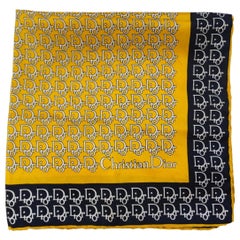
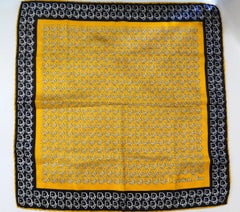
Dior Trotter Monogram Black & Yellow Silk Scarf
By Christian Dior
Located in Scottsdale, AZ
Logomania is back in full force! Rock a piece of original monogram printed Dior with our adorable
Category
Dior Trotter Monogram Black & Yellow Silk Scarf
By Christian Dior
Located in Scottsdale, AZ
Logomania is back in full force! Rock a piece of original monogram printed Dior with our adorable
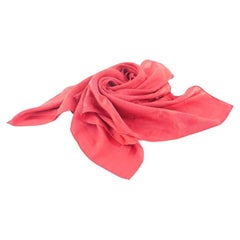
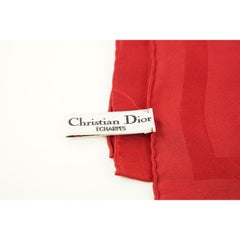
Christian Dior Red Monogram Trotter Silk Scarf 862847
By Christian Dior
Located in Dix hills, NY
Measurements: Length: 28.5" Width: .1" Height: 28.5" OVERALL VERY GOOD CONDITION ( 7.5/10 or B+ ) Signs of Wear: Exterior Canvas: Little to No Fraying, Little to No marks
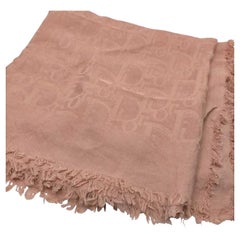
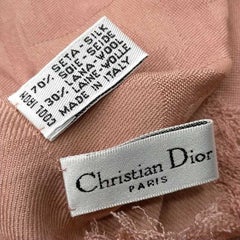
Christian Dior Dusty Rose Pink Monogram Trotter Scarf 862094
By Christian Dior
Located in Dix hills, NY
VERY GOOD CONDITION (8/10 or AB) Minor marks Main Color : Rose Fabric : Silk 70% Wool 30% Size : 140cm x 135cm (approx) / 55.1inch x 53.1inch (approx) Country of Ma...
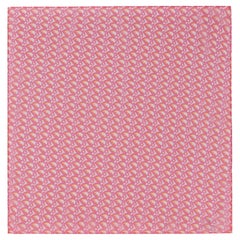
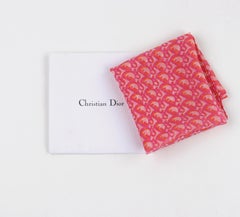
CHRISTIAN DIOR “Trotter” Pink & Orange Diorissimo Silk Chiffon Scarf w/ Envelope
By Christian Dior
Located in Thiensville, WI
CHRISTIAN DIOR “Trotter” Pink & Orange Diorissimo Silk Chiffon Scarf w/ Envelope Brand
Dior Vintage Monogram Oblique Trotter Rabbit Fur Scarf Stole
By Christian Dior
Located in Montreal, Quebec
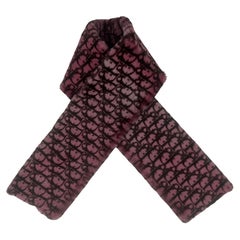
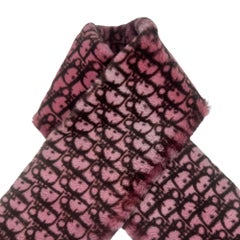
Vintage Dior scarf form the early 2000 designed by John Galliano. Rabbit fur scarf in purple with

Christian Dior Navy Blue Trotter Printed Tie Detail Silk Scarf
By Christian Dior
Located in Dubai, Al Qouz 2
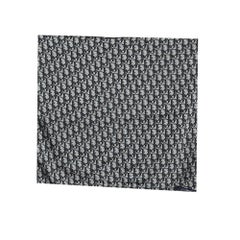
For days when you want your accessory to present your style, this Christian Dior stole is perfect
When Christian Dior launched his couture house, in 1946, he wanted nothing less than to make “an elegant woman more beautiful and a beautiful woman more elegant.” He succeeded, and in doing so the visionary designer altered the landscape of 20th century fashion. Vintage Dior bags, shoes, evening dresses, shirts and other garments and accessories are known today for their feminine and sophisticated sensibility.
Dior was born in Granville, on the Normandy coast, in 1905. His prosperous haute bourgeois parents wanted him to become a diplomat despite his interest in art and architecture. However, they agreed to bankroll an art gallery, which Dior opened in 1928 in Paris with a friend.
This was the start of Dior’s rise in the city’s creative milieu, where he befriended Pablo Picasso and Jean Cocteau. After seven years as an art dealer, Dior retrained as a fashion illustrator, eventually landing a job as a fashion designer for Robert Piguet, and in 1941, following a year of military service, he joined the house of Lucien Lelong. Just five years later, with the backing of industrialist Marcel Boussac, the ascendant Dior established his own fashion house, at 30 avenue Montaigne in Paris.
Just two years after the end of World War II, the fashion crowd and the moribund haute couture industry were yearning, comme tout Paris, for security and prosperity, desperate to discard the drab, sexless, utilitarian garb imposed by wartime deprivation. They needed to dream anew.
And Dior delivered: He designed a collection for a bright, optimistic future. “It’s quite a revolution, dear Christian!” exclaimed Carmel Snow, the prescient American editor-in-chief of Harper’s Bazaar, famously proclaiming, “Your dresses have such a new look.” The press ran with the description, christening Dior’s debut Spring/Summer haute couture collection the New Look. “God help those who bought before they saw Dior,” said Snow. “This changes everything.”
Dior’s collection definitively declared that opulence, luxury and femininity were in. His skirts could have 40-meter-circumference hems, and outfits could weigh up to 60 pounds. They were cut and shaped like architecture, on strong foundations that molded women and “freed them from nature,” Dior said. Rather than rationing, his ladies wanted reams of fabric and 19-inch waists enforced by wire corsets, and the fashion world concurred. The debut got a standing ovation.
In the subsequent decade, Paris ruled as the undisputed fashion capital of the world, and Christian Dior reigned as its king. With the luxuriously full skirts of his New Look, suits and his drop-dead gorgeous couture dresses and ball gowns worthy of any princess, Dior gave women the gift of glamour they’d lost in the miserable years of war.
On 1stDibs, find an exquisite range of vintage Christian Dior clothing, jewelry, handbags and other items.
We’ve long had a love affair with vintage and designer scarves. Every glamorous go-to ensemble deserves the lightweight finishing touch that can be added with this stylish, versatile accessory.
Scarves have held a distinctive place in the evolution of formal and casual wear for centuries. And although now firmly entrenched in western culture, the origins of this neckwear are global.
Egyptian Queen Nefertiti is known to have worn a finely woven scarf with a headdress, and Emperor Cheng of the Chinese Han dynasty presided over an army of warriors whose scarves denoted their rank. The idea of scarves as status symbols still persists; for example, silk scarves, which were favored by the upper class during the reign of Queen Victoria, are an out-of-reach luxury item, cost prohibitive for many consumers. However, the increasing diversity of available materials over the years has rendered this adornment more accessible since their early days.
Luxury houses and various designers helped elevate scarves and long, flowing wraps as a desirable fashion accessory during the 20th century.
Visionary Italian designer Emilio Pucci — the first fashion designer to enter the lifestyle market — introduced abstractions and dazzling psychedelic elements to scarves, while mid-century era multidisciplinary American artist Vera Neumann drew on Japanese techniques to create exuberant textile designs based on her paintings and drawings.
Established in Paris in 1837, Hermès didn’t start creating their famously decorative scarves until 100 years later, in 1937. Before long, the Hermès scarf, then crafted from strong imported Chinese silk, became an iconic work favored by actresses such as Audrey Hepburn and Grace Kelly, a lifetime enthusiast of the family-owned brand. Hermès has produced over 2,000 different scarf designs in the decades since Robert Dumas, Émile-Maurice Hermès’s son-in-law, crafted the first one.
On 1stDibs, find a broad selection of vintage scarves that includes flamboyant and colorful accessories designed by Chanel, Yves Saint Laurent and more.