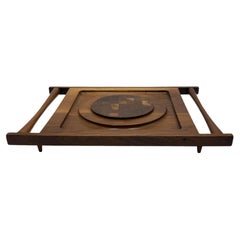
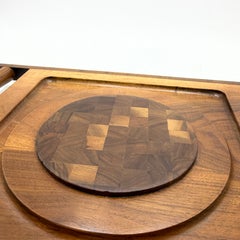
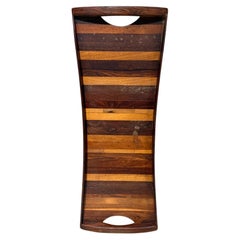
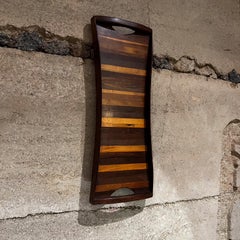
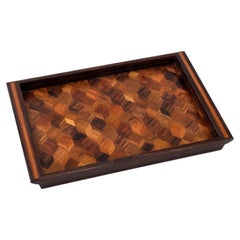
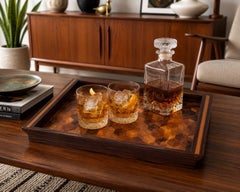
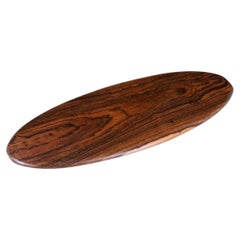
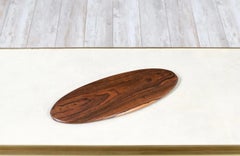
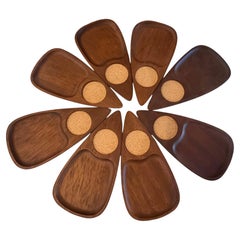
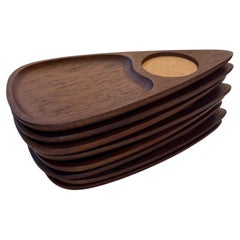
With a vast inventory of beautiful furniture at 1stDibs, we’ve got just the don shoemaker tray you’re looking for. Each don shoemaker tray for sale was constructed with extraordinary care, often using
wood,
hardwood and
cocobolo. Whether you’re looking for an older or newer don shoemaker tray, there are earlier versions available from the 20th Century and newer variations made as recently as the 20th Century. A don shoemaker tray is a generally popular piece of furniture, but those created in
Mid-Century Modern,
Modern and
Art Deco styles are sought with frequency.
If it weren’t for his honeymoon, American furniture designer Don S. Shoemaker might not have played any role in Mexican modernism of the mid-20th century.
Born in Nebraska in 1919, Shoemaker studied at the School of the Art Institute of Chicago during the 1930s. In the 1940s he got married, and he and his wife, Barbara, ventured to Mexico for their honeymoon. Enamored with the country, Shoemaker decided that Mexico should become the newlyweds' permanent home. They settled in a town called Santa Maria de Guido in Michoacán, where Shoemaker spent his days painting and growing rare plants.
Through horticulture, Shoemaker became inspired by Mexico’s tropical woods, such as cocobolo, a Mexican rosewood, and he decided to delve into furniture design. In the late 1950s, he started a small factory, producing hand-carved desks, armchairs, dining room tables, decorative boxes and bowls, and serveware. The popularity of Shoemaker’s furnishings grew throughout Mexico, and his small factory became the Señal S.A. company, employing more than 100 skilled artisans and carpenters.
Shoemaker’s handcrafted designs were essentially a mid-century modern interpretation of traditional Mexican household furnishings, and like Clara Porset — an unsung Cuban-born activist, writer and designer who drew on Mexican craft traditions in her concepts for furniture — he found inspiration in his adopted country. These influences can be seen in iconic Shoemaker originals like the Sling collection of seating, the Suspension stool and several of his table designs.
Shoemaker's furniture was exhibited in showrooms in several major Mexican cities and across the U.S., including Houston, Chicago, and Los Angeles. (And mid-century modernist ideas that traveled between Mexico and California didn’t make one-way trips — they bounced back and forth.)
After Shoemaker died in 1990, his son George took over Señal S.A. The company closed after George’s death in the early 2000s.
Shoemaker’s Mexican modern furnishings continue to be coveted by avid furniture collectors around the world. From 2016 to 2017, the Museum of Modern Art in Mexico City dedicated a retrospective exhibition to honoring his work.
On 1stDibs, discover a range of vintage Don S. Shoemaker desks, seating, decorative objects and serveware.
Your dining room table is a place where stories are shared and personalities shine — why not treat yourself and your guests to the finest antique and vintage glass, silver, ceramics and serveware for your meals?
Just like the people who sit around your table, your serveware has its own stories and will help you create new memories with your friends and loved ones. From ceramic pottery to glass vases, set your table with serving pieces that add even more personality, color and texture to your dining experience.
Invite serveware from around the world to join your table settings. For special occasions, dress up your plates with a striking Imari charger from 19th-century Japan or incorporate Richard Ginori’s Italian porcelain plates into your dining experience. Celebrate the English ritual of afternoon tea with a Japanese tea set and an antique Victorian kettle. No matter how big or small your dining area is, there is room for the stories of many cultures and varied histories, and there are plenty of ways to add pizzazz to your meals.
Add different textures and colors to your table with dinner plates and pitchers of ceramic and silver or a porcelain lidded tureen, a serving dish with side handles that is often used for soups. Although porcelain and ceramic are both made in a kiln, porcelain is made with more refined clay and is more durable than ceramic because it is denser. The latter is ideal for statement pieces — your tall mid-century modern ceramic vase is a guaranteed conversation starter. And while your earthenware or stoneware is maybe better suited to everyday lunches as opposed to the fine bone china you’ve reserved for a holiday meal, handcrafted studio pottery coffee mugs can still be a rich expression of your personal style.
“My motto is ‘Have fun with it,’” says author and celebrated hostess Stephanie Booth Shafran. “It’s yin and yang, high and low, Crate & Barrel with Christofle silver. I like to mix it up — sometimes in the dining room, sometimes on the kitchen banquette, sometimes in the loggia. It transports your guests and makes them feel more comfortable and relaxed.”
Introduce elegance at supper with silver, such as a platter from celebrated Massachusetts silversmith manufacturer Reed and Barton or a regal copper-finish flatware set designed by International Silver Company, another New England company that was incorporated in Meriden, Connecticut, in 1898. By then, Meriden had already earned the nickname “Silver City” for its position as a major hub of silver manufacturing.
At the bar, try a vintage wine cooler to keep bottles cool before serving or an Art Deco decanter and whiskey set for after-dinner drinks — there are many possibilities and no wrong answers for tableware, barware and serveware. Explore an expansive collection of antique and vintage glass, ceramics, silver and serveware today on 1stDibs.