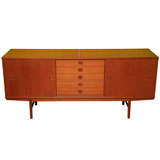
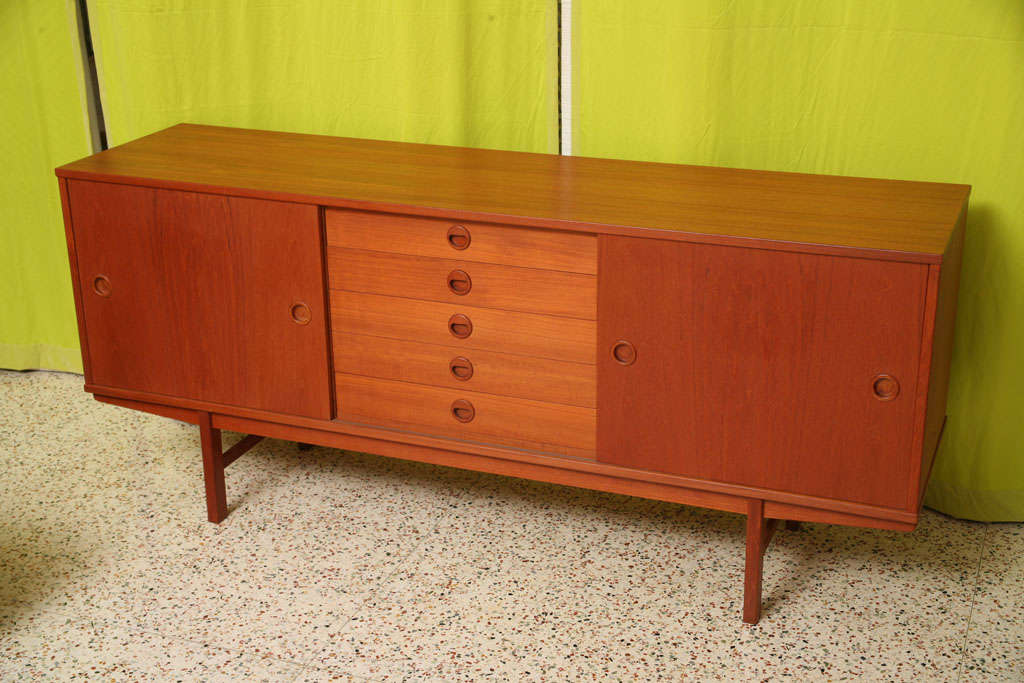
Fine Dux Teak Mid-Century Sideboard Credenza Sweden
Located in Miami, FL
SOLD AUG 2010 Swedish Modern rocks! This Dux teak sideboard credenza features five centered drawers, the top drawer felt lined and partioned.
Category
Fine Dux Teak Mid-Century Sideboard Credenza Sweden
Located in Miami, FL
SOLD AUG 2010 Swedish Modern rocks! This Dux teak sideboard credenza features five centered drawers, the top drawer felt lined and partioned.
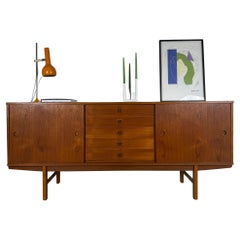
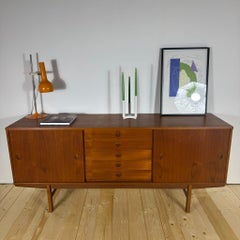
Teak sideboard by Yngve Ekstrom for Dux
By Dux of Sweden, Yngve Ekström
Located in Torino, IT
Straordinaria madia in teak disegnata da Yngve Ekstrom per DUX, Svezia, anni Cinquanta.
Teak
Midcentury Teak DUX Sweden Credenza/Sideboard, c.1960
By Dux of Sweden
Located in San Francisco, CA
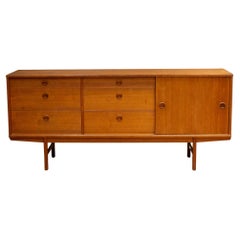
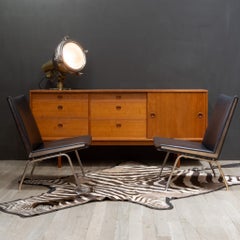
ABOUT Revive your midcentury decor with this vintage DUX credenza/sideboard from Sweden c.1960. Crafted from Teak and Beech, it features four large drawers and two small.
Walnut
Mid-Century Modern Teak Sideboard Credenza by Dux of Sweden
By Dux of Sweden
Located in San Jose, CA
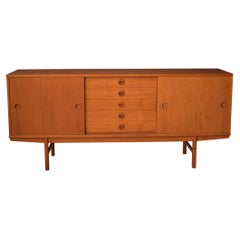
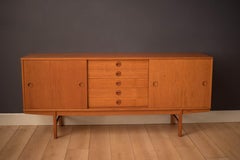
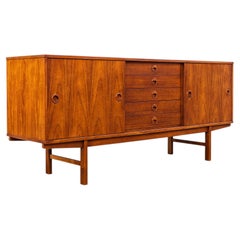
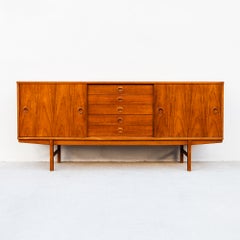
Mid-Century Modern sideboard in teak manufactured by Dux of Sweden, circa 1960s.
Teak
Sold
H 31 in W 71.75 in D 18 in
Restored 1960s Scandinavian "Ulvö" Credenza / Sideboard in Teak by Dux
By Dux of Sweden, Yngve Ekström
Located in Toluca Ter, CA
Expertly restored Swedish mid century modern "Ulvo" sideboard / buffet in teak by Yngve Ekstrom, made by Dux in August 1960.
Teak
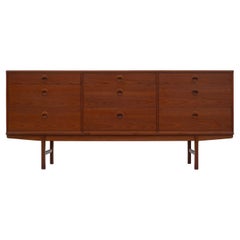
Danish Modern Teak Sideboard Credenza by Folke Ohlsson for DUX
By Folke Ohlsson, Dux of Sweden
Located in Brooklyn, NY
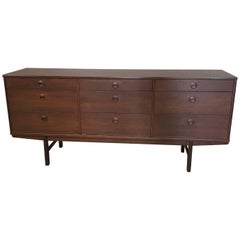
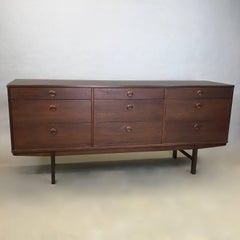
Danish modern, credenza, sideboard by Folke Ohlsson for DUX features his signature recessed pulls on it's nine drawers and is newly restored in a stunning dark teak finish.
Teak
Sold
H 31 in W 71 in D 18.5 in
Folke Ohlsson for DUX Swedish Teak 9-Drawer Mid Century Modern Dresser Sideboard
By Folke Ohlsson, Dux of Sweden
Located in Philadelphia, PA
Designed by Folke Ohlsson, this dresser or sideboard was made in the 1960s by DUX of Sweden. It features teak construction throughout, with bookmatched drawerfronts, 9 large drawers,...
Teak
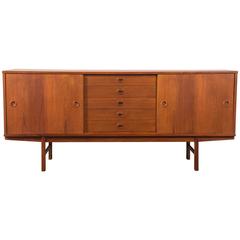

Vintage Mid-Century Sideboard by Yngve Ekstrom for Dux
By Dux of Sweden, Yngve Ekström
Located in San Francisco, CA
This Scandinavian Modern teak credenza was designed by Yngve Ekstrom for Dux's Carmel Collection (Model 504) in the 1960's. It has two sliding doors and five drawers (one with divide...
Teak
Today, Swedish manufacturer DUX’s most popular furniture lines — as well as the furnishings created by its first president, Folke Ohlsson — are synonymous with the work that vintage mid-century modern design obsessives love. Also important, the brand is known for some of the most commonplace means of furniture shipping and production in the modern era.
In Sweden, Studio Ljungs Industrier AB is the large family-owned parent company of Duxiana (in America, DUX). Initially a purveyor of bedding that is today celebrated for its ergonomically guided designs, Ljungs Industrier was founded by entrepreneur (and chocolate maker) Efraim Ljung in 1926. In 1950, Folke Ohlsson, then leading Ljungs Industrier’s design team, decamped to the States to explore how he could expand DUX’s business, which at that point included a wide range of furniture. Ohlsson established a DUX office not long after he arrived in California, first in San Francisco and later in Burlingame.
On the West Coast, the booming postwar American market was eager to embrace DUX’s affordable and practical bedroom furnishings, tables, armchairs and other seating. Characterized by sleek walnut and teak frames and low-slung silhouettes, the brand’s designs were emblematic of a generation of Scandinavian modernism that had gained popularity owing to visionaries such as product designer and architect Greta Magnusson-Grossman, who arrived in California from Sweden a decade prior to Ohlsson, and Finn Juhl, who created a Danish modern line for Michigan’s Baker Furniture Company in 1951.
DUX frequently collaborated with top-tier furniture design talent — among them Bruno Mathsson, Edward Wormley and Alf Svensson, a chief designer in the Malmö, Sweden, office of Ljungs Industrier — expanding the brand’s portfolio and establishing credibility as a design source. Ohlsson’s own designs, such as his comfortable leather lounges and wool-upholstered reclining rocking chairs, continue to be among the brand’s most desirable — and most imitated — however.
In 1949, DUX put into practice an idea that Ohlsson patented for the so-called “knock-down,” or “KD,” chair, a term referencing easy, flat-pack assembly. It saved DUX space in warehouses and money on transportation and was a concept that would provide inspiration to hundreds of subsequent companies — most notably fellow Swedish brand IKEA.
Today, vintage DUX sofas and dining chairs are valuable collector’s items. Find this coveted seating and other authentic DUX furniture on 1stDibs.
Of all the vintage storage cabinets and antique case pieces that have become popular in modern interiors over the years, dressers, credenzas and cabinets have long been home staples, perfect for routine storage or protection of personal items.
In the mid-19th century, cabinetmakers would mimic styles originating in the Louis XIV, Louis XV and Louis XVI eras for their dressers, bookshelves and other structures, and, later, simpler, streamlined wood designs allowed these “case pieces” or “case goods” — any furnishing that is unupholstered and has some semblance of a storage component — to blend into the background of any interior.
Mid-century modern furniture enthusiasts will cite the tall modular wall units crafted in teak and other sought-after woods of the era by the likes of George Nelson, Poul Cadovius and Finn Juhl. For these highly customizable furnishings, designers of the day delivered an alternative to big, heavy bookcases by considering the use of space — and, in particular, walls — in new and innovative ways. Mid-century modern credenzas, which, long and low, evolved from tables that were built as early as the 14th century in Italy, typically have no legs or very short legs and have grown in popularity as an alluring storage option over time.
Although the name immediately invokes images of clothing, dressers were initially created in Europe for a much different purpose. This furnishing was initially a flat-surfaced, low-profile side table equipped with a few drawers — a common fixture used to dress and prepare meats in English kitchens throughout the Tudor period. The drawers served as perfect utensil storage. It wasn’t until the design made its way to North America that it became enlarged and equipped with enough space to hold clothing and cosmetics. The very history of case pieces is a testament to their versatility and well-earned place in any room.
In the spirit of positioning your case goods center stage, decluttering can now be design-minded.
A contemporary case piece with open shelving and painted wood details can prove functional as a storage unit as easily as it can a room divider. Alternatively, apothecary cabinets are charming case goods similar in size to early dressers or commodes but with uniquely sized shelving and (often numerous) drawers.
Whether you’re seeking a playful sideboard that features colored glass and metal details, an antique Italian hand-carved storage cabinet or a glass-door vitrine to store and show off your collectibles, there are options for you on 1stDibs.