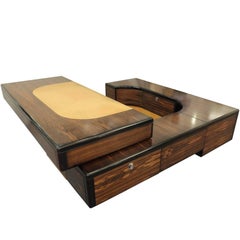
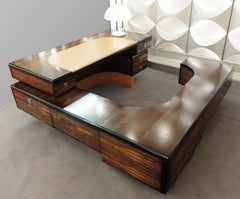
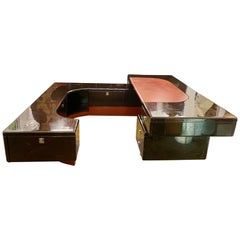
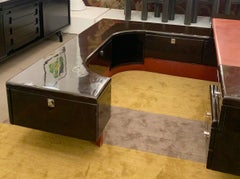
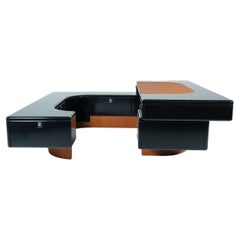
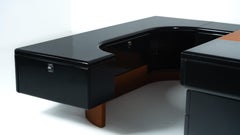
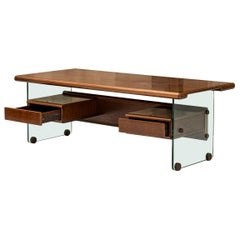
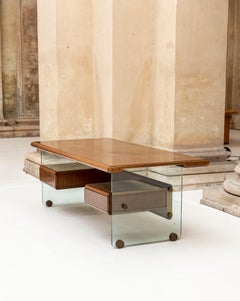
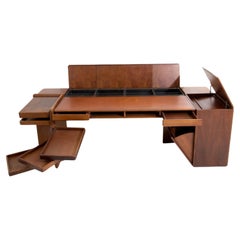
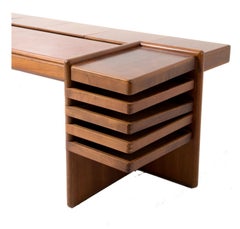
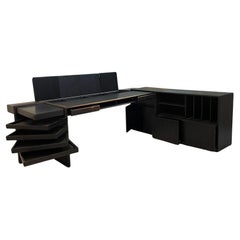
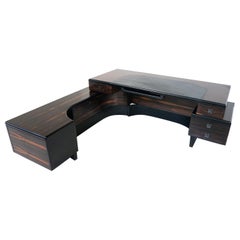
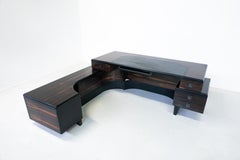
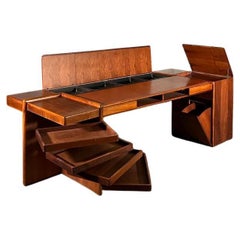
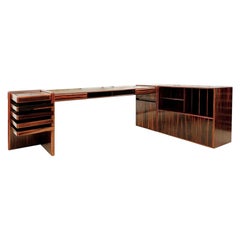
Italian designer Fabio Lenci’s bold Space Age furniture exudes a spirit of adventure and playfulness. Experimenting with plexiglass for the framework of his famous Hyaline lounge chairs and sofas, for instance, he made seating that creates the illusion of a sitter suspended in the air.
Lenci was born in 1935 in Rome, where his father was an industrial manufacturer. He initially entered the Italian Air Force and later pursued decorating and product design. Lenci’s career took shape in 1962 and he quickly made a name for himself, winning the Trieste award in 1965 for his innovative kitchen design.
In the late 1960s, and throughout the ’70s, Lenci collaborated extensively with Bernini and Italian lighting company Guzzini. The latter partnership produced an array of more than 400 pendants, floor lamps, table lamps and other fixtures that look like lighting from the future.
In 2016, Lenci received the prestigious Compasso d'Oro award for a lifetime of forward-looking design. His pieces are found in museums throughout the world, including a Chain armchair in the Museum of Modern Art in New York City. He has created hundreds of products over the course of his career and continues to design out of his studio in Rome, and his work is celebrated by critics and collectors everywhere.
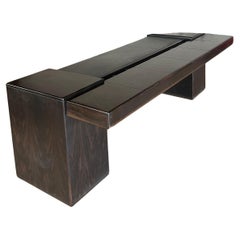
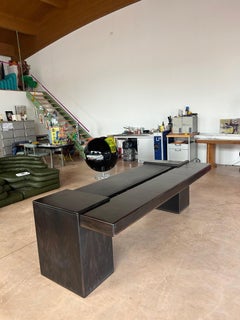
On 1stDibs, explore Fabio Lenci’s futuristic tables, seating and lighting.
The right vintage, new or antique tables can help make any space in your home stand out.
Over the years, the variety of tables available to us, as well as our specific needs for said tables, has broadened. Today, with all manner of these must-have furnishings differing in shape, material and style, any dining room table can shine just as brightly as the guests who gather around it.
Remember, when shopping for a dining table, it must fit your dining area, and you need to account for space around the table too — think outside the box, as an oval dining table may work for tighter spaces. Alternatively, if you’ve got the room, a Regency-style dining table can elevate any formal occasion at mealtime.
Innovative furniture makers and designers have also redefined what a table can be. Whether it’s an unconventional Ping-Pong table, a brass side table to display your treasured collectibles or a Louis Vuitton steamer trunk to add an air of nostalgia to your loft, your table can say a lot about you.
The visionary work of French designer Xavier Lavergne, for example, includes tables that draw on the forms of celestial bodies as often as they do aquatic creatures or fossils. Elsewhere, Italian architect Gae Aulenti, who looked to Roman architecture in crafting her stately Jumbo coffee table, created clever glass-topped mobile coffee tables that move on bicycle tires or sculpted wood wheels for Fontana Arte.
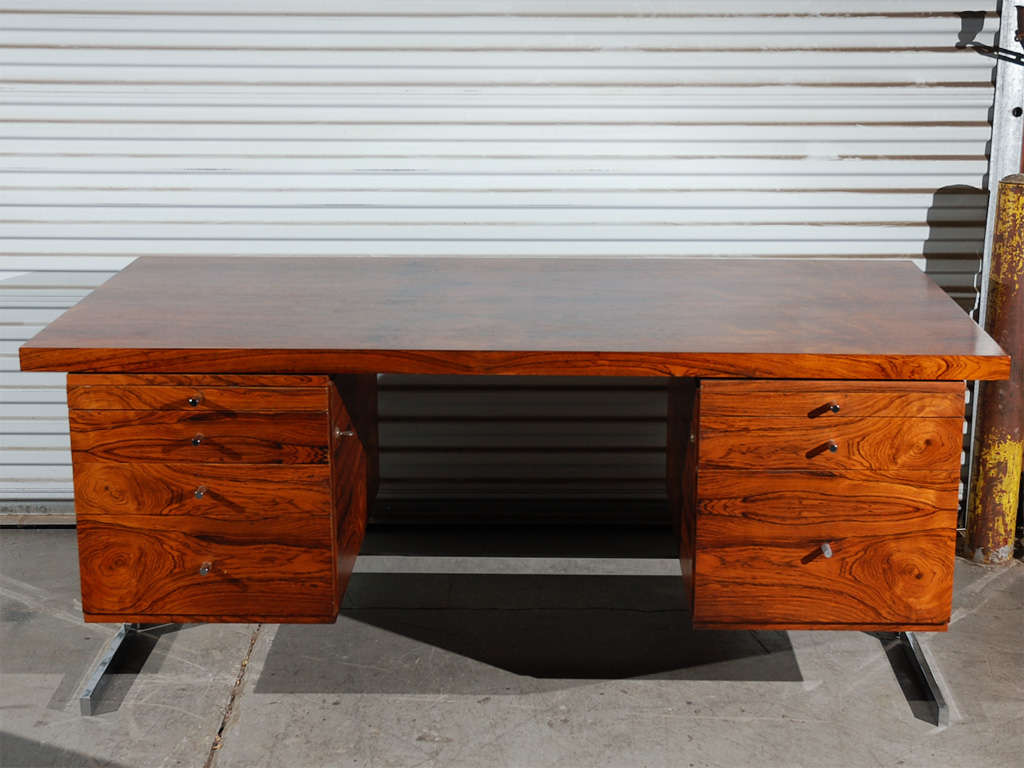
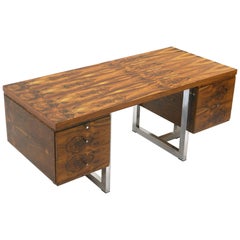
Coffee and cocktail tables can serve as a room’s centerpiece with attention-grabbing details and colors. Glass varieties will keep your hardwood flooring and dazzling area rugs on display, while a marble or stone coffee table in a modern interior can showcase your prized art books and decorative objects. A unique vintage desk or writing table can bring sophistication and even a bit of spice to your work life.
No matter your desired form or function, a quality table for your living space is a sound investment. On 1stDibs, browse a collection of vintage, new and antique bedside tables, mid-century end tables and more .