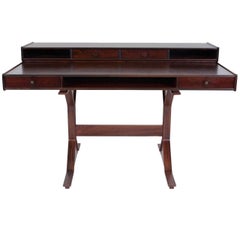
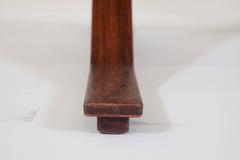
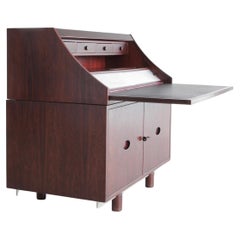
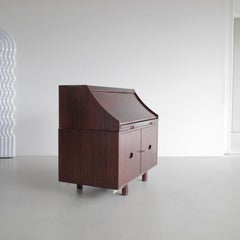
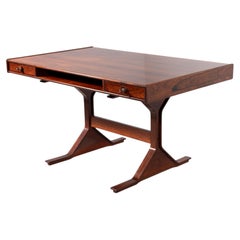
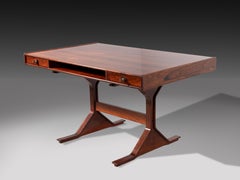
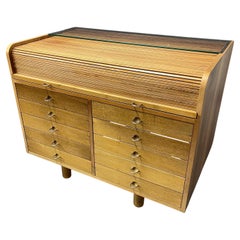
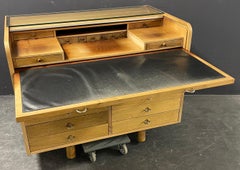
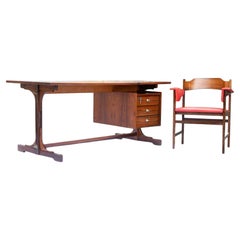
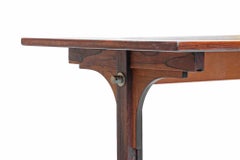
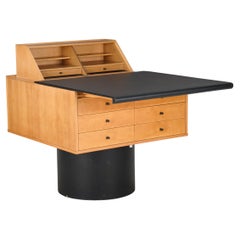
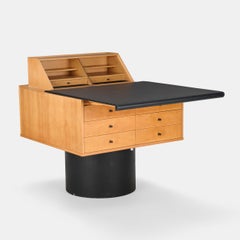
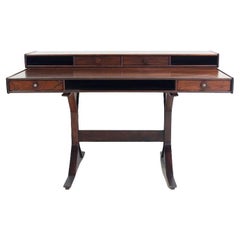
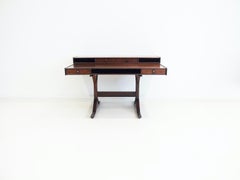
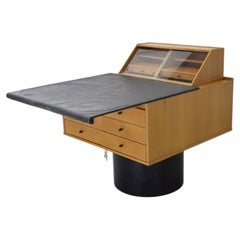
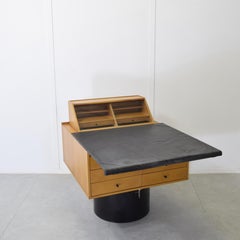
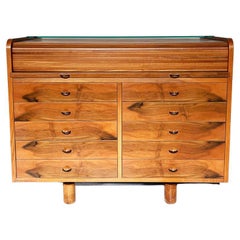
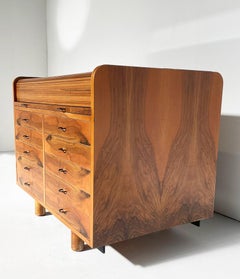
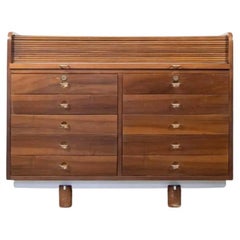
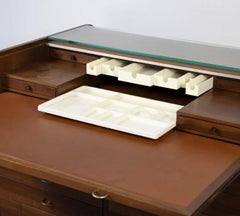
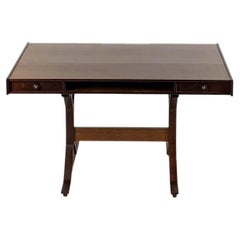
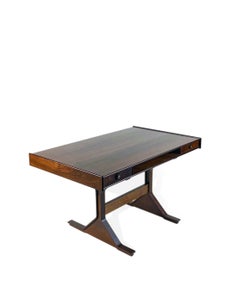
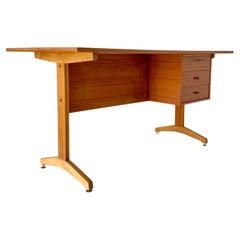
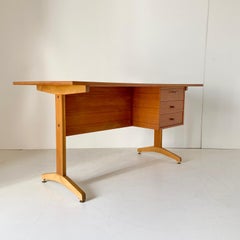
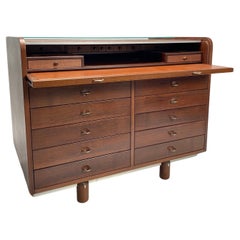
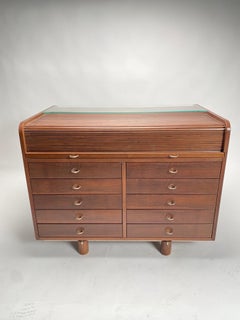
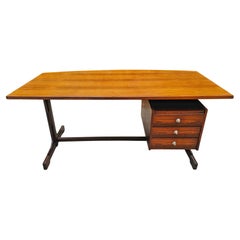
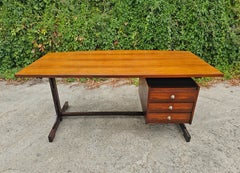
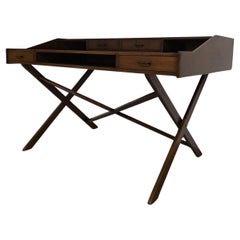
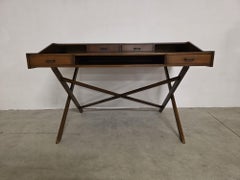
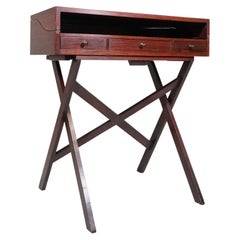
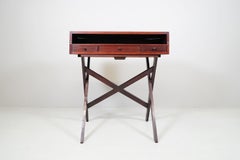
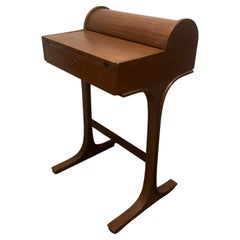
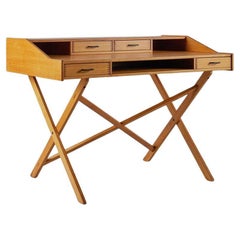
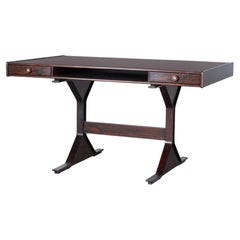
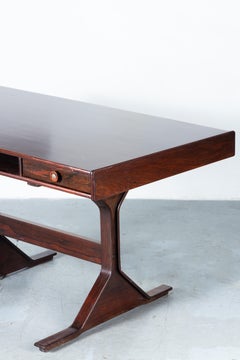
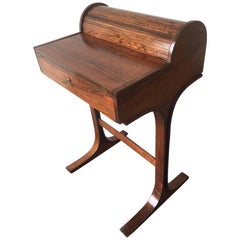
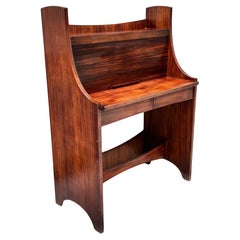
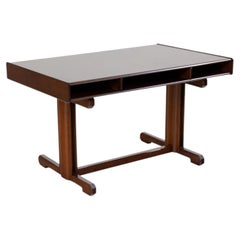
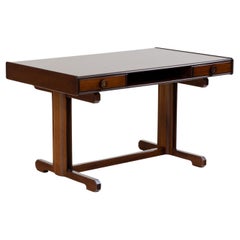
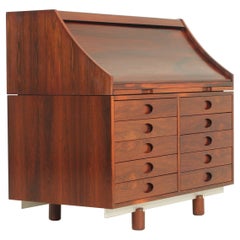
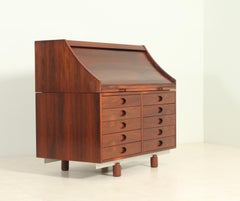
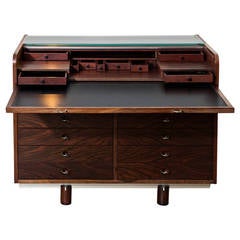
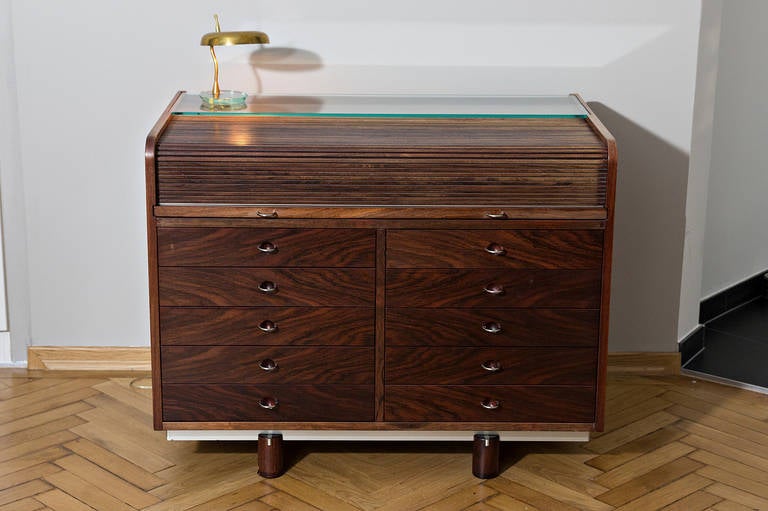
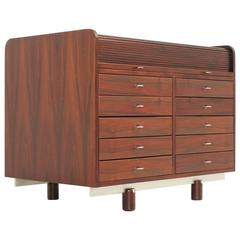
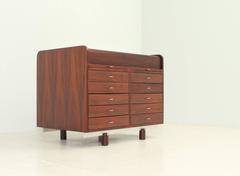
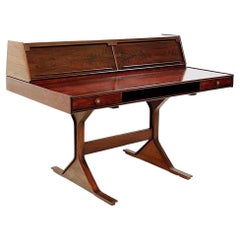
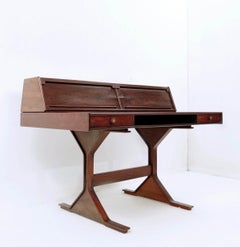
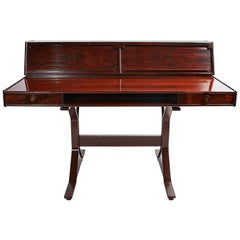
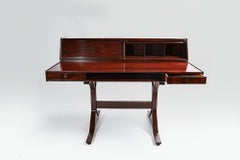
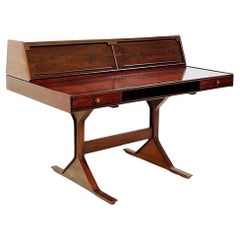
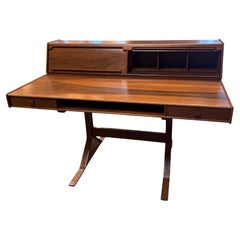
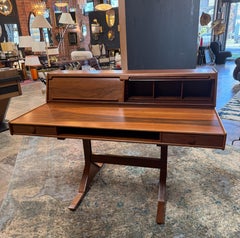
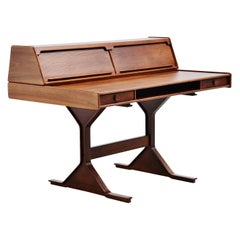
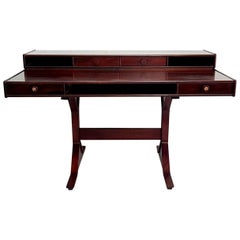
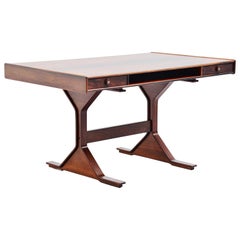
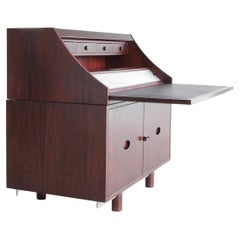
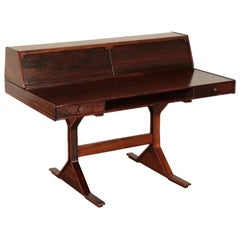
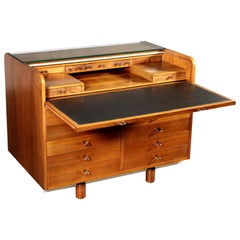
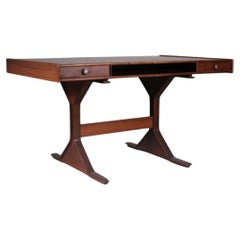
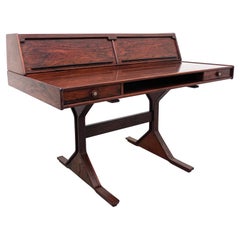
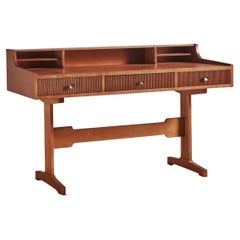
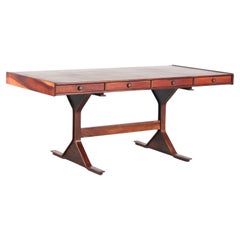
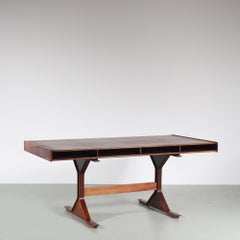
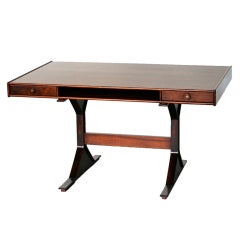
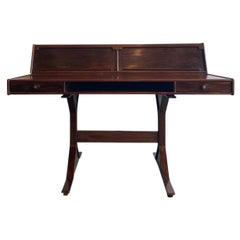
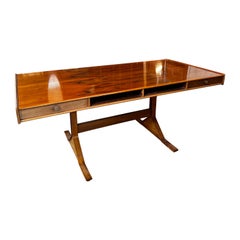
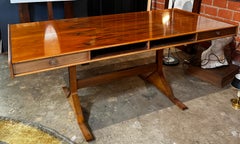
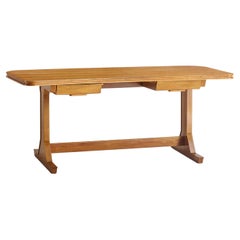
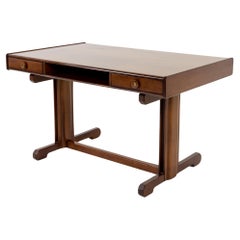
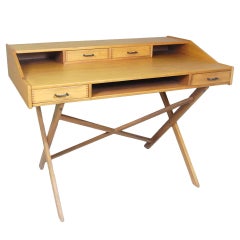
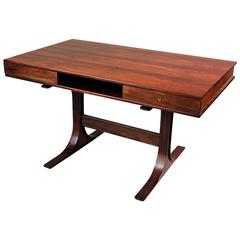
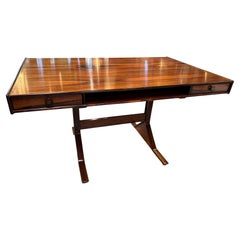
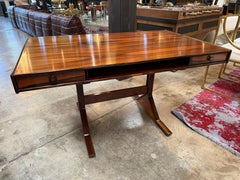
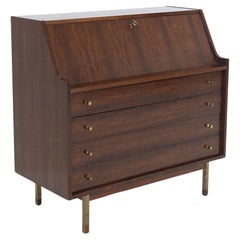
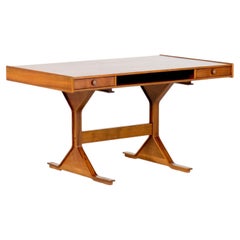
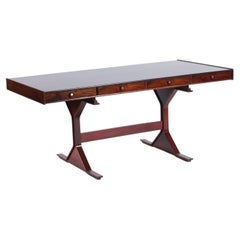
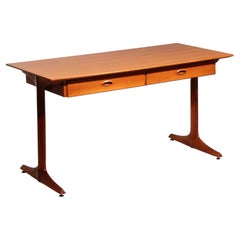
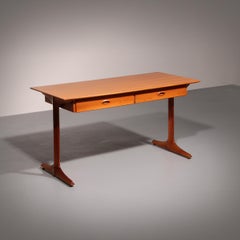
Find many varieties of an authentic gianfranco frattini writing desk available at 1stDibs. Each gianfranco frattini writing desk for sale was constructed with extraordinary care, often using
wood,
rosewood and
metal. Your living room may not be complete without a gianfranco frattini writing desk — find older editions for sale from the 20th Century and newer versions made as recently as the 20th Century. Each gianfranco frattini writing desk bearing
Mid-Century Modern,
Modern or
Art Deco hallmarks is very popular. You’ll likely find more than one gianfranco frattini writing desk that is appealing in its simplicity, but
Gianfranco Frattini,
Bernini and
Cantieri Carugati produced versions that are worth a look.
Gianfranco Frattini is widely regarded as a mid-century master of Italian modern design. He was an award-winning architect and designer, and specialized in creating furniture and decor that is both decorative and practical — Frattini’s vintage desks, armchairs, nesting tables and other works are celebrated for their sophisticated merging of function and form.
Born in Padua in 1926, Frattini studied architecture at the Polytechnic University of Milan. He later apprenticed with his teacher and mentor, Gio Ponti. Through Ponti — arguably the most important figure in 20th-century Italian architecture and design — Frattini met many notable modernist designers such as Oscar Niemeyer and Le Corbusier, but an introduction to famed Italian entrepreneur Cesare Cassina would prove incredibly significant in helping launch his career.
During the mid-1950s, Frattini began to collaborate with Cassina’s eponymous company. He designed the brand’s acclaimed leather and walnut Model 849 lounge chair — a winner of the Compasso d’Oro award — the Marema nesting tables and the iconic Sesann collection. The latter, an enduring 1970s suite of impossibly welcoming leather-covered seating, is now produced by Tacchini. In addition to Cassina, Frattini created furniture and lighting for other manufacturers such as Bernini, Arteluce, Artemide, Knoll and more.
While many of his designs incorporate glass, tubular steel and other materials, Frattini loved working with wood. The sculptural Albero bookcase — an innovative floor-to-ceiling structure made in walnut that swings on a 360-degree vertical swivel axis — is a striking example of Frattini’s dedication to traditional woodworking techniques. In the early 1970s, he traveled to Japan with friend and collaborator Pierluigi Ghianda — a master Milanese cabinet maker — in order to study the work of artisans in Kyoto. The trip inspired his design of the Kyoto table, a work of solid beech with Canaletto walnut inserts that is part of the permanent collection of the Milan Triennale’s Design Museum. The Kyoto and Albero have been revived by Poltrona Frau.
Frattini’s designs are in the permanent collections of prestigious museums such as the Museum of Modern Art and the Cooper Hewitt, Smithsonian Design Museum.
Find vintage Gianfranco Frattini furniture, lighting and decor on 1stDibs.
Vintage desks and writing tables span centuries of design. The writing table came first, a simple surface built for correspondence, while the drawered desk followed as record-keeping at home and in the office grew more demanding.
Styles to Know
Any desk at least 20 years old falls under this broader vintage category. If you want a tapered-leg, mid-century look specifically, browse mid-century modern desks; Louis XVI and Art Deco secretary desks bridge the writing-table and desk forms. A vintage table lamp adds task lighting to either.
How to Choose the Right Vintage Piece
Writing tables often carry little to no storage of their own, so a separate file cabinet or desk organizer may be worth planning for, alongside a close look at the surface dimensions against the space available. Each piece comes from a vetted 1stDibs seller, with era, designer and condition detailed, and every purchase is covered by the 1stDibs Promise.