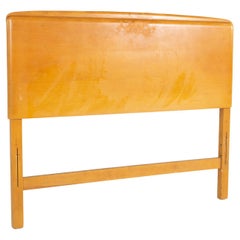
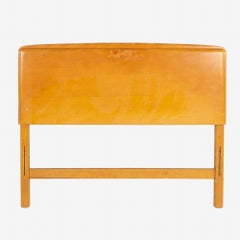
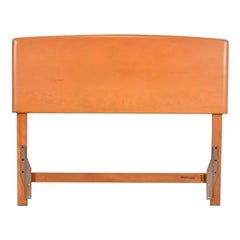
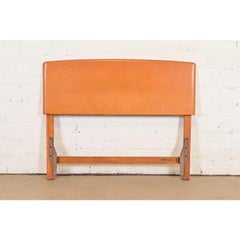
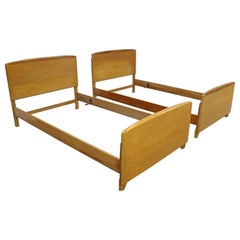
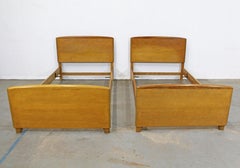
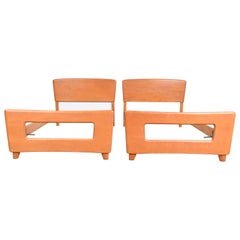
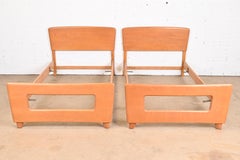
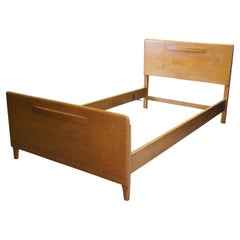
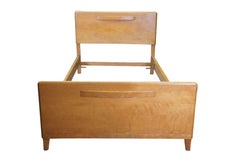
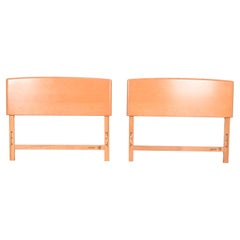
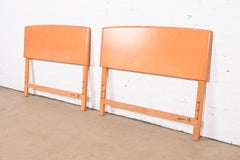
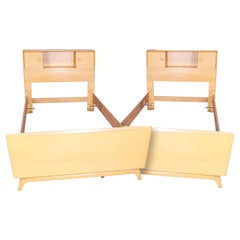
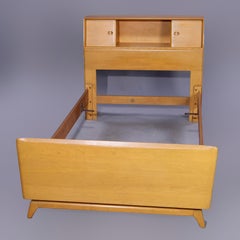
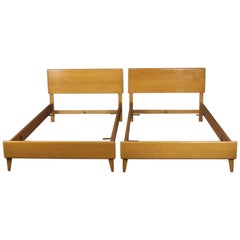
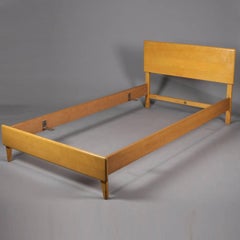
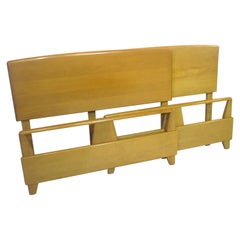
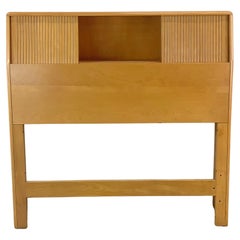
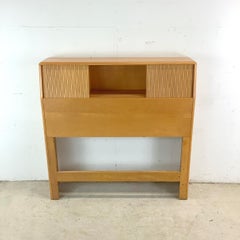
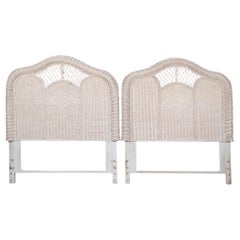
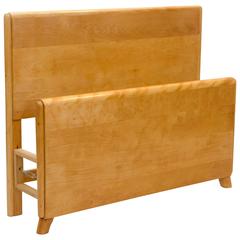
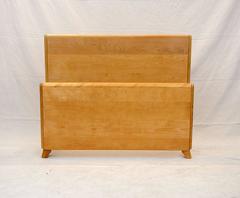
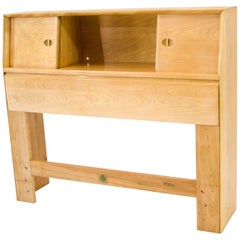
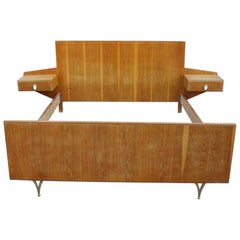
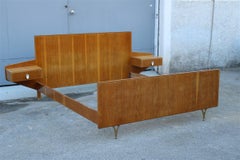
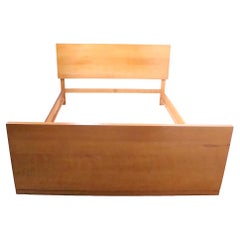
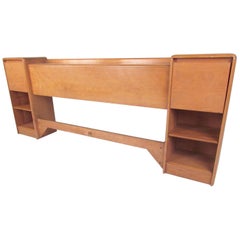
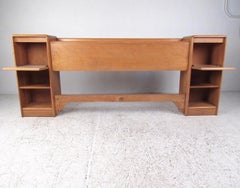
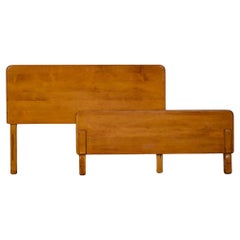
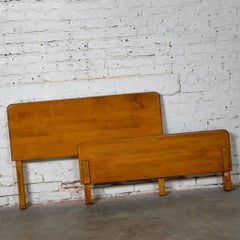
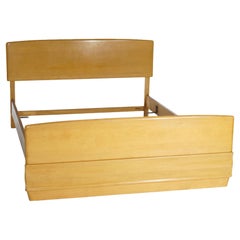
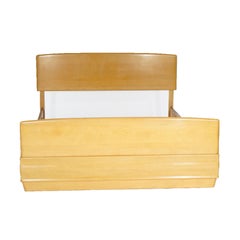
Choose from an assortment of styles, material and more with respect to the heywood wakefield twin bed you’re looking for at 1stDibs. Frequently made of
wood,
birch and
maple, every heywood wakefield twin bed was constructed with great care. Whether you’re looking for an older or newer heywood wakefield twin bed, there are earlier versions available from the 20th Century and newer variations made as recently as the 20th Century. When you’re browsing for the right heywood wakefield twin bed, those designed in
Mid-Century Modern styles are of considerable interest.
Heywood-Wakefield Co. and
Count Alexis de Sakhnoffsky each produced at least one beautiful heywood wakefield twin bed that is worth considering.
A heywood wakefield twin bed can differ in price owing to various characteristics — the average selling price 1stDibs is $995, while the lowest priced sells for $595 and the highest can go for as much as $2,200.
Created by the 19th-century merger of two venerable Massachusetts furniture makers, Heywood-Wakefield was one of the largest and most successful companies of its kind in the United States. In its early decades, the firm thrived by crafting affordable and hugely popular wicker pieces in traditional and historical styles. In the midst of the Great Depression, however, Heywood-Wakefield reinvented itself, creating instead the first modernist furniture — chairs, tables, dressers and more — to be widely embraced in American households.
The Heywoods were five brothers from Gardner, Massachusetts, who in 1826 started a business making wooden chairs and tables in their family shed. As their company grew, they moved into the manufacture of furniture with steam-bent wood frames and cane or wicker seats, backs and sides.
In 1897, the Heywoods joined forces with a local rival, the Wakefield Rattan Company, whose founder, Cyrus Wakefield, got his start on the Boston docks buying up lots of discarded rattan, which was used as cushioning material in the holds of cargo ships, and transforming it into furnishings. The conglomerate initially did well with both early American style and woven pieces, but taste began to change at the turn of the 20th century and wicker furniture fell out of fashion.
In 1930, Heywood-Wakefield brought in designer Gilbert Rohde, a champion of the Art Deco style. Before departing in 1932 to lead Herman Miller — the prolific Michigan manufacturer that helped transform the American home and office — Rohde created well-received sleek, bentwood chairs for Heywood-Wakefield and gave its colonial pieces a touch of Art Deco flair.
Committed to the new style, Heywood-Wakefield commissioned work from an assortment of like-minded designers, including Alfons Bach, W. Joseph Carr, Leo Jiranek and Count Alexis de Sakhnoffsky, a Russian nobleman who had made his name in Europe creating elegant automotive body designs.
In 1936, the company introduced its “Streamline Modern” group of furnishings, presenting a look that would define the company’s wares for another 30 years. The buoyantly bright, blond wood — maple initially, later birch — came in finishes such as amber “wheat” and pink-tinted “champagne.” The forms of the pieces, at once light and substantial, with softly contoured edges and little adornment beyond artful drawer pulls and knobs, were featured in lines with names such as “Sculptura,” “Crescendo” and “Coronet.” It was forward-looking, optimistic and built to last — a draw for middle-class buyers in the Baby Boom years.
By the 1960s, Heywood-Wakefield began to be seen as “your parents’ furniture.” The last of the Modern line came out in 1966; the company went bankrupt in 1981. The truly sturdy pieces have weathered the intervening years well, having found a new audience for their blithe and happy sophistication.
Find vintage Heywood-Wakefield desks, vanities, tables and other furniture for sale on 1stDibs.
We find relaxation and solace in our bedrooms, which are often the most cherished rooms of a home. Your antique, new or vintage bed and bed frame are integral to this oasis of personal comfort.
Beds and bed frames have long been an important part of the sanctuary that is the bedroom. For the upper class in countries such as England, the massive, costly beds of the 16th and 17th centuries were decorative and of the poster variety. Some were characterized by large painted wooden headboards, often made of oak, that featured ornate carvings and richly colored curtains affixed to each of the two or four posts — think of today’s sumptuous upholstered headboards as a distant cousin to these luxurious furnishings. The heavy fabric curtains were drawn across a fringed canopy to close out the sunlight that might’ve warmed your grandiose and opulent bedchambers. This feature could also offer privacy as desired, because, as we all know, a bedroom is for more than just sleeping.
Coiled springs didn’t make their way into mattresses until the 1800s, which likely made for a far more comfortable night’s sleep for many. Bed frames of cast iron and brass were introduced during the mid- to late-19th century. Later, the 20th century brought with it marvelous innovations for slumberland, among them daybeds from the likes of George Nelson and Ludwig Mies van der Rohe and Lilly Reich as well as convertible sofa beds.
Today, you will find a range of beds geared toward your individual personality and preferred style of decor. When shopping for a bed and bed frame, keep in mind that you’ve got options. Sizes range from twin to California king. At 76 inches wide and 80 inches long, a king-size bed is roughly 16 inches wider than a queen-size mattress, and your bed frame will likely add two to five inches to each side. (The California king bed is 84 inches long.)
From dramatic bedroom designs to uncomplicated, minimalist approaches, the bedroom has evolved into the haven that it should be: a peaceful place of respite, where we begin and end every day. Take the time to create your very own oasis — you deserve it. Rest easy with an expansive collection of antique, new and vintage beds and bed frames available on 1stDibs.