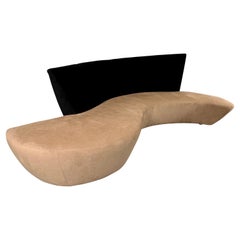
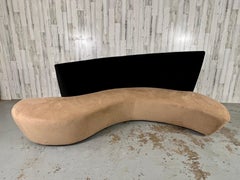
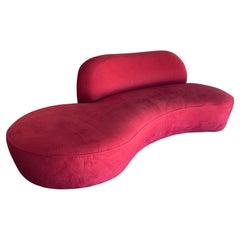
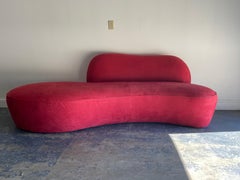
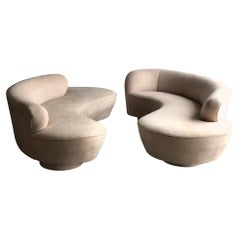
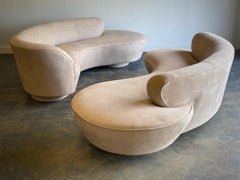
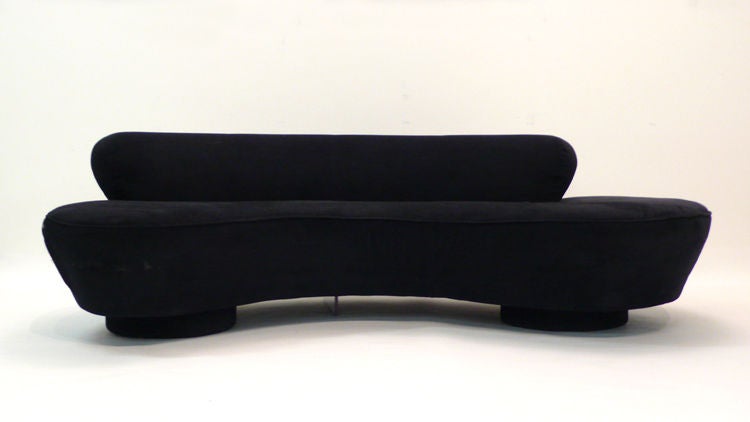
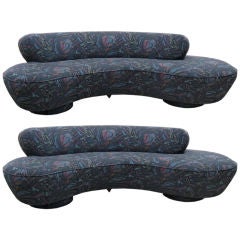
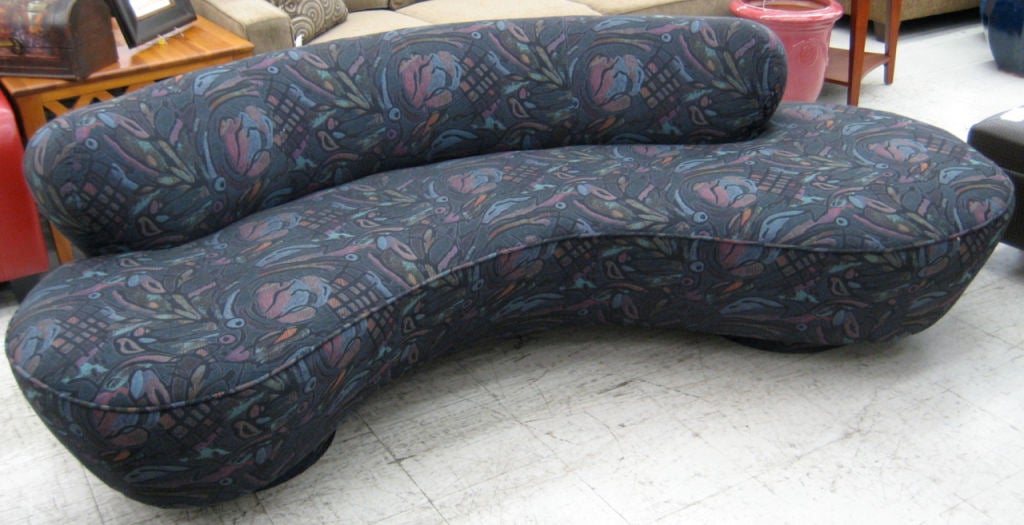
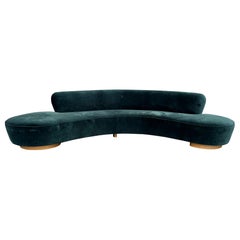
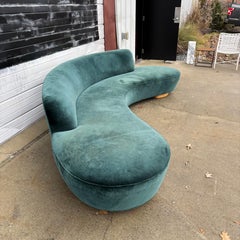
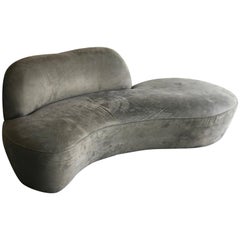
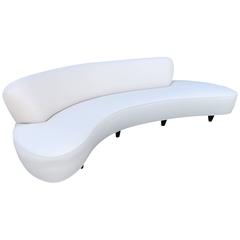
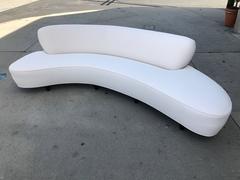
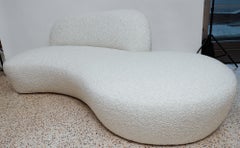
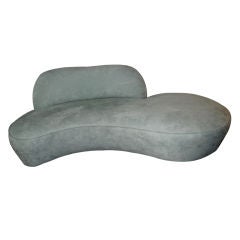
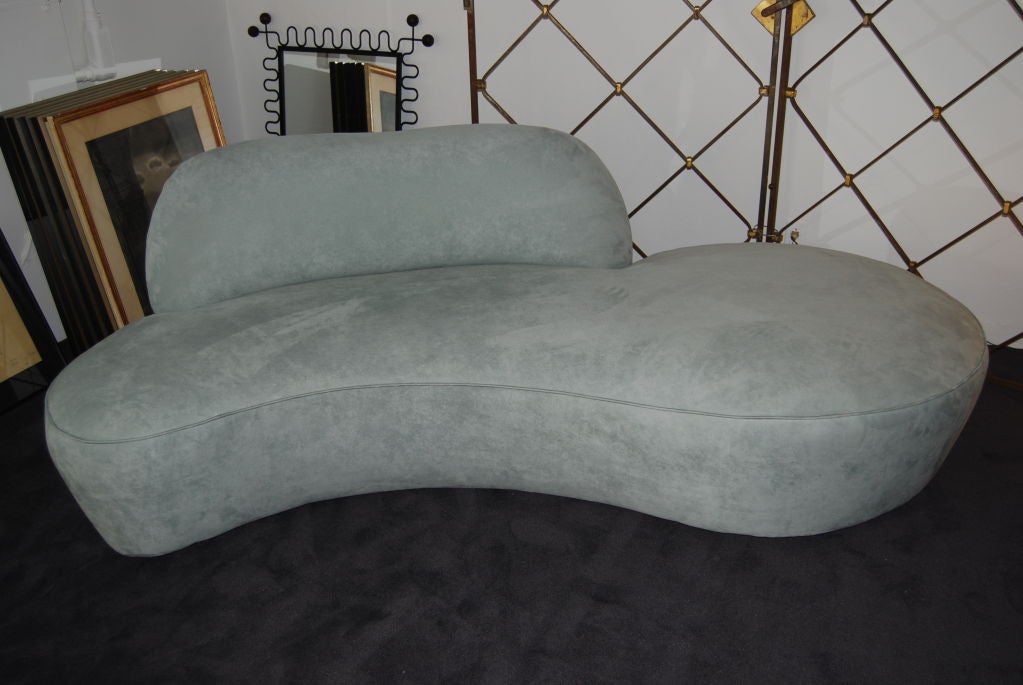
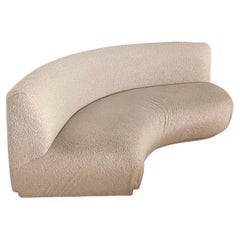
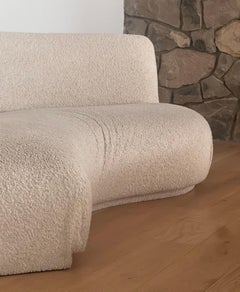
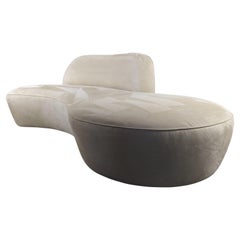
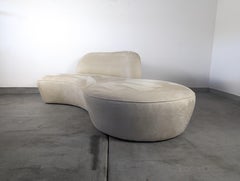
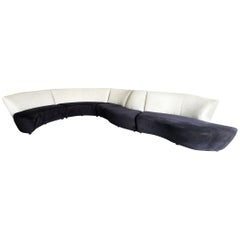
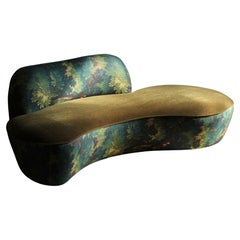
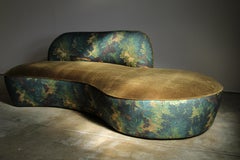
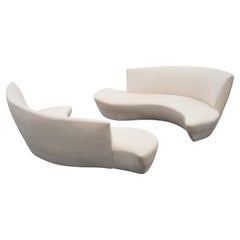
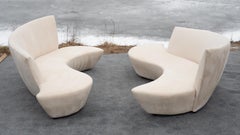
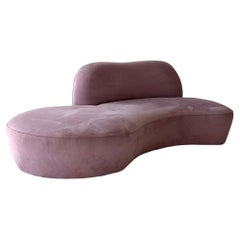
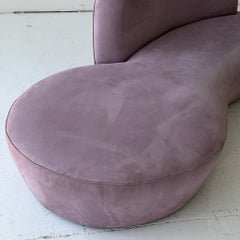
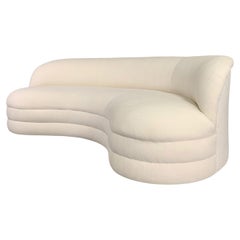
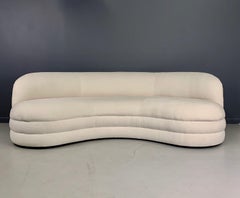
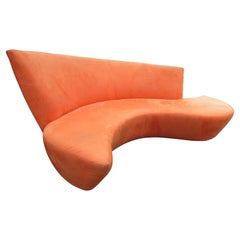
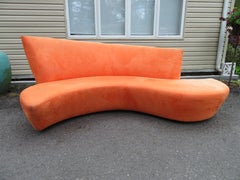
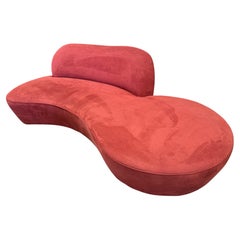
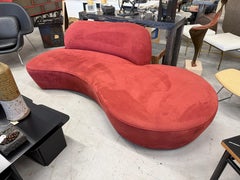
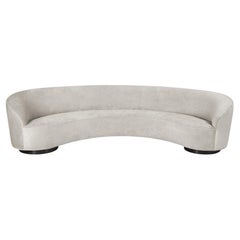
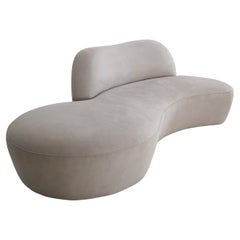
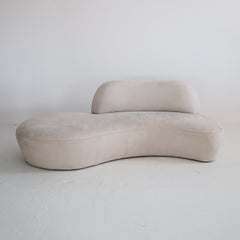
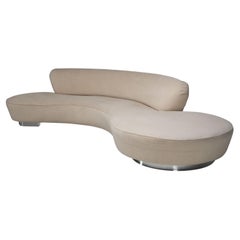
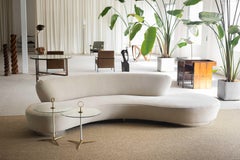
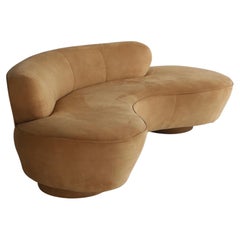
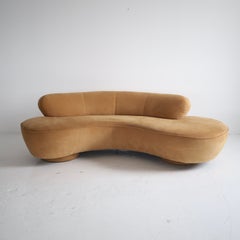
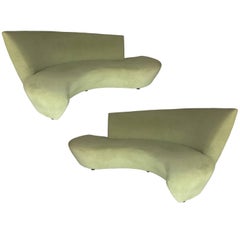
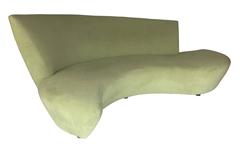
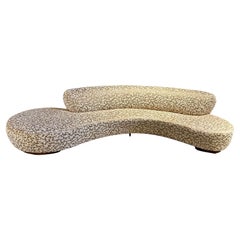
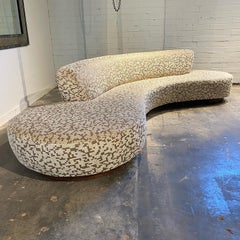
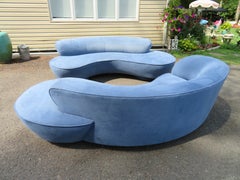
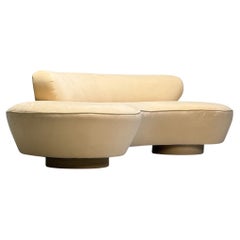
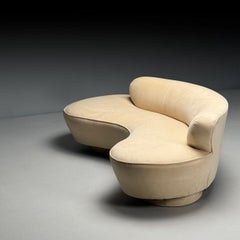
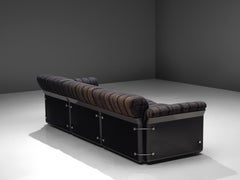
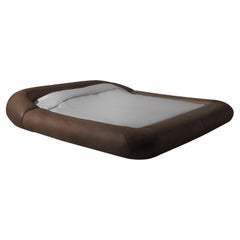
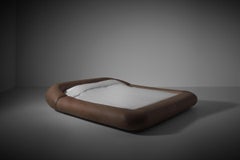
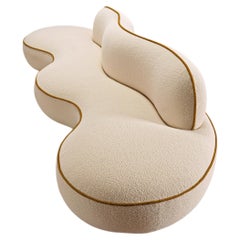
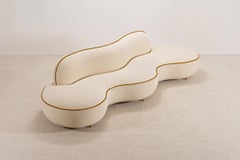
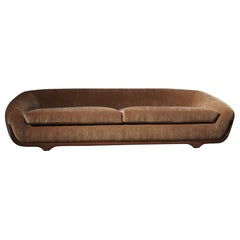
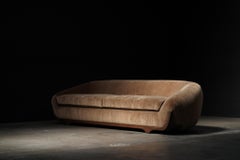
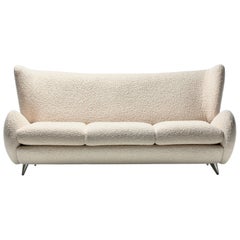
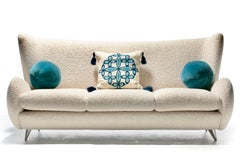
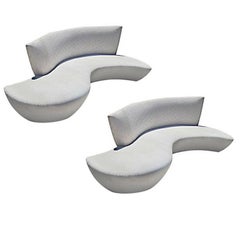
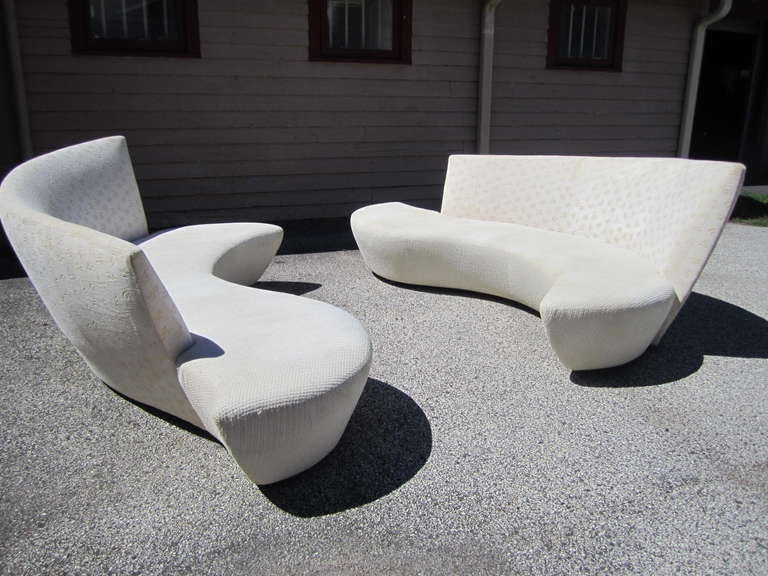
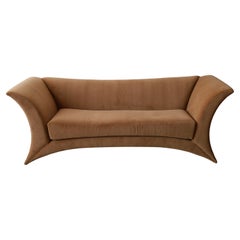
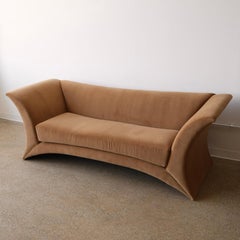
The pioneers of modern furniture design in America in the mid-20th century all had their moments of flamboyance: Charles and Ray Eames produced the startling, biomorphic La Chaise; George Nelson’s firm created the Marshmallow sofa; Edward Wormley had his decadent Listen to Me chaise. But no designer of the day steadily offered works with more verve and dynamism than Vladimir Kagan. While others, it seems, designed with suburban households in mind, Kagan aimed to suit the tastes of young, sophisticated city-dwellers. With signature designs that feature sleekly curved frames and others that have dramatic out-thrust legs, Kagan made furniture sexy.
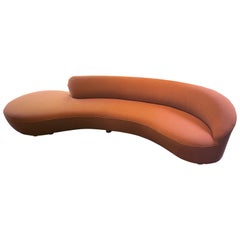
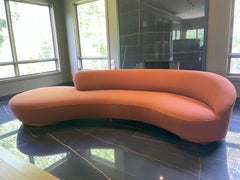
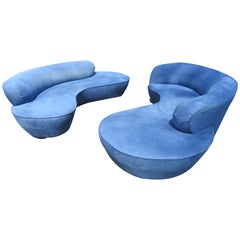
Kagan’s father was a Russian master cabinetmaker who took his family first to Germany (where Vladimir was born) and then to New York in 1938. After studying architecture at Columbia University, Kagan opened a design firm at age 22 and immediately made a splash with his long, low and sinuous Serpentine sofa. Furniture lines such as the Tri-symmetric group of glass-topped, three-legged tables and the vivacious Contours chairs soon followed.
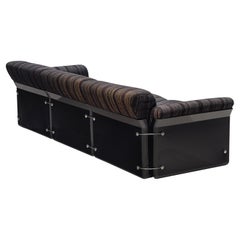
Kagan’s choices of form and materials evolved through subsequent decades, embracing lucite, aluminum and burl-wood veneers. By the late 1960s, Kagan was designing austere, asymmetrical cabinets and his Omnibus group of modular sofas and chairs. For all his aesthetic élan, Kagan said that throughout his career, his touchstone was comfort. “A lot of modern furniture was not comfortable. And so comfort is: form follows function. The function was to make it comfortable,” he once commented. “I created what I called vessels for the human body.”
A diverse group of bodies have made themselves at home with Kagan designs. Among the famous names who commissioned and collected his designs are Marilyn Monroe, Gary Cooper, Andy Warhol, David Lynch, Angelina Jolie and Brad Pitt, and firms such as Gucci and Giorgio Armani. His work is in numerous museum collections, including those of the Victoria & Albert and the Metropolitan Museum of Art.
Because of its idiosyncrasy, Kagan’s work did not lend itself to mass-production. Kagan never signed on with any of the major furniture-making corporations, and examples of his designs are relatively rare. As you will see from the offerings on 1stDibs, even decades after their conception, Kagan pieces still command the eye, with their freshness, energy, sensuality and wit.
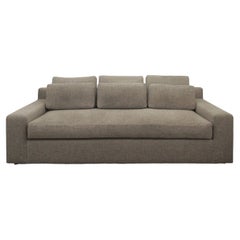
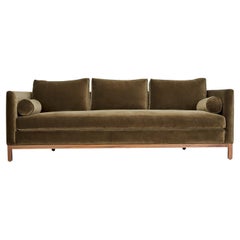
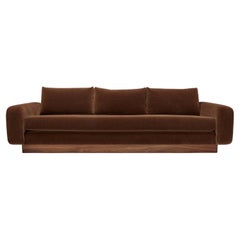
Vintage couches and antique sofas have anchored living rooms for generations. The pieces most sought after today carry the deep-buttoned tufting of a Chesterfield or the low, sculptural ease of mid-century modern and Hollywood Regency design.
Styles to Know
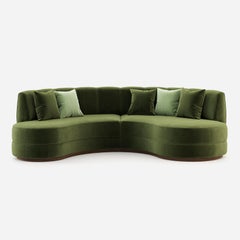
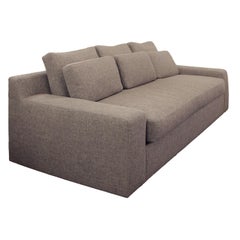
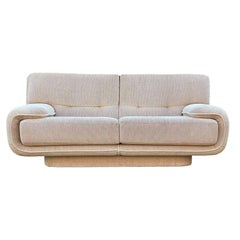
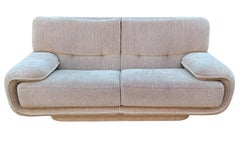
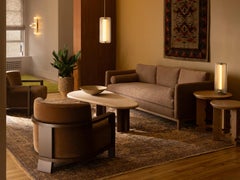
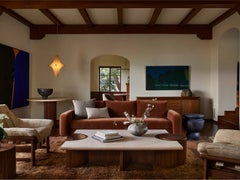
Rolled arms and tufted backs point to Mid-Century Modern or Hollywood Regency pieces, while tight backs and turned legs skew more traditional. Velvet is enjoying a renewed moment across most of these silhouettes; see our velvet chesterfield sofa trend report for examples. A mid-century modern coffee table within reach and a vintage mirror nearby round out the seating area.
How to Choose the Right Vintage Sofa
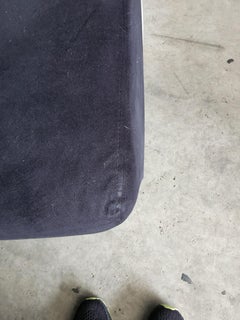
A sofa's frame and upholstery history can be difficult to judge from photographs alone. Ask a seller for more information when a listing doesn't show the fabric or joinery clearly, and confirm whether the upholstery is original or has been redone. Each piece comes from a vetted 1stDibs seller, with era, designer and condition detailed, and the 1stDibs Promise stands behind every purchase.