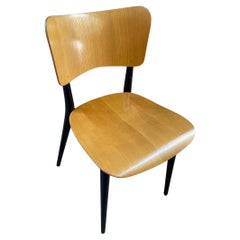
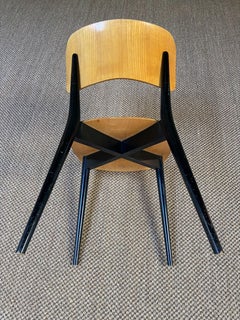
Max Bill, Chair "Kneuzzargenstull", 1951
By Max Bill
Located in Saint ouen, FR
Max Bill - Chair "Kneuzzargenstull" Edition Möbelwerke Horgan Glarus Circa 1951 Wood and
Category
Vintage 1950s European Modern Armchairs
Materials
Steel
Max Bill, Chair "Kneuzzargenstull", 1951
By Max Bill
Located in Saint ouen, FR
Max Bill - Chair "Kneuzzargenstull" Edition Möbelwerke Horgan Glarus Circa 1951 Wood and
Steel
$1,000
H 30.71 in W 18.9 in D 22.84 in
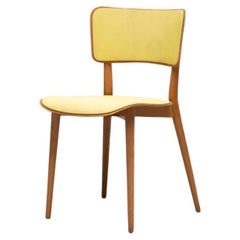
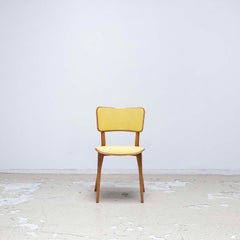
Kneuzzargenstull Chair with yellow seat by Max Bill dining chair side chair
By Max Bill
Located in Tokyo, Tokyo
Born Winterthur, Switzerland; died 1994. Max Bill's name is often associated with concrete art and
Wood, Plywood

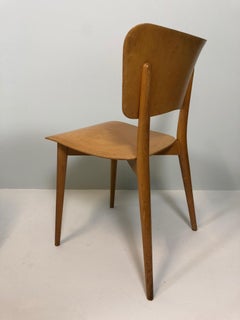
Max Bill Cross Frame Chair
By Max Bill, Horgen-Glarus
Located in Berne, CH
An original chair by Max Bill from the 1950s. Beech wood, Swiss production. Measures: H 78.74 cm x
Beech
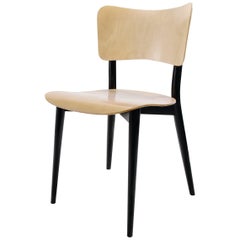
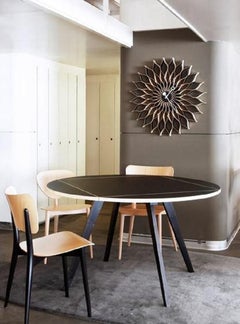
Unavailable
H 30.7 in W 18.9 in D 20.5 in
Max Bill Cross Frame Chair, Black Beech Frame/Natural Birch Plywood Seat&Back
By Max Bill
Located in New Milford, CT
Max Bill's award-winning cross-frame chair (Kreuzzargenstuhl) has been in continual production
Beech, Plywood
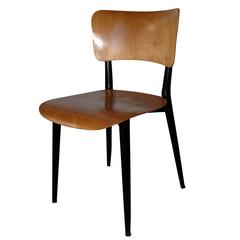
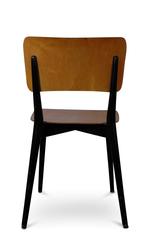
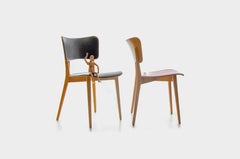
Kreuzzargenstuhl by Max Bill for Horgen Glarus
By Max Bill, Horgen-Glarus
Located in Cologne, DE
The Kreuzzargenstuhl by Max Bill was designed in 1951 and produced at first by Horgen Glarus. Two
Unavailable
H 35.44 in W 19.69 in D 19.69 in
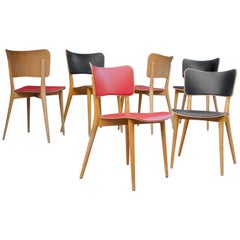
Set of 6 Red and Black "Kreuzzargenstühle" by Max Bill for Horgen Glarus
By Max Bill, Horgen-Glarus
Located in Zürich, CH
Strong and stabile but balanced and beautiful, this is how Bill's cross frame chair can be
Maple
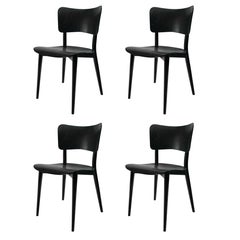
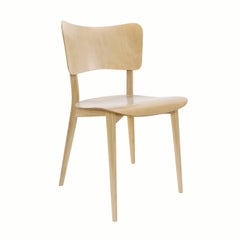
Cross Frame Chair by Max Bill
By Max Bill
Located in Jersey City, NJ
Max Bill Cross frame chair Lacquered beech available in all black, all beech or beech with black
Beech
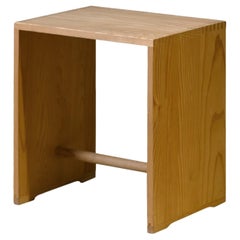
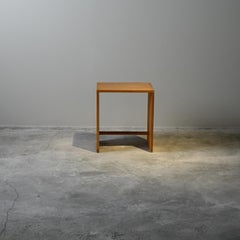
Max Bill's Ulm Stool / Authentic Mid-Century Swiss Design
By Max Bill
Located in Zürich, CH
an unspoiled way. Ulm stool was designed by the Swiss architect and artist Max Bill, in
Spruce
Sold
H 30.71 in W 18.9 in D 20.08 in
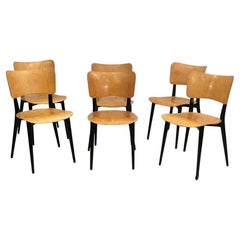
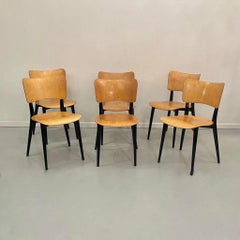
Set of 6 vintage dining chairs by Max Bill, Horgen Glarus, Switzerland ca. 1950s
By Max Bill
Located in Geneva, CH
Rare set of chairs designed in 1951 by Max Bill for the Swiss manufacturer Horgen Glarus
Beech
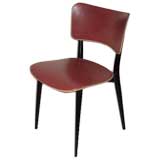

Max Bill for Horgen-Glarus Chair
Located in New York, NY
Increasingly difficult to find in the US. Beechwood chair designed by Max Bill for Horgen-Glaris

Sold
H 31.11 in W 18.9 in D 16.93 in
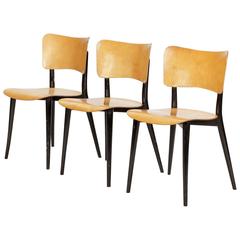
Set of Three Max Bill Chairs for Horgen Glarus, Switzerland, 1957
By Max Bill, Horgen-Glarus
Located in Basel, CH
Set of three original 1950s max bill chairs model "Kreuzzargenstuhl" designed in 1951 for the Swiss
Birch
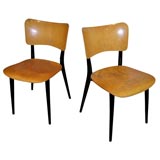

Max Bill Chair
Located in New York, NY
Chair designed by important Swiss architect Max Bill for Horgen-Glarus Co. Sold singly, but
Wood
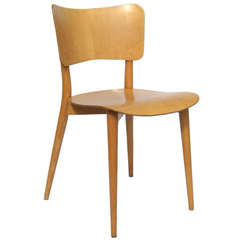
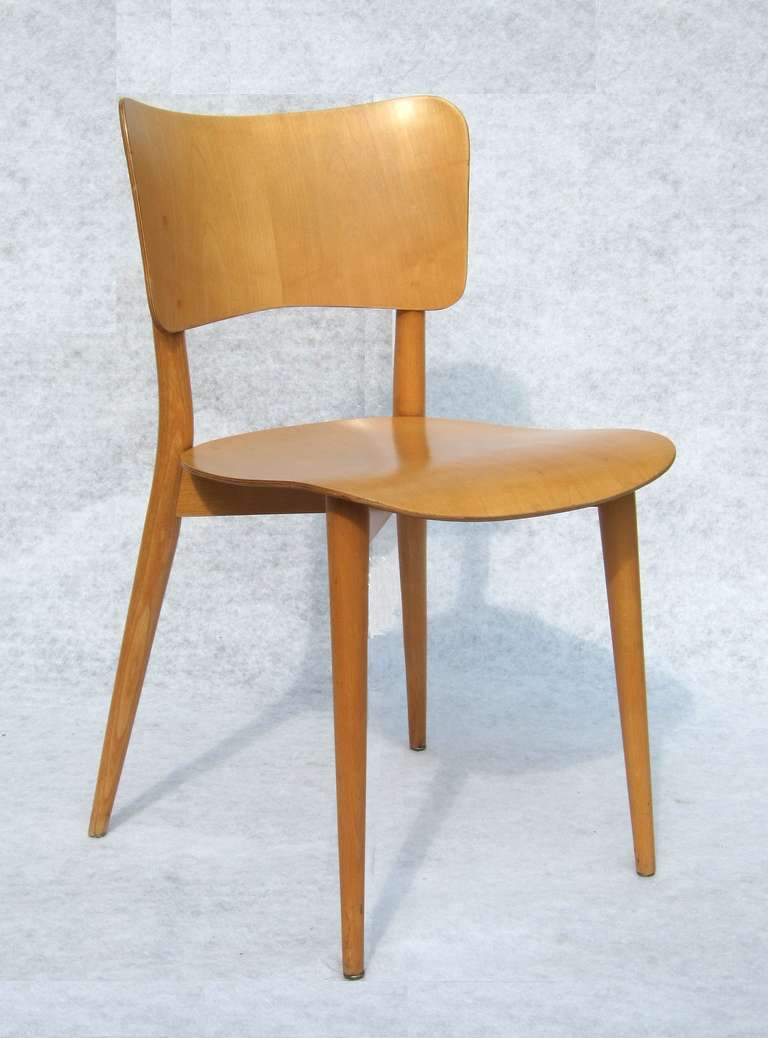
Max Bill Chair "Kreuzzargenstuhl, " Switzerland, 1950s
By Max Bill
Located in Bern, CH
Iconic and award-winning Chair designed by the Artist, Architect and Designer Max Bill in 1952
Wood
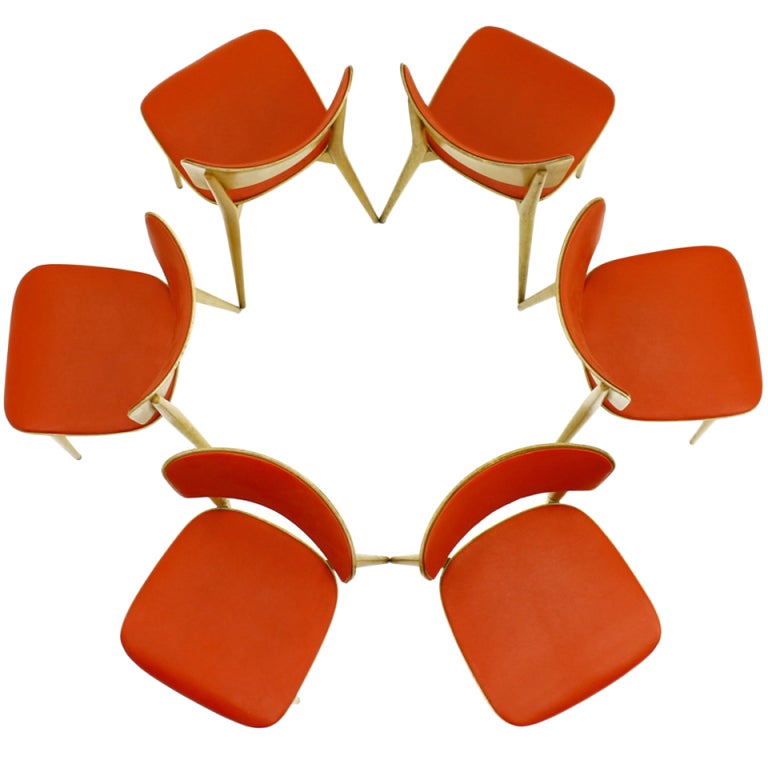
6 early Max Bill Dining Chairs, Switzerland ca. 1950`s
By Max Bill
Located in Frankfurt / Dreieich, DE
A Set of 6 Max Bill "Kreuzzargen Stuhl" Designed in 1949 made by Horgen Glarus, Switzerland. Beech
Beech, PVC
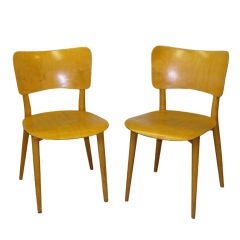
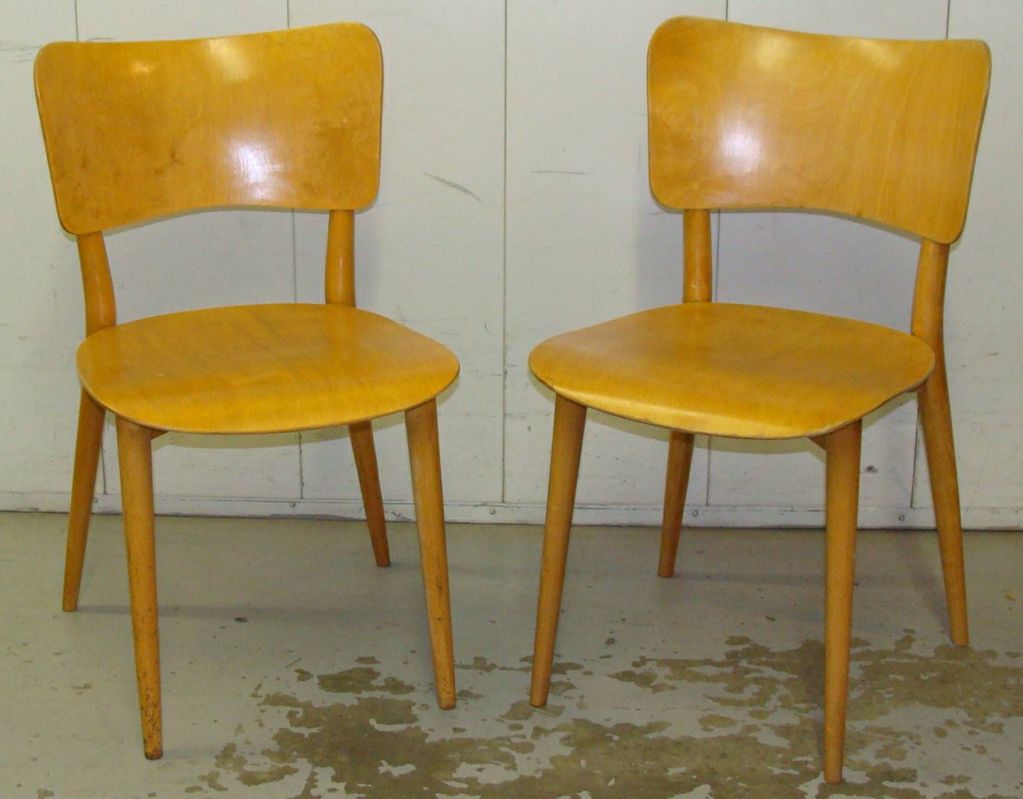
Pair of Chairs by Max Bill
Located in Lambertville, NJ
Pair of molded plywood chairs designed by Max Bill for Horgen - Glarus, Switzerland.
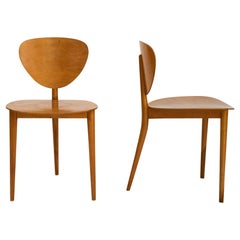
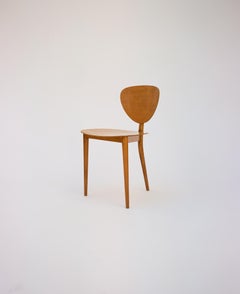
Max Bill Tripod Chair, 1949
By Horgen-Glarus, Max Bill
Located in Los Angeles, CA
Tripod chairs (“Dreibeinstuhl”) by Max Bill designed in 1949, produced by Swiss manufacturer AG
Beech, Plywood

Sold
H 33.47 in W 16.15 in D 16.54 in
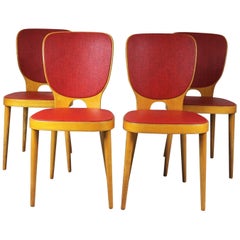
Max Bill, Set of Four Chairs Manufactured by Horgen Glarus, Switzerland 1952
By Horgen-Glarus, Max Bill
Located in Cimelice, Czech republic
Set of four chairs designed by Max Bill in 1952, manufactured by Horgen Glarus, Switzerland. Lit
Faux Leather, Beech
$1,650 / item
H 16.1 in Dm 11.5 in
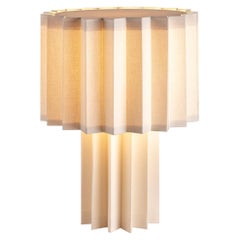
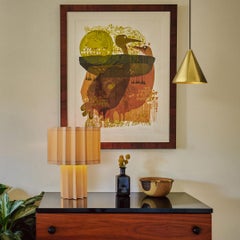
'Plissé White Edition' Pleated Textile Table Lamp by Folkform for Örsjö
By Örsjö Industri AB
Located in Glendale, CA
'Plissé White Edition' pleated textile table lamp by Folkform for Örsjö. This unique table lamp was awarded “Lighting of the Year 2022” by Residence Magazine Sweden, who called it “...
Textile
Max Bill was born in Winterthur, Switzerland. After an apprenticeship as a silversmith during 1924–27, he took up studies at the Bauhaus in Dessau under many teachers including Wassily Kandinsky, Paul Klee and Oskar Schlemmer from 1927 to 1929, after which he moved to Zurich.
After working on graphic designs for the few modern buildings being constructed, Bill built his first work, his own house and studio (1932–3) in Zurich-Höngg. From 1937 onward he was a prime mover behind the Allianz group of Swiss artists.
Bill is widely considered the single most decisive influence on Swiss graphic design beginning in the 1950s with his theoretical writing and progressive work. His connection to the days of modernism gave him special authority. As an industrial designer, his work is characterized by a clarity of design and precise proportions. Examples are the elegant clocks and watches designed for Junghans, a long-term client. Among Bill's most notable product designs is the Ulmer Hocker of 1954, a stool that can also be used as a shelf element, a speaker's desk, a tablet or a side table. Although the stool was a creation of both Bill's and Ulm School designer Hans Gugelot's, it is often called "Bill Hocker" because the first sketch of it on a cocktail napkin was Bill's work.
As a designer and artist, Bill sought to create forms which visually represent the New Physics of the early 20th century. He sought to create objects so that the new science of form could be understood by the senses: that is as a concrete art. Thus Bill is not a rationalist – as is typically thought – but rather a phenomenologist. He made spare geometric paintings, prints and spherical sculptures, some based on the Möbius strip, in stone, wood, metal and plaster. His architectural work included an office building in Germany, a radio studio in Zurich, and a bridge in eastern Switzerland.
Bill continued to produce architectural designs, such as those for a museum of contemporary art (1981) in Florence and for the Bauhaus Archive (1987) in Berlin. In 1982 he also entered a competition for an addition to the Neue Nationalgalerie in Berlin, built to a design by Ludwig Mies van der Rohe. Pavillon-Skulptur, a large granite sculpture, was installed adjacent to the Bahnhofstrasse, Zürich in 1983. As is often the case with modern art in public places, the installation generated some controversy. Endlose Treppe, a sculpture made of North American granite, was designed for the philosopher Ernst Bloch.
In 1982 he was awarded the Sir Misha Black award and was added to the College of Medallists.
Bill executed many public sculptures in Europe and exhibited extensively in galleries and museums, including a retrospective at the Kunsthaus Zürich in 1968–69. He was the subject of retrospectives at the Albright-Knox Art Gallery in Buffalo and the Los Angeles County Museum of Art in 1974, and the Solomon R. Guggenheim Museum in New York City in 1988.
Find vintage Max Bill stools, lighting, and other furniture on 1stDibs.
With entire areas of our homes reserved for “sitting rooms,” the value of quality antique and vintage seating cannot be overstated.
Fortunately, the design of side chairs, armchairs and other lounge furniture — since what were, quite literally, the early perches of our ancestors — has evolved considerably.
Among the earliest standard seating furniture were stools. Egyptian stools, for example, designed for one person with no seat back, were x-shaped and typically folded to be tucked away. These rudimentary chairs informed the design of Greek and Roman stools, all of which were a long way from Sori Yanagi's Butterfly stool or Alvar Aalto's Stool 60. In the 18th century and earlier, seats with backs and armrests were largely reserved for high nobility.
The seating of today is more inclusive but the style and placement of chairs can still make a statement. Antique desk chairs and armchairs designed in the style of Louis XV, which eventually included painted furniture and were often made of rare woods, feature prominently curved legs as well as Chinese themes and varied ornaments. Much like the thrones of fairy tales and the regency, elegant lounges crafted in the Louis XV style convey wealth and prestige. In the kitchen, the dining chair placed at the head of the table is typically reserved for the head of the household or a revered guest.
Of course, with luxurious vintage or antique furnishings, every chair can seem like the best seat in the house. Whether your preference is stretching out on a plush sofa, such as the Serpentine, designed by Vladimir Kagan, or cozying up in a vintage wingback chair, there is likely to be a comfy classic or contemporary gem for you on 1stDibs.
With respect to the latest obsessions in design, cane seating has been cropping up everywhere, from sleek armchairs to lounge chairs, while bouclé fabric, a staple of modern furniture design, can be seen in mid-century modern, Scandinavian modern and Hollywood Regency furniture styles.
Admirers of the sophisticated craftsmanship and dark woods frequently associated with mid-century modern seating can find timeless furnishings in our expansive collection of lounge chairs, dining chairs and other items — whether they’re vintage editions or alluring official reproductions of iconic designs from the likes of Hans Wegner or from Charles and Ray Eames. Shop our inventory of Egg chairs, designed in 1958 by Arne Jacobsen, the Florence Knoll lounge chair and more.
No matter your style, the collection of unique chairs, sofas and other seating on 1stDibs is surely worthy of a standing ovation.