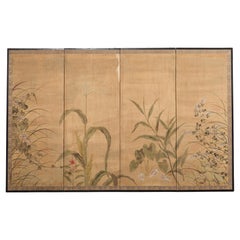
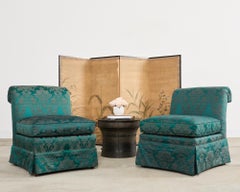
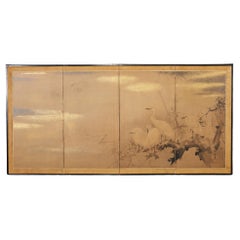
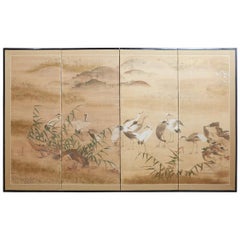
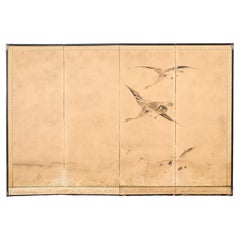
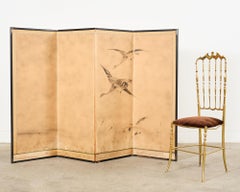
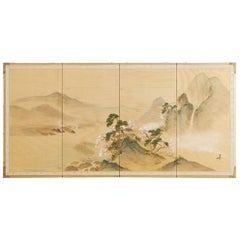
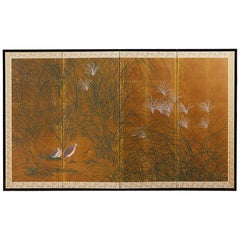
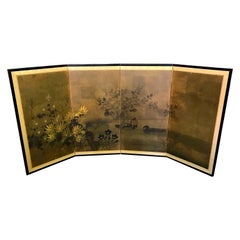
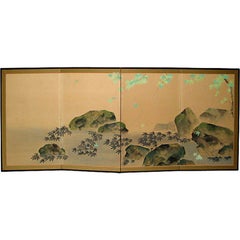
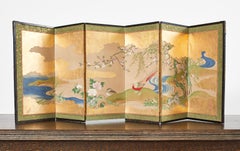
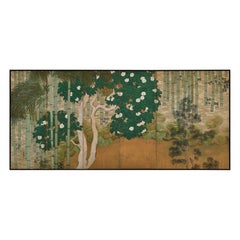
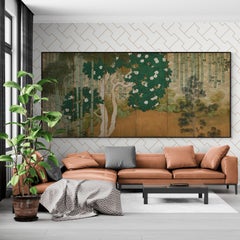
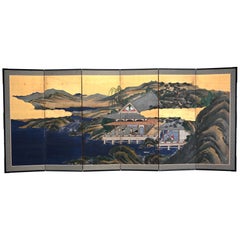
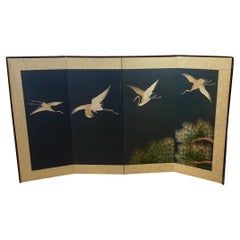
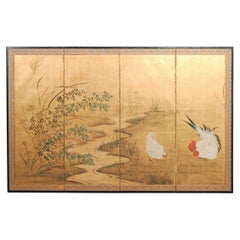
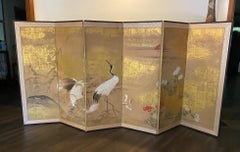
Japanese Meiji Four Panel Screen Wild Geese Over Reeds
Located in Rio Vista, CA
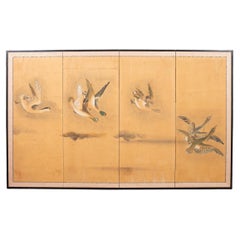
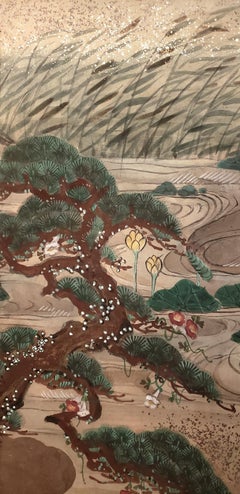
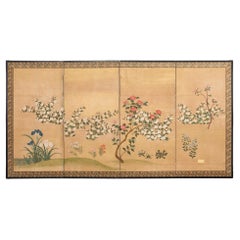
Muromachi period inspired Japanese four panel byobu screen depicting wild geese in flight over
Antique 19th Century Japanese Meiji Paintings and Screens
Brass
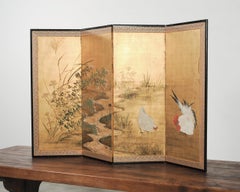
Japanese Meiji Four Panel Screen Wild Geese Over Reeds
Located in Rio Vista, CA
Muromachi period inspired Japanese four panel byobu screen depicting wild geese in flight over
Brass
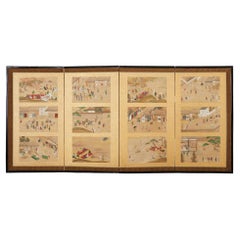
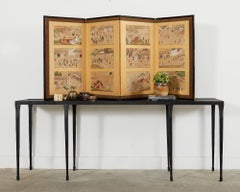
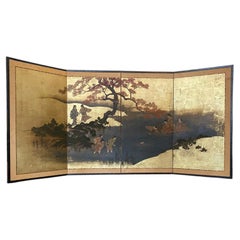
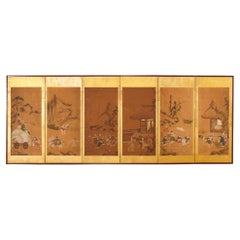
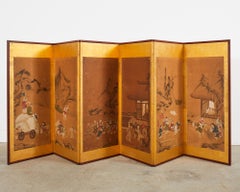
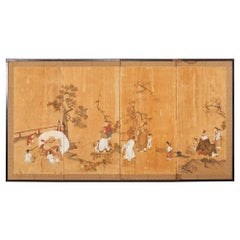
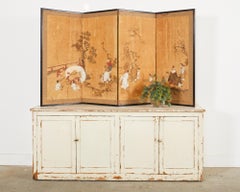
19th Century Japanese Meiji Four Panel Screen Festival Scenes
Located in Rio Vista, CA
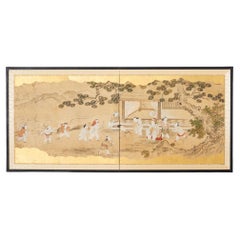
Colorful late 19th century late Meiji period four-panel byobu screen featuring 12 scenes of a
Brass
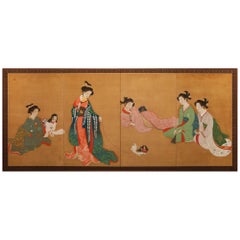
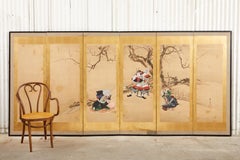
Meiji Period Japanese Four Panel Screen Bijin At Leisure
Located in Hudson, NY
Japanese four panel screen: Bijin At Leisure. Ladies in a tea house with a small dog. Seal reads
Silk, Wood
$2,172
H 35.44 in W 43.31 in D 1.58 in
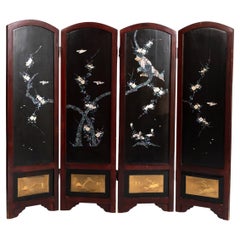
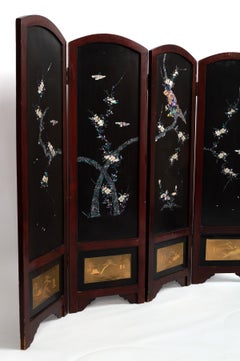
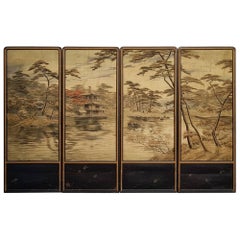
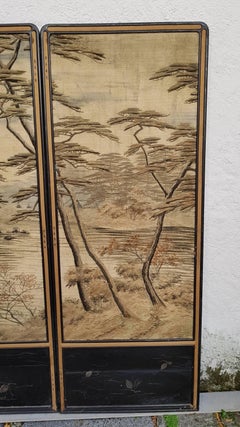
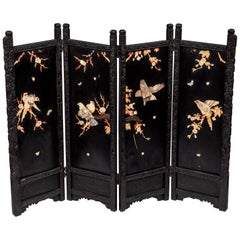
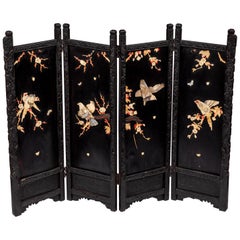
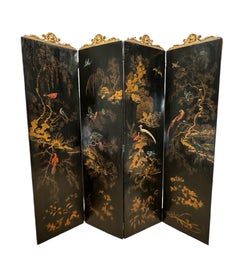
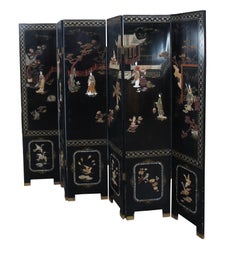
19th Century Shibayama Four Panel Screen Meiji Period Japan, C.1880
Located in London, GB
19th century Shibayama four Panel screen Meiji Period Japan C.1880 Mother of pearl inlay in
Mother-of-Pearl, Wood, Lacquer
$14,000
H 30 in W 71 in D 2 in
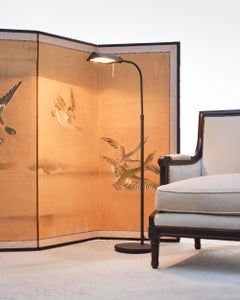
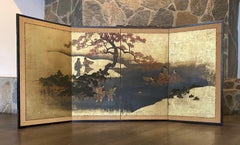
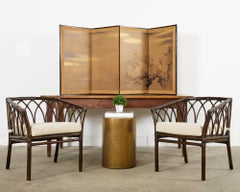
Japanese Meiji Period Four-Panel Screen w Flying Cranes and Landscape, Ca. 1900
Located in New York, NY
Japanese Meiji Period Four-Panel Screen with Flying Cranes and Landscape, Ca. 1900
Wood
Meiji Period Japanese Peacock Four Hanging Panels
Located in Los Angeles, CA
Meiji Era superlative folding screen representing a peacock marching along near flowers, silk with
Silk, Glass, Wood
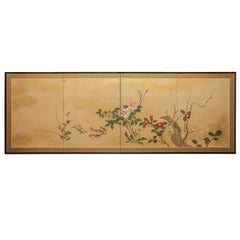
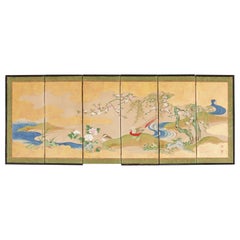
Japanese Four Panel Screen: Early Spring Into Summer
Located in Hudson, NY
Japanese Four Panel Screen: Early Spring Into Summer, Meiji period (1868 -1912) painting of plum
Gold Leaf
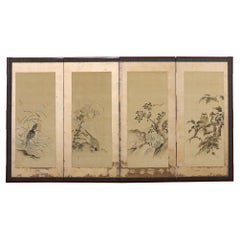
Japanese Kano School Four Panel Screen Birds and Owl
Located in Rio Vista, CA
Amazing 19th century Japanese Meiji period four-panel byobu screen featuring painted panels
Gold Leaf
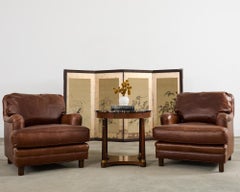
Antique Japanese Hand-Painted Four-Panel Folding Table Screen
Located in Miami, FL
Antique Japanese hand-painted four-panel folding table screen depicting birds, bamboo and flowering
Paper, Silk, Wood
Japanese Meiji Four Panel Screen After Tawaraya Sotatsu
Located in Rio Vista, CA
Fascinating late 19th century Japanese Meiji period four panel folding byobu screen. Made in the
Brass
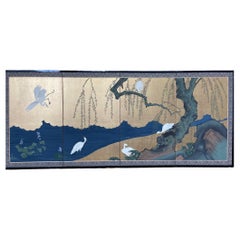
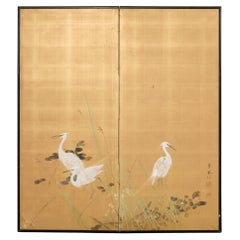
Japanese Meiji Four Panel Screen White Egrets in Winter Landscape
Located in Rio Vista, CA
Late 19th century serene Japanese Meiji period four panel folding byobu screen featuring a flock of
Silk, Wood, Paper
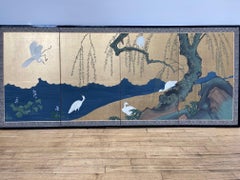
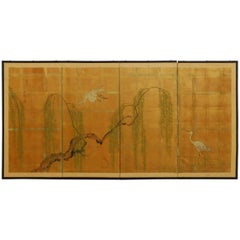
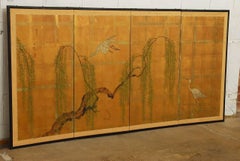
Japanese Four-Panel Byobu Screen of Cranes and Willow on Gold Leaf
Located in Rio Vista, CA
Early 20th century Japanese Meiji four-panel screen featuring cranes and a willow tree. Painted on
Brass, Gold Leaf
Japanese Meiji Four-Panel Moriage Style Chrysanthemum Screen
Located in Rio Vista, CA
Dramatic early 20th century Japanese late Meiji period Byobu screen featuring painted
Brass
Sold
H 68.12 in W 64.18 in D 0.79 in
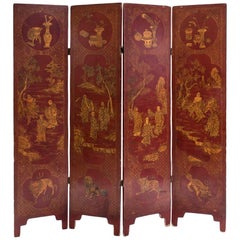
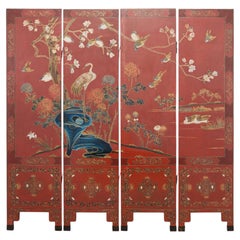
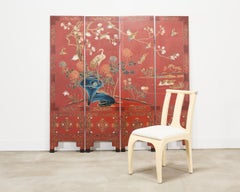
Red Japanese Lacquer Four-Panels Folding Screen, Meiji Period, 1868-1912
Located in Saint-Ouen, FR
Red Japanese lacquer four panels folding screen "{yonkyoku byobu}". The panels are decorated with
Lacquer
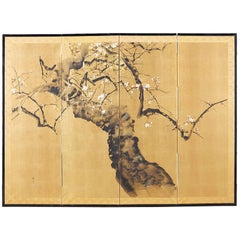
Japanese Four Panel Screen Flowering Prunus Tree
Located in Rio Vista, CA
Impressive Japanese four panel screen depicting ancient flowering prunus tree with spring blossoms
Brass
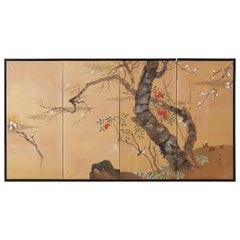
Japanese Four-Panel Screen Prunus Tree with Nandina
Located in Rio Vista, CA
Colorful Japanese four-panel screen depicting a prunus tree with a songbird perched in a red
Wood, Paper
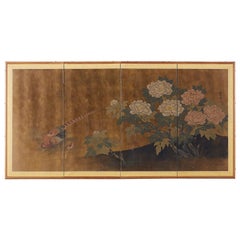
Japanese Four-Panel Showa Screen Pheasant and Peonies
Located in Rio Vista, CA
Charming Japanese Showa period four-panel screen depicting a pheasant and her chicks next to blooms
Silk, Wood, Paper
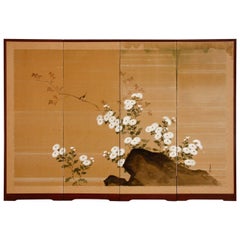
Japanese Four Panel Silk Byobu Screen of Chrysanthemums
Located in Rio Vista, CA
Vintage Japanese four panel silk Byobu screen of delicate chrysanthemums and a small bird. Features
Brass
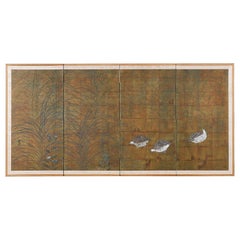
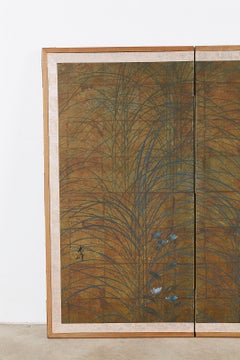
Japanese Four-Panel Screen Quail in Autumn Landscape
Located in Rio Vista, CA
Serene Japanese four-panel byobu screen depicting three quail in an autumn landscape with eulalia
Brass
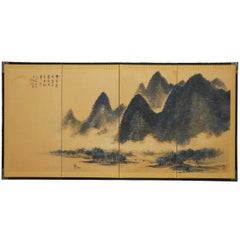
Japanese Four-Panel Blue Mountain Landscape Byobu Screen
Located in Rio Vista, CA
Dramatic Japanese four-panel landscape byobu screen featuring a blue mountain landscape scene
Brass
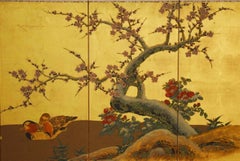
Japanese Four Panel Screen of Ducks and Prunus on Gold Leaf
Located in Rio Vista, CA
Colorful Japanese four panel byobu folding screen depicting a pair of ducks near a prunus blossom
Gold Leaf
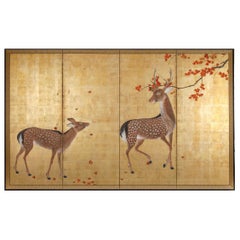
Japanese Four Panel Screen Buck and Doe with Autumn Maple on Gold
Located in Hudson, NY
Japanese four panel screen: Buck and doe with autumn maple on gold. Late Meiji period (1868-1912
Gold Leaf
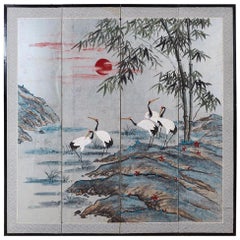
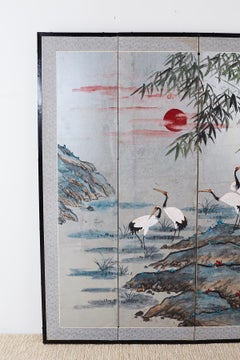
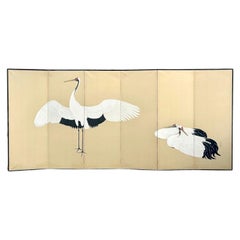
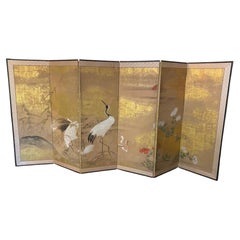
Japanese Meiji Period Screen of Red-Crowned Cranes
Located in Rio Vista, CA
Impressive Japanese four-panel Meiji period screen depicting a landscape scene with cranes
Brass
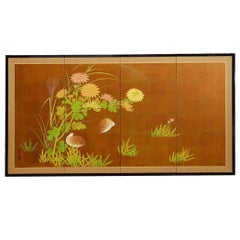
Japanese Four-Panel Byobu Screen of Quail and Flowers
Located in Rio Vista, CA
Beautiful Japanese four-panel Byobu screen featuring Japanese quail and spring flowers on a gilt
Silk, Wood, Paint, Paper
Sold
H 4.75 in W 8.75 in D 0.25 in
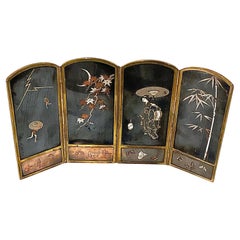
Bronze Mixed Metal Japanese Meiji Era Four Panel 2 Sided Table Screen Signed
Located in Ann Arbor, MI
A good Japanese bronze and shakudo miniature table screen, Meiji period, each panel in a gilt
Bronze
Weathered Japanese Meiji Four Panel Screen Tale of Genji
Located in Rio Vista, CA
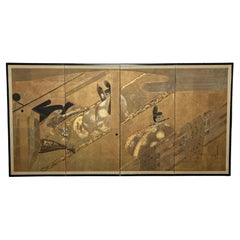
Beautifully aged and weathered late 19th century Japanese Meiji period four-panel byobu screen
Silk, Wood, Paper
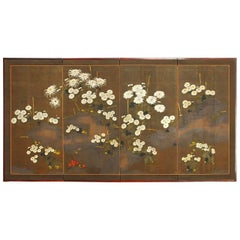
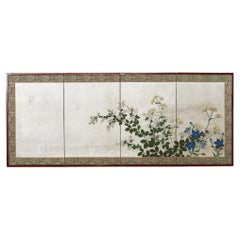
Japanese Meiji Four Panel Screen Chrysanthemums Along a Fence
Located in Rio Vista, CA
Extraordinary Japanese late Meiji period four panel screen depicting colorful chrysanthemums
Brass, Silver Leaf
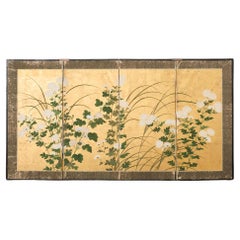
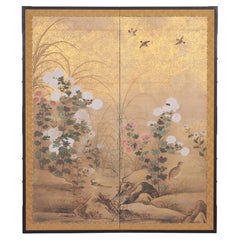
Japanese Meiji Four Panel Screen Flowering Grasses of Autumn
Located in Rio Vista, CA
Remarkable late 19th century Meiji period Japanese four panel byobu screen featuring the flowering
Silver Leaf
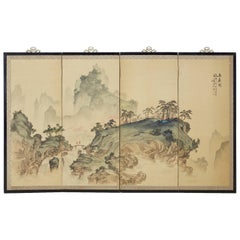
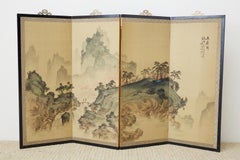
Japanese Meiji Period Four-Panel Landscape Screen
Located in Rio Vista, CA
Dramatic Japanese late Meiji early Showa period landscape screen titled Mountain Residence. Ink and
Brass
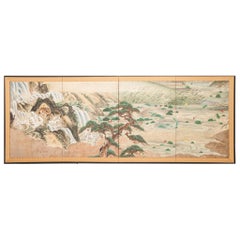
Japanese Four-Panel Screen Water Landscape
Located in Hudson, NY
Japanese four-panel screen: Water landscape, Meiji period (1868-1912) painting of a waterfall on
Silver Leaf
Japanese Four-Panel Byobu Gilt Landscape Screen
Located in Rio Vista, CA
Large Japanese four-panel Byobu screen featuring a painted mountain landscape on a gilt background
Brass
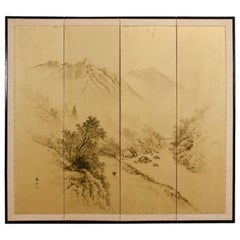
Japanese Four-Panel Silk Landscape Byobu Screen
Located in Rio Vista, CA
Exceptional Japanese four-panel Byobu screen of a mountain landscape painted on silk. The
Brass
Japanese Four-Panel Flowers of Autumn Byobu Screen
Located in Rio Vista, CA
Gorgeous Japanese four-panel byobu screen depicting colorful flowers of autumn. Chrysanthemum (kiku
Silk, Paper, Wood
Japanese Four-Panel Screen Winter Pine with Ducks
Located in Rio Vista, CA
Unique Japanese four-panel screen depicting a cool winter landscape with pine, prunus, and bamboo
Silk, Glass, Paper, Wood
Japanese Four-Panel Kano School Manchurian Crane Screen
Located in Rio Vista, CA
Colorful Japanese four-panel screen made in the kano school style depicting five Manchurian cranes
Silver Leaf, Brass
Japanese Four-Panel Painted Silk Landscape Byobu Screen
Located in Rio Vista, CA
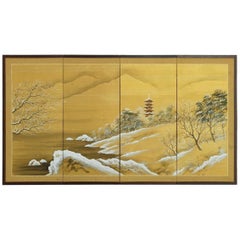
Idyllic Japanese four panel painted silk Byobu screen depicting a snow covered landscape with a
Brass
Hand Painted Four Panel Japanese Byobu Screen Circa 1960s
Located in Peabody, MA
A hand painted Japanese byobu screen of four panels, ca. 1960s, depicting an abstract assemblage of
Paint
Japanese Showa Period Floral Foliate Four-Panel Screen
Located in Rio Vista, CA
Captivating Japanese Showa four-panel byobu screen depicting a floral and foliate scene
Brass
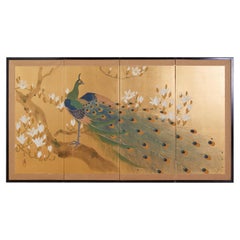
Japanese Four Panel Screen Peacock and Flowering Magnolia
Located in Rio Vista, CA
Gorgeous Japanese four-panel byobu screen featuring a peacock perched in a flowering magnolia tree
Silk, Wood, Paint, Paper
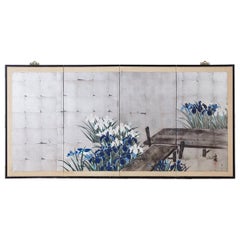
Japanese Four Panel Screen Irises on Silver Leaf
Located in Rio Vista, CA
Fantastic Japanese four panel Byobu screen featuring hand painted irises on squares of metallic
Brass, Silver Leaf
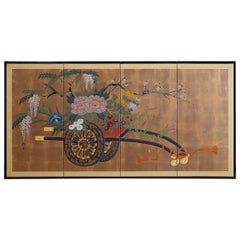
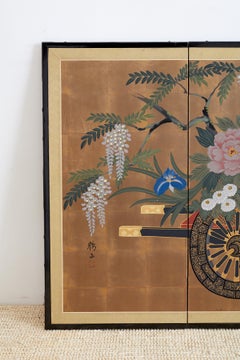
Japanese Four Panel Screen Gold Leaf Flower Cart
Located in Rio Vista, CA
Lovely Japanese four-panel Byobu screen featuring a vibrant and colorful flower cart painted on
Gold Leaf, Brass
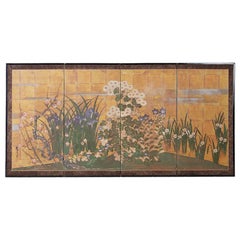
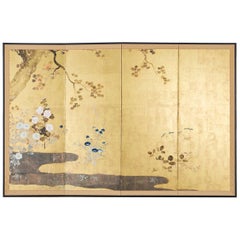
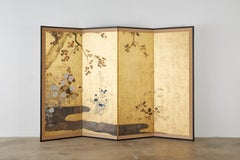
Japanese Four-Panel Rimpa Screen Floral Autumn Landscape
Located in Rio Vista, CA
Magnificent Japanese four-panel 19th century Meiji screen. Made in the Rimpa School style depicting
Brass, Gold Leaf, Silver Leaf
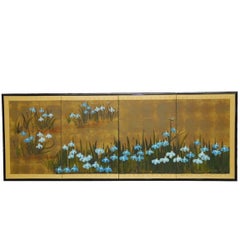
Japanese Four-Panel Byobu Screen of Irises on Gilt
Located in Rio Vista, CA
Colorful Japanese four-panel byobu screen featuring watercolor painted irises on gilt background
Brass
Japanese Four-Panel Byobu Screen of Quail in Grass
Located in Rio Vista, CA
Charming Japanese four-panel byobu screen depicting two young quail in Eulalia grasses. Beautifully
Gold Leaf, Brass
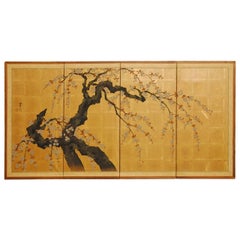
Japanese Four-Panel Byobu Screen Sakura Cherry Blossom Tree
Located in Rio Vista, CA
Dramatic Japanese four-panel Byobu screen featuring a large Sakura or cherry blossom tree on
Silk, Wood, Paint, Paper
Japanese Edo Four Panel Screen Flowering White Chrysanthemums
Located in Rio Vista, CA
19th century extraordinary Japanese late Edo/early Meiji period four-panel byobu screen featuring
Brass, Gold Leaf
Sold
H 36 in W 72 in D 1 in
Japanese Asian Signed Four-Panel Folding Byobu Screen Ducks on Pond 19th Century
Located in Studio City, CA
A gorgeous four-panel Japanese Byobu folding screen depicting two ducks on a tranquil pond with
Gold Leaf
Sold
H 30 in W 48 in D 0.75 in
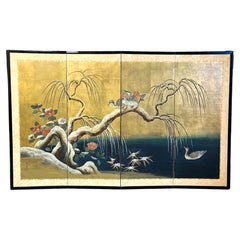
Antique Japanese Four Panel Byobu Screen: Mandarin Ducks by Snowy Pond in Early
Located in Sheridan, CO
Antique Japanese Four Panel Byobu Screen: Mandarin Ducks by Snowy Pond in Early Spring. Kano School
Metal, Gold Leaf
Japanese Screen, Four Panels Japanese Screen on Spring Gold Leaf
By Japanese Studio
Located in Brescia, IT
Spring landscape by an unknown painter of the Rinpa school, XX th century, six-panel ink painted on
Gold Leaf
Sold
H 67.33 in W 97.64 in D 0.79 in
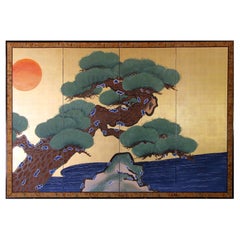
Japanese Folding Screen four Panels painted on gold leaf -Japanese Byobu
By Japanese Studio
Located in Brescia, IT
Japanese Kano school four-panel screen, with pine trees near the sea kissed by the sun. Hand
Gold Leaf
Japanese Maple Leaf Screen
Located in San Francisco, CA
Antique Japanese Meiji-period four-panel signed byobu (screen). Signature of the artist in the
Japanese Embroidered Silk Four-Panel Folding Screen
Located in Locarno, CH
Beautiful Japanese folding screen from the Meiji period (1868-1912). The structure is made in
Wood, Silk
$750,000
H 132 in W 87.5 in D 8 in
Raimundo de Madrazo y Garreta Palatial Oil on Canvas Portrait Isabelle McCreery
By Raimundo de Madrazo y Garreta
Located in LA, CA
Raimundo De Madrazo y Garreta (Spanish School, 1841-1920) an exceptional and palatial oil on canvas "Portrait of Isabelle McCreery” depicting an elegant woman gracefully exiting a li...
Oil
Geometric Mid Century Open Bookcase
Located in Westwood, NJ
Finished in Batavia Black with a Sandbar finish interior, this bookcase showcases rhythmic, crescent-shaped oval cut-outs that form an architectural silhouette—an homage to the sculp...
Wood
Pair of Constant Night Stands in Oak Wood by Master for Lemon
By Lemon
Located in Amsterdam, NL
Envisioned by designer Yaniv Chen, the Constant nightstand exudes an air of refined luxury, celebrating the inherent splendor of wood. Meticulously crafted with impeccable proportion...
Oak
Murano Glass Smoked “Macchie” Sconces
Located in Austin, TX
Pair of Murano sconces in smoked and silver glass. We loved the organic shape of the sconces and their dynamic design. This pair has been newly wired to fit US standards and is in ve...
Murano Glass
$4,800
H 48 in W 45 in D 2 in
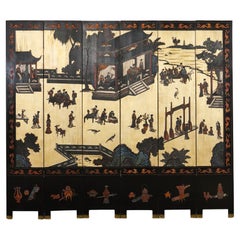
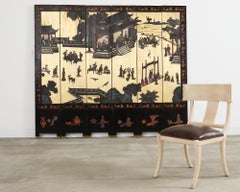
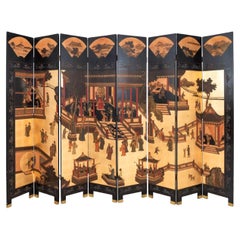
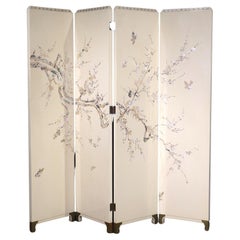
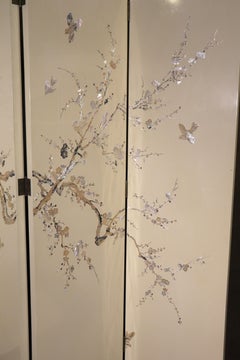
Pair of Four-Panel Reversible French Chinoiserie Coromandel Screens Paris, 1920s
Located in Miami, FL
Eight-Panel Reversible Chinese Coromandel Screen Pair of French chinoiserie screens, Paris, 1920s This French chinoiserie screens from the 1920s are composed of four panels richly ...
Wood, Mother-of-Pearl
Bertu Counter Stools, White Oak Counter Stool, Chile Stool
By Bertu Furniture
Located in Oak Harbor, OH
Bertu Counter Stools, White Oak Counter Stool, Chile Stool This White Oak Chile Counter Stool is beautifully constructed from solid wood in Ohio, USA. The stool is chunky and modern...
Wood, Oak
$16,000 / set
H 24.02 in W 26.78 in D 33.86 in
Mid-Century Modern Pair of "Cubo" Armchairs by Jorge Zalszupin, Brazil, 1960s
By Jorge Zalszupin
Located in Deerfield Beach, FL
Mid-Century Modern Pair of "Cubo" Armchairs by Jorge Zalszupin, Brazil, 1960s Created by renowned Brazilian designer Jorge Zalszupin circa 1960, the "Cubo" - or Cube - armchair is s...
Fabric, Plywood
Japanese Old Iron Block 1950s-1970s / Display stand Wabi Sabi
Located in Chōsei District Nagara, JP
This is an old Japanese iron block, estimated to have been made in the early Showa period (1950s–1970s). At the time, it was used in ironworks as an anvil or workbench. Decades of us...
Iron
Edo Period Samurai Suit Of Armor
Located in New Orleans, LA
This exquisite Tetsusabiji Uchidashi Gomai Dou Gusoku (Five-Plate Russet Iron Embossed Cuirass Armor), crafted in the 18th century, exemplifies the pinnacle of Edo-period samurai arm...
Copper, Iron
$1,502,373
H 34.65 in W 39.57 in D 21.26 in
17th Century Japanese Export Lacquer Cabinet with Depiction the Dutch Tradepost
Located in Amsterdam, NL
A highly important Japanese export lacquer cabinet with depiction of the Dutch East India Company tradepost Deshima and the annual Dutch delegation on its way to the Shogun in Edo ...
Copper, Gold
$6,400
H 27 in W 35 in D 32 in
Viggo Boesen Style 1940s Danish Low Club or Lounge Chair in Pearl Sheepskin
By Flemming Lassen, Viggo Boesen
Located in Bridgeport, CT
Comfortable, exuberant, and ultracool Danish lounge chair from the 1930-40's. These type of chairs were produced as companions to the curved "banana" sofas coming out of the of the ...
Beech, Sheepskin
Large Stained Glass Window 32" x 52"
Located in Brooklyn, NY
Antique brownstone window with yellow tinted glass and beautiful leaded designs. Currently housed in a wooden frame - the overall dimensions are for the stained glass and the frame. ...
Lead
$6,325
H 71.5 in W 47.5 in D 22.5 in
Chinese Black Lacquer Cabinet with Painted Landscape and Floral Motifs
Located in Yonkers, NY
A Chinese cabinet from the late Qing Dynasty, crafted in the early 20th century, retaining its original dark brown/black lacquer and hand-painted decoration. The rectangular form is ...
Wood
$180,284
H 45.28 in W 56.3 in D 17.33 in
Italian Art Deco Bar Cabinet in Parchment with Inlays Signed by Anzani, 1930s
By Giuseppe Anzani
Located in Meda, MB
This bar cabinet was produced in Italy, in the late 1930s and is a really unique and special piece. Its tremendous historical and artistic value is what makes this item a real piece...
Glass, Mirror, Wood, Maple, Walnut, Parchment Paper
$300
H 67.72 in W 35.44 in D 0.79 in
Chinese Painting on Scroll Paper, China 19th Century, Birds and Nature Decor
Located in Auribeau sur Siagne, FR
Chinese painting on paper, which is unrolled once hung on the wall. It is a painting that depicts birds in nature, in the style of the 18th century. This painting is from the 19th ce...
Paper
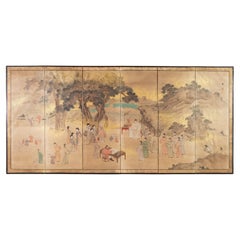
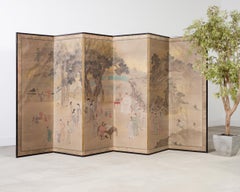
Japanese Meiji Eight Panel Screen Village Landscape with Figures
Located in Rio Vista, CA
Large 19th century Japanese Meiji period eight panel byobu screen featuring a panoramic village landscape. The serene painting depicts agricultural scenes with villagers engaged in p...
Gold Leaf
From 1868 to 1912, Emperor Mutsuhito oversaw an era of transformation in Japan. Formerly a country of feudalism and isolation, Japan entered an age of modernization influenced by newly established trade and exchange with the West. The Meiji period, or period of “enlightened rule,” also saw the global impact of the East Asian country’s culture. Japanese Meiji furniture was exhibited at expositions from Paris to San Francisco and created for export.
Prior to the Meiji era, furniture was mostly made by commission for the ruling class; now there were new domestic and international markets. European styles like Japonisme appropriated Japanese design while craftsmen in places like Wales and England employed japanning, a varnishing technique that approximated the appearance of lacquer for the surfaces of furnishings.
Meiji furniture made for Japanese homes and buildings constructed in Western styles resulted in taller tables, chairs, cabinets with large drawers and other features. The government invested in areas such as transportation and communication, and because people could freely choose occupations after the restrictions of feudalism, industries of various types were energized by expressive new ideas during those years. Art schools were formed and, for the first time, design was an area of study in the country, leading to the evolution of professional design as a career by the 1890s.
The work of Japanese designers was transmitted widely through lavishly illustrated pattern books that included designs for screens and lacquerware for the home. While screens today may be of use as decorative accents or partitions to ensure privacy in one’s space, Japanese screens were adorned with paintings and were featured in performing arts such as concerts, tea ceremonies and more. The color illustrations that characterize Meiji woodblock prints, a genre of Japanese art that grew out of 17th-century developments in printing and book publishing, depicted the sweeping changes that the era brought to East Asia.
Although it was a time of societal and cultural shifts, a bolstered interest in art and design elevated Japanese craft traditions. From colorful porcelain table lamps with silk shades and hardwood tables decorated with dark lacquer to cabinets featuring iron hardware and inlaid with mother-of-pearl, Meiji furniture showcased Japan’s artistic heritage to the world.
Find a collection of antique Japanese Meiji period case pieces and storage cabinets, decorative objects, wall decorations and more furniture on 1stDibs.
Traditional Asian paintings were often created on scrolls and folding screens. Artisans made screens that could be folded up or spread out by connecting several panels using hinges. Today, antique Asian folding screens and paintings are sophisticated decorative accents that can serve as makeshift partitions to ensure privacy.
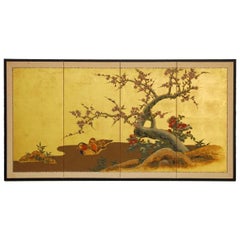
The original folding screens were created by Chinese artists. The earliest record of screens comes from the 2nd century B.C., and surviving examples date back to the Ming dynasty. Chinese painting utilizes many of the same tools as calligraphy — these screens were crafted from wood with painted panels featuring striking art or calligraphy that told cultural stories or represented nature and life in the area.
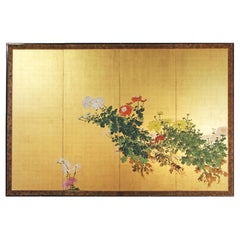
The practice was introduced to Japan, where paintings for screens were made on paper and silk, in the 8th century. These paintings frequently feature subjects such as landscapes, animals, flowers and Buddhist religious themes. Along with screens for tea ceremonies and dance backgrounds, there were screens for use in Shinto and Buddhist temples.
In the 17th century, screens began to be imported to Europe where their popularity grew. Coco Chanel famously collected Coromandel folding screens.
Traditional Asian paintings can make a tasteful addition to any wall, and screens can be used as decoration or, in the case of larger iterations, as an aesthetic way to divide a large room. Browse the selection of antique Asian paintings and screens from a variety of styles and eras on 1stDibs.