Meiji Era Screen

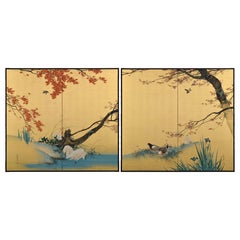
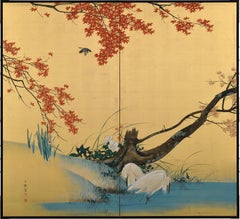
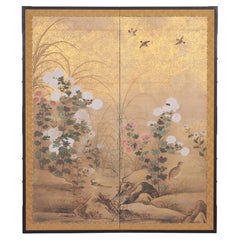
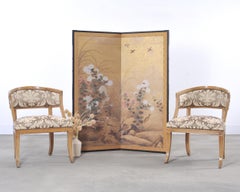
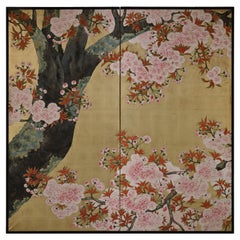
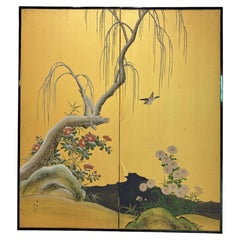
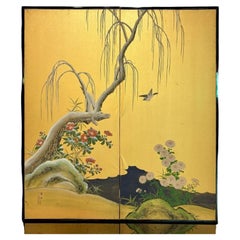
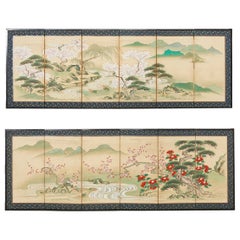
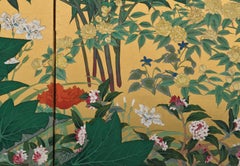
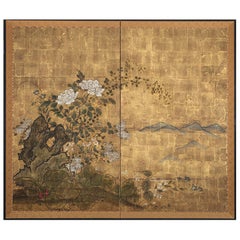
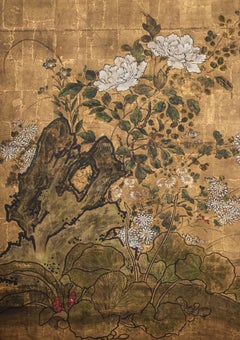
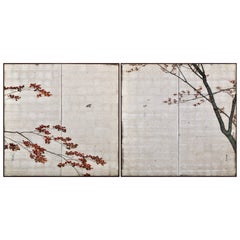
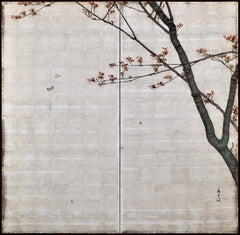
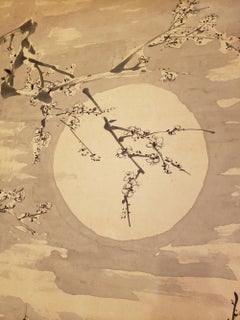
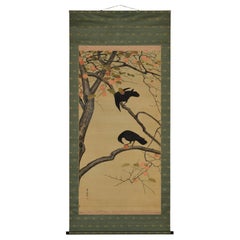
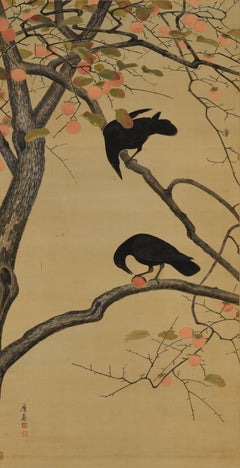
Meiji era Japanese Screen Pair, Two-panel. Spring & Autumn Birds & Flowers.

Meiji era Japanese Screen Pair, Two-panel. Spring & Autumn Birds & Flowers.

Located in Kyoto, JP

Spring and Autumn Birds & Flowers Hasegawa Gyokujun (1863-1921) Meiji period, circa 1900. Ink

Category

Early 20th Century Japanese Meiji Paintings and Screens

Materials

Gold Leaf

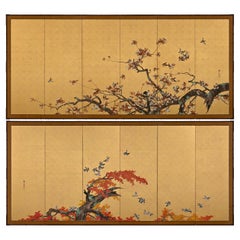
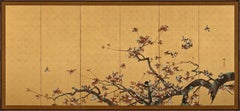
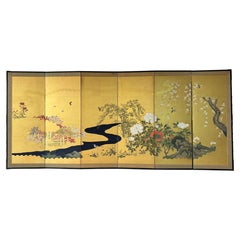
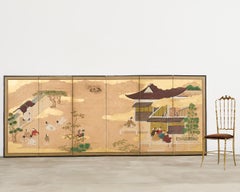
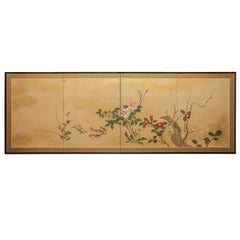
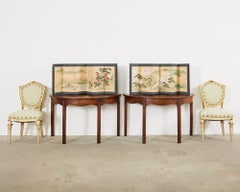
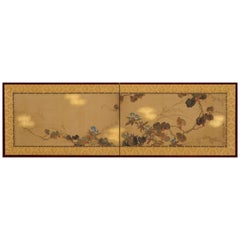
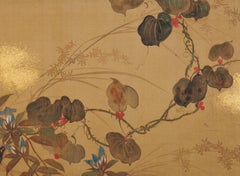
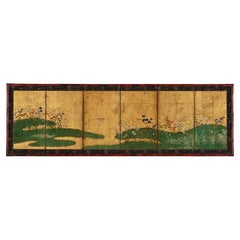
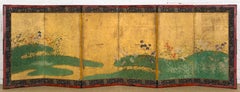
Meiji Era, Circa 1900 Japanese Screen Pair, Flowers & Birds of Spring & Autumn

Meiji Era, Circa 1900 Japanese Screen Pair, Flowers & Birds of Spring & Autumn

Located in Kyoto, JP

) A pair of six-fold Japanese flower and bird screens from the late Meiji period. The cherry blossom

Category

Antique 1890s Japanese Meiji Paintings and Screens

Materials

Gold Leaf

Meiji Period Japanese Peacock Four Hanging Panels

Meiji Period Japanese Peacock Four Hanging Panels

Located in Los Angeles, CA

Meiji Era superlative folding screen representing a peacock marching along near flowers, silk with

Category

Antique Late 19th Century Japanese Paintings and Screens

Materials

Silk, Glass, Wood

Recent Sales

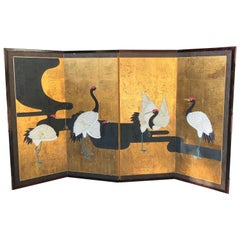
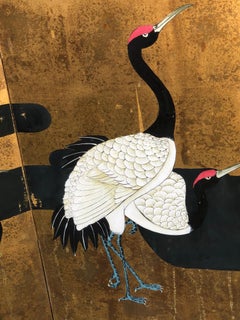
Meiji Era Cranes along a River Japanese Screen Grues Aux Bords D'une Riviere

Meiji Era Cranes along a River Japanese Screen Grues Aux Bords D'une Riviere

Located in Sarasota, FL

. Anonymous artist (Japan, meiji era, 19th century) CRANES ALONG A RIVER Grues aux bords d'une riviere

Category

Antique Mid-19th Century Japanese Meiji Paintings and Screens

Materials

Gold Leaf

Japanese Silk Fan, Meiji Era Japan

Japanese Silk Fan, Meiji Era Japan

Unavailable

H 0.91 in W 17.72 in D 9.45 in

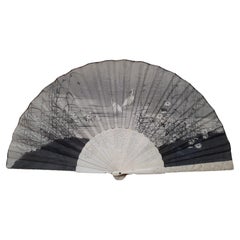
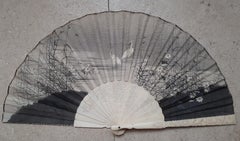
Japanese Silk Fan, Meiji Era Japan

Located in Saverne, Grand Est

Precious silk fan painted with ink and embroidered, decorated with cranes in a lake landscape. The strands are in finely carved bone decorated with peonies. Gold signature on the rev...
Category

Antique Late 19th Century Japanese Meiji Paintings and Screens

Materials

Bone, Silk

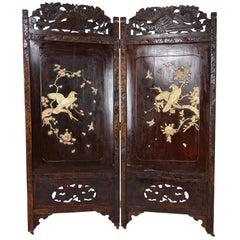
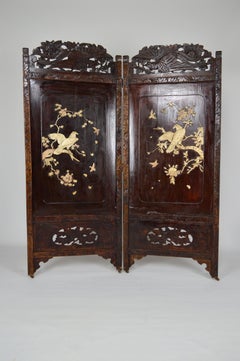
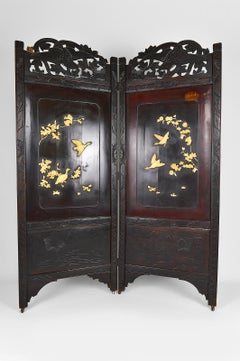
Shibayama Inlaid & Carved Folding Screen, "Eagles", Japan, Meiji Era, circa 1890

Shibayama Inlaid & Carved Folding Screen, "Eagles", Japan, Meiji Era, circa 1890

Located in L'Etang, FR

other side the panels are painted / lacquered, we see a landscape. Shibayama Art, Japan, Meiji Era

Category

Antique 1890s Japanese Meiji Screens and Room Dividers

Materials

Bone, Wood

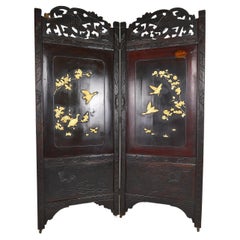
Shibayama Art, Meiji Era, Ebonized Wood, Lacquer, Two Panel Screen, Japan, 1890s

Shibayama Art, Meiji Era, Ebonized Wood, Lacquer, Two Panel Screen, Japan, 1890s

Located in Stamford, CT

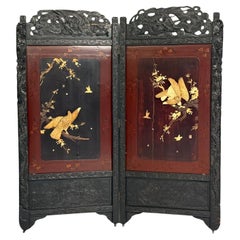
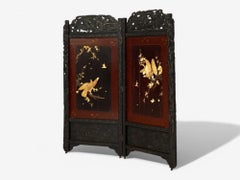
Shibayama Art, Meiji Era, Ebonized Wood, Lacquer, Japanese Two Panel Screen, Room Divider, Japan

Category

Antique Late 19th Century Japanese Meiji Screens and Room Dividers

Materials

Wood, Lacquer

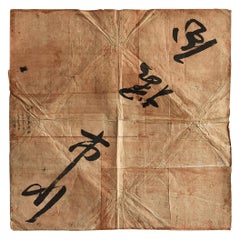
Japanese Antiques / Old Wrapping Paper from the Meiji Era / like Tapestries

Japanese Antiques / Old Wrapping Paper from the Meiji Era / like Tapestries

Located in Sammu-shi, Chiba

can imitate. It is an old Japanese paper from the Meiji era in Japan. This connects multiple

Category

Antique Late 19th Century Japanese Meiji Paintings and Screens

Materials

Paper

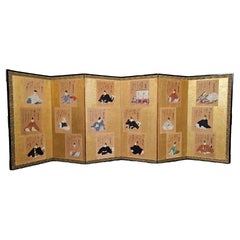
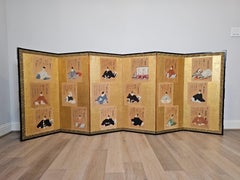
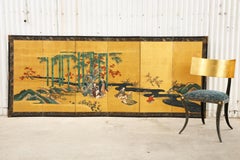
Antique Japanese Six Panel Screen with Immortal Poets

Antique Japanese Six Panel Screen with Immortal Poets

Located in Forney, TX

A lovely Japanese Meiji era (1868-1912) six panel screen - room divider featuring ink and color on

Category

Early 20th Century Japanese Meiji Paintings and Screens

Materials

Brass

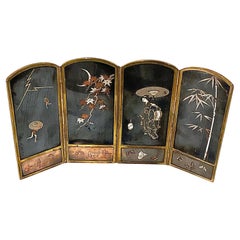
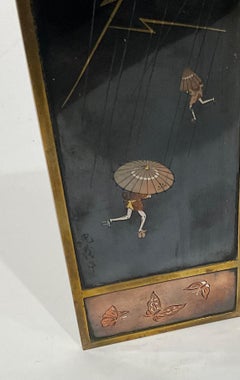
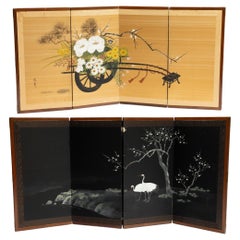
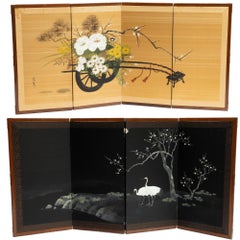
Bronze Mixed Metal Japanese Meiji Era Four Panel 2 Sided Table Screen Signed

Bronze Mixed Metal Japanese Meiji Era Four Panel 2 Sided Table Screen Signed

Located in Ann Arbor, MI

A good Japanese bronze and shakudo miniature table screen, Meiji period, each panel in a gilt

Category

Antique Early 1900s Japanese Figurative Sculptures

Materials

Bronze

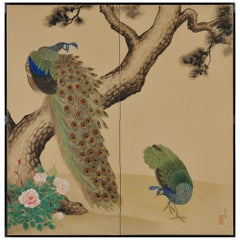
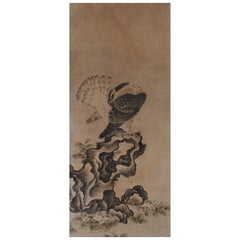
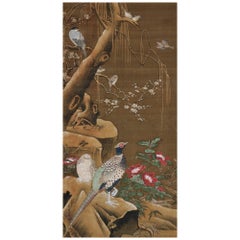
Japanese Screen, Peacock and Peahen, Meiji Era, circa 1900

Japanese Screen, Peacock and Peahen, Meiji Era, circa 1900

Located in Kyoto, JP

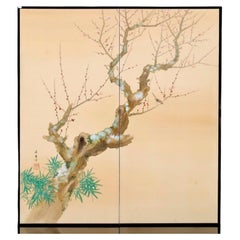
Unknown artist Peacock and Peahen Late Meiji period, circa 1900 Folding screen in two

Category

Antique Early 1900s Japanese Meiji Paintings and Screens

Materials

Silk, Wood

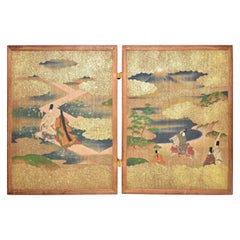
Meiji Era Japanese Two Panel Hand Painted Wood Table Screen Tale of Genji

Meiji Era Japanese Two Panel Hand Painted Wood Table Screen Tale of Genji

Located in Studio City, CA

A Meiji era Japanese two-panel wood screen, with illustrated images from The Tale of Genji that are

Category

Antique 19th Century Japanese Meiji Paintings and Screens

Materials

Gold Leaf

Carved and Inlaid Shibayama Folding Screen, Japan, Meiji Era, circa 1890

Carved and Inlaid Shibayama Folding Screen, Japan, Meiji Era, circa 1890

Located in VÉZELAY, FR

animal marquetry) and painted on the back side (flowers). Shibayama style, Japan, Meiji era, around

Category

Antique 1890s Japanese Meiji Screens and Room Dividers

Materials

Wood

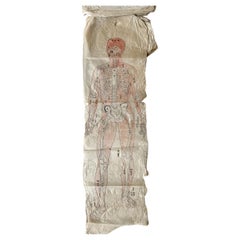
Japanese Meiji-Era Illustrated Medical Manuscript with Human Body Diagram

Japanese Meiji-Era Illustrated Medical Manuscript with Human Body Diagram

Located in Chiba, JP

A hand-drawn Japanese medical manuscript from the Meiji period, featuring 27 anatomical

Category

Antique Late 19th Century Japanese Meiji Paintings and Screens

Materials

Paper

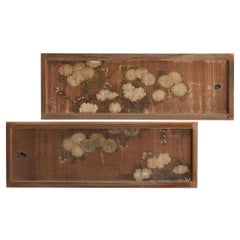
Japanese Antique Wooden Painting / Panel Painting / Sliding Door /Edo-Meiji Era

Japanese Antique Wooden Painting / Panel Painting / Sliding Door /Edo-Meiji Era

Located in Sammu-shi, Chiba

It is a panel painting of a sliding door from the late Edo period to the Meiji period. It's a

Category

Antique 19th Century Japanese Edo Paintings and Screens

Materials

Cypress

People Also Browsed

Italian Mid-Century Modern Wall-Mounted Mirror with Shelf in Teak

Italian Mid-Century Modern Wall-Mounted Mirror with Shelf in Teak

Located in Waalwijk, NL

Wall-mounted mirror with shelf, teak, mirrored glass, Italy, 1950s An exemplar of mid-century modern design, this sleek, wall-mounted mirror epitomizes finesse and the inimitable ch...

Category

Vintage 1950s Italian Mid-Century Modern Wall Mirrors

Materials

Mirror, Teak

Evolving Elegance: An Oxidized Silver Screen from the Meiji Period

Evolving Elegance: An Oxidized Silver Screen from the Meiji Period

Located in Fukuoka, JP

This anodized 6-panel screen captures the serene and minimalistic beauty of a bamboo grove, embodying the aesthetic principles of the Edo period. The screen features subtle and delic...

Category

Antique 18th Century Japanese Edo Paintings and Screens

Materials

Silver Leaf

Beautiful Japanese folding screen/Byôbu, six panels, Taishô /early 20th century.

Beautiful Japanese folding screen/Byôbu, six panels, Taishô /early 20th century.

Located in Stockholm, SE

An equisite decorative and functional six panel folding screen / buôby, perfect as a room divider or large wall painting. In the style of Kanô Eigaku. The hand-painted screen depicts...

Category

Early 20th Century Japanese Arts and Crafts Paintings and Screens

Materials

Wood, Paper

Rare Moses Michelangelo Guggenheim & Pauly Cie Et Venice Antique Carved Armoire

Rare Moses Michelangelo Guggenheim & Pauly Cie Et Venice Antique Carved Armoire

By Pauly et Cie, Guggenheim Museum

Located in West Sussex, Pulborough

We are delighted to offer for sale this very rare one of a kind Pauly CIE Et stamped hand carved walnut armoire made by the genius that was Moses Michelangelo Guggenheim 1837-1910 W...

Category

Antique 19th Century Italian Victorian Wardrobes and Armoires

Materials

Walnut

Kiku to Hagi Byobu, Rinpa School Style, Edo Period.

Kiku to Hagi Byobu, Rinpa School Style, Edo Period.

$20,000

H 67.25 in W 147 in D 0.75 in

Kiku to Hagi Byobu, Rinpa School Style, Edo Period.

Located in Point Richmond, CA

A Chrysanthemum and Bush Clover painting on gold leaf six-panel folding screen, painted with clusters of leafy green chrysanthemum plants with white blossoms having moriage relief p...

Category

Antique Early 1800s Japanese Edo Paintings and Screens

Materials

Gold Leaf

Japanese Screen Pair, Tigers by Kishi Renzan, Late Edo Period

Japanese Screen Pair, Tigers by Kishi Renzan, Late Edo Period

$38,000 / set

H 67.5 in W 148 in D 0.75 in

Japanese Screen Pair, Tigers by Kishi Renzan, Late Edo Period

Located in Kyoto, JP

Kishi Renzan (1804-1859) Tigers Pair of six-panel Japanese screens. Ink and gold-leaf on paper. In this monochromatic pair of six-fold Japanese screens painted on gold-le...

Category

Antique Mid-19th Century Asian Edo Paintings and Screens

Materials

Gold Leaf

19th Century Japanese Scroll Painting, Birds & Flowers of the Four Seasons

19th Century Japanese Scroll Painting, Birds & Flowers of the Four Seasons

Located in Kyoto, JP

Birds and flowers of the four seasons Early to mid-19th century Ink, pigment and gofun on silk Unidentified artist Signature: Shuho Seal: Shuho ga in A large Japane...

Category

Antique 1830s Japanese Edo Paintings and Screens

Materials

Silk

Chinese Carved Jadeite Vase and Cover, Qing Dynasty, Ex. C.T. Loo

Chinese Carved Jadeite Vase and Cover, Qing Dynasty, Ex. C.T. Loo

Located in Austin, TX

A stunning carved and pierced Chinese jade vase, Qing Dynasty, 19th century. The vase is carved with a design of birds, flowers and trees, each rife with meaning. The dense, heavy ja...

Category

Antique Mid-19th Century Chinese Qing Scholar's Objects

Materials

Jade, Silver

Late 17th Century Japanese Screen. Puppy and Kittens on Gold Leaf.

Late 17th Century Japanese Screen. Puppy and Kittens on Gold Leaf.

Located in Kyoto, JP

Anonymous Late 17th century Puppy & Kittens A six-panel Japanese screen. Ink, color, gofun, gold-leaf and gold-fleck on paper. A medium sized late 17th century Japanese screen fe...

Category

Antique Late 17th Century Japanese Edo Paintings and Screens

Materials

Gold Leaf

19th Century Japanese Paintings. Zenga Tiger and Dragon by Inoue Kanshu.

19th Century Japanese Paintings. Zenga Tiger and Dragon by Inoue Kanshu.

Located in Kyoto, JP

Inoue Kanshu (1807-1880) Zenga Tiger and Dragon 19th century Pair of framed Japanese paintings. Ink on silk. Dimensions (each): W. 114 cm x H. 115 cm (45” x 45”) Presented here ...

Category

Antique Mid-19th Century Japanese Meiji Paintings and Screens

Materials

Silk

Mid 19th Century Framed Japanese Painting. Spider & Morning Glory.

Mid 19th Century Framed Japanese Painting. Spider & Morning Glory.

Located in Kyoto, JP

Obata Tosho (1812-1886) Spider & Morning Glory Late Edo period, mid 19th Century Framed Japanese Painting. Ink and color on paper. Individually framed 19th century bird and f...

Category

Antique Mid-19th Century Japanese Edo Paintings and Screens

Materials

Paper

1838 Japanese Screen Pair. Flowers & Grasses of the Four Seasons.

1838 Japanese Screen Pair. Flowers & Grasses of the Four Seasons.

Located in Kyoto, JP

Maruyama Oshin (1790-1838) Flowers and grasses of the four seasons: dated 1838 Pair of eight-panel Japanese screens; ink, color and gold leaf on silk Dimensions: each (2) H. 38.5 cm...

Category

Antique 1830s Japanese Edo Paintings and Screens

Materials

Silk

Early 19th Century Rimpa School Floral Screen

Early 19th Century Rimpa School Floral Screen

$13,260Sale Price|25% Off

H 67.33 in W 144.49 in D 1.19 in

Early 19th Century Rimpa School Floral Screen

By Rimpa School

Located in Fukuoka, JP

Early 19th Century Rimpa School Floral Screen Period: Early 19th Century Dimensions: 367x171 cm (144.5x67.3 inches) SKU: RJ118/2 This 6-panel gold-leafed screen is a splendid repre...

Category

Antique Early 19th Century Japanese Edo Paintings and Screens

Materials

Gold Leaf

19th Century Japanese Screen Pair - Birds & Flowers of the Four Seasons

19th Century Japanese Screen Pair - Birds & Flowers of the Four Seasons

Located in Kyoto, JP

Birds & Flowers of the Four Seasons Yamamoto Baiitsu (1783-1856) Late Edo period, Dated 1850 A magnificent pair of six-panel Japanese folding screens by Yamamoto Baitsu, representin...

Category

Antique Mid-19th Century Japanese Edo Paintings and Screens

Materials

Wood, Paper

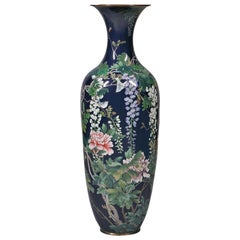
Large Meiji Period Cloisonne Enamel Vase

Large Meiji Period Cloisonne Enamel Vase

$62,346

H 58.67 in Dm 20.08 in

Large Meiji Period Cloisonne Enamel Vase

Located in London, GB

Of ovoid form, with a narrow neck and outward flaring rim, on dark blue ground depicting wisteria blossoms in white and purple cascading from the shoulder with birds throughout and w...

Category

Antique Late 19th Century Japanese Meiji Vases

Materials

Enamel

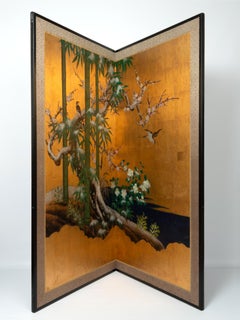
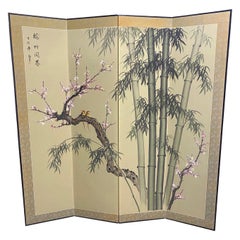
Japanese Two-Panel Screen Peony, Wisteria, Cherry and Bamboo on Soft Silver

Japanese Two-Panel Screen Peony, Wisteria, Cherry and Bamboo on Soft Silver

Located in Hudson, NY

Japanese two-panel screen: Peony, Wisteria, cherry and bamboo on soft silver, Meiji period (1868-1912) painting of a garden in spring. Painted in mineral pigments on oxidized silver ...

Category

Antique Early 1900s Japanese Meiji Paintings and Screens

Materials

Silver Leaf

Get Updated with New Arrivals
Save "Meiji Era Screen", and we’ll notify you when there are new listings in this category.

Meiji Era Screen For Sale on 1stDibs

Choose from an assortment of styles, material and more with respect to the meiji era screen you’re looking for at 1stDibs. A meiji era screen — often made from fabric, silk and paper — can elevate any home. If you’re shopping for a meiji era screen, we have 22 options in-stock, while there are 5 modern editions to choose from as well. Whether you’re looking for an older or newer meiji era screen, there are earlier versions available from the 19th Century and newer variations made as recently as the 21st Century.

How Much is a Meiji Era Screen?

Prices for a meiji era screen can differ depending upon size, time period and other attributes — at 1stDibs, they begin at $854 and can go as high as $32,000, while the average can fetch as much as $4,850.

A Close Look at Meiji Furniture

From 1868 to 1912, Emperor Mutsuhito oversaw an era of transformation in Japan. Formerly a country of feudalism and isolation, Japan entered an age of modernization influenced by newly established trade and exchange with the West. The Meiji period, or period of “enlightened rule,” also saw the global impact of the East Asian country’s culture. Japanese Meiji furniture was exhibited at expositions from Paris to San Francisco and created for export.

Prior to the Meiji era, furniture was mostly made by commission for the ruling class; now there were new domestic and international markets. European styles like Japonisme appropriated Japanese design while craftsmen in places like Wales and England employed japanning, a varnishing technique that approximated the appearance of lacquer for the surfaces of furnishings.

Meiji furniture made for Japanese homes and buildings constructed in Western styles resulted in taller tables, chairs, cabinets with large drawers and other features. The government invested in areas such as transportation and communication, and because people could freely choose occupations after the restrictions of feudalism, industries of various types were energized by expressive new ideas during those years. Art schools were formed and, for the first time, design was an area of study in the country, leading to the evolution of professional design as a career by the 1890s.
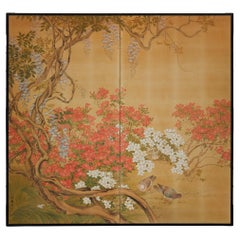
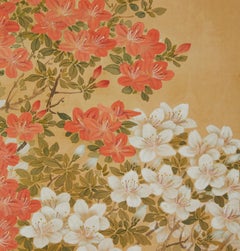
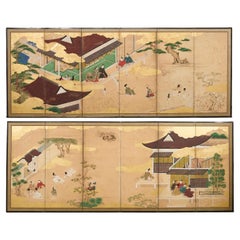
The work of Japanese designers was transmitted widely through lavishly illustrated pattern books that included designs for screens and lacquerware for the home. While screens today may be of use as decorative accents or partitions to ensure privacy in one’s space, Japanese screens were adorned with paintings and were featured in performing arts such as concerts, tea ceremonies and more. The color illustrations that characterize Meiji woodblock prints, a genre of Japanese art that grew out of 17th-century developments in printing and book publishing, depicted the sweeping changes that the era brought to East Asia.

Although it was a time of societal and cultural shifts, a bolstered interest in art and design elevated Japanese craft traditions. From colorful porcelain table lamps with silk shades and hardwood tables decorated with dark lacquer to cabinets featuring iron hardware and inlaid with mother-of-pearl, Meiji furniture showcased Japan’s artistic heritage to the world.

Find a collection of antique Japanese Meiji period case pieces and storage cabinets, decorative objects, wall decorations and more furniture on 1stDibs.

Finding the Right Paintings-screens for You

Traditional Asian paintings were often created on scrolls and folding screens. Artisans made screens that could be folded up or spread out by connecting several panels using hinges. Today, antique Asian folding screens and paintings are sophisticated decorative accents that can serve as makeshift partitions to ensure privacy.

The original folding screens were created by Chinese artists. The earliest record of screens comes from the 2nd century B.C., and surviving examples date back to the Ming dynasty. Chinese painting utilizes many of the same tools as calligraphy — these screens were crafted from wood with painted panels featuring striking art or calligraphy that told cultural stories or represented nature and life in the area.

The practice was introduced to Japan, where paintings for screens were made on paper and silk, in the 8th century. These paintings frequently feature subjects such as landscapes, animals, flowers and Buddhist religious themes. Along with screens for tea ceremonies and dance backgrounds, there were screens for use in Shinto and Buddhist temples.

In the 17th century, screens began to be imported to Europe where their popularity grew. Coco Chanel famously collected Coromandel folding screens.

Traditional Asian paintings can make a tasteful addition to any wall, and screens can be used as decoration or, in the case of larger iterations, as an aesthetic way to divide a large room. Browse the selection of antique Asian paintings and screens from a variety of styles and eras on 1stDibs.