Crane Paintings Gold Leaf

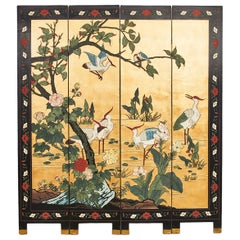
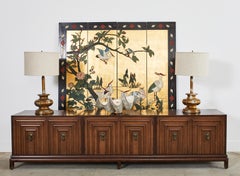
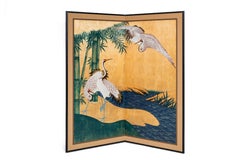
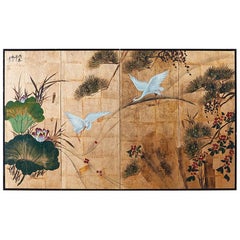
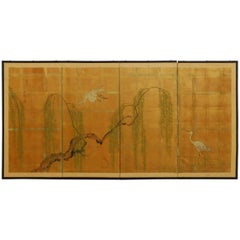
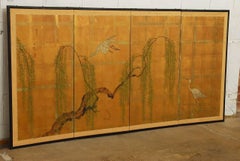
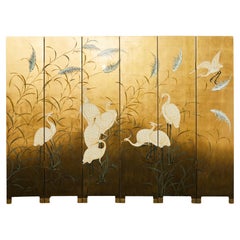
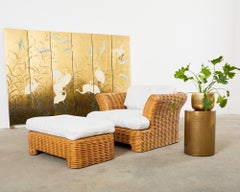
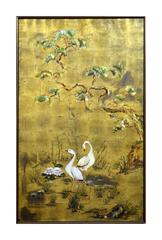
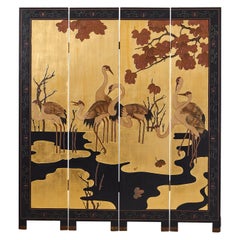
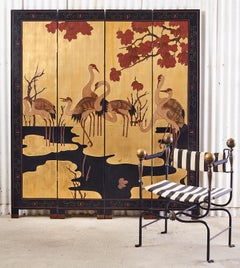
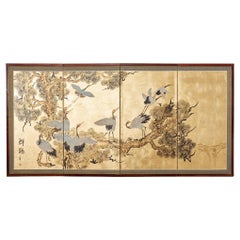
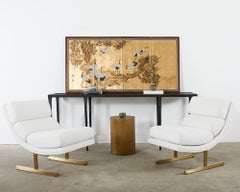
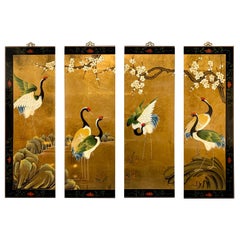
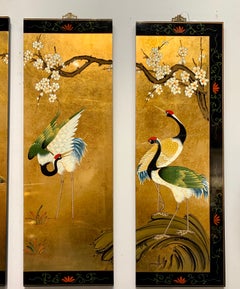
Chinese Export Four Panel Coromandel Screen Cranes on Gold Leaf

Chinese Export Four Panel Coromandel Screen Cranes on Gold Leaf

Located in Rio Vista, CA

Dazzling Chinese export lacquered four-panel coromandel screen featuring a flora and fauna waterscape with stylized cranes. The carved lacquer panels are embellished with vivid color...

Category

20th Century Chinese Chinese Export Paintings and Screens

Materials

Brass, Gold Leaf

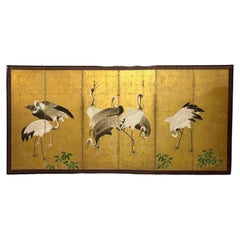
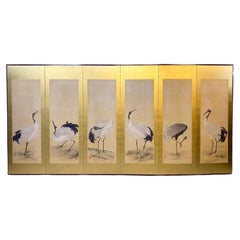
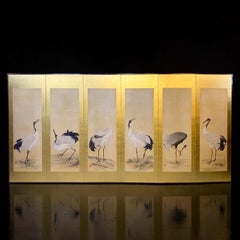
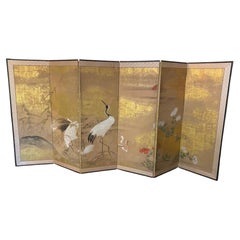
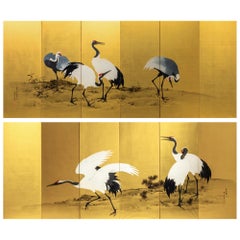
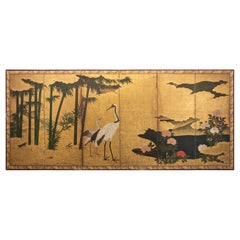
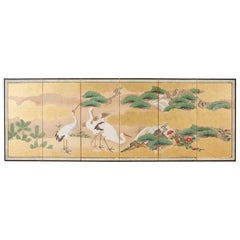
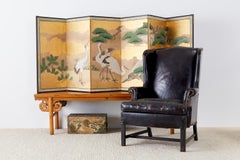
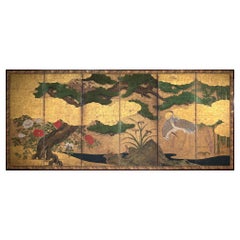
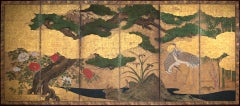
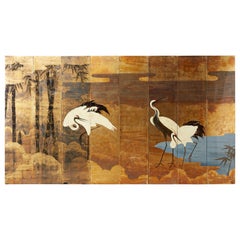
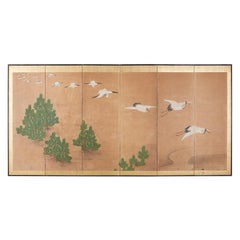
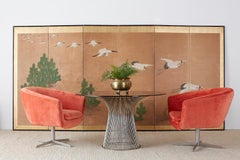
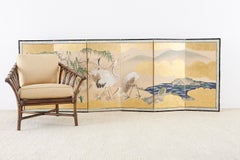
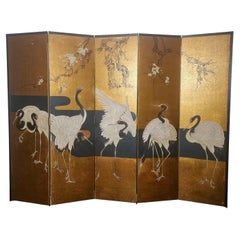
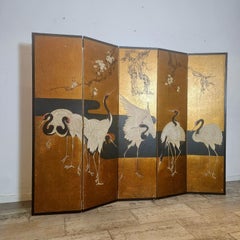
A six-panel Kano-school gold-leaf screen depicting cranes beneath a majestic pine tree

A six-panel Kano-school gold-leaf screen depicting cranes beneath a majestic pine tree

Located in Milano, IT

An antique six-panel Japanese screen in the Kano school, painted on a gold-leaf background with gold sand, depicting an elegant natural landscape featuring cranes, pine trees, and se...

Category

Antique Late 18th Century Japanese Paintings and Screens

Materials

Gold Leaf

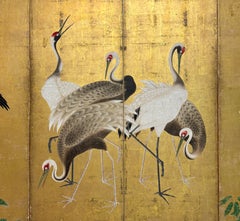
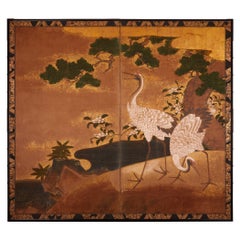
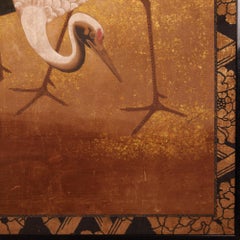
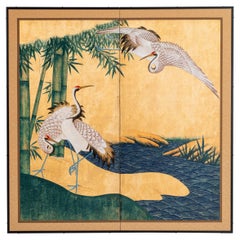
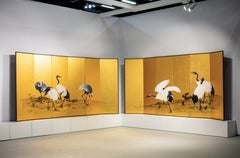
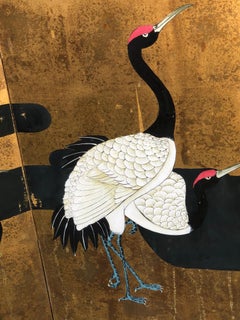
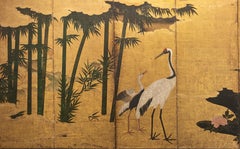
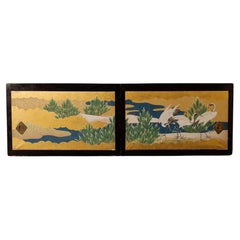
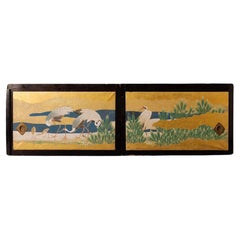
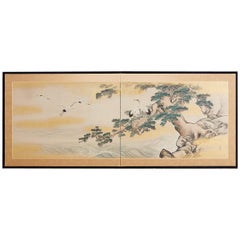
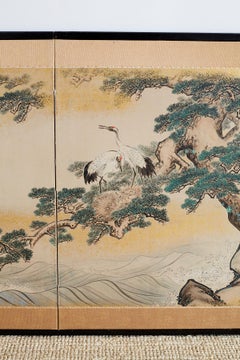
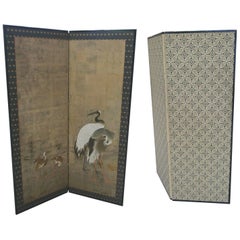
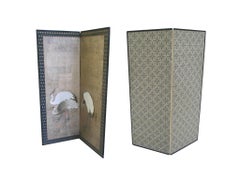
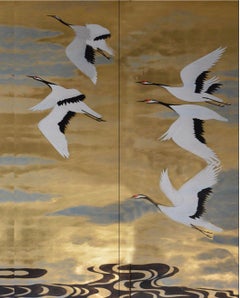
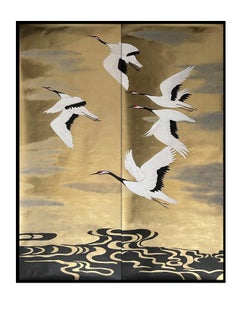
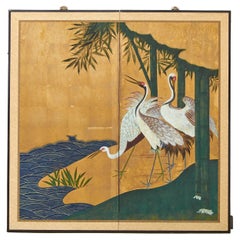
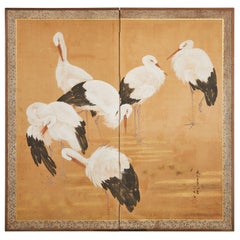
Japanese Two-Panel Screen: Cranes on Gold

Japanese Two-Panel Screen: Cranes on Gold

Located in Hudson, NY

Mineral pigments, gold dust and gold leaf on mulberry paper. With a gold embroidered 17th century silk brocade border and black lacquer trim.

Category

Antique Late 18th Century Japanese Paintings and Screens

Materials

Gold, Gold Leaf

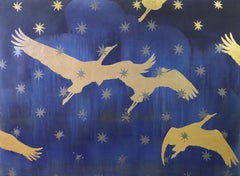
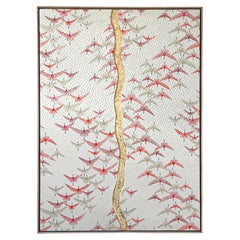
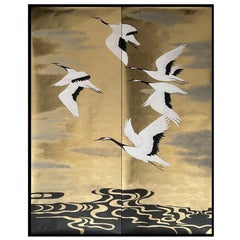
Vintage kimono textile art " Cranes ~ Kintsugi ~ II" White Red Gold Japan

Vintage kimono textile art " Cranes ~ Kintsugi ~ II" White Red Gold Japan

By Kimono ikasu

Located in Setagaya City, JP

In traditional Japanese art, gold leaf is often applied to religious objects, sculptures, paintings, and lacquerware to create a luxurious and decorative effect.

Category

Late 20th Century Japanese Japonisme Paintings

Materials

Gold Leaf, Silver Leaf

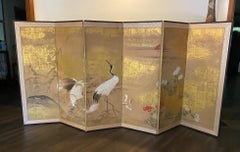
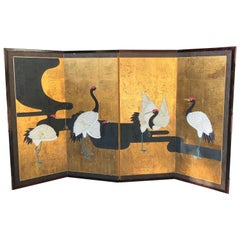
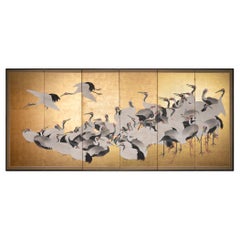
Japanese Asian Edo Meiji 6 Panel Folding Byobu Screen Red Crown Cranes Landscape

Japanese Asian Edo Meiji 6 Panel Folding Byobu Screen Red Crown Cranes Landscape

Located in Studio City, CA

A gorgeous, quite large antique six-panel Japanese Asian Byobu folding screen depicting a landscape scene with red crowned cranes, other playful birds and boldly colored blossoming S...

Category

Antique 19th Century Japanese Edo Paintings and Screens

Materials

Gold Leaf

Get Updated with New Arrivals
Save "Crane Paintings Gold Leaf", and we’ll notify you when there are new listings in this category.

Crane Paintings Gold Leaf For Sale on 1stDibs

Choose from an assortment of styles, material and more with respect to the crane paintings gold leaf you’re looking for at 1stDibs. Frequently made of gold leaf, gold and metal, every crane paintings gold leaf was constructed with great care. If you’re shopping for a crane paintings gold leaf, we have 18 options in-stock, while there are 7 modern editions to choose from as well. You’ve searched high and low for the perfect crane paintings gold leaf — we have versions that date back to the 18th Century alongside those produced as recently as the 21st Century are available. Each crane paintings gold leaf bearing Hollywood Regency hallmarks is very popular. Many designers have produced at least one well-made crane paintings gold leaf over the years, but those crafted by Japanese School are often thought to be among the most beautiful.

How Much is a Crane Paintings Gold Leaf?

The average selling price for a crane paintings gold leaf at 1stDibs is $2,540, while they’re typically $900 on the low end and $358,185 for the highest priced.

Finding the Right Paintings-screens for You

Traditional Asian paintings were often created on scrolls and folding screens. Artisans made screens that could be folded up or spread out by connecting several panels using hinges. Today, antique Asian folding screens and paintings are sophisticated decorative accents that can serve as makeshift partitions to ensure privacy.
The original folding screens were created by Chinese artists. The earliest record of screens comes from the 2nd century B.C., and surviving examples date back to the Ming dynasty. Chinese painting utilizes many of the same tools as calligraphy — these screens were crafted from wood with painted panels featuring striking art or calligraphy that told cultural stories or represented nature and life in the area.

The practice was introduced to Japan, where paintings for screens were made on paper and silk, in the 8th century. These paintings frequently feature subjects such as landscapes, animals, flowers and Buddhist religious themes. Along with screens for tea ceremonies and dance backgrounds, there were screens for use in Shinto and Buddhist temples.

In the 17th century, screens began to be imported to Europe where their popularity grew. Coco Chanel famously collected Coromandel folding screens.

Traditional Asian paintings can make a tasteful addition to any wall, and screens can be used as decoration or, in the case of larger iterations, as an aesthetic way to divide a large room. Browse the selection of antique Asian paintings and screens from a variety of styles and eras on 1stDibs.