Gold Asian Art and Furniture
to
81
286
79
433
244
3
6
4
2
2
1
1
1
1
100
210
123
247
53
25
13
8
1
3
3
1
4
6
1
2
12,873
6,393
5,457
5,277
2,997
653
600
555
41
25
680
661
667
5
4
2
1
1
Material: Gold
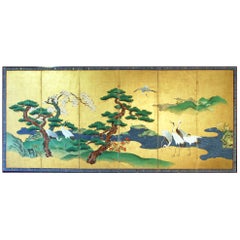
Japanese Asian Edo Meiji 6 Panel Folding Byobu Screen Red Crown Cranes Landscape

Japanese Asian Edo Meiji 6 Panel Folding Byobu Screen Red Crown Cranes Landscape

Located in Studio City, CA

A gorgeous, quite large antique six-panel Japanese Asian Byobu folding screen depicting a landscape scene with red crowned cranes, other playful birds and boldly colored blossoming S...

Category

19th Century Japanese Edo Antique Gold Asian Art and Furniture
Materials

Gold Leaf

Japanese Asian Four-Panel Folding Byobu Showa Screen Tale of Genji & Cherry Tree

Japanese Asian Four-Panel Folding Byobu Showa Screen Tale of Genji & Cherry Tree

Located in Studio City, CA

A gorgeous four-panel Japanese Byobu folding screen depicting a scene from the Classic Japanese narrative "Tale of Genji" (the beautifully clad woman in the flowing kimono could very...

Category

20th Century Japanese Showa Gold Asian Art and Furniture
Materials

Gold Leaf

1950s Chinoiserie Hand Painted Elegant Gold Leaf Chinese Cabinet

1950s Chinoiserie Hand Painted Elegant Gold Leaf Chinese Cabinet

Located in Chula Vista, CA

Midcentury Chinese two-door cabinet with hardstone possibly jade and mother-of-pearl inlay. Elegant relief garden scene flowers trees and birds. Brass hardware hand painted gold leaf...

Category

1950s Chinese Chinoiserie Vintage Gold Asian Art and Furniture

Materials

Brass, Gold Leaf

Japanese Showa Four-Panel Screen Autumn Landscape Rooster & Hen

Japanese Showa Four-Panel Screen Autumn Landscape Rooster & Hen

Located in Rio Vista, CA

A beautifully rendered Japanese Showa period four-panel folding byōbu screen in the Nihonga school style. The painting depicts a quiet pastoral scene of a pair of chickens gathered a...

Category

20th Century Japanese Showa Gold Asian Art and Furniture

Materials

Gold Leaf

Antique Thandatti Gold Earrings – South India Asian jewellery Tribal art

Antique Thandatti Gold Earrings – South India Asian jewellery Tribal art

Located in London, GB

Antique South Indian Thandatti Gold Earrings – Traditional Tamil Nadu Design A beautiful and rare pair of antique South Indian Thandatti earrings, traditionally worn by women of ...

Category

Early 20th Century Indian Gold Asian Art and Furniture

Materials

Gold

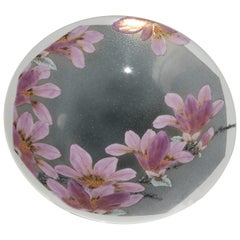
19th Century Japanese Satsuma Lotus Koi Bowl on Custom Steel Mount

19th Century Japanese Satsuma Lotus Koi Bowl on Custom Steel Mount

Located in Chicago, IL

This extraordinary 19th-century Japanese Satsuma bowl, created during the luminous years of the Meiji period, unfolds like a flower caught at the precise moment of perfection. Each p...

Category

19th Century Japanese Meiji Antique Gold Asian Art and Furniture

Materials

Gold Leaf

Japanese Six Panel Screen: Matsushima (Pine Tree Island)

Japanese Six Panel Screen: Matsushima (Pine Tree Island)

Located in Hudson, NY

Golden clouds encompass the islands of Matsushima, located in the north-east of Sendai in Miyagi prefecture in the Tohoku region. Beautifully painted with mineral pigments, gold leaf...

Category

19th Century Japanese Antique Gold Asian Art and Furniture

Materials

Bronze, Gold Leaf

Chinese Lacquer Boxes Black Leaf Gold 1930 Ducks

Chinese Lacquer Boxes Black Leaf Gold 1930 Ducks

Located in Palermo, Sicily

Boxes in antique Chinese Lacquer , 24KT gold leaf.

Category

1930s Chinese Chinoiserie Vintage Gold Asian Art and Furniture

Materials

Gold Leaf

Japanese Asian Signed Four-Panel Folding Byobu Showa Screen Hokusai Great Wave

Japanese Asian Signed Four-Panel Folding Byobu Showa Screen Hokusai Great Wave

Located in Studio City, CA

A gorgeous, absolutely stunning, thoroughly engaging four-panel Japanese Byobu folding screen featuring a faithful recreation of renowned Japanese artist Katsushika Hokusai's woodbl...

Category

20th Century Japanese Showa Gold Asian Art and Furniture

Materials

Gold Leaf

Mid-19th Century Mother-Of-Pearl Inlaid Altar Table, Japan, Edo Period

Mid-19th Century Mother-Of-Pearl Inlaid Altar Table, Japan, Edo Period

Located in New York, NY

An antique Japanese table with inlaid mother-of-pearl (Raden) and gold maki-e over brown lacquer. Japan, late Edo period, possibly earlier. Raden (螺鈿) is a traditional Japanese dec...

Category

1850s Japanese Edo Antique Gold Asian Art and Furniture

Materials

Gold

Rare set of 2 Japanese suits-of-armour, complete with 2 matching folding screens

Rare set of 2 Japanese suits-of-armour, complete with 2 matching folding screens

Located in Amsterdam, NL

Important unique set of two suits-of-armour (yoroi), complete with two high six-panel screens, that belong together as is indicated by the used family crests (mon). Two crests are used, both belonging to the Nakagawa family of Oka Castle, Ôita prefecture on Kyûshû. They are: – the Nakagawa-kurusu, a circle depicting a Celtic-like cross through a ring. The cross was originally a Christian symbol but after the ban on Christianity in Japan the use of a hidden cross in family crests could continue. – the Nakagawa-kashiwa, two leaves of the Japanese Emperor Oak turned to each other (dakikashiwa mon). The remarkable aspect of this ensemble is the presence of matching crests on both the yoroi and the accompanying folding screens. The kurusu and kashiwa crests adorning the yoroi are elegantly replicated on the screens, providing compelling evidence that these pieces form a harmonious and unified set. This exceptional cohesion between the armour and screens further enhances their artistic and historical value. After the warlord Toyotomi Hideyoshi (1537-1598) had interfered in the battle between the Lord of Bungo Province Ôtomo Yoshi-mune (1558-1605) and the Shimazu of Hyûga Province, he split the Bungo Province in a number of small fiefs and transferred in 1594 Nakagawa Hideshige (1570-1612) from Miki Castle in the Harima Fief to Oka Castle in Kyûshû. The Nakagawa family stayed in possession of Oka Castle till the abolishment of the military use of castles in 1873. In 1884 the Nakagawa family received the title of Count (a title in use till the abolishment of aristocracy in 1947). After the Nakagawa’s left, the castle and the building soon dilapidated and is now known as Oka Castle Ruins. The castle is located in Taketa Village part of Taketa Town in Ôita Province on Kyûshû. > Set of two tall byôbu (folding screens), painted with large red jinmaku (camp enclosure curtain) on a gold leaf ground. The curtains show both crests of the Nakagawa family: one screen depicts two Nakagawa-kurusu crests next to a Nakagawa-kashi crest in the middle, and the other shows the symbols the other way round. Dimensions: Total width 148.66 in/377.6 cm (2 x 25.35 in/64.4 cm, 4 x 24.48 in/62.2 cm); Height 72.63 in/184.5 cm. Period: Japan – Late Edo period (First half 19th century), and maybe even older. > Yoroi with Nakagawa-kashiwa crest: A Japanese black lacquered suit-of-armour (yoroi) completely laced with orange cords (kuro’urushinuri hi’ito odoshi nimai’dô’maru). A thirty-two plate suji’bachi kabuto (helmet with raised ridges) with in front a maedate (fore crest) -with traces of gilding- in the shape of flames, resembling a mythical flaming bird flying down. The fukikaeshi (face guards) and the mabizashi (visor) have the Nakagawa-kashiwa crest in gold maki-e lacquer. Five curved ‘itazane’-plate neck guards (shikoro) laced with orange cords. Together with an ‘angry man...

Category

18th Century Japanese Antique Gold Asian Art and Furniture

Materials

Metal, Iron, Gold Leaf

Japanese Asian Signed Two Panel Meiji Edo Folding Byobu Landscape House Screen

Japanese Asian Signed Two Panel Meiji Edo Folding Byobu Landscape House Screen

Located in Studio City, CA

A gorgeous, large two-panel antique Japanese Byobu folding screen depicting a nature landscape scene with a lone house, perhaps a tea house, hidden in the trees and foliage with dist...

Category

19th Century Japanese Meiji Antique Gold Asian Art and Furniture

Materials

Gold Leaf

Antique Japanese Samurai Suit of Armor, Edo Period, 18th Century

Antique Japanese Samurai Suit of Armor, Edo Period, 18th Century

Located in Point Richmond, CA

Antique Japanese Samurai Suit of Armor, Edo period, 18th century. A complete matching set of lacquered iron work; the cuirass with dragonfly decoration and blue lacing, a Kaga schoo...

Category

18th Century Japanese Edo Antique Gold Asian Art and Furniture

Materials

Metal, Silver, Foil, Iron, Gold Leaf

Chinoiserie Panel Hand Painted Wallpaper on Gold Metallic, Accept Custom Size

Chinoiserie Panel Hand Painted Wallpaper on Gold Metallic, Accept Custom Size

Located in Wuxi, 32

If you love the look of De Gournay wallpaper but not the price, this is for you. The colorways in this sections present our latest colorways, which can be applied to any designs a...

Category

21st Century and Contemporary Chinese Gold Asian Art and Furniture

Materials

Gold Leaf

Chinoiserie Panel Hand Painted Wallpaper on Gold Metallic, Accept Custom Size

Chinoiserie Panel Hand Painted Wallpaper on Gold Metallic, Accept Custom Size

Located in Wuxi, 32

If you love the look of De Gournay wallpaper but not the price, this is for you. The colorways in this sections present our latest colorways, which can be applied to any designs and...

Category

21st Century and Contemporary Chinese Gold Asian Art and Furniture

Materials

Gold Leaf

Tall Japanese 6-panel folding screen with Tosa School genre painting

Tall Japanese 6-panel folding screen with Tosa School genre painting

Located in Amsterdam, NL

An amazing, tall six-panel byôbu (folding screen) presents an elaborate Tosa School genre painting set against a backdrop of gold leaf, capturing lively celebrations across various s...

Category

Early 19th Century Japanese Antique Gold Asian Art and Furniture

Materials

Gold Leaf

Japanese Asian Four-Panel Folding Byobu Showa Screen Tale of Genji & Cherry Tree

Japanese Asian Four-Panel Folding Byobu Showa Screen Tale of Genji & Cherry Tree

Located in Studio City, CA

A gorgeous four-panel Japanese Byobu folding screen depicting a scene from the Classic Japanese narrative "Tale of Genji" featuring various characters in a cherry blossom tree villag...

Category

20th Century Japanese Showa Gold Asian Art and Furniture

Materials

Gold Leaf

Pair Japanese Edo Six Panel Screens Legend of Minamoto

Pair Japanese Edo Six Panel Screens Legend of Minamoto

Located in Rio Vista, CA

Fascinating pair of large Japanese 19th century Edo period six-panel folding byobu screens depicting the legend of Minamoto No Yorimasa (Japanese Samurai 1106-1180). The pair of pain...

Category

19th Century Japanese Edo Antique Gold Asian Art and Furniture

Materials

Brass, Gold Leaf

A Set of Lacquer Kiseruzutsu, Tabako-ire, and Kiseru, Signed Sesshin, Meiji Era

A Set of Lacquer Kiseruzutsu, Tabako-ire, and Kiseru, Signed Sesshin, Meiji Era

Located in Norton, MA

A fine set of a lacquer kiseruzutsu (pipe case), tabako-ire (tobacco pouch), and kiseru (pipe), signed on both the Pipe and Pipe Case. Decorated with a sake gourd suspended from a ma...

Category

Late 19th Century Japanese Antique Gold Asian Art and Furniture

Materials

Stone, Gold, Silver, Copper

Chinese Antique Lacquer Boxes Black and 24 KT Gold Leaf Owl

Chinese Antique Lacquer Boxes Black and 24 KT Gold Leaf Owl

Located in Palermo, Sicily

Antique Owl-shaped boxes in Chinese lacquer and gold leaf circa 1930 .

Category

1930s Chinese Chinoiserie Vintage Gold Asian Art and Furniture

Materials

Gold Plate

Japanese Asian Signed Four Panel Folding Byobu Nanban Ship at Sea Arrival Screen

Japanese Asian Signed Four Panel Folding Byobu Nanban Ship at Sea Arrival Screen

Located in Studio City, CA

A beautiful, quite engaging four-panel Showa Period Japanese Nanban (Namban) Byobu folding screen depicting the exotic arrival by ship and activities of Southern Barbarians (Portugue...

Category

Mid-20th Century Japanese Showa Gold Asian Art and Furniture

Materials

Gold Leaf

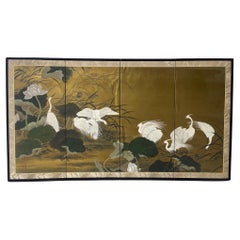
Asian Showa Four-Panel Screen Herons Amid Lotus and Peonies

Asian Showa Four-Panel Screen Herons Amid Lotus and Peonies

Located in Rio Vista, CA

A dramatic large 20th century Asian four-panel folding screen measuring 6 feet high and wide. The screen features a richly detailed hand-painted composition over a gold-leaf ground m...

Category

Mid-20th Century Chinese Chinese Export Gold Asian Art and Furniture

Materials

Brass, Gold Leaf

Late 19th Century Qing Dynasty Red Lacquered and Parcel-Gilt Altar Chair

Late 19th Century Qing Dynasty Red Lacquered and Parcel-Gilt Altar Chair

By James Mont, Tony Duquette

Located in Glasgow, GB

A late 19th-century Chinese Qing Dynasty altar chair, exquisitely handcrafted from hardwood and finished in a bold imperial red lacquer. This striking piece exemplifies the fine craftsmanship and technical woodworking skills for which Chinese artisans were renowned. Constructed using traditional mortise and tenon joinery—an advanced technique that requires no nails or glue—the chair demonstrates remarkable stability and artistry, hallmarks of Qing Dynasty furniture. The chair’s centre back splat features parcel-gilt cartouche decorations, each meticulously hand-carved and gilded with symbolic Chinese motifs and a central figural scene. The rich red lacquer and gilding reflect the traditional colours associated with good fortune and reverence in Chinese culture. Compact in stature, this antique altar chair...

Category

Late 19th Century Chinese Chinoiserie Antique Gold Asian Art and Furniture

Materials

Gold Leaf

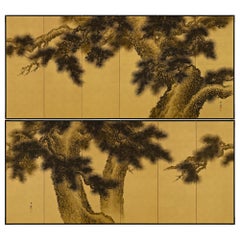
Japanese Screen. Two-panel. Aged Pines by Suzuki Shonen. Meiji period.

Japanese Screen. Two-panel. Aged Pines by Suzuki Shonen. Meiji period.

Located in Kyoto, JP

Suzuki Shonen (1848-1918) Aged Pine Meiji period (1868-1912). Circa 1900. Two-panel Japanese screen. Ink and gold leaf on paper. This commanding two-panel screen by Suzuki Shōnen...

Category

Early 20th Century Meiji Gold Asian Art and Furniture

Materials

Gold Leaf

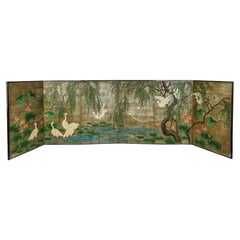
A six-panel gold leaf screen with cranes among bamboo and peonies

A six-panel gold leaf screen with cranes among bamboo and peonies

Located in Milano, IT

A Japanese six-panel screen in gold leaf and natural pigments depicting cranes, peonies, and bamboo. The composition unfolds over a wide golden ground. On the left rises a group of ...

Category

18th Century Japanese Antique Gold Asian Art and Furniture

Materials

Gold Leaf

Antique 16k Gold Chinese Qianlong Cloisonne Enamel Snuff Bottle Mark & Period

Antique 16k Gold Chinese Qianlong Cloisonne Enamel Snuff Bottle Mark & Period

Located in Portland, OR

A fine & rare antique Imperial Chinese Qing dynasty solid gold & cloisonne enamel snuff bottle, Qianlong mark & period, 1736-1795, tests as 16k gold. It is rare to find a cloisonné e...

Category

18th Century Chinese Qing Antique Gold Asian Art and Furniture

Materials

Gold, Enamel

Chinoiserie Panel Hand Painted Wallpaper on Gold Metallic, Accept Custom Size

Chinoiserie Panel Hand Painted Wallpaper on Gold Metallic, Accept Custom Size

Located in Wuxi, 32

If you love the look of De Gournay wallpaper but not the price, this is for you. The colorways in this sections present our latest colorways, which can be applied to any designs a...

Category

21st Century and Contemporary Chinese Gold Asian Art and Furniture

Materials

Gold Leaf

Japanese Asian Signed Four-Panel Folding Byobu Showa Genji Screen Lady Murasaki

Japanese Asian Signed Four-Panel Folding Byobu Showa Genji Screen Lady Murasaki

Located in Studio City, CA

A gorgeous and quite striking four-panel Japanese Byobu folding screen featuring an elegantly clad Lady Murasaki, the Japanese novelist, (and famed author of the classic "Tale of Gen...

Category

Mid-20th Century Japanese Showa Gold Asian Art and Furniture

Materials

Gold Leaf

Kiku to Hagi Byobu, Rinpa School Style, Edo Period.

Kiku to Hagi Byobu, Rinpa School Style, Edo Period.

Located in Point Richmond, CA

A Chrysanthemum and Bush Clover painting on gold leaf six-panel folding screen, painted with clusters of leafy green chrysanthemum plants with white blossoms having moriage relief petals of gofun growing amidst pink blossoming bush clover within a bunched bush clover garden fence rendered in lighter gold relief, all on a background entirely of rich gold leaf. These two flowers are symbolic of Japan and the autumn season. The classic patterned paper verso with a Naga Antiques...

Category

Early 1800s Japanese Edo Antique Gold Asian Art and Furniture

Materials

Gold Leaf

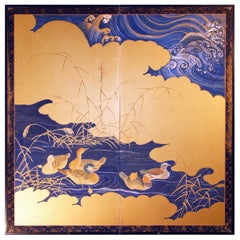
Japanese Meiji Six Panel Screen Kano School Bird Waterscape

Japanese Meiji Six Panel Screen Kano School Bird Waterscape

Located in Rio Vista, CA

Stunning late 19th century Japanese Meiji period six panel byobu screen featuring a deep blue waterscape with pheasants and ducks. Made in the Kano sch...

Category

19th Century Japanese Meiji Antique Gold Asian Art and Furniture

Materials

Brass, Gold Leaf

Peacock Chinoiserie Wallpaper Hand Painted Wallpaper on Champagne Metallic

Peacock Chinoiserie Wallpaper Hand Painted Wallpaper on Champagne Metallic

Located in Wuxi, 32

If you love the look of De Gournay wallpaper but not the price, this is for you. Measures: 36" wide x 91" height The colorways in this sections present our latest colorways, which c...

Category

21st Century and Contemporary Chinese Gold Asian Art and Furniture

Materials

Gold Leaf

Chinese Export Four Panel Gilt Lacquered Coromandel Screen

Chinese Export Four Panel Gilt Lacquered Coromandel Screen

Located in Rio Vista, CA

Extraordinary Chinese export four-panel coromandel screen featuring a pagoda pavilion landscape with a dramatic gold leaf background. The black lacquered panels are incised with vibr...

Category

20th Century Chinese Chinese Export Gold Asian Art and Furniture

Materials

Brass, Gold Leaf

Japanese Edo Six Panel Screen Chinese Children at Play

Japanese Edo Six Panel Screen Chinese Children at Play

Located in Rio Vista, CA

Amazing 19th century Japanese Edo period six panel folding byobu screen depicting Chinese children at play. The screen alludes to the 100 children theme. ...

Category

19th Century Japanese Edo Antique Gold Asian Art and Furniture

Materials

Gold Leaf

Fine Antique Burma BurmeseTemple Mandalay Buddha Carved Wood Gold Statue 16 1/2"

Fine Antique Burma BurmeseTemple Mandalay Buddha Carved Wood Gold Statue 16 1/2"

Located in San Diego, CA

Fine antique 19c Burmese Southeast Asia temple Mandalay buddha deity hand carved wood statue. Carved out of wood and has a hand painted 24 karat gold gilded finish over black lacquer...

Category

Late 19th Century Southeast Asian Antique Gold Asian Art and Furniture

Materials

Gold Leaf

Japanese Black Platinum Gold Porcelain Vase by Contemporary Master Artist, 1

Japanese Black Platinum Gold Porcelain Vase by Contemporary Master Artist, 1

Located in Takarazuka, JP

Contemporary Japanese porcelain vase, hand painted showcasing a dramatic dragon set against a dimpled black background, a signed piece from the signature dragon collection by highly ...

Category

21st Century and Contemporary Japanese Meiji Gold Asian Art and Furniture

Materials

Gold, Platinum

17th Century Japanese Folding Screen

17th Century Japanese Folding Screen

Located in Camarate, PT

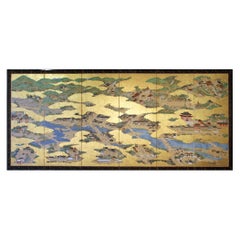
A six-panel folding screen with a narrative painting showing from a bird’s-eye view a spring landscape with cherry blossoms and cryptomeria trees by a river with a bridge. Groups of ...

Category

17th Century Japanese Edo Antique Gold Asian Art and Furniture

Materials

Gold Leaf

Japanese Edo Six Panel Screen Yoshitsune and Benkei

Japanese Edo Six Panel Screen Yoshitsune and Benkei

Located in Rio Vista, CA

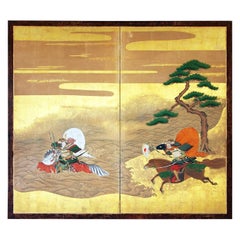
Spectacular 19th century Japanese late Edo period six-panel byobu screen depicting Yoshitsune and Benkei, two heroes of Japanese folklore. Crafted in ink and natural color pigments on mulberry paper with thick gold leaf borders on each panel. The character Yoshitsune is seated under a blossoming cherry tree in full armor holding a fan. The warrior priest or monk Benkei is depicted kneeling on a leopard skin...

Category

19th Century Japanese Edo Antique Gold Asian Art and Furniture

Materials

Brass, Gold Leaf

Japanese Antique Hand Painted Lotus And Blue Waters Screen Vibrant Colors

Japanese Antique Hand Painted Lotus And Blue Waters Screen Vibrant Colors

Located in South Burlington, VT

From our recent Japanese Acquisitions- Hard to Find Lotus Flowers A stunning Japanese Antique Hand Painted six panel byobu screen on silk executed with lovely lotus flowers and vib...

Category

19th Century Japanese Meiji Antique Gold Asian Art and Furniture

Materials

Gold Leaf

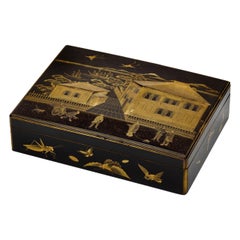
FUJI YOSHITOYO 1880 Japan Komai Desk Box In Gold Inlaid Iron damascene 24Kt Gold

FUJI YOSHITOYO 1880 Japan Komai Desk Box In Gold Inlaid Iron damascene 24Kt Gold

Located in Miami, FL

A gold damascene Komai desk box designed by Fujii Yoshitoyo. This is a beautiful decorative presentation box created in the Imperial Japan during the Meiji period, back in 1880. The...

Category

1880s Japanese Meiji Antique Gold Asian Art and Furniture

Materials

Gold, Bronze

Paravent - A two-fold screen with the Uji Bridge - Rimpa school, 17th Century

Paravent - A two-fold screen with the Uji Bridge - Rimpa school, 17th Century

Located in Brussels, BE

A two-fold Japanese paper screen painted in ink and colour on a gold ground with the Uji River and lotus beneath its renowned bridge. Rimpa School, Japan 17th century, Edo period. ...

Category

17th Century Japanese Other Antique Gold Asian Art and Furniture

Materials

Gold Leaf

17th Century Japanese Screen Pair. Flock of Cranes. Ink and color on gold leaf.

17th Century Japanese Screen Pair. Flock of Cranes. Ink and color on gold leaf.

Located in Kyoto, JP

A pair of six-fold Japanese screens from the 17th century depicting a flock of cranes arriving at their wintering grounds. The expansive scene is heavily atmospheric. The cranes are...

Category

17th Century Japanese Edo Antique Gold Asian Art and Furniture

Materials

Gold Leaf

Pair Japanese Edo Six Panel Harimaze Decoupage Screens

Pair Japanese Edo Six Panel Harimaze Decoupage Screens

Located in Rio Vista, CA

Incredible pair of late 18th/early 19th century Japanese Edo period six panel folding byobu screens featuring Harimaze decoupage, applied paintings and drawing. Each screen is an ama...

Category

19th Century Japanese Edo Antique Gold Asian Art and Furniture

Materials

Gold Leaf

Panoramic Mural Hand Painted Wallpaper on Gold Metallic, Accept Custom Size

Panoramic Mural Hand Painted Wallpaper on Gold Metallic, Accept Custom Size

Located in Wuxi, 32

If you love the look of De Gournay wallpaper but not the price, this is for you. The colorways in this sections present our latest colorways, which can be applied to any designs a...

Category

21st Century and Contemporary Chinese Gold Asian Art and Furniture

Materials

Gold Leaf

Early 20th Century Japanese Screen. Flowers of the Four Seasons.

Early 20th Century Japanese Screen. Flowers of the Four Seasons.

Located in Kyoto, JP

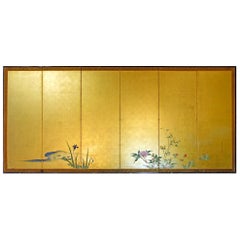
Anonymous Flowers of the Four Seasons A four-panel Japanese screen. Ink, gofun and pigments on gold leaf. This Japanese screen is a rich visual celebration of the flowers of the fo...

Category

Early 20th Century Japanese Taisho Gold Asian Art and Furniture

Materials

Gold Leaf

Japanese Six-Panel Folding Screen with Floral Landscape

Japanese Six-Panel Folding Screen with Floral Landscape

Located in Fukuoka, JP

Elegant Japanese six-panel byōbu depicting a tranquil landscape with blooming flowers set against softly rendered hills and stylized clouds. The composition is balanced and serene, w...

Category

20th Century Japanese Showa Gold Asian Art and Furniture

Materials

Gold Leaf

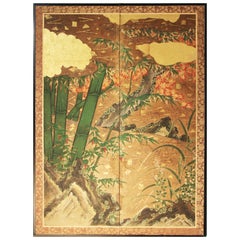
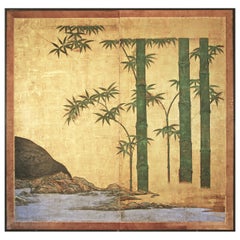
A two-panel folding screen with bamboo plants on gold leaf

A two-panel folding screen with bamboo plants on gold leaf

Located in Milano, IT

A Japanese two-panel folding screen painted with pigments on a gold leaf ground, depicting a group of bamboo plants. The composition features slender stalks alternating with thinner ...

Category

Early 20th Century Japanese Gold Asian Art and Furniture

Materials

Gold Leaf

19th Century Japanese Screen for Tea-Ceremony, Ink Bamboo and Plum on Gold Leaf

19th Century Japanese Screen for Tea-Ceremony, Ink Bamboo and Plum on Gold Leaf

Located in Kyoto, JP

Three Friends of Winter Nakajima Raisho (1796-1871) Late Edo period, circa 1850 Ink and gold leaf on paper. This is a double-sided Japanese Furosaki or tea-ceremony screen from the mid 19th century; bamboo and plum on the front, young pines the back. It by Nakajima Raisho, a master painter of the Maruyama school in the late Edo and early Meiji periods. In this work Raisho combines exquisite ink brushwork with large open spaces of brilliant gold-leaf to inspire the viewers imagination. Rather than naturalism, he is searching for the phycological impression of the motifs, resulting in abstraction and stylization. His simplification of the motifs the result of looking to capture the inner nature of the objects. This art motif is known as Sho Chiku Bai, or the Three Friends of Winter. Evergreen pine connotes steadfastness, bamboo suggests both strength and flexibility, while plum blossoms unfurling on snow-laden branches imply hardiness. Combined, this trio is emblematic of Japanese new year. Chinese literati were the first to group the three plants together due to their noble characteristics. Like these resilient plants flowering so beautifully in winter, it was expected of the scholar-gentleman to cultivate a strong character with which he would be able to show the same degree of perseverance and steadfastness even during times of adverse conditions. The screen would have been placed near the hearth of a room used for the Japanese tea ceremony, shielding the fire from draughts and also forming a stimulating and decorative backdrop behind the tea utensils. It would have been used in the Hatsugama, or first tea-ceremony of the new year. Nakajima Raisho (1796-1871) originally studied under Watanabe Nangaku before entering the school of Maruyama Ozui. He was the highest ranking Maruyama school painter at the end of the Edo period and was known as one of the ‘Four Heian Families’ along with Kishi...

Category

Mid-19th Century Japanese Edo Antique Gold Asian Art and Furniture

Materials

Gold Leaf

Early 20th Century Japanese Cherry Blossom Screen by Kano Sanrakuki

Early 20th Century Japanese Cherry Blossom Screen by Kano Sanrakuki

Located in Kyoto, JP

Cherry Blossoms Kano Sanrakuki (1898-1981) Showa period, circa 1930 2-panel Japanese Screen Color, gofun and gold leaf on paper Against a backdrop of gold-leafed ground, the lichen covered trunk and branches of the life-sized cherry blossom tree reach out and beyond the confines of the pictorial surface. The overall composition has a feeling of flatness which draws emphasis to the surface and the three-dimensionality of the cherry blossoms. Painstakingly built-up layers of thickly applied shell-white gofun detail the voluminous blossoms and cover large areas of this tour-de-force of Japanese Nihonga painting. By simplifying the background, minimizing the number of colors and depicting the blossoms with such heavy relief, the artist has emphasized the stunning presence of the cherry tree. The type of tree depicted is the Yae-Zakura; a double-layered type of cherry blossom famed for its beauty and strength. When we think of Japanese cherry blossoms, the first thing that comes to mind is Somei Yoshino variety, which has a single flower with five almost white petals. This type is fragile and easily blown away by strong wind or rain. Most of the double-flowered cherry blossoms begin to bloom when the Somei-Yoshino falls, and the flowering period lasts longer than that of the Somei-Yoshino. Kano Sanrakuki originally studied painting at the Kyoto City Arts and Crafts School under the tutelage of Yamamoto Shunkyo...

Category

Early 20th Century Japanese Showa Gold Asian Art and Furniture

Materials

Gold Leaf

17th Century Japanese Screen. Flowers & Birds of Winter and Early Spring.

17th Century Japanese Screen. Flowers & Birds of Winter and Early Spring.

Located in Kyoto, JP

Signed Unkoku Toyu (1660-1716) Flowers & Birds of Winter and Early Spring A Six-panel Japanese Screen. Ink, color and gold leaf on paper. This later 17th century Japanese screen is signed Unkoku Tōyū (1660–1716), a leading figure of the Unkoku school in the early Edo period. Tōyū was the eldest son of Unkoku Tōji, and he carried forward a lineage that deliberately anchored itself in the authority of Sesshū Tōyō. The mood of the scene is observational and seasonal, not emblematic of power as were many screens from the more wide-spread Kano school. The composition is unified by wind and atmosphere. Everything — bamboo, plum, reeds, water, birds — participates in a single directional force moving from left to right. Unlike certain later screens that flatten elements across the surface, this composition preserves a sense of depth. Yet the recession is moderated by gold clouds and frontal placement of forms. The result is a balanced tension between depth and surface. The compositional structure — with its expansive sweep across the panels — reflects the decorative ambition of Momoyama screen...

Category

Late 17th Century Japanese Edo Antique Gold Asian Art and Furniture

Materials

Gold Leaf

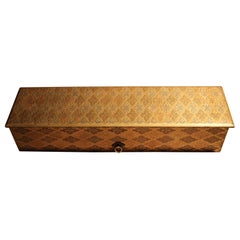
Japanese Mixed Metals Box by Fujii Yoshitoyo, Meiji Period

Japanese Mixed Metals Box by Fujii Yoshitoyo, Meiji Period

By Fujii Yoshitoyo

Located in Newark, England

IMPRESSIVE SIZE MIXED METALS BOX From our Japanese collection, we are pleased to offer this Japanese Mixed Metals Box by Fujii Yoshitoyo. This substantial rectangular box, raised u...

Category

Late 19th Century Japanese Meiji Antique Gold Asian Art and Furniture

Materials

Metal, Gold Plate, Silver, Brass

Paravent - An eight-fold screen with flowers of the four seasons and poem slips

Paravent - An eight-fold screen with flowers of the four seasons and poem slips

Located in Brussels, BE

An eight-fold Japanese paper screen painted in ink and colour on a gold leaf ground depicting various flowers of the four seasons with tanzaku (poem slips) by Kagawa Kageki (1768-184...

Category

Early 19th Century Japanese Edo Antique Gold Asian Art and Furniture

Materials

Gold Leaf

Japanese Edo Six Panel Table Screen After Maruyama Okyo

Japanese Edo Six Panel Table Screen After Maruyama Okyo

Located in Rio Vista, CA

Fantastic diminutive Japanese Edo period table top screen depicting a lively water landscape with flora and fauna. The screen is beautifully painted o...

Category

19th Century Japanese Edo Antique Gold Asian Art and Furniture

Materials

Brass, Gold Leaf

Japanese Porcelain Vase in Red and Blue by Contemporary Master Artist

Japanese Porcelain Vase in Red and Blue by Contemporary Master Artist

Located in Takarazuka, JP

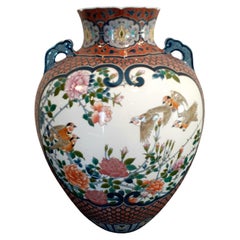
Stunning contemporary decorative porcelain vase showcasing a blue and turquoise Phoenix gracefully extending its wings all around the body of the vase on a red background with a deta...

Category

21st Century and Contemporary Japanese Meiji Gold Asian Art and Furniture

Materials

Gold

Japanese Asian Signed Edo Period Kano School Painting of Mythical Landscape

Japanese Asian Signed Edo Period Kano School Painting of Mythical Landscape

Located in Studio City, CA

A beautiful, wonderfully composed and engaging original hand-painted large Japanese Edo period Kano School painting depicting an almost magical/ mythical village landscape scene with...

Category

18th Century Japanese Edo Antique Gold Asian Art and Furniture

Materials

Gold Leaf