Japanese Screen Owl

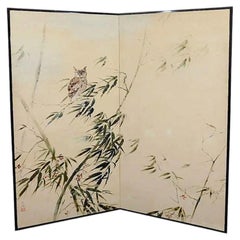
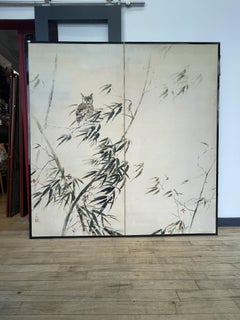
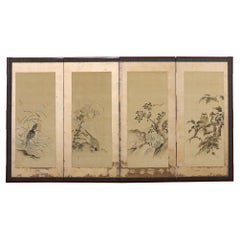
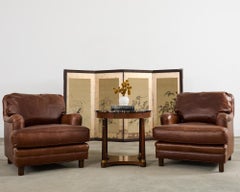
Japanese Kano School Four Panel Screen Birds and Owl

Japanese Kano School Four Panel Screen Birds and Owl

Located in Rio Vista, CA

Amazing 19th century Japanese Meiji period four-panel byobu screen featuring painted panels

Category

Antique 19th Century Japanese Meiji Paintings and Screens

Materials

Gold Leaf

Recent Sales

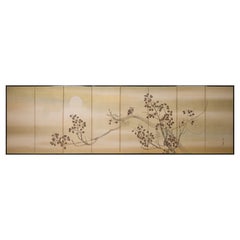
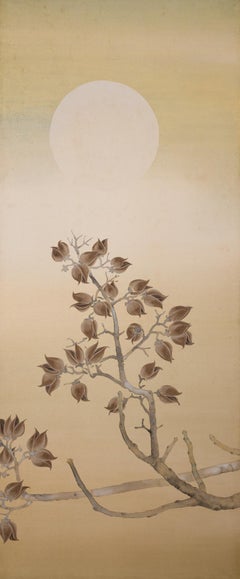
Japanese Eight Panel Screen Owl in a Moonlit Landscape

Japanese Eight Panel Screen Owl in a Moonlit Landscape

Located in Hudson, NY

Mineral pigment on paper. Hand stenciled back paper. Signature reads: Kagai.

Category

Antique Late 19th Century Japanese Paintings and Screens

Materials

Paper

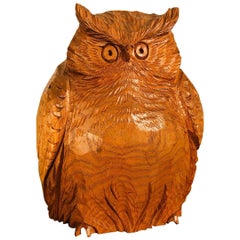
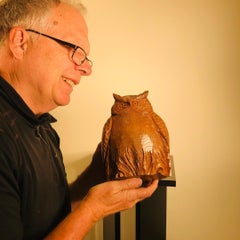
Japanese Hand Carved  Owl, Fine Mid Century Work of Art

Japanese Hand Carved Owl, Fine Mid Century Work of Art

Located in South Burlington, VT

The Japanese name for owl is Fukuro which can be written with a meaning of Luck to come and the other

Category

Mid-20th Century Japanese Showa Paintings and Screens

Materials

Wood

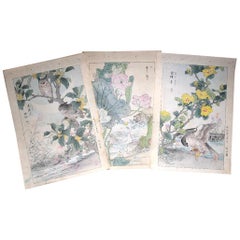
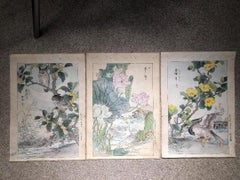
Japanese Unique "Owls & Flowers" Hand Paintings Set of Three Kono Bairei 1899

Japanese Unique "Owls & Flowers" Hand Paintings Set of Three Kono Bairei 1899

Located in South Burlington, VT

From our recent Japanese Acquisitions Travels, #10 A unique and scarce set of three (3) large

Category

Antique 19th Century Japanese Meiji Paintings and Screens

Materials

Paper

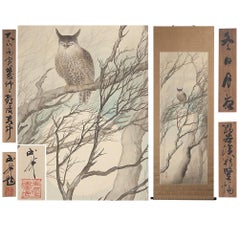
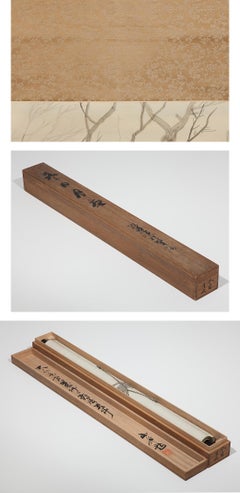
Lovely Owl at Night Nihonga Scene Taisho/Showa Period Scroll Japan Artist

Lovely Owl at Night Nihonga Scene Taisho/Showa Period Scroll Japan Artist

Located in Amsterdam, Noord Holland

Although the condition is good, please understand the thin wrinkles. Please check the image for details. Biography Remark I don't know the details of the author, but this item is ...

Category

Mid-20th Century Japanese Taisho Paintings and Screens

Materials

Silk

People Also Browsed

Pair of Japanese Edo Rimpa School Screens after Tawaraya Sōtatsu

Pair of Japanese Edo Rimpa School Screens after Tawaraya Sōtatsu

Located in Rio Vista, CA

Impressive pair of 17th century Japanese Edo period Rinpa school screens made in the manner and style of Autumn Grasses by Tawaraya Sōtatsu (1570-1640). Beautifully decorated with wi...

Category

Antique 17th Century Japanese Edo Paintings and Screens

Materials

Gold Leaf

B48 Old Japanese Silver folding screen, Byobu 2panel

B48 Old Japanese Silver folding screen, Byobu 2panel

$1,900

H 68.9 in W 34.26 in D 0.79 in

B48 Old Japanese Silver folding screen, Byobu 2panel

Located in Niiza, JP

Unfolded size: 1740 x 1750 x 20 mm Foldable: 870 x 1750 x 40 mm, 7kg Estimated size after packaging (sandwiched between 5 mm plywood): 9 cm x 95 cm x 185 cm Weight 30KG An atmosph...

Category

20th Century Japanese Paintings and Screens

Materials

Paper

Kiku to Hagi Byobu, Rinpa School Style, Edo Period.

Kiku to Hagi Byobu, Rinpa School Style, Edo Period.

$20,000

H 67.25 in W 147 in D 0.75 in

Kiku to Hagi Byobu, Rinpa School Style, Edo Period.

Located in Point Richmond, CA

A Chrysanthemum and Bush Clover painting on gold leaf six-panel folding screen, painted with clusters of leafy green chrysanthemum plants with white blossoms having moriage relief p...

Category

Antique Early 1800s Japanese Edo Paintings and Screens

Materials

Gold Leaf

Japanese Screen: Flow of Time in Gold

Japanese Screen: Flow of Time in Gold

$5,040Sale Price|20% Off

H 47.64 in W 108.67 in D 1.19 in

Japanese Screen: Flow of Time in Gold

Located in Fukuoka, JP

Seasons Flowing in Gold is a masterful expression of depth and rhythm, painted with a subtle three-dimensional effect that brings the landscape to life. From the snow-laden willow a...

Category

Antique Early 19th Century Japanese Edo Paintings and Screens

Materials

Wood, Paper

19th Century Japanese Paintings. Zenga Tiger and Dragon by Inoue Kanshu.

19th Century Japanese Paintings. Zenga Tiger and Dragon by Inoue Kanshu.

Located in Kyoto, JP

Inoue Kanshu (1807-1880) Zenga Tiger and Dragon 19th century Pair of framed Japanese paintings. Ink on silk. Dimensions (each): W. 114 cm x H. 115 cm (45” x 45”) Presented here ...

Category

Antique Mid-19th Century Japanese Meiji Paintings and Screens

Materials

Silk

Japanese Silver Screen Pair, Meiji Period, Herons & Plovers, Shijo School

Japanese Silver Screen Pair, Meiji Period, Herons & Plovers, Shijo School

Located in Kyoto, JP

Heron & Plovers Ink and silver leaf on paper Maekawa Bunrei (1837-1917) A pair of low six-panel Japanese screens by Maekawa Bunrei, a later master of the Kyoto based Shijo school ...

Category

Antique Early 1900s Japanese Meiji Paintings and Screens

Materials

Silver Leaf

Japanese Four Panel Screen, Autumn Flowers

Japanese Four Panel Screen, Autumn Flowers

$21,275

H 49.25 in W 91.5 in D 0.75 in

Japanese Four Panel Screen, Autumn Flowers

Located in Hudson, NY

Taisho period painting (1912-1926) of a fall landscape with wild grasses, red maple, and dahlias. Mineral pigments on gold with a silk brocade border and beautiful metal mounts.

Category

Vintage 1920s Japanese Taisho Paintings and Screens

Materials

Silk, Wood, Paper

Japanese Six-Panel Screen Byobu With Chrysanthemums And Autumn Grass and Flower

Japanese Six-Panel Screen Byobu With Chrysanthemums And Autumn Grass and Flower

Located in Torino, IT

The 19th Century Six-Panel Japanese folding screen "Byōbu" usually used in the most important Japanese house to stop wind and also to separate different space of the same big room de...

Category

Antique Mid-19th Century Japanese Edo Paintings and Screens

Materials

Gold Leaf

Stunning Set of Four 19th Century Edo Period Fusuma Door Decorative Panels

Stunning Set of Four 19th Century Edo Period Fusuma Door Decorative Panels

Located in Los Angeles, CA

A set of four fusuma (sliding door) panels from the 19th century, painted in ink and colors on gold leaf. The panels depict a blossoming cherry tree extending beyond a woven fence an...

Category

Antique Late 19th Century Japanese Edo Paintings and Screens

Materials

Gold Leaf, Brass

Japanese Two-Panel Screen Peony, Wisteria, Cherry and Bamboo on Soft Silver

Japanese Two-Panel Screen Peony, Wisteria, Cherry and Bamboo on Soft Silver

Located in Hudson, NY

Japanese two-panel screen: Peony, Wisteria, cherry and bamboo on soft silver, Meiji period (1868-1912) painting of a garden in spring. Painted in mineral pigments on oxidized silver ...

Category

Antique Early 1900s Japanese Meiji Paintings and Screens

Materials

Silver Leaf

Early 19th Century Rimpa School Floral Screen

Early 19th Century Rimpa School Floral Screen

$13,260Sale Price|25% Off

H 67.33 in W 144.49 in D 1.19 in

Early 19th Century Rimpa School Floral Screen

By Rimpa School

Located in Fukuoka, JP

Early 19th Century Rimpa School Floral Screen Period: Early 19th Century Dimensions: 367x171 cm (144.5x67.3 inches) SKU: RJ118/2 This 6-panel gold-leafed screen is a splendid repre...

Category

Antique Early 19th Century Japanese Edo Paintings and Screens

Materials

Gold Leaf

A pair of six-panel folding screens depicting two pine trees (matsu)

A pair of six-panel folding screens depicting two pine trees (matsu)

Located in Milano, IT

A pair of six-panel folding screens from the Kano school, painted in ink and pigments on paper. The naturalistic composition is dominated by two lush green pine trees extending from ...

Category

Antique 19th Century Japanese Paintings and Screens

Materials

Paper

19th Japanese Screen with Cranes and Pine on a Golden Background

19th Japanese Screen with Cranes and Pine on a Golden Background

Located in Marbella, ES

A spectacular antique Japanese six-panel screen, decorated with an elegant scene of cranes beside a pine tree against a gold leaf background. The composition, remarkably balanced and...

Category

Antique 19th Century Japanese Paintings

Materials

Gold, Iron

Wooden door with old Japanese bamboo painting/Wall hanging painting/Wooden door

Wooden door with old Japanese bamboo painting/Wall hanging painting/Wooden door

Located in Sammu-shi, Chiba

This is a one-panel wooden door made in Japan around the 20th century. The material used is presumed to be Japanese cypress or Japanese cedar, and the delicately straight grain of th...

Category

20th Century Japanese Taisho Paintings

Materials

Cedar

Japanese Two Panel Screen: Garden Landscape

Japanese Two Panel Screen: Garden Landscape

$25,875

H 64.5 in W 68.5 in D 0.75 in

Japanese Two Panel Screen: Garden Landscape

Located in Hudson, NY

Beautifully painted garden lanscape with red and white azalias, old wisteria vine in bloom with doves. Mineral pigments on silk with black lacquer trim and beautiful bronze hardware....

Category

Early 20th Century Japanese Paintings and Screens

Materials

Bronze

Set of Four Japanese Silk Hanging Scrolls Screens C.1920

Set of Four Japanese Silk Hanging Scrolls Screens C.1920

$6,049Sale Price / set|20% Off

H 83.27 in W 70.08 in D 0.04 in

Set of Four Japanese Silk Hanging Scrolls Screens C.1920

Located in London, GB

A stunning set of four Japanese silk mounted vertical hanging scrolls. Dating from C.1920 Taisho Period. The watercolour and ink on silk depicts a large cherry blossom tree with ...

Category

Vintage 1920s Japanese Japonisme Paintings and Screens

Materials

Silk

Get Updated with New Arrivals
Save "Japanese Screen Owl", and we’ll notify you when there are new listings in this category.

Finding the Right Paintings-screens for You

Traditional Asian paintings were often created on scrolls and folding screens. Artisans made screens that could be folded up or spread out by connecting several panels using hinges. Today, antique Asian folding screens and paintings are sophisticated decorative accents that can serve as makeshift partitions to ensure privacy.

The original folding screens were created by Chinese artists. The earliest record of screens comes from the 2nd century B.C., and surviving examples date back to the Ming dynasty. Chinese painting utilizes many of the same tools as calligraphy — these screens were crafted from wood with painted panels featuring striking art or calligraphy that told cultural stories or represented nature and life in the area.

The practice was introduced to Japan, where paintings for screens were made on paper and silk, in the 8th century. These paintings frequently feature subjects such as landscapes, animals, flowers and Buddhist religious themes. Along with screens for tea ceremonies and dance backgrounds, there were screens for use in Shinto and Buddhist temples.

In the 17th century, screens began to be imported to Europe where their popularity grew. Coco Chanel famously collected Coromandel folding screens.

Traditional Asian paintings can make a tasteful addition to any wall, and screens can be used as decoration or, in the case of larger iterations, as an aesthetic way to divide a large room. Browse the selection of antique Asian paintings and screens from a variety of styles and eras on 1stDibs.