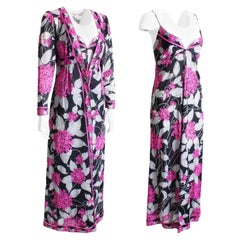
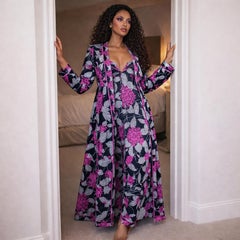
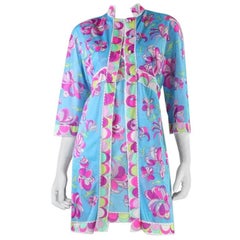
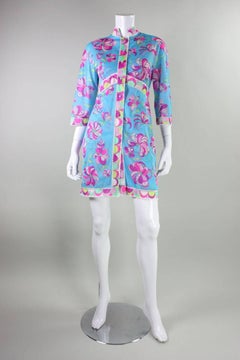
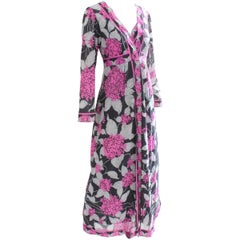
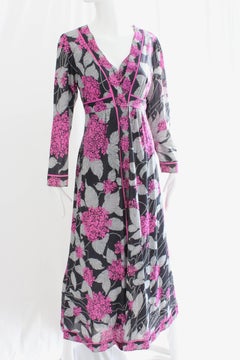
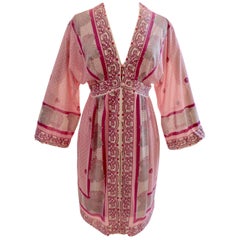
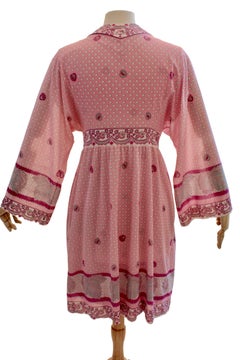
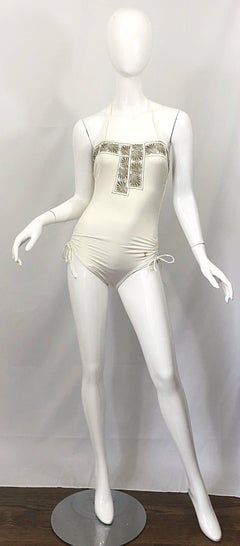
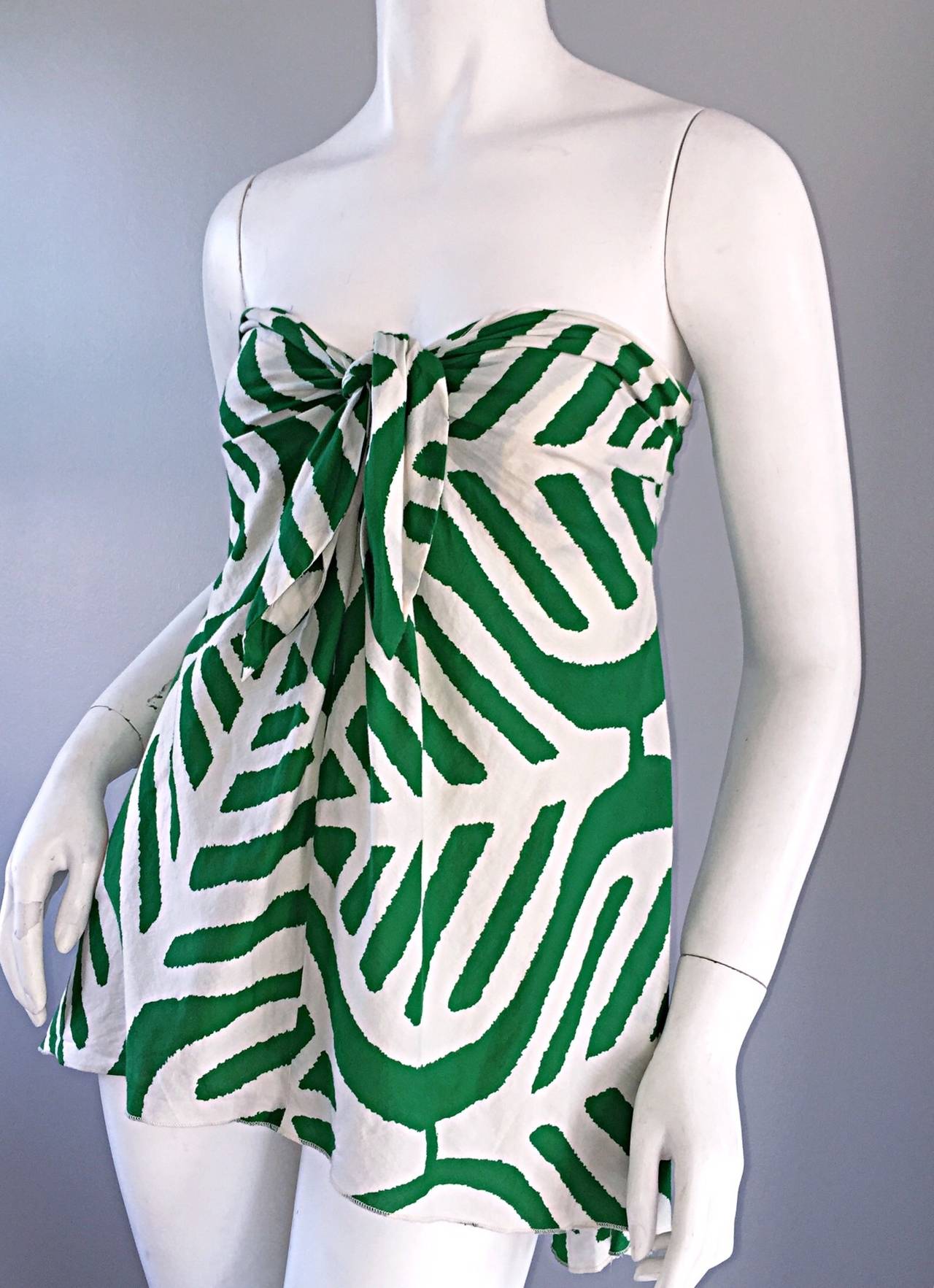
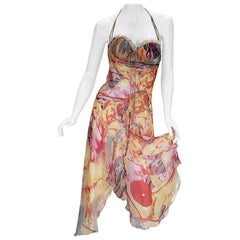
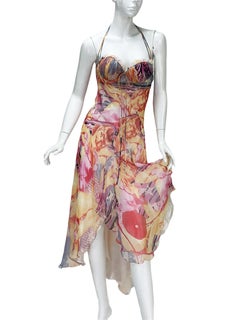
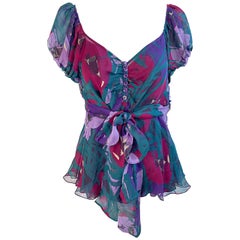
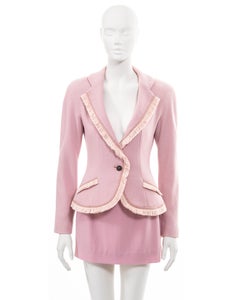
By the mid-1960s, the international fashion press, enamored of his dazzling scarves and slithery dresses in sensuous psychedelic silk jersey, had dubbed Florentine designer Emilio Pucci the Prince of Prints. Less well known is that, starting in the early 1950s, Pucci applied his colorful, abstract patterns to static angular mediums such as ceramics, floors and furniture, imbuing them with movement, not to mention glamour. He was the first fashion designer to enter the lifestyle market, founding the successful brand that exists today.
Born in 1914 to one of Italy’s oldest noble families, Emilio Pucci, Marchese Pucci di Barsento, was a member of the postwar international jet set, hopping from beach to mountain to city. His fashion career began unexpectedly in 1947, when he created a revolutionary stretch ski outfit that was photographed on the Swiss slopes for Harper’s Bazaar.
Eschewing a life of aristocratic glamour, the self-taught Pucci opened a boutique on Capri dedicated to simple resort clothing (think capri pants) that evoked the Mediterranean’s undulating waves and refreshingly bright colors. At the time, luxury fashion was as constricted as a Dior cocktail dress, but the Swinging Sixties were on the horizon. Signed with what Vogue International editor Suzy Menkes calls a “handwritten ‘Emilio’ flourish” — a concept, she points out, as novel as that of designer ready-to-wear — his designs were soon seen on celebrities like Jackie Kennedy and Marilyn Monroe.
From the airline uniforms he created for Braniff in the 1960s to the emblem he crafted for the Apollo XV space mission in 1971, Pucci’s designs were visionary. In spite of his traditional roots (or because of them), the Prince of Prints was forward thinking and outward looking. Pucci put his signature flourish on patterns that were flexible — first for fashion, then for furnishings and objects. Whether on fabric or foam, shelves or sails, as he first explained some 70 years ago, the ornamental designs work in “continuous motion.” Venturing into nontraditional design partnerships, he laid the groundwork for a future brand, a classic legacy that his daughter Laudomia Pucci continues today.
Find vintage Emilio Pucci evening dresses, scarves, skirts and other clothing and accessories on 1stDibs.
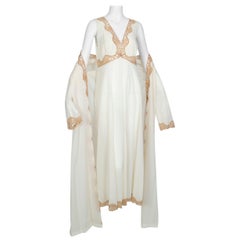
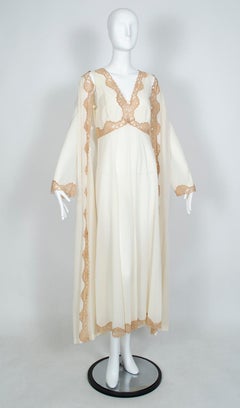
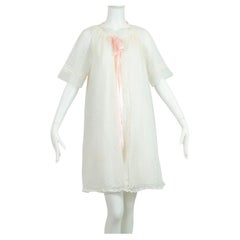
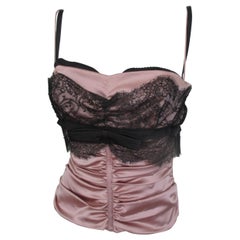
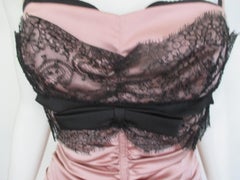
As the most intimate layer of clothing, lingerie has evolved over time from an object of modesty to one of sensuality. Some vintage and designer lingerie includes garments and accessories that are hard, such as corsets and structured bras, while other items are soft to the touch, including nightgowns and slips.
In the 18th century, European women commonly wore whalebone corsets to create the look of an hourglass figure. Corsets were a standard part of women’s fashion into the 19th century. In 1914, Caresse Crosby filed a patent for the first modern bra, made by sewing two handkerchiefs together with ribbon ties. By the 1920s, the corset fell out of fashion in North America and Europe, and loose silhouettes and silky slips became mainstream.
As fashion returned to feminine forms in the 1930s, so did lingerie, with girdles and minimal bras. During World War II, bras were adapted to the rationing of materials like nylon and metal. In the postwar era, women had more lingerie choices than ever before, with inventions including the strapless bra.
In the 1950s, lingerie became more glamorous, matching the trends led by legendary French couturier Christian Dior and his “New Look,” a collection that introduced a new feminine silhouette of extravagant elegance upon its postwar debut. Just as the evolution of women’s swimwear over time reflected changing aesthetic taste as well as social upheaval, shifts in the design of lingerie owed to changing perspectives toward sex and style trends. Mid-century pinup models like Bettie Page transformed the undergarments market forever with a new desire for sexy lingerie. It would lead to the founding of Victoria’s Secret by Roy and Gaye Raymond in 1977.
In the late 1980s, performers like Madonna and Selena wore bustiers as outerwear, a trend that continued through the 1990s and early 2000s. With the broadcasting of the Victoria's Secret fashion show beginning in 1995, everyday style also changed. Lingerie was no longer expected to be hidden away.
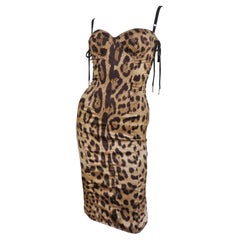
On 1stDibs, find a range of alluring vintage and designer lingerie, including black bodysuits, black bralettes, corsets and more by designers such as Vivienne Westwood, Azzedine Alaïa and Versace.