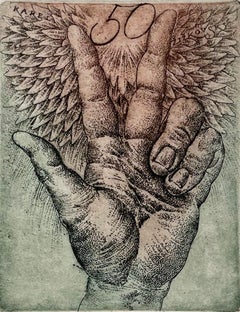
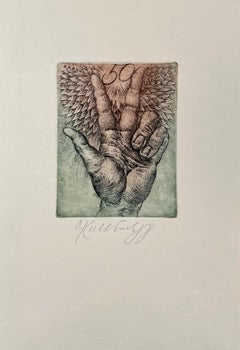
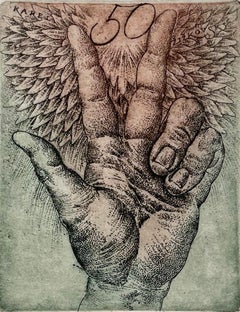
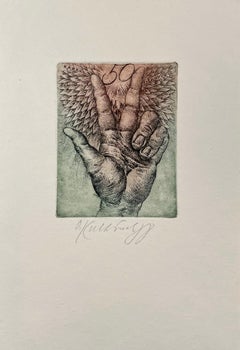
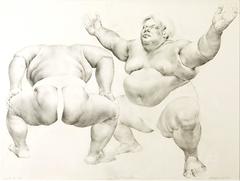
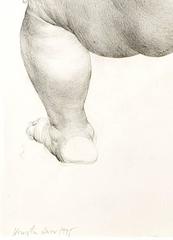
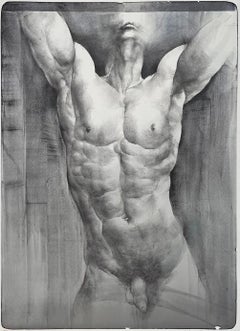
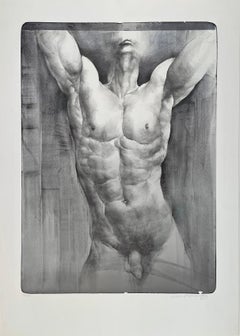
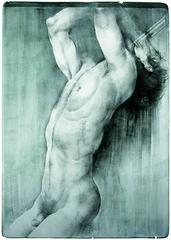
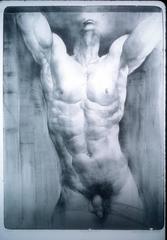
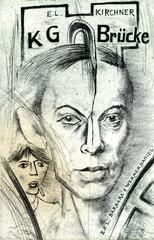
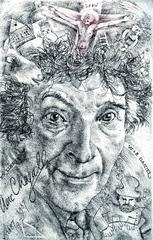
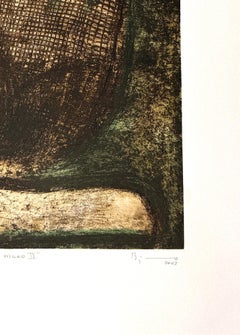
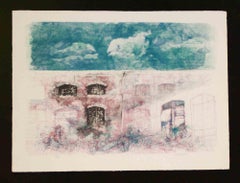
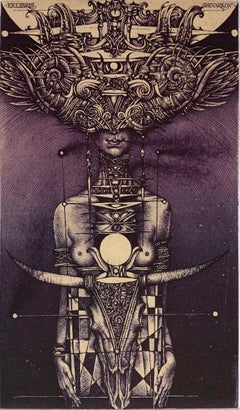
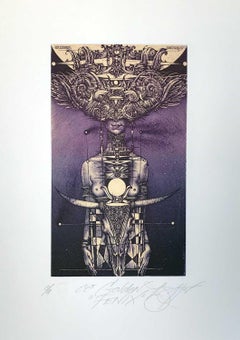
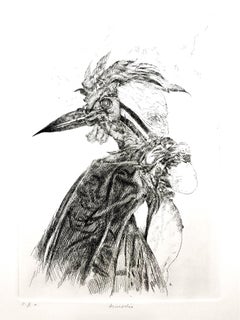
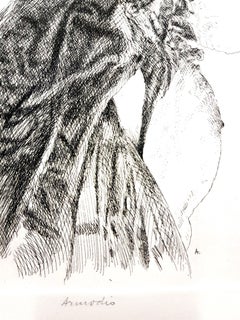
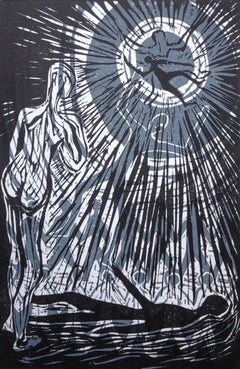
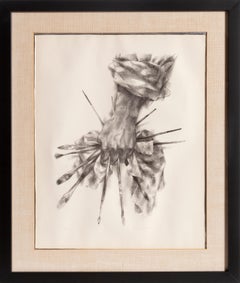
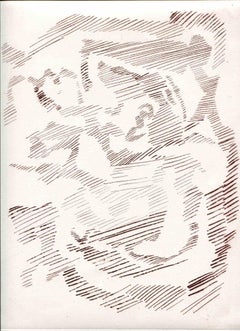
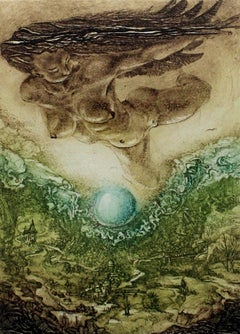
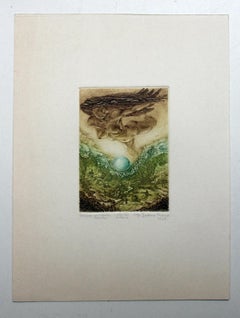
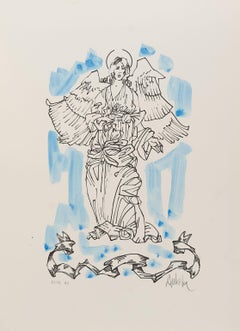
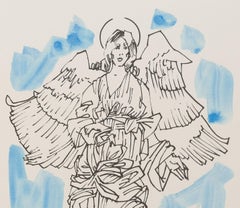
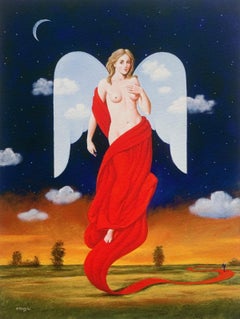
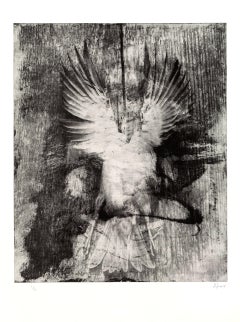
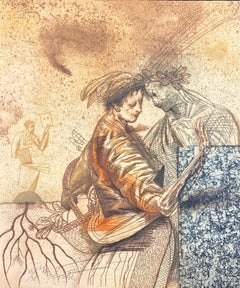
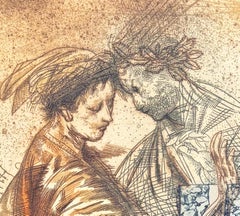
Oldrich Kulhanek was born on 26 February 1940 in Prague. He started studying art at the Secondary Art School in Prague. From 1958 he studied at the College of Applied Arts in Prague in the studio of Prof. Karel Svolinsky. In 1964, Kulhanek completed his studies with a dissertation and illustrations in a book of verses called "Dream" by Vladimir Holan.
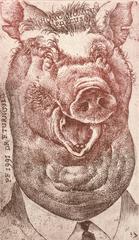
In 1971 Kulhanek was arrested by the StB (the Czech version of KGB) and accused of sedition and defamation of the political representatives in communist countries in his graphic sheets. It was namely the "abuse" of Stalin's face in his graphic art.
The 70`s were thus marked by a total ban from exhibiting, cooperation with publishing houses and any public art. Nevertheless, Kulhanek continued to work and did not wish to play the part of a persona non grata.
His art, unlike its author, found its way into the free world illegally. For instance, Kulhanek's graphic art was displayed in the "Hommage a Albrecht Dürer" exhibition in Nuremberg in 1971. The exhibition was organised to celebrate the anniversary of the 500th birthday of A. Dürer and Kulhanek exhibited under the pseudonym of Ulrich Böhm.
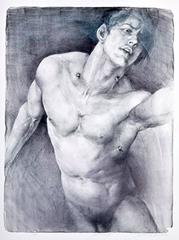
In 1990 Kulhanek visited the USA for the first time to participate in a Lithographic Workshop in Los Angeles. Since then he has been invited to the States many times. In the summer of 1991, Kulhanek gave a seminar on drawing in the Atlantic Center for the Arts, New Smyrne Beach and was a guest lecturer at the University of Houston-Clear Lake in Texas in 1995.
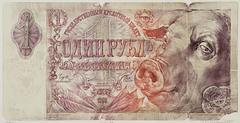
Between 1992 and 1993 Kulhanek was involved in the new Czech banknotes project.
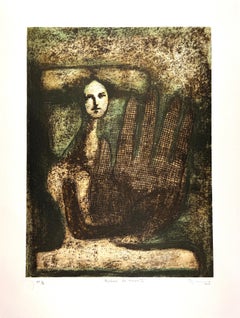
During 1994 he created a cycle of lithographs called "Ecce homo".
A large monography about him, written by Eva Petrova, was published in 1997.
Bring energy and an array of welcome colors and textures into your space by decorating with figurative fine-art prints and works on paper.
Figurative art stands in contrast to abstract art, which is more expressive than representational. The oldest-known work of figurative art is a figurative painting — specifically, a rock painting of an animal made over 40,000 years ago in Borneo. This remnant of a remote past has long faded, but its depiction of a cattle-like creature in elegant ocher markings endures.
Since then, figurative art has evolved significantly as it continues to represent the world, including a breadth of works on paper, including printmaking. This includes woodcuts, which are a type of relief print with perennial popularity among collectors. The artist carves into a block and applies ink to the raised surface, which is then pressed onto paper. There are also planographic prints, which use metal plates, stones or other flat surfaces as their base. The artist will often draw on the surface with grease crayon and then apply ink to those markings. Lithographs are a common version of planographic prints.
Figurative art printmaking was especially popular during the height of the Pop art movement, and this kind of work can be seen in artist Andy Warhol’s extensive use of photographic silkscreen printing. Everyday objects, logos and scenes were given a unique twist, whether in the style of a comic strip or in the use of neon colors.
Explore an impressive collection of figurative art prints for sale on 1stDibs and read about how to arrange your wall art.