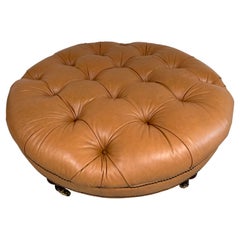
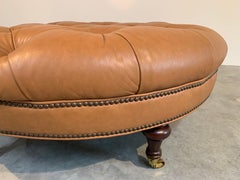
The expansion of the British Empire brought Chesterfield sofas around the world, such as in Canada, where the word “chesterfield” refers to any type of sofa. Antique Chesterfield-style furniture now includes seating in a range of sizes and aesthetics, from velvet love seats and linen-upholstered club chairs to ottomans accompanying classic leather sofas.
Popular lore dates the Chesterfield sofa to Philip Dormer Stanhope, fourth earl of Chesterfield. The arbiter of taste and manners in 18th-century England was best known for publishing guides on how to behave in society to attain success. The story goes that he commissioned a sofa in the mid-1700s designed so he could sit on it while not wrinkling his clothes. He later bequeathed it to his godson, and the seating style spread in popularity, eventually becoming an icon of British interior design.
Although this origin is not recorded, it resonates with the iconic sofa’s urbane sophistication. Traditionally made with tall rolled arms the same height as the back, deep buttoning on dark brown leather upholstery, tacked trim and an imposing yet elegant profile, it evokes English estates and the gentlemen’s clubs of London. It became a staple amid the Victorian era’s embrace of comfort. Tartan versions were in Queen Victoria’s drawing room at Balmoral Castle, giving the space a Scottish flair.
Some Chesterfield sofas are slimmed down in shape, others have taller legs for a lighter appearance. And while leather Chesterfield sofas are a more common variant — and can easily elevate a workspace as luxury office furniture — a velvet Chesterfield sofa possesses a singular chameleonic property, softening and emboldening the spaces it inhabits. Whether it’s the focal point of a living room, hotel lobby or trendy restaurant, the Chesterfield remains a status symbol, channeling the sophisticated tastes of its namesake.
Find a collection of antique Chesterfield seating, including sofas, settees, armchairs and lounge chairs, on 1stDibs.
Antique and vintage ottomans and poufs add comfort and style to any living room, game room, home office or minimalist lounge space. An ottoman is a short seat or footstool that is also often used to store items. A pouf is similar, but it’s typically more petite than an ottoman, usually without the storage space inside.
When one thinks of the Ottoman Empire, it’s easy to overlook the iconic seat named for the region. The ottoman — originally an upholstered seat or small bench without a back or arms — was a family’s main seating furniture, a way to merge floor seating with cushions and mats. It wasn’t until they were brought to Europe from Turkey, during the 18th century, that it became popular to join ottomans with other pieces of furniture, such as at the base of a chair. Eventually, these footrests were transformed into storage furnishings to organize quilts and blankets or other textiles. Furniture makers crafted their ottomans with lids that revealed a hidden cupboard, which rendered them both comfortable and practical.
Poufs, which appeared in France during the 1840s, are also of the low-platform seating variety. These versatile furnishings have been made available in all manner of shapes and sizes over time, and depending upon their firmness can be used as a side table should an occasion call for an extra one. However, your average ottoman is almost always firmer than a pouf, and even if the plush pouf in your living room feels sturdy, it’s probably not the best surface for your early-evening cocktail.
Both ottomans and poufs can help create an inviting and warm atmosphere in your living space. For the smaller rooms that are characterized by a casual feel, a shaggy or woven wool pouf might be a better choice, as it’s likely to be more compact and floor-cushion-like than an ottoman. The latter are often larger and more table-like and are comparatively a good fit for a more formal room such as a library or a study. Today, you might find that an ottoman works well in your bedroom, where there isn’t room for a sofa, or perhaps it can serve as a reliable perch in front of your vintage vanity table.
Whatever your seating needs are, find a collection of antique, new and vintage ottomans and poufs in varying styles on 1stDibs that include neoclassical, Industrial and mid-century modern. From the bright colors and bold patterns deployed by Milan-born designer Lorenza Bozzoli to the classy leather furnishings created at family-run Brooklyn, New York, atelier Moses Nadel, there is an endless range of these lovable low stools that merge seamlessly with most decor.