To suggest that Ralph Lauren has come a long way is an understatement. From his humble beginnings as a tie salesman working out of a drawer at New York’s Empire State Building, he grew one of the world’s largest and most successful fashion empires from scratch.
For decades, Ralph Lauren’s clothing brand has blended classic, preppy Americana East Coast-style with the look of upper-crust English aristocracy. This style is the hallmark of Ralph Lauren’s design and can be seen in all facets of his brand, from its vintage apparel, accessories and jewelry to furniture and décor.
The iconic fashion designer was born Ralph Rueben Lifshitz in New York City and grew up in the Bronx. When he and his brother were in their teens, they changed their surname from Lifshitz to Lauren after being teased about it at school. Later on, Lauren took business classes at night, worked at various menswear retailers and did a stint in the U.S. Army. While working at tie manufacturer Beau Brummel, he was inspired to create his own line of ties.
In 1967, Lauren launched “Polo,” ties handmade from high-quality fabrics featuring a wide design. They were a success. Lauren sold $500,000 worth to retail giants Bloomingdale’s, Neiman Marcus and Paul Stuart in his first year.
Lauren expanded his designs into clothing, with his first menswear line of classic tweed suits in 1968 and, in 1971, his first line of womenswear featuring classic feminine tailoring. Lauren’s nostalgic fashion soon captured the eye of Hollywood. He created costumes for the 1974 adaptation of The Great Gatsby and was responsible for Diane Keaton’s distinctive feminine menswear look in 1977’s Annie Hall. Ralph Lauren’s designs have since garnered national and international acclaim and recognition — from Gwyneth Paltrow’s iconic pink 1999 Oscars dress to becoming the official outfitter of Team USA for the Olympics since 2008.
In 2018, Ralph Lauren celebrated his 50th anniversary with a star-studded fashion show and, in 2019, was awarded an honorary knighthood — the highest British honor — for services to fashion.
On 1stDibs, discover a wide range of vintage Ralph Lauren shirts, sweaters and other clothing.
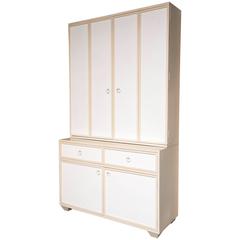
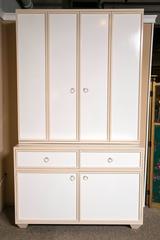
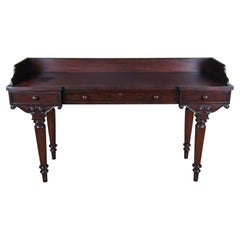
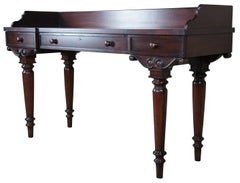
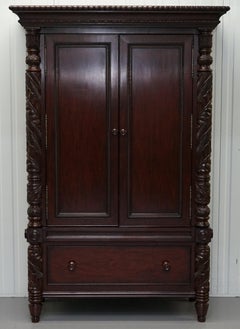
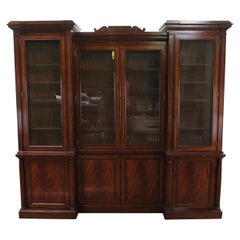
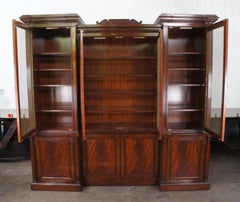
Of all the vintage storage cabinets and antique case pieces that have become popular in modern interiors over the years, dressers, credenzas and cabinets have long been home staples, perfect for routine storage or protection of personal items.
In the mid-19th century, cabinetmakers would mimic styles originating in the Louis XIV, Louis XV and Louis XVI eras for their dressers, bookshelves and other structures, and, later, simpler, streamlined wood designs allowed these “case pieces” or “case goods” — any furnishing that is unupholstered and has some semblance of a storage component — to blend into the background of any interior.
Mid-century modern furniture enthusiasts will cite the tall modular wall units crafted in teak and other sought-after woods of the era by the likes of George Nelson, Poul Cadovius and Finn Juhl. For these highly customizable furnishings, designers of the day delivered an alternative to big, heavy bookcases by considering the use of space — and, in particular, walls — in new and innovative ways. Mid-century modern credenzas, which, long and low, evolved from tables that were built as early as the 14th century in Italy, typically have no legs or very short legs and have grown in popularity as an alluring storage option over time.
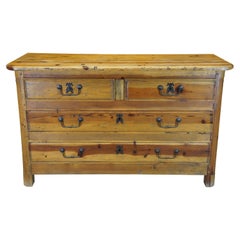
Although the name immediately invokes images of clothing, dressers were initially created in Europe for a much different purpose. This furnishing was initially a flat-surfaced, low-profile side table equipped with a few drawers — a common fixture used to dress and prepare meats in English kitchens throughout the Tudor period. The drawers served as perfect utensil storage. It wasn’t until the design made its way to North America that it became enlarged and equipped with enough space to hold clothing and cosmetics. The very history of case pieces is a testament to their versatility and well-earned place in any room.
In the spirit of positioning your case goods center stage, decluttering can now be design-minded.
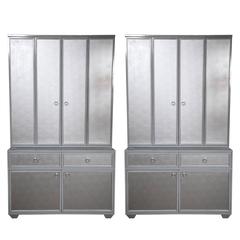
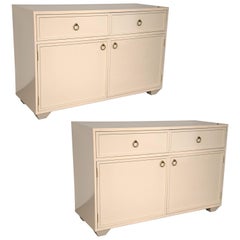
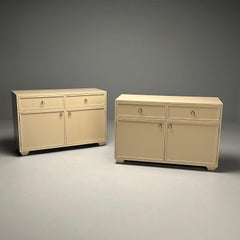
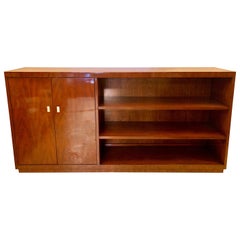
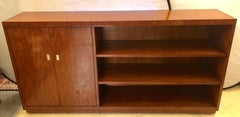
A contemporary case piece with open shelving and painted wood details can prove functional as a storage unit as easily as it can a room divider. Alternatively, apothecary cabinets are charming case goods similar in size to early dressers or commodes but with uniquely sized shelving and (often numerous) drawers.
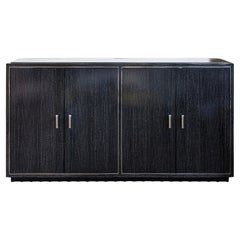
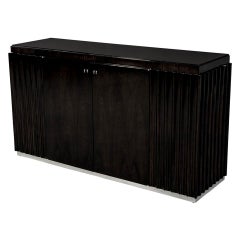
Whether you’re seeking a playful sideboard that features colored glass and metal details, an antique Italian hand-carved storage cabinet or a glass-door vitrine to store and show off your collectibles, there are options for you on 1stDibs.