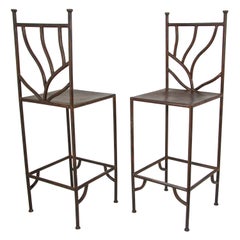
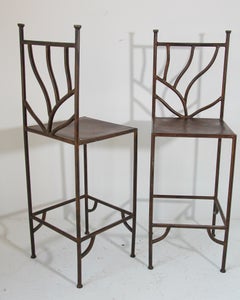
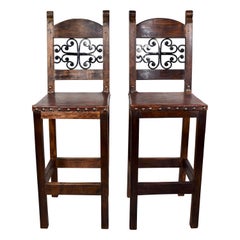
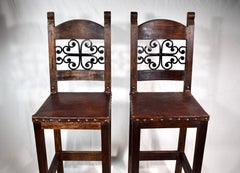
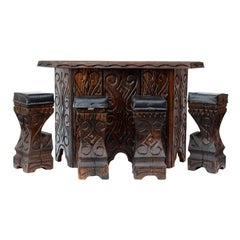
After the conquest of Mexico in 1521 and the Philippines in 1565, Spain dictated a global culture. The colonization of territories in the Americas, Western Europe, Africa, Oceania and the Pacific imposed the values of Spain, including Catholicism, while the extraction of resources reinforced the empire’s wealth and power. Unlike many styles that came out of European colonialism, such as British Colonial, Spanish Colonial furniture and architecture frequently mixed local heritage with the artistic traditions of Spain.
Spanish Colonial furniture was informed by the shifting styles of Europe as well as Indigenous culture. There were Inca tapestries depicting Spanish coats of arms and Baroque chairs adorned with tropical flora. The butaca, a low easy chair popular in the Caribbean, was inspired by Rococo’s curving forms and the shape of precolonial seating. In New Mexico, Pueblo artisans carved chests with patterns reminiscent of Anasazi art.
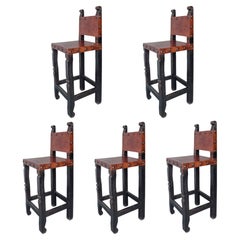
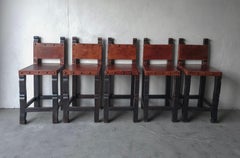
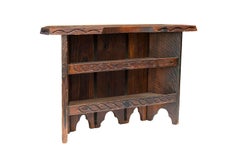
Even within the homes of the wealthy, furniture was usually restricted to necessities like benches, desks, cupboards and chests. These were often ornately designed and especially important for storing prized goods like textiles. Spanish Colonial houses were built with adobe and clay and tended to be minimally decorated, so the style’s heavily carved wooden furniture pieces stood out against a home’s white stucco walls.
The Spanish Colonial period mostly came to an end after the territories achieved independence from Spain. However, its aesthetics continued to influence Southwestern style and Spanish Colonial Revival style after Spanish Colonial style was used extensively at San Diego’s 1915 Panama-California Exposition.
Find a collection of antique Spanish Colonial chairs, tables, bedroom furniture and other furniture on 1stDibs.
Stools are versatile and a necessary addition to any living room, kitchen area or elsewhere in your home. A sofa or reliable lounge chair might nab all the credit, comfort-wise, but don’t discount the roles that good antique, new and vintage stools can play.
“Stools are jewels and statements in a space, and they can also be investment pieces,” says New York City designer Amy Lau, who adds that these seats provide an excellent choice for setting an interior’s general tone.
Stools, which are among the oldest forms of wooden furnishings, may also serve as decorative pieces, even if we’re talking about a stool that is far less sculptural than the gracefully curving molded plywood shells that make up Sōri Yanagi’s provocative Butterfly stool.
Fawn Galli, a New York interior designer, uses her stools in the same way you would use a throw pillow. “I normally buy several styles and move them around the home where needed,” she says.
Stools are smaller pieces of seating as compared to armchairs or dining chairs and can add depth as well as functionality to a space that you’ve set aside for entertaining. For a splash of color, consider the Stool 60, a pioneering work of bentwood by Finnish architect and furniture maker Alvar Aalto. It’s manufactured by Artek and comes in a variety of colored seats and finishes.
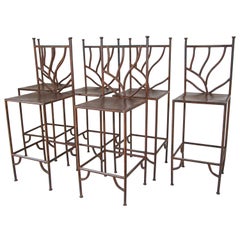
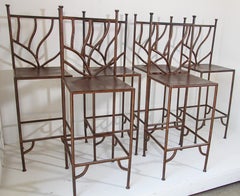
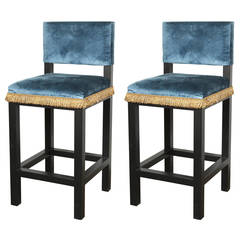
Barstools that date back to the 1970s are now more ubiquitous in kitchens. Vintage barstools have seen renewed interest, be they a meld of chrome and leather or transparent plastic, such as the Lucite and stainless-steel counter stool variety from Indiana-born furniture designer Charles Hollis Jones, who is renowned for his acrylic works. A cluster of barstools — perhaps a set of four brushed-aluminum counter stools by Emeco or Tubby Tube stools by Faye Toogood — can encourage merriment in the kitchen. If you’ve got the room for family and friends to congregate and enjoy cocktails where the cooking is done, consider matching your stools with a tall table.
Whether you need counter stools, drafting stools or another kind, explore an extensive range of antique, new and vintage stools on 1stDibs.