Johann Elias Ridinger Art

to
1
1
2
Overall Width
to
Overall Height
to
2
1
2
1
2
2
1
1
1
1
1
2
1

Use search to find more

6
11,946
2,897
2,541
1,648

Use search to find more

Artist: Johann Elias Ridinger
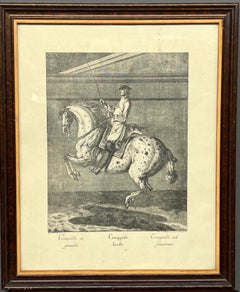
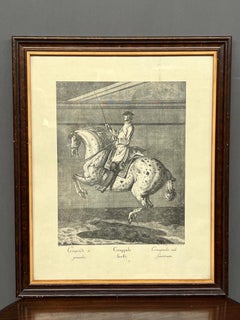
Johann Elias Ridinger (1698-1767) - Framed 1734 Engraving, The New Riding School

Johann Elias Ridinger (1698-1767) - Framed 1734 Engraving, The New Riding School

By Johann Elias Ridinger

Located in Corsham, GB

A finely detailed engraving by the German painter, engraver, and publisher Johann Elias Ridinger (1698-1767). The work depicts an impressive horse with a mottled coat, being led by a...

Category

Early 18th Century Johann Elias Ridinger Art

Materials

Engraving

Related Items
Igor Gabor Artist 1989 Original Hand Signed silkscreen rural nature

Igor Gabor Artist 1989 Original Hand Signed silkscreen rural nature

Located in Miami, FL

Igor Gabor 'Arquitectura', 1989 silkscreen on paper 19.7 x 27.6 in. (50 x 70 cm.) Edition of 25 ID: GAB1057-001-025 Unframed Hand-signed by author

Category

1980s Contemporary Johann Elias Ridinger Art

Materials

Paper, Engraving, Screen

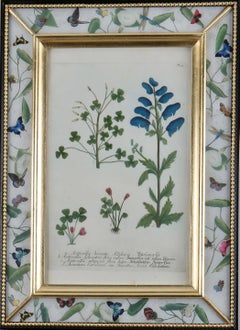
Framed eighteenth century botanical engraving in a decalcomania frame.

Framed eighteenth century botanical engraving in a decalcomania frame.

By Johann Wilhelm Weinmann

Located in Richmond, GB

From a wonderful selection of hand-coloured mezzotint engravings from: "Phytanthoza Iconographia", c1739, presented in a hand- made parcel-gilt, ebonised and decalcomania frame. So...

Category

Mid-18th Century Johann Elias Ridinger Art

Materials

Handmade Paper, Engraving, Mezzotint

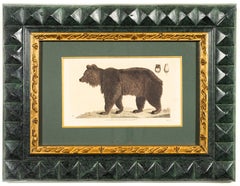
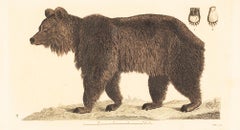
A Bear, Hand-Colored Print From The Early 1800s by Johan Wilhelm Palmstruch

A Bear, Hand-Colored Print From The Early 1800s by Johan Wilhelm Palmstruch

By Johan Wilhelm Palmstruch

Located in Stockholm, SE

Johan Wilhelm Palmstruch (1770-1811) Sweden Title: A Bear hand-coloured print early 1800s print dimensions approx 4.33 x 7.08 inches (11 x 18 cm) frame 11.81 x 15.74 inches (30 ...

Category

Early 19th Century Naturalistic Johann Elias Ridinger Art

Materials

Color

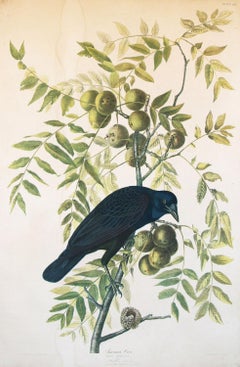
American Crow 1858 Chromolithograph by J.J. Audubon Plate, Julius Bien Edition

American Crow 1858 Chromolithograph by J.J. Audubon Plate, Julius Bien Edition

By John James Audubon

Located in Paonia, CO

American Crow by J.J. Audubon from his Birds of America folio shows an adult male crow in a Black Walnut bush with a nest of a Ruby-Throated Hummingbird in a branch below the crow. This original chromolithograph plate no. 226 is in good condition with a repairable water mark in the image on the left side as can be seen in the photos. The ” Birds of America” by John James...

Category

1850s Naturalistic Johann Elias Ridinger Art

Materials

Lithograph

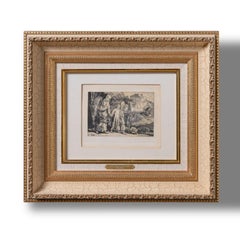
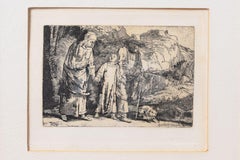
Rembrandt van Rijn - Christ Between His Parents, Returning from the Temple -1820

Rembrandt van Rijn - Christ Between His Parents, Returning from the Temple -1820

By Rembrandt van Rijn

Located in Dallas, TX

Offered here is a compelling later impression of one of Rembrandt’s most intimate biblical subjects, Christ Between His Parents, Returning from the Temple. Executed originally in 1654, the composition captures the youthful Christ walking between Mary and Joseph following the episode in Jerusalem, rendered with remarkable psychological nuance and economy of line. This impression was printed in the early nineteenth century from Rembrandt’s original copperplate and is accompanied by a historical letter attesting to its authenticity and dating. The letter states in part: “In my opinion and to the best of my knowledge, the etching presented to me by Antonio’s Collection and entitled Rembrandt E van RIJM is an authentic Rembrandt etching made from the plates owned by the Museum of Amsterdam. It is probably an etching third state and would date approximately 1820.” The reference to plates held by the Rijksmuseum situates this impression within the long tradition of posthumous printings drawn from Rembrandt’s original matrices—objects that have been preserved, studied, and occasionally re-inked for carefully supervised editions. With its rich burr, velvety shadows, and expressive linear handling, this impression remains faithful to the master’s conception while offering collectors the opportunity to acquire an authentic Rembrandt etching from a later, historically significant printing. Like many of Rembrandt’s etched works, Christ Between His Parents, Returning from the Temple exists in several states, meaning the copperplate was altered over time as the artist reworked details, added lines, or strengthened passages of shadow. First State (1654) The earliest impressions are prized for their freshness and painterly light effects, with delicate burr and subtle modeling in the figures’ garments and faces. These are rare and typically reside in museum collections. Subsequent States Later states reflect adjustments to shading, contours, and background architecture—often deepening contrasts or clarifying forms as Rembrandt refined the narrative focus of the scene. Third State (circa 1820) By the early nineteenth century, impressions were occasionally pulled from the preserved original plates, producing prints that retain the fully developed image while often showing slightly firmer lines and less burr than seventeenth-century impressions. Such examples are historically important, documenting the continued reverence for Rembrandt’s graphic work and the custodial role of European institutions in safeguarding his plates. The accompanying letter provides valuable documentary support, linking this impression to early twentieth-century scholarship and reinforcing its status as an authentic pull from Rembrandt’s plate...

Category

19th Century Old Masters Johann Elias Ridinger Art

Materials

Paper

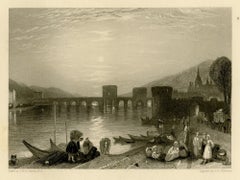
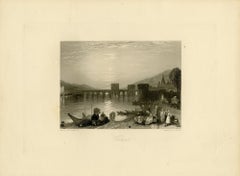
Vernon
Vernon

J.M.W. TurnerVernon, 1845

$250

H 8.51 in W 12.52 in

Vernon

By J.M.W. Turner

Located in Middletown, NY

Turner, J. M. W. & J. T. Willmore (engr.) Vernon London: 1845. Fisher, Son & Co. Engraving on cream wove paper, 8 1/2 x 12 /12 inches (216 x 318 mm), the full sheet, full margins. ...

Category

Mid-19th Century English School Johann Elias Ridinger Art

Materials

Watercolor, Engraving

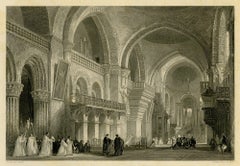
The Cathedral, Angoulême

The Cathedral, Angoulême

By Thomas Allom

Located in Middletown, NY

Allom, Thomas & John Saddler The Cathedral, Angoulême London: Fisher, Son & Co, 1845. Engraving on cream wove paper, 8 1/2 x 12 /12 inches (216 x 318 mm), the full sheet, full marg...

Category

Mid-19th Century English School Johann Elias Ridinger Art

Materials

Engraving

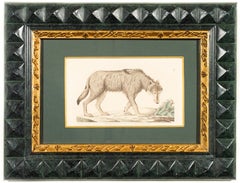
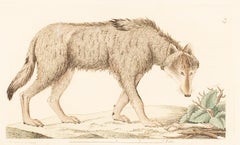
A Wolf, Hand-Colored Print From The Early 1800s by Johan Wilhelm Palmstruch

A Wolf, Hand-Colored Print From The Early 1800s by Johan Wilhelm Palmstruch

By Johan Wilhelm Palmstruch

Located in Stockholm, SE

Johan Wilhelm Palmstruch (1770-1811) Sweden Title: A Wolf hand-coloured print early 1800s print dimensions approx 4.33 x 7.08 inches (11 x 18 cm) frame 11.81 x 15.74 inches (30 ...

Category

Early 19th Century Naturalistic Johann Elias Ridinger Art

Materials

Etching

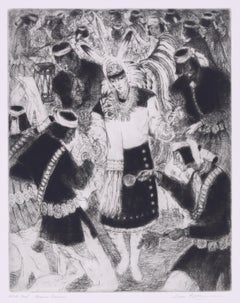
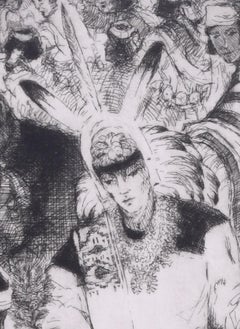
Keresan Dancers
Keresan Dancers

Gene KlossKeresan Dancers, 1962

$2,250

H 13.88 in W 10.88 in

Keresan Dancers

By Gene Kloss

Located in Fairlawn, OH

Keresan Dancers Etching & drypoint, 1962 Signed lower right (see photo) Inscribed lower left: "Artist's Proof Keresan Dancers" Depicts Keresan speaking peoples at Sam Felipe Pueblo Contemporary Puebloans are customarily described as belonging to either the eastern or the western division. The eastern Pueblo villages are in New Mexico along the Rio Grande and comprise groups who speak Tanoan and Keresan languages. Tanoan languages such as Tewa are distantly related to Uto-Aztecan, but Keresan has no known affinities. The western Pueblo villages include the Hopi villages of northern Arizona and the Zuni, Acoma, and Laguna villages, all in western New Mexico. Born Alice Glasier in Oakland, CA, Kloss grew up amid the worldly bustle of the San Francisco Bay Area. She attended the University of California at Berkeley, graduating with honors in art in 1924. She discovered her talents in intaglio printmaking during a senior-year course in figurative drawing. The professor, Perham Nahl, held up a print from Kloss’ first plate, still damp from the printing process, and announced that she was destined to become a printmaker. In 1925, Gene married Phillips Kloss, a poet and composer who became her creative partner for life. The match was uncanny, for in her own way Gene, too, was a poet and a composer. Like poetry, her artworks capture a moment in time; like music, her compositions sing with aesthetic harmony. Although she was largely self-taught, Kloss was a printmaking virtuoso. On their honeymoon the Klosses traveled east from California, camping along the way. They spent two week is Taos Canyon – with a portable printing press cemented to a rock near their campsite – where Gene learned to appreciate the wealth of artistic subject matter in New Mexico. The landscape, the cultures, and the immense sky left an indelible impression on the couple, who returned every summer until they made Taos their permanent home 20 years later. Throughout her life, Kloss etched more than 625 copper plates, producing editions ranging from five to 250 prints. She pulled every print in every edition herself, manually cranking the wheel of her geared Sturges press until she finally purchased a motorized one when she was in her 70s. Believing that subject matter dictated technique, she employed etching, drypoint, aquatint, mezzotint, roulette, softground, and a variety of experimental approaches, often combining several techniques on the same plate. She also produced both oil and watercolor paintings. Kloss’ artworks are filled with drama. Her prints employ striking contrasts of darkness and light, and her subjects are often illuminated by mysterious light sources. Though she was a devout realist, there is also a devout abstraction on Kloss’ work that adds an almost mythical quality. For six decades Kloss documented the cultures of the region-from images of daily life to those of rarely seen ceremonies. She and her husband shared a profound respect for the land and people, which made them welcome among the Native American and Hispanic communities. Kloss never owned a camera but relied instead on observation and recollection. Her works provide an inside look at the cultures she depicted yet at the same time communicate the awe and freshness of an outsider’s perspective. Although Kloss is best known for her images of Native American and Penitente scenes, she found artistic inspiration wherever she was. During the early years of their marriage, when she and Phil returned to the Bay Area each winter to care for their aging families, she created images of the California coast. And when the Klosses moved to southwestern Colorado in 1965, she etched the mining towns and mountainous landscapes around her. In 1970 the Klosses returned to Taos and built a house north of town. Though her artwork continued to grow in popularity, she remained faithful to Taos’ Gallery A, where she insisted that owner Mary Sanchez keep the prices of her work reasonable regardless of its market value. Kloss continued to etch until 1985, when declining health made printmaking too difficult. From her first exhibition at San Francisco’s exclusive Gump’s in 1937 to her 1972 election to full membership in the National Academy of Design, Kloss experienced a selective fame. She received numerous awards, and though she is not as well known as members of the Taos Society of Artists...

Category

1960s American Realist Johann Elias Ridinger Art

Materials

Drypoint

Canal aux Martiques
Canal aux Martiques

Canal aux Martiques

By Adolphe APPIAN

Located in Middletown, NY

Paris: 1872. Etching with drypoint on laid Japon paper, 4 1/2 x 8 1/8 inches (115 x 207); sheet 9 3/4 x 12 7/8 inches (248 x 327 mm), full margins. In good condition with some minor...

Category

Mid-19th Century French School Johann Elias Ridinger Art
Materials

Handmade Paper, Engraving, Etching

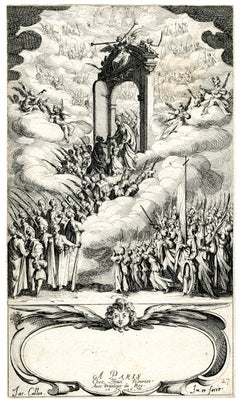
Old Master, Etching, Saints, Jacques Callot, Lugt collector's marks

Old Master, Etching, Saints, Jacques Callot, Lugt collector's marks

By Jacques Callot

Located in Fairlawn, OH

Jacques Callot (1592-1635) Frontispiece from "Les Images de Saints" Designed and Etched by Callot, printed on laid paper, 1634-35 Signed in the plate lower left (see photo) Publisher...

Category

1630s Old Masters Johann Elias Ridinger Art

Materials

Etching

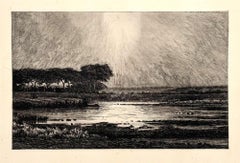
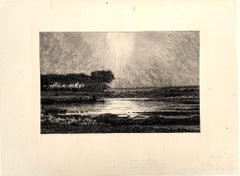
Lever de lune
Lever de lune

Lever de lune

By Charles François Daubigny

Located in Middletown, NY

Paris: Chardon, 1861. Etching with engraving on Chine collé mounted to a wove paper matrix with a false platemark and a deckle edge, 4 1/2 x 6 1/2 inches (115 x 165 mm); matrix 12 1...

Category

Mid-19th Century French School Johann Elias Ridinger Art
Materials

Handmade Paper, Etching, Engraving

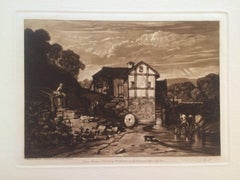
Water Mill

Water Mill

By Sir Frank Short

Located in Plano, TX

Water Mill (after the drawing by J.M.W. Turner, R.A., 1775-1851). 1885. Mezzotint. Hardie 3.ii. With the publication line. 7 x 10 1/8 (sheet 12 1/4 x 16 5/8...

Category

1880s Johann Elias Ridinger Art
Materials

Mezzotint

Previously Available Items
Johann Elias Ridinger (1698-1767) - 18th Century Engraving, Retreat to the Wall

Johann Elias Ridinger (1698-1767) - 18th Century Engraving, Retreat to the Wall

By Johann Elias Ridinger

Located in Corsham, GB

A finely detailed engraving by the German painter, engraver, and publisher Johann Elias Ridinger (1698-1767) from a series of engravings depicting dressage. Inscribed in French, Germ...

Category

Early 18th Century Johann Elias Ridinger Art
Materials

Engraving

Johann Elias Ridinger (1698-1767) - Engraving, Pirouette on the Small Circle

Johann Elias Ridinger (1698-1767) - Engraving, Pirouette on the Small Circle

By Johann Elias Ridinger

Located in Corsham, GB

A finely detailed engraving by the German painter, engraver, and publisher Johann Elias Ridinger (1698-1767) from a series of engravings depicting dressage. Inscribed in French, Germ...

Category

Early 18th Century Johann Elias Ridinger Art
Materials

Engraving

Johann Elias Ridinger (1698-1767)  - 18th Century Engraving, Knabstrupper

Johann Elias Ridinger (1698-1767) - 18th Century Engraving, Knabstrupper

By Johann Elias Ridinger

Located in Corsham, GB

A charming engraving depicting a Knabstupper spotted horse in a village landscape. Inscribed and signed in the plate. Presented in a gilt frame and wash line mount. On paper.

Category

18th Century Johann Elias Ridinger Art
Materials

Engraving

Memento Mori
Memento Mori

Johann Elias RidingerMemento Mori, circa 1760

Sold

H 20.6 in W 16.5 in D 0.1 in

Memento Mori

By Johann Elias Ridinger

Located in Palm Springs, CA

Memento Mori images were meant as a reminder of the fleeting nature of life, with symbols such as the candle that is burnt out, and the flower already loo...

Category

18th Century Johann Elias Ridinger Art
Materials

Mezzotint

Johann Elias Ridinger art for sale on 1stDibs.

Find a wide variety of authentic Johann Elias Ridinger art available for sale on 1stDibs. You can also browse by medium to find art by Johann Elias Ridinger in engraving, handmade paper, mezzotint and more. Not every interior allows for large Johann Elias Ridinger art, so small editions measuring 15 inches across are available. Customers who are interested in this artist might also find the work of Francois Nicolas Martinet, Johan Christoph Volkhamer, and Maria Sybilla Merian. Johann Elias Ridinger art prices can differ depending upon medium, time period and other attributes. On 1stDibs, the price for these items starts at $940 and tops out at $12,388, while the average work can sell for $6,664.

Artists Similar to Johann Elias Ridinger