Joseph Stella Art

American, Italian, 1877-1946

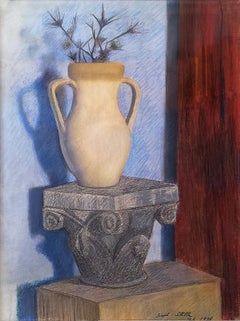
Joseph Stella was a visionary artist who painted what he saw, an idiosyncratic and individual experience of his time and place. Stella arrived in New York in 1896, part of a wave of Italian immigrants from poverty-stricken Southern Italy. But Stella was not a child of poverty. His father was a notary and respected citizen in Muro Lucano, a small town in the southern Apennines. The five Stella brothers were all properly educated in Naples. Stella’s older brother, Antonio, was the first of the family to come to America. Antonio Stella trained as a physician in Italy, and was a successful and respected doctor in the Italian community centered in Greenwich Village. He sponsored and supported his younger brother, Joseph, first sending him to medical school in New York, then to study pharmacology, and then sustaining him through the early days of his artistic career. Antonio Stella specialized in the treatment of tuberculosis and was active in social reform circles. His connections were instrumental in Joseph Stella’s early commissions for illustrations in reform journals.

Joseph Stella, from the beginning, was an outsider. He was of the Italian-American community, but did not share its overwhelming poverty and general lack of education. He went back to Italy on several occasions, but was no longer an Italian. His art incorporated many influences. At various times his work echoed the concerns and techniques of the so-called Ashcan School, of New York Dada, of Futurism and, of Cubism, among others. These are all legitimate influences, but Stella never totally committed himself to any group. He was a convivial, but ultimately solitary figure, with a lifelong mistrust of any authority external to his own personal mandate. He was in Europe during the time that Alfred Stieglitz established his 291 Gallery. When Stella returned he joined the international coterie of artists who gathered at the West Side apartment of the art patron Conrad Arensberg. It was here that Stella became close friends with Marcel Duchamp.

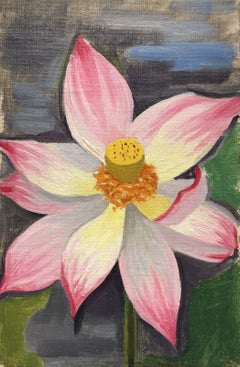
Stella was 19 when he arrived in America and studied in the early years of the century at the Art Students League, and with William Merritt Chase, under whose tutelage he received rigorous training as a draftsman. His love of line, and his mastery of its techniques, is apparent early in his career in the illustrations he made for various social reform journals. Stella, whose later work as a colorist is breathtakingly lush, never felt obliged to choose between line and color. He drew throughout his career, and unlike other modernists, whose work evolved inexorably to more and more abstract form, Stella freely reverted to earlier realist modes of representation whenever it suited him. This was because, in fact, his “realist” work was not “true to nature,” but true to Stella’s own unique interpretation. Stella began to draw flowers, vegetables, butterflies, and birds in 1919, after he had finished the Brooklyn Bridge series of paintings, which are probably his best-known works. These drawings of flora and fauna were initially coincidental with his fantastical, nostalgic and spiritual vision of his native Italy which he called Tree of My Life (Mr. and Mrs. Barney A. Ebsworth Foundation and Windsor, Inc., St. Louis, illus. in Barbara Haskell, Joseph Stella, exh. cat. [New York: Whitney Museum of American Art, 1994], p. 111 no. 133).

(Biography provided by Hirschl & Adler)

to
5
15
6
5
1
1
Overall Width
to
Overall Height
to
28
1
1
3
2
3
22
1
18
8
2
13
9
7
7
7
4
4
4
3
3
2
2
2
1
1
1
1
1
1
1
13
13
10
8
6
29
10,113
2,803
2,503
1,389
17
28
Artist: Joseph Stella
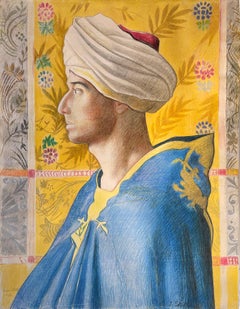
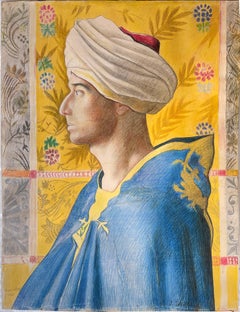
Middle Eastern Man with Turban and Blue Cloak in Profile against Yellow
By Joseph Stella
Located in Miami, FL
Portrait in primary blues and yellow of perhaps a Persian man. He is in profile set against a decorative yellow background with floral elements. The work...
Category

1940s Modern Joseph Stella Art

Materials

Paper, Pencil, Color Pencil

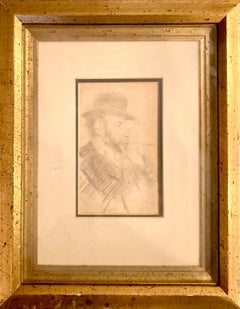
"Man with Beard"
By Joseph Stella
Located in Warren, NJ
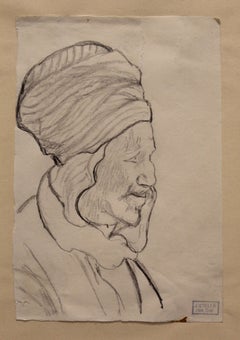
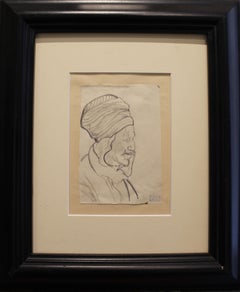
This is an Joseph Stella original pencil drawing “man with beard” . In good condition comes from joseph Stella’s estate. In good condition measu...
Category

Early 20th Century Joseph Stella Art

Materials

Paper

Study for "Golden Fall"
By Joseph Stella
Located in Bryn Mawr, PA
Study for "Golden Fall", 1940 Pastel on paper, 26 x 20 inches (66 x 50.8 cm) Framed dimensions 33 1/2 x 27 1/2 inches Joseph Stella’s artistic career defies easy categorization. He ...
Category

20th Century American Modern Joseph Stella Art

Materials

Paper, Pastel

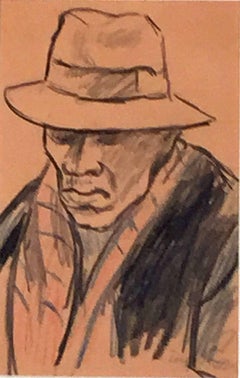
STUDY OF A MAN WITH A HAT AND OVERCOAT
By Joseph Stella
Located in Portland, ME
Stella, Joseph. STUDY OF A MAN WITH A HAT AND OVERCOAT. Blue, red and black crayon on tan wove paper, c. 1920. 6 7/8 x 4 3/4 inches; 173 x 120 mm. Signe...
Category

1920s American Realist Joseph Stella Art

Materials

Crayon

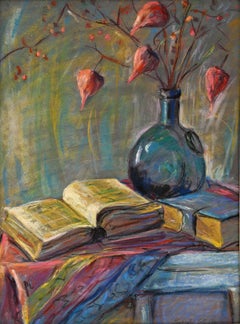
Still Life of Books and Chinese Lanterns in Vibrant Colors
By Joseph Stella
Located in Miami, FL
Joseph Stella creates a beautiful and colorful still life rendered in lush expressive bright colors and quick spontaneous bravura brushstrokes.. Signed Lower Right Joseph Stella Fra...
Category

1920s Futurist Joseph Stella Art

Materials

Pastel

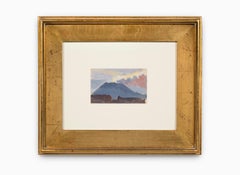
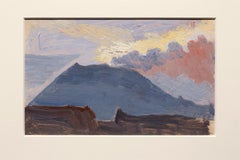
"Study of Mt. Vesuvius" Oil on Canvas, Blue Tones, Landscape
By Joseph Stella
Located in Detroit, MI
SALE ONE WEEK ONLY “Study of Mt. Vesuvius" is a small intimate painting of an active volcano that has at times wrecked great destruction. As seen from a distance, it is a calm blue ...
Category

Late 20th Century American Modern Joseph Stella Art

Materials

Canvas, Oil

Cactus Flower
By Joseph Stella
Located in Bryn Mawr, PA
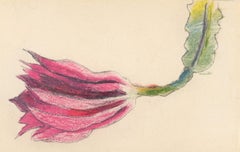
Silverpoint and crayon on paper 4 11/16 x 3 inches 11.9 x 7.6 cm Framed dimensions 8 1/8 x 9 7/8 inches Provenance The artist; By bequest to his nephew, Sergio Stella, 1946; By desc...
Category

20th Century American Modern Joseph Stella Art

Materials

Crayon

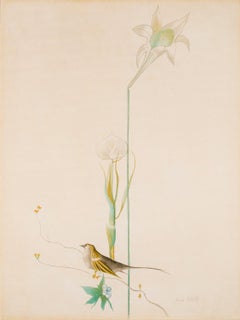
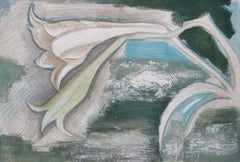
Lily and Bird
By Joseph Stella
Located in New York, NY
Silverpoint and colored pencil on paper, 29 x 23 in. Signed (at lower right): Joseph Stella Executed about 1919 EXHIBITED: Hirschl & Adler Galleries, New York, November 23, 1985–January 4, 1986, American Masterworks on Paper: Drawings, Watercolors, and Prints, pp. 6, 46 no. 47 illus. // (probably) Richard York Gallery, New York, October 5–November 17, 1990, Joseph Stella: 100 Works on Paper, no. 36 EX COLL.: [Dudensing Galleries, New York]; sale, Christie’s, New York, December 7, 1984, lot 324; [Hirschl & Adler Galleries, New York, 1984]; to private collection, 2006 until the present An independent-minded artist who adhered to the credo “Rules don’t exist,” Joseph Stella explored a range of styles, media, and themes, willfully ignoring the “barricades erected by ... [the] self-appointed dictators” of the art establishment (Joseph Stella, “On Painting,” Broom 11 [December 1921], pp. 122–23; Joseph Stella, “Discovery of America: Autobiographical Notes,” Art News 59 [November 1960], p. 41). By doing so, he produced a diverse and highly eclectic body of work, ranging from realist figure subjects, pulsating Futurist cityscapes, and modernist religious...
Category

Early 20th Century American Modern Joseph Stella Art

Materials

Paper, Color Pencil
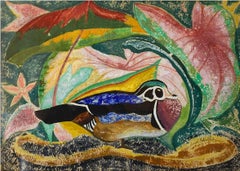
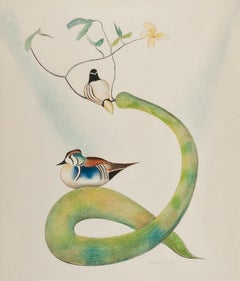
Two Wood Ducks on a Flowering Branch
By Joseph Stella
Located in New York, NY
Joseph Stella was a visionary artist who painted what he saw, an idiosyncratic and individual experience of his time and place. Stella arrived in New York in 1896, part of a wave of Italian immigrants from poverty-stricken Southern Italy. But Stella was not a child of poverty. His father was a notary and respected citizen in Muro Locano, a small town in the southern Appenines. The five Stella brothers were all properly educated in Naples. Stella’s older brother, Antonio, was the first of the family to come to America. Antonio Stella trained as a physician in Italy, and was a successful and respected doctor in the Italian community centered in Greenwich Village. He sponsored and supported his younger brother, Joseph, first sending him to medical school in New York, then to study pharmacology, and then sustaining him through the early days of his artistic career. Antonio Stella specialized in the treatment of tuberculosis and was active in social reform circles. His connections were instrumental in Joseph Stella’s early commissions for illustrations in reform journals. Joseph Stella, from the beginning, was an outsider. He was of the Italian-American community, but did not share its overwhelming poverty and general lack of education. He went back to Italy on several occasions, but was no longer an Italian. His art incorporated many influences. At various times his work echoed the concerns and techniques of the so-called Ashcan School, of New York Dada, of Futurism and, of Cubism, among others. These are all legitimate influences, but Stella never totally committed himself to any group. He was a convivial, but ultimately solitary figure, with a lifelong mistrust of any authority external to his own personal mandate. He was in Europe during the time that Alfred Stieglitz established his 291 Gallery. When Stella returned he joined the international coterie of artists who gathered at the West Side apartment of the art patron Conrad Arensberg. It was here that Stella became close friends with Marcel Duchamp. Stella was nineteen when he arrived in America and studied in the early years of the century at the Art Students League, and with William Merritt Chase, under whose tutelage he received rigorous training as a draftsman. His love of line, and his mastery of its techniques, is apparent early in his career in the illustrations he made for various social reform journals. Stella, whose later work as a colorist is breathtakingly lush, never felt obliged to choose between line and color. He drew throughout his career, and unlike other modernists, whose work evolved inexorably to more and more abstract form, Stella freely reverted to earlier realist modes of representation whenever it suited him. This was because, in fact, his “realist” work was not “true to nature,” but true to Stella’s own unique interpretation. Stella began to draw flowers, vegetables, butterflies, and birds in 1919, after he had finished the Brooklyn Bridge series of paintings, which are probably his best-known works. These drawings of flora and fauna were initially coincidental with his fantastical, nostalgic and spiritual vision of his native Italy which he called Tree of My Life (Mr. and Mrs. Barney A. Ebsworth Foundation and Windsor, Inc., St. Louis, illus. in Barbara Haskell, Joseph Stella, exh. cat. [New York: Whitney Museum of American Art, 1994], p. 111 no. 133). Two Wood Ducks...
Category

20th Century American Modern Joseph Stella Art

Materials

Color Pencil

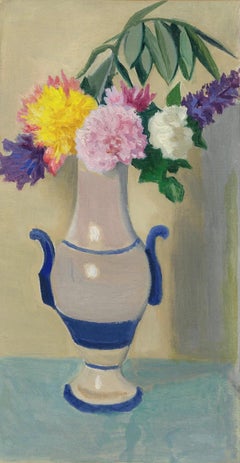
Flowers in a Vase
By Joseph Stella
Located in Bryn Mawr, PA
Provenance The artist; By bequest to his nephew, Sergio Stella, 1946; By descent in the family, until the present Exhibitions Richard York Gallery, New York, 1994, Joseph Stella's N...
Category

20th Century Modern Joseph Stella Art

Materials

Oil

MAN PLAYING PICCOLO
By Joseph Stella
Located in Portland, ME
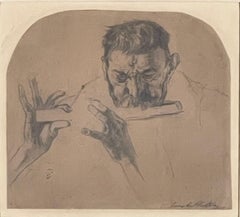
Stella, Joseph (American, 1877-1946). MAN PLAYING PICCOLO. Pencil on paper, 1908. Signed and dated, lower right. 6 1/4 x 7 inches, framed to 14 x 14 inches. Identified on labels of D...
Category

Early 1900s Joseph Stella Art

Materials

Pencil

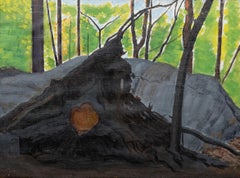
"Tree, Trunk, and Roots, New York" Joseph Stella, American Modernism
By Joseph Stella
Located in New York, NY
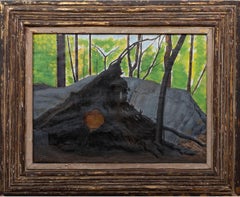
Joseph Stella (1877 - 1946) Tree, Trunk, and Roots, Bronx, New York, circa 1924 Oil on canvas 12 x 16 inches inscribed in another hand Joseph Stella/Estate and bears Joseph Stella Estate stamp (on the reverse) Provenance: The Estate of the Artist Rabin & Kreuger, New Jersey Parke Bernet Galleries, New York, March 14, 1968, Lot 147 ACA Galleries, New York Thence by descent Stella was born June 13, 1877 at Muro Lucano, Italy, a mountain village not far from Naples. He became painter laureate of Muro Lucano when he was in his teens with a representation of the local saint in the village church. Stella immigrated to America in 1896 and studied medicine and pharmacology, but upon the advice of artist friend Carlo de Fornaro, who recognized his undeveloped talent, he enrolled at the Art Students League in 1897. Stella objected to the rule forbidding the painting of flowers, an indication of his lifelong devotion to flower painting. He also studied under William Merritt Chase in the New York School of Art and at Shinnecock Hills, Long Island in 1901-1902, displaying the bravura brushwork and dark Impressionist influence of Chase. Stella liked to paint the raw street life of immigrant society, rendering this element more emotionally than the city realists, the Aschcan School headed by Robert Henri. Stella went through a progression of styles--from realism to abstraction--mixing media and painting simultaneously in different manners, reviving styles and subjects years later. The "Survey" sent Stella to illustrate the mining disaster of 1907 in Monongah, West Virginia, and in 1908 commissioned him to execute drawings of the Pittsburgh industrial scene. Steel and electricity became a major experience in shaping his responses to the modern world, and Stella succeeded in portraying the pathos of the steelworkers and the Pittsburgh landscape. Stella went abroad in 1909 at the age of thirty-two, lonely for his native land. He returned to Italy, traveling to Venice, Florence and Rome. He took up the glazing technique of the old Venetian masters to get warmth, transparency, and depth of color. One of Stella's paintings was shown in the International Exhibition in Rome in 1910 and was acquired by the city of Rome. The influence of the French Modernists awakened his dormant individuality. His friendship with Antonio Mancini, a Futurist, also played a role in his new style. At the urging of Walter Pach...
Category

1920s American Modern Joseph Stella Art

Materials

Canvas, Oil

Exhibited American Modernist painting titled 'Tropical Scene'
By Joseph Stella
Located in Colfax, CA
An exhibited American watercolor by Italian-born American modernist Joseph Stella. Stella is widely recognized for his futurist and precisionist contributions to American modern art...
Category

1930s American Modern Joseph Stella Art

Materials

Paper, Watercolor

Study for "The Jade Necklace"
By Joseph Stella
Located in Fairlawn, OH
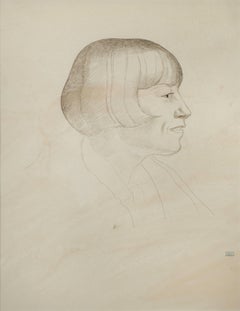
Study for the painting "The Jade Necklace" Silver point drawing on prepared paper, n.d. Stamp lower right: "J Stella/JML Coll" (see photo) The painting of the same sitter and title, measures 21 3/4 x 18 1/8 inches, formerly handled by Richard York Gallery. (see photo) Provenance: Collection of the artist Mrs. Giovanni Stella, the artist's sister-in-law Josephine M...
Category

20th Century American Modern Joseph Stella Art

Materials

Pencil

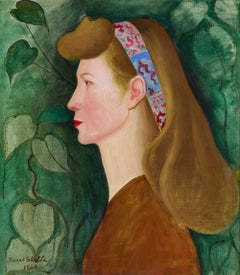
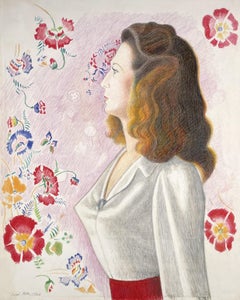
Woman with Floral Cloth Background (Portrait of Grace)
By Joseph Stella
Located in Bryn Mawr, PA
Woman with Floral Cloth Background (Portrait of Grace), 1944 Crayon and pencil on paper, 28 x 22 inches (71.1 x 55.9 cm) Framed dimensions: 32 1/2 x 26 1/2 inches Signed and dated at...
Category

1940s American Modern Joseph Stella Art

Materials

Paper, Crayon, Pencil

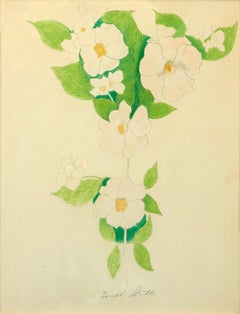
"Flowers" Joseph Stella, Vibrant Modernist Flower Composition on Paper
By Joseph Stella
Located in New York, NY
Joseph Stella Flowers Signed lower center Crayon and pencil on paper 13 1/4 x 10 1/4 inches Stella was born June 13, 1877 at Muro Lucano, Italy, a mountain village not far from Nap...
Category

Early 20th Century Modern Joseph Stella Art

Materials

Paper, Crayon, Pencil

"Original Joseph Stella Drawing" - 20th Century Portrait Pencil Drawing
By Joseph Stella
Located in New Orleans, LA
A pencil sketch by famed American Modernist Joseph Stella, who burst on to the American scene at the epochal Armory Show of 1913 and whose work is today in the collections of every m...
Category

Early 20th Century Modern Joseph Stella Art

Materials

Graphite

Portrait of Grace
By Joseph Stella
Located in Bryn Mawr, PA
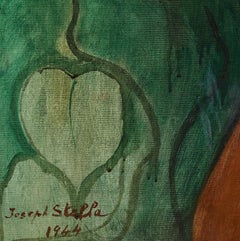
Portrait of Grace, 1944 Oil on canvas, 23 x 20 inches (58.4 x 50.8 cm) Framed dimensions 31 1/2 x 28 1/2 inches Signed and dated lower left: Joseph Stella / 1944 Signed on verso: Jos...
Category

1940s American Modern Joseph Stella Art

Materials

Canvas, Oil

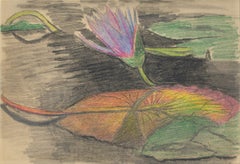
Pink Waterlily with Green and Black Background
By Joseph Stella
Located in Bryn Mawr, PA
Pink Waterlily with Green and Black Background, 1940 Crayon and pencil on paper 10 3/8 x 13 11/16 inches (26.4 x 34.8 cm) Signed and dated at lower right: Joseph Stella / 1940 Josep...
Category

20th Century American Modern Joseph Stella Art

Materials

Paper, Crayon, Pencil

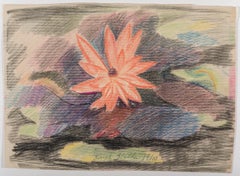
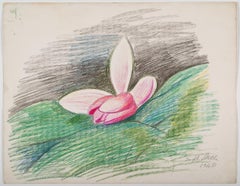
Pink Waterlily
By Joseph Stella
Located in Bryn Mawr, PA
Pink Waterlily, 1940 Charcoal and pastel on textured paper 7 x 9 3/4 inches (17.8 x 24.8 cm) Signed and dated at lower center: Joseph Stella 1940 Joseph Stella’s artistic career def...
Category

20th Century American Modern Joseph Stella Art

Materials

Paper, Charcoal, Pastel

Pink Flower
By Joseph Stella
Located in Bryn Mawr, PA
Born in Italy, Joseph Stella immigrated to New York City at the age of nineteen and went on to become one of America’s foremost modernist painters. He remained deeply loyal to his It...
Category

20th Century Modern Joseph Stella Art

Materials

Oil

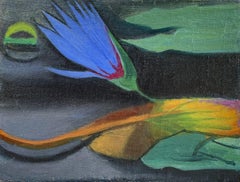
Blue Waterlily
By Joseph Stella
Located in Bryn Mawr, PA
Provenance The artist; By bequest to his nephew, Sergio Stella, 1946; By descent in the family, until the present Joseph Stella’s artistic career defies easy categorization. He was ...
Category

20th Century Modern Joseph Stella Art

Materials

Crayon, Pencil

Water Lily and Woodchuck - Barbados
By Joseph Stella
Located in Miami, FL
Powerful visual done at Stella's peak period of creativity in Barbados. Signed lower right. Provenance: Doyle, New York Elegantly framed.
Category

1910s Futurist Joseph Stella Art

Materials

Gouache, Paper

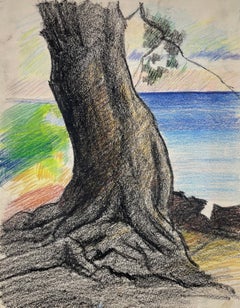
Untitled (Tree Trunks)
By Joseph Stella
Located in Bryn Mawr, PA
Untitled (Tree Trunks) Pastel on paper, 12 x 9 1/4 inches (30.5 x 23.5 cm) Framed dimensions: 15 1/4 x 12 3/4 inches Inscribed on verso of overmat: 148 W. Houston St. Joseph Stella’...
Category

20th Century American Modern Joseph Stella Art

Materials

Paper, Pastel

White Iris with Fern
By Joseph Stella
Located in Bryn Mawr, PA
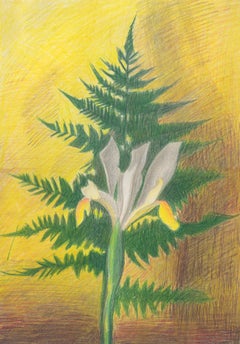
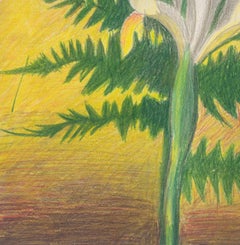
White Iris with Fern, c. 1925 Crayon and silverpoint on paper, 17 x 12 inches (43.2 x 30.5 cm) Framed dimensions: 23 1/4 x 18 1/4 inches Signed twice in pencil, at lower right and lo...
Category

20th Century American Modern Joseph Stella Art

Materials

Paper, Crayon

Thistles
By Joseph Stella
Located in Miami, FL
Signature: Signed, dated 1938 and inscribed Italy lower right. Thistles, 1938 Pastel on paper 25 3/4 × 18 3/4 in Work is framed Christie's, New York Very strong in person. Gallery st...
Category

1930s Post-Impressionist Joseph Stella Art

Materials

Pastel

Thistles
Thistles
$27,200 Sale Price
20% Off
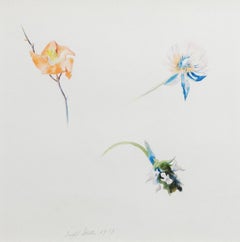
Three Flowers
By Joseph Stella
Located in New York, NY
Joseph Stella was a visionary artist who painted what he saw, an idiosyncratic and individual experience of his time and place. Stella arrived in New York in 1896, part of a wave of ...
Category

20th Century American Modern Joseph Stella Art

Materials

Paper, Crayon

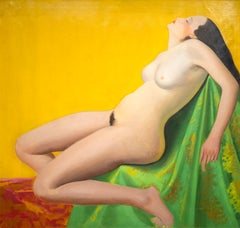
Reclining Nude
By Joseph Stella
Located in Palm Desert, CA
A painting by Joseph Stella. "Reclining Nude" is a figurative painting, oil on canvas in a bright palette of yellows, greens, and tans by American Modernist artist Joseph Stella. The...
Category

Early 20th Century American Modern Joseph Stella Art

Materials

Canvas, Oil

Related Items
Late Afternoon - Modernist Mid-Century Midwest Oil Painting
Located in Marco Island, FL
A quintessential American Scene landscape painted by the Chicago Modernist, William Schwartz. Workers in tilled fields surrounding a farmstead under dramatic skies. Painted in 1935...
Category

1930s American Modern Joseph Stella Art

Materials

Canvas, Oil

Nude Young Woman Art Deco Modernist ink drawing
Located in Wilton Manors, FL
Beautiful original drawing by American artist, Albert Sway (b.1913). Portrait of a young woman, ca. 1935. Ink on paper, measuring 8.5 x 11 inches. Signed lower right. Unframed...
Category

1930s American Realist Joseph Stella Art

Materials

Paper, Ink

A Dynamic 1945 Mid-Century Modern Cubist Studio Scene, Artist Sketch Class
By Harold Haydon
Located in Chicago, IL
A Dynamic, 1945 Mid-Century Modern Cubist Studio Scene, Artist's Sketch Class by Noted Chicago Painter, Harold Haydon (Am. 1909-1994). Artwork size: 11 x 8 1/2 inches, unframed, mo...
Category

Mid-20th Century Cubist Joseph Stella Art

Materials

Paper, Charcoal, Pastel

A Fine 1946 Modern Figure Study of a Handsome Young Male Model Wearing a Suit
By Harold Haydon
Located in Chicago, IL
A Fine 1940s, Mid-Century Modern Academic Figure Study Portrait of a Handsome, Seated Male Model Wearing a Suit by Notable Chicago Artist, Harold Haydon (Am. 1909-1994). An exceptionally well executed early 1940s charcoal...
Category

Mid-20th Century American Modern Joseph Stella Art

Materials

Paper, Charcoal

Indian Dancer - Vintage Illustration in Ink and Watercolor
By Irene Pattinson
Located in Soquel, CA
Indian Dancer - Vintage Illustration in Ink and Watercolor A stoic, dark-haired woman in elaborate dress is sitting cross-legged in this illustration by Irene Pattinson (American, 1909-1999). Pattinson uses fine ink line detail and a vibrant pink watercolor for a splash of color. Signed at the bottom, "Irene Pattinson." Provenance: The Artist, Estate of Irene Pattinson: David Carlson; Estate of Larry Miller Fine Art, Robert Azensky Fine Art. Presented in a new white mat with foam core backing. Mat size: 16"H x 12"W Paper size: 11.75"H x 8.5"W Image size: 7.5"H x 6.5"W Irene Pattinson (American, 1909-1999) studied at the California School of Fine Art (now The San Francisco Art Institute), San Francisco State College and The Marion Hartwell School of Design. She was President of the San Francisco Woman Artists Association 1955-56. Provenance: The Artist, Estate of Irene Pattinson: David Carlson; Estate of Larry Miller Fine Art, Robert Azensky Fine Art. Solo Exhibitions: Lucien Labaudt Gallery 1955; San Francisco Museum of Art, 1961 (39 works). Selected Group Exhibitions: San Francisco Art Association Annual 1948, 54, 55; San Francisco Woman Artists, 1957-1960; Oakland Art Museum Annual, 1951, 58; California Palace of the Legion of Honor, 1960; Richmond Art Center, 1955, 56, 57, 58; San Francisco Art Institute 1959, 60. The Art Bank of the San Francisco Art Association, 1958, 59, 60, 62, 63; Winter Invitational, California Palace of The Legion of Honor, San Francisco, 1960; Fourth Winter Invitational, California Palace of The Legion of Honor, San Francisco, 1963. Awards: First Place, San Francisco Woman Artists Assoc., 1957, 1959; San Francisco Art Festival 1957;Literature: San Francisco Art Institute - A catalog of the Art Ban 1962/63; San Francisco and the Second Wave: The Blair Collection Exhibitions: 1963 The Art Bank of the San Francisco Art Association, San Francisco, CA 1963 California Palace of The Legion of Honor: Forth Winter Invitational, San Francisco, CA 1962 The Art Bank of the San Francisco Art Association, San Francisco, CA 1961 San Francisco Museum of Art, San Francisco, CA 1960 California...
Category

1950s American Modern Joseph Stella Art

Materials

Paper, India Ink, Watercolor, Pen

Chef Basting Chicken with Madeline Watching
By Ludwig Bemelmans, 1898-1962
Located in Miami, FL
This large Bemelans features a small image of Madeline in the smoke behind the chef's face. It was most likely preliminary work for an illustration with Madeline and the Chef that a...
Category

1950s American Modern Joseph Stella Art

Materials

Paper, Watercolor, Gouache, Pencil

John Edward Thompson “Early Spring (Thompson’s Studio)” 1933 Colorado Modernist
By John Edward Thompson
Located in Denver, CO
Early Spring (Thompson’s Studio) is an original 1933 oil on canvas painting by celebrated Colorado modernist John Edward Thompson (1882–1945). This striking Impressionist work offers...
Category

1930s American Modern Joseph Stella Art

Materials

Canvas, Oil

A Timely, 1940s WWII Era Political Cartoon Ink Drawing, "USA No Admittance"
By Harold Haydon
Located in Chicago, IL
A Timely and Prescient, 1940s WWII Era Political Cartoon / Illustration Ink Drawing by Notable Chicago Modern Artist, Harold Haydon (Am. 1909-1994). Titled "USA No Admittance". A p...
Category

1940s American Modern Joseph Stella Art

Materials

Paper, Ink

Woman - Drawing - Late-19th Century
Located in Roma, IT
Woman is a drawing realized in the Late-19th Century. Red pencil on ivory-colored paper. Good conditions with slight foxing. The artwork is realized through deft expressive strokes.
Category

Late 19th Century Modern Joseph Stella Art

Materials

Color Pencil

Young man in a toga elegant man Latin American hyperrealist Hockney style
By Claudio Bravo
Located in Norwich, GB
Superb original drawing in coloured conté pencils, heightened with white on oatmeal coloured vergé paper by Claudio Bravo. The work was created during the artist's Moroccan period, a...
Category

1970s Modern Joseph Stella Art

Materials

Conté, Laid Paper, Color Pencil
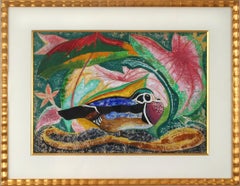
"One Thousand Words" - Surreal Figurative
Located in Soquel, CA
Bold figurative work by Richard Cronin (American, b. 1952). Two figures stand on a patio, turned away from each other. The figures and scene are rendere...
Category

1970s American Modern Joseph Stella Art

Materials

Canvas, Oil

"One Thousand Words" - Surreal Figurative
$2,040 Sale Price
20% Off
H 48 in W 48 in D 1 in
Mid Century Self Portrait of the Artist Original Drawing on Paper
Located in Soquel, CA
Portrait of the Artist by the Artist Original Charcoal Drawing on Paper 1960 Excellent detailed original drawing of the artist by Eugene Hawkins (American, b. 1933). A realistic dep...
Category

1960s American Modern Joseph Stella Art

Materials

Paper, Charcoal

Previously Available Items
"Tropical Flower with Azalea" Joseph Stella, circa 1919 Academic Azalea
By Joseph Stella
Located in New York, NY
Joseph Stella Tropical Flower with Azalea, circa 1919 Signed lower right Silverpoint and crayon on paper Image 10 3/4 x 8 1/4 inches Sheet 11 x 12 1/4 inches Stella was born June 1...
Category

Early 20th Century Modern Joseph Stella Art

Materials

Paper, Watercolor

Two Red & One Lavender Flower in a Vase, Watercolor and Pencil on Paper
By Joseph Stella
Located in Bryn Mawr, PA
Signed at lower left: Joseph Stella Provenance The artist; By bequest to his nephew, Sergio Stella, 1946; By descent in the family, until the present Born in Italy, Joseph Stella i...
Category

20th Century American Modern Joseph Stella Art

Materials

Watercolor

"Lemon and Eggplant Still Life" Joseph Stella, American Modernism, Colorful
By Joseph Stella
Located in New York, NY
Joseph Stella Lemon and Eggplant Still Life, circa 1929 Signed lower center; signed on the stretcher and reverse and inscribed "Still Life" on the reverse Oil on canvas 10 x 11 inches Stella was born June 13, 1877 at Muro Lucano, Italy, a mountain village not far from Naples. He became painter laureate of Muro Lucano when he was in his teens with a representation of the local saint in the village church. Stella immigrated to America in 1896 and studied medicine and pharmacology, but upon the advice of artist friend Carlo de Fornaro, who recognized his undeveloped talent, he enrolled at the Art Students League in 1897. Stella objected to the rule forbidding the painting of flowers, an indication of his lifelong devotion to flower painting. He also studied under William Merritt Chase in the New York School of Art and at Shinnecock Hills, Long Island in 1901-1902, displaying the bravura brushwork and dark Impressionist influence of Chase. Stella liked to paint the raw street life of immigrant society, rendering this element more emotionally than the city realists, the Aschcan School headed by Robert Henri. Stella went through a progression of styles--from realism to abstraction--mixing media and painting simultaneously in different manners, reviving styles and subjects years later. The "Survey" sent Stella to illustrate the mining disaster of 1907 in Monongah, West Virginia, and in 1908 commissioned him to execute drawings of the Pittsburgh industrial scene. Steel and electricity became a major experience in shaping his responses to the modern world, and Stella succeeded in portraying the pathos of the steelworkers and the Pittsburgh landscape. Stella went abroad in 1909 at the age of thirty-two, lonely for his native land. He returned to Italy, traveling to Venice, Florence and Rome. He took up the glazing technique of the old Venetian masters to get warmth, transparency, and depth of color. One of Stella's paintings was shown in the International Exhibition in Rome in 1910 and was acquired by the city of Rome. The influence of the French Modernists awakened his dormant individuality. His friendship with Antonio Mancini, a Futurist, also played a role in his new style. At the urging of Walter Pach, Stella made a trip to Paris, where he met Gertrude and Leo Stein and saw the work of Matisse and the leading Fauves, spurring him to paint with alluring, vivid colors. Stella effected a quick transition from traditionality to the abstract idiom. At the Galerie Bernheim-Jeune in 1912, he saw the works of his countrymen Carlo Carra, Umberto Boccioni and Gino Severini. Primed with these influences, Stella returned to New York in late 1912. His preference for structural composition is obvious in the paintings in which he fused high-key color with broad broken strokes, which were included in the 1913 Armory Show. A month following the Armory Show, Stella premiered at the Italian National Club to which the Italian ambassador made a special appearance to toast "an event in the history of the Italian colony here." "Battle of Lights" (1914) was Stella's first major Futurist work created as a result of the Armory Show,propelling Stella into the vanguard of Modernism. Color chips in various sizes with dense design and spears representing light beams allows the composition movement within a stable axis. This caused a sensation when displayed in a group show at the Montross Gallery in 1914. Stella was represented in a group show at the Bourgeois Galleries in 1917 and 1918, and began a series of industrial paintings which grew out of the "Survey" commission, most notably the "Brooklyn Bridge" (1917-1918) in which he combined Cubist and Futurist techniques. This was exhibited in a one-man show at Bourgeois in 1920 and advanced his reputation substantially as the "poet" of the industrial scene. Stella had a show at the Whitney Studio Club in 1921. His most ambitious work "New York Interpreted" (1920-1922) inspired by Robert Delaunay's "La Ville de Paris" was displayed at his solo show at the 1923 Société Anonyme of which he was a charter member. At the same time, Stella was producing lyrical nocturnes and paintings heavy with symbolism bearing resemblance to the work of Odilon Redon. He also executed innumerable drawings of flowers as he wrote, "my devout wish, that my every working day might begin and end. . . with the light, gay painting...
Category

Early 20th Century American Modern Joseph Stella Art

Materials

Canvas, Oil

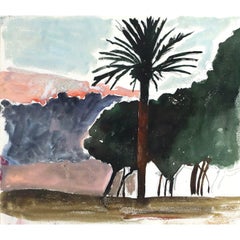
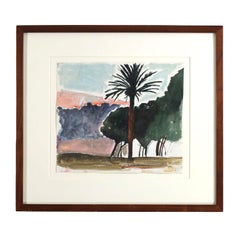
"The Palm" Poster
By Joseph Stella
Located in Chesterfield, MI
Poster. Measures 12.75 x 11 inches and is Unframed. Good Condition-minor wrinkle in upper-left corner (please see secondary photo for detail)/print has been cropped in upper white bo...
Category

Late 20th Century Joseph Stella Art

Materials

Lithograph

"The Conversation"
By Joseph Stella
Located in Southampton, NY
Joseph Stella Joseph Stella (born Giuseppe Michele Stella, June 13, 1877 – November 5, 1946) was an Italian-born American Futurist painter best known for his depictions of industria...
Category

1920s American Modern Joseph Stella Art

Materials

Color Pencil
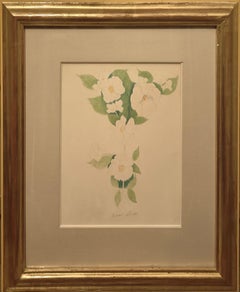
Joseph Stella art for sale on 1stDibs.

Find a wide variety of authentic Joseph Stella art available for sale on 1stDibs. If you’re browsing the collection of art to introduce a pop of color in a neutral corner of your living room or bedroom, you can find work that includes elements of yellow and other colors. You can also browse by medium to find art by Joseph Stella in pencil, crayon, paint and more. Much of the original work by this artist or collective was created during the 20th century and is mostly associated with the modern style. Not every interior allows for large Joseph Stella art, so small editions measuring 8 inches across are available. Customers who are interested in this artist might also find the work of Francesco Spicuzza, Emanuel Glicenstein Romano, and Milton Avery. Joseph Stella art prices can differ depending upon medium, time period and other attributes. On 1stDibs, the price for these items starts at $675 and tops out at $225,000, while the average work can sell for $27,000.
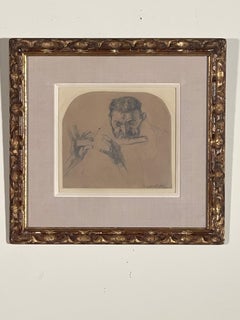
Artists Similar to Joseph Stella

Questions About Joseph Stella Art
  • 1stDibs ExpertNovember 20, 2024
    Here are three interesting facts about Frank Stella. First, Stella considered paintings on canvas as objects in their own right, like sculptures, rather than representations. This led him to reject certain formal conventions, eschewing sketches and often using nontraditional materials, like house paint. Secondly, Stella created a series of works named after the ancient cities whose circular plans Stella had noticed while traveling in the Middle East during the 1960s. Called the “Protractor” series, these works usually involved several canvases set flush against one another so that the geometric figures in each section came together in a larger, more complex whole. In addition, Stella was awarded the National Medal of Arts by President Obama in 2009 and was given the Lifetime Achievement Award in Contemporary Sculpture by the International Sculpture Center in 2011. On 1stDibs, shop a wide variety of Frank Stella art.
  • 1stDibs ExpertAugust 29, 2024
    Joseph Stella first painted the Brooklyn Bridge in 1918. He actually returned to the subject numerous times, completing additional paintings of the landmark in 1918, 1920, 1939 and 1941. Examining these paintings side by side shows how Stella's style became more and more abstract over the course of his career. Explore an assortment of Joseph Stella art on 1stDibs.
  • 1stDibs ExpertOctober 15, 2024
    Joseph Stella is known for his work as an artist. He was a visionary artist who painted what he saw: an idiosyncratic and individual experience of his time and place. Stella was 19 when he arrived in the United States and studied in the early years of the century at the Art Students League and with William Merritt Chase, under whose tutelage he received rigorous training as a draftsman. His love of line and his mastery of its techniques are apparent in his early illustrations for various social reform journals. Stella, whose later work as a colorist is breathtakingly lush, never felt obliged to choose between line and color. He drew throughout his career, and unlike other modernists, whose work evolved to more and more abstract forms, Stella freely reverted to earlier realist modes of representation whenever it suited him. Some of his most famous works include Battle of Lights, Coney Island, Mardi Gras; The Brooklyn Bridge: Variation on an Old Theme and Flowers, Italy. Shop a selection of Joseph Stella art on 1stDibs.
  • 1stDibs ExpertAugust 29, 2024
    Opinions differ about what kind of artist Joseph Stella was. At various times, his work echoed the concerns and techniques of the so-called Ashcan School, New York Dada, Futurism and Cubism, among others. These are all legitimate influences, but Stella never totally committed himself to any group. Some people also associate him with the American Precisionist movement, which emerged after World War I and explored industrialization and urbanization themes. Shop a diverse assortment of Joseph Stella art on 1stDibs.
  • 1stDibs ExpertAugust 29, 2024
    No, Frank Stella was not related to Joseph Stella. While it's possible that in-depth genealogical research may uncover a shared ancestor many generations ago, the two artists are not currently believed to be related. Joseph Stella was born in 1877 in Muro Lucano, Italy, while Frank Stella was born in 1936 in Malden, Massachusetts. On 1stDibs, shop a diverse assortment of Frank Stella and Joseph Stella art.