Questions & Answers
Our trusted network of 1stDibs sellers answer common questions
When did Joseph Stella paint the Brooklyn Bridge?
1 Answer
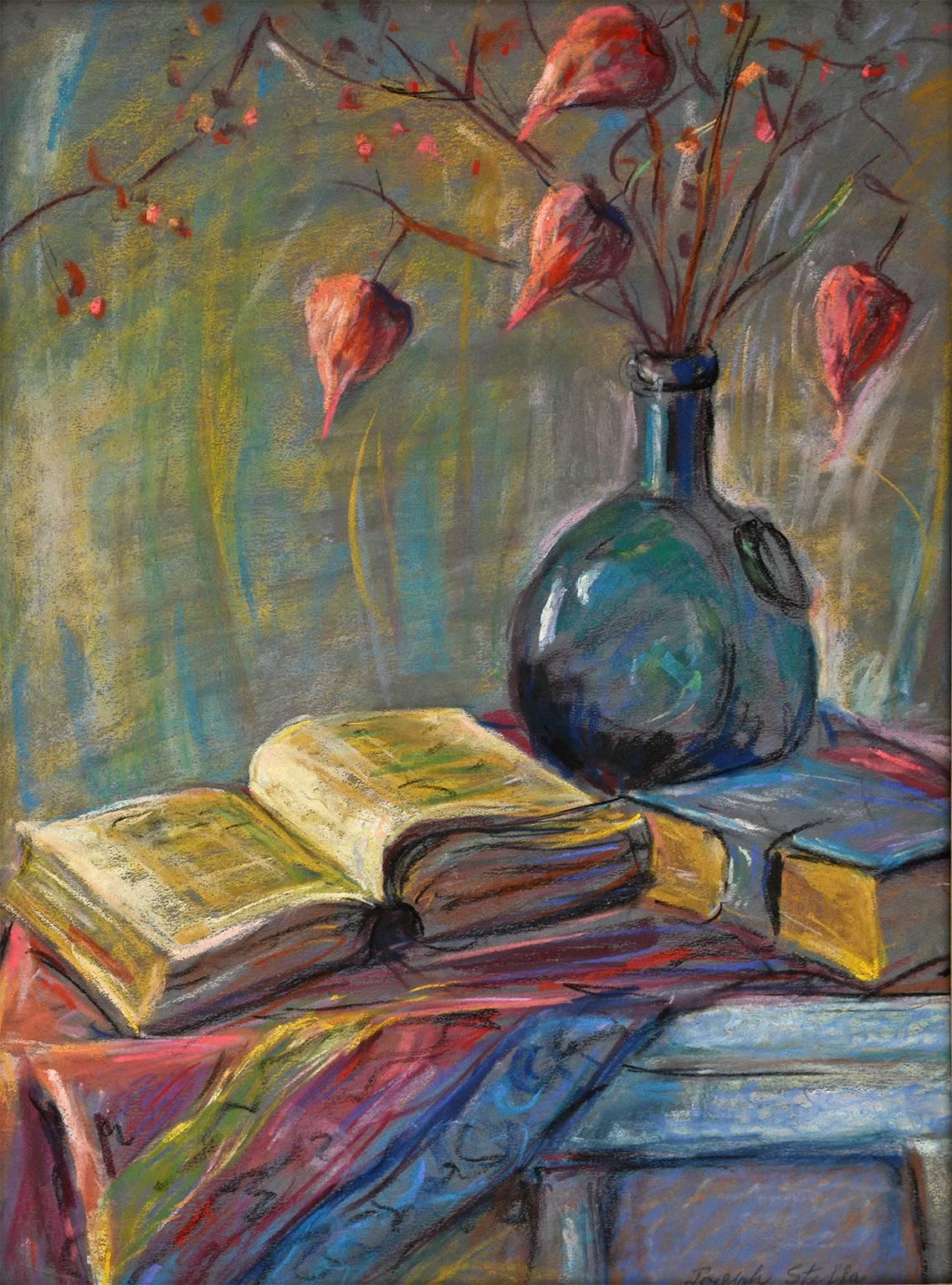
Joseph Stella first painted the Brooklyn Bridge in 1918. He actually returned to the subject numerous times, completing additional paintings of the landmark in 1918, 1920, 1939 and 1941. Examining these paintings side by side shows how Stella's style became more and more abstract over the course of his career. Explore an assortment of Joseph Stella art on 1stDibs.
1stDibs ExpertAugust 29, 2024
Related Questions
- What is Joseph Stella known for?1 Answer
- Was Frank Stella related to Joseph Stella?1 Answer
- What kind of artist was Joseph Stella?1 Answer
- What is a bridge lamp?1 Answer
- What is Stella McCartney's inspiration?1 Answer
Shop for Joseph Stella Art on 1stDibs
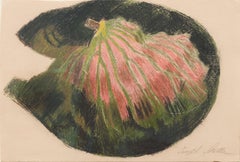
Tropical Foliage Study
By Joseph Stella
Located in London, GB
In 1919, Stella experienced an artistic shift from depicting New York cityscapes to themes of nature as he reflected on his childhood in Italy. This shift is evident when we consider...
Category
20th Century American Modern Mixed Media
Materials
Crayon
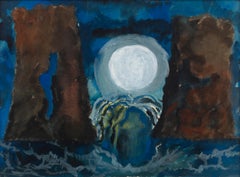
Tropical Moonlight
By Joseph Stella
Located in London, GB
Born in the hillside town of Muro Lucano, southeast of Naples, Italy, Joseph Stella immigrated to the United States in 1896. Having demonstrated remarkable talent as a young boy, he ...
Category
20th Century American Modern Landscape Drawings and Watercolors
Materials
Watercolor, Gouache
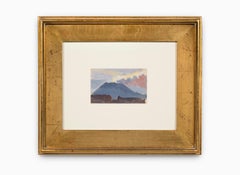
"Study of Mt. Vesuvius" Oil on Canvas, Blue Tones, Landscape
By Joseph Stella
Located in Detroit, MI
SALE ONE WEEK ONLY
“Study of Mt. Vesuvius" is a small intimate painting of an active volcano that has at times wrecked great destruction. As seen from a distance, it is a calm blue ...
Category
Late 20th Century American Modern Landscape Paintings
Materials
Canvas, Oil
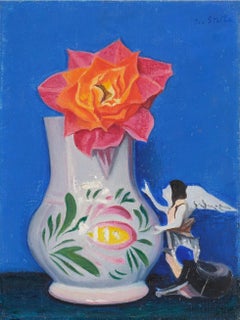
Rose and Angel
By Joseph Stella
Located in London, GB
Joseph Stella was an Italian born American whose repertoire spans many different themes, ideas and impulses with pictorial diversity - which becomes difficult to classify. However, h...
Category
20th Century American Modern Abstract Paintings
Materials
Canvas, Oil
Portrait of Grace
By Joseph Stella
Located in Bryn Mawr, PA
Portrait of Grace, 1944
Oil on canvas, 23 x 20 inches (58.4 x 50.8 cm)
Framed dimensions 31 1/2 x 28 1/2 inches
Signed and dated lower left: Joseph Stella / 1944 Signed on verso: Jos...
Category
1940s American Modern Portrait Paintings
Materials
Canvas, Oil

Two Wood Ducks on a Flowering Branch
By Joseph Stella
Located in New York, NY
Joseph Stella was a visionary artist who painted what he saw, an idiosyncratic and individual experience of his time and place. Stella arrived in New York in 1896, part of a wave of Italian immigrants from poverty-stricken Southern Italy. But Stella was not a child of poverty. His father was a notary and respected citizen in Muro Locano, a small town in the southern Appenines. The five Stella brothers were all properly educated in Naples. Stella’s older brother, Antonio, was the first of the family to come to America. Antonio Stella trained as a physician in Italy, and was a successful and respected doctor in the Italian community centered in Greenwich Village. He sponsored and supported his younger brother, Joseph, first sending him to medical school in New York, then to study pharmacology, and then sustaining him through the early days of his artistic career. Antonio Stella specialized in the treatment of tuberculosis and was active in social reform circles. His connections were instrumental in Joseph Stella’s early commissions for illustrations in reform journals.
Joseph Stella, from the beginning, was an outsider. He was of the Italian-American community, but did not share its overwhelming poverty and general lack of education. He went back to Italy on several occasions, but was no longer an Italian. His art incorporated many influences. At various times his work echoed the concerns and techniques of the so-called Ashcan School, of New York Dada, of Futurism and, of Cubism, among others. These are all legitimate influences, but Stella never totally committed himself to any group. He was a convivial, but ultimately solitary figure, with a lifelong mistrust of any authority external to his own personal mandate. He was in Europe during the time that Alfred Stieglitz established his 291 Gallery. When Stella returned he joined the international coterie of artists who gathered at the West Side apartment of the art patron Conrad Arensberg. It was here that Stella became close friends with Marcel Duchamp.
Stella was nineteen when he arrived in America and studied in the early years of the century at the Art Students League, and with William Merritt Chase, under whose tutelage he received rigorous training as a draftsman. His love of line, and his mastery of its techniques, is apparent early in his career in the illustrations he made for various social reform journals. Stella, whose later work as a colorist is breathtakingly lush, never felt obliged to choose between line and color. He drew throughout his career, and unlike other modernists, whose work evolved inexorably to more and more abstract form, Stella freely reverted to earlier realist modes of representation whenever it suited him. This was because, in fact, his “realist” work was not “true to nature,” but true to Stella’s own unique interpretation.
Stella began to draw flowers, vegetables, butterflies, and birds in 1919, after he had finished the Brooklyn Bridge series of paintings, which are probably his best-known works. These drawings of flora and fauna were initially coincidental with his fantastical, nostalgic and spiritual vision of his native Italy which he called Tree of My Life (Mr. and Mrs. Barney A. Ebsworth Foundation and Windsor, Inc., St. Louis, illus. in Barbara Haskell, Joseph Stella, exh. cat. [New York: Whitney Museum of American Art, 1994], p. 111 no. 133).
Two Wood Ducks...
Category
20th Century American Modern Still-life Drawings and Watercolors
Materials
Color Pencil