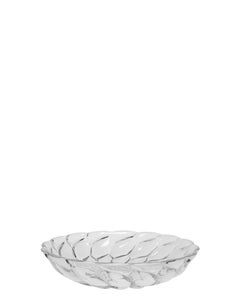
Kartell Bowls and Baskets

Italian

The Italian design giant Kartell transformed plastic from the stuff of humble household goods into a staple of luxury design in the 1960s. Founded in Milan by Italian chemical engineer Giulio Castelli (1920–2006) and his wife Anna Ferrieri (1918–2006), Kartell began as an industrial design firm, producing useful items like ski racks for automobiles and laboratory equipment designed to replace breakable glass with sturdy plastic. Even as companies like Olivetti and Vespa were making Italian design popular in the 1950s, typewriters and scooters were relatively costly, and Castelli and Ferrieri wanted to provide Italian consumers with affordable, stylish goods.

They launched a housewares division of Kartell in 1953, making lighting fixtures and kitchen tools and accessories from colorful molded plastic. Consumers in the postwar era were initially skeptical of plastic goods, but their affordability and infinite range of styles and hues eventually won devotees. Tupperware parties in the United States made plastic storage containers ubiquitous in postwar homes, and Kartell’s ingenious designs for juicers, dustpans, and dish racks conquered Europe. Kartell designer Gino Colombini was responsible for many of these early products, and his design for the KS 1146 Bucket won the Compasso d’Oro prize in 1955.

Buoyed by its success in the home goods market, Kartell introduced its Habitat division in 1963. Designers Marco Zanuso and Richard Sapper created the K1340 (later called the K 4999) children’s chair that year, and families enjoyed their bright colors and light weight, which made them easy for kids to pick up and move. In 1965, Joe Colombo (1924–78) created one of Kartell’s few pieces of non-plastic furniture, the 4801 chair, which sits low to the ground and comprised of just three curved pieces of plywood. (In 2012, Kartell reissued the chair in plastic.) Colombo followed up on the success of the 4801 with the iconic 4867 Universal Chair in 1967, which, like Verner Panton’s S chair, is made from a single piece of plastic. The colorful, stackable injection-molded chair was an instant classic. That same year, Kartell introduced Colombo’s KD27 table lamp. Ferrierei’s cylindrical 4966 Componibili storage module debuted in 1969.

Kartell achieved international recognition for its innovative work in 1972, when a landmark exhibition curated by Emilio Ambasz called “Italy: The New Domestic Landscape” opened at New York’s Museum of Modern Art. That show introduced American audiences to the work of designers such as Gaetano Pesce; Ettore Sottsass, founder of the Memphis Group; and the firms Archizoom and Superstudio (both firms were among Italy's Radical design groups) — all of whom were using wit, humor and unorthodox materials to create a bracingly original interior aesthetic.

Castelli and Ferrieri sold Kartell to Claudio Luti, their son-in-law, in 1988, and since then, Luti has expanded the company’s roster of designers.

Kartell produced Ron Arad’s Bookworm wall shelf in 1994, and Philippe Starck’s La Marie chair in 1998. More recently, Kartell has collaborated with the Japanese collective Nendo, Spanish architect Patricia Urquiola and glass designer Tokujin Yoshioka, among many others. Kartell classics can be found in museums around the world, including MoMA, the Victoria and Albert Museum and the Cooper Hewitt, Smithsonian Design Museum. In 1999, Claudio Luti established the Museo Kartell to tell the company’s story, through key objects from its innovative and colorful history.

Find vintage Kartell tables, seating, table lamps and other furniture on 1stDibs.
to
1
7
7
1
6
6
5
1
7
6
1
7
6
1
Height
to
Width
to
7
7
7
593
145
145
136
115
Creator: Kartell
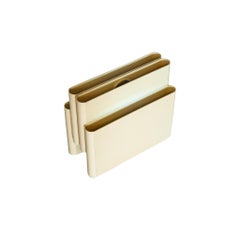
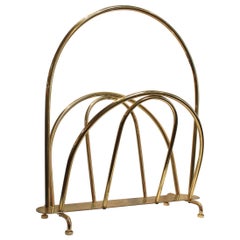
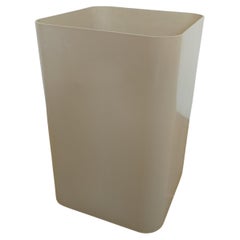
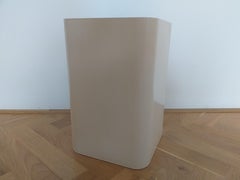
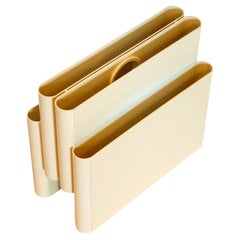
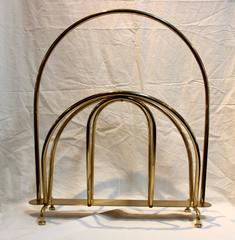
Giotto Stoppino For Kartell 1970 Italian Magazine Holder In Cream Plastic

Giotto Stoppino For Kartell 1970 Italian Magazine Holder In Cream Plastic

By Giotto Stoppino, Kartell

Located in Miami, FL

Magazine holder designed by Giotto Stoppino (1926-1911) for Kartell. Stunning and very decorative piece, designed in Milano Italy by the architect Giotto Stoppino, back in the 1970....

Category

1970s Italian Post-Modern Vintage Kartell Bowls and Baskets

Materials

Plastic

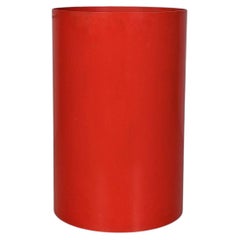
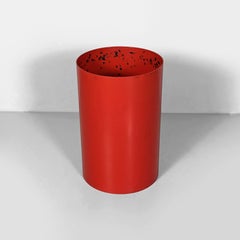
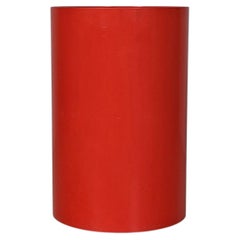
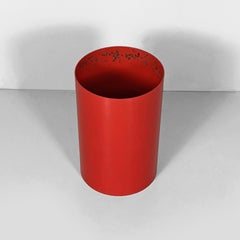
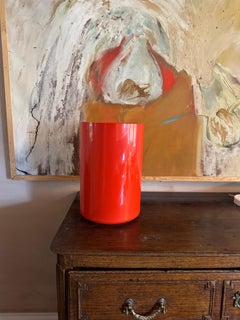
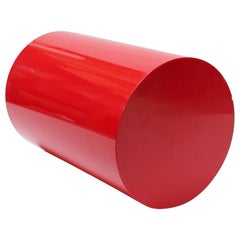
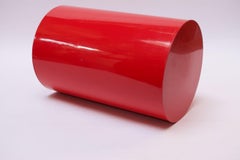
Italian wastepaper basket model 4670 by Gino Colombini for Kartell, 1970s

Italian wastepaper basket model 4670 by Gino Colombini for Kartell, 1970s

By Gino Colombini, Kartell

Located in MIlano, IT

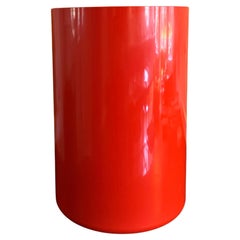
Italian wastepaper basket model 4670 by Gino Colombini for Kartell, 1970s Wastepaper basket Model 4670 with a cylindrical shape, made of red plastic. The structure features smooth, c...

Category

1970s Italian Modern Vintage Kartell Bowls and Baskets

Materials

Plastic

Italian wastepaper basket model 4670 by Gino Colombini for Kartell, 1970s

Italian wastepaper basket model 4670 by Gino Colombini for Kartell, 1970s

By Gino Colombini, Kartell

Located in MIlano, IT

Italian wastepaper basket model 4670 by Gino Colombini for Kartell, 1970s Wastepaper basket Model 4670 with a cylindrical shape, made of red plastic. The structure features smooth, c...

Category

1970s Italian Modern Vintage Kartell Bowls and Baskets

Materials

Plastic

Italian wastepaper basket model 4670 by Gino Colombini for Kartell, 1970s

Italian wastepaper basket model 4670 by Gino Colombini for Kartell, 1970s

By Gino Colombini, Kartell

Located in MIlano, IT

Italian wastepaper basket model 4670 by Gino Colombini for Kartell, 1970s Wastepaper basket Model 4670 with a cylindrical shape, made of red plastic. The structure features smooth, c...

Category

1970s Italian Modern Vintage Kartell Bowls and Baskets

Materials

Plastic

Italian wastepaper basket model 4670 by Gino Colombini for Kartell, 1970s

Italian wastepaper basket model 4670 by Gino Colombini for Kartell, 1970s

By Gino Colombini, Kartell

Located in MIlano, IT

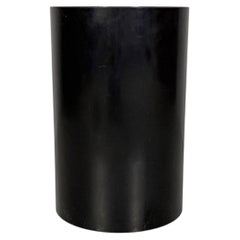
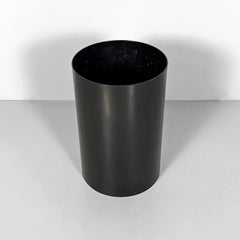
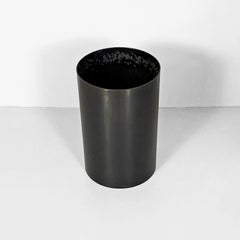
Italian wastepaper basket model 4670 by Gino Colombini for Kartell, 1970s Wastepaper basket Model 4670 with a cylindrical shape, made of black plastic. The structure features smooth,...

Category

1970s Italian Modern Vintage Kartell Bowls and Baskets

Materials

Plastic

Italian wastepaper basket model 4670 by Gino Colombini for Kartell, 1970s

Italian wastepaper basket model 4670 by Gino Colombini for Kartell, 1970s

By Gino Colombini, Kartell

Located in MIlano, IT

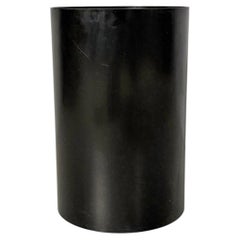
Italian wastepaper basket model 4670 by Gino Colombini for Kartell, 1970s Wastepaper basket Model 4670 with a cylindrical shape, made of black plastic. The structure features smooth,...

Category

1970s Italian Modern Vintage Kartell Bowls and Baskets

Materials

Plastic

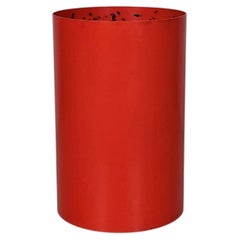
Red Crayonne Planter by Kartell, Mid-Century Modern Design

Red Crayonne Planter by Kartell, Mid-Century Modern Design

By Kartell

Located in London, GB

Really cool red Crayonne bin or planter.

Category

Mid-20th Century French Mid-Century Modern Kartell Bowls and Baskets

Materials

Plastic

Related Items
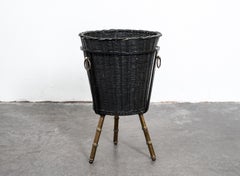
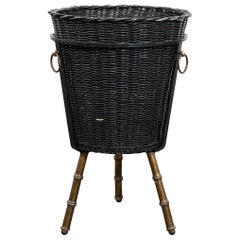
Jacques Adnet Faux Bamboo Wastepaper Basket

Jacques Adnet Faux Bamboo Wastepaper Basket

$1,638

H 21.66 in W 14.18 in D 14.18 in

Jacques Adnet Faux Bamboo Wastepaper Basket

Located in Henley-on Thames, Oxfordshire

Rare midcentury rattan and steel wastepaper basket by Jacques Adnet with brass ring handles supported on three brass faux bamboo legs.

Category

1950s Mid-Century Modern Vintage Kartell Bowls and Baskets

Materials

Brass, Steel

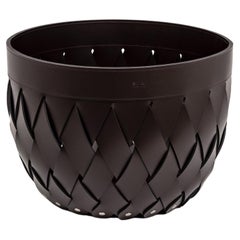
21st Century Hook Magazine Holder Leather Basket with Fabric Handmade in Italy

21st Century Hook Magazine Holder Leather Basket with Fabric Handmade in Italy

By Pinetti

Located in Bagnatica, Lombardia

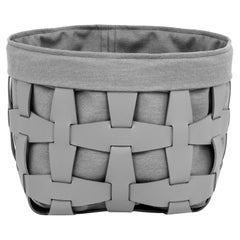
Pinetti elegant basket made with upcycled leather with inside fabric in linen and cotton is part of Hook collection. The frame is composed of a grid-like structure of leather belts ...

Category

2010s Italian Modern Kartell Bowls and Baskets

Materials

Leather, Fabric, Cotton

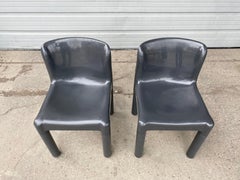
Carlo Bartoli Chair Model 4875 for Kartell, Italy, 1970s

Carlo Bartoli Chair Model 4875 for Kartell, Italy, 1970s

By Carlo Bertoli & Piero Menichetti, Kartell

Located in Buffalo, NY

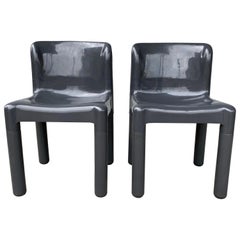
Early pair of Italian Modernist Polypropylene chairs designed by Carlo Bartoli for Kartell Italia in the 1970s model 4875, unusual color, art furniture, Nic...

Category

1970s Italian Mid-Century Modern Vintage Kartell Bowls and Baskets

Materials

Plastic

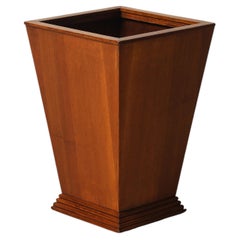
Gio Ponti Walnut Wastepaper Basket, 1939, Italy

Gio Ponti Walnut Wastepaper Basket, 1939, Italy

$6,000

H 17.5 in W 12.5 in D 12 in

Gio Ponti Walnut Wastepaper Basket, 1939, Italy

By Gio Ponti

Located in New York, NY

Gio Ponti Walnut Wastepaper Basket, 1939, Italy A Gio Ponti designed walnut wastepaper basket made for the Vetrocoke offices, Marghera, Venice, circa 1939. Extremely elegant, feat...

Category

1930s Italian Art Deco Vintage Kartell Bowls and Baskets

Materials

Walnut

21st Century Canaria Magazine Holder Handmade in Italy with Regenerated Leather

21st Century Canaria Magazine Holder Handmade in Italy with Regenerated Leather

By Pinetti

Located in Bagnatica, Lombardia

Canaria, our brand new storage solution. A unique texture made with regenerated leather resistant to light and water and perfectly suitable for indoor as well for outdoor use. Mas...

Category

2010s Italian Modern Kartell Bowls and Baskets

Materials

Leather

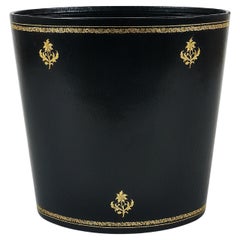
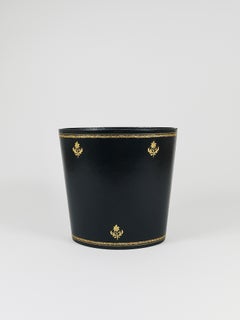
Morabito Paris Black & Gold Leather Wastepaper Basket Bin, France, 1970s

Morabito Paris Black & Gold Leather Wastepaper Basket Bin, France, 1970s

Located in Vienna, AT

A beautiful and elegant vintage Mid-Century Modern paper basket/paper bin from the 1970s, handcrafted by the renowned Parisian fashion house Morabito. This piece features an oval, co...

Category

Mid-20th Century French Mid-Century Modern Kartell Bowls and Baskets

Materials

Leather

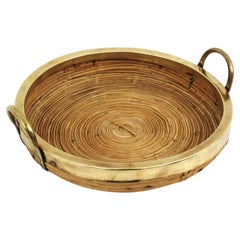
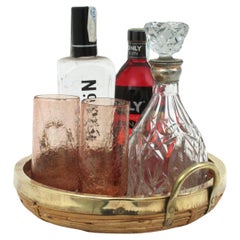
Rattan and Brass Italian Centerpiece Tray Basket, 1970s

Rattan and Brass Italian Centerpiece Tray Basket, 1970s

Located in Barcelona, ES

Mid-Century Modern brass and rattan round tray basket or centerpiece. It has a brass trim covering the top and brass handles at both sides. Handcraft...

Category

20th Century Italian Mid-Century Modern Kartell Bowls and Baskets

Materials

Brass

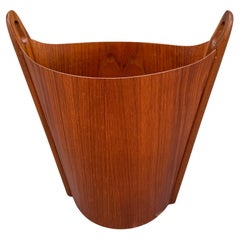
Midcentury Modern Wastepaper Basket in Beautiful Teak

Midcentury Modern Wastepaper Basket in Beautiful Teak

By Einar Barnes , P.S. Heggen

Located in BROOKLYN, NY

Modern Einar Barnes for P.S. Heggen Teak Wastepaper Basket Scandinavian Modern Einar Barnes for P.S. Heggen teak wastepaper basket A fine example of sculpted teak waste paper bask...

Category

Mid-20th Century Norwegian Scandinavian Modern Kartell Bowls and Baskets

Materials

Teak

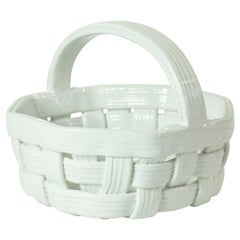
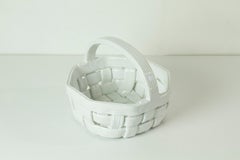
Handmade White Ceramic Fruit Basket, Modern Design, Italy, 1970s

Handmade White Ceramic Fruit Basket, Modern Design, Italy, 1970s

Located in Albano Laziale, Rome/Lazio

Handmade fruit basket in ceramic with a white glaze made in Italy. Perfect for the romantic looking country kitchen.

Category

20th Century Italian Modern Kartell Bowls and Baskets

Materials

Ceramic

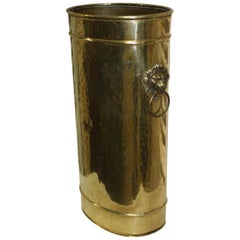
French Empire Period Wastepaper Basket

French Empire Period Wastepaper Basket

$920

H 17.5 in W 9.75 in D 7 in

French Empire Period Wastepaper Basket

Located in Stockbridge, GA

French Empire period wastepaper basket.

Category

Early 19th Century French Empire Antique Kartell Bowls and Baskets

Materials

Brass

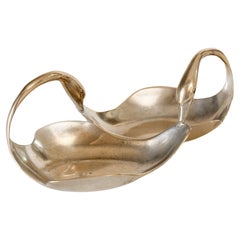
Vide Poche Soap Holder Swans Sculpture Shaped, in Silvered Metal Italy, 1970's

Vide Poche Soap Holder Swans Sculpture Shaped, in Silvered Metal Italy, 1970's

Located in Auribeau sur Siagne, FR

Vide Poche Soap Holder Swans Sculpture Shaped, in Silvered Metal Italy, 1970's

Category

1970s Italian Hollywood Regency Vintage Kartell Bowls and Baskets

Materials

Metal

Previously Available Items
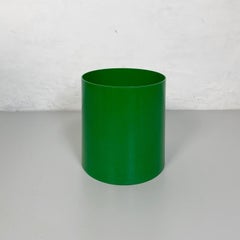
Italian Green Plastic Basket by Gino Colombini for Kartell, 1980s

Italian Green Plastic Basket by Gino Colombini for Kartell, 1980s

By Kartell, Giotto Stoppino

Located in MIlano, IT

Italian green plastic basket by Gino Colombini for Kartell, 1980s. Green polycarbonate basket model 4660 produced by Kartell and designed by Gino Colomb...

Category

1980s Italian Mid-Century Modern Vintage Kartell Bowls and Baskets

Materials

Plastic

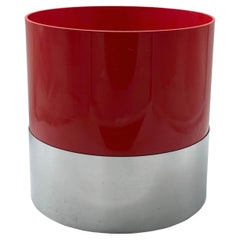
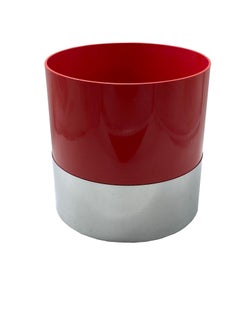
Kartell Red and Chrome Waste Paper Basket, Italy, 1970s

Kartell Red and Chrome Waste Paper Basket, Italy, 1970s

By Kartell

Located in Naples, IT

Simple and stylized design for one of the historical pieces of the Kartell collection: the Waste Bin. This "evergreen", practical and multifunctional, which does not accuse the passa...

Category

1970s Italian Mid-Century Modern Vintage Kartell Bowls and Baskets

Materials

Metal

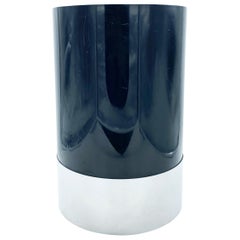
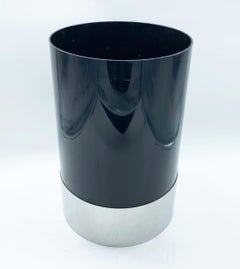
Kartell Black and Chrome Waste Paper Basket, Italy, 1970s

Kartell Black and Chrome Waste Paper Basket, Italy, 1970s

By Kartell

Located in Naples, IT

Simple and stylized design for one of the historical pieces of the Kartell collection: the Waste Bin. This "evergreen", practical and multifunctional, which does not accuse the passa...

Category

1970s Italian Mid-Century Modern Vintage Kartell Bowls and Baskets

Materials

Metal

Vintage Cestino with Lid by Gino Colombini for Kartell

Vintage Cestino with Lid by Gino Colombini for Kartell

By Kartell, Gino Colombini

Located in Brooklyn, NY

Cestino / lidded cylinder designed by Gino Colombini for Kartell (Milano, IT) and manufactured by Beylerian. Rare red example scarcely...

Category

1960s Italian Mid-Century Modern Vintage Kartell Bowls and Baskets

Materials

Plastic

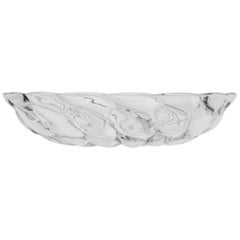
Set of 4 Large Kartell Jelly Bowls in Crystal by Patricia Urquiola

Set of 4 Large Kartell Jelly Bowls in Crystal by Patricia Urquiola

By Kartell, Patricia Urquiola

Located in Brooklyn, NY

The Jelly bowls are part of a new series of design items through which Kartell, in its continuous search for new tactile and aesthetic effects, once again demonstrates its technologi...

Category

21st Century and Contemporary Italian Modern Kartell Bowls and Baskets

Materials

Crystal

Kartell bowls and baskets for sale on 1stDibs.

Kartell bowls and baskets are available for sale on 1stDibs. These distinctive items are frequently made of plastic and are designed with extraordinary care. There are many options to choose from in our collection of Kartell bowls and baskets, although gray editions of this piece are particularly popular. We have 3 vintage editions of these items in-stock, while there is 18 modern edition to choose from as well. Many of the original bowls and baskets by Kartell were created in the modern style in italy during the 21st century and contemporary. If you’re looking for additional options, many customers also consider bowls and baskets by Memphis Group, Carlo Scarpa, and Ghirò Studio. Prices for Kartell bowls and baskets can differ depending upon size, time period and other attributes — on 1stDibs, these items begin at $80 and can go as high as $478, while a piece like these, on average, fetch $190.

Questions About Kartell Bowls and Baskets

  • 1stDibs ExpertOctober 15, 2024
    The founders of Kartell are Italian chemical engineer Giulio Castelli and his wife, Anna Ferrieri. Kartell began as an industrial design firm, producing useful items like ski racks for automobiles and laboratory equipment designed to replace breakable glass with sturdy plastic. Even as companies like Olivetti and Vespa made Italian design popular in the 1950s, typewriters and scooters were relatively costly. Castelli and Ferrieri wanted to provide Italian consumers with affordable, stylish goods. They launched a housewares division of Kartell in 1953, making lighting fixtures, kitchen tools and accessories from colorful molded plastic. Buoyed by its success in the home goods market, Kartell introduced its Habitat division in 1963. Castelli and Ferrieri sold Kartell to Claudio Luti, their son-in-law, in 1988, and since then, Luti has expanded the company’s roster of designers. Shop a collection of Kartell furniture on 1stDibs.
  • 1stDibs ExpertOctober 24, 2024
    Kartell is made in Italy. The company has had its headquarters and factory in Noviglio, Lombardy, since 1967. The company was initially founded in Milan by Italian chemical engineer Giulio Castelli and his wife, Anna Ferrieri. It began as an industrial design firm, producing useful items like ski racks for automobiles and laboratory equipment designed to replace breakable glass with sturdy plastic. Shop a wide variety of Kartell furniture on 1stDibs.
  • 1stDibs ExpertMarch 22, 2022
    Kartell is known largely for producing contemporary furniture out of plastic. The Italian company, founded in 1949, helped elevate the material, proving that it was suitable for designer furniture. You can find a collection of Kartell furniture and decorative objects on 1stDibs.
  • 1stDibs ExpertFebruary 21, 2024
    The history of Kartell starts with an Italian chemical engineer named Giulio Castelli and his wife, Anna Ferrieri. The couple founded Kartell in Milan as an industrial design firm, producing utilitarian items like ski racks for automobiles and laboratory equipment designed to replace breakable glass with sturdy plastic. Even as companies like Olivetti and Vespa were making Italian design popular in the 1950s, typewriters and scooters were relatively costly, and Castelli and Ferrieri wanted to provide Italian consumers with affordable, stylish goods. They launched a housewares division of Kartell in 1953, making lighting fixtures and kitchen tools and accessories from colorful molded plastic. Buoyed by its success in the home goods market, Kartell introduced its Habitat division in 1963. Kartell achieved international recognition for its innovative work in 1972, when a landmark exhibition curated by Emilio Ambasz called "Italy: The New Domestic Landscape" opened at New York's Museum of Modern Art. Castelli and Ferrieri sold Kartell to Claudio Luti, their son-in-law, in 1988, and since then, Luti has expanded the company's roster of designers. On 1stDibs, explore a large selection of Kartell furniture.
  • 1stDibs ExpertAugust 29, 2024
    The country that Kartell is from is Italy. Founded in Milan by Italian chemical engineer Giulio Castelli and his wife Anna Ferrieri, Kartell began as an industrial design firm, producing useful items like ski racks for automobiles and laboratory equipment designed to replace breakable glass with sturdy plastic. They launched a housewares division of Kartell in 1953, making lighting fixtures and kitchen tools and accessories from colorful molded plastic. Then, buoyed by its success in the home goods market, Kartell introduced its Habitat division in 1963. On 1stDibs, shop a large selection of Kartel furniture.
  • 1stDibs ExpertOctober 15, 2024
    To tell a real Kartell, look for the maker's markings. Nearly all authentic pieces will feature an embossed mark that indicates the Kartell name, the product name and the designer name. If your piece lacks any of these three marks or the marking is printed in ink on the piece or on a paper label, it may be a replica. You can also research identifying characteristics for your particular type of furniture and use these to evaluate your item. Alternatively, you can seek the opinion of a certified appraiser or knowledgeable dealer. Find a variety of Kartell furniture on 1stDibs.
  • 1stDibs ExpertOctober 24, 2024
    Kartell chairs are made in Italy. Since 1967, the Italian furniture maker has produced pieces at its own factory in Noviglio, Lombardy. During the 1960s, Kartell transformed plastic from the stuff of humble household goods into a staple of luxury design, and plastic remains one of its best-known materials to this day. In fact, it is the material for some of its most iconic chairs, including the Ghost chair, designed by Philippe Starck, and the S chair, created by Verner Panton. On 1stDibs, find a large collection of Kartell chairs.
  • 1stDibs ExpertOctober 24, 2024
    The history of Kartell furniture begins with Italian chemical engineer Giulio Castelli and his wife, Anna Ferrieri. They founded the company in 1949 as an industrial design firm, producing items like ski racks for automobiles and laboratory equipment designed to replace breakable glass with sturdy plastic. They launched a housewares division of Kartell in 1953, making lighting fixtures, kitchen tools and accessories from colorful molded plastic. The affordability and infinite range of styles and hues won devotees of Kartell’s ingenious designs for juicers, dustpans and dish racks. Kartell designer Gino Colombini was responsible for many of these early products, including the KS 1146 Bucket, which won the Compasso d’Oro prize in 1955. Buoyed by its success in the home goods market, Kartell introduced its Habitat division in 1963. In 1972, Kartell achieved international recognition for its innovative work when a landmark exhibition curated by Emilio Ambasz called “Italy: The New Domestic Landscape” opened at New York’s Museum of Modern Art. In 1988, Castelli and Ferrieri sold Kartell to Claudio Luti, their son-in-law, who has expanded the company’s roster of designers. Shop a collection of Kartell furniture on 1stDibs.
  • 1stDibs ExpertMarch 25, 2024
    How you clean Kartell plastic depends on the piece. Often, the best way to clean plastic furniture is with lukewarm water and mild dish soap. However, recommended cleaning methods vary. For the best results, refer to the manufacturer's care instructions that accompany your furniture. Shop a collection of Kartell furniture on 1stDibs.
  • 1stDibs ExpertSeptember 9, 2024
    Yes, Kartell is an Italian brand. Giulio Castelli and his wife, Anna Ferrieri, founded the company in Milan in 1949. Originally, Kartell was an industrial design firm, producing items like ski racks for automobiles and laboratory equipment to replace breakable glass with sturdy plastic. It first introduced its housewares division in 1953. Find a large selection of Kartell furniture on 1stDibs.
  • 1stDibs ExpertSeptember 9, 2024
    Yes, the Kartell Componibili is stackable. In fact, a big part of the appeal of the furniture collection is the fact that you can stack it up to create the ideal storage solution for your needs. Kartell first unveiled the Componibili line in 1967, and it remains popular today. Find a collection of Kartell Componibili furniture on 1stDibs.
  • 1stDibs ExpertApril 5, 2022
    Kartell Louis Ghost chairs are made of lucite. Designed by Phillipe Starck for Kartell in 2002, this clear chair is crafted from a single piece of plastic, making it a beautifully elegant piece. On 1stDibs, find a range of authentic Kartell Ghost chairs from top sellers.
  • 1stDibs ExpertAugust 20, 2024
    The dimensions of the Kartell Invisible table vary by style. The high rectangular table measures around 15.75 inches in height by 15.75 inches in depth by 47 inches in length, while the low rectangle version is 12.4 inches high by 15.75 inches deep by 47 inches long. There is also a 39-inch by 39-inch square Invisible table available in 28- and 12.4-inch heights. On 1stDibs, explore a selection of Kartell Invisible tables.
  • 1stDibs ExpertOctober 24, 2024
    How big the Kartell Four table is varies. The rectangular dining table is actually available in four sizes. Its smallest version measures 62.5 inches in width by 31 inches in depth, and the largest is 87.5 inches long by 32 inches deep. Kartell also offers a 74.75-inch long option in two depths: 31 inches and 35.5 inches. All four size options are 28.25 inches tall. Shop a selection of Kartell dining tables on 1stDibs.
  • 1stDibs ExpertOctober 15, 2024
    Yes, many online reviewers state that the Kartell Masters chair is comfortable. Fans of the chair designed by Philippe Starck with Eugeni Quitllet frequently say that the unique shape of its back and its gently sloped seat together provide optimal support. However, whether or not any chair is comfortable is a matter of personal preference. Find an assortment of Kartell Masters chairs on 1stDibs.
  • 1stDibs ExpertOctober 24, 2024
    Kartell started making plastic objects shortly after its founding in 1949. The company began as an industrial design firm, producing useful items like ski racks for automobiles and laboratory equipment designed to replace breakable glass with sturdy plastic. Even as companies like Olivetti and Vespa made Italian design popular in the 1950s, typewriters and scooters remained relatively costly. Kartell founders Giulio Castelli and Anna Ferrieri wanted to provide Italian consumers with affordable, stylish goods. They launched a housewares division in 1953, making lighting fixtures, kitchen tools and accessories from colorful molded plastic. Buoyed by its success in the home goods market, Kartell introduced its Habitat division in 1963. On 1stDibs, shop a wide range of Kartell furniture.
  • 1stDibs ExpertAugust 29, 2024
    Philippe Starck designed the Louis Ghost chair for Kartell in 2002. The chair is a postmodern take on the classic Louis XVI armchair, a style that emerged under the fraught reign of French King Louis XVI and Queen Marie Antoinette. This style represented the birth of neoclassicism in France and was characterized by a relative restraint compared to the Rococo flourishes of previous eras. The second half of the chair’s name refers to its materiality. It wasn’t Starck’s first plastic chair for Kartell, but it was the first time it could use a single polycarbonate plastic mold in the process, creating a structure completely free of joints. Formally, Starck distilled the geometry of his antique reference to its main elements: the oval-shaped backrest, curved armrests and straight legs. On 1stDibs, shop a collection of Philippe Starck Louis Ghost chairs.