Roman Cieslewicz Art

to
3
4
3
2
Overall Width
to
Overall Height
to
12
3
7
1
1
1
11
1
7
6
6
6
3
3
3
3
2
1
1
1
9
3
2
1
1
15
10,848
2,843
2,494
1,421
1
9
3
Artist: Roman Cieslewicz
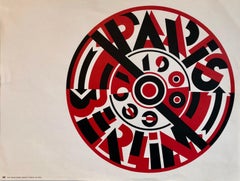
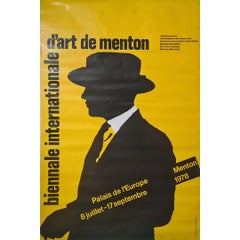
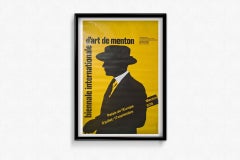
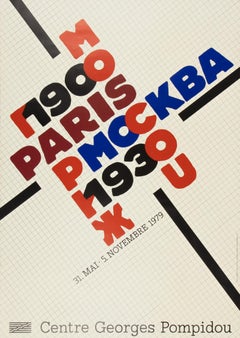
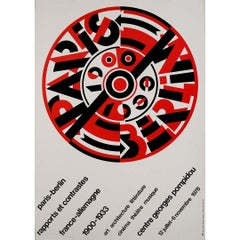
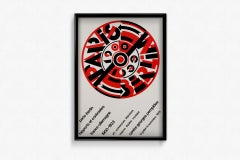
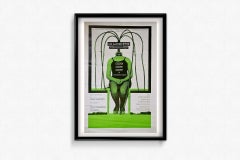
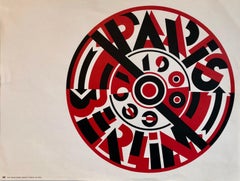
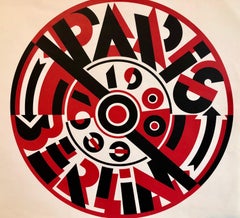
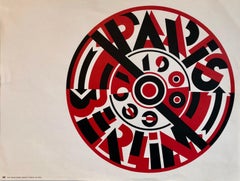
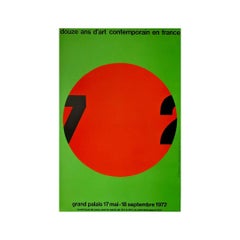
Vintage Poster Bold Paris Berlin 1900-1930 Pompidou Center Polish Graphic Artist

Vintage Poster Bold Paris Berlin 1900-1930 Pompidou Center Polish Graphic Artist

By Roman Cieslewicz

Located in Surfside, FL

Roman Cieślewicz (born 1930 13 January in Lwów Poland now Lviv Ukraine - died 1996 21 January in Paris, France) was a Polish (naturalized French) graphic artist and photographer. From 1943 to 1946 he attended the School of Artistic Industry in Lvov and from 1947 to 1949 attended the Krakow's Fine Arts Lycee. He studied at Kraków Academy of Fine Arts from 1949 to 1955. He was artistic editor of "Ty i Ja" monthly (Warsaw) 1959-1962. In 1963 he moved to France and naturalized in 1971. He worked as art director of Vogue, Elle (1965-1969) and Mafia - advertising agency (1969-1972) and was artistic creator of Opus International (1967-1969), Kitsch (1970-1971) and Cnac-archives (1971-1974). Taught at the Ecole Supérieure d'Arts Graphiques (ESAG) in Paris. In 1976 he produced his "review of panic information" - "Kamikaze"/No. 1/ published by Christian Bourgois. Folon. In 1991 he produced "Kamikaze 2" with Agnes B. He took part in numerous group exhibitions of graphic, poster and photographic art and was a member of AGI (Alliance Graphique Internationale). He designed a famous 1960s Polish Cyrk Circus Dog Poster as well as a Pop art superman cover for Opus magazine and a Charlie Chaplin poster...

Category

1970s Constructivist Roman Cieslewicz Art

Materials

Offset

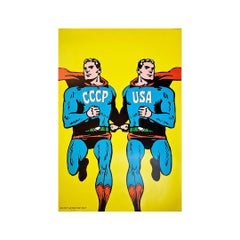
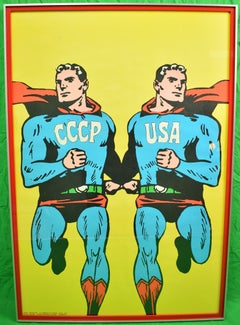
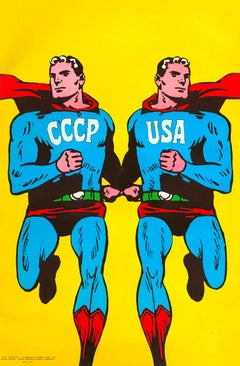
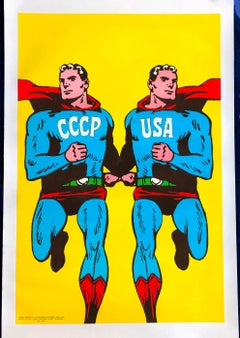
1968 Original poster Superman CCCP - USA by Roman Cieslewicz

1968 Original poster Superman CCCP - USA by Roman Cieslewicz

By Roman Cieslewicz

Located in PARIS, FR

Original poster Superman CCCP - USA Created by the editor Georges Fall, Opus International is a French contemporary art magazine founded in 1967 and disappeared in 1995. From the be...

Category

1960s Roman Cieslewicz Art

Materials

Paper, Lithograph

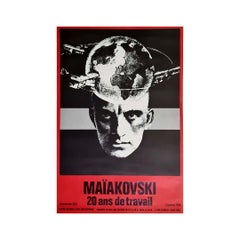
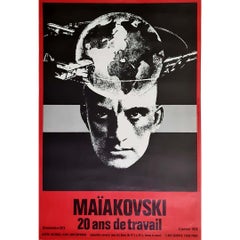
Original poster of Roman Cieslewicz - Maiakovski 20 years of work

Original poster of Roman Cieslewicz - Maiakovski 20 years of work

By Roman Cieslewicz

Located in PARIS, FR

Roman Cieslewicz 🇵🇱 (1930-1996) was a graphic artist who designed numerous posters for the Central Film Distribution Company, the Polish Chamber of Commerce and the Communist Party...

Category

1970s Roman Cieslewicz Art

Materials

Paper

1975 exhibition poster by Roman Cieslewicz - Poetic intervention

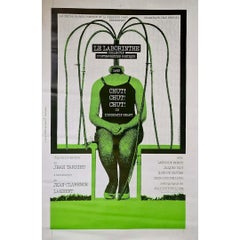
1975 exhibition poster by Roman Cieslewicz - Poetic intervention

By Roman Cieslewicz

Located in PARIS, FR

The 1975 exhibition poster "Le labyrinthe collectif d'intervention poétique dans chut ! chut ! chut ! ou l'indicatif néant" by Roman Cieślewicz is a striking visual representation of...

Category

1970s Roman Cieslewicz Art

Materials

Paper

Superpowers
Superpowers

Superpowers

By Roman Cieslewicz

Located in Bristol, CT

Iconic original parchment linen poster 'Superpowers' c1968 by noted Polish graphic artist Roman Cieslewicz (1930-1996) Poster Sz: 31 1/4"H x 21"W Frame Sz: 32 1/2"H x 22 1/2"W w/ ...

Category

1960s Other Art Style Roman Cieslewicz Art

Materials

Linen, Parchment Paper

Related Items
Cypriano (A Basque Boy)

Cypriano (A Basque Boy)

By Gerald Leslie Brockhurst

Located in Middletown, NY

Etching on cream wove paper. 6 5/16 x 3 3/4 inches (159 x 94 mm), full margin. Signed in pencil lower center margin, from the edition of 111. A well inked impression with a minor cre...

Category

Mid-20th Century American Modern Roman Cieslewicz Art

Materials

Handmade Paper, Etching

Artist and Model Howard Hodgkin - green and yellow etching watercolour gouache

Artist and Model Howard Hodgkin - green and yellow etching watercolour gouache

By Howard Hodgkin

Located in New York, NY

This vibrant abstract orange and green print is part of a group of soft-ground etchings (Artist and Model, Artist and Model (in green and yellow), These…Plants) by Howard Hodgkin. The two versions of Artist and Model are printed from the same plates, but in different colors. In this iteration, green watercolor contrasts beautifully with marigold orange, crimson, and terra cotta red. Seen in all three prints is a bust in silhouette before a window. Artist and Model is a surprising name, as Hodgkin never painted or drew from a model. Signed by the artist with initials, dated 1980, and numbered lower center in red crayon. Soft-ground etching with hand coloring in a yellow watercolor wash and green gouache on Stoneridge mould-made etching paper. Edition 100. Howard Hodgkin was introduced to the etching technique used in Artist and Model (in green and yellow) at Petersburg Press, where this print was produced and where he would become a long-time collaborator. This technique allowed him to work fluidly and spontaneously, creating the moody interior scenes that mark Hodgkin’s work from the late 70s and early 80s. Catalogue reference: Elizabeth Knowles...

Category

Late 20th Century Abstract Roman Cieslewicz Art

Materials

Watercolor, Gouache, Etching

Howard Hodgkin Late Afternoon in the Museum of Modern Art abstract black white

Howard Hodgkin Late Afternoon in the Museum of Modern Art abstract black white

By Howard Hodgkin

Located in New York, NY

Abstract black, white and tan print of interior scene with dots, lines, shadow and painted brushstroke texture. Ideal for display in minimalist, modern and contemporary spaces. While British pop artists such as David Hockney and Patrick Caulfield numbered amongst Howard Hodgkin's circle of friends, Hodgkin's work is painterly, expressionist, and abstract. Late Afternoon in the Museum of Modern Art by Howard Hodgkin. Soft-ground etching on buff BFK Rives mould-made paper. Edition 100: this impression 36/100. Signed by the artist, numbered 36/100, and dated 79 lower center in red crayon. Printed from the same plate as Early Evening in the Museum of Modern Art. Published by Petersburg Press. This print depicts an abstracted scene, perhaps a sculpture in front of a window in the Museum of Modern Art, Oxford, in Hodgkin's signature painterly style. The expressive mark-making in this print is an example of the artist’s movement in the late 70s towards pronounced gestures. Hodgkin used his hand as a mark-making tool, combining these textures with loose and urgent brushwork. Howard Hodgkin was introduced to the etching technique used in Late Afternoon in the Museum of Modern Art at Petersburg Press, where this print was produced and where he would become a long-time collaborator. This technique allowed him to work fluidly and spontaneously, creating the moody interior scenes that mark Hodgkin’s work from the late 70s and early 80s. Part of a series of four prints reflecting on a visit to the Museum...

Category

Late 20th Century Abstract Roman Cieslewicz Art

Materials

Etching

Howard Hodgkin hand-colored Early Evening in the Museum of Modern Art

Howard Hodgkin hand-colored Early Evening in the Museum of Modern Art

By Howard Hodgkin

Located in New York, NY

Large scale black and white abstract interior scene with dots, lines, brushstrokes, and hand painting in grey, to hang in contemporary, modern and minimalist spaces. While British pop artists such as David Hockney and Patrick Caulfield numbered amongst Howard Hodgkin's circle of friends, Hodgkin's work is painterly, emotional, expressionist, and abstract. Early Evening in the Museum of Modern Art, by Howard Hodgkin. Signed by the artist, numbered, and dated 79 lower center in red crayon. Soft-ground etching printed from the same plate as 'Late Afternoon in the Museum of Modern Art', with hand coloring in black gouache on Grey BFK Rives mould-made paper. This print depicts an abstracted scene, perhaps a sculpture in front of a window in the Museum of Modern Art, Oxford, in Hodgkin's signature painterly style. The expressive mark-making in this print is an example of the artist’s movement in the late 70s towards pronounced gestures. Wide areas of deep black pigment contrast urgent swipes of ink. Always seeking greater richness in his prints, Hodgkin layered ink and hand coloring in this print, rendering each impression in the edition unique. Part of a series of four prints reflecting on a visit to...

Category

Late 20th Century Abstract Roman Cieslewicz Art

Materials

Gouache, Etching

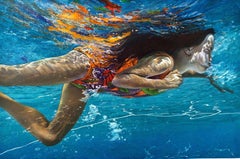
Muse (a young novice in colorful swim suit struggles thru a pool of blue)

Muse (a young novice in colorful swim suit struggles thru a pool of blue)

By Art Werger

Located in New Orleans, LA

Muse is #43 of 45. It depicts a young woman in a colorful swimsuit doing her best to swim through the blue waters of the pool. Her mouth is pursed and the bubbles flow out. I sold an impression of this image to an olympic swimming...

Category

Early 2000s American Modern Roman Cieslewicz Art

Materials

Etching

'Sisters' — Renowned Black American, Harlem Renaissance Artist

'Sisters' — Renowned Black American, Harlem Renaissance Artist

Located in Myrtle Beach, SC

James Lesesne Wells, 'Sisters', linocut, edition not stated but small, 1928. Signed, titled, and annotated 'imp' in pencil. A fine impression on off-white wove Japan paper, with wide margins (1 7/8 to 3 3/4 inches), in excellent condition. Printed by the artist. Very scarce. Matted to museum standards, unframed. Image size 8 3/16 x 6 3/4 inches (208 x 171 mm); sheet size 13 1/2 x 10 3/4 inches (343 x 273 mm). Exhibition and Literature: 'Narratives of African American Art and Identity: The David C. Driskell Collection,' The Art Gallery at the University of Maryland, extensive touring exhibition, 1998-2000. Collections: Pennsylvania Academy of the Fine Arts, Smithsonian Institution (Anacostia Community Museum). ABOUT THE ARTIST “Wells is more than an artist with a deep concern for his fellow man. He carries many of his themes a step further into an apocalyptic world, a world of revelation and shifting lights. … He works on large blocks in a bold free style. … His work has a vigor, therefore, that is not often used in the medium today.” —Jacob Kainen (painter, critic, and collector) from Richard J. Powell’s 1986 essay Phoenix Ascending: The Art of James Lesesne Wells. James Lesesne Wells was an American painter, printmaker, educator, and pioneering figure of the Harlem Renaissance, whose work established a vital connection between African heritage, modernist form, and African American cultural identity. Known for his innovative use of linoleum and woodblock printing, Wells played a key role in shaping 20th-century African American art and inspired countless students throughout his lengthy career as a teacher at Howard University. Born in Atlanta, Georgia, Wells' early exposure to the arts came through church and community, where African American cultural traditions were central. He pursued formal artistic training at Lincoln University in Pennsylvania (earning a B.A. in 1924), followed by studies at the Pennsylvania Academy of the Fine Arts and the Barnes Foundation, where he encountered European modernists as well as traditional African sculpture, which profoundly influenced his style. Wells moved to New York in the late 1920s, swiftly immersing himself in the lively artistic and intellectual scene of Harlem. There, he became associated with artists, writers, and thinkers of the Harlem Renaissance, contributing to the growth of Black cultural identity. Considered a mentor to many famed artists of the Harlem Renaissance, Wells served as director of a summer art workshop in Harlem where his assistants included Charles Alston, Jacob Lawrence, and Palmer Hayden...

Category

1920s American Modern Roman Cieslewicz Art

Materials

Linocut

Art Card: Kenneth Noland - 1975 Andre Emmerich invitation, Hand signed by Noland

Art Card: Kenneth Noland - 1975 Andre Emmerich invitation, Hand signed by Noland

By Kenneth Noland

Located in New York, NY

Offset lithograph invitation Hand signed and dated '84 by Kenneth Noland in ink on the front This invitation was published on the occasion of the 1975 exhibition "Kenneth Noland New ...

Category

1970s Abstract Geometric Roman Cieslewicz Art

Materials

Offset, Lithograph

A 1928 Modernist Woodcut, Self-Portrait of Notable Chicago Modernist Emil Armin

A 1928 Modernist Woodcut, Self-Portrait of Notable Chicago Modernist Emil Armin

By Emil Armin

Located in Chicago, IL

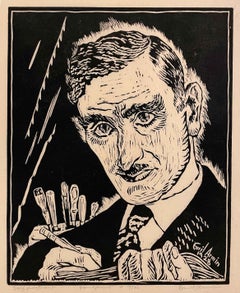
A 1928 woodcut on paper of a self-portrait of notable Chicago Modernist artist, Emil Armin. Artwork size: 10 1/2" x 8". Archivally matted to: 12 1/2" x 14 1/2. Signed, titled and numbered in pencil. Edition 7/30. Emil Armin was born in Radautz, Austria in 1883. By the age of 10, Armin was orphaned and was raised by his older siblings. He supported himself by working in restaurants and drew in his spare time. In 1905, at the age of 21, Armin immigrated to Chicago. He began studying at the Art Institute of Chicago in 1907, but financial difficulties forced him to start and stop a number of times, finally graduating in 1920. He studied with George Bellows and Randall Davey. Armin was an integral part of Chicago’s 57th Street Art Colony and exhibited in both the more avant-garde Chicago No-Jury Society Shows, as well as the more formal and conventional Chicago Society of Artists Exhibitions, the Chicago Renaissance Society and Art Institute of Chicago (1922-1949) exhibitions. He taught at Hull House...

Category

1920s American Modern Roman Cieslewicz Art

Materials

Paper, Woodcut

Mr. Unpopular (Funk Art, Conceptual Humor, Postwar American Art, ~46% OFF)

Mr. Unpopular (Funk Art, Conceptual Humor, Postwar American Art, ~46% OFF)

By William T. Wiley

Located in Kansas City, MO

William T. Wiley Mr. Unpopular Original Color Lithograph Year: 1980 Edition: L.P. Impression outside and edition of 35 Publisher: Landfall Press, Chicago, IL, United States Paper Si...

Category

1980s American Modern Roman Cieslewicz Art

Materials

Lithograph

Alexander Calder - Our Unfinished Revolution (Sun), 1976, Limited Edition poster

Alexander Calder - Our Unfinished Revolution (Sun), 1976, Limited Edition poster

By Alexander Calder

Located in New York, NY

Offset lithograph poster Printed signature and date on offset paper This poster was published in a limited edition of 250, separate from the lithographic portfolio of the same title ...

Category

1970s Abstract Roman Cieslewicz Art

Materials

Lithograph, Offset

Rare 1970s offset lithograph exhibition print (pencil signed by Philip Guston)

Rare 1970s offset lithograph exhibition print (pencil signed by Philip Guston)

By Philip Guston

Located in New York, NY

Philip Guston at David McKee Gallery (pencil signed by Philip Guston), 1974 Lithograph and offset lithograph poster Signed in graphite pencil under the image 24 1/2 × 20 inches Unframed, unnumbered Rare vintage lithographic poster of 1974 Guston exhibition at David McKee Gallery Signed under the image in graphite pencil by Philip Guston Another hand signed edition is in the permanent collection of Vassar College; otherwise we haven't seen another besides the present work; a true collectors item when hand signed by the artist. Philip Guston Biography Philip Guston (1913 – 1980) is one of the great luminaries of twentieth-century art. His commitment to producing work from genuine emotion and lived experience ensures its enduring impact. Guston’s legendary career spanned a half century, from 1930 to 1980. His paintings—particularly the liberated and instinctual forms of his late work—continue to exert a powerful influence on younger generations of contemporary painters. Born in Montreal, Canada, in 1913 to poor Russian Jewish émigrés, Guston moved with his family to California in 1919. Briefly attending the Otis Art Institute in Los Angeles in 1930, he was otherwise completely self-taught. Guston’s first precocious work, Mother and Child, was completed when he was only seventeen years of age. Influenced by the social and political landscape of the 1930s, his earliest works evoked the stylized forms of Giorgio de Chirico and Pablo Picasso, social realist motifs of the Mexican muralists, and classical properties of Italian Renaissance frescoes of Piero della Francesca and Masaccio that he had seen only in reproduction. Painted in Mexico with another young artist, the huge fresco The Struggle Against War and Fascism drew national attention in the US. Guston’s success continued in the WPA, a Depression-era government program that commissioned American artists to create murals in public buildings. While not widely known today, the young artist’s early experiences as a mural painter allowed a development of narrative and scale that he would draw upon in his late figurative work. In the early 1940s, as the WPA program was ending, Guston found work teaching at universities in the Midwestern United States. In his studio, he was working in oils on easel paintings that were more personal and smaller in scale, focusing on portraits and allegories, like Martial Memory and If This Be Not I. His first solo exhibition in Iowa was well received and, within a few years, he was offered his first solo show in New York City. Guston was awarded a Prix de Rome, allowing him to leave teaching and spend a year in Italy, studying firsthand the Italian masters he loved. By the time he had finished The Tormentors, Guston’s move to abstraction was all but complete. On his return from Italy, he continued dividing his time between the artists’ colony of Woodstock in Upstate New York and New York City, which was then emerging as the center of the postwar art world. He rented a studio on 10th Street, where abstract expressionists Jackson Pollock, Willem de Kooning and Mark Rothko also worked. For Guston, success was never what mattered most. He was already impatient with the language of pure abstraction and experimenting with larger forms, using a limited palette of grays, pinks and blacks. As his forms became still more reduced, he stopped painting altogether and embarked on a series of simplified abstract “pure drawings” in brush or charcoal. At this juncture, Guston removed himself from the art scene in New York, living and working in Woodstock for the remainder of his life. Guston’s move ­was hardly a withdrawal. Freed from the distractions and formal constraints of the art world and the opinions of critics, he was able to experiment with new forms and to engage more deeply with the issues that mattered to him. The 1960s was a period of great social upheaval in the United States, characterized by assassinations and violence, civil rights and anti-war protests. “When the 1960s came along I was feeling split, schizophrenic,” Guston later said. “The war, what was happening to America, the brutality of the world. What kind of man am I, sitting at home, reading magazines...

Category

1970s Abstract Roman Cieslewicz Art

Materials

Lithograph, Offset

Print of Frank Stella Wall Relief Sculpture, Hand Signed, Dated by Artist Framed

Print of Frank Stella Wall Relief Sculpture, Hand Signed, Dated by Artist Framed

By Frank Stella

Located in New York, NY

Frank Stella (after) Untitled, for the Very Special Arts Gallery (Hand Signed by Frank Stella), 1992 Photo lithograph and offset litho on thin board (hand signed by Frank Stella) Fra...

Category

1990s Abstract Expressionist Roman Cieslewicz Art

Materials

Lithograph, Offset

Previously Available Items
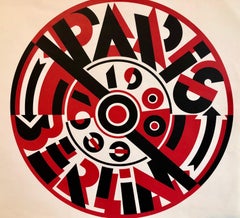
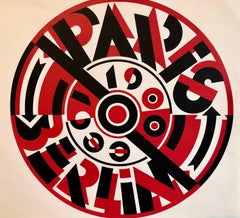
Vintage Poster Bold Paris Berlin 1900-1930 Pompidou Center Polish Graphic Artist

Vintage Poster Bold Paris Berlin 1900-1930 Pompidou Center Polish Graphic Artist

By Roman Cieslewicz

Located in Surfside, FL

Roman Cieślewicz (born 1930 13 January in Lwów Poland now Lviv Ukraine - died 1996 21 January in Paris, France) was a Polish (naturalized French) graphic artist and photographer. From 1943 to 1946 he attended the School of Artistic Industry in Lvov and from 1947 to 1949 attended the Krakow's Fine Arts Lycee. He studied at Kraków Academy of Fine Arts from 1949 to 1955. He was artistic editor of "Ty i Ja" monthly (Warsaw) 1959-1962. In 1963 he moved to France and naturalized in 1971. He worked as art director of Vogue, Elle (1965-1969) and Mafia - advertising agency (1969-1972) and was artistic creator of Opus International (1967-1969), Kitsch (1970-1971) and Cnac-archives (1971-1974). Taught at the Ecole Supérieure d'Arts Graphiques (ESAG) in Paris. In 1976 he produced his "review of panic information" - "Kamikaze"/No. 1/ published by Christian Bourgois. Folon. In 1991 he produced "Kamikaze 2" with Agnes B. He took part in numerous group exhibitions of graphic, poster and photographic art and was a member of AGI (Alliance Graphique Internationale). He designed a famous 1960s Polish Cyrk Circus Dog Poster as well as a Pop art superman cover for Opus magazine and a Charlie Chaplin poster for a Polish film festival. Major awards 1964 - Grand Prix, International Exhibition of Film Posters in Karlovy Vary (Czech Republic) 1964 - Gold Medal, 1st Biennial of Industrial Forms in Ljubljana (Yugoslavia) 1972 - Gold Medal, 4th International Biennial of Posters in Warsaw (Poland) 1979 - Grand Prix for posters in Paris (France) 1984 - Bronze Medal, International Biennial of Posters 1990 - Grand Prix of "Art Graphique" (France) 1991 - Excellence Prize at Biennial of Graphic in Zagreb (Yugoslavia) 1992 - President Price, Biennial of Applied Graphic in Brno (Slovakia) 1993 – Second prize, Poster Biennale Lahti (Finland) He was included in the MoMA NY show of Polish posters (along with Jerzy Czerniawski, Wiktor Gorka, Mieczyslaw Gorowski, Jan Lenica, Jan Mlodozeniec, Andrzej Pagowski, Jan Sawka...

Category

1970s Constructivist Roman Cieslewicz Art

Materials

Offset

Roman Cieslewicz Superman CCCP USA silkscreen 1968 (60s Pop Art)

Roman Cieslewicz Superman CCCP USA silkscreen 1968 (60s Pop Art)

By Roman Cieslewicz

Located in NEW YORK, NY

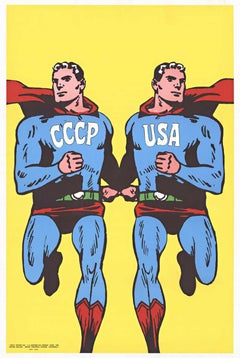
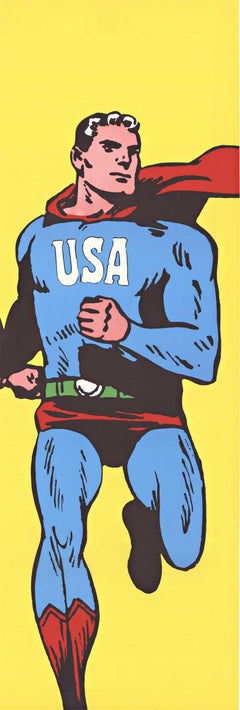
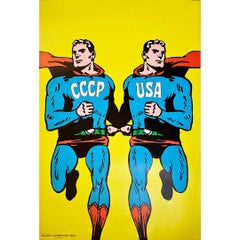
Superman 1968 CCCP / USA by Roman Cieslewicz Original vintage Superman style poster: CCCP USA by the legendary graphic designer Roman Cieslewicz featuring bold, colorful Superman mirror images depicted as Cold War rivals. USSR (CCCP / Soviet Union) and America Supermen running alongside each other against a bright yellow background. This work was also used as a cover image for Opus Magazine in 1968. Good condition. Medium: Silkscreen in colors affixed to linen backing Dimensions: 24 x 34.75 inches (including backing) Condition: Bold, bright colors; only minor signs of handling; otherwise very good condition Unsigned from an edition of unknown Published by Georges Fall, Paris. Printed by Serg, Paris. About the artist Roman Cieślewicz was born in Lwow, Poland in 1930 (d. 1996). He graduated from the Academy of Fine Arts, Cracow in 1955, moved to France in 1963 and became a citizen in 1971. He worked for several press and publishing houses, including Elle, Vogue and Opus, and various cultural organisations, such as the Festival d’Automne and the Pompidou Centre. A professional militant, Cieslewicz avoids the groups that are active and influential in France: the admen, the Swiss school, the ‘politicos’. Yet it was he who introduced the Polish poster to the country, unleashing all those influences which continue even now to determine French poster design, particularly in the political, social and cultural fields. Though his approach is comparable with that of the Polish school, Cieslewicz has created his own technique and language, which he applied to posters, publications, photomontages and illustration. His graphic ideas were expressed in a haunting and incisive style. His output was prolific, his approach disturbingly free, with accidental elements permitted to challenge the typographical order. Related Categories Political art. Roy Lichtenstein. Andy Warhol Superman...

Category

1960s Pop Art Roman Cieslewicz Art
Materials

Screen

Roman Cieslewicz art for sale on 1stDibs.
Find a wide variety of authentic Roman Cieslewicz art available for sale on 1stDibs. If you’re browsing the collection of art to introduce a pop of color in a neutral corner of your living room or bedroom, you can find work that includes elements of yellow, green and other colors. You can also browse by medium to find art by Roman Cieslewicz in paper, offset print, fabric and more. Much of the original work by this artist or collective was created during the 20th century and is mostly associated with the modern style. Not every interior allows for large Roman Cieslewicz art, so small editions measuring 16 inches across are available. Customers who are interested in this artist might also find the work of Elie Nadelman, Lilya Vorobey, and Caroline Durieux. Roman Cieslewicz art prices can differ depending upon medium, time period and other attributes. On 1stDibs, the price for these items starts at $444 and tops out at $2,166, while the average work can sell for $1,106.
Artists Similar to Roman Cieslewicz