Poplar Sculptures

to
1
4
1
1
2
1
1
1
841
18,550
10,784
10,071
8,535
2
2
3
1
1
1
1
Height
to
Width
to
4
4
4
1
Material: Poplar
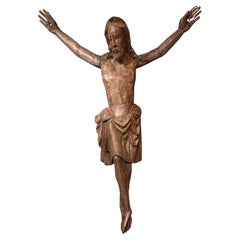
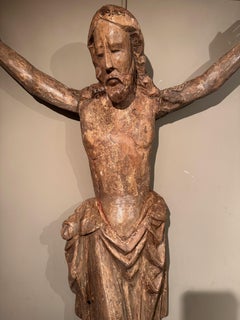
Very Large and Rare Christ on the Cross ( height 130. cms )  14th Century

Very Large and Rare Christ on the Cross ( height 130. cms ) 14th Century

Located in PARIS, FR

Very large Christ on the Cross ( height 1,30 m), Painted and carved in the round in poplar wood. Some old traces of polychromy. Restorations to the fingers. but not recently. South...

Category

15th Century and Earlier German Gothic Antique Poplar Sculptures

Materials

Poplar

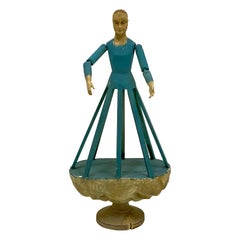
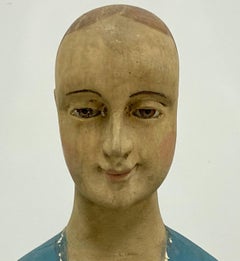
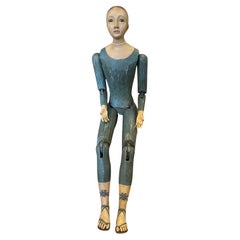
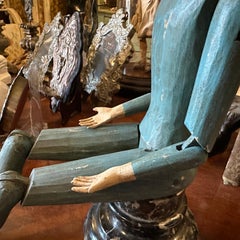
Early Italian Polychromed Cage Mannequin or Doll with Glass Eyes

Early Italian Polychromed Cage Mannequin or Doll with Glass Eyes

Located in Kennesaw, GA

This is an early 20th century Italian polychromed cage mannequin with glass eyes. These were once used for store display. Her detailed joints are in wo...

Category

Early 20th Century Italian Rustic Poplar Sculptures

Materials

Glass, Poplar

Related Items
Art Deco Doll Mannequin with Earthenware Head by Fery-Boudrot , 1900-1930

Art Deco Doll Mannequin with Earthenware Head by Fery-Boudrot , 1900-1930

By Fery Boudrot

Located in Delft, NL

Art Deco Doll Mannequin with Earthenware Head by Fery-Boudrot , 1900-1930 Fery-Boudrot, Paris, France The red brown velvet touch earthenware head in Art Deco style The head is attac...

Category

Early 20th Century French Art Deco Poplar Sculptures

Materials

Earthenware, Plaster, Wood

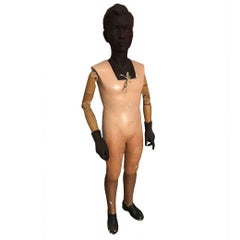
1950s Lacquered Wood Italian Articulated Mannequin

1950s Lacquered Wood Italian Articulated Mannequin

Located in Catania, Sicilia

A charming vintage mannequin from the 1950s, beautifully crafted figure is a perfect blend of functionality and folk art, making it a unique and striking decorative piece. The manneq...

Category

Mid-20th Century Italian Folk Art Poplar Sculptures

Materials

Wood, Lacquer

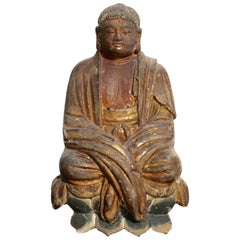
Early Ming Dynasty Chinese Buddha Statue, circa 14th Century

Early Ming Dynasty Chinese Buddha Statue, circa 14th Century

Located in Dallas, TX

A very fine late Yuan to early Ming Chinese terracotta gilt and polychrome painted Buddha figure, he is dressed in thick robes, his hair arranged in ty...

Category

15th Century and Earlier Chinese Ming Antique Poplar Sculptures

Materials

Terracotta

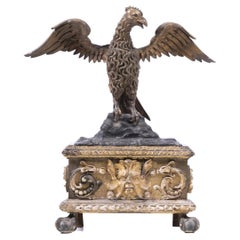
IMPORTANT ITALIAN IMPERIAL EAGLE  17th Century

IMPORTANT ITALIAN IMPERIAL EAGLE 17th Century

$5,994

H 30.32 in W 19.69 in D 8.67 in

IMPORTANT ITALIAN IMPERIAL EAGLE 17th Century

Located in Madrid, ES

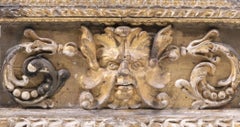
IMPERIAL EAGLE Italian, 17th Century sculpture in carved and gilded wood, based on a base decorated with plant motifs and masks with two claw and ball-...

Category

Late 17th Century Italian Baroque Antique Poplar Sculptures

Materials

Wood

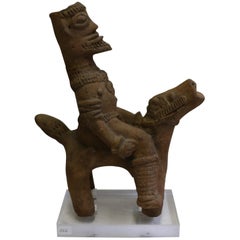
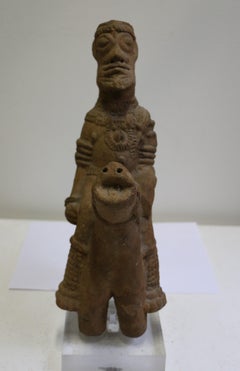
Equestrian figure Koma-Bulsa, Ghana, 14th-15th century

Equestrian figure Koma-Bulsa, Ghana, 14th-15th century

$14,385

H 13.19 in W 10.24 in D 5.12 in

Equestrian figure Koma-Bulsa, Ghana, 14th-15th century

Located in Paris, FR

Terracotta, 14th-15th century (thermoluminescence test: Interexpert 388317 from March 18, 1988). Koma-Bulsa motifs (Ghana), including a concave hairstyle with braided frontal ornamen...

Category

15th Century and Earlier Ghanaian Tribal Antique Poplar Sculptures

Materials

Terracotta

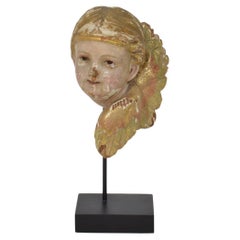
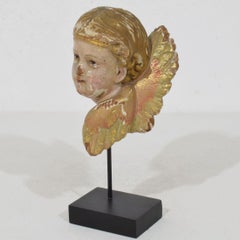
Antique Hand Carved Wooden Angel Head Sculpture, Spanish, Circa 1900-1920

Antique Hand Carved Wooden Angel Head Sculpture, Spanish, Circa 1900-1920

$593Sale Price|49% Off

H 7.88 in W 3.55 in D 2.37 in

Antique Hand Carved Wooden Angel Head Sculpture, Spanish, Circa 1900-1920

Located in Buisson, FR

Wonderful early 20th century hand carved wooden angel head with glass eyes. Amazing eyecather with beautiful expression. Spain circa 1900-1920 Weathered, small losses. H:20cm W:9cm ...

Category

Early 20th Century Spanish Art Nouveau Poplar Sculptures

Materials

Glass, Wood

Antique Hand-Carved Wooden Saint Figure, Italian, Circa 1800-1850, Glass Eyes

Antique Hand-Carved Wooden Saint Figure, Italian, Circa 1800-1850, Glass Eyes

Located in Buisson, FR

Very nice saint figure. Hand carved wood with glass eyes Italy, circa 1800-1850. Weathered, small losses.

Category

19th Century Italian Baroque Antique Poplar Sculptures

Materials

Wood

Small 18th Century Italian Carved Wooden Head with Glass Eyes

Small 18th Century Italian Carved Wooden Head with Glass Eyes

$509Sale Price|46% Off

H 6.5 in W 3.94 in D 3.94 in

Small 18th Century Italian Carved Wooden Head with Glass Eyes

Located in Buisson, FR

Stunning handcarved wooden head fragment with beautiful expression and glass eyes, Italy, circa 1750-1800. Beautiful example of 18th century craftsmanship. Weathered Measurement her...

Category

18th Century Italian Baroque Antique Poplar Sculptures

Materials

Glass, Wood

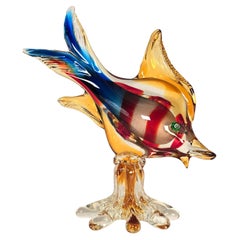
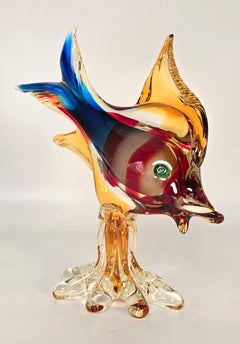
Murano large glass fish with millefiori glass eyes circa 1950

Murano large glass fish with millefiori glass eyes circa 1950

Located in Central England, GB

This very fine early example from the highly skilled local craftsmen from the small Italian island of Murano This is a very large and beautifully modelled piece that displays very n...

Category

Mid-20th Century Italian Mid-Century Modern Poplar Sculptures

Materials

Glass, Murano Glass

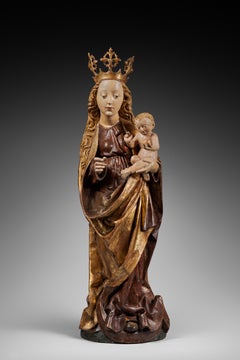
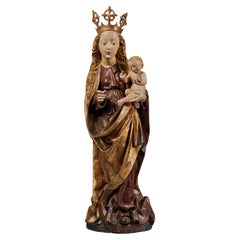
Polychrome carved wood Virgin and Child from the 15th Century

Polychrome carved wood Virgin and Child from the 15th Century

Located in Saint-Ouen, FR

POLYCHROME CARVED WOOD VIRGIN AND CHILD FROM THE 15TH CENTURY   ORIGIN: SOUTH GERMANY, SWABIA, NUREMBERG REGION PERIOD: 15th CENTURY   Height: 94,6cm Width : 28 cm Depth : 18 cm   Lime wood Original Polychromy Good state of conservation     From 1430 onwards, sculpture underwent a profound stylistic renewal which continued until 1530, the so-called late Gothic period. In the Germanic countries, original sculptures flourished in an expressive and sensitive vein.
This renewal was inspired by the art of Nicholas of Leiden, who was active in Strasbourg in the 1460's. His style broke with the refined and delicate art of the international Gothic style in force throughout Europe around 1400. The figures became more authentic and realistic. The bodies became denser. Clothes are animated by deep, broken folds, the fabrics are heavy and have a great decorative value. In addition, the polychromy is intended to be illusionistic. The painting makes it possible to restore the texture of the materials, the richness of the textiles and the natural skin tone of the characters.   The dissemination of images through engraving and the great mobility of the artists led to the success of this style, which conquered the Upper Rhine, Swabian, Tyrolean and Franconian regions, contributing to the formation of a common stylistic identity in these regions. The economic boom in the flourishing German cities was conducive to the development of original production. Attracted by this prosperity, numerous workshops were set up in order to meet the orders of religious communities, the Church and the laity, including a clientele of middle-class rockers.      This precious Virgin and Child is depicted standing on a crescent moon, her head encircled by a crown of tall flowers. Her long wavy hair spreads over her shoulders, framing her beautiful oval face. Under fine eyebrows drawn with a brushstroke, her almond-shaped, slightly drooping eyes look at the Child with infinite softness. She is dressed in a long red dress with a rounded neckline, belted under the chest. The heavy fabric of her dress spreads out in broken folds at her feet. On her shoulders she wears a golden cloak. The drapery has deep folds. She holds out her right hand while she holds the Christ Child with her left.   Christ, with his well-defined hair, is naked. His cheeks are highlighted with red, he holds an apple in his left hand and with the other hand makes a sign of blessing towards the faithful.   Virgins with Child on a crescent moon were very popular in the second half of the 15th century, especially as the central subject of altarpieces in southern Germany and Austria. The crescent moon on which Mary is standing is reminiscent of the Woman of the Apocalypse. Often equated with the Virgin Mary.    This episode is taken from the Book of Revelation (12:1-6)   1 Then a great sign appeared in heaven: a woman clothed with the sun, with the moon under her feet and a crown of twelve stars on her head. ; 2 She was pregnant, and she cried out because she was in labor, in pain from giving birth. ; 3 Then another sign appeared in heaven: it was a great fiery red dragon, with seven heads and ten horns, and seven royal crowns on his heads. ; 4 His tail swept down a third of heaven's stars and threw them to the earth. The dragon stood in front of the woman who was about to give birth so that when she gave birth, he might devour her child. ; 5 She gave birth to a son, a male child who is to rule all the nations with an iron rod. Her child was snatched up to God and his throne. ; 6 Then the woman fled into the desert, where God has prepared a place for her. There she will be taken care of for one thousand two hundred sixty days.   Some theologians see in this woman a reference to the Virgin Mary and in the child, Jesus.    
This remarkable work is a very fine example of sculpture from Swabian workshops in the last decades of the 15th century. It presents all the characteristic stylistic elements: a highly girdled silhouette, an abundant drapery with angular folds, but also a great physical presence accentuated by the polychromy that restores the anatomical details. This group is made of a wooden log. The deep folds of the drapery highlight the movement of the Virgin holding the child.       Bibliography :   Sophie Guillot de Suduiraut, Dévotion et Séduction, Sculptures souabes des musées de France, vers 1460-1530, Paris musée du Louvre-Éditions somogy, 2015   “Revelation 12 -   Common English Bible...

Category

15th Century and Earlier German Gothic Antique Poplar Sculptures
Materials

Wood

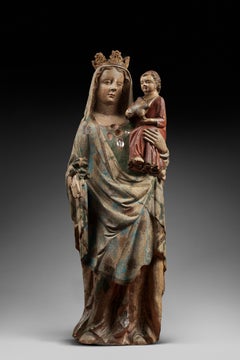
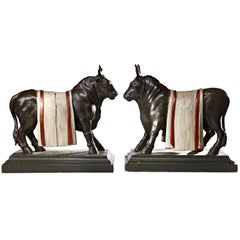
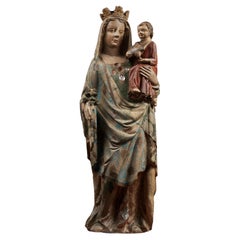
Important 14th Century Polychrome Limestone Virgin from Lorraine

Important 14th Century Polychrome Limestone Virgin from Lorraine

Located in Saint-Ouen, FR

Provenance : - Kunsthaus Heinrich Hahn, Frankfurt am Main, sale 16, June 17, 1930, lot 16. - Sotheby's, Amsterdam, Feb. 26, 2006, lot 201. HISTORIC Located between Moselle valley and Meuse valley, framed by the Vosges Mountains on the south side and the duchy of Luxembourg on the north side, the duchy of Lorraine is the result of several partitions. It starts with the 9th century when the Carolingian empire is divided, with Lothar 1st inheriting Lotharingia. In 959 this territory was in turn divided in two; Lower and Upper Lotharingia, the latter being the forebear of the duchy of Lorraine. This duchy was under the rule of the Holy Roman Germanic Empire until 1736 when it was absorbed by the kingdom of France. All along its history the duchy of Lorraine has found itself in the midst of many conflicts. Alliances and feuds marking European history were always particularly sensible in Lorraine where instability was frequent. Because of its geographic position the duchy of Lorraine was also an artistic crossroad. Hence the duchy of Lorraine becomes from the 13th century onwards an important artistic centre where a particular type of Virgin and Child appears. According to professor J. A. Schmoll the characteristics of Lorraine sculpture burgeon around 1280-1300 in the Aube region. It presents “vigorous volumes, restrained movements, rare but solemn gestures and a strong interiorised and stern expression”. Those Virgins look similar with a wide forehead, a shield- or oval-shaped face, large neck, small lips and a cleft chin. This model is particularly in favour during the 13th century because of the revival for Marial worship and for the theme of the Virgin and Child. It bears witness to a new religious sensibility with a more intimate vision of religious practice. DESCRIPTION The important 14th century Virgin we present to you is one of the most beautiful examples of sculptural art from Eastern France, with her fascinating distant gaze. Her contrapposto posture is induced by the weight of the child she carries high on her left side. The child has a chubby face framed by blond hair with well defined curls and he wears a long red V-collared tunic from which emerge his feet. The fabric is animated by long folds. The position of the right foot turned to the back is a detail we can notice on several Virgins from Lorraine. He holds a bird that seems to be pecking his thumb. “The bird /held by the child in his hands/ has been read as a reference to an episode from Christ’s childhood when he has moulded sparrows with clay before giving them life. It appears in the apocryphal gospel of Pseudo-Matthew (ch. 27) and later in the Quran (III, 43, v. 110). However the iconography seems to be more influenced by the concept of Redemption or of Eucharist, the bird symbolising the soul of the Christian about to be redeemed or revitalised.” Mary wears a long dress with two rock crystal cabochons remaining from the original five. She is covered by a red cloak enriched with old-gold motifs draped as an apron falling in long pleats along her left hip. The relief treatment and the volume of the cloak developing a network of concentric pleats contrast with the the flat pleating of her dress. They nevertheless suggest the curve of her bent right leg. She wears a floret crown securing a short thin veil carved in very low relief. From it emerges her blond curled hair characteristic of the 13th century. The large face with almond-shaped eyes, straight nose, small lips and cleft chin casts its gaze afar in a fashion typical of 13th century Virgins. In her right hand she holds a lily flower. In a very refined manner the artist has carved a band on her right ring-finger. In the back, carefully sculpted, spreads the minutely detailed short veil. COMPARATIVE STUDIES This sculpture of great quality presents obvious similarities with Virgins from Lorraine, designated by William Forsythe...

Category

15th Century and Earlier French Gothic Antique Poplar Sculptures
Materials

Limestone

Previously Available Items
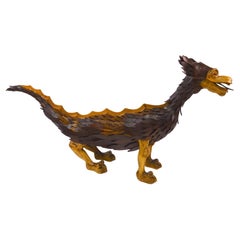
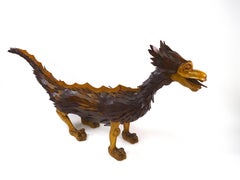
Wood Sculpture Depicting a Dragon by Rosario Lattuca, circa 1970

Wood Sculpture Depicting a Dragon by Rosario Lattuca, circa 1970

Located in Vicenza, VI

Sculpture depicting a fantastic dragon, made through the use of poplar and larch wood, by artist Rosario Lattuca around 1970. Rosario Lattuca is an artist who distinguished himsel...

Category

1970s Italian Other Vintage Poplar Sculptures

Materials

Wood, Poplar

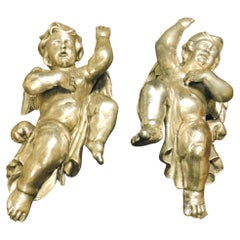
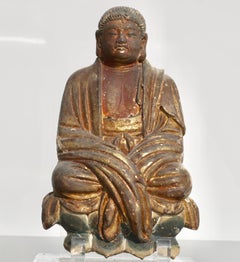
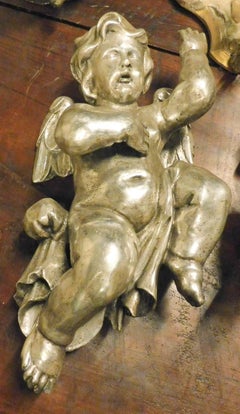
Pair of Winged Cherubs, Hand-Sculpted and Silvered, Late 19th Century, Italy

Pair of Winged Cherubs, Hand-Sculpted and Silvered, Late 19th Century, Italy

Located in Cuneo, Italy (CN)

Vintage pair of winged putti sculptures, whole, hand-sculpted, in the round, also finished on the back and silvered, probably used in a composition of sculptures (for a church perhap...

Category

Late 19th Century Italian Antique Poplar Sculptures
Materials

Poplar

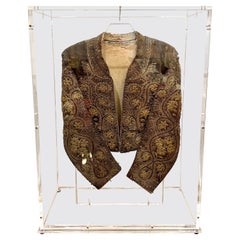
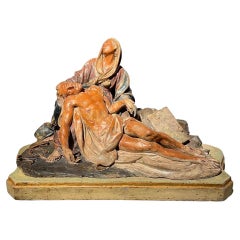
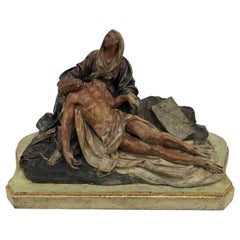
18th Century Italian Baroque Pity Pietà Sculpture by Piò Angelo Bolognese Circle

18th Century Italian Baroque Pity Pietà Sculpture by Piò Angelo Bolognese Circle

By Angelo Gabriello Piò

Located in Milano, MI

A stunning Italian Polychrome Earthenware Pietà Pity dating back to 18th century of Bolognese circle of the master Angelo Gabriello Piò, Bologna 1690-1770, dating back to the first quarter of 18th century, in good age related condition, with minor restorations, a terracotta group deposition with beautiful, original polychromy and spectacular anatomy of the body of Christ...

Category

Early 18th Century Italian Baroque Antique Poplar Sculptures
Materials

Terracotta, Poplar

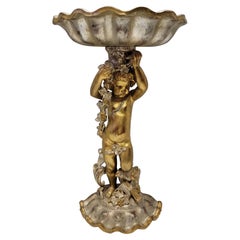
Grotto Style Italian Giltwood Carved Putti and Shell Form Jardiniere

Grotto Style Italian Giltwood Carved Putti and Shell Form Jardiniere

Located in Kennesaw, GA

This is wonderful! It is an Italian Grotto style carved putti and shell form jardiniere. It is a combination of both silver and gold gilt. The putti is balanced on a shell as well as...

Category

Mid-20th Century Italian Rococo Poplar Sculptures

Materials

Poplar

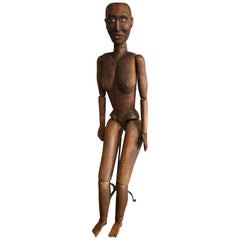
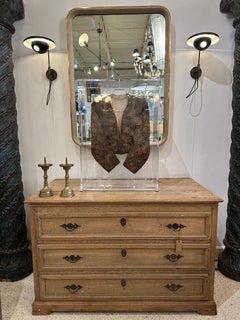
19th Century Articulated Folk Art Figure

19th Century Articulated Folk Art Figure

Located in Middleburg, VA

Charming 19th century articulated Folk Art figure. Found in Tennessee, carved from black walnut and poplar, circa 1880. Mounted on a wrought iron stand...

Category

Late 19th Century Folk Art Antique Poplar Sculptures
Materials

Poplar, Walnut

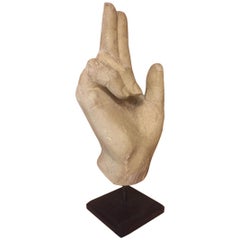
18th Century Wooden Hand on Stand

18th Century Wooden Hand on Stand

Sold

H 7.49 in W 2.37 in D 1.97 in

18th Century Wooden Hand on Stand

Located in Vosselaar, BE

This wooden hand makes the well known gesture of swearing in a ode as you would do in court. This symbolic hand signal originates from the Christian gesture of salvation as famously depicted by Leonardo da Vinci in his Salvator Mundi painting. The two fingers represent the duality and unity of the divine and the earthly, man and woman and Jezus the man and the son of God. And connected to this the sacrifice of Jezus on the cross for mankind. Interestingly hand gestures like this can also be found in other religions worldwide as for example Buddhism. The example here is carefully sculpted, with lots of details, out of poplar and then painted. This paint has faded away gracefully which gives a attractive patina. It probably was part of a larger saint statue.

Category

1780s French Neoclassical Antique Poplar Sculptures
Materials

Poplar

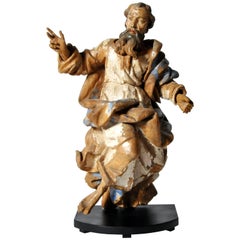
Sculpture of Saint Peter

Sculpture of Saint Peter

Sold

H 42 in W 27.5 in D 15 in

Sculpture of Saint Peter

Located in Chicago, IL

This sculpture of Saint Peter is from Italy and is made from poplar wood, circa 16th century. Saint Peter, according to the New Testament, was one of the 1...

Category

16th Century Italian Antique Poplar Sculptures
Materials

Poplar

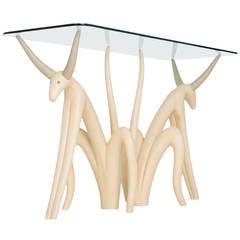
Judy Kensley McKie Table

Judy Kensley McKie Table

Sold

H 30 in W 52 in D 18 in

Judy Kensley McKie Table

By Judy Kensley McKie

Located in Amarillo, TX

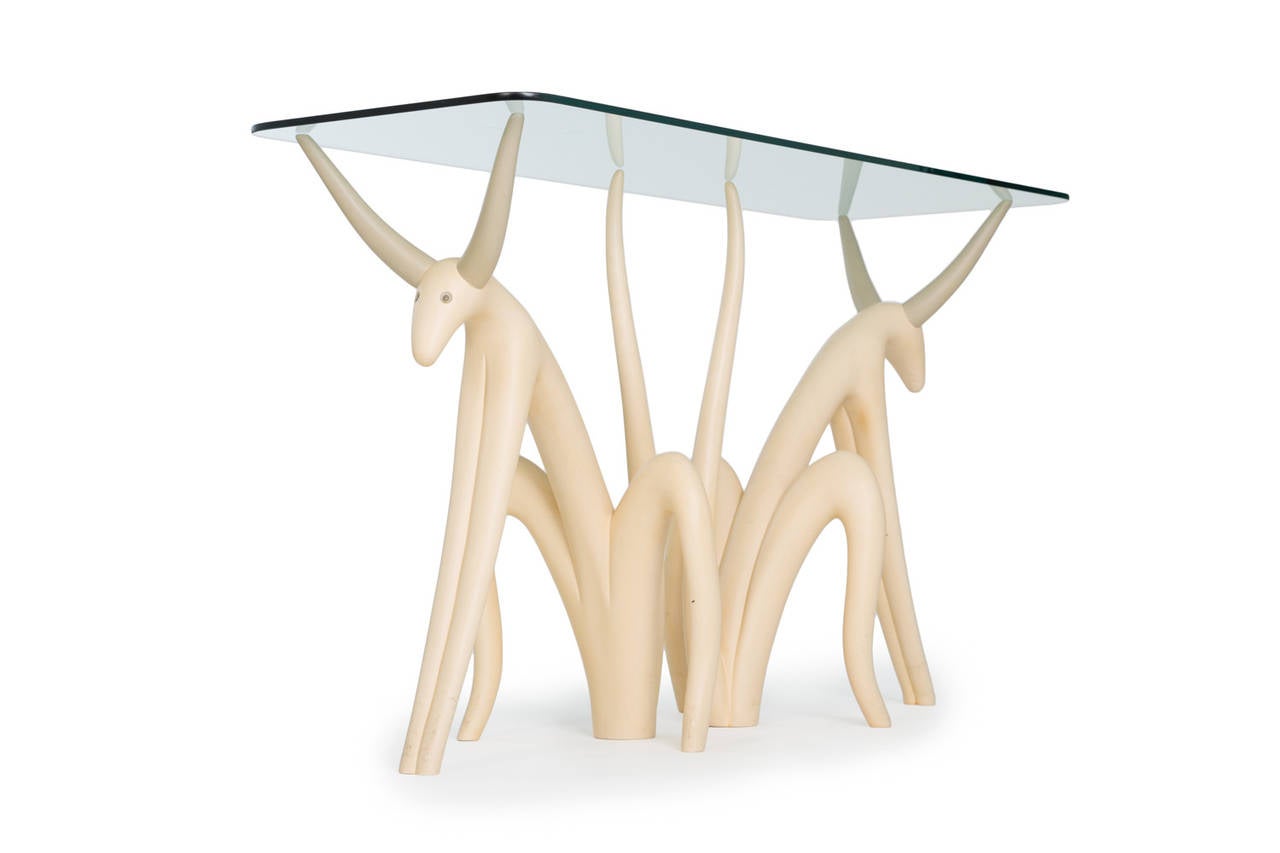
Judy Kensley McKie. Pete and repeat table. USA, circa 1981. Carved and painted poplar, glass. height 30 in (83.7 cm); length 52 in (132 cm); depth 18 in (45.7 cm). Pete an...

Category

1980s American Vintage Poplar Sculptures
Materials

Glass, Poplar

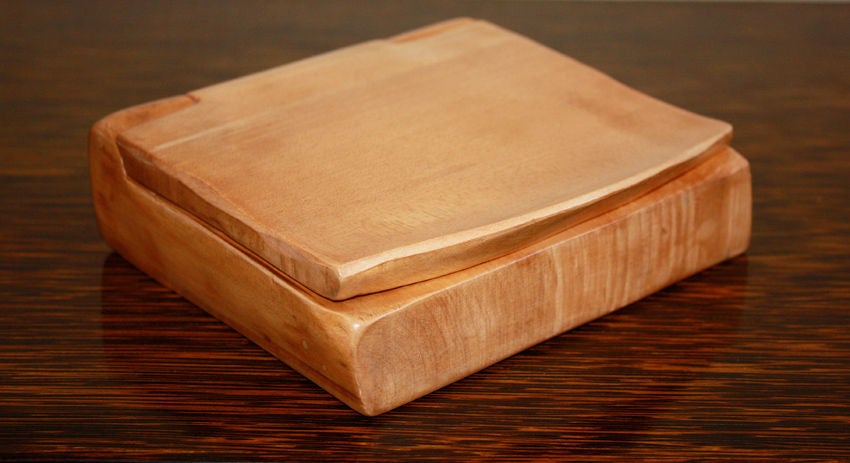
Alexandre NOLL -  Authentic Poplar boxe Circa 1950

Alexandre NOLL - Authentic Poplar boxe Circa 1950

Located in Encino, CA

Alexandre NOLL ( 1890 - 1970 )
Poplar boxe Circa 1950
carved signature A.NOLL
Provenance : Publication adviser of the portfolio " NOLL Galerie 1950...

Category

1950s French Vintage Poplar Sculptures
Materials

Poplar

Read More

He Wrote ‘Oedipus Rex,’ but Do You Know What He Looked Like?

The Greek tragedian is said to have been handsome in his day.

These Soft Sculptures Are Childhood Imaginary Friends Come to Life
Miami artist and designer Gabriela Noelle’s fantastical creations appeal to the Peter Pan in all of us.

Salvatori Commissioned Several Famous Architects to Create Miniature Homes in Stone

Gabriele Salvatori explains how the COVID lockdowns inspired his design company's latest collection, the Village.

Christopher Norman Is Turning the Cast-Off Urban Trees of Los Angeles into Art

With a World War II–era milling machine, the California artist crafts poetic, sculptural furniture pieces.

These Human-Size Ceramic Hares Evoke Serious Emotions

Swedish artist Margit Brundin's large anthropomorphic animal sculptures are on view for the first time in the United States at Dienst + Dotter Antikviteter, in New York.
Tour the Wabi-Sabi New York Apartment of Andrianna Shamaris

As her sun-filled home reveals, the furniture maker and dealer puts a contemporary spin on antiques from around the globe.

Vicente Wolf’s Tips for Finding — and Living with — Eastern Treasures
The A-list designer shares his expertise on choosing authentic objects and displaying them with style.
Rodrigo Rivero Lake’s Mexico City Showroom Is a Museum-Worthy Trove of Spanish Colonial and Asian Antiques
The dealer and curator has spent the past 50 years amassing a collection of exceptional art, furniture and architectural elements that trace the cultural influence of the Spanish empire from Europe to the Americas and beyond.