Located in Vancouver, British Columbia
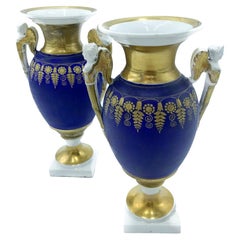
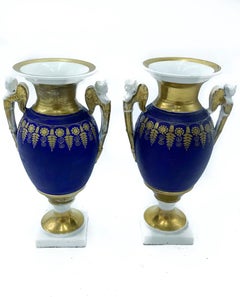
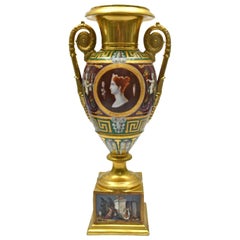
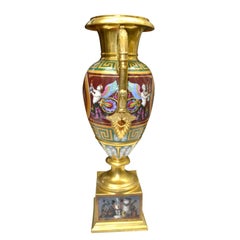
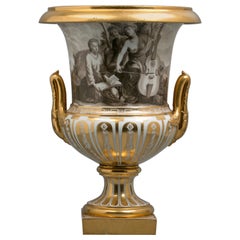
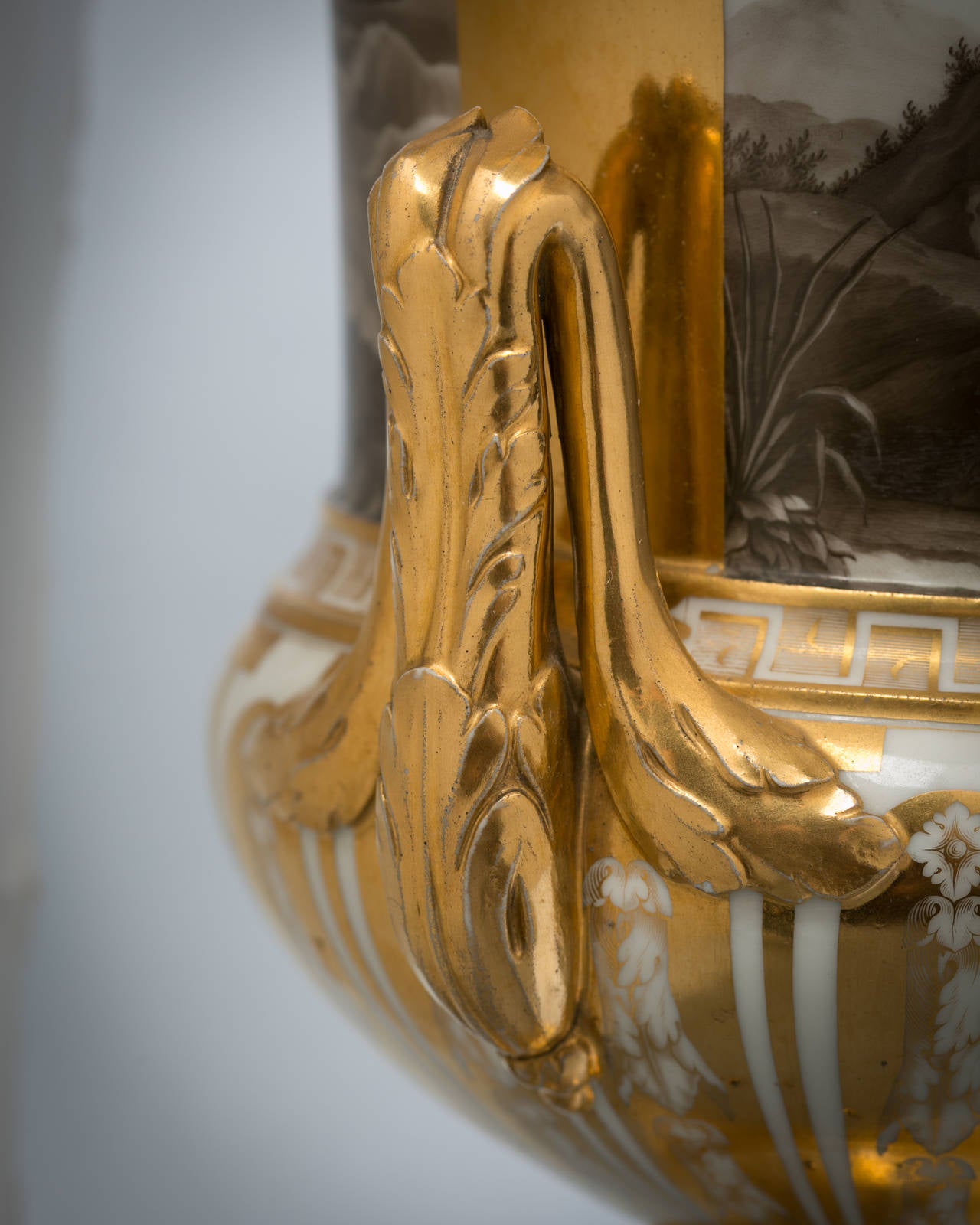
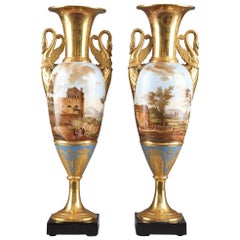
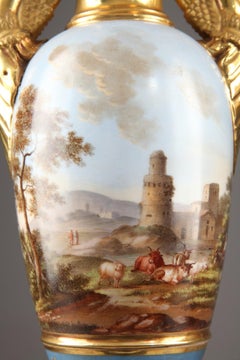
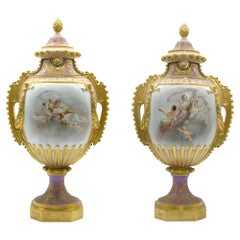
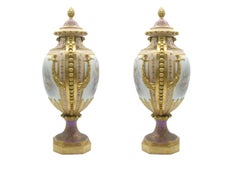
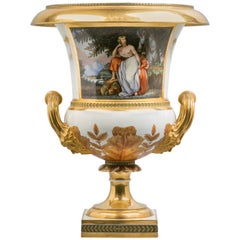
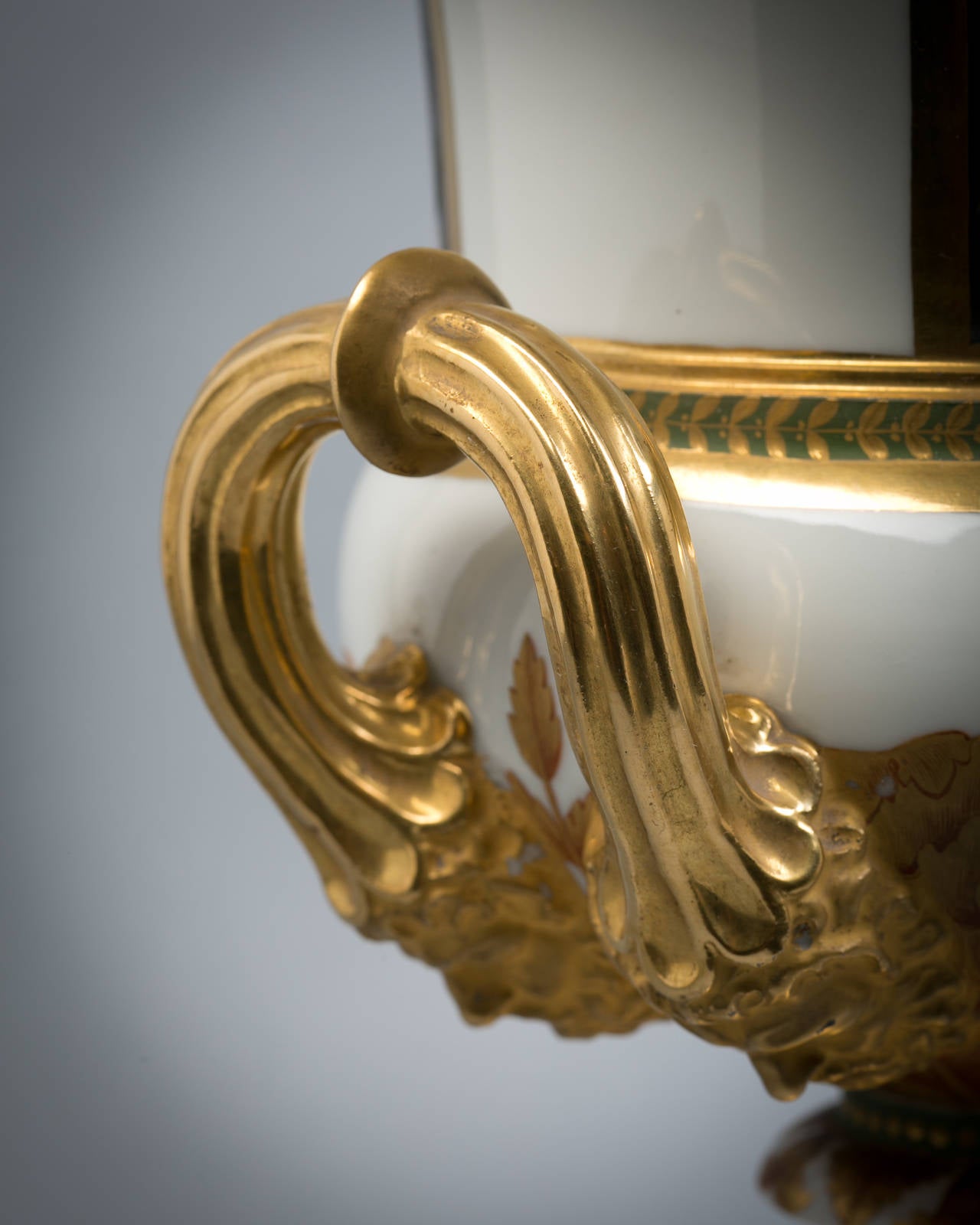
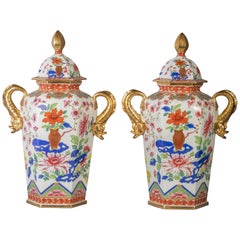
A museum quality early 19th century Paris porcelain urn. The twin handled vase sits on a rectangular porcelain base (modelled as part of the vase), which is decorated on all four sides with finely painted scenes titled 'Gene de Corrinte', 'Gene de Mytilene', 'Gene de Sparte', and 'Gene de Chiu' in reference to various Greek city states. The ovoid body of the vase is richly decorated with Greek key and stylized acanthus designs over and below a large gilt framed oval cameo of Athena on one side and a similar cameo on the other side bearing an undecipherable name. The overall background colour scheme of the vase is dark red/burgundy and dark emerald green, two colours which were more commonly used by the Dagoty factory in Paris than other porcelain manufacturing firms at the time. The vase is unsigned.
Note: Pierre Louis Dagoty's porcelain was characterized by the use of vivid colours and the thick application of burnished gold leaf. He borrowed from the repertoire of Neoclassical ornament but his designs also included Egyptian and Chinoiseries motifs.
Dagoty's elegant ceramics won him the patronage of Empress Joséphine. At the height of production, in 1807, he employed over a hundred workers, and exported his wares to Russia. After the fall of the First French Empire in 1814, manufacture continued under the Duchesse d'Angoulême, the only surviving child of Louis XVI and Marie-Antoinette.
Between 1816 and 1820, Dagoty worked in partnership with François Maurice Honoré. In 1817. Dagoty and Honoré received a commission from President James Monroe...
Category
French Empire Antique 1810s Vases and Vessels