Meiji Paintings

28 Results
MEIJI STYLE

From 1868 to 1912, Emperor Mutsuhito oversaw an era of transformation in Japan. Formerly a country of feudalism and isolation, Japan entered an age of modernization influenced by newly established trade and exchange with the West. The Meiji period, or period of “enlightened rule,” also saw the global impact of the East Asian country’s culture. Japanese Meiji furniture was exhibited at expositions from Paris to San Francisco and created for export.

Prior to the Meiji era, furniture was mostly made by commission for the ruling class; now there were new domestic and international markets. European styles like Japonisme appropriated Japanese design while craftsmen in places like Wales and England employed japanning, a varnishing technique that approximated the appearance of lacquer for the surfaces of furnishings.

Meiji furniture made for Japanese homes and buildings constructed in Western styles resulted in taller tables, chairs, cabinets with large drawers and other features. The government invested in areas such as transportation and communication, and because people could freely choose occupations after the restrictions of feudalism, industries of various types were energized by expressive new ideas during those years. Art schools were formed and, for the first time, design was an area of study in the country, leading to the evolution of professional design as a career by the 1890s.

The work of Japanese designers was transmitted widely through lavishly illustrated pattern books that included designs for screens and lacquerware for the home. While screens today may be of use as decorative accents or partitions to ensure privacy in one’s space, Japanese screens were adorned with paintings and were featured in performing arts such as concerts, tea ceremonies and more. The color illustrations that characterize Meiji woodblock prints, a genre of Japanese art that grew out of 17th-century developments in printing and book publishing, depicted the sweeping changes that the era brought to East Asia.

Although it was a time of societal and cultural shifts, a bolstered interest in art and design elevated Japanese craft traditions. From colorful porcelain table lamps with silk shades and hardwood tables decorated with dark lacquer to cabinets featuring iron hardware and inlaid with mother-of-pearl, Meiji furniture showcased Japan’s artistic heritage to the world.

Find a collection of antique Japanese Meiji period case pieces and storage cabinets, decorative objects, wall decorations and more furniture on 1stDibs.

to
1
21
3
29
Height
to
Width
to
3,024
2,609
845
698
468
401
251
151
122
97
96
67
66
61
60
44
35
24
14
15
13
6
19
17
17
16
13
27
27
23
3
1
29
29
29
Style: Meiji
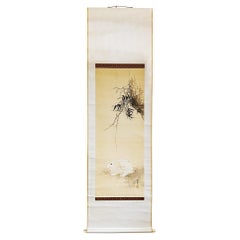
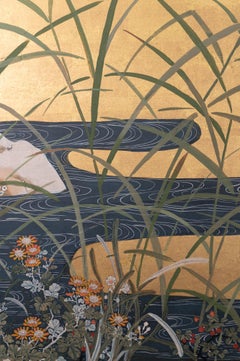
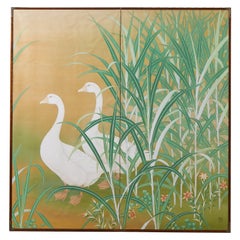
Japanese Meiji Two Panel Screen Geese and Reeds

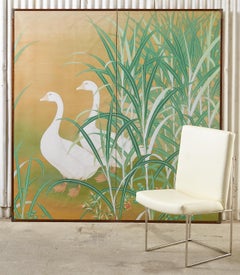
Japanese Meiji Two Panel Screen Geese and Reeds

Located in Rio Vista, CA

Fantastic Japanese late Meiji period two-panel byobu screen by Hashimoto Koshu. The large screen features two white geese amid brightly colored reeds. The symbolism of geese and reeds was introduced to Japan from China in the 13th century. This was a popular subject for Japanese zen artists of the period. Beautifully crafted with exceptional brush strokes and details. Made with natural pigments in dramatic vivid colors of white, pink, and mint green on a silk background of gilt. Circa 1900 with artist seal on bottom right corner. Koshu studied Western art under...

Category

20th Century Japanese Meiji Paintings

Materials

Silk, Wood, Paper
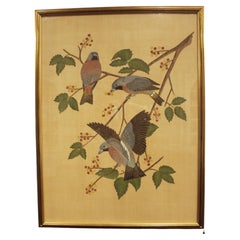
Early 20th Century Japanese Kacho-Ga Painting on Silk

Early 20th Century Japanese Kacho-Ga Painting on Silk

Located in Chapel Hill, NC

Early 20th century Kacho-ga Japanese painting on silk. Bird & branch depiction - foraging birds expertly rendered, likely Chestnut-cheeked Starlings. Symbolic of community, harmony, ...

Category

Early 20th Century Japanese Meiji Paintings

Materials

Silk, Glass, Wood, Paint

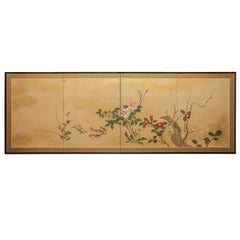
Japanese Four Panel Screen: Early Spring Into Summer

Japanese Four Panel Screen: Early Spring Into Summer

Located in Hudson, NY

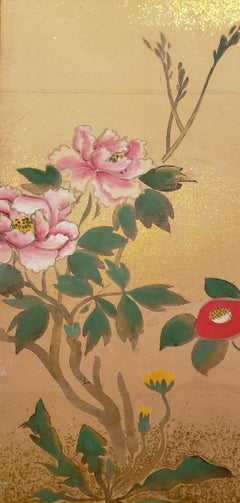
Japanese Four Panel Screen: Early Spring Into Summer, Meiji period (1868 -1912) painting of plum in bloom with red camellias on the right and peony and thistle on the left. A clutc...

Category

Early 1900s Japanese Antique Meiji Paintings

Materials

Gold Leaf

Japanese Single Panel Painting Moon and Plum Design 'Winter Scene'

Japanese Single Panel Painting Moon and Plum Design 'Winter Scene'

Located in Hudson, NY

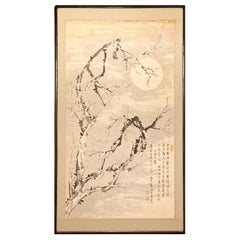
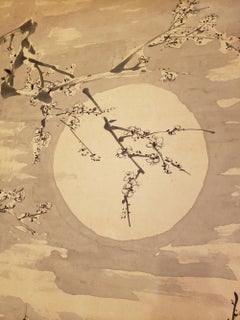
Meiji period (1868-1912) ink painting of plum branches in bloom against a full moon with calligraphy. The calligraphy is a poem about winter. Signature reads: Matsuura Ryosai, Dated:...

Category

Late 19th Century Japanese Antique Meiji Paintings

Materials

Paper

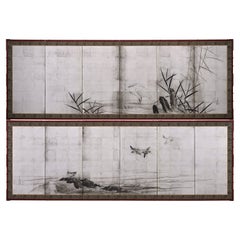
Japanese Silver Screen Pair, Meiji Period, Herons & Plovers, Shijo School

Japanese Silver Screen Pair, Meiji Period, Herons & Plovers, Shijo School

Located in Kyoto, JP

Heron & Plovers Ink and silver leaf on paper Maekawa Bunrei (1837-1917) A pair of low six-panel Japanese screens by Maekawa Bunrei, a later master of the Kyoto based Shijo school of painting. On the right screen a solitary white heron stands motionless in a stream. On the left screen plovers play along a shoreline. The elegant forms are executed employing fluid, minimalistic ink brushstrokes. The soft brushstrokes and the sharp light of the silver leaf lend the scenes a sense of translucence. The sophisticated composition superbly exploits the long, horizontal pictorial surface of the pair of folding screens...

Category

Early 1900s Japanese Antique Meiji Paintings

Materials

Silver Leaf

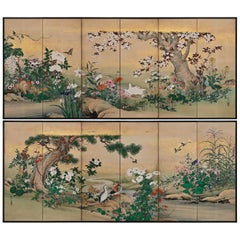
Meiji Era, Circa 1900 Japanese Screen Pair, Flowers & Birds of Spring & Autumn

Meiji Era, Circa 1900 Japanese Screen Pair, Flowers & Birds of Spring & Autumn

Located in Kyoto, JP

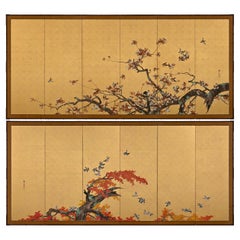
Flowers & Birds of Spring and Autumn Unknown artist. Japan. Meiji period, circa 1900. A pair of six-fold screens. Ink, color, gofun and gold leaf on paper. Signed: Gaga S...

Category

1890s Japanese Antique Meiji Paintings

Materials

Gold Leaf

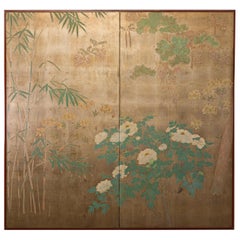
Japanese Two-Panel Screen Peony, Wisteria, Cherry and Bamboo on Soft Silver

Japanese Two-Panel Screen Peony, Wisteria, Cherry and Bamboo on Soft Silver

Located in Hudson, NY

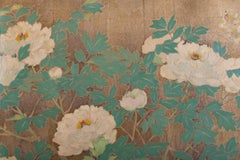
Japanese two-panel screen: Peony, Wisteria, cherry and bamboo on soft silver, Meiji period (1868-1912) painting of a garden in spring. Painted in mineral pigments on oxidized silver ...

Category

Early 1900s Japanese Antique Meiji Paintings

Materials

Silver Leaf

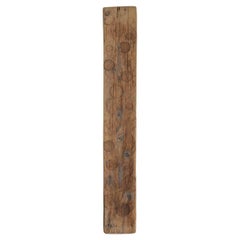
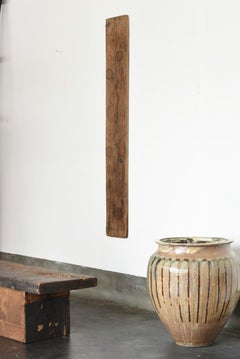
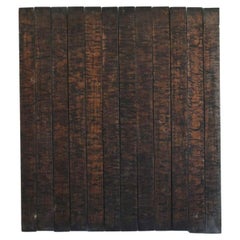
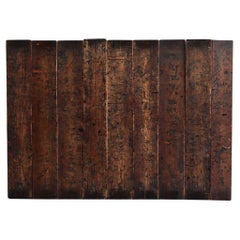
Antique Work Board Used by Japanese Craftsmen/1868-1920/Wabi-Sabi Wall Painting

Antique Work Board Used by Japanese Craftsmen/1868-1920/Wabi-Sabi Wall Painting

Located in Sammu-shi, Chiba

If you want something special, we recommend purchasing items selected by Brood. We sell carefully selected old Japanese items. I've seen tens of thousands of items so far. Based o...

Category

Late 19th Century Japanese Antique Meiji Paintings

Materials

Cedar

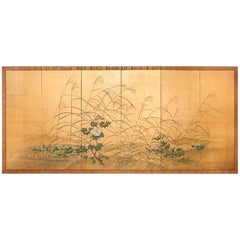
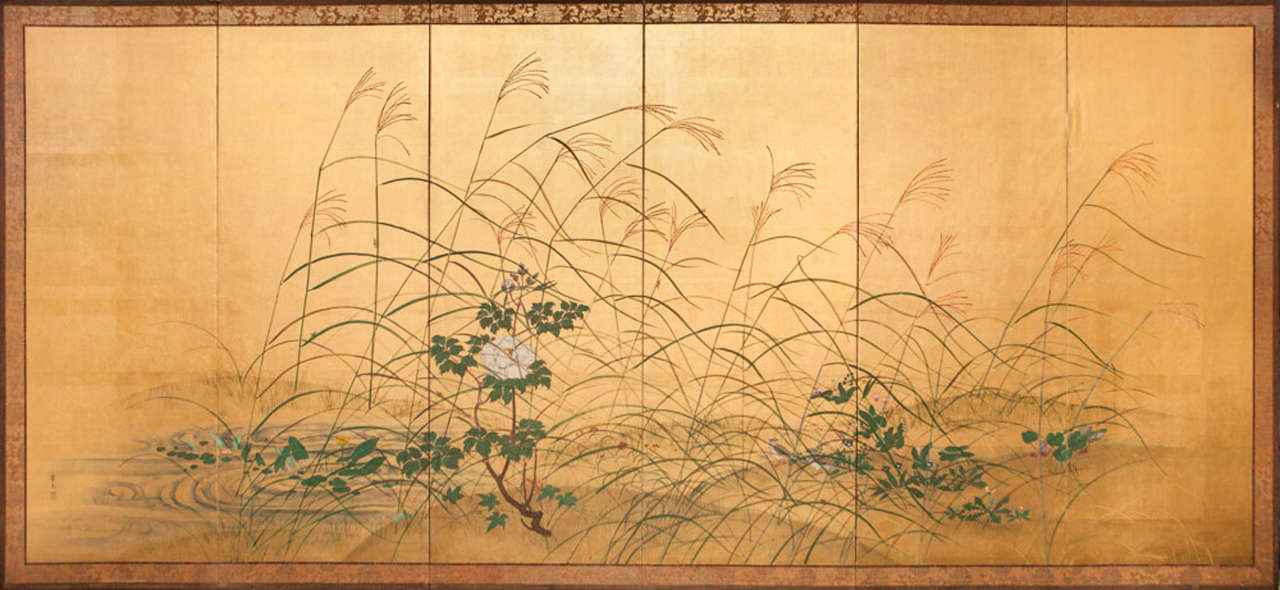
Japanese Six-Panel Screen "Wild Grasses and Peonies by Rivers Edge"

Japanese Six-Panel Screen "Wild Grasses and Peonies by Rivers Edge"

Located in Hudson, NY

Japanese Six Panel Screen: Wild Grasses and Peonies by Rivers Edge. Early Meiji period (1868 - 1912) painting of a grassy knoll next to a running brook or river. A soft breeze is m...

Category

1880s Japanese Antique Meiji Paintings

Materials

Gold Leaf

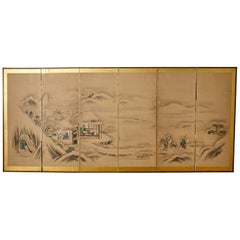
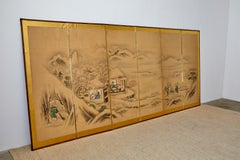
Japanese Six Panel Kano School Winter Landscape Screen

Japanese Six Panel Kano School Winter Landscape Screen

Located in Rio Vista, CA

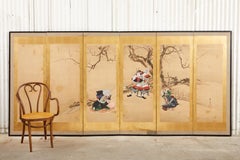
Large Japanese Meiji period six-panel screen depicting a winter landscape with a Chinese sage visiting friends in a country villa. Ink and vivid color pigments on mulberry paper mounted to a gilt background. Painted in the 19th century Kano school...

Category

19th Century Japanese Antique Meiji Paintings

Materials

Metal

19th Century Japanese Six Panel Screen: Silver Moon Rising Over Summer Field

19th Century Japanese Six Panel Screen: Silver Moon Rising Over Summer Field

Located in Hudson, NY

Japanese Six Panel Screen: Silver Moon Rising Over Summer Field. Rimpa Style painting of a moon rising over summer flowers and grasses, including cockscomb and blue bellflowers. Pa...

Category

Late 19th Century Japanese Antique Meiji Paintings

Materials

Gold Leaf

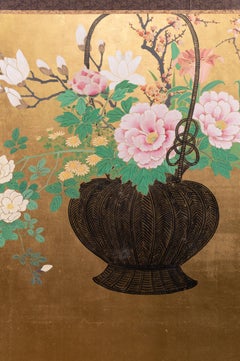
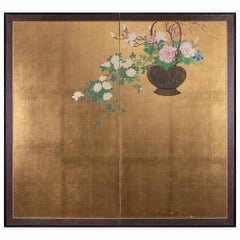
Japanese Two-Panel Screen Ikebana on Gold

Japanese Two-Panel Screen Ikebana on Gold

Located in Hudson, NY

Japanese two-panel screen: Ikebana on gold. Meiji period (1868-1912) painting of a basket with beautifully arranged spring flowers in the style of ikebana (Japanese traditional flowe...

Category

Late 19th Century Japanese Antique Meiji Paintings

Materials

Gold Leaf

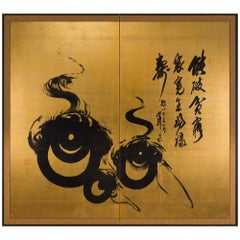
Japanese Two-Panel Screen Three Jewels of Buddhism

Japanese Two-Panel Screen Three Jewels of Buddhism

Located in Hudson, NY

Japanese two-panel screen: Three Jewels of Buddhism. Meiji period (1868-1912) painting. The three jewels of Buddhism are the teacher, the lesson, and the ...

Category

Late 19th Century Japanese Antique Meiji Paintings

Materials

Silk, Wood, Paper
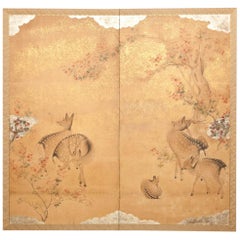
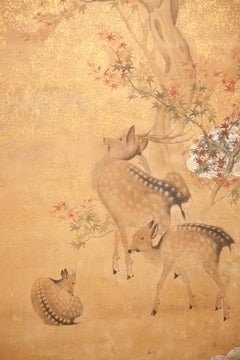
Japanese Two Panel Screen Nara Deer in Gentle Yoshino Landscape

Japanese Two Panel Screen Nara Deer in Gentle Yoshino Landscape

Located in Hudson, NY

Japanese two panel screen: Nara Deer in Gentle Yoshino Landscape. Yoshino is in the Nara Prefecture, an area famous for these small and tame deer native to J...

Category

Early 1900s Japanese Antique Meiji Paintings

Materials

Gold Leaf, Silver Leaf

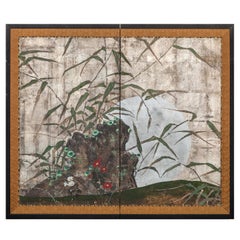
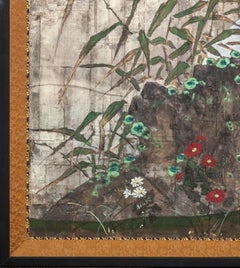
Japanese Two Panel Screen Moon Rising Through Bamboo on Silver Leaf

Japanese Two Panel Screen Moon Rising Through Bamboo on Silver Leaf

Located in Hudson, NY

Japanese two panel screen: Moon rising through bamboo on silver leaf, Meiji period painting (1868 - 1912) of the moon rising on the horizon with a garden stone in the foreground. Lic...

Category

Early 20th Century Japanese Meiji Paintings

Materials

Silver Leaf

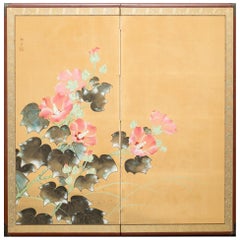
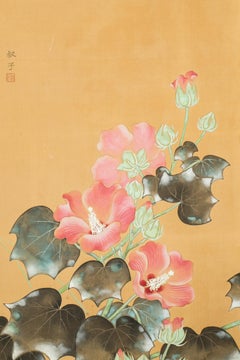
Japanese Two-Panel Screen, Hibiscus In Bloom

Japanese Two-Panel Screen, Hibiscus In Bloom

Located in Hudson, NY

Japanese Two Panel Screen: Hibiscus in Bloom, Meiji period (1868 - 1912) painting of hibiscus flowers reaching for the sun in full bloom. Mineral pigments on silk with a silk brocad...

Category

Early 1900s Japanese Antique Meiji Paintings

Materials

Silk, Wood, Paper
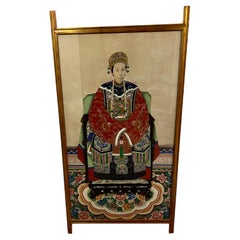
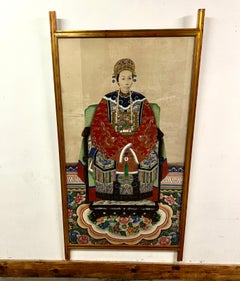
Ancestor Portrait Framed in Gold Leafed Frame

Ancestor Portrait Framed in Gold Leafed Frame

Located in Los Angeles, CA

A beautiful Ancestor portrait of an important Chinese Matriarch. The piece is hand painted in vibrant colors and has held the test of time. The gilt wood framing is an unusual fram...

Category

Early 20th Century Chinese Meiji Paintings

Materials

Glass, Giltwood, Paint

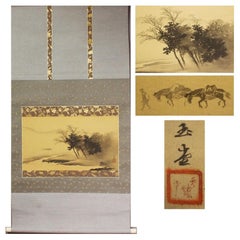
Nihonga Japanese Painting 1900 Meiji Scroll Kawai Gyokudo Nanga School Lake Scen

Nihonga Japanese Painting 1900 Meiji Scroll Kawai Gyokudo Nanga School Lake Scen

Located in Amsterdam, Noord Holland

This painting by Gyokudo Kawa is named "Lakeside Night Return", portraying a serene journey home. Gyokudo Kawai (1873-1957) A Japanese painter from the Meiji to Showa periods, born ...

Category

19th Century Antique Meiji Paintings

Materials

Silk

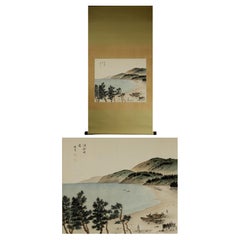
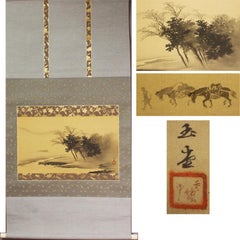
Japanese Meiji Riverside Scroll Painting, c. 1900

Japanese Meiji Riverside Scroll Painting, c. 1900

Located in Chicago, IL

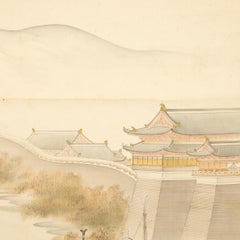
Although western painting was initially embraced during Japan’s Meiji period (1868-1912), artists brought on a revival of traditional painting styles as they sought to create a modern Japanese style with roots in the past. This exquisite hanging scroll demonstrates the preference for soft layering of gray tones with judicious use of color. The landscape is rendered in soft ink washes that subtly distinguish between water, mountain, and sky. The scroll painting...

Category

Early 20th Century Japanese Meiji Paintings

Materials

Paper

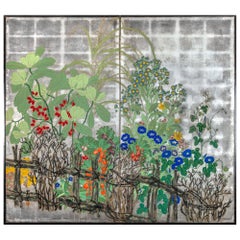
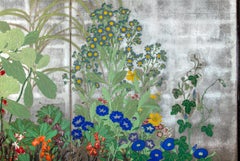
Japanese Two Panel Screen Summer Flowers on Silver

Japanese Two Panel Screen Summer Flowers on Silver

Located in Hudson, NY

Japanese two panel screen: Summer flowers on silver. Meiji period painting (1868 - 1912) of Summer flowers including morning glories and daisies against a garden fence. Signature and...

Category

Early 1900s Japanese Antique Meiji Paintings

Materials

Silver Leaf

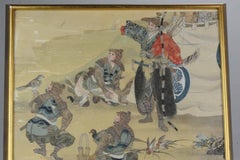
Samurai Japanese Scene Meij Period Painting Japan Artist, 19/20th Century

Samurai Japanese Scene Meij Period Painting Japan Artist, 19/20th Century

Located in Amsterdam, Noord Holland

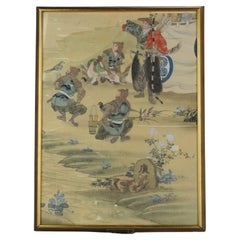
Very nice painting with Japanese Samurai Scene. 19/20th century Additional information: Material: Wood / Bamboo Primary Material: Paper Region of Origin: Japan Condition: Some minim...

Category

20th Century Japanese Meiji Paintings

Materials

Paper

Japanese Six-Panel Screen, Winter Landscape with Flowering Plum

Japanese Six-Panel Screen, Winter Landscape with Flowering Plum

Located in Hudson, NY

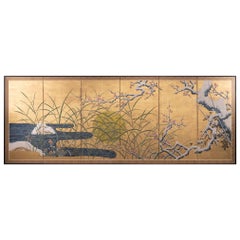
Japanese six-panel screen: Winter landscape with flowering plum, Meiji period (1868-1912) painting of a full moon with wild grasses between river's edge and a snow covered plum tree ...

Category

Early 20th Century Japanese Meiji Paintings

Materials

Gold Leaf

Nihonga Japanese Painting 1900 Meiji Scroll Fishing Boats at Gyosen Nanga School

Nihonga Japanese Painting 1900 Meiji Scroll Fishing Boats at Gyosen Nanga School

Located in Amsterdam, Noord Holland

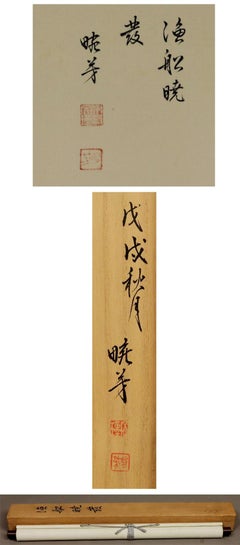
A drawing of the painting "Gyosen Gyosan" painted by Akifoshi. Also included is the box. This is a tasteful work depicting a fishing boat going fishing at sunrise. ■Silk back, handp...

Category

19th Century Antique Meiji Paintings

Materials

Silk

Three Japanese Paintings of Mount Fuji

Three Japanese Paintings of Mount Fuji

Located in Palm Beach, FL

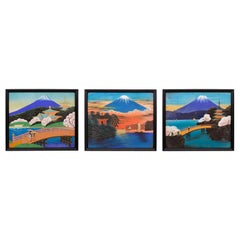
Set of three perspectives of the iconic Mount Fuji painted with gouache, now under glass, in bold colors with architecture, bridges, boats, people, and trees all with the same confid...

Category

Early 20th Century Japanese Meiji Paintings

Materials

Paint

Large Framed Japanese Buddhist Amida Temple Hall Painting, Mid-19th Century

Large Framed Japanese Buddhist Amida Temple Hall Painting, Mid-19th Century

Located in Austin, TX

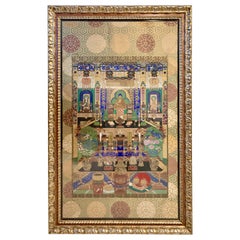
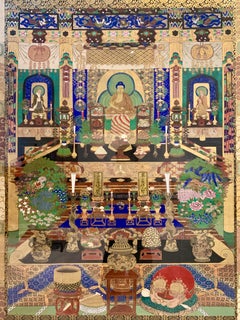
A large and incredible Japanese painting of a Buddhist temple hall with Amida Nyorai, late Edo or early Meiji period, mid-19th century, Japan. Mounted wit...

Category

Mid-19th Century Japanese Antique Meiji Paintings

Materials

Brocade, Silk, Acrylic, Wood, Paint

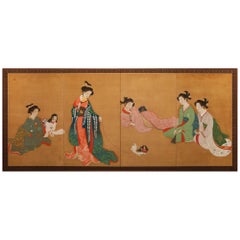
Meiji Period Japanese Four Panel Screen Bijin At Leisure

Meiji Period Japanese Four Panel Screen Bijin At Leisure

Located in Hudson, NY

Japanese four panel screen: Bijin At Leisure. Ladies in a tea house with a small dog. Seal reads "Ensan dai" (drawn by Ensan). Meiji Period (1868 - 1912) pa...

Category

Late 19th Century Japanese Antique Meiji Paintings

Materials

Silk, Wood

Related Items
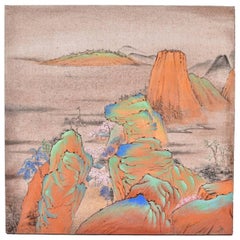
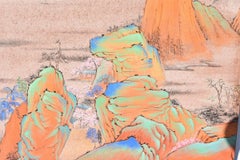
Hand-Painted Oil Painting on Canvas Asian River Scene, Contemporary

Hand-Painted Oil Painting on Canvas Asian River Scene, Contemporary

$475Sale Price|27% Off

H 27.75 in W 27.75 in D 1.5 in

Hand-Painted Oil Painting on Canvas Asian River Scene, Contemporary

Located in Somis, CA

A beautiful, hand-painted oil on canvas depicting river scene in Spring. The background is a gorgeous blush color, with the mountain rocks in rust oran...

Category

2010s Chinese Meiji Paintings

Materials

Canvas

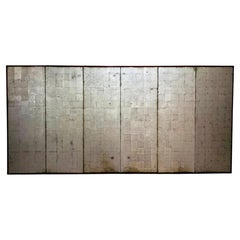
Japanese Six-Panel Folding Screen with Aged Silver Leaf, Meiji Period

Japanese Six-Panel Folding Screen with Aged Silver Leaf, Meiji Period

Located in Fukuoka, JP

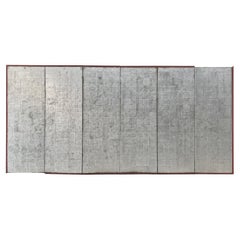
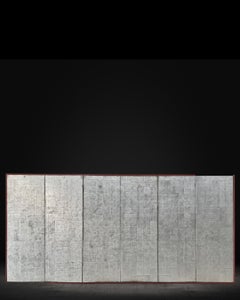
A striking Japanese six-panel folding screen covered entirely in silver leaf. Rather than featuring a painted composition, the screen is defined by the surface of the silver itself....

Category

Late 19th Century Japanese Antique Meiji Paintings

Materials

Silver Leaf

Rare Triptych Scroll Paintings by Watanabe Seitei Meiji Period

Rare Triptych Scroll Paintings by Watanabe Seitei Meiji Period

Located in Atlanta, GA

A set of three paintings of ink and watercolor on silk mounted within brocade borders as scrolls by Watanabe Seitei (1851-1918). This is a very rare an...

Category

Early 1900s Japanese Antique Meiji Paintings

Materials

Brocade, Silk, Wood

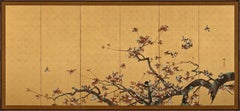
Japanese Showa Two Panel Screen Blossoming Prunus Tree

Japanese Showa Two Panel Screen Blossoming Prunus Tree

Located in Rio Vista, CA

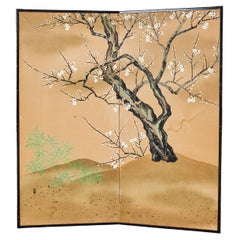
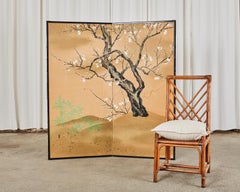
Serene Japanese Showa period two-panel folding byobu screen depicting a large spring blossoming prunus tree or plum tree. Beautifully painted with ink and natural color pigments on m...

Category

20th Century Japanese Meiji Paintings

Materials

Brass

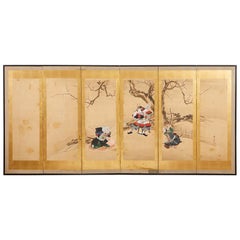
Japanese Edo Six Panel Screen Yoshitsune and Benkei

Japanese Edo Six Panel Screen Yoshitsune and Benkei

$3,400Sale Price|29% Off

H 66 in W 139.5 in D 0.5 in

Japanese Edo Six Panel Screen Yoshitsune and Benkei

Located in Rio Vista, CA

Spectacular 19th century Japanese late Edo period six-panel byobu screen depicting Yoshitsune and Benkei, two heroes of Japanese folklore. Crafted in ink and natural color pigments on mulberry paper with thick gold leaf borders on each panel. The character Yoshitsune is seated under a blossoming cherry tree in full armor holding a fan. The warrior priest or monk Benkei is depicted kneeling on a leopard skin...

Category

19th Century Japanese Antique Meiji Paintings

Materials

Brass, Gold Leaf

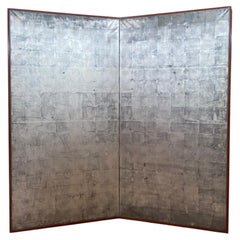
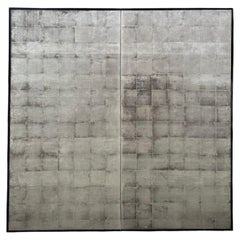
Japanese Two-Panel Folding Screen with Aged Silver Leaf, Meiji Period

Japanese Two-Panel Folding Screen with Aged Silver Leaf, Meiji Period

Located in Fukuoka, JP

A striking Japanese two-panel folding screen (byōbu) from the Meiji period (1868–1912), entirely covered in silver leaf. Remarkable for its restrained, minimalist aesthetic, the scr...

Category

Mid-19th Century Japanese Antique Meiji Paintings

Materials

Wood, Paper

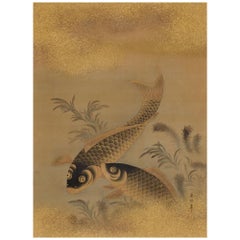
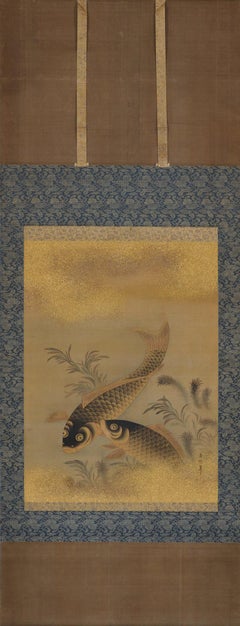
Japanese Painting, Hanging Scroll, Mid 19th Century, Koi and Water Plants

Japanese Painting, Hanging Scroll, Mid 19th Century, Koi and Water Plants

By Iwase Hirotaka

Located in Kyoto, JP

Iwase Hirotaka (1808-1877) Koi and Water Plants Hanging scroll, ink, color, gold wash and gold flecks on silk Inscription: Hirotaka Seal: Ille...

Category

1860s Japanese Antique Meiji Paintings

Materials

Silk

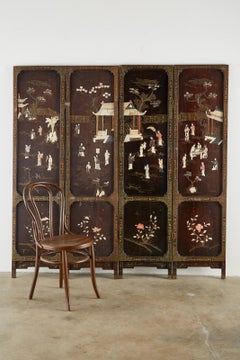
Chinese Qing Four Panel Carved Soapstone Coromandel Screen

Chinese Qing Four Panel Carved Soapstone Coromandel Screen

Located in Rio Vista, CA

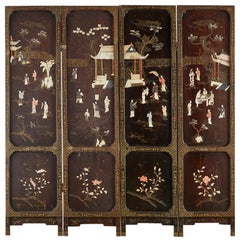
Impressive Chinese late Qing dynasty four panel folding coromandel screen featuring carved soapstone. The lacquered panels are decorated with idyllic scenes of beauties in a pagoda p...

Category

20th Century Chinese Meiji Paintings

Materials

Soapstone, Brass

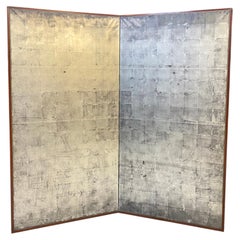
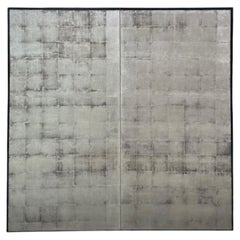
Meiji Period 2-Panel Silver Leaf Screen: Oxidised Patina

Meiji Period 2-Panel Silver Leaf Screen: Oxidised Patina

$3,072Sale Price|20% Off

H 68.51 in W 68.51 in D 1.19 in

Meiji Period 2-Panel Silver Leaf Screen: Oxidised Patina

Located in Fukuoka, JP

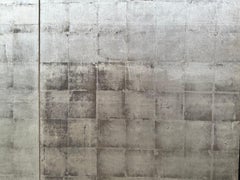
A quiet study in texture and tone. This Meiji-period two-panel screen features silver leaf that has naturally oxidised over time, creating a soft, atmospheric surface of shifting gre...

Category

19th Century Japanese Antique Meiji Paintings

Materials

Silver Leaf

19th Century Japanese Shunga Hand-Scroll, Katsukawa School

19th Century Japanese Shunga Hand-Scroll, Katsukawa School

Located in Kyoto, JP

Shunga Unknown artist Meiji era, circa 1880 Hand-scroll mounted with 12 paintings Ink, pigment and gofun on silk Dimensions: Each image measures H. 23.2 cm x W. 34.4 cm (9.15” x 13.5”) The hand-scroll measures H. 28 cm x W. 540 cm (11” x 212”) A set of 12 late 19th century Japanese Shunga paintings mounted as a hand-scroll. Two of the leaves bear the signature and seal ‘Setsuzan’, although we are unable to confirm the identity of the artist using this art name. 6 of the 12 images are taken almost directly from Katsukawa Shuncho’s late 18th century woodblock series, ‘Erotic Pictures...

Category

Late 19th Century Japanese Antique Meiji Paintings

Materials

Silk

Meiji Period Silver Oxidized Screen, Hand-Painted Wood & Paper, Japan

Meiji Period Silver Oxidized Screen, Hand-Painted Wood & Paper, Japan

Located in Fukuoka, JP

Meiji Period Silver Oxidized Screen Period: Meiji Size: 352 x 174 cm SKU: 2424 Step back in time with this Meiji period screen, where the allure of silver oxidation artfully c...

Category

Late 19th Century Japanese Antique Meiji Paintings

Materials

Silver Leaf

Meiji Period 2-Panel Silver Leaf Screen: Oxidised Patina

Meiji Period 2-Panel Silver Leaf Screen: Oxidised Patina

Located in Fukuoka, JP

A quiet study in texture and tone. This Meiji-period two-panel screen features silver leaf that has naturally oxidised over time, creating a soft, atmospheric surface of shifting gre...

Category

19th Century Japanese Antique Meiji Paintings

Materials

Silver Leaf

Previously Available Items
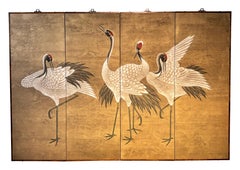
Japanese Meiji Period Hand Painted Screen Panels of Cranes

Japanese Meiji Period Hand Painted Screen Panels of Cranes

Located in San Francisco, CA

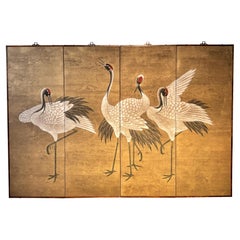
Beautifully painted Japanese screen panels of majestic cranes. Acquired from an estate in the San Francisco Bay Area where they were used to decorate the wall of their dining room in...

Category

Late 19th Century Japanese Antique Meiji Paintings

Materials

Paint, Paper

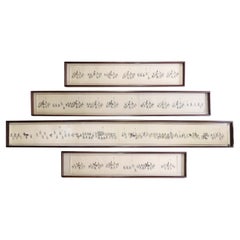
Monumental Antique Mounted Japanese Daimyo Procession Hand Scrolls, Set of Four

Monumental Antique Mounted Japanese Daimyo Procession Hand Scrolls, Set of Four

Located in Denver, CO

Very unique and rare museum quality professionally framed Japanese Daimyo procession hand scroll, likely Meiji Period (1868-1911). The set of 4 scrolls feature ink and color figural ...

Category

Late 19th Century Japanese Antique Meiji Paintings

Materials

Acrylic, Hardwood, Paint, Paper

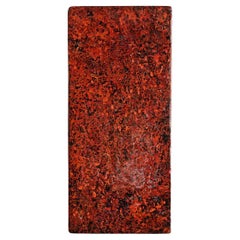
Old wooden work board used by Japanese lacquer craftsmen/abstract painting

Old wooden work board used by Japanese lacquer craftsmen/abstract painting

Located in Sammu-shi, Chiba

This is a work board used by Japanese lacquer craftsmen. Work boards like this, which are no longer in use due to closures of businesses, are sometimes processed or sold. Then, by po...

Category

20th Century Japanese Meiji Paintings

Materials

Wood, Lacquer

Japanese antique lacquer craftsman's wooden work board/1868-1920/Wall hanging

Japanese antique lacquer craftsman's wooden work board/1868-1920/Wall hanging

Located in Sammu-shi, Chiba

A work board used by lacquerware craftsmen. It is thought that it was probably used in the Tohoku region. The period is from the Meiji era to the early Showa era (1868-1940) The mate...

Category

Late 19th Century Japanese Antique Meiji Paintings

Materials

Cedar

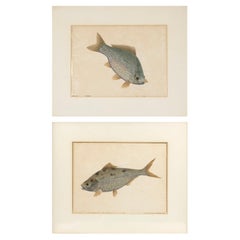
Pair of Watercolor Paintings Depicting Carps

Pair of Watercolor Paintings Depicting Carps

Sold

H 15.36 in W 18.12 in D 0.79 in

Pair of Watercolor Paintings Depicting Carps

Located in Kastrup, DK

A vivid pair of Japanese watercolor paintings of carps. Individually framed. Artwork dimensions (cm): 20, 5 x 27, 5. Handpainted on rice...

Category

Late 19th Century Japanese Antique Meiji Paintings

Materials

Glass, Wood, Paper
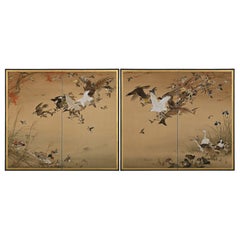
Meiji Period Japanese Screen Pair, One Hundred Birds by Hasegawa Gyokujun

Meiji Period Japanese Screen Pair, One Hundred Birds by Hasegawa Gyokujun

Located in Kyoto, JP

One hundred birds Hasegawa Gyokujun (1863-1921) Meiji period, circa 1900. Ink, color and gofun on silk. Dimensions of each screen: H. 170 cm x W. 190 cm (67’’ x 75”) Despite the title, well over 100 birds are represented in this pair of two-fold Japanese screens (the title functions figuratively to convey the idea of a large number). The monumental work is rendered with a comprehensive and highly complex composition which is exquisitely executed and meticulously colored. More a celebration of naturalism than the traditional “One Hundred Birds” paintings which originated in China. This was a subject matter known for its auspicious meaning as much as its actual depiction of nature. These paintings generally had a phoenix (occasionally peacocks) placed in the center, and the other birds paying homage to it. In this quintessentially Japanese scene painted by Gyokujun, a couple of long-tailed birds modeled after paradise flycatchers are included; these are traditional auspicious motifs in Oriental bird and flower painting and denote themes such as celebration and enduring generations. In addition there is the playful inclusion of single exotic parrot. Even so, the vast majority of the birds and flowers are native to Japan. Reading the scene from right to left, from spring through to autumn, the overwhelming sense is one of movement and haste. It is almost as if the birds are in a race, with the fleetest leading the way forward. Although these native birds were commonly drawn amongst artists of the Shijo school, rarely were they painted with such drama and dynamism. It is not strictly a depiction of sketched birds whose manner was faithfully handed down through the traditions of the Shijo school. Rather we see Gyokujun seeking and achieving new expressions in the heart of the turbulent Meiji period. Hasegawa Gyokujun (1863-1921) was born in Kyoto. He was the eldest son of Hasegawa Gyokuho, a Shijo school painter who studied under Matsumura Keibun. Gyokujun studied painting under his father and became a prominent member of the Kyoto painti ng world from a young age. In 1891 he established the ‘Young Painters Social Club’ along with Takeuchi Seiho, Miyake Gogyo and Taniguchi Kokyo. Also in 1891 he was selected as a judge of the Great Private Paintings Exhibition along with Takeuchi Seiho, Yamamoto Shunkyo...

Category

Early 1900s Japanese Antique Meiji Paintings

Materials

Silk, Wood

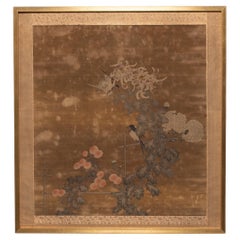
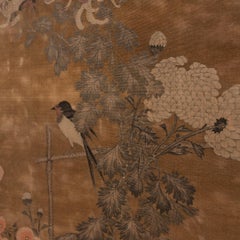
Japanese Velvet Scroll Painting of Magpies and Chrysanthemums, Meiji Period

Japanese Velvet Scroll Painting of Magpies and Chrysanthemums, Meiji Period

Located in Chicago, IL

This beautiful gold-toned painting on silk and velvet is originally from a 19th-century Japanese handscroll. The painting depicts a quiet scene of two black and white magpies flitting amidst chrysanthemum, beautifully drawn with delicate linework and a soft, subdued palette. One magpie rests on a trellis of spotted bamboo, while the other dives behind large purple spider chrysanthemum blossoms. A common motif in Japanese and Chinese art...

Category

Mid-19th Century Japanese Antique Meiji Paintings

Materials

Silk, Velvet

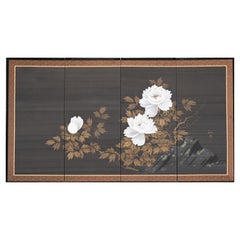
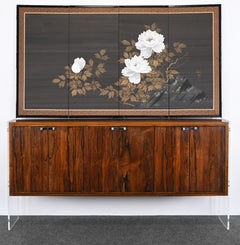
Four Panel Lotus Flower Painting on Silk, Signed, 20th Century

Four Panel Lotus Flower Painting on Silk, Signed, 20th Century

Located in Hamburg, PA

A beautiful Asian 4-panel screen with white lotus flowers, gold decoration, and mountains on silk. Has signature but not able to decipher artist or origin. Most likely Asian, Chinese...

Category

Mid-20th Century Chinese Meiji Paintings

Materials

Silk, Wood, Lacquer, Paint

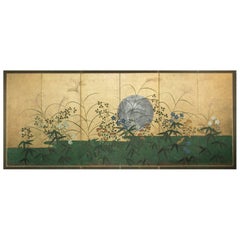
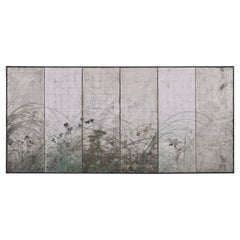
Meiji Period Japanese Screen, Autumn Grasses on Silver-Leaf

Meiji Period Japanese Screen, Autumn Grasses on Silver-Leaf

Located in Kyoto, JP

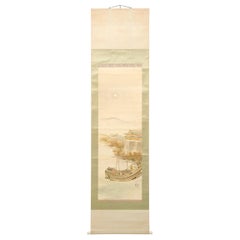
Autumn Grasses Anonymous Six-fold Japanese screen. Ink, pigment, gofun and silver-leaf on paper Inscription: Unsen Hitsu  Seal: Unread The waving grasses of autumn appearing on an unobstructed horizon are usually associated with the Musahino Plain. Once wild, the plain of Musashi is now a densely populated area of Northern Tokyo. Poetic traditions, dating back to the tenth century, associate the vast plain with the season of autumn. Typically the moon is featured in the artwork though here, the shimmering silver leaf preserves a coolness that evokes moonlight on an autumn evening. By staggering and overlapping the grasses and adding partially obscured autumn wildflowers throughout, the artist achieves a surprising degree of spatial depth within the constraints imposed by the screens’s flat, gilded surface. Painted directly onto the gilded paper, the scene required vigorous, demanding brushwork to create the compositional tension and balance. Although the artist remains anonymous both the subject matter and techniques find strong parallels within the Rinpa school of art. The Rinpa school represents the fullest expression of the highly decorative approach to nature painting in Japan. Rinpa is regarded by some as “quintessentially Japanese,” especially when compared with Japan’s Chinese-influenced schools of painting. In this work the artist the artist has painted entirely without outlines using the ‘mokkotsu’ or boneless technique. The artist has also made use of the ‘tarashikomi’ pooling technique for the flowering kudzu vine...
Category

1890s Japanese Antique Meiji Paintings

Materials

Silver Leaf
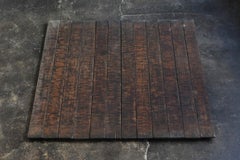
Japanese Wabi-Sabi Antique Board / 1868-1910/Table Top Board Plate / Mingei

Japanese Wabi-Sabi Antique Board / 1868-1910/Table Top Board Plate / Mingei

Located in Sammu-shi, Chiba

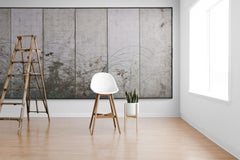
It is a board made around 1868-1910 in Japan. Don't you think it's a very nice atmosphere? I think it was used as a work table by farmers. You can see countless scratches made b...

Category

Late 19th Century Japanese Antique Meiji Paintings

Materials

Pine

Work Board Used by Japanese Lacquer Ware Craftsmen / Wall-Mounted Interior

Work Board Used by Japanese Lacquer Ware Craftsmen / Wall-Mounted Interior

Located in Sammu-shi, Chiba

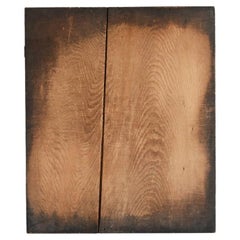
We have an aesthetic sense peculiar to Japanese people. And we introduce the unique items that only we can do, the route of purchasing in Japan, the experience value so far, and the way that no one can imitate. This board is a work board used by lacquer ware...

Category

Late 19th Century Japanese Antique Meiji Paintings

Materials

Cedar

Meiji paintings for sale on 1stDibs.

Find a broad range of unique Meiji paintings for sale on 1stDibs. Many of these items were first offered in the Early 20th Century, but contemporary artisans have continued to produce works inspired by this style. If you’re looking to add vintage paintings created in this style to your space, the works available on 1stDibs include wall decorations, asian art and furniture and other home furnishings, frequently crafted with paper, wood and other materials. If you’re shopping for used Meiji paintings made in a specific country, there are Asia, East Asia, and Japan pieces for sale on 1stDibs. While there are many designers and brands associated with original paintings, popular names associated with this style include and Shunyu. It’s true that these talented designers have at times inspired knockoffs, but our experienced specialists have partnered with only top vetted sellers to offer authentic pieces that come with a buyer protection guarantee. Prices for paintings differ depending upon multiple factors, including designer, materials, construction methods, condition and provenance. On 1stDibs, the price for these items starts at $800 and tops out at $63,250 while the average work can sell for $12,000.