German Prints

1,280 Results
to
116
1,194
103
1,297
6
Height
to
Width
to
130
82
27
14
12
10
4
3
2
1
1
242
705
350
6
102
134
104
15
6
8
5
44
4
25
60
10
6
1,266
164
123
117
46
23,158
8,862
1,689
1,567
1,356
1,303
1,303
1,303
44
10
7
7
5
Place of Origin: German
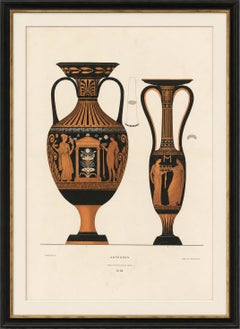
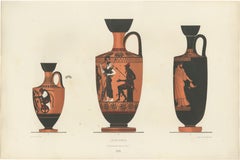
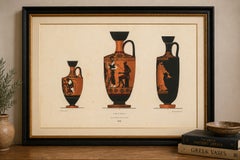
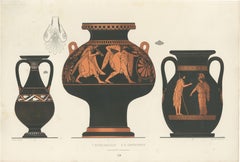
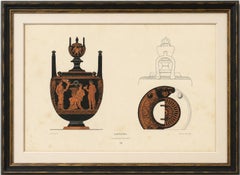
Large Antique Greek Amphora Chromolithograph, Genick, 1883

Large Antique Greek Amphora Chromolithograph, Genick, 1883

Located in Langweer, NL

Large Antique Greek Amphora Chromolithograph, Genick, 1883 Original antique color lithograph depicting an elaborately decorated ancient Greek amphora with a classical warrior scene,...

Category

Late 19th Century Neoclassical Antique German Prints

Materials

Paper

Greater Bird of Paradise Male & Female Hand-Colored Lithograph, c.1875

Greater Bird of Paradise Male & Female Hand-Colored Lithograph, c.1875

Located in Langweer, NL

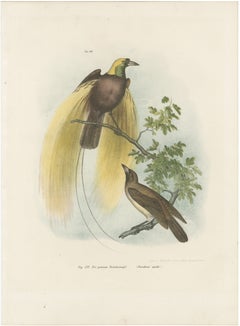
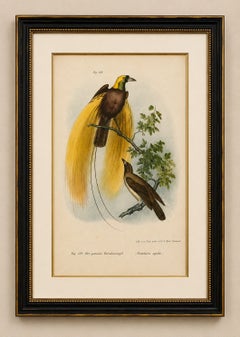
Greater Bird of Paradise Male & Female Hand-Colored Lithograph, c. 1875 Description: Original antique hand-colored lithograph depicting a magnificent pair of Greater Birds of Paradise, identified beneath the image as “Der gemeine Paradiesvogel (Paradisea apoda).” The composition shows the spectacular male Greater Bird of Paradise perched above a female. The male is represented with his characteristic golden-yellow ornamental flank plumes cascading dramatically around the body, contrasting with his dark chest and greenish-yellow head and throat. Two extremely elongated tail wires descend beneath him. The more restrained brown plumage of the female provides a striking illustration of the sexual dimorphism for which birds of paradise became celebrated. Birds of paradise were among the most extraordinary exotic birds known to European naturalists and collectors. Early specimens reached Europe from the Indonesian archipelago without their feet, contributing to centuries of myths that the birds lived perpetually in the air. This history is reflected in the scientific name Paradisea apoda, meaning essentially “footless bird of paradise.” The plate is numbered Fig. 139 and bears the German title “Der gemeine Paradiesvogel.” It was produced for a German 19th-century natural-history publication and is a fine example of the period's increasingly sophisticated ornithological illustration. Although the composition is reminiscent of the celebrated bird illustrations associated with John Gould, I would not attribute this particular plate directly to Gould. The available evidence does not establish Gould as its artist or publisher, and the German typography and figure numbering indicate that it belongs to a separate German natural-history publication. Greater Bird of Paradise Paradisea apoda “Der gemeine Paradiesvogel” Fig. 139 German School c. 1870–1880 Original hand-colored lithograph This is an original antique print from the 19th century, not a modern reproduction. Condition: Good antique condition with overall age-related toning, scattered light foxing and minor spotting and marks, particularly within the margins. Some minor handling wear is consistent with age. The colors remain attractive and the principal image is well preserved. Please study the photographs carefully as they form part of the condition description. Period: Late 19th Century Style: Victorian Medium: Hand-colored lithograph on paper Subject: Greater Bird of Paradise Bird of Paradise Paradisea apoda Male and Female Birds Tropical Birds Ornithology Natural History Keywords: Greater Bird of Paradise, Bird of Paradise, Paradisea apoda, Paradiesvogel, Der gemeine Paradiesvogel, paradise bird, tropical bird, exotic bird, male bird of paradise, female bird of paradise, Indonesian birds...

Category

Early 19th Century Victorian Antique German Prints

Materials

Paper

Horse Training at the Pillar – Baroque Riding School, Georg Simon Winter, 1678

Horse Training at the Pillar – Baroque Riding School, Georg Simon Winter, 1678

Located in Langweer, NL

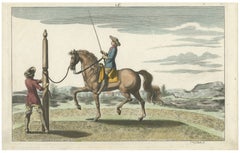
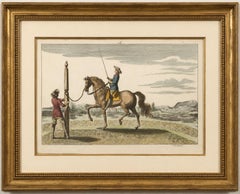
1678 Baroque Dressage Training Horse at the Pillar – Georg Simon Winter This original hand-coloured copperplate engraving depicts an advanced riding-school exercise from one of the ...

Category

Late 17th Century Antique German Prints

Materials

Paper

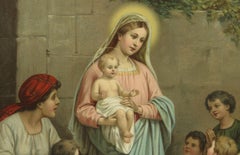
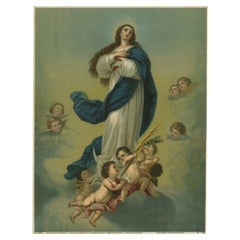
St Mary Protectress of Innocents, Antique German Chromolithograph c.1900

St Mary Protectress of Innocents, Antique German Chromolithograph c.1900

Located in Langweer, NL

St Mary Protectress of Innocents, Antique German Chromolithograph c.1900 This exceptionally tender and beautifully composed late 19th–early 20th century German chromolithograph depi...

Category

Late 19th Century Antique German Prints
Materials

Paper

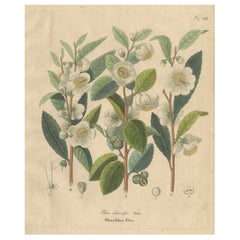
Antique Botanical Print of Thea Chinensis, Hand Colored, c.1831

Antique Botanical Print of Thea Chinensis, Hand Colored, c.1831

Located in Langweer, NL

Antique Tea Botanical Print, Thea Chinensis, Hand Colored, c.1831 This elegant botanical engraving depicts Thea chinensis, the tea plant, one of the most influential commodities in ...

Category

1830s Antique German Prints

Materials

Paper

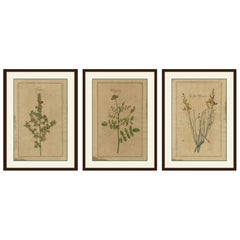
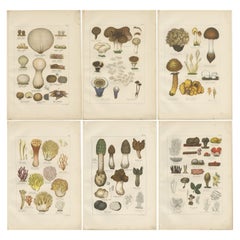
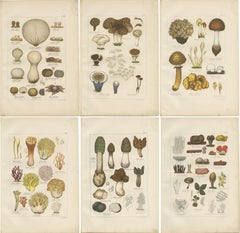
JOHANN WEINMANN - Six Hand Colored Botanical Engravings - Germany - C. 1737-1745

JOHANN WEINMANN - Six Hand Colored Botanical Engravings - Germany - C. 1737-1745

By Johann Wilhelm Weinmann

Located in Chatham, ON

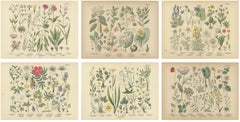
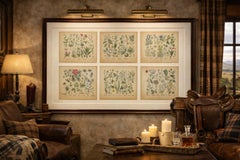
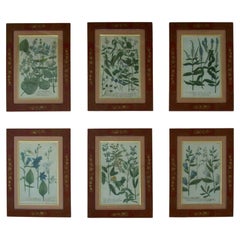
JOHANN WILHELM WEINMANN (1683-1741) - PHYTANTHOZA ICONOGRAPHIE - Antique set of six framed 18th century first edition PHYTANTHOZA ICONOGRAPHIE botanical hand colored mezzotint engrav...

Category

Early 18th Century Georgian Antique German Prints

Materials

Wood, Paper, Glass

Antique Greek Amphora with Classical Figures Color Lithograph, 1883

Antique Greek Amphora with Classical Figures Color Lithograph, 1883

Located in Langweer, NL

Antique Greek Amphora with Classical Figures Color Lithograph, 1883 Original antique color lithograph depicting an elaborately decorated ancient Greek amphora with a dynamic classic...

Category

Late 19th Century Neoclassical Antique German Prints

Materials

Paper

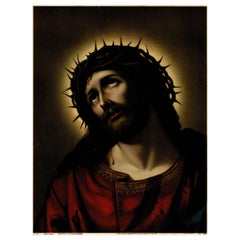
Ecce Homo, 1899 German Chromolithograph of Christ with Crown of Thorns (Dresden)

Ecce Homo, 1899 German Chromolithograph of Christ with Crown of Thorns (Dresden)

Located in Langweer, NL

Ecce Homo, 1899 German Chromolithograph of Christ with Crown of Thorns (Dresden) This moving late-19th-century chromolithograph of Christ as “Ecce Homo” was printed in Dresden in 18...

Category

Late 19th Century Antique German Prints
Materials

Paper

Antique Greek Amphora with Winged Nike Color Lithograph, 1883

Antique Greek Amphora with Winged Nike Color Lithograph, 1883

Located in Langweer, NL

Antique Greek Amphora with Winged Nike Color Lithograph, 1883 Original antique color lithograph depicting an ancient Greek amphora decorated with a striking representation of the winged goddess Nike, published in Berlin in 1883 as part of Albert Genick’s monumental work on Greek ceramics. The monumental black amphora is dominated by a single winged female figure rendered in terracotta red. The figure represents Nike, the ancient Greek personification and goddess of victory. She is shown in profile with outstretched wings and holding a staff-like object. A Greek-key meander border beneath the figure and stylized palmette ornament around the neck complete the vessel's decoration. The dramatic contrast between the deep black body of the amphora and the restrained terracotta-colored decoration makes this one of the particularly graphic and decorative plates from the series. The print originates from the second edition of Albert Genick’s important publication on Greek ceramics, published by Ernst Wasmuth in Berlin in 1883. The complete work comprised 36 large color lithographic plates, including four double-page plates, illustrating amphorae, vases, bowls and other examples of ancient Greek ceramic art. The lithographs were produced by the Berlin printing establishment Hein & Mosler. Albert Genick (1837–1906), a Berlin-trained architect, became particularly known for his precise graphic documentation of ancient ceramics. This publication is regarded as his principal work. Complete examples are rare, and individual plates from the series are increasingly difficult to find. Creator: Albert Genick (1837–1906) Publisher: Ernst Wasmuth, Berlin Printer: Hein & Mosler, Berlin Plate: II Date: 1883 Edition: Second edition Technique: Color lithograph Origin: Germany Sheet size: Approximately 68 x 46 cm (26.8 x 18.1 inches) Period: Late 19th Century Style: Neoclassical / Archaeological Revival Condition: Very good antique condition. The colors and deep black areas remain remarkably strong. Light age-related toning with minor scattered foxing and spotting, primarily in the margins. Minor edge wear consistent with age. Please study the photographs carefully as they form part of the condition description. An original antique lithograph printed in 1883, not a modern reproduction. The print is offered unframed. Any framed or interior images, if shown, are for presentation and inspiration only. Additional companion plates from Albert Genick’s series are available separately. Keywords: Albert Genick, Greek amphora, Nike goddess...

Category

Late 19th Century Neoclassical Antique German Prints

Materials

Paper

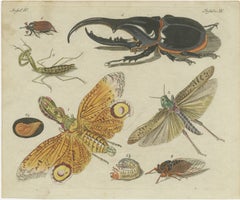
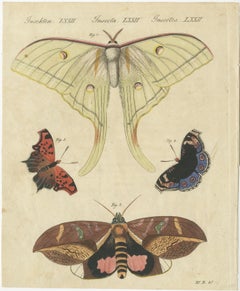
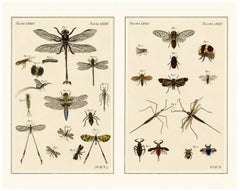
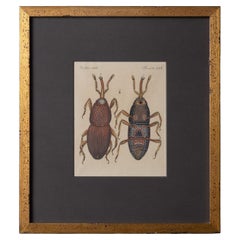
Original Antique Print of Exotic Insects, Lanternfly and Mantis, c. 1790

Original Antique Print of Exotic Insects, Lanternfly and Mantis, c. 1790

Located in Langweer, NL

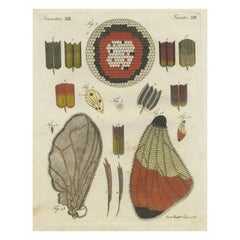
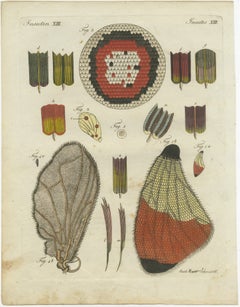
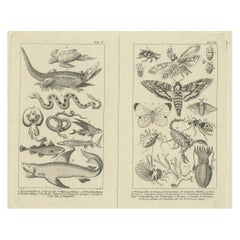
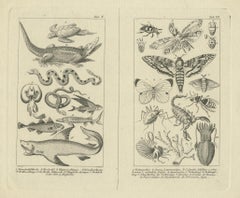
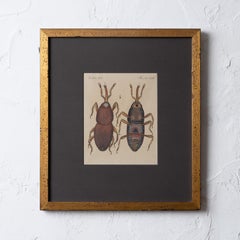
Original Antique Print of Exotic Insects, Lanternfly and Mantis, c. 1790 Original antique hand-colored engraving depicting a spectacular collection of exotic insects, including a la...

Category

Late 18th Century Neoclassical Antique German Prints

Materials

Paper

Original Antique Print of Roman Chariot Racing and Circus Maximus, c.1800

Original Antique Print of Roman Chariot Racing and Circus Maximus, c.1800

Located in Langweer, NL

Original Antique Print of Roman Chariot Racing and Circus Maximus by Bertuch, c. 1800 Original antique hand-colored copper engraving illustrating ancient Roman chariot racing and the Circus Maximus, published in Friedrich Justin Bertuch’s celebrated “Bilderbuch für Kinder” around 1800. The plate is titled “Alterthümer VIII / Antiquités VIII” and contains four illustrations relating to Roman chariot racing and the famous circus games of antiquity. Fig. 1 presents a reconstruction of the Circus Maximus in Rome, the enormous ancient arena used for chariot races and other public spectacles. The elongated track is shown surrounded by tiers of seating, monumental entrances and the central barrier or spina, decorated with an obelisk, statues and other monuments. Fig. 2 depicts a dramatic Roman quadriga: a four-horse chariot racing at speed, with the charioteer leaning forward and wielding his whip. The richly ornamented chariot and animated horses make this the visual centerpiece of the plate. Fig. 3 illustrates details of an ancient horse harness or bridle, while Fig. 4 reproduces an ancient representation of a chariot and driver. The engraving is delicately enhanced with original hand coloring in restrained shades of green, ochre, red and brown and bears the engraved signature “Jacob H. Schmuzer” beneath Fig. 4. Friedrich Justin Bertuch (1747–1822) was a German publisher, writer and patron of the arts. His monumental “Bilderbuch für Kinder” (Picture Book for Children) was one of the great illustrated educational encyclopedias of the late 18th and early 19th centuries. Published in Weimar from 1790 onward, the work contained hundreds of engraved and hand-colored plates covering natural history, geography, science, technology, mythology, ancient history and costumes. An attractive early 19th-century representation of ancient Rome, particularly appealing to collectors of classical antiquity, equestrian subjects and Grand Tour imagery. Creator: Friedrich Justin Bertuch (1747–1822) Engraver: Jacob H. Schmuzer Source: Bilderbuch für Kinder Plate: Alterthümer VIII / Antiquités VIII Place of Publication: Weimar, Germany Date of Manufacture: Circa 1800 Period: Early 19th Century Style: Neoclassical – In the Period of Medium: Original hand-colored copper engraving on paper Condition: Good. Wear consistent with age and use. Light age-related toning and scattered minor spotting. Some wear and irregularity along the right sheet edge and minor marginal imperfections. Original hand coloring remains attractive. Please refer to the photographs for further details of condition. Please note: This is an original antique print from circa 1800, not a modern reproduction. The print is sold unframed. Framed images or interior views, if shown, are for presentation and inspiration only. Keywords: Roman chariot print, chariot racing, Circus Maximus, ancient Rome print, Roman quadriga, four horse chariot, Roman horses, Roman antiquities, classical antiquity, Grand Tour print, equestrian engraving, Bertuch print, Friedrich Justin Bertuch, Jacob Schmuzer, hand colored engraving, Neoclassical print, antique Roman print

Category

Early 1800s Neoclassical Antique German Prints

Materials

Paper

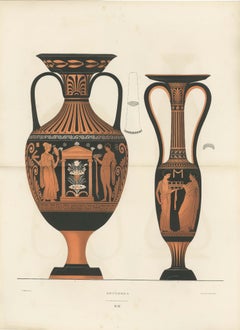
Antique Greek Amphora & Classical Pottery Lithograph, 1883

Antique Greek Amphora & Classical Pottery Lithograph, 1883

Located in Langweer, NL

Antique Greek Amphora & Classical Pottery Lithograph, 1883 Original antique color lithograph depicting an ancient Greek amphora, published in Berlin in 1883 as part of Albert Genick’s monumental work on Greek ceramics. The plate presents a large two-handled amphora decorated in the red-figure technique, with two standing figures occupying the principal pictorial field. An ornamental palmette and floral frieze decorates the neck, while a Greek-key border runs beneath the figural scene. A small line drawing at upper right records a detail of the vessel’s construction. The restrained black, terracotta-red and cream palette closely evokes the appearance of the original ancient pottery and gives the plate a particularly strong decorative quality. The print originates from the second edition of Albert Genick’s important publication on Greek ceramics, published by Ernst Wasmuth in Berlin in 1883. The complete work comprised 36 large color lithographic plates, including four double-page plates, illustrating amphorae, vases, bowls and other examples of ancient Greek ceramic art. The lithographs were produced by the Berlin printing establishment Hein & Mosler. Genick (1837–1906), a Berlin-trained architect, became particularly known for his precise graphic documentation of ancient ceramics. This publication is regarded as his principal work and complete examples are rare; individual plates are also increasingly difficult to find. Creator: Albert Genick (1837–1906) Publisher: Ernst Wasmuth, Berlin Printer: Hein & Mosler, Berlin Date: 1883 Edition: Second edition Technique: Color lithograph Origin: Germany Sheet size: Approximately 68 x 46 cm (26.8 x 18.1 inches) Period: Late 19th Century Style: Neoclassical / Archaeological Revival Condition: Good antique condition. General age-related toning with scattered foxing and spotting, particularly visible in the surrounding margins. Some minor wear and discoloration toward the sheet edges, consistent with age. Please study the photographs carefully as they form part of the condition description. An original antique lithograph printed in 1883, not a modern reproduction. The print is offered unframed. Any framed or interior images, if shown, are for presentation and inspiration only. Keywords: Albert Genick, Greek amphora, ancient Greek pottery, Greek ceramics, Greek vase, amphora print, archaeological print, classical antiquity, ancient Greece, Greek art, red figure pottery, red figure vase...

Category

Late 19th Century Neoclassical Antique German Prints

Materials

Paper

Antique Greek Hydria with Classical Warriors Color Lithograph, 1883

Antique Greek Hydria with Classical Warriors Color Lithograph, 1883

Located in Langweer, NL

Antique Greek Hydria with Classical Figures Color Lithograph, 1883 Original antique color lithograph depicting a monumental ancient Greek hydria decorated with classical figures and elaborate ornamental bands, published in Berlin in 1883 as part of Albert Genick’s important work on Greek ceramics. This impressive large-format plate presents a single monumental hydria, the characteristic ancient Greek vessel traditionally used for carrying, storing and pouring water. The vessel is dominated by a broad, almost uninterrupted black body, creating a particularly bold and graphic composition. Across the shoulder runs a red-figure narrative scene with several classical figures rendered in terracotta against the deep black ground. Immediately below the figural scene is an exceptionally decorative continuous frieze composed of repeating palmette and rosette-like motifs. The intricate terracotta ornament...

Category

Late 19th Century Neoclassical Antique German Prints

Materials

Paper

Set of 3 Antique Fish Prints, Sword Fish, John Dory, Haddock, 1832

Set of 3 Antique Fish Prints, Sword Fish, John Dory, Haddock, 1832

Located in Langweer, NL

Set of three original antique fish prints. Star fish, Peprilus paru 78, and swordfish, Xiphias gladius 79. Haddock, Melanogrammus aeglefinus 84, and Atlantic cod, Gadus morhua 85. Jo...

Category

Mid-19th Century Antique German Prints

Materials

Paper

Antique Chromolithograph Pair, Ceramics Through the Ages, 1898

Antique Chromolithograph Pair, Ceramics Through the Ages, 1898

Located in Langweer, NL

Antique Chromolithograph Pair, Ceramics Through the Ages, Meyers 1898 This attractive pair of original chromolithographs illustrates the history and artistic development of ceramics...

Category

Late 19th Century Art Nouveau Antique German Prints

Materials

Paper

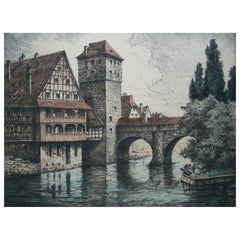
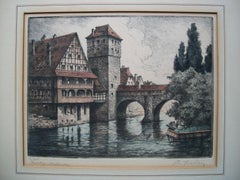
Hangman's Bridge - Hand Colored Fine Art Engraving - Germany - Circa 1900

Hangman's Bridge - Hand Colored Fine Art Engraving - Germany - Circa 1900

Located in Chatham, ON

Hangman's Bridge (Henkersteg), Nuremberg, Bavaria, Germany - Antique fine art hand colored engraving on heavy cream paper - architectural view - indistinctly signed by the artist low...

Category

Late 19th Century Victorian Antique German Prints

Materials

Paint, Paper

The Holy Guardian Angel Protecting a Child – Antique Chromolithograph, 1900

The Holy Guardian Angel Protecting a Child – Antique Chromolithograph, 1900

Located in Langweer, NL

The Holy Guardian Angel Protecting a Child – Antique German Chromolithograph, 1900 This beautifully composed antique German chromolithograph depicts the Holy Guardian Angel gently guiding and protecting a small child as they cross a narrow wooden bridge above flowing water. The scene is rich in symbolic meaning, representing divine protection, childhood innocence, and spiritual guidance — themes deeply rooted in Catholic devotional tradition. The guardian angel is shown in flowing white robes with a pale blue sash, her wide luminous wings fully extended as she leads the child safely forward. A golden halo and radiant star above her head emphasize her divine nature, while her calm and protective posture reinforces the message of constant heavenly care. The child, dressed in soft rose-colored garments and holding a simple walking staff, steps forward with trust and quiet confidence. The surrounding landscape enhances the spiritual narrative: a peaceful waterfall below, a distant church on the cliffs above, and lush greenery framing the path. These details reflect the traditional Catholic interpretation of life’s journey guided by faith. The soft atmospheric lighting, subtle color transitions, and fine detail are characteristic of high-quality German chromolithography at the turn of the 20th century. This image was widely cherished in Catholic homes, schools, and religious institutions, where it served both as devotional inspiration and as a comforting symbol of protection for children. Today, original examples in strong condition are increasingly scarce and highly sought after by collectors of antique religious art. An ideal piece for Catholic art collectors, children’s rooms, chapels, prayer spaces, and anyone seeking a meaningful symbol of spiritual guardianship. CONDITION REPORT Good antique condition. Light, even age toning throughout. Minor edge wear and gentle softening at the corners. No tears, no significant losses, and no restoration. Colors remain vibrant, with excellent preservation of gold tones and soft pastel shading. FRAMING TIPS This print will be beautifully enhanced by a softly antiqued gilt or champagne-gold frame to echo the angelic glow. A deep ivory or pale linen mat with museum glass will elevate the devotional and collector-quality presentation. TECHNIQUE Chromolithography MAKER German devotional publisher, Germany, circa 1900 KEYWORD BLOCK Holy Guardian Angel antique print, Guardian Angel child protection, Catholic devotional art, German chromolithograph, religious wall art antique, angel with child print, Christian protection symbol, sacred angel print, Catholic nursery art...

Category

Early 20th Century German Prints

Materials

Paper

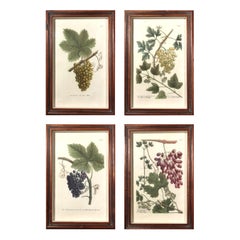
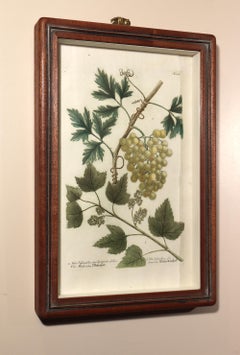
Weinmann Phytanthoza Iconographia Grape Engravings, Set of Four, Circa 1745

Weinmann Phytanthoza Iconographia Grape Engravings, Set of Four, Circa 1745

By Johann Wilhelm Weinmann

Located in Downingtown, PA

Weinmann Phytanthoza Iconographia Grape Engravings, Set of Four, Circa 1745 This set of four color-printed and hand-finished botanical engravings of grape vines comes from Johann Wi...

Category

1740s Baroque Antique German Prints

Materials

Paper

Set of Four Antique Mineralogy & Crystal Chromolithographs by Kenngott, 1888

Set of Four Antique Mineralogy & Crystal Chromolithographs by Kenngott, 1888

Located in Langweer, NL

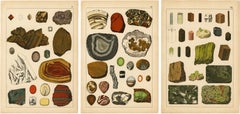
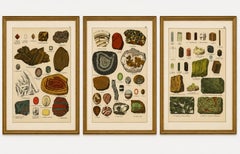
Set of Four Antique Mineralogy & Crystal Chromolithographs by Kenngott, 1888 DESCRIPTION: A fascinating set of four original 19th-century scientific plates illustrating mineralo...

Category

Late 19th Century Victorian Antique German Prints

Materials

Paper

Catholic Religious Costume Study, Hand-Colored Print, Published ca.1880

Catholic Religious Costume Study, Hand-Colored Print, Published ca.1880

Located in Langweer, NL

Clerical and Monastic Vestments 1400–1800, Antique Hand-Colored Print This elegant antique costume plate illustrates a wide range of clerical and monastic garments worn within the R...

Category

1880s Antique German Prints

Materials

Paper

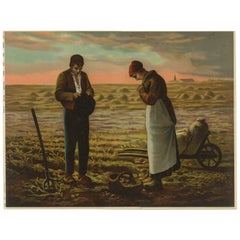
The Angelus at Sunset, After Millet, Antique European Chromolithograph, c.1900

The Angelus at Sunset, After Millet, Antique European Chromolithograph, c.1900

Located in Langweer, NL

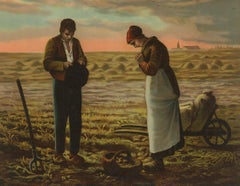
The Angelus at Sunset, After Millet, Antique European Chromolithograph This atmospheric late 19th-century European chromolithograph presents a devotional rural scene inspired by Jea...

Category

Late 19th Century Antique German Prints
Materials

Paper

Antique Catholic Print of Jesus Blessing Children – Germany, c. 1890

Antique Catholic Print of Jesus Blessing Children – Germany, c. 1890

Located in Langweer, NL

Jesus Blessing the Children – Antique German Catholic Chromolithograph, c. 1890 This beautiful late 19th-century German chromolithograph depicts one of the most tender and beloved scenes in Christian iconography: Jesus blessing the children. Christ stands centrally in a serene pastoral landscape, gently extending his hands in a gesture of protection and compassion, while two children approach Him with trust and reverence. The soft light of the halo frames His head, reinforcing the sacred presence, while the surrounding greenery and distant buildings create a peaceful biblical setting. This image reflects the powerful theme from the Gospel of Matthew, “Let the little children come to me,” and was widely used in Catholic devotional culture for home altars, schools, and parish settings during the late Victorian period. The gentle facial expressions, flowing robes, and rich harmonious colors are all characteristic of high-quality German chromolithography from the late 19th century. Chromolithography allowed for exceptional depth of color and painterly effects, closely imitating oil painting. This example shows especially fine tonal transitions in the robes, sky, and landscape, as well as excellent detail in the figures and foliage. The overall visual impression is warm, calm, and deeply devotional, making this print particularly appealing to Catholic art collectors and religious interiors. Pieces of this type were often displayed in framed settings above prayer corners, in churches, or in Catholic family homes and have become increasingly collectible as surviving examples in good condition grow scarcer. Its subject matter gives it lasting spiritual and decorative appeal and makes it a timeless devotional artwork. CONDITION REPORT Good antique condition overall. Light even age toning to the paper, consistent with late 19th-century chromolithographs. Minor softening at the edges and faint handling traces visible upon close inspection. No major stains, no tears, and no restoration observed. The colors remain vibrant and well preserved. FRAMING TIPS This print would be beautifully enhanced with a classic gold-leaf or champagne-gilt wooden frame combined with a wide ivory or warm cream mat. For a more contemporary sacred interior, a soft walnut or dark oak frame with museum glass would provide excellent contrast and visual depth while keeping the devotional character intact. TECHNIQUE Chromolithography MAKER German devotional publisher, Germany, circa 1890 KEYWORD BLOCK Jesus blessing children, Jesus the Friend of Children, antique catholic print...

Category

Late 19th Century Antique German Prints

Materials

Paper

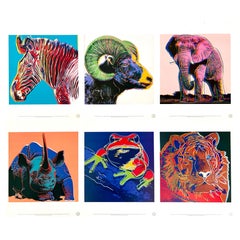
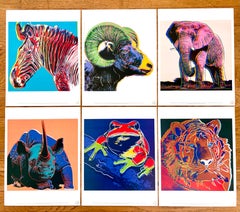
Andy Warhol's Endangered Species Prints by Neues Publishing Co., 1989

Andy Warhol's Endangered Species Prints by Neues Publishing Co., 1989

By (after) Andy Warhol

Located in Philadelphia, PA

Andy Warhol's Endangered Species Portfolio of 6 Prints by Neues Publishing Company, 1989 The 1989 portfolio contains high-quality reproductions of six animals rendered in Warhol's s...

Category

1980s Post-Modern Vintage German Prints

Materials

Paper

Jesus Blessing the Children, Antique German Chromolithograph, ca.1900

Jesus Blessing the Children, Antique German Chromolithograph, ca.1900

Located in Langweer, NL

Jesus Blessing the Children, Antique German Chromolithograph after Meithheuser c.1900 This exceptionally moving late 19th–early 20th century German chromolithograph depicts one of t...

Category

Late 19th Century Antique German Prints
Materials

Paper

Original Antique Print of an Atlas Moth by Bertuch, circa 1800

Original Antique Print of an Atlas Moth by Bertuch, circa 1800

Located in Langweer, NL

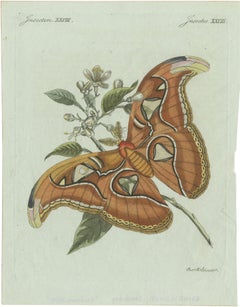
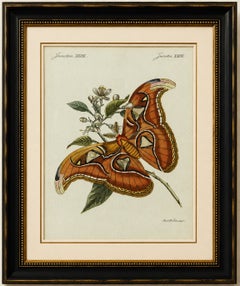
Original Antique Print of an Atlas Moth by Bertuch, circa 1800 Original antique hand-colored copper engraving depicting the magnificent Atlas moth (Attacus atlas), one of the largest and most spectacular moths in the world. The plate is titled “Insecten XXVIII / Insectes XXVIII” and originates from Friedrich Justin Bertuch’s celebrated “Bilderbuch für Kinder,” published in Weimar around 1800. The enormous moth is shown with its wings fully extended across a flowering branch. Its richly patterned wings are beautifully rendered in shades of rust, ochre, cream, black and pink, with the characteristic translucent, window-like markings prominently displayed. The combination of the dramatically oversized insect and delicate botanical background makes this one of the more visually striking natural-history subjects in Bertuch’s series. The Atlas moth is native to the tropical forests of South and Southeast Asia and is renowned for its extraordinary wingspan. Its distinctive wing tips have often been noted for their resemblance to the head of a snake, possibly serving as a defensive adaptation against predators. The engraving bears the inscription “Jacob H. Schmuzer” at lower right. Friedrich Justin Bertuch (1747–1822) was a German publisher, writer and patron of the arts. His monumental “Bilderbuch für Kinder” (Picture Book for Children) was one of the great illustrated educational encyclopedias of the late 18th and early 19th centuries. Published in Weimar from 1790 onward, the work contained hundreds of finely engraved and hand-colored plates devoted to natural history, geography, science, technology, costumes and mythology. A particularly decorative and impressive antique natural-history print, well suited to collectors of butterflies and moths, entomology and early scientific illustration. Creator: Friedrich Justin Bertuch (1747–1822) Engraver: Jacob H. Schmuzer Source: Bilderbuch für Kinder Plate: Insecten XXVIII / Insectes XXVIII Place of Publication: Weimar, Germany Date of Manufacture: Circa 1800 Period: Early 19th Century Style: Neoclassical – In the Period of Medium: Original hand-colored copper engraving on paper Condition: Good. Wear consistent with age and use. Light age-related toning and occasional minor spotting. Some marginal wear and small imperfections, particularly along the right edge. Original hand coloring remains strong and attractive. Please refer to the photographs for further details of condition. Please note: This is an original antique print from circa 1800, not a modern reproduction. The print is sold unframed. Framed images or interior views, if shown, are for presentation and inspiration only. Keywords: Atlas moth print, Attacus atlas, antique moth...

Category

Early 1800s Neoclassical Antique German Prints

Materials

Paper

Antique Greek Amphora with Warrior & Horse Color Lithograph, 1883

Antique Greek Amphora with Warrior & Horse Color Lithograph, 1883

Located in Langweer, NL

Antique Greek Amphora with Warrior & Horse Color Lithograph, 1883 Original antique color lithograph depicting an ancient Greek amphora decorated with a dynamic equestrian warrior scene, published in Berlin in 1883 as part of Albert Genick’s monumental work on Greek ceramics. The large black amphora is decorated in the characteristic terracotta-red palette of ancient Greek pottery. Its principal scene shows an armed horseman confronting a standing warrior. The mounted figure carries a long spear and wears armor, while the opposing warrior is shown with helmet, spear and a large decorated shield. The composition is framed below by a geometric Greek meander border. The neck of the amphora is decorated with a large stylized palmette, while the distinctive handles have a twisted or rope-like appearance. The combination of the monumental vessel, equestrian subject and strong black-and-terracotta coloring makes this a particularly decorative plate from the series. The print originates from the second edition of Albert Genick’s important publication on Greek ceramics, published by Ernst Wasmuth in Berlin in 1883. The complete work comprised 36 large color lithographic plates, including four double-page plates, illustrating amphorae, vases, bowls and other examples of ancient Greek ceramic art. The lithographs were produced by the Berlin printing establishment Hein & Mosler. Albert Genick (1837–1906), a Berlin-trained architect, became particularly known for his precise graphic documentation of ancient ceramics. This publication is regarded as his principal work. Complete examples are rare, and individual plates from the series are increasingly difficult to find. Creator: Albert Genick (1837–1906) Publisher: Ernst Wasmuth, Berlin Printer: Hein & Mosler, Berlin Plate: III Date: 1883 Edition: Second edition Technique: Color lithograph Origin: Germany Sheet size: Approximately 68 x 46 cm (26.8 x 18.1 inches) Period: Late 19th Century Style: Neoclassical / Archaeological Revival Condition: Very good antique condition. Strong black and terracotta coloring with good overall preservation. Light age-related toning and scattered foxing and spotting, mainly visible in the surrounding margins. Minor wear and slight irregularity along the sheet edges consistent with age. Please study the photographs carefully as they form part of the condition description. An original antique lithograph printed in 1883, not a modern reproduction. The print is offered unframed. Any framed or interior images, if shown, are for presentation and inspiration only. Additional companion plates from Albert Genick’s series are available separately. Keywords: Albert Genick, Greek amphora, Greek warrior, horseman, equestrian art, ancient Greek warrior, Greek pottery, Greek ceramics, Greek vase, amphora print, warrior print, horse print, archaeological print, classical antiquity, ancient Greece, Greek art, red figure pottery, red figure vase...

Category

Late 19th Century Neoclassical Antique German Prints

Materials

Paper

Antique Greek Krater with Classical Procession Color Lithograph, 1883

Antique Greek Krater with Classical Procession Color Lithograph, 1883

Located in Langweer, NL

Antique Greek Krater with Classical Procession Color Lithograph, 1883 Original antique color lithograph depicting an ancient Greek krater decorated with a striking classical process...

Category

Late 19th Century Neoclassical Antique German Prints

Materials

Paper

Original Antique Print of Volcanic Eruptions and Ships by Bertuch, c. 1800

Original Antique Print of Volcanic Eruptions and Ships by Bertuch, c. 1800

Located in Langweer, NL

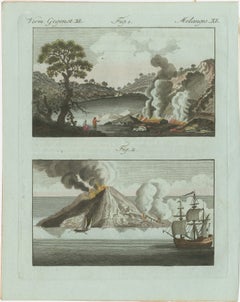
Original Antique Print of Volcanic Eruptions and Ships by Bertuch, c. 1800 Original antique hand-colored copper engraving depicting two dramatic volcanic phenomena, published in Fri...

Category

Early 1800s Neoclassical Antique German Prints

Materials

Paper

Antique New Mexico Landscape Print, Wagon Train Scene, Meyer 1850s

Antique New Mexico Landscape Print, Wagon Train Scene, Meyer 1850s

Located in Langweer, NL

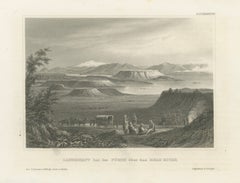
Antique New Mexico Landscape Print, Wagon Train Scene, Meyer 1850s This atmospheric mid-19th-century engraving presents a striking frontier landscape titled “Landschaft bei der Furt...

Category

Mid-19th Century Antique German Prints
Materials

Paper

Early Frisian and Hungarian Horse Engraving by Jonstonus & Merian, 1650

Early Frisian and Hungarian Horse Engraving by Jonstonus & Merian, 1650

Located in Langweer, NL

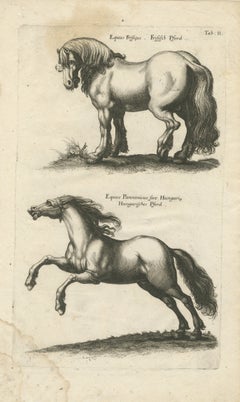
Jonstonus Friesian and Hungarian Horses Engraving, 1650 Description: Original antique copper engraving depicting two European horse breeds: the Friesian horse (“Equus Frisicus – Frisisch Pferd”) and the Pannonian or Hungarian horse (“Equus Pannonicus sive Hungaric – Hungarisches Pferd”). The upper composition shows the powerful Friesian horse standing in profile, distinguished by its heavy build, long flowing mane and feathered legs. Below, the Hungarian horse is represented in a dramatic rearing pose, creating a particularly lively and decorative equestrian composition. The engraving was published in Joannes Jonstonus’ important Historiae naturalis de quadrupetibus, Frankfurt am Main, 1650. The work was issued by the heirs of Matthäus Merian and forms part of Jonstonus’ celebrated multi-volume natural history of animals. Joannes Jonstonus (1603–1675), also known as John Johnston or Jan Jonston, was a Polish-born physician, naturalist and scholar. His extensive natural-history publications were among the important illustrated zoological works of the 17th century, preceding the systematic classification of Linnaeus by more than a century. From the first edition of Historiae naturalis de quadrupetibus, published in Frankfurt by the Merian publishing house in 1650. Plate II, titled within the engraving: “Equus Frisicus – Frisisch Pferd” “Equus Pannonicus sive Hungaric – Hungarisches Pferd” A beautiful early representation of the Friesian horse and an appealing decorative work for an equestrian, country-house or natural-history collection. Joannes Jonstonus (1603–1675) Historiae naturalis de quadrupetibus Frankfurt am Main Published by the heirs of Matthäus Merian 1650 Original copper engraving Plate II This is an original antique print published in 1650, not a modern reproduction. Condition: Good antique condition with overall age-related toning, scattered spotting and surface marks. Noticeable old staining and discoloration to the lower left corner and margin. Minor handling creases and wear along the sheet edges. The engraved image remains strong and well defined. Please study the photographs carefully as they form part of the condition description. Period Mid-17th Century Style Baroque Natural History Equestrian Subject Friesian Horse Hungarian Horse Equestrian Horses Natural History Zoology Frisian Keywords: Joannes Jonstonus, John Johnston, Jan Jonston, Matthäus Merian, Merian, Friesian horse, Frisian horse, Friesisch Pferd, Equus Frisicus, Hungarian horse, Pannonian horse, Equus Pannonicus, horse engraving, antique horse print, equestrian engraving, equestrian art, horse wall art...

Category

Mid-17th Century Baroque Antique German Prints

Materials

Paper

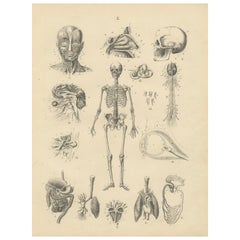
Anatomical Skeleton Study Engraving Academic Figure German Edition, c1745

Anatomical Skeleton Study Engraving Academic Figure German Edition, c1745

Located in Langweer, NL

18th Century Anatomical Skeleton Study Engraving Academic Figure German Edition c1745 This finely engraved anatomical plate presents two standing skeleton figures shown from frontal...

Category

Mid-18th Century Antique German Prints

Materials

Paper

Mater Dolorosa, 1899 German Chromolithograph of the Sorrowful Mother, Dresden

Mater Dolorosa, 1899 German Chromolithograph of the Sorrowful Mother, Dresden

Located in Langweer, NL

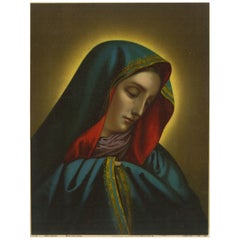
Mater Dolorosa, 1899 German Chromolithograph of the Sorrowful Mother, Dresden This exquisite late-19th-century chromolithograph of the Mater Dolorosa—“Sorrowful Mother”—was printed ...

Category

Late 19th Century Antique German Prints
Materials

Paper

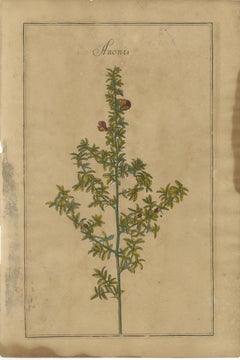
Rare Set of Botanical Engravings – Lotus, Lathyrus & Hedysarum, ca.1690

Rare Set of Botanical Engravings – Lotus, Lathyrus & Hedysarum, ca.1690

Located in Langweer, NL

Rivinus botanicals: Lotus, Lathyrus & Hedysarum, Leipzig, 1690s Set of three late-17th/early-18th-century botanical copper engravings with period hand-colour, attributed to Augustus...

Category

Late 17th Century Antique German Prints
Materials

Paper

Gerard Schneider Abstract Signed Lithograph 37" x 28" Mid Century Modern Art

Gerard Schneider Abstract Signed Lithograph 37" x 28" Mid Century Modern Art

By Gérard Ernest Schneider

Located in Atlanta, GA

Mid century abstract lithograph by Gerard Schneider, German, circa 1960s. Signed. It measures 28.5"H x 37.5"W.

Category

1960s Mid-Century Modern Vintage German Prints

Materials

Glass, Wood, Paper

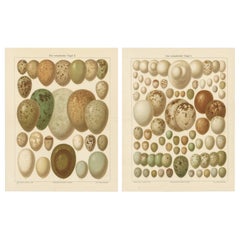
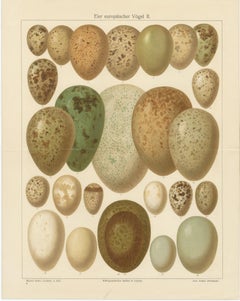
European Bird Eggs Lithographs, Set of Two – Meyers Konversations-Lexikon, 1890s

European Bird Eggs Lithographs, Set of Two – Meyers Konversations-Lexikon, 1890s

Located in Langweer, NL

European Bird Eggs Lithographs, Set of Two – Meyers Konversations-Lexikon, 1890s Description: This exquisite pair of chromolithographs, titled Eier europäischer Vögel I & II (Eg...

Category

Late 19th Century Antique German Prints
Materials

Paper

Karl Blossfeldt — Framed Photogravure: Natural Grace, 1942

Karl Blossfeldt — Framed Photogravure: Natural Grace, 1942

By Karl Blossfeldt

Located in Barcelona, ES

Karl Blossfeldt — Framed Photogravure: Natural Grace, 1942 A striking Karl Blossfeldt photogravure from the 1942 edition of Wunder in der Natur. Retaining its original condition, i...

Category

1940s Mid-Century Modern Vintage German Prints

Materials

Paper

Swans on a Quiet Lake – Graceful Antique Bird Chromolithograph c.1880

Swans on a Quiet Lake – Graceful Antique Bird Chromolithograph c.1880

Located in Langweer, NL

Swans on a Quiet Lake – Graceful Antique Bird Chromolithograph c.1880 This serene late 19th-century ornithological chromolithograph depicts a peaceful lakeside scene with swans in different stages of maturity, presented within a broad, open landscape of calm water, grassy banks, and distant trees. In the foreground, an adult white swan glides across the water with its neck elegantly curved, while nearby a grey-brown juvenile swan and an older, darker bird stand at the water’s edge. The composition gently illustrates growth and variation within the species, a common and instructive theme in natural history illustration of the period. The swan, long regarded as a symbol of grace, purity, and tranquility, was a favored subject in 19th-century European ornithological works. The contrast between the bright white plumage of the adult bird and the softer grey tones of the younger swans is rendered with great sensitivity, emphasizing differences in age and development. The surrounding landscape is deliberately understated, allowing the birds to remain the focal point while conveying a convincing natural habitat. Produced using chromolithography, this print displays soft, harmonious coloration and smooth tonal transitions. Pale blues and greens dominate the water and sky, complemented by gentle earth tones along the shoreline. Fine feather detailing and subtle reflections in the water demonstrate the technical quality of late 19th-century chromolithographic printing, which sought to combine scientific accuracy with decorative appeal. This print is ideal for collectors of antique bird prints, waterfowl imagery, and pastoral wildlife scenes. It also works beautifully in interior settings such as living rooms, bedrooms, nurseries, country houses, or calm contemporary spaces, where its balanced composition and soothing palette add a sense of elegance and quiet refinement. Condition report Good antique condition. Light foxing and mild age-related toning visible, mainly in the margins, consistent with chromolithographs of this period. The image area remains clean and well preserved, with no major tears or losses observed. Framing tips Frame with a wide off-white or soft beige mat and a natural wood, walnut, or simple black frame. This enhances the gentle color palette and gives the print a timeless, museum-style presentation. Keywords antique bird print, swan illustration, swans on a lake, waterfowl art...

Category

Late 19th Century Antique German Prints
Materials

Paper

Original Antique Print of Ancient Greek and Roman Musical Instruments, 1802

Original Antique Print of Ancient Greek and Roman Musical Instruments, 1802

Located in Langweer, NL

Original Antique Print of Ancient Greek and Roman Musical Instruments by Bertuch, 1802 Original antique hand-colored copper engraving illustrating a remarkable collection of musical...

Category

Early 1800s Neoclassical Antique German Prints

Materials

Paper

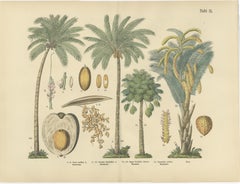
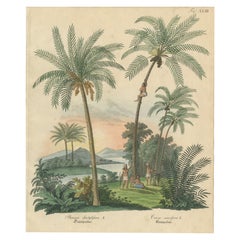
Antique Sugarcane Chromolithograph, Teboe Monjet and Teboe Rapooh Kiang, 1892

Antique Sugarcane Chromolithograph, Teboe Monjet and Teboe Rapooh Kiang, 1892

Located in Langweer, NL

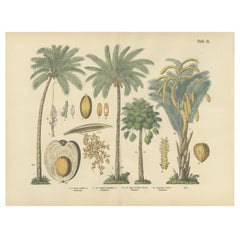
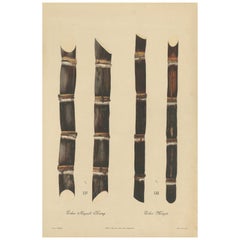
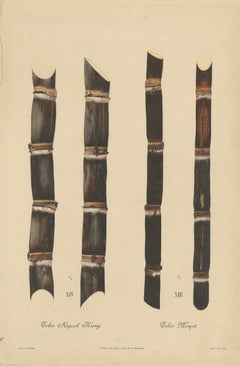
Antique Sugarcane Chromolithograph, Teboe Monjet and Teboe Rapooh Kiang, 1892 Description This large chromolithographic plate illustrates two distinct sugarcane varieties cultivated...

Category

Late 19th Century Antique German Prints
Materials

Paper

Antique Lunar Map “Der Mond”, German Scientific Chart Meyers Leipzig c.1900

Antique Lunar Map “Der Mond”, German Scientific Chart Meyers Leipzig c.1900

Located in Langweer, NL

Antique Lunar Map “Der Mond”, German Scientific Chart Meyers Leipzig c.1900 A finely detailed and highly decorative antique lunar chart titled “Der Mond” (The Moon), published in Me...

Category

Early 20th Century German Prints

Materials

Paper

Karl Blossfeldt — Framed Photogravure: Natural Grace, 1942

Karl Blossfeldt — Framed Photogravure: Natural Grace, 1942

By Karl Blossfeldt

Located in Barcelona, ES

Karl Blossfeldt — Framed Photogravure: Natural Grace, 1942 A striking Karl Blossfeldt photogravure from the 1942 edition of Wunder in der Natur. Retaining its original condition, i...

Category

1940s Mid-Century Modern Vintage German Prints

Materials

Paper

Jung Koch Quentell Vintage Mural Wall Chart Poster Brown Hare Common Rabbit

Jung Koch Quentell Vintage Mural Wall Chart Poster Brown Hare Common Rabbit

Located in Berghuelen, DE

A countrycore Jung Koch Quentell pull-down wall chart showing the brown hair and the common rabbit. Used as teaching material in German schools. Colorful print on paper reinforced wi...

Category

Mid-20th Century Country German Prints

Materials

Canvas, Wood, Paper

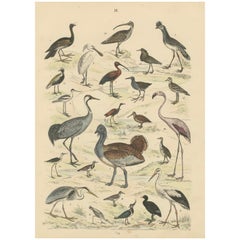
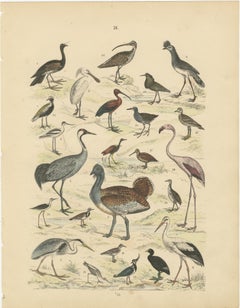
Wading Birds & Cranes Print: Flamingo, Stork, Ibis, Bustard – Antique 1867

Wading Birds & Cranes Print: Flamingo, Stork, Ibis, Bustard – Antique 1867

Located in Langweer, NL

Wading Birds & Cranes Print: Flamingo, Stork, Ibis, Bustard – Antique 1867 This elegant antique print depicts a variety of wading birds and cranes, including flamingos, storks, ibis...

Category

1860s Antique German Prints

Materials

Paper

Holy Mary in Prayer – Antique German Marian Chromolithograph, 1904

Holy Mary in Prayer – Antique German Marian Chromolithograph, 1904

Located in Langweer, NL

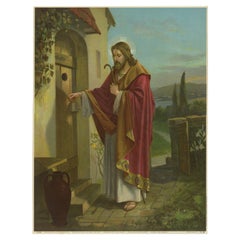
Jesus Appears to Mary Magdalene – Antique German Chromolithograph, c. 1895 This striking late 19th-century German chromolithograph depicts the moving biblical moment in which the risen Christ appears to Mary Magdalene following the Resurrection. Christ is shown standing in quiet majesty, halo radiant with divine light, His right hand placed gently over His heart in a gesture of compassion and reassurance. Mary Magdalene kneels before Him with deep devotion, her long flowing hair and rich garments emphasizing both humility and reverence. The composition is set within a tranquil garden landscape, traditionally associated with the Resurrection narrative, reinforcing the spiritual symbolism of rebirth, forgiveness, and divine mercy. Christ’s red tunic and deep blue mantle radiate warmth and solemnity, while the soft golden halo creates a luminous focal point that draws the eye immediately to His face. This scene, known in Christian tradition as *Noli Me Tangere* (“Touch Me Not”), represents one of the most emotionally powerful moments of the Gospel story. It became a highly favored subject in Catholic devotional art of the late 19th century, commonly displayed in prayer corners, chapels, religious schools, and family interiors. Produced using high-quality chromolithography, this print achieves exceptional painterly depth, with delicate shading in the flesh tones, refined folds in the drapery, and beautifully layered landscape colors. The gold highlights of the halos and the saturated reds and blues are especially well preserved, reflecting the superior production standards of German devotional publishers during this period. This is a visually commanding and spiritually meaningful artwork, highly desirable for Catholic collectors, sacred art interiors, and serious devotional art collections. CONDITION REPORT Good antique condition overall. Light, even age toning to the paper consistent with late 19th-century chromolithographs. Minor edge wear and very gentle corner softening visible upon close inspection. No major stains, no tears, and no restoration observed. Colors remain strong and vivid. FRAMING TIPS This print will display beautifully in a classic gilt or softly antiqued gold wooden frame to echo the sacred halo tones. For a more restrained interior, a dark walnut or black lacquer frame with a wide ivory mat and museum glass will create a dramatic devotional presentation. TECHNIQUE Chromolithography MAKER German devotional publisher, Germany, circa 1895 KEYWORD BLOCK Jesus and Mary Magdalene, Noli Me Tangere, resurrection scene, antique catholic print...

Category

Early 20th Century German Prints

Materials

Paper

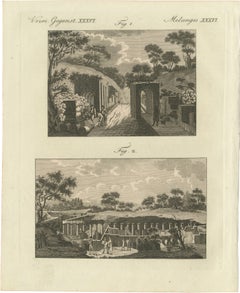
Original Antique Print of Archaeological Excavations by Bertuch, c. 1800

Original Antique Print of Archaeological Excavations by Bertuch, c. 1800

Located in Langweer, NL

Original Antique Print of Archaeological Excavations by Bertuch, c. 1800 Original antique copper engraving depicting archaeological excavations and newly uncovered ancient architect...

Category

Early 1800s Neoclassical Antique German Prints

Materials

Paper

Tribal Tattoos & Warrior Costume, Brodtmann Hand-Colored Lithograph, 1816

Tribal Tattoos & Warrior Costume, Brodtmann Hand-Colored Lithograph, 1816

Located in Langweer, NL

Tribal Tattoos & Warrior Costume, Brodtmann Hand-Colored Lithograph, 1816 This remarkable original hand-colored lithograph depicts two heavily tattooed tribal warriors adorned w...

Category

Early 19th Century Antique German Prints
Materials

Paper

Antique Comet Study “Kometen”, Meyers Scientific Cosmos Leipzig c.1900

Antique Comet Study “Kometen”, Meyers Scientific Cosmos Leipzig c.1900

Located in Langweer, NL

Antique Comet Study “Kometen”, Meyers Scientific Cosmos Leipzig c.1900 A captivating and atmospheric antique chromolithograph titled “Kometen” (Comets), published in Meyers Konversa...

Category

Early 20th Century German Prints

Materials

Paper

Set of 3 Rare Botanical Engravings – Cracca, Lotus & Foenugracum, ca.1690

Set of 3 Rare Botanical Engravings – Cracca, Lotus & Foenugracum, ca.1690

Located in Langweer, NL

Rivinus botanicals: Cracca, Lotus lybica & Foenugracum, Leipzig, 1690s Set of three late-17th/early-18th-century botanical copper engravings with period hand-colour, attributed to A...

Category

Late 17th Century Antique German Prints
Materials

Paper

Pair of Antique Hawk Moth Life Cycle Engravings – Bertuch, c.1800

Pair of Antique Hawk Moth Life Cycle Engravings – Bertuch, c.1800

Located in Langweer, NL

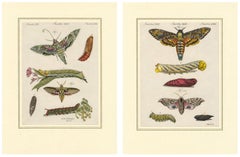
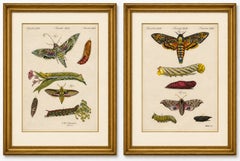
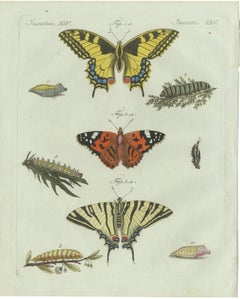
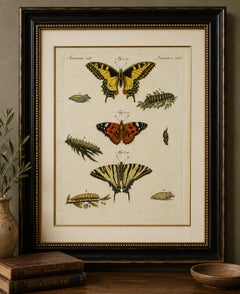
Title: Pair of Antique Hawk Moth Life Cycle Engravings – Bertuch, c.1800 A striking set of two original antique hand-colored copper engravings depicting large hawk moths or sphinx m...

Category

Early 19th Century Neoclassical Antique German Prints

Materials

Paper

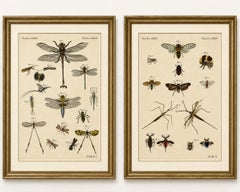
Pair of Antique Dragonfly, Cicada & Exotic Insect Engravings – Bertuch, c.1815

Pair of Antique Dragonfly, Cicada & Exotic Insect Engravings – Bertuch, c.1815

Located in Langweer, NL

Title: Pair of Antique Dragonfly, Cicada & Exotic Insect Engravings – Bertuch, c. 1815 A decorative set of two original antique hand-colored copper engravings depicting an extraordi...

Category

Early 19th Century Neoclassical Antique German Prints

Materials

Paper

Detailed 1730 Maritime Warship Print with Tools, Rigging, and Ship Cross-Section

Detailed 1730 Maritime Warship Print with Tools, Rigging, and Ship Cross-Section

Located in Langweer, NL

Title: Detailed 1730 Maritime Warship Print with Tools, Rigging, and Ship Cross-Section Description: This exceptionally detailed and decorative maritime print, published in Nurember...

Category

1730s Antique German Prints

Materials

Paper

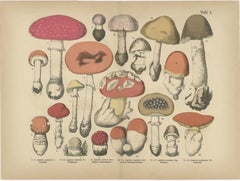
Vintage Botanical Mushroom Illustration, by E. Hochdanz, Stuttgart, Germany

Vintage Botanical Mushroom Illustration, by E. Hochdanz, Stuttgart, Germany

Located in 05-080 Hornowek, PL

Antique entomological illustration plate showcasing a wide variety of insects and arthropods, printed in Germany and featuring original German scientific nomenclature. Likely produce...

Category

Mid-19th Century Bauhaus Antique German Prints

Materials

Paper

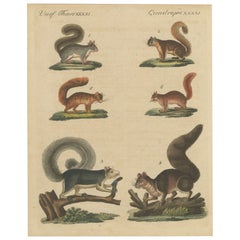
Antique Hand-Colored Engraving of Squirrels and Rodents, Quadrupeds - circa 1800

Antique Hand-Colored Engraving of Squirrels and Rodents, Quadrupeds - circa 1800

Located in Langweer, NL

Antique Hand-Colored Engraving of Squirrels and Rodents, Quadrupeds Plate XXXXI Description: This fine antique hand-colored engraving, titled Vierf. Thiere XXXXI (Quadrupeds Plate 4...

Category

Early 1800s Antique German Prints

Materials

Paper

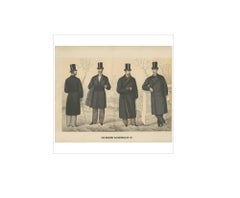
Original Antique Print of Men's Fashion, circa 1900

Original Antique Print of Men's Fashion, circa 1900

Located in Langweer, NL

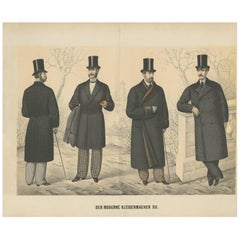
Antique print titled 'Der Moderne Kleidermacher XII'. German fashion print, published circa 1900. Four men showing various outfits (incl. long jackets/coats), all wearing hats.

Category

Early 20th Century German Prints

Materials

Paper

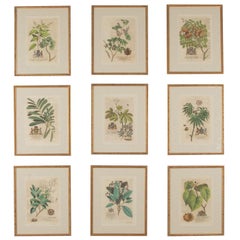
Collection of Nine 18th Century Tropical Botanical Engravings by Georg Dionysius

Collection of Nine 18th Century Tropical Botanical Engravings by Georg Dionysius

By Georg Dionysius Ehret

Located in Tetbury, Gloucestershire

Collection of nine 18th Century tropical botanical engravings by Georg Dionysius Ehret. Hand coloured prints depicting local flora of Barbados. Each is dedicated to a prominent perso...

Category

18th Century Antique German Prints
Materials

Paper

Antique Greek Amphora with Lyre Player Classical Lithograph, 1883

Antique Greek Amphora with Lyre Player Classical Lithograph, 1883

Located in Langweer, NL

Antique Greek Amphora with Lyre Player Classical Lithograph, 1883 Original antique color lithograph depicting an ancient Greek amphora with an elaborate classical figural and archit...

Category

Late 19th Century Neoclassical Antique German Prints

Materials

Paper

Decorative German Botanical Plates of Technical Plants, Complete Set of 12, 1854

Decorative German Botanical Plates of Technical Plants, Complete Set of 12, 1854

Located in Langweer, NL

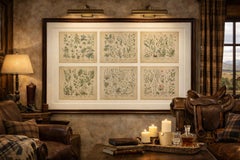
Decorative German Botanical Plates of Technical Plants, Complete Set of 12, 1854 This beautiful set of twelve original hand-colored botanical plates offers a timeless and versatile ...

Category

Mid-19th Century Antique German Prints
Materials

Paper

Rare Framed Renaissance Engravings of Moravian Nobility, Central Europe, ca.1600

Rare Framed Renaissance Engravings of Moravian Nobility, Central Europe, ca.1600

Located in Doha, QA

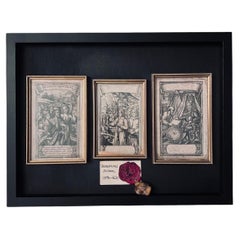
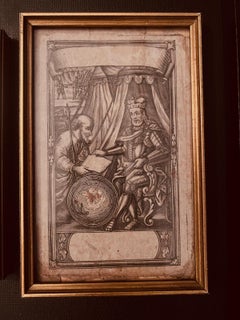
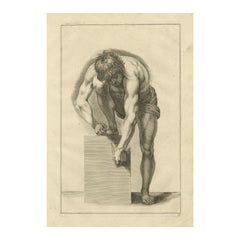
A rare and visually compelling suite of three Renaissance-period engravings, likely originating from a Central European historical or dynastic publication produced in the late 16th o...

Category

Early 17th Century Renaissance Antique German Prints
Materials

Glass, Wood, Paper

Original Antique Print of Two Sperm Whales by Bertuch, c. 1800

Original Antique Print of Two Sperm Whales by Bertuch, c. 1800

Located in Langweer, NL

Original Antique Print of Two Sperm Whales by Bertuch, c. 1800 Original antique hand-colored copper engraving depicting two sperm whales, published in Friedrich Justin Bertuch’s celebrated “Bilderbuch für Kinder” around the beginning of the 19th century. The plate is titled “Fische XXXVIII / Poissons XXXVIII” and presents two different representations of the sperm whale, one of the largest toothed whales in the world. Both animals are shown in profile with their characteristic massive, almost rectangular heads, narrow toothed lower jaws and relatively small flippers. Jets of water emerge dramatically from the blowholes. The unusual appearance of the animals reflects both their distinctive anatomy and the way whales were understood and represented by European naturalists around 1800. The sperm whale was of considerable economic importance during this period. It was hunted particularly for spermaceti, the waxy substance contained within its enormous head, as well as for whale oil and ambergris. These early zoological representations are especially interesting because accurate observation of living whales was extremely difficult. Natural-history illustrators therefore frequently relied upon stranded or captured specimens, descriptions by sailors and whalers, and earlier published illustrations. The engraving is delicately enhanced with original hand coloring in restrained shades of black, gray and brown and bears the inscription “Jacob Hauer Schmuzer” at lower right. Friedrich Justin Bertuch (1747–1822) was a German publisher, writer and patron of the arts. His monumental “Bilderbuch für Kinder” (Picture Book for Children) was one of the great illustrated educational encyclopedias of the late 18th and early 19th centuries. Creator: Friedrich Justin Bertuch (1747–1822) Engraver: Jacob Hauer Schmuzer Source: Bilderbuch für Kinder Plate: Fische XXXVIII / Poissons XXXVIII Place of Publication: Weimar, Germany Date of Manufacture: Circa 1800 Period: Early 19th Century Style: Neoclassical – In the Period of Medium: Original hand-colored copper engraving on paper Condition: Good. Wear consistent with age and use. Light age-related toning and scattered minor spotting and marks. Some marginal wear and a small loss/irregularity at the upper right corner. Original hand coloring remains attractive. Please refer to the photographs for further details of condition. Please note: This is an original antique print from circa 1800, not a modern reproduction. The print is sold unframed. Framed images or interior views, if shown, are for presentation and inspiration only. Keywords: sperm whale print, antique whale print...

Category

Early 19th Century Neoclassical Antique German Prints
Materials
Paper