German Prints

1,268 Results
to
162
1,183
102
1,285
6
Height
to
Width
to
113
82
27
14
12
10
4
3
2
1
1
247
688
350
6
102
135
103
15
6
8
5
44
5
25
59
10
6
1,254
164
124
117
46
27,673
8,870
1,701
1,675
1,177
1,291
1,291
1,291
44
10
7
7
5
Place of Origin: German
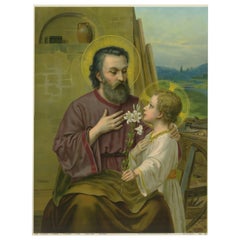
St. Aloysius Gonzaga, German Devotional Chromolithograph, ca.1900

St. Aloysius Gonzaga, German Devotional Chromolithograph, ca.1900

Located in Langweer, NL

St. Aloysius Gonzaga, c.1900 German Devotional Chromolithograph (Printed in Germany) This early 20th-century German chromolithograph presents a serene and contemplative portrait of St. Aloysius Gonzaga, one of the most revered saints of the Catholic Church and patron saint of youth and purity. Produced around 1900 by a major German devotional press, the print displays the refined craftsmanship and rich colouring typical of the period’s finest chromolithographic work. The composition shows the young saint in quiet adoration of the crucifix, his head tilted in prayerful devotion, surrounded by classic symbols of sanctity and purity: lilies, rosary beads, devotional books, and the deep red cloth of an altar. Unlike the more dramatic depictions from the same era, this version places Aloysius within a softly rendered church interior, with a framed image of the Virgin and Child visible behind him. His vestments are delicately modelled, with lace edging and soft shading achieved through multiple lithographic stones, each layer adding depth and texture to the fabric. The gentle gradation of colour in the background and the luminous golden halo around the saint reveal the technical mastery of German chromolithographers working circa 1900–1915. The lower margin includes multilingual captions—“Hl. Aloysius von Gonzaga. St. Luigi di Gonzaga. St. Louis de Gonzague. St. Luis Gonzaga. St. Aloysius of Gonzaga.”—reflecting the widespread international distribution of German devotional prints. The imprimatur line, “Imprimi permittitur. Ordinariatus episcopalis Limburgensis,” confirms official Church approval for its publication. The imprint “Printed in Germany” situates the work in one of the major German centres of religious chromolithography, likely Munich or Cologne, where high-quality devotional images were produced for Catholic communities across Europe and the Americas. This print is unquestionably an original chromolithograph. The velvety colour fields, stippled pigment textures, soft transitions, crisp typesetting, and characteristic matte paper all confirm authentic stone-based printing rather than modern offset or digital reproduction. Prints of St. Aloysius from this period were commonly displayed in Catholic schools, parishes, and youth chapels, making high-quality surviving examples increasingly desirable for both devotional use and collectors of sacred art. Conditon Report: Very good condition. The colours remain bright and true, with light and even toning at the outer margins and minor handling marks typical of age. No tears, losses, creases, or repairs. The plate text and imprimatur remain sharp and fully legible. Tips for Framing: Ideal for framing in a dark walnut or gilded frame to complement the warm reds and golds of the composition. A cream or ivory mat helps emphasize the saint’s pale vestments and the purity symbolized by the lilies. For a more modern presentation, a slim black frame with a wide mat creates elegant contrast while preserving the devotional atmosphere. Technique: Chromolithograph Maker: German Devotional Press, printed in Germany, c.1900 st aloysius gonzaga saint aloysius aloysius print catholic saint art devotional art religious art german chromolithograph printed in germany antique lithograph chromolithograph imprimi permittitur church imprimatur holy youth lilies of purity crucifix devotion altar scene early 20th century religious print german devotional art fine chromolitho religious ephemera antique christian art

Category

Early 20th Century German Prints

Materials

Paper
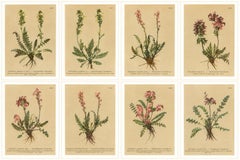
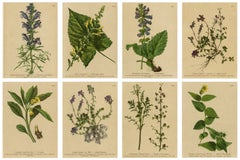
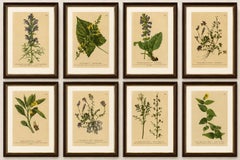
Eight Small Original Antique Pedicularis Wildflower Prints from the Alps, 1897

Eight Small Original Antique Pedicularis Wildflower Prints from the Alps, 1897

Located in Langweer, NL

Eight Small Original Antique Pedicularis Wildflower Prints from the Alps, 1897 Description: A beautifully matched set of eight original antique botanical chromolithographs published...

Category

Late 19th Century Antique German Prints

Materials

Paper
Set of Antique Mineralogy Chromolithographs, Azurite, Malachite, Meteorites 1888

Set of Antique Mineralogy Chromolithographs, Azurite, Malachite, Meteorites 1888

Located in Langweer, NL

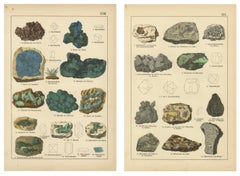
Set of Two Antique Mineralogy Chromolithographs, Azurite, Malachite & Meteorites, 1888 DESCRIPTION: A striking set of two original 19th-century mineralogy chromolithographs illustra...

Category

Late 19th Century Victorian Antique German Prints

Materials

Paper
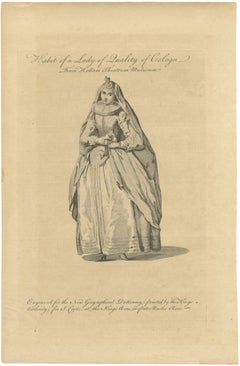
Lady of Quality of Cologne, Germany – Antique Costume Engraving, c.1795

Lady of Quality of Cologne, Germany – Antique Costume Engraving, c.1795

Located in Langweer, NL

Lady of Quality of Cologne, Germany – Antique Costume Engraving, c.1795 This elegant costume engraving depicts a noblewoman of Cologne (Cöln am Rhein), identified in the title as a ...

Category

Late 18th Century Antique German Prints

Materials

Paper
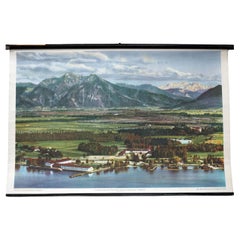
Pre-Alpine Landscape Foothills Bavaria Chiemsee Vintage Rollable Wall Chart

Pre-Alpine Landscape Foothills Bavaria Chiemsee Vintage Rollable Wall Chart

Located in Berghuelen, DE

The cottagecore vintage pull-down wallchart shows a pre-alpine landscape at the famous Chiemsee in Bavaria. Published by der Neue Schulmann, Fricke & Co. Stuttgart. Colorful prin...

Category

1970s Country Vintage German Prints

Materials

Canvas, Wood, Paper
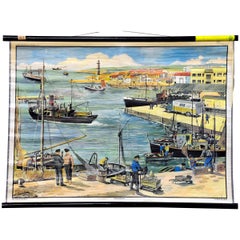
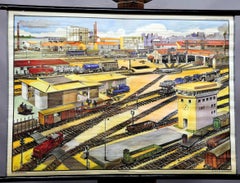
Double-Sided Cottagecore Wall Chart Fishing Harbour Goods Railway Station

Double-Sided Cottagecore Wall Chart Fishing Harbour Goods Railway Station

Located in Berghuelen, DE

A classical pull-down double-sided wall chart illustrating on one side a traditional fishing harbour with lighthouse and on the other side a vintage look goods station. Used as teach...
Category

1970s Country Vintage German Prints

Materials

Canvas, Wood, Paper
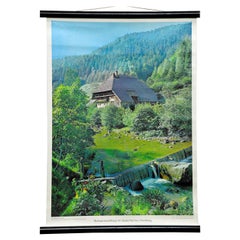
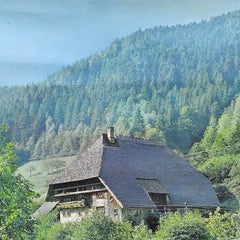
Cottagecore Black Forest House Landscape Scenery River Dam Wall Chart Poster

Cottagecore Black Forest House Landscape Scenery River Dam Wall Chart Poster

Located in Berghuelen, DE

A vintage pull-down wall chart depicting a Black Forest house in the valley of Gutach near Hornberg, Germany. Photo: H. Müller-Brunke, Chiemgau. Used as teaching material in German s...

Category

1970s Country Vintage German Prints

Materials

Canvas, Wood, Paper

Set of 8 Antique Alpine Botanical Chromolithographs – Atlas der Alpenflora 1897

Set of 8 Antique Alpine Botanical Chromolithographs – Atlas der Alpenflora 1897

Located in Langweer, NL

Title: Set of 8 Antique Alpine Botanical Chromolithographs – Atlas der Alpenflora 1897 Description: An elegant and cohesive set of eight original antique botanical chromolithograph...

Category

Late 19th Century Antique German Prints

Materials

Paper
Silhouette Faces Lithograph Print, Signed, Limited Edition, 1990s

Silhouette Faces Lithograph Print, Signed, Limited Edition, 1990s

Located in London, GB

Lithograph of faces in silhouette by Beate Selzer, Germany 1990's. In this print the headsars reduced to the bear minimum and stylized to head sculptures each with its own color beco...

Category

1990s Modern German Prints

Materials

Paper
Large Rollable Map Central America Northern South America Wall Chart Poster

Large Rollable Map Central America Northern South America Wall Chart Poster

Located in Berghuelen, DE

A fantastic pull-down wall chart depicting a map of Central America and Northern South America. Used as teaching material in German schools. Colorful print on paper reinforced with c...

Category

Mid-20th Century Country German Prints

Materials

Canvas, Wood, Paper
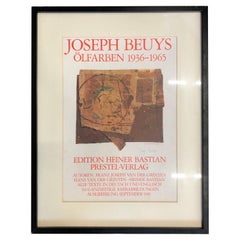
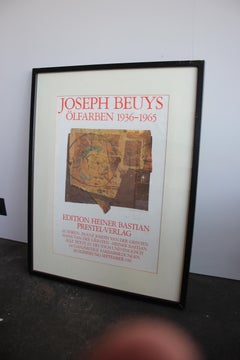
Original Signed Joseph Beuys Advertisment Poster "Ölfarben 1936-1965"

Original Signed Joseph Beuys Advertisment Poster "Ölfarben 1936-1965"

By Joseph Beuys

Located in Hamburg, DE

Original advertisement poster from 1981 for a book on Beuys oil paintings from 1936 to 1965. Signed by Beuys himself. This poster is an offset print with an artist's signature in ...

Category

1880s Post-Modern Antique German Prints

Materials

Glass, Wood, Paper
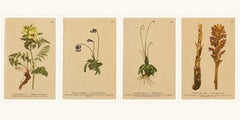
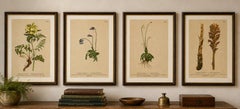
Antique Alpine Botanical Chromolithographs – Set of 4 Small Prints, Germany 1897

Antique Alpine Botanical Chromolithographs – Set of 4 Small Prints, Germany 1897

Located in Langweer, NL

Antique Alpine Botanical Chromolithographs – Set of 4, Germany 1897 Description: A beautifully curated set of four original antique botanical chromolithographs published in Germany ...

Category

Late 19th Century Antique German Prints

Materials

Paper
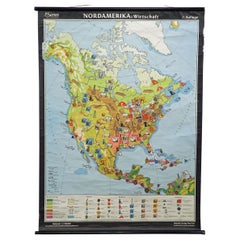
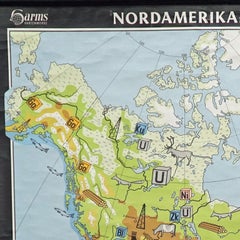
Canada Greenland North America Map Vintage Mural Rollable Wall Chart Countrycore

Canada Greenland North America Map Vintage Mural Rollable Wall Chart Countrycore

Located in Berghuelen, DE

A classical pull-down map of Canada and Greenland (North American Continent). Used as teaching material in German schools. Colorful print on paper reinforced with canvas. Published b...
Category

1970s Country Vintage German Prints

Materials

Canvas, Wood

Corals & Jellyfish Print: Medusa, Anemone, Corals, Ctenophores – Antique 1867

Corals & Jellyfish Print: Medusa, Anemone, Corals, Ctenophores – Antique 1867

Located in Langweer, NL

Corals & Jellyfish Print: Medusa, Sea Anemone, Corals, Ctenophores – Antique 1867 This detailed antique print depicts a range of marine invertebrates, including jellyfish, Portugues...

Category

1860s Antique German Prints

Materials

Paper
Original Antique Print of Iceland Geyser, Hekla and Orkney Bird Catchers, 1802

Original Antique Print of Iceland Geyser, Hekla and Orkney Bird Catchers, 1802

Located in Langweer, NL

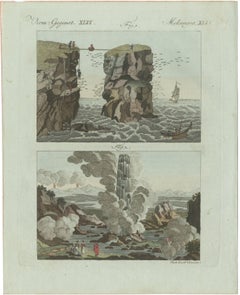
Original Antique Print of Iceland Geyser, Hekla and Orkney Bird Catchers, 1802 Original antique hand-colored copper engraving depicting remarkable scenes from Iceland and the northern islands, published in Friedrich Justin Bertuch’s celebrated “Bilderbuch für Kinder” in Weimar in 1802. The plate is titled “Verm. Gegenst. XLVI / Mélanges XLVI” and was devoted to what Bertuch described as “Nordische Merkwürdigkeiten,” or Northern Curiosities. Fig. 1 depicts the extraordinary and dangerous practice of bird catching on the steep cliffs of the Orkney and other northern islands. Men are shown descending the sheer rock face on ropes to reach nesting seabirds, while others cross a dramatic chasm on a narrow suspended rope. Small sailing vessels appear in the turbulent sea below. Fig. 2 depicts the famous Great Geyser of Iceland erupting dramatically into the air, surrounded by clouds of steam. In the distance are the volcanic mountains of Iceland, including Mount Hekla, shown emitting smoke. Bertuch specifically identifies this scene as “Der Geyser und Hekla auf Island” — the Geyser and Hekla in Iceland. The dramatic combination of cliff climbing, turbulent seas, sailing vessels, an erupting geyser and volcanic landscape makes this an unusually lively plate from Bertuch’s encyclopedia. The engraving bears the inscription “Jacob Hauer Schmuzer” at lower right. Friedrich Justin Bertuch (1747–1822) was a German publisher, writer and patron of the arts. His monumental “Bilderbuch für Kinder” (Picture Book for Children) was one of the great illustrated educational encyclopedias of its period, containing hundreds of engraved and hand-colored plates covering natural history, geography, science, technology, antiquity, costumes and other subjects. Creator: Friedrich Justin Bertuch (1747–1822) Engraver: Jacob Hauer Schmuzer Source: Bilderbuch für Kinder Plate: Vermischte Gegenstände XLVI / Mélanges XLVI – Nordische Merkwürdigkeiten Place of Publication: Weimar, Germany Date of Manufacture: 1802 Period: Early 19th Century Style: Neoclassical – In the Period of Medium: Original hand-colored copper engraving on paper Condition: Good. Wear consistent with age and use. Light age-related toning and occasional minor spotting. Minor marginal wear. Original hand coloring remains attractive and the engraved impressions are well preserved. Please refer to the photographs for further details of condition. Please note: This is an original antique print from 1802, not a modern reproduction. The print is sold unframed. Framed images or interior views, if shown, are for presentation and inspiration only. Keywords: Iceland antique...

Category

Early 1800s Neoclassical Antique German Prints

Materials

Paper

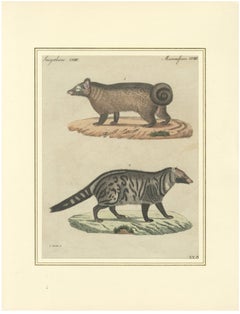
Antique Asian Civets & Kopi Luwak Natural History Engraving – Bertuch, 1820

Antique Asian Civets & Kopi Luwak Natural History Engraving – Bertuch, 1820

Located in Langweer, NL

Title: Antique Asian Civets & Kopi Luwak Natural History Engraving – Bertuch Original antique hand-colored copper engraving depicting two exotic civet-like mammals from Asia, publis...

Category

Early 19th Century Neoclassical Antique German Prints

Materials

Paper

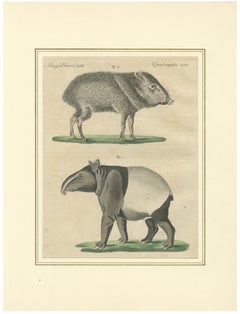
Antique Malayan Tapir & Collared Peccary Engraving – Bertuch, c.1815

Antique Malayan Tapir & Collared Peccary Engraving – Bertuch, c.1815

Located in Langweer, NL

Title: Antique Malayan Tapir & Collared Peccary Engraving – Bertuch, c. 1815 Original antique hand-colored copper engraving depicting two remarkable mammals from distant parts of th...

Category

Early 19th Century Neoclassical Antique German Prints

Materials

Paper

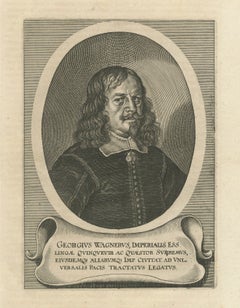
Georg Wagner, Peace of Westphalia Diplomat Portrait Engraving, 1652

Georg Wagner, Peace of Westphalia Diplomat Portrait Engraving, 1652

Located in Langweer, NL

TITLE: Georg Wagner, Peace of Westphalia Diplomat Portrait Engraving, 1652 DESCRIPTION: Original 17th-century portrait engraving of Georg Wagner (1605–1661), German jurist, mayor of...

Category

Mid-17th Century Baroque Antique German Prints

Materials

Paper

Set of Four Peace of Westphalia Portrait Engravings by Matthäus Merian II, 1652

Set of Four Peace of Westphalia Portrait Engravings by Matthäus Merian II, 1652

Located in Langweer, NL

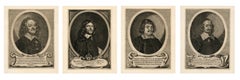
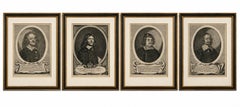
TITLE: Set of Four Peace of Westphalia Portrait Engravings by Matthäus Merian II, 1652 DESCRIPTION: A rare and highly decorative matching set of four original 17th-century portrait ...

Category

Mid-17th Century Baroque Antique German Prints

Materials

Paper

Turtles & Tortoises Print: Sea Turtle, Snapping Turtle, Terrapin – Antique 1867

Turtles & Tortoises Print: Sea Turtle, Snapping Turtle, Terrapin – Antique 1867

Located in Langweer, NL

Turtles & Tortoises Print: Sea Turtle, Snapping Turtle, Terrapin – Antique 1867 This detailed antique print depicts various turtles and tortoises, including sea turtles, snapping tu...

Category

1860s Antique German Prints

Materials

Paper

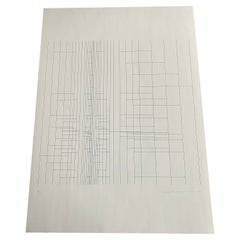
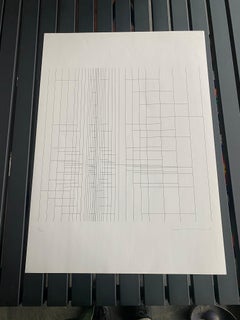
Monochrome Space Age Serigraphie Von Max H. Mahlmann

Monochrome Space Age Serigraphie Von Max H. Mahlmann

By Max Herrmann Mahlmann

Located in Hamburg, DE

Monochrome Space Age serigraph by Max H. Mahlmann. The serigraph is unframed and will be sent in a roll. The picture is signed and dated in pencil. It is piece no. 78 in an edition of 100. Mahlmann worked from 1934 to 1938 as a student of Richard Müller...

Category

1970s Space Age Vintage German Prints

Materials

Paper

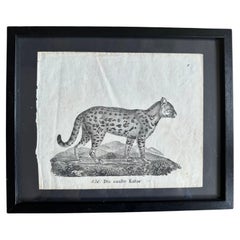
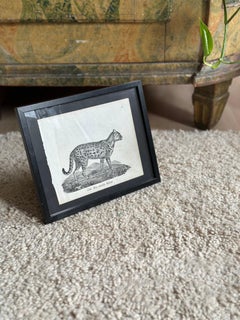
Zoological Original Lithograph Featuring "the gentle cat" from 1831-35

Zoological Original Lithograph Featuring "the gentle cat" from 1831-35

Located in Hamburg, DE

Transport yourself to the Biedermeier era with this exquisite and rare original lithograph from the book "Neue Bildergalerie der Jugend." Published between 1831 and 1835 by Carl Hell...

Category

1830s Biedermeier Antique German Prints

Materials

Paper

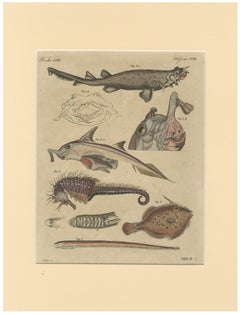
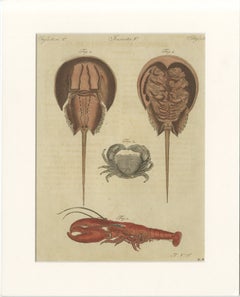
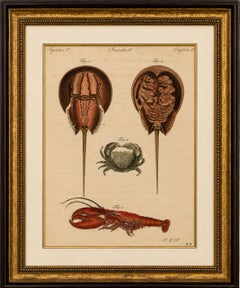
Antique Lobster, Crab & Horseshoe Crab Engraving – Bertuch, 1792

Antique Lobster, Crab & Horseshoe Crab Engraving – Bertuch, 1792

Located in Langweer, NL

Antique Lobster, Crab & Horseshoe Crab Engraving – Bertuch, 1792 Original antique hand-colored copper engraving depicting a lobster, crab and the extraordinary Moluccan horseshoe crab, published in Friedrich Justin Bertuch’s celebrated “Bilderbuch für Kinder” in Weimar in 1792. The plate is headed “Insecten V / Insecta V” and illustrates four figures devoted to unusual marine crustaceans and the horseshoe crab. Although Bertuch placed these creatures under the historical heading “Insecten,” they are not insects according to modern zoological classification. Such broad groupings were common in 18th-century natural history, when the classification of invertebrate animals was still developing. Fig. 1 – Sea Lobster / European Lobster Historical German name: Der See-Hummer A large marine lobster shown in profile with its characteristic massive claws, long antennae and segmented body. The animal is recognizable as a lobster of the Homarus type, most closely associated with the European Lobster (Homarus gammarus), an important marine crustacean of European Atlantic waters. Fig. 2 – Crab Historical German name: Die Krabbe A compact true crab shown from above, with its broad carapace, prominent claws and multiple walking legs clearly represented. Fig. 3 & Fig. 4 – Moluccan Horseshoe Crab Historical German name: Der Molukkische Krebs These two remarkable figures show the animal now commonly known as a Horseshoe Crab. Fig. 3 presents the animal from above, displaying its extraordinary horseshoe-shaped shell and exceptionally long pointed tail spine. Fig. 4 shows the underside, revealing the complex arrangement of legs, mouthparts and other anatomical structures concealed beneath the protective shell. Despite its familiar name, the horseshoe crab is not a true crab. Horseshoe crabs belong to an ancient lineage of marine arthropods more closely related to arachnids than to lobsters and true crabs. The historical name “Moluccan Crab” or “Moluccan King Crab” reflects the association of these remarkable animals with the waters of Southeast Asia and the East Indies. The Asian horseshoe crab group includes species historically associated with the Moluccas and surrounding regions. Horseshoe crabs are among the most ancient-looking animals represented in early natural-history books. Their basic body form has an exceptionally long evolutionary history, giving them their popular reputation as “living fossils.” Friedrich Justin Bertuch (1747–1822) was a German publisher, writer and patron of the arts. His monumental “Bilderbuch für Kinder” (Picture Book for Children), first published in Weimar in 1790, became one of the great illustrated educational encyclopedias of the late 18th and early 19th centuries. Its hundreds of engraved and hand-colored plates introduced readers to animals, plants, geography, science, technology, antiquity and cultures from around the world. This particularly decorative plate combines the brilliant red-orange lobster with the almost anatomical studies of the horseshoe crab, making it an appealing example of late 18th-century marine natural-history illustration. Technique: Original hand-colored copper engraving Publisher: Friedrich Justin Bertuch / Industrie-Comptoir Publication: Bilderbuch für Kinder Place: Weimar, Germany Date: 1792 Plate: Insecten V / Insecta V Subjects: Sea Lobster, Crab and Moluccan Horseshoe Crab Historical names: Fig. 1 – Der See-Hummer Fig. 2 – Die Krabbe Fig. 3 & 4 – Der Molukkische Krebs Condition: Good antique condition with overall age-related toning and some scattered spotting and foxing. Some show-through or offsetting from text is visible in the background, together with minor marks and imperfections consistent with a print dating from 1792. The original hand coloring remains attractive, particularly the strong red-orange coloring of the lobster and warm reddish tones of the horseshoe crab. Please study the photographs carefully as they form part of the condition description. The engraving is loosely inserted in an acid-free matting board. Please note: This is an original antique hand-colored copper engraving from 1792, not a modern reproduction. The print is sold unframed. Framed images or interior views, if shown, are for presentation and inspiration only. Other companion marine-life, animal and natural-history plates from Bertuch’s “Bilderbuch für Kinder” are also available separately. Keywords: Friedrich Justin Bertuch, Bilderbuch für Kinder, lobster engraving, European lobster, Homarus gammarus, antique lobster print, crab engraving, antique crab print...

Category

Late 18th Century Neoclassical Antique German Prints

Materials

Paper

Antique Hand-Colored Crested Birds Engraving – Bertuch, c. 1800

Antique Hand-Colored Crested Birds Engraving – Bertuch, c. 1800

Located in Langweer, NL

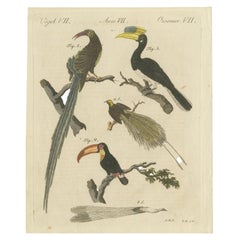
Title: Antique Hand-Colored Crested Birds Engraving – Bertuch, c. 1800 Original antique hand-colored copper engraving depicting five remarkable crested and ornamental birds, publish...

Category

Early 19th Century Neoclassical Antique German Prints

Materials

Paper

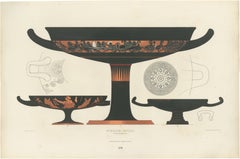
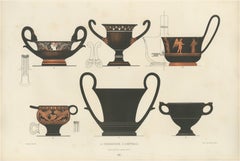
Antique Greek Drinking Vessels & Cups Color Lithograph, 1883

Antique Greek Drinking Vessels & Cups Color Lithograph, 1883

Located in Langweer, NL

Antique Greek Drinking Vessels & Cups Color Lithograph, 1883 Original antique color lithograph depicting a varied collection of ancient Greek drinking vessels and a ladle, published...

Category

Late 19th Century Neoclassical Antique German Prints

Materials

Paper

Greek Vases and Amphorae – Classical Antiquity Chromolithograph, Meyers 1898

Greek Vases and Amphorae – Classical Antiquity Chromolithograph, Meyers 1898

Located in Langweer, NL

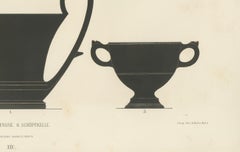
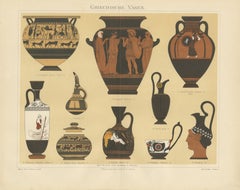
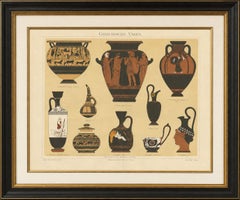
Greek Vases and Amphorae – Classical Antiquity Chromolithograph, Meyers 1898 This decorative antique chromolithograph illustrates ten examples of ancient Greek terracotta vessels, carefully reproduced from archaeological originals. The plate presents a variety of classical ceramic forms, including an amphora, krater, stamnos, lekythos, wine vessel, oil bottles, pouring vessels, and ceremonial containers used throughout ancient Greece. Each example demonstrates the distinctive shapes and decorative styles that made Greek pottery one of the defining artistic achievements of the classical world. Published in Germany in 1898 as part of the renowned Meyers Konversations-Lexikon, this educational plate was produced during a period of intense scholarly interest in archaeology and classical antiquity. The lithograph was printed by the Bibliographisches Institut in Leipzig, one of Germany's most respected publishing houses. The illustrations faithfully reproduce the black-figure and red-figure decoration found on surviving Greek ceramics, depicting mythological scenes, warriors, horses, deities, and ornamental motifs. The arrangement is both informative and visually striking, with the warm terracotta tones contrasting beautifully against the dark painted surfaces of the vessels. The large Panathenaic amphora and stamnos dominate the composition, while smaller vessels provide a survey of the many forms used for storing wine, oil, perfumes, and other valuable commodities in daily Greek life. Beyond its educational value, the print possesses a strong decorative quality that makes it particularly suitable for display in libraries, studies, museums, classical interiors, and contemporary spaces inspired by archaeology and ancient art. It appeals equally to collectors of antiquities, classical scholars, and those interested in the history of design and ceramics. This print is an original 1898 chromolithograph, not a modern reproduction. Any images showing the print framed are for visual inspiration only. The print is supplied unframed. Condition: Good antique condition with age-related toning and minor handling wear. Original center fold as issued. Please examine the accompanying images carefully for a detailed impression of condition. Framing tips: Displays beautifully in a museum-black, dark walnut, or ebonized frame with a wide warm ivory mat. A thin gilt liner can further enhance the terracotta colors and classical character of the composition. Technique: Chromolithograph Maker: Meyers Konversations-Lexikon, Bibliographisches Institut, Leipzig, Germany, 1898 Keywords: Greek vases, Greek pottery, amphora, krater, stamnos, lekythos, wine jar, oil bottle, ancient Greece, classical antiquity, archaeology, terracotta vessel, red figure pottery, black figure pottery...

Category

Late 19th Century Antique German Prints

Materials

Paper

Hand-Colored Copper Engraving of ‘Cyprinus Nasus’ by Marcus Elieser Bloch, 1790

Hand-Colored Copper Engraving of ‘Cyprinus Nasus’ by Marcus Elieser Bloch, 1790

By Marcus Elieser Bloch

Located in Munich, Bavaria

Antique Copper Engraving by Marcus Elieser Bloch – “Cyprinus Nasus (The Nase)”, 1790 A beautifully hand-colored copper engraving from the iconic natural history series “Ichthyolog...

Category

18th Century Other Antique German Prints

Materials

Glass, Wood, Paper

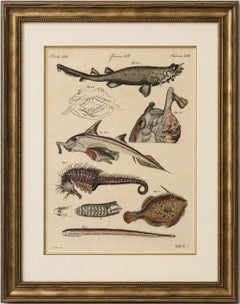
Original Antique Print of Electric Eel, Electric Ray and Exotic Fish, 1790

Original Antique Print of Electric Eel, Electric Ray and Exotic Fish, 1790

Located in Langweer, NL

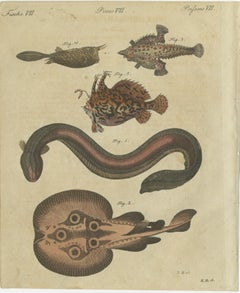
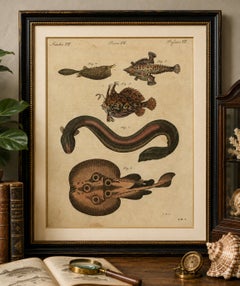
Original Antique Print of Electric Eel, Electric Ray and Exotic Fish by Bertuch, 1790 Original antique hand-colored copper engraving depicting five remarkable and unusual fish species, published in Friedrich Justin Bertuch’s celebrated “Bilderbuch für Kinder” in Weimar in 1790. The plate is titled “Fische VII / Pisces VII / Poissons VII” and was published under the heading “Wunderbare Fische,” or “Remarkable Fish.” It presents five extraordinary species selected for their unusual appearance or remarkable natural characteristics. Fig. 1 depicts the Electric Eel, historically identified as Gymnotus electricus and today classified as Electrophorus electricus. Bertuch called it the “Zitter-Aal oder Krampf-Fisch,” referring to its extraordinary ability to produce powerful electric discharges. Fig. 2 represents the Electric Ray or Torpedo, historically Raja torpedo and now Torpedo torpedo. Its rounded body is decorated with prominent eye-like markings. Like the electric eel, this species can generate electrical discharges used in defense and in subduing prey. Fig. 3 depicts the Sea Bat, historically Lophius vespertilio and now Ogcocephalus vespertilio, commonly known as the Brazilian Batfish or Seadevil. Bertuch described its bizarre horn-like snout and fin structures, which give the animal its highly unusual appearance. Fig. 4 shows the Sea Bull, historically Ostracion cornutus and today known as Lactoria cornuta, the Longhorn Cowfish. Its body is protected by a rigid, box-like covering of bony plates and bears prominent horn-like projections. Fig. 5 is the Sea Toad, historically Lophius histrio and now Histrio histrio, the Sargassumfish. This remarkable anglerfish uses a modified fin ray as a lure to attract small prey. Together the five species provide a fascinating glimpse into late 18th-century European knowledge of some of the world's strangest fishes. Particularly interesting are the two electric species, which fascinated contemporary naturalists because their ability to generate electricity was still a relatively new subject of scientific investigation. The engraving is enhanced with original hand coloring in restrained shades of brown, red, ochre, green and black. The dramatic electric eel and beautifully patterned electric ray dominate the composition, while the three smaller and unusually shaped fishes give the plate strong cabinet-of-curiosities appeal. Friedrich Justin Bertuch (1747–1822) was a German publisher, writer and patron of the arts. His monumental “Bilderbuch für Kinder” was one of the great illustrated educational encyclopedias of the late 18th and early 19th centuries, covering zoology, botany, geography, science, technology, antiquity and numerous other subjects. Creator: Friedrich Justin Bertuch (1747–1822) Source: Bilderbuch für Kinder Plate: Fische VII / Pisces VII / Poissons VII Historical Title: Wunderbare Fische / Remarkable Fish Subjects: Electric Eel – Electrophorus electricus (historically Gymnotus electricus) Electric Ray – Torpedo torpedo (historically Raja torpedo) Brazilian Batfish – Ogcocephalus vespertilio (historically Lophius vespertilio) Longhorn Cowfish – Lactoria cornuta (historically Ostracion cornutus) Sargassumfish – Histrio histrio (historically Lophius histrio) Place of Publication: Weimar, Germany Date of Manufacture: 1790 Period: Late 18th Century Style: Neoclassical – In the Period of Medium: Original hand-colored copper engraving on paper Condition: Good. Wear consistent with age and use. General age-related toning with scattered foxing, spotting and minor marks. Some discoloration is visible, particularly toward the upper portion of the sheet. Minor marginal wear and edge imperfections. Original hand coloring remains attractive. Please refer to the photographs for further details of condition. Please note: This is an original antique engraving from 1790, not a modern reproduction. The print is sold unframed. Framed images or interior views, if shown, are for presentation and inspiration only. Other companion fish and natural-history plates from Bertuch’s “Bilderbuch für Kinder” are also available separately. Keywords: electric eel print, electric ray print, Torpedo ray, Electrophorus electricus, Torpedo torpedo, Brazilian batfish, Ogcocephalus vespertilio, longhorn cowfish, Lactoria cornuta, Sargassumfish, Histrio histrio, exotic fish print, antique fish engraving...

Category

Late 18th Century Neoclassical Antique German Prints

Materials

Paper

Original Antique Print of Sperm Whale and North Atlantic Whales, ca.1800

Original Antique Print of Sperm Whale and North Atlantic Whales, ca.1800

Located in Langweer, NL

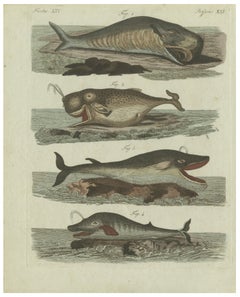
Original Antique Print of Sperm Whale and North Atlantic Whales by Bertuch, c.1800 Original antique hand-colored copper engraving depicting four remarkable early representations of whales, published in Friedrich Justin Bertuch’s celebrated “Bilderbuch für Kinder” around the turn of the 19th century. The plate is titled “Fische XXI / Poissons XXI” and belongs to Bertuch’s series devoted to fishes and marine animals. The historical accompanying descriptions identify the subjects as the Pottfisch (Sperm Whale), Nordkaper (North Atlantic Right Whale) and Kleinauge, illustrating different whale forms as they were understood by European naturalists around 1800. The four whales are represented individually in profile, surrounded by waves and rocky coastal settings. Their exaggerated heads, mouths, blowholes and body proportions provide a fascinating insight into early European attempts to depict these enormous animals at a time when direct observation of living whales was extremely difficult. The Sperm Whale is represented with the massive head and comparatively narrow lower jaw characteristic of the species. The North Atlantic Right Whale was historically one of the most important animals of the European whaling industry and was hunted extensively for its oil and baleen. Particularly fascinating are the visible jets emerging from the blowholes of several animals. Early natural-history illustrations often represented whale breathing as fountains or jets of water, contributing to the distinctive appearance of historical cetacean imagery. Rather than being anatomically precise by modern standards, the animals reflect information assembled from stranded specimens, whalers, sailors, travelers and earlier natural-history publications. This gives the engraving particular interest as a document of the developing science of cetology. The restrained original hand coloring in shades of black, gray, brown and red complements the finely engraved waves and coastal settings. Friedrich Justin Bertuch (1747–1822) was a German publisher, writer and patron of the arts. His monumental “Bilderbuch für Kinder” (Picture Book for Children) was one of the great illustrated educational encyclopedias of its period. Published in Weimar from 1790 onward, the work eventually comprised more than a thousand plates covering zoology, botany, geography, science, technology, antiquity, costumes and many other subjects. This particular plate is documented as no. 53 of Volume II and as plate XXI within the section devoted to fishes. ([Iberlibro (ES)][1]) Creator: Friedrich Justin Bertuch (1747–1822) Source: Bilderbuch für Kinder Plate: Fische XXI / Poissons XXI Historical Subjects: Sperm Whale (Pottfisch) North Atlantic Right Whale (Nordkaper) Kleinauge / historical whale type Place of Publication: Weimar, Germany Date of Manufacture: Circa 1800 Period: Late 18th / Early 19th Century Style: Neoclassical – In the Period of Medium: Original hand-colored copper engraving on paper Condition: Good. Wear consistent with age and use. General age-related toning and scattered spotting and marks. Some marginal wear and small edge imperfections, including irregularity toward the upper right margin. Original hand coloring remains attractive. Please refer to the photographs for further details of condition. Please note: This is an original antique engraving from around 1800, not a modern reproduction. The print is sold unframed. Framed images or interior views, if shown, are for presentation and inspiration only. Other companion whale, fish and natural-history plates from Bertuch’s “Bilderbuch für Kinder” are also available separately. Keywords: antique whale print, sperm whale print, Pottfisch, North Atlantic Right Whale, Nordkaper, antique cetacean print, whale engraving...

Category

Early 19th Century Neoclassical Antique German Prints

Materials

Paper

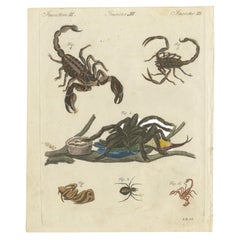
Original Antique Print of Tarantula, Spiders and Scorpions by Bertuch, c. 1790

Original Antique Print of Tarantula, Spiders and Scorpions by Bertuch, c. 1790

Located in Langweer, NL

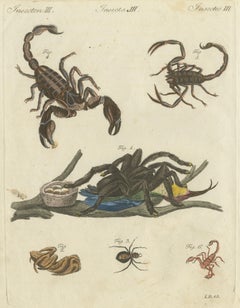
Original Antique Print of Tarantula, Spiders and Scorpions by Bertuch, c. 1790 Original antique hand-colored copper engraving depicting a remarkable group of spiders and scorpions, ...

Category

Late 18th Century Neoclassical Antique German Prints

Materials

Paper

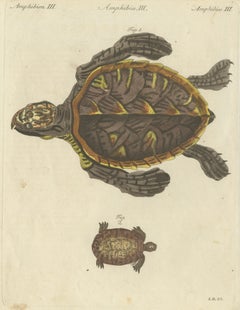
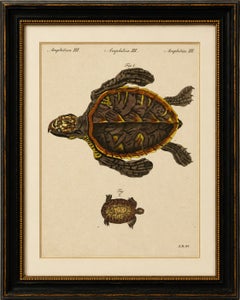
Original Antique Print of Sea Turtle and Freshwater Turtle by Bertuch, c. 1790

Original Antique Print of Sea Turtle and Freshwater Turtle by Bertuch, c. 1790

Located in Langweer, NL

Original Antique Print of Sea Turtle and Freshwater Turtle by Bertuch, c. 1790 Original antique hand-colored copper engraving depicting two turtles, published in Friedrich Justin Bertuch’s celebrated “Bilderbuch für Kinder” around the end of the 18th century. The plate is titled “Amphibien III / Amphibia III / Amphibiae III” and bears the reference “I.B.25” at lower right. It belongs to Bertuch’s early natural-history series devoted to animals historically classified as amphibians, a category that at the time also encompassed reptiles such as turtles. Fig. 1 is dominated by a large marine turtle shown from below, providing an unusually detailed view of the plastron, head and powerful paddle-like limbs. The animal is depicted at impressive scale and occupies most of the sheet. The dark brown and black body is enlivened by warm yellow and ochre details around the shell and underside. Fig. 2 shows a much smaller freshwater or terrestrial turtle viewed from above, allowing the patterned carapace and contrasting body structure to be compared directly with the much larger marine specimen. The juxtaposition of the two animals reflects Bertuch’s educational approach, presenting related species in comparative form and emphasizing differences in their anatomy and adaptation to different environments. The engraving is enhanced with original hand coloring in shades of brown, black, ochre and yellow. The exceptionally large sea turtle gives the composition considerable visual impact and makes this a particularly attractive example of early reptile and marine-life illustration. Friedrich Justin Bertuch (1747–1822) was a German publisher, writer and patron of the arts. His monumental “Bilderbuch für Kinder” (Picture Book for Children) was one of the great illustrated educational encyclopedias of the late 18th and early 19th centuries. Published in Weimar from 1790 onward, the work contained hundreds of finely engraved and hand-colored plates devoted to zoology, botany, geography, science, technology, antiquity and numerous other subjects. Creator: Friedrich Justin Bertuch (1747–1822) Source: Bilderbuch für Kinder Plate: Amphibien III / Amphibia III / Amphibiae III Reference: I.B.25 Subject: Sea Turtle and Freshwater Turtle Place of Publication: Weimar, Germany Date of Manufacture: Circa 1790 Period: Late 18th Century Style: Neoclassical – In the Period of Medium: Original hand-colored copper engraving on paper Condition: Good. Wear consistent with age and use. General age-related toning with scattered foxing, spotting and minor marks. Some marginal wear and small edge irregularities, including minor loss at the upper right edge. Original hand coloring remains strong and attractive. Please refer to the photographs for further details of condition. Please note: This is an original antique engraving from the late 18th century, not a modern reproduction. The print is sold unframed. Framed and interior images, if shown, are for presentation and inspiration only. Other companion zoological, marine-life and natural-history plates from Bertuch’s “Bilderbuch für Kinder” are available separately. Keywords: antique turtle print, sea turtle print, marine turtle, freshwater turtle, turtle engraving, antique reptile print...

Category

Late 18th Century Neoclassical Antique German Prints

Materials

Paper

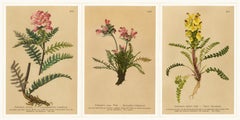
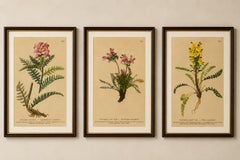
Antique Pedicularis Botanical Chromolithographs – Set of 3, Germany 1897

Antique Pedicularis Botanical Chromolithographs – Set of 3, Germany 1897

Located in Langweer, NL

Title: Antique Pedicularis Botanical Chromolithographs – Set of 3, Germany 1897 Description: A beautifully coordinated set of three original antique botanical chromolithographs pub...

Category

Late 19th Century Antique German Prints

Materials

Paper

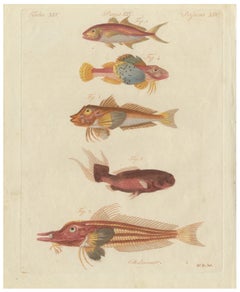
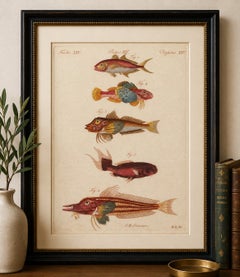
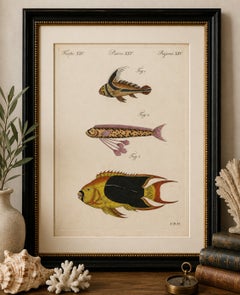
Original Antique Print of Five Exotic Red Fish by Bertuch, c. 1800

Original Antique Print of Five Exotic Red Fish by Bertuch, c. 1800

Located in Langweer, NL

Original Antique Print of Five Exotic Red Fish by Bertuch, c.1800 Original antique hand-colored copper engraving depicting five remarkable species of fish, published in Friedrich Ju...

Category

Early 19th Century Neoclassical Antique German Prints

Materials

Paper

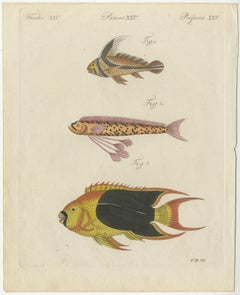
Original Antique Print of Three Exotic Tropical Fish by Bertuch, c.1800

Original Antique Print of Three Exotic Tropical Fish by Bertuch, c.1800

Located in Langweer, NL

Original Antique Print of Three Exotic Tropical Fish by Bertuch, c. 1800 Original antique hand-colored copper engraving depicting three spectacular exotic fish, published in Friedri...

Category

Early 19th Century Neoclassical Antique German Prints

Materials

Paper

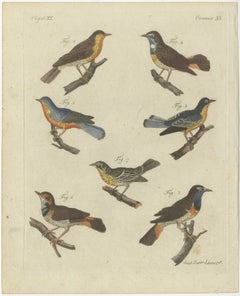
Original Antique Print of Seven Robins, Bluethroats and Yellowthroats, 1796

Original Antique Print of Seven Robins, Bluethroats and Yellowthroats, 1796

Located in Langweer, NL

Original Antique Print of Seven Robins, Bluethroats and Yellowthroats by Bertuch, 1796 Original antique hand-colored copper engraving depicting seven beautifully colored robins, blu...

Category

Late 18th Century Neoclassical Antique German Prints

Materials

Paper

midcentury Nr. 2 wood print blue beige black tone of city scape by Gerhard Tor

midcentury Nr. 2 wood print blue beige black tone of city scape by Gerhard Tor

Located in Rümmingen, BW

The posters and prints may display signs of aging, such as paper discoloration, tears, folds, and other imperfections. These pieces were part of an art collection owned by a German ...

Category

Mid-20th Century Mid-Century Modern German Prints

Materials

Paper

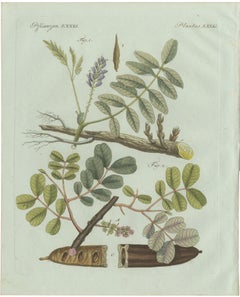
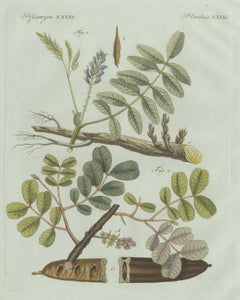
Original Antique Botanical Print of Rubber and Gum Arabic Trees by Bertuch, 1802

Original Antique Botanical Print of Rubber and Gum Arabic Trees by Bertuch, 1802

Located in Langweer, NL

Original Antique Botanical Print of Rubber and Gum Arabic Trees by Bertuch, 1802 Original antique hand-colored copper engraving depicting two economically important tropical trees, ...

Category

Early 19th Century Neoclassical Antique German Prints

Materials

Paper

Original Antique Print of Swallowtail and Painted Lady Butterflies, c.1800

Original Antique Print of Swallowtail and Painted Lady Butterflies, c.1800

Located in Langweer, NL

Original Antique Print of Swallowtail and Painted Lady Butterflies by Bertuch, c. 1800 Original antique hand-colored copper engraving depicting three colorful butterflies together w...

Category

Early 19th Century Neoclassical Antique German Prints

Materials

Paper

Antique Alpine Speedwell and Wulfenia Small Botanical Prints, Set of 8, 1897

Antique Alpine Speedwell and Wulfenia Small Botanical Prints, Set of 8, 1897

Located in Langweer, NL

Title: Antique Alpine Speedwell and Wulfenia Botanical Prints, Set of 8, 1897 Description: A charming and beautifully matched set of eight original antique botanical chromolithograp...

Category

Late 19th Century Antique German Prints

Materials

Paper

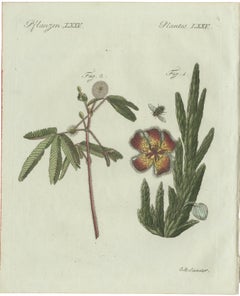
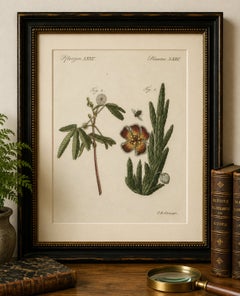
Original Antique Botanical Print of Carrion Flower and Mimosa by Bertuch, 1805

Original Antique Botanical Print of Carrion Flower and Mimosa by Bertuch, 1805

Located in Langweer, NL

Original Antique Botanical Print of Carrion Flower and Mimosa by Bertuch, 1805 Original antique hand-colored copper engraving depicting two remarkable exotic plants, the Carrion Flo...

Category

Early 19th Century Neoclassical Antique German Prints

Materials

Paper

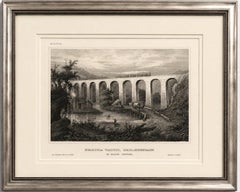
Starucca Viaduct, Erie Railroad – Antique New York Railway Engraving, ca.1850

Starucca Viaduct, Erie Railroad – Antique New York Railway Engraving, ca.1850

Located in Langweer, NL

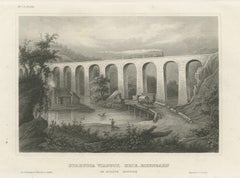
Title: Starucca Viaduct, Erie Railroad – Antique New York Railway Engraving This impressive nineteenth-century engraving depicts the celebrated Starucca Viaduct, one of the great en...

Category

Mid-19th Century Antique German Prints

Materials

Paper

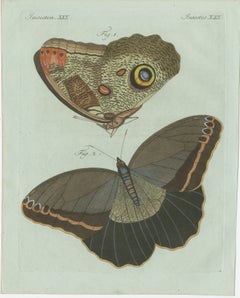
Original Antique Print of Two Exotic Butterflies by Bertuch, c. 1800

Original Antique Print of Two Exotic Butterflies by Bertuch, c. 1800

Located in Langweer, NL

Original Antique Print of Two Exotic Butterflies by Bertuch, c. 1800 Original antique hand-colored copper engraving depicting two spectacular exotic butterflies, published in Friedr...

Category

Early 19th Century Neoclassical Antique German Prints

Materials

Paper

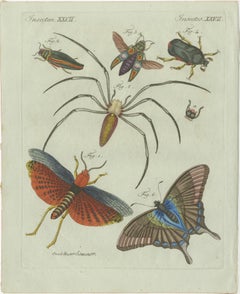
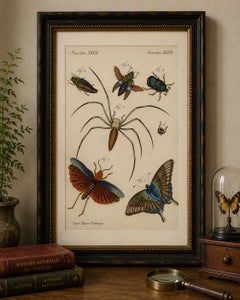
Original Antique Print of Exotic Insects, Spider and Butterfly by Bertuch, 1800

Original Antique Print of Exotic Insects, Spider and Butterfly by Bertuch, 1800

Located in Langweer, NL

Original Antique Print of Exotic Insects, Spider and Butterfly by Bertuch, c. 1800 Original antique hand-colored copper engraving depicting a spectacular collection of exotic insect...

Category

Early 19th Century Neoclassical Antique German Prints

Materials

Paper

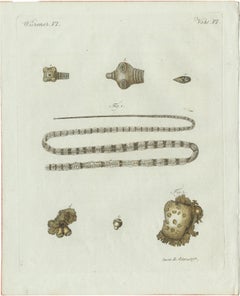
Original Antique Print of Tapeworm and Parasites by Bertuch, circa 1800

Original Antique Print of Tapeworm and Parasites by Bertuch, circa 1800

Located in Langweer, NL

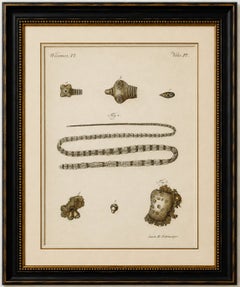
Original Antique Print of Tapeworm and Parasites by Bertuch, circa 1800 Original antique hand-colored copper engraving illustrating the anatomy and forms of parasitic worms, publish...

Category

Early 1800s Neoclassical Antique German Prints

Materials

Paper

Original Antique Print of Five Exotic Lizards by Bertuch, 1802

Original Antique Print of Five Exotic Lizards by Bertuch, 1802

Located in Langweer, NL

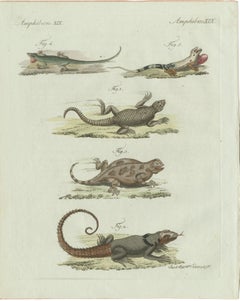
Title: Original Antique Print of Exotic Lizards and Reptiles by Bertuch, circa 1805 Description: Original antique hand-colored copper engraving depicting five exotic lizards: the Cordyle, Quetz-Paleo, Toad Lizard, Red-throated Lizard and Throat-pouched Lizard. Plate “Amphibien XIX / Amphibies XIX” from Friedrich Justin Bertuch's Bilderbuch für Kinder, Volume IV, published in Weimar in 1802. The plate is headed “Amphibien XIX.” and “Amphibies XIX.” and presents five individually numbered reptiles in remarkably detailed profile. The animals include several unusual lizards with distinctive scales, tails, crests and throat structures, reflecting the rapidly developing European interest in zoology and natural history around 1800. The five figures are: Fig. 1 – The Cordyle (Lacerta cordylus) — the spiny-scaled lizard in the center. Fig. 2 – The Quetz-Paleo (Lacerta azurea) — the striking lower animal with the heavily armored, curled tail. Fig. 3 – The Toad Lizard (Die Kröten-Eidechse) — the broad-bodied animal in the middle. Fig. 4 – The Red-throated Lizard (Die rothkehlige Eidechse) — upper left, with the red throat. Fig. 5 – The Goiter/Throat-pouched Lizard (Die Kropf-Eidechse) — upper right, with the conspicuous expanded throat pouch. The engraving bears the inscription “Jacob Hauer Schweitzer” at lower right. This example belongs to the German-French issue of Bertuch’s natural-history plates; later versions of many of these compositions were also produced with multilingual headings. Friedrich Justin Bertuch (1747–1822) was a German publisher, writer and patron of the arts. He is best remembered for his monumental “Bilderbuch für Kinder” (Picture Book for Children), published in Weimar from 1790 onward. The extensive encyclopedia introduced young readers to natural history, geography, science, technology, costumes and mythology through hundreds of finely engraved and hand-colored illustrations. An attractive early 19th-century zoological engraving with particularly decorative reptile imagery. Creator: Friedrich Justin Bertuch (1747–1822) Engraver: Jacob Hauer Source: Bilderbuch für Kinder Plate: Amphibien XIX / Amphibies XIX Place of Publication: Weimar, Germany Date of Manufacture: Circa 1805 Period: Early 19th Century Style: Neoclassical – In the Period of Medium: Original hand-colored copper engraving on paper Condition: Good. Wear consistent with age and use. Light age-related toning and occasional minor spotting. Original hand coloring remains attractive. Please refer to the photographs for further details of condition. Please note: This is an original antique print, not a modern reproduction. The print is sold unframed. Framed images or interior views, if shown, are for presentation and inspiration only. Keywords: antique reptile print...

Category

Early 1800s Neoclassical Antique German Prints

Materials

Paper

Antique Grape Botanical Chromolithographs, Wine & Table Grapes, Set of Six, 1854

Antique Grape Botanical Chromolithographs, Wine & Table Grapes, Set of Six, 1854

Located in Langweer, NL

Antique Grape Botanical Chromolithographs, Wine & Table Grapes, Set of Six, 1854 This impressive set of six original mid-19th century botanical chromolithographs was published in St...

Category

Mid-19th Century Antique German Prints

Materials

Paper

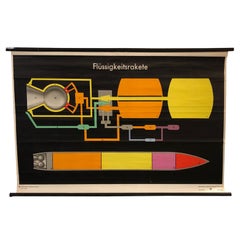
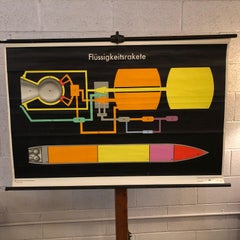
German Scientific Liquid Rocket Engine Chart

German Scientific Liquid Rocket Engine Chart

Located in Brooklyn, NY

Vintage, German, scientific, engineering, roll down chart depicting the construction of a liquid rocket engine (Flussigkeitsrakete) is printed on canvas...

Category

Mid-20th Century Industrial German Prints

Materials

Canvas, Wood, Paper

Original Antique Print of Exotic Moths and Caterpillars by Bertuch, c. 1800

Original Antique Print of Exotic Moths and Caterpillars by Bertuch, c. 1800

Located in Langweer, NL

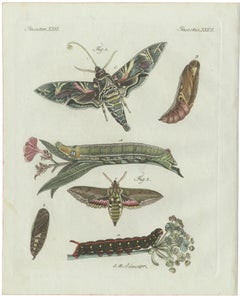
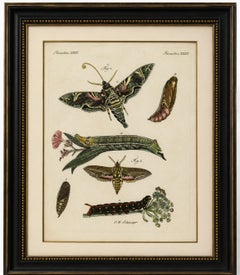
Original Antique Print of Exotic Moths and Caterpillars by Bertuch, c. 1800 Original antique hand-colored copper engraving depicting two exotic moths together with their caterpillars and pupae, published in Friedrich Justin Bertuch’s celebrated “Bilderbuch für Kinder” around the beginning of the 19th century. The plate is titled “Insecten XXVI / Insectes XXVI” and illustrates the different stages in the life cycle of two spectacular moth species. Fig. 1 presents a large and dramatically patterned moth with its wings fully extended. The dark wings are decorated with contrasting cream, green and reddish markings. Alongside it are representations of its large caterpillar and chrysalis. Fig. 2 depicts another sphinx or hawk moth with elongated wings and attractive pink coloration, accompanied by its striking dark caterpillar with red and yellow markings and its pupal stage. The inclusion of adult moths, caterpillars and pupae reflects the growing scientific interest in insect metamorphosis during the late 18th and early 19th centuries. The insects are beautifully engraved and enhanced with original hand coloring, while the caterpillars are shown feeding on their respective host plants. The plate bears the engraved signature “J. H. Schmuzer” at the bottom. Friedrich Justin Bertuch (1747–1822) was a German publisher, writer and patron of the arts. His monumental “Bilderbuch für Kinder” (Picture Book for Children) was one of the great illustrated educational encyclopedias of the late 18th and early 19th centuries. Published in Weimar from 1790 onward, it contained hundreds of finely engraved and hand-colored plates covering natural history, geography, science, technology, antiquity, costumes and mythology. A particularly decorative early entomological print, appealing to collectors of butterflies and moths, natural history and early scientific illustration. Creator: Friedrich Justin Bertuch (1747–1822) Engraver: J. H. Schmuzer Source: Bilderbuch für Kinder Plate: Insecten XXVI / Insectes XXVI Place of Publication: Weimar, Germany Date of Manufacture: Circa 1800 Period: Early 19th Century Style: Neoclassical – In the Period of Medium: Original hand-colored copper engraving on paper Condition: Good. Wear consistent with age and use. Light age-related toning and occasional minor spotting. Minor marginal wear. Original hand coloring remains strong and attractive. Please refer to the photographs for further details of condition. Please note: This is an original antique print from circa 1800, not a modern reproduction. The print is sold unframed. Framed images or interior views, if shown, are for presentation and inspiration only. Keywords: antique moth...

Category

Early 1800s Neoclassical Antique German Prints

Materials

Paper

Original Antique Print of Four Exotic Lizards by Bertuch, 1802

Original Antique Print of Four Exotic Lizards by Bertuch, 1802

Located in Langweer, NL

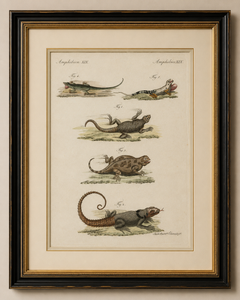
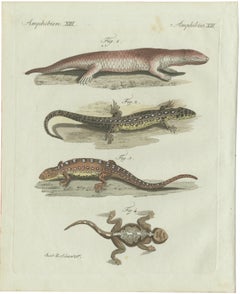
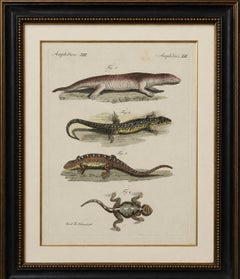
Original Antique Print of Four Exotic Lizards by Bertuch, 1802 Original antique hand-colored copper engraving depicting four unusual lizards, published in Friedrich Justin Bertuch’s celebrated “Bilderbuch für Kinder” in Weimar in 1802. The plate is titled “Amphibien XIII / Amphibies XIII” and presents four reptiles in profile, carefully engraved and individually numbered. Bertuch’s accompanying text identifies Fig. 1 as “Der Stink,” a skink-type lizard. Figs. 2 and 3 represent the male and female of what Bertuch called “Die graue Eidechse,” or Grey Lizard. Fig. 4 depicts “Die Dorneidechse,” or Thorn/Spiny Lizard. The animals are particularly attractive for their varied forms and markings. The two central specimens display striking spotted patterns, while the unusual lower animal is shown from below, revealing its distinctive body structure and scales. The engraving is enhanced with original hand coloring in restrained shades of pink, brown, green, yellow and gray and bears the signature “Jacob H. Schmuzer” at lower left. Friedrich Justin Bertuch (1747–1822) was a German publisher, writer and patron of the arts. His monumental “Bilderbuch für Kinder” (Picture Book for Children) was one of the great illustrated educational encyclopedias of the late 18th and early 19th centuries, containing hundreds of engraved and hand-colored plates devoted to natural history, geography, science, technology, antiquity and numerous other subjects. Creator: Friedrich Justin Bertuch (1747–1822) Engraver: Jacob H. Schmuzer Source: Bilderbuch für Kinder Plate: Amphibien XIII / Amphibies XIII Place of Publication: Weimar, Germany Date of Manufacture: 1802 Period: Early 19th Century Style: Neoclassical – In the Period of Medium: Original hand-colored copper engraving on paper Condition: Good. Wear consistent with age and use. Light age-related toning and scattered minor spotting. Some discoloration near the upper center and minor marginal wear. Original hand coloring remains attractive. Please refer to the photographs for further details of condition. Please note: This is an original antique print from 1802, not a modern reproduction. The print is sold unframed. Framed images or interior views, if shown, are for presentation and inspiration only. Keywords: antique lizard print, antique reptile print...

Category

Early 1800s Neoclassical Antique German Prints

Materials

Paper

Original Antique Print of Mountain Roads and Rock-Cut Passes by Bertuch, c. 1800

Original Antique Print of Mountain Roads and Rock-Cut Passes by Bertuch, c. 1800

Located in Langweer, NL

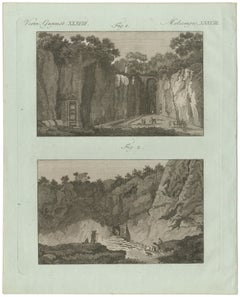
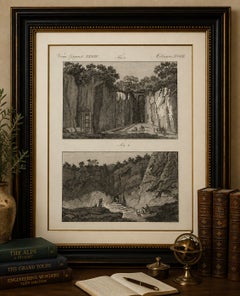
Original Antique Print of Mountain Roads and Rock-Cut Passes by Bertuch, c. 1800 Original antique copper engraving depicting two remarkable mountain roads cut through steep rocky terrain, published in Friedrich Justin Bertuch’s celebrated “Bilderbuch für Kinder” around the beginning of the 19th century. The plate is titled “Verm. Gegenst. XXXVIII / Mélanges XXXVIII” and contains two finely engraved views illustrating impressive feats of early road building and engineering. Fig. 1 depicts a roadway passing through a deep artificial cutting between towering rock walls. Architectural structures and an arched passage are incorporated into the cliffs, while travelers, horses and a carriage provide a sense of the enormous scale of the excavation. Fig. 2 shows another spectacular mountain passage, where a road or stepped route has been constructed through a rugged rocky gorge. Small figures and architectural elements appear among the cliffs, emphasizing the difficulty of creating transportation routes through such dramatic terrain. The finely engraved landscapes reflect the fascination around 1800 with engineering, travel and the transformation of difficult natural landscapes through human ingenuity. Friedrich Justin Bertuch (1747–1822) was a German publisher, writer and patron of the arts. His monumental “Bilderbuch für Kinder” (Picture Book for Children) was one of the great illustrated educational encyclopedias of the late 18th and early 19th centuries. Published in Weimar from 1790 onward, it contained hundreds of engraved and hand-colored plates covering natural history, geography, science, technology, architecture, antiquity and numerous other subjects. An atmospheric early engraving combining mountain scenery, travel and the history of engineering. Creator: Friedrich Justin Bertuch (1747–1822) Source: Bilderbuch für Kinder Plate: Vermischte Gegenstände XXXVIII / Mélanges XXXVIII Place of Publication: Weimar, Germany Date of Manufacture: Circa 1800 Period: Early 19th Century Style: Neoclassical – In the Period of Medium: Copper engraving on paper Condition: Good. Wear consistent with age and use. Light age-related toning and occasional minor spotting and handling marks. Minor marginal wear. Engraved impressions remain strong and detailed. Please refer to the photographs for further details of condition. Please note: This is an original antique print from circa 1800, not a modern reproduction. The print is sold unframed. Framed images or interior views, if shown, are for presentation and inspiration only. Keywords: antique mountain print, mountain road, rock cut road, mountain pass, historic engineering, road engineering, antique engineering print, mountain landscape, travel engraving, Grand Tour print, early transportation, classical landscape, Bertuch print, Friedrich Justin Bertuch, antique landscape engraving...

Category

Early 1800s Neoclassical Antique German Prints

Materials

Paper

Original Antique Print of Ancient Crowns and Laurel Wreaths by Bertuch, c. 1800

Original Antique Print of Ancient Crowns and Laurel Wreaths by Bertuch, c. 1800

Located in Langweer, NL

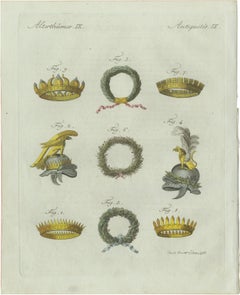
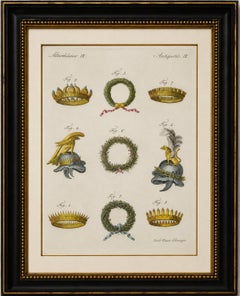
Original Antique Print of Ancient Crowns and Laurel Wreaths by Bertuch, c. 1800 Original antique hand-colored copper engraving illustrating crowns, laurel wreaths and military headdresses from classical antiquity, published in Friedrich Justin Bertuch’s celebrated “Bilderbuch für Kinder” around 1800. The plate is titled “Alterthümer IX / Antiquités IX” and presents nine different forms of ancient crowns, wreaths and honorary headgear. These objects reflect the various ways in which rank, military achievement, civic distinction and victory were represented in the ancient world. Several examples take the form of golden crowns, while others consist of laurel or vegetal wreaths associated with victory and honor. Particularly decorative are the two military helmets, each surmounted by an elaborate animal or mythological crest. The carefully arranged objects are delicately enhanced with original hand coloring in gold, green, pink, blue and gray. Together they form an attractive example of the renewed fascination with the material culture and symbolism of classical antiquity during the Neoclassical period. The engraving bears the inscription “Jacob Hauer Schmuzer” at lower right. Friedrich Justin Bertuch (1747–1822) was a German publisher, writer and patron of the arts. His monumental “Bilderbuch für Kinder” (Picture Book for Children) was one of the great illustrated educational encyclopedias of the late 18th and early 19th centuries. Published in Weimar from 1790 onward, the work contained hundreds of engraved and hand-colored plates covering natural history, geography, science, technology, mythology, antiquity and costumes. A highly decorative classical print particularly suited to collectors of ancient history, Neoclassical design, heraldry and Grand Tour imagery. Creator: Friedrich Justin Bertuch (1747–1822) Engraver: Jacob Hauer Schmuzer Source: Bilderbuch für Kinder Plate: Alterthümer IX / Antiquités IX Place of Publication: Weimar, Germany Date of Manufacture: Circa 1800 Period: Early 19th Century Style: Neoclassical – In the Period of Medium: Original hand-colored copper engraving on paper Condition: Good. Wear consistent with age and use. Light age-related toning and occasional minor spotting and marks. Minor marginal wear. Original hand coloring remains attractive. Please refer to the photographs for further details of condition. Please note: This is an original antique print from circa 1800, not a modern reproduction. The print is sold unframed. Framed images or interior views, if shown, are for presentation and inspiration only. Keywords: ancient crowns, antique crown print, laurel wreath, Roman wreath, ancient Roman crowns, classical antiquity, Roman military helmet, ancient helmet...

Category

Early 1800s Neoclassical Antique German Prints

Materials

Paper

Original Antique Print of Elephant and Mysterious Sukotyro by Bertuch, c. 1800

Original Antique Print of Elephant and Mysterious Sukotyro by Bertuch, c. 1800

Located in Langweer, NL

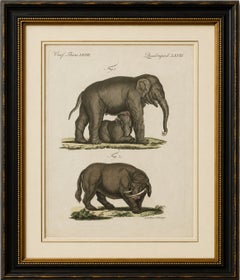
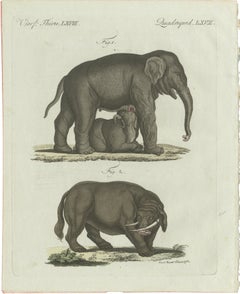
Original Antique Print of Elephant and Mysterious Sukotyro by Bertuch, c. 1800 Original antique hand-colored copper engraving depicting a nursing elephant with her calf and the mysterious “Sukotyro,” published in Friedrich Justin Bertuch’s celebrated “Bilderbuch für Kinder” in Weimar around 1800. The plate is titled “Vierf. Thiere LXVIII / Quadrupèd. LXVIII” and contains two fascinating early zoological illustrations. Fig. 1 depicts a female elephant standing protectively over her nursing calf. Fig. 2 represents the “Sukotyro,” a mysterious animal historically reported from Java in Indonesia. Bertuch depicts the creature as a heavily built quadruped with elephant- or rhinoceros-like characteristics and prominent curved tusks. Such representations provide a fascinating insight into European attempts around 1800 to illustrate exotic animals known through travelers’ descriptions and earlier natural-history sources. The plate bears the engraved inscription “Jacob Hauer Schmuzer” at lower right. Friedrich Justin Bertuch (1747–1822) was a German publisher, writer and patron of the arts. He is best known for his monumental “Bilderbuch für Kinder” (Picture Book for Children), one of the great illustrated educational encyclopedias of the late 18th and early 19th centuries. Published in Weimar from 1790 onward, the work contained hundreds of finely engraved and hand-colored plates covering natural history, geography, science, technology, costumes and mythology. An unusual and highly decorative early natural-history print, particularly interesting for its combination of an accurately recognizable elephant with the enigmatic Sukotyro of Java. Creator: Friedrich Justin Bertuch (1747–1822) Engraver: Jacob Hauer Schmuzer Source: Bilderbuch für Kinder Plate: Vierf. Thiere LXVIII / Quadrupèd. LXVIII Place of Publication: Weimar, Germany Date of Manufacture: Circa 1800 Period: Early 19th Century Style: Neoclassical – In the Period of Medium: Original hand-colored copper engraving on paper Condition: Good. Wear consistent with age and use. Light age-related toning, occasional minor spotting and marginal wear. Original hand coloring remains attractive. Please refer to the photographs for further details of condition. Please note: This is an original antique print from circa 1800, not a modern reproduction. The print is sold unframed. Framed images or interior views, if shown, are for presentation and inspiration only. Keywords: antique elephant print...

Category

Early 1800s Neoclassical Antique German Prints

Materials

Paper

Original Antique Print of Four Exotic Snakes by Bertuch, 1802

Original Antique Print of Four Exotic Snakes by Bertuch, 1802

Located in Langweer, NL

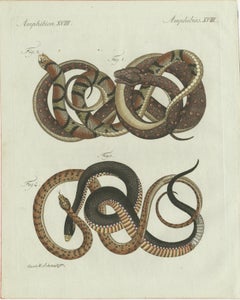
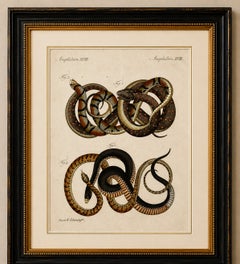
Original Antique Print of Four Exotic Snakes by Bertuch, 1802 Original antique hand-colored copper engraving depicting four exotic species of snakes, published in Friedrich Justin B...

Category

Early 1800s Neoclassical Antique German Prints

Materials

Paper

Das Weltausstellungsgebäude in Wien – The Vienna Exhibition Hall, 1873

Das Weltausstellungsgebäude in Wien – The Vienna Exhibition Hall, 1873

Located in Langweer, NL

Das Weltausstellungsgebäude in Wien – The Vienna Exhibition Hall, 1873 A finely hand-colored 19th-century engraving depicting the grand Weltausstellungsgebäude (World Exhibition Hal...

Category

1870s Antique German Prints

Materials

Paper

Antique Arabian Horse Lithograph Sultan Mahmoud, Stuttgart 1846

Antique Arabian Horse Lithograph Sultan Mahmoud, Stuttgart 1846

Located in Langweer, NL

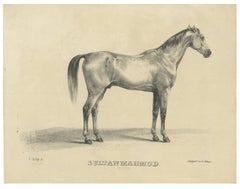
Title: Antique Arabian Horse Lithograph “Sultan Mahmoud,” Stuttgart 1846 Description: A refined and highly decorative antique lithograph depicting the Arabian stallion “Sultan Mahmoud,” published in Stuttgart in 1846 as part of August Jäger’s celebrated equestrian publication Das orientalische Pferd (“The Oriental Horse”). Elegant in its simplicity and executed with exceptional lithographic skill, the composition presents the horse in a poised side profile intended to emphasize the noble proportions, refined anatomy, and graceful bearing associated with elite Arabian bloodlines. The lithograph was issued by the Stuttgart publisher G. Ebner, whose imprint appears in the lower right margin. The notation in the lower left indicates that the print formed part of the first installment of the series. During the mid-19th century, European fascination with Oriental horses reached its height, and richly illustrated works such as Das orientalische Pferd became important references for breeders, cavalry officers, collectors, and admirers of Arabian equestrian culture. Arabian horses were among the most prized horses of the 18th and 19th centuries, admired for their endurance, intelligence, elegance, and speed. Carefully bred by Bedouin tribes across the Arabian Peninsula, these horses later became foundational bloodlines for many modern breeds, including the Thoroughbred. Their distinctive features — refined heads, arched necks, high tail carriage, and athletic build — made them symbols of prestige throughout Europe. This particular lithograph possesses a quiet monumentality and timeless elegance. The horse stands alone against a restrained ground with no unnecessary background detail, allowing full attention to focus on the animal itself. The monochrome lithographic technique creates subtle tonal transitions and sculptural modeling, while the precise draftsmanship demonstrates the quality associated with mid-19th-century German lithography. Today, prints from Das orientalische Pferd are highly appealing both as historical equestrian studies and as sophisticated decorative artworks. The minimalist composition and elegant tonal palette allow this piece to work equally well in traditional interiors and modern curated spaces. This print displays exceptionally well in dark walnut, black lacquer, or lightly gilt frames paired with a wide ivory or oatmeal mat. Its refined monochrome palette and noble equestrian subject make it particularly suitable for libraries, studies, country houses, horse stables, riding clubs, or sophisticated gallery walls. This is an original antique print, not a reproduction. All items we offer are authentic period works of art over 100 years old. The piece is sold unframed; any framed images are shown for presentation and interior inspiration only and may not always be to scale. Keywords: Arabian horse, Sultan Mahmoud, oriental horse, antique horse lithograph...

Category

Mid-19th Century Antique German Prints

Materials

Paper

Colored, Framed Copper Engraving "Fuhrwerk II" Published by Winkelmann and Sons

Colored, Framed Copper Engraving "Fuhrwerk II" Published by Winkelmann and Sons

Located in Hamburg, DE

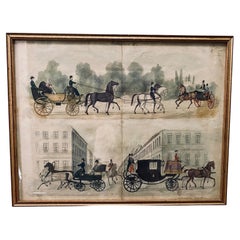
Hand coloured, framed copper engraving "Fuhrwerk II" published by Winkelmann and Sons in Berlin in the mid-19th century. The print shows the vehicles of that time, four different ca...

Category

Mid-19th Century Biedermeier Antique German Prints

Materials

Paper

Pair of Antique Entomology Lithographs by Richard Tümpel, Germany 1908

Pair of Antique Entomology Lithographs by Richard Tümpel, Germany 1908

Located in Langweer, NL

Set of Two Entomological Lithographs from Die Geradflügler, Germany, 1908 Description: An elegant pair of original color lithographs from Richard Tümpel's celebrated natural history...

Category

Early 20th Century German Prints

Materials

Paper