German Prints

1,268 Results
to
162
1,183
102
1,285
6
Height
to
Width
to
113
82
27
14
12
10
4
3
2
1
1
247
688
350
6
102
135
103
15
6
8
5
44
5
25
59
10
6
1,254
164
124
117
46
27,549
8,870
1,686
1,676
1,183
1,291
1,291
1,291
44
10
7
7
5
Place of Origin: German
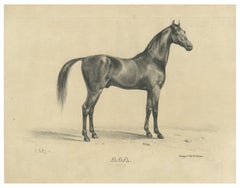
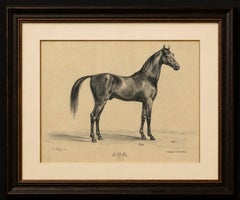
Antique Arabian Horse Lithograph “Aga” by August Jäger, 1846

Antique Arabian Horse Lithograph “Aga” by August Jäger, 1846

Located in Langweer, NL

Title: Antique Arabian Horse Lithograph “Aga” by August Jäger, 1846 Description: An elegant and highly refined antique lithograph depicting the Arabian stallion “Aga,” published in Stuttgart in 1846 as part of August Jäger’s celebrated equestrian work Das orientalische Pferd (“The Oriental Horse”). This striking composition presents the horse in a classic side profile, emphasizing the purity, balance, and noble proportions that made Arabian horses among the most admired breeds of the 19th century. The lithograph was issued by the Stuttgart publisher G. Ebner, whose imprint appears in the lower right margin. The notation in the lower left suggests the plate formed part of the first installment of the series. Das orientalische Pferd is regarded as one of the notable European publications devoted to the study and appreciation of Oriental horse breeds during a period when Arabian bloodlines were increasingly sought after by aristocratic breeders and cavalry traditions throughout Europe. Arabian horses are among the oldest and most influential horse breeds in the world. Carefully bred by Bedouin tribes for endurance, intelligence, elegance, and speed, these horses became foundational bloodlines for numerous modern breeds, including the Thoroughbred. Their refined heads, high tail carriage, and graceful movement made them symbols of prestige and refinement during the 18th and 19th centuries. This particular composition is remarkable for its understated sophistication. The horse stands alone against a minimal ground, allowing the viewer to focus entirely on the elegant anatomy and subtle tonal modeling of the animal. The monochrome lithographic technique lends the image a timeless, almost sculptural quality, while the delicate shading and precise draftsmanship demonstrate the high level of craftsmanship associated with German lithography of the period. Today, prints from Das orientalische Pferd are admired both for their historical importance and for their decorative appeal. The restrained palette and graceful composition make this example particularly suitable for sophisticated interiors ranging from traditional libraries to contemporary equestrian-inspired spaces. This print displays exceptionally well in dark walnut, black lacquer, or lightly gilt frames paired with a wide ivory or oatmeal mat. Its elegant monochrome palette and refined equestrian subject make it especially suitable for libraries, studies, country houses, horse stables, riding clubs, or sophisticated gallery walls. This is an original antique print, not a reproduction. All items we offer are authentic period works of art over 100 years old. The piece is sold unframed; any framed images are shown for presentation and interior inspiration only and may not always be to scale. Keywords: Arabian horse, Aga, oriental horse, antique horse lithograph...

Category

Mid-19th Century Antique German Prints

Materials

Paper
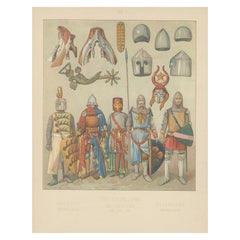
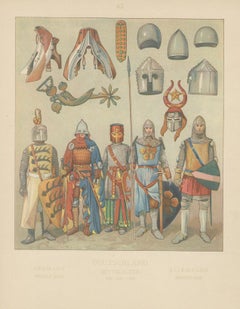
Medieval German Knights and Armor, Antique Hand-Colored Print c.1880

Medieval German Knights and Armor, Antique Hand-Colored Print c.1880

Located in Langweer, NL

Medieval German Knights Plate 1200–1400, Antique Hand-Colored Print This striking antique costume plate presents an exceptionally detailed depiction of German medieval knights and a...

Category

1880s Antique German Prints

Materials

Paper
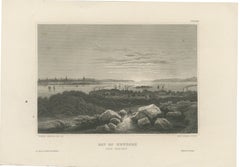
Bay of New York from Hoboken – Antique New York Harbor Engraving, c.1850

Bay of New York from Hoboken – Antique New York Harbor Engraving, c.1850

Located in Langweer, NL

Bay of New York from Hoboken – Antique New York Harbor Engraving, c.1850 This original nineteenth-century steel engraving presents a remarkable panoramic view of New York Harbor as ...

Category

Mid-19th Century Antique German Prints

Materials

Paper
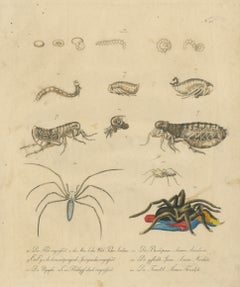
Fleas, Tarantula & Spiders – Brodtmann Hand-Colored Natural History Plate, 1816

Fleas, Tarantula & Spiders – Brodtmann Hand-Colored Natural History Plate, 1816

Located in Langweer, NL

Fleas, Tarantula & Spiders – Brodtmann Hand-Colored Natural History Plate, 1816 This fascinating original hand-colored lithograph illustrates a variety of insects and arachnids,...

Category

Early 19th Century Antique German Prints

Materials

Paper
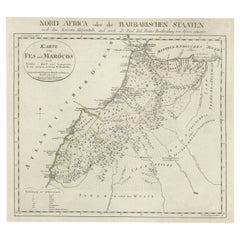
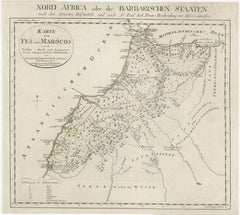
Original Antique Map of Fez and Morocco, 1799

Original Antique Map of Fez and Morocco, 1799

Located in Langweer, NL

Antique map titled 'Karte von Fes und Marócos (..)'. Original old map of Fez (or Fes) and Morocco. Also shows the Strait of Gibraltar. By Friedrich Gottlieb Canzler, published 1799.

Category

Late 18th Century Antique German Prints

Materials

Paper
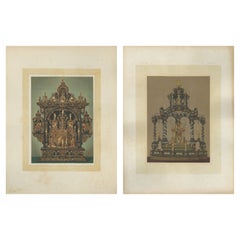
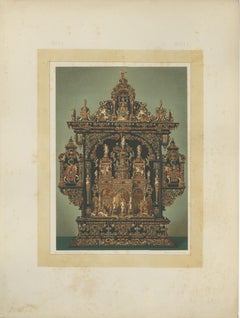
Pair Bavarian Royal Chapel Altar Shrines Chromolithographs, Munich, 1874

Pair Bavarian Royal Chapel Altar Shrines Chromolithographs, Munich, 1874

Located in Langweer, NL

Pair Bavarian Royal Chapel Altar Shrines Chromolithographs, F.X. Zettler Munich 1874 This striking pair of chromolithographs, produced in Munich in 1874 by the renowned ecclesiastic...
Category

1870s Antique German Prints

Materials

Paper
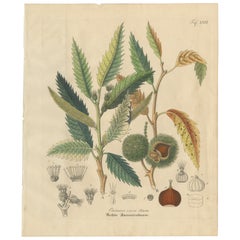
Antique Chestnut Botanical Print, Castanea Vesca, Hand Colored, c.1831

Antique Chestnut Botanical Print, Castanea Vesca, Hand Colored, c.1831

Located in Langweer, NL

Antique Chestnut Botanical Print, Castanea Vesca, Hand Colored, c.1831 Description: This original botanical engraving depicts Castanea Vesca, the sweet chestnut tree, shown with fol...

Category

1830s Antique German Prints

Materials

Paper
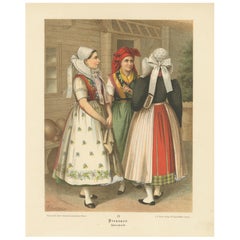
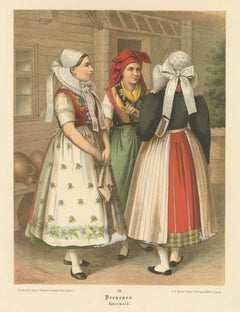
Spreewald Folk Costumes, Prussia, Women in Traditional Dress, c.1875

Spreewald Folk Costumes, Prussia, Women in Traditional Dress, c.1875

Located in Langweer, NL

Spreewald Folk Costumes, Prussia, Women in Traditional Dress, c.1875 This finely coloured chromolithograph depicts three women wearing traditional folk dress from the Spreewald regi...

Category

1870s Antique German Prints

Materials

Paper
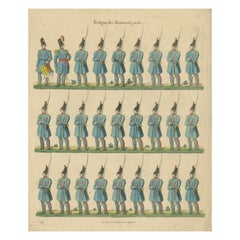
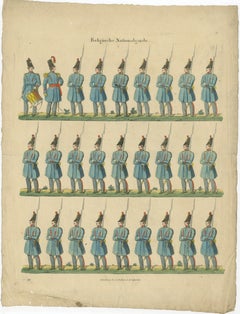
Antique Print of Belgian National Guard – Infantry Drill & Uniforms, c.1830–1840

Antique Print of Belgian National Guard – Infantry Drill & Uniforms, c.1830–1840

Located in Langweer, NL

Belgian National Guard – Infantry Drill and Uniforms, c.1830–1840 This finely hand-colored military print depicts the Belgian National Guard shortly after the formation of the Kingd...

Category

1830s Antique German Prints

Materials

Paper
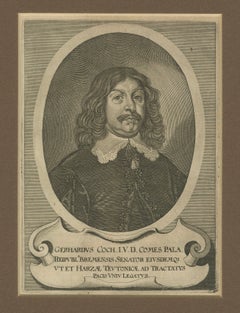
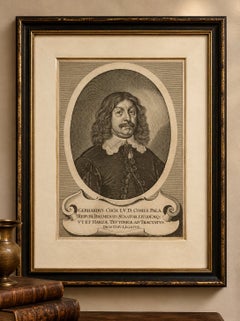
Gerhard Coch, Peace of Westphalia & Hanseatic Diplomat Portrait, 1652

Gerhard Coch, Peace of Westphalia & Hanseatic Diplomat Portrait, 1652

Located in Langweer, NL

TITLE Gerhard Coch, Peace of Westphalia & Hanseatic Diplomat Portrait, 1652 DESCRIPTION Original mid-17th-century portrait engraving of Gerhard Coch (1601–1660), German jurist, Br...

Category

Mid-17th Century Baroque Antique German Prints

Materials

Paper
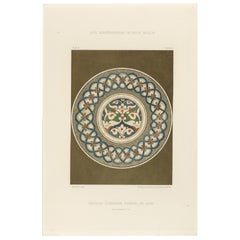
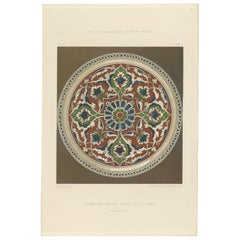
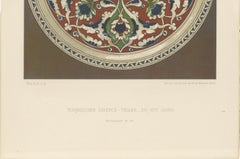
Persian-Turkish Faience Plate with Interlaced Pattern – J. Lessing, Berlin 1890

Persian-Turkish Faience Plate with Interlaced Pattern – J. Lessing, Berlin 1890

Located in Langweer, NL

Persian-Turkish Faience Plate with Interlaced Pattern – Julius Lessing, Berlin 1890 Description: An elegant chromolithograph from Julius Lessing’s Persisch-Türkische Fayencen (Persi...

Category

1890s Antique German Prints

Materials

Paper
Don Carlos from Schiller’s Tragedy – German Steel Engraving, 1859

Don Carlos from Schiller’s Tragedy – German Steel Engraving, 1859

Located in Langweer, NL

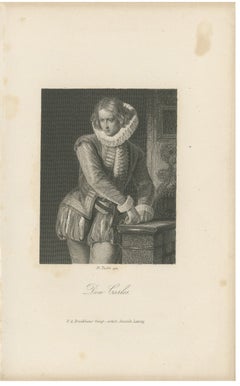
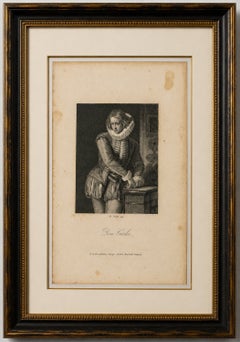
TITLE: Don Carlos from Schiller’s Tragedy – German Steel Engraving, 1859 DESCRIPTION: Original mid-19th-century German steel engraving depicting Don Carlos, the title character from Friedrich Schiller’s celebrated historical tragedy Don Carlos, Infant von Spanien (Don Carlos, Infante of Spain), first published in 1787. The young Don Carlos is portrayed in elaborate Renaissance court dress, with a prominent ruff collar, doublet and trunk hose. He stands beside a table in a richly detailed interior, creating a dramatic representation of Schiller’s Spanish prince. The composition was drawn by German artist Friedrich Pecht (1814–1903), identified beneath the image by the inscription “Fr. Pecht gez.” The engraving was produced for the Schiller-Galerie, an illustrated series presenting characters from the dramatic works of Friedrich Schiller. Published by F. A. Brockhaus’ Geographisch-artistische Anstalt in Leipzig, circa 1859. An attractive example of German 19th-century literary illustration, combining the Romantic fascination with historical drama with finely rendered period costume and interior detail. ARTIST: Friedrich Pecht (1814–1903), after his drawing PUBLISHER: F. A. Brockhaus’ Geographisch-artistische Anstalt, Leipzig PUBLICATION: Schiller-Galerie DATE: Circa 1859 ORIGIN: Leipzig, Germany MEDIUM: Steel engraving on paper SUBJECT: Don Carlos from Friedrich Schiller’s Don Carlos, Infant von Spanien STYLE: German Romanticism / Historicism PERIOD: Mid-19th Century / Victorian Era CONDITION: Fair to good antique condition. General age-related toning with scattered foxing and staining throughout the sheet. A more noticeable area of staining is present in the upper right margin, with several smaller marks and spots elsewhere. The engraved image itself remains strong and well defined. Minor edge and handling wear consistent with age. Please study the photographs carefully as they form part of the condition description. ORIGINAL ANTIQUE: This is an original antique steel engraving produced in the 19th century, not a modern reproduction. SOLD UNFRAMED: The print is offered unframed. Any framed or interior images shown are for presentation and inspiration only. KEYWORDS: Don Carlos, Friedrich Schiller, Friedrich Pecht, Schiller Galerie, German literature, German Romanticism, Historicism, steel engraving, antique engraving, literary print, German theatre, Spanish prince, Renaissance costume, historical portrait, Victorian print, 19th century print, Leipzig, Brockhaus, German drama, antique German print...
Category

Mid-19th Century Romantic Antique German Prints

Materials

Paper

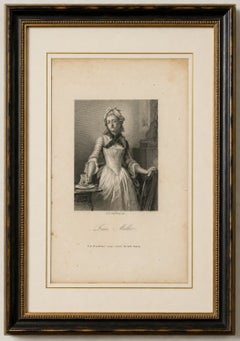
Luise Miller, Schiller’s Kabale und Liebe – German Steel Engraving, 1859

Luise Miller, Schiller’s Kabale und Liebe – German Steel Engraving, 1859

Located in Langweer, NL

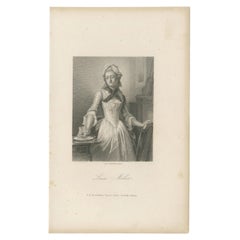
TITLE: Luise Miller, Schiller’s Kabale und Liebe – German Steel Engraving, 1859 DESCRIPTION: Original mid-19th-century steel engraving depicting Luise Miller, the central heroine of Friedrich Schiller’s celebrated bourgeois tragedy Kabale und Liebe (Love and Intrigue), first published and performed in 1784. Luise is portrayed as an elegantly dressed young woman in a domestic interior, standing beside a small table with a glass and plate. The finely rendered costume, furniture and interior details demonstrate the precision and tonal qualities characteristic of 19th-century steel engraving. The composition was drawn by German-Austrian artist Arthur von Ramberg (1819–1875), whose name appears beneath the image as “A. v. Ramberg gez.” It was engraved by Konrad Conrad Geyer and produced for the Schiller-Galerie, an illustrated series devoted to characters from the dramatic works of Friedrich Schiller. Published by F. A. Brockhaus’ Geographisch-artistische Anstalt in Leipzig, circa 1859. The elegant combination of German literary history, Romantic-era subject matter and detailed period costume makes this an attractive decorative print as well as an interesting piece for collectors of Schiller, German literature and 19th-century illustration. CREATOR: Arthur von Ramberg (1819–1875), after his drawing ENGRAVER: Konrad Conrad Geyer PUBLISHER: F. A. Brockhaus’ Geographisch-artistische Anstalt, Leipzig PUBLICATION: Schiller-Galerie DATE: Circa 1859 ORIGIN: Leipzig, Germany MEDIUM: Steel engraving on paper SUBJECT: Luise Miller from Friedrich Schiller’s Kabale und Liebe (Love and Intrigue) STYLE / PERIOD: Mid-19th Century German Romanticism Victorian Era Literary Illustration CONDITION: Good antique condition with age-related toning and scattered foxing, primarily within the margins. Some discoloration and minor wear are visible toward the edges of the sheet. The engraved image itself remains well defined with good detail and tonal contrast. Please study the photographs carefully as they form part of the condition description. ORIGINAL ANTIQUE: This is an original antique steel engraving produced in the 19th century, not a modern reproduction. SOLD UNFRAMED: The print is offered unframed. Any framed or interior images shown are for presentation and inspiration only. KEYWORDS: Luise Miller, Kabale und Liebe, Love and Intrigue, Friedrich Schiller, Arthur von Ramberg, Konrad Geyer, Schiller Galerie, German literature, German Romanticism, steel engraving, antique engraving, literary print, female portrait, Victorian print, 19th century print, Leipzig, Brockhaus, German theatre, historical costume, antique German print...

Category

Mid-19th Century Romantic Antique German Prints

Materials

Paper

Turkish Faience Plate with Stylized Floral Medallion – J. Lessing, Berlin 1890

Turkish Faience Plate with Stylized Floral Medallion – J. Lessing, Berlin 1890

Located in Langweer, NL

Turkish Faience Plate with Stylized Floral Medallion – Julius Lessing, Berlin 1890 A beautifully detailed chromolithograph from Julius Lessing’s Persisch-Türkische Fayencen (Persian...

Category

1890s Antique German Prints

Materials

Paper

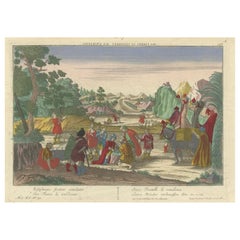
Optica Print of Joseph Sold by His Brothers to Ishmaelites, 1770 -Biblical Scene

Optica Print of Joseph Sold by His Brothers to Ishmaelites, 1770 -Biblical Scene

Located in Langweer, NL

Optica Print of Joseph Sold by His Brothers to the Ishmaelites, circa 1770 – Hand-Colored Biblical Engraving This vibrant hand-colored *vue d’optique*, titled "Josephum fratres vend...

Category

Mid-18th Century Antique German Prints

Materials

Paper

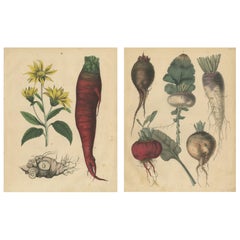
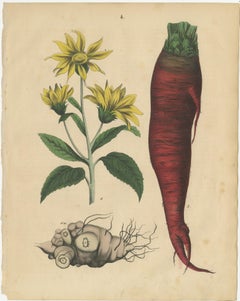
Antique Root Vegetable Lithographs – Beets, Carrots, Turnips, Calwer 1852

Antique Root Vegetable Lithographs – Beets, Carrots, Turnips, Calwer 1852

Located in Langweer, NL

Antique Root Vegetable Lithographs – Beets, Carrots, Turnips, Calwer 1852 This attractive two-plate set features cultivated root vegetables illustrated in Carl Gustav Calwer’s Landw...

Category

Mid-19th Century Antique German Prints

Materials

Paper

Antique Giant Locust & Grasshopper Engraving – Bertuch, c.1800

Antique Giant Locust & Grasshopper Engraving – Bertuch, c.1800

Located in Langweer, NL

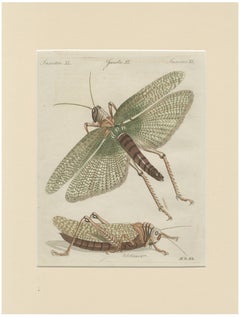
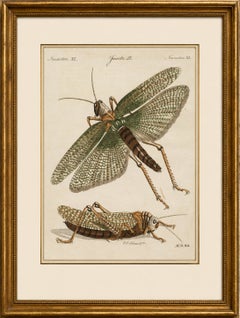
Title: Antique Giant Locust & Grasshopper Engraving – Bertuch, c. 1800 Original antique hand-colored copper engraving depicting a spectacular large grasshopper or locust, published in Friedrich Justin Bertuch’s celebrated “Bilderbuch für Kinder” around the turn of the 19th century. The plate presents the insect in two complementary views: a magnificent flying specimen with all four wings fully extended and a second specimen at rest with its wings folded along the body. Large Locust / Grasshopper The principal figure dominates the composition and beautifully displays the insect’s remarkable anatomy. Its powerful hind legs are adapted for jumping, while the two pairs of wings are shown fully extended. Particularly attractive are the large, delicately patterned wings, hand-colored in subtle shades of green, grey, brown and reddish pink. The second figure shows the same or a closely related grasshopper at rest. This allows the viewer to compare the dramatically expanded flying form with the insect’s much more compact appearance when its wings are folded. Grasshoppers and locusts belong to the order Orthoptera, an ancient group of insects characterized by powerful hind legs, chewing mouthparts and, in many species, the ability to produce sound. Locusts are essentially certain species of grasshopper capable of dramatic behavioral changes and, under particular environmental conditions, forming enormous migratory swarms. For European readers around 1800, large exotic grasshoppers and locusts were particularly fascinating. They were known not only as remarkable natural-history specimens but also through historical and biblical accounts of vast locust swarms. Friedrich Justin Bertuch Friedrich Justin Bertuch (1747–1822) was a German publisher, writer and patron of the arts. His monumental “Bilderbuch für Kinder” (Picture Book for Children), first published in Weimar in 1790, became one of the great illustrated educational encyclopedias of the late 18th and early 19th centuries. ([DNB][2]) Its engraved and hand-colored plates introduced young readers to animals, insects, plants, geography, science, technology, antiquity and cultures from around the world. The plate bears the engraved signature “J. G. Schmuzer” and the reference “X.B.22.” The combination of unusually large scale, finely engraved wing structure and restrained original coloring makes this one of the more decorative insect plates from the series. The flying specimen has an almost architectural quality, with the four wings spread across most of the sheet. Technique: Original hand-colored copper engraving Publisher: Friedrich Justin Bertuch / Industrie-Comptoir Publication: Bilderbuch für Kinder Place: Weimar, Germany Date: Late 18th / early 19th century, circa 1800 Engraver: J. G. Schmuzer Plate reference: X.B.22 Subject: Large Locust / Grasshopper Order: Orthoptera Condition: Good antique condition with overall age-related toning, scattered light foxing and spotting and minor marks and imperfections consistent with its age. Some faint show-through or offsetting from printed text is visible. The original hand coloring remains particularly attractive, with delicate green, grey, brown and reddish tones. The engraving is loosely inserted in an acid-free matting board. Please study the photographs carefully as they form part of the condition description. Please note: This is an original antique hand-colored copper engraving from around the turn of the 19th century, not a modern reproduction. The print is sold unframed. Framed images or interior views, if shown, are for presentation and inspiration only. Other companion insect and natural-history plates from Bertuch’s “Bilderbuch für Kinder” are also available separately. Keywords: Friedrich Justin Bertuch, Bilderbuch für Kinder, locust, grasshopper, giant grasshopper, giant locust, flying locust, Orthoptera, antique grasshopper...

Category

Early 19th Century Neoclassical Antique German Prints

Materials

Paper

Antique Tapir & Bear Zoological Engraving – Bertuch, c. 1800

Antique Tapir & Bear Zoological Engraving – Bertuch, c. 1800

Located in Langweer, NL

Title: Antique Tapir & Bear Zoological Engraving – Bertuch, c. 1800 Original antique hand-colored copper engraving depicting two remarkable exotic mammals – a South American tapir a...

Category

Early 19th Century Neoclassical Antique German Prints

Materials

Paper

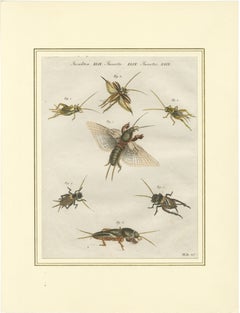
Antique Crickets & Mole Cricket Engraving – Bertuch, 1807

Antique Crickets & Mole Cricket Engraving – Bertuch, 1807

Located in Langweer, NL

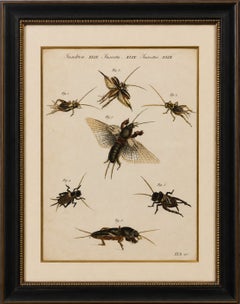
Title: Antique Crickets & Mole Cricket Engraving – Bertuch, 1807 Original antique hand-colored copper engraving depicting seven different native crickets and related insects, published in Friedrich Justin Bertuch’s celebrated “Bilderbuch für Kinder” in Weimar in 1807. The plate is headed “Insekten XLIX / Insecta XLIX / Insectes XLIX” and is historically described as: “Verschiedene Einheimische Grillen-Arten” – Various Native Species of Crickets. The engraving presents seven different cricket forms, including field and ground crickets and the extraordinary mole cricket, shown both at rest and with its wings fully extended. Fig. 1–5 – Various Crickets The smaller insects surrounding the central figure represent several forms of true crickets and related Orthoptera. Their characteristic features include exceptionally long antennae, powerful hind legs adapted for jumping and compact bodies. Crickets were familiar inhabitants of European fields, gardens and houses, but their remarkable anatomy and characteristic chirping made them popular subjects in early natural-history publications. The sound commonly associated with crickets is produced principally by males rubbing specialized parts of their wings together, a process known as stridulation. Fig. 6 – Mole Cricket The remarkable insect at the bottom is a Mole Cricket, recognizable by its elongated body and enormously developed front legs. Common name: European Mole Cricket Scientific name: Gryllotalpa gryllotalpa Unlike ordinary crickets, the Mole Cricket spends much of its life underground. Its powerful front legs have evolved into broad digging structures that function almost like miniature shovels. With them the insect excavates extensive tunnels through moist soil. The name Gryllotalpa literally combines the Latin words for “cricket” and “mole” – an exceptionally appropriate description of this unusual insect. Fig. 7 – Winged Mole Cricket The spectacular central figure shows a Mole Cricket with its wings fully extended. This is particularly interesting because the familiar burrowing insect is rarely depicted in flight. The large, delicately veined wings contrast dramatically with its heavy body and powerful digging forelegs. Despite their subterranean lifestyle, adult mole crickets possess functional wings and some species are capable of considerable flight, particularly when dispersing or seeking mates. The central winged specimen gives this plate considerably more visual impact than a conventional cricket illustration. Friedrich Justin Bertuch (1747–1822) was a German publisher, writer and patron of the arts. His monumental “Bilderbuch für Kinder” (Picture Book for Children), first published in Weimar in 1790, became one of the great illustrated educational encyclopedias of the late 18th and early 19th centuries. Its hundreds of engraved and hand-colored plates introduced readers to animals, plants, geography, science, technology, antiquity and cultures from around the world. This attractive entomological plate combines scientific observation with decorative composition. Seven insects are arranged almost like specimens in a natural-history cabinet, while the unusually large winged Mole Cricket forms a dramatic centerpiece. Technique: Original hand-colored copper engraving Publisher: Friedrich Justin Bertuch / Industrie-Comptoir Publication: Bilderbuch für Kinder Place: Weimar, Germany Date: 1807 Plate: Insekten XLIX / Insecta XLIX / Insectes XLIX Historical subject: Verschiedene Einheimische Grillen-Arten – Various Native Species of Crickets Subjects: Crickets, Field Crickets and Mole Cricket Mole Cricket scientific name: Gryllotalpa gryllotalpa Plate reference: XI B. 26 Condition: The engraving is loosely inserted in an acid-free matting board. Please study the photographs carefully as they form part of the condition description. Please note: This is an original antique hand-colored copper engraving from 1807, not a modern reproduction. The print is sold unframed. Framed images or interior views, if shown, are for presentation and inspiration only. Other companion insect and natural-history plates from Bertuch’s “Bilderbuch für Kinder” are also available separately. Keywords: Friedrich Justin Bertuch, Bilderbuch für Kinder, cricket engraving, antique cricket print...

Category

Early 19th Century Neoclassical Antique German Prints

Materials

Paper

Battle of the Drina, 14 August 1914 – Austro-Serbian Front, WWI Color Print

Battle of the Drina, 14 August 1914 – Austro-Serbian Front, WWI Color Print

Located in Langweer, NL

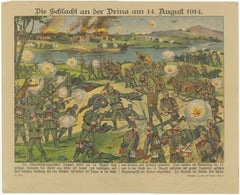
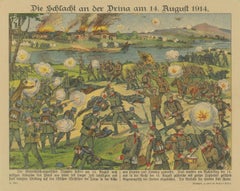
Battle of the Drina, 14 August 1914 – Austro-Serbian Front, WWI Color Print This vivid and highly animated color print depicts the Battle of the Drina on 14 August 1914, one of the ...

Category

Early 20th Century German Prints

Materials

Paper

German Botanical Plates Umbellifers & Medicinal Plants, Stuttgart c.1890

German Botanical Plates Umbellifers & Medicinal Plants, Stuttgart c.1890

Located in Langweer, NL

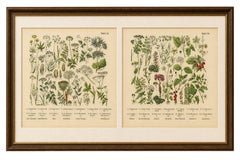
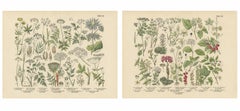
German Botanical Plates Umbellifers & Medicinal Plants, Stuttgart c.1890 Description: A finely detailed and visually harmonious pair of antique botanical plates (Tafeln 55–56), publ...

Category

Late 19th Century Antique German Prints

Materials

Paper

Antique Beaver with Webbed Feet Engraving – Bertuch, c. 1792

Antique Beaver with Webbed Feet Engraving – Bertuch, c. 1792

Located in Langweer, NL

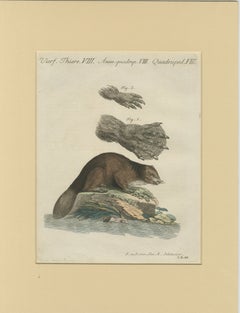
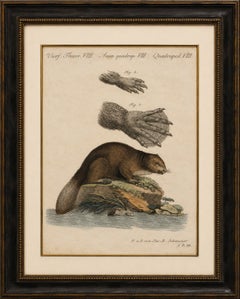
Title: Antique Beaver with Webbed Feet Engraving – Bertuch, c. 1792 Original antique hand-colored copper engraving depicting a beaver together with detailed anatomical studies of it...

Category

Late 18th Century Neoclassical Antique German Prints

Materials

Paper

Antique African Sanga Longhorn Cattle Engraving – Bertuch, c.1810

Antique African Sanga Longhorn Cattle Engraving – Bertuch, c.1810

Located in Langweer, NL

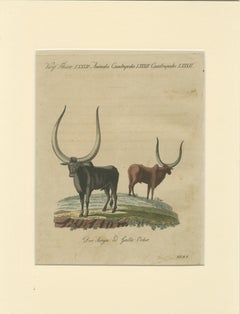
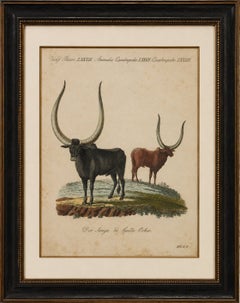
Title: Antique African Sanga Longhorn Cattle Engraving – Bertuch, c. 1810 Original antique hand-colored copper engraving depicting the extraordinary African Sanga or long-horned cattle, published in Friedrich Justin Bertuch’s celebrated “Bilderbuch für Kinder” in Weimar in the early 19th century. The plate is headed “Vierfüßige Thiere LXXXVI / Animalia Quadrupedia LXXXVI / Quadrupèdes LXXXVI” and bears the original German caption: “Der Sanga od. Galla-Ochse” – The Sanga or Galla Ox. The Sanga Ox / African Longhorn The engraving depicts two African cattle, dominated by the spectacular dark animal in the foreground with exceptionally long, slender horns sweeping dramatically upward. Behind it stands a smaller reddish-brown animal, likewise displaying the characteristic elongated horns of the Sanga cattle group. Sanga cattle are an ancient group of African cattle associated particularly with eastern, central and southern Africa. They are immediately recognizable by their impressive horns, which in certain breeds can reach extraordinary dimensions. The term Sanga is still used for a broad group of indigenous African cattle. They are historically related to some of the spectacular long-horned cattle breeds surviving today, including the famous Ankole and Ankole-Watusi cattle of East and Central Africa. The enormous horns are not simply decorative. In some African long-horned cattle they contain a large internal network of blood vessels, helping the animal regulate body temperature in hot climates. Historical “Galla Ox” Bertuch gives the animal the alternative historical name “Galla-Ochse.” “Galla” was a name historically used in European literature for the Oromo people and regions associated with them in East Africa, particularly present-day Ethiopia and neighboring areas. The term is now outdated and is retained here solely as part of the original historical title printed on the engraving. Around 1800, animals such as these were still extraordinary sights for European audiences. Natural-history publications introduced readers to cattle breeds and wild animals known through exploration, travellers’ accounts, imported specimens and earlier zoological works. The immense horns of African cattle made them particularly fascinating subjects. The engraving beautifully emphasizes this feature: the foreground animal’s horns extend far above its head, creating an almost architectural silhouette. Friedrich Justin Bertuch (1747–1822) was a German publisher, writer and patron of the arts. His monumental “Bilderbuch für Kinder” (Picture Book for Children), first published in Weimar in 1790, became one of the great illustrated educational encyclopedias of the late 18th and early 19th centuries. Its hundreds of engraved and hand-colored plates introduced readers to animals, plants, geography, science, technology, antiquity and cultures from around the world. This is an especially striking Bertuch animal plate. The extraordinary sweeping horns, restrained original hand coloring and simple landscape setting give the composition considerable decorative impact. It would work particularly well in a natural-history collection, country-house interior, study, library, African-inspired interior or cabinet-of-curiosities setting. Technique: Original hand-colored copper engraving Publisher: Friedrich Justin Bertuch / Industrie-Comptoir Publication: Bilderbuch für Kinder Place: Weimar, Germany Date: early 19th century, circa 1810 Plate: Vierfüßige Thiere LXXXVI / Animalia Quadrupedia LXXXVI / Quadrupèdes LXXXVI Original title: Der Sanga od. Galla-Ochse Subject: Sanga Cattle / African Long-Horned Cattle Also associated with: Ankole / Ankole-Watusi cattle Geographical association: East and Central Africa Condition: Good antique condition with overall age-related toning, scattered foxing and spotting and some visible show-through or offsetting from printed text. There are minor stains and marks, particularly toward the lower portion of the sheet, consistent with an original print more than 200 years old. The original hand coloring remains attractive, with restrained black, brown, green and blue-grey tones. Please study the photographs carefully as they form part of the condition description. The engraving is loosely inserted in an acid-free matting board. Please note: This is an original antique hand-colored copper engraving from the early 19th century, not a modern reproduction. The print is sold unframed. Framed images or interior views, if shown, are for presentation and inspiration only. Other companion animal and natural-history plates from Bertuch’s “Bilderbuch für Kinder” are also available separately. Keywords: Friedrich Justin Bertuch, Bilderbuch für Kinder, Sanga cattle, Sanga ox, African cattle, African longhorn, long horned cattle, Ankole cattle, Ankole-Watusi, Watusi cattle, African ox, Galla Ox, Ethiopia, East Africa, African livestock, cattle engraving, antique cow print, antique cattle print...

Category

Early 19th Century Neoclassical Antique German Prints

Materials

Paper

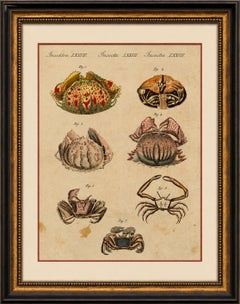
Antique Exotic Crabs & Fiddler Crab Engraving – Bertuch, c. 1813

Antique Exotic Crabs & Fiddler Crab Engraving – Bertuch, c. 1813

Located in Langweer, NL

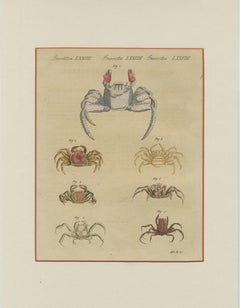
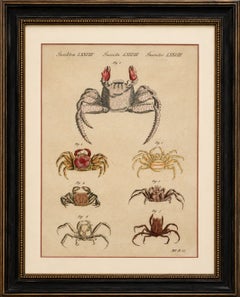
Title: Antique Exotic Crabs & Fiddler Crab Engraving – Bertuch, c. 1813 Original antique hand-colored copper engraving depicting seven unusual and highly decorative crabs, published in Friedrich Justin Bertuch’s celebrated “Bilderbuch für Kinder” in Weimar in the early 19th century. The plate is headed “Insekten LXXVIII / Insecta LXXVIII / Insectes LXXVIII” and presents seven different crab forms, ranging from the spectacular large-clawed specimen at the top to a series of smaller tropical shore and marine crabs below. As was customary in zoological literature of Bertuch’s period, crustaceans were included within the broad historical category of “Insects.” Under modern zoological classification, all of the animals represented here are crustaceans. Fig. 1 – Fiddler Crab / Calling Crab Type The spectacular principal figure shows a long-legged crab with prominently raised red claws. Crabs with enlarged or conspicuously displayed claws became popularly known as fiddler crabs or calling crabs. The exaggerated claws are used for display, communication and competition between individuals. Its almost symmetrical pose and bright red claws make this the visual centerpiece of the engraving. Fig. 2 – Red Shore Crab A compact and particularly colorful crab with a rounded red carapace, yellow-green legs and contrasting red claws. Fig. 3 – Pale Tropical Crab A delicately colored crab with a pale yellow-orange body, elongated legs and prominent claws. Fig. 4 – Spotted Crab A small decorative crab with a beautifully patterned orange-red carapace and contrasting darker legs. Fig. 5 – Horned / Spiny Crab A remarkable small crab distinguished by its strongly sculpted body and projecting points or spines. Its unusual shape reflects the extraordinary diversity of tropical crab species that fascinated European naturalists. Fig. 6 – Long-Legged Crab A pale crab with a compact central body and comparatively long, slender legs. Fig. 7 – Dark Shore Crab A dark reddish-brown crab with angular claws and legs, represented in a characteristically defensive or elevated stance. The exact scientific classification of many crabs illustrated in early natural-history works has changed substantially since Bertuch’s time. For that reason, the descriptive common names above are preferable to assigning modern species names where the historical illustration alone does not permit a secure identification. Friedrich Justin Bertuch (1747–1822) was a German publisher, writer and patron of the arts. His monumental “Bilderbuch für Kinder” (Picture Book for Children), first published in Weimar in 1790, became one of the great illustrated educational encyclopedias of the late 18th and early 19th centuries. Its hundreds of engraved and hand-colored plates introduced readers to animals, plants, geography, science, technology, antiquity and cultures from around the world. This is an especially attractive marine natural-history plate. The seven crabs are presented almost like specimens in a cabinet of curiosities, while the restrained but varied original coloring in red, pink, yellow, green and brown gives the composition considerable decorative appeal. The companion Bertuch plate “Insekten LXXVII,” illustrating Calappa or box crabs, is also available separately and makes an especially attractive pairing with this engraving. Technique: Original hand-colored copper engraving Publisher: Friedrich Justin Bertuch / Industrie-Comptoir Publication: Bilderbuch für Kinder Place: Weimar, Germany Date: early 19th century, circa 1813 Plate: Insekten LXXVIII / Insecta LXXVIII / Insectes LXXVIII Subject: Exotic Crabs / Marine Crustaceans Number of figures: Seven Condition: Good antique condition with overall age-related toning, scattered foxing and spotting and some visible show-through or offsetting from printed text. Minor marks and imperfections are present consistent with a print more than 200 years old. The original hand coloring remains attractive, particularly the red and pink coloring of the claws and shells. Please study the photographs carefully as they form part of the condition description. The engraving is loosely inserted in an acid-free matting board. Please note: This is an original antique hand-colored copper engraving from the early 19th century, not a modern reproduction. The print is sold unframed. Framed images or interior views, if shown, are for presentation and inspiration only. Other companion marine-life, crustacean and natural-history plates from Bertuch’s “Bilderbuch für Kinder” are also available separately. Keywords: Friedrich Justin Bertuch, Bilderbuch für Kinder, antique crab print...

Category

Early 19th Century Neoclassical Antique German Prints

Materials

Paper

Antique Wild Buffalo & Long Horns Engraving – Bertuch, c. 1810

Antique Wild Buffalo & Long Horns Engraving – Bertuch, c. 1810

Located in Langweer, NL

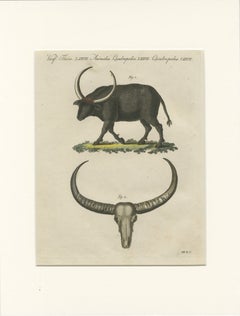
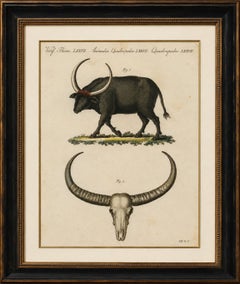
Title: Antique Wild Buffalo & Long Horns Engraving – Bertuch, c. 1810 Original antique hand-colored copper engraving depicting an impressive wild buffalo with enormous crescent-shap...

Category

Early 19th Century Neoclassical Antique German Prints

Materials

Paper

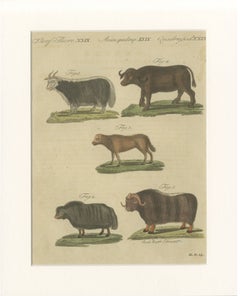
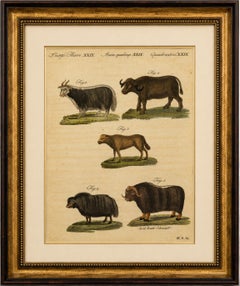
Antique Yak, Indian Cattle, Buffalo & Musk Ox Engraving – Bertuch, 1796

Antique Yak, Indian Cattle, Buffalo & Musk Ox Engraving – Bertuch, 1796

Located in Langweer, NL

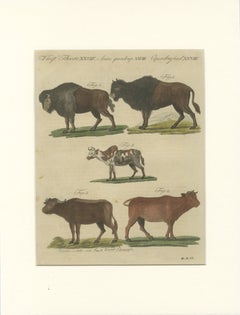
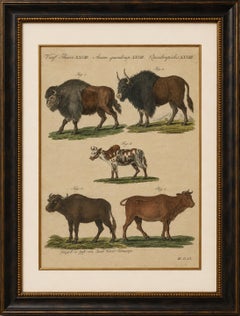
Title: Antique Yak, Indian Cattle, Buffalo & Musk Ox Engraving – Bertuch, 1796 Original antique hand-colored copper engraving depicting five remarkable cattle and bovids from Asia, Africa and the northern regions, published in Friedrich Justin Bertuch’s celebrated “Bilderbuch für Kinder” in Weimar in 1796. The plate is headed “Vierfüßige Thiere XXVIII / Anim. quadrup. XXVIII / Quadrupèdes XXVIII” and illustrates several exotic members and varieties of the ox and cattle family. Bertuch’s original subject description identifies the animals represented on this plate as the Sarluk or Grunting Ox, the Indian Cow, the African Buffalo and the Musk Ox. Fig. 1 – Sarluk / Grunting Ox / Yak The large shaggy animal at upper right represents the Sarluk, historically also known as the Grunting Ox. Today this animal is generally associated with the Yak (Bos grunniens), the famous long-haired bovine of the highlands of Central Asia and the Himalayan region. Its heavy shaggy coat provides protection against extreme cold, while its powerful build makes the yak exceptionally well adapted to mountainous environments. The historical name “Grunting Ox” derives from the characteristic grunting sounds made by the animal. Fig. 2 – Indian Cow / Indian Cattle The reddish-brown animal at lower right represents an Indian form of domestic cattle. Indian cattle were of considerable interest to European naturalists because their appearance differed noticeably from familiar European breeds. Their distinctive characteristics eventually became associated particularly with zebu-type cattle (Bos indicus), although historical classifications and illustrations do not always correspond exactly with modern breeds. Fig. 3 – Sarluk / Yak The second shaggy animal at upper left represents another example or variety of the Sarluk or Grunting Ox. Its massive forequarters, dark shaggy mane and shorter hindquarters give it a remarkably bison-like appearance, illustrating why early European naturalists sometimes struggled to distinguish and classify the various wild and domesticated bovids encountered through travel and exploration. Fig. 4 – Indian Cow The smaller centrally positioned animal represents another Indian cattle variety, attractively depicted with a distinctive brown-and-white patterned coat. Fig. 5 – African Buffalo The dark horned animal at lower left represents the African Buffalo. Today the African or Cape Buffalo is classified as Syncerus caffer. It is one of Africa’s largest and most powerful bovids and is distinguished by its massive body and heavy horns. Musk Ox Bertuch’s original description of this plate also includes the Musk Ox, historically grouped with ox-like animals because of its heavy build and exceptionally thick coat. The Musk Ox (Ovibos moschatus) is native to the Arctic regions of North America and Greenland. Despite its traditional name and ox-like appearance, modern zoology places it closer to goats and sheep than to true cattle. The plate is particularly interesting as a record of late 18th-century zoological classification. European naturalists were attempting to understand relationships between domestic cattle, yaks, buffaloes, musk oxen and other bovids at a time when many exotic species were known principally through travellers’ descriptions, preserved specimens and earlier natural-history illustrations. Friedrich Justin Bertuch (1747–1822) was a German publisher, writer and patron of the arts. His monumental “Bilderbuch für Kinder” (Picture Book for Children), first published in Weimar in 1790, became one of the great illustrated educational encyclopedias of the late 18th and early 19th centuries. Its hundreds of engraved and hand-colored plates introduced readers to animals, plants, geography, science, technology, antiquity and cultures from around the world. The plate is inscribed at the bottom: “Gezeich. u. gest. von Jacob Xaver Schmuzer” meaning “drawn and engraved by Jacob Xaver Schmuzer.” The combination of shaggy exotic cattle, buffalo and unusual regional breeds makes this an especially decorative natural-history plate, well suited to a country-house, farmhouse, library, study or natural-history interior. Technique: Original hand-colored copper engraving Publisher: Friedrich Justin Bertuch / Industrie-Comptoir Publication: Bilderbuch für Kinder Place: Weimar, Germany Date: 1796 Plate: Vierfüßige Thiere XXVIII / Anim. quadrup. XXVIII / Quadrupèdes XXVIII Artist / Engraver: Jacob Xaver Schmuzer Subjects: Sarluk or Grunting Ox, Indian Cattle, African Buffalo and Musk Ox Modern names associated with the historical subjects: Yak / Grunting Ox – Bos grunniens Indian Cattle / Zebu – Bos indicus African Buffalo / Cape Buffalo – Syncerus caffer Musk Ox – Ovibos moschatus Condition: Good antique condition with overall age-related toning, scattered foxing and spotting and some visible show-through or offsetting from printed text. Minor marks and imperfections are present consistent with a print dating from 1796. The original hand coloring remains attractive, with restrained shades of brown, black, green and ochre. Please study the photographs carefully as they form part of the condition description. The engraving is loosely inserted in an acid-free matting board. Please note: This is an original antique hand-colored copper engraving from 1796, not a modern reproduction. The print is sold unframed. Framed images or interior views, if shown, are for presentation and inspiration only. Other companion animal and natural-history plates from Bertuch’s “Bilderbuch für Kinder” are also available separately. Keywords: Friedrich Justin Bertuch, Bilderbuch für Kinder, yak, Sarluk, grunting ox, Bos grunniens, Indian cow, Indian cattle, zebu, Bos indicus, African buffalo, Cape buffalo, Syncerus caffer, musk ox, Ovibos moschatus, antique cattle print...

Category

Early 19th Century Neoclassical Antique German Prints

Materials

Paper

Antique Jaguar & Jaguarundi Engraving – Bertuch, 1813

Antique Jaguar & Jaguarundi Engraving – Bertuch, 1813

Located in Langweer, NL

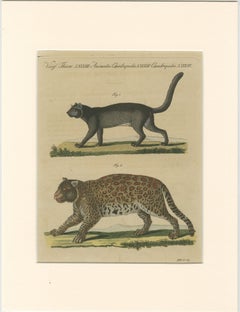
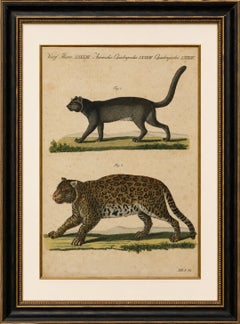
Title: Antique Jaguar & Jaguarundi Engraving – Bertuch, 1813 Original antique hand-colored copper engraving depicting two remarkable South American wil...

Category

Early 19th Century Neoclassical Antique German Prints

Materials

Paper

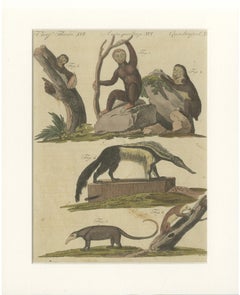
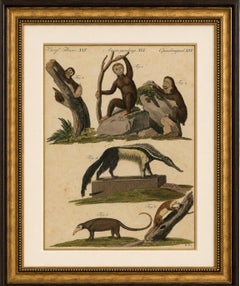
Antique Aardvark, Echidna, Baboons & Skeleton Engraving – Bertuch

Antique Aardvark, Echidna, Baboons & Skeleton Engraving – Bertuch

Located in Langweer, NL

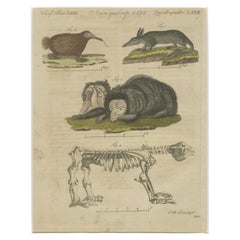
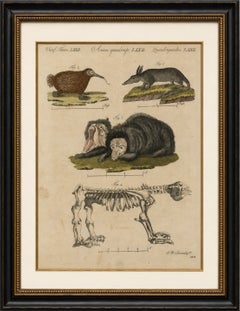
Title: Antique Aardvark, Echidna, Baboons & Skeleton Engraving – Bertuch Original antique hand-colored copper engraving depicting several remarkable mammals, including an aardvark, ...

Category

Early 19th Century Neoclassical Antique German Prints

Materials

Paper

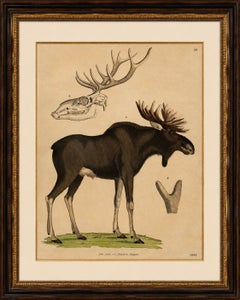
Antique Moose / Eurasian Elk & Antler Anatomy Lithograph – 1845

Antique Moose / Eurasian Elk & Antler Anatomy Lithograph – 1845

Located in Langweer, NL

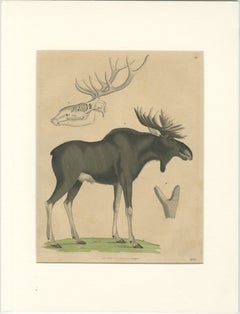
Title: Antique Moose / Eurasian Elk & Antler Anatomy Lithograph – 1845 Original antique hand-colored lithograph depicting a magnificent male Moose or Eurasian Elk (Alces alces), accompanied by detailed anatomical studies of its skull, antlers and cloven hoof. Published in Stuttgart and dated 1845, this striking zoological plate is numbered 38 and was produced by the Lithographische Anstalt von C. Schach, an important Stuttgart lithographic establishment responsible for natural-history illustrations associated with the works of German naturalist Lorenz Oken. Fig. 1 – Moose / Eurasian Elk (Alces alces) The large central figure depicts an adult male Moose, known in British and European English as the Elk. Alces alces is the largest living member of the deer family (Cervidae) and is immediately recognizable by its massive body, long legs, elongated muzzle and the spectacular broad, palmate antlers carried by mature males. The terminology can sometimes cause confusion: in North American English the animal is called a Moose, while in British English it is traditionally called an Elk. The North American animal commonly called an “elk” is a different species, the Wapiti (Cervus canadensis). Fig. 2 – Moose Skull and Antlers Above the main animal is a finely drawn anatomical study of the skull and enormous antlers. The illustration clearly shows the distinctive broad, flattened or palmate antlers of the mature male, which distinguish the Moose from most other deer species. Fig. 3 – Cloven Hoof A separate anatomical detail illustrates the characteristic divided or cloven hoof. Moose are superbly adapted to forests, wetlands and cold northern environments. Their large spreading hooves help support their considerable weight when moving across soft marshland, mud and snow. The combination of a complete animal portrait with separate anatomical details reflects the increasingly scientific approach to zoological illustration during the first half of the 19th century. The lithograph bears the inscription: “Lith. Anst. v. C. Schach in Stuttgart” and is dated: 1845 The C. Schach lithographic establishment in Stuttgart produced finely illustrated zoological and natural-history plates during the 19th century. Comparable plates were used in connection with the extensive natural-history publications of Lorenz Oken (1779–1851), one of the most influential German naturalists and philosophers of his generation. This particularly handsome plate has considerable decorative appeal. The monumental dark silhouette of the Moose, its spectacular antlers and the almost museum-like anatomical studies make it suitable for a country-house, hunting lodge, library, study or natural-history interior. Technique: Original hand-colored lithograph Lithographer / Printer: Lithographische Anstalt von C. Schach Place: Stuttgart, Germany Date: 1845 Plate Number: 38 Subject: Moose / Eurasian Elk Scientific name: Alces alces Family: Cervidae Additional subjects: Moose skull, antlers and cloven hoof Condition: Good antique condition with overall age-related toning and scattered small spots and foxing. Some minor marks and imperfections are present consistent with a lithograph dating from 1845. The original coloring remains attractive, particularly the subtle green coloring beneath the animal. Please study the photographs carefully as they form part of the condition description. The lithograph is loosely inserted in an acid-free matting board. Please note: This is an original antique lithograph dating from 1845, not a modern reproduction. The print is sold unframed. Framed images or interior views, if shown, are for presentation and inspiration only. Keywords: antique moose print, moose lithograph, Eurasian elk, elk print, Alces alces, antique deer print...

Category

Early 19th Century Neoclassical Antique German Prints

Materials

Paper

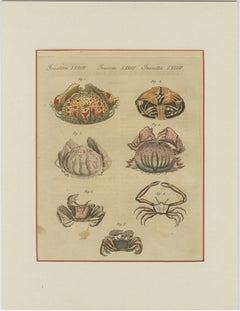
Antique Calappa Box Crabs & Exotic Crabs Engraving – Bertuch, 1813

Antique Calappa Box Crabs & Exotic Crabs Engraving – Bertuch, 1813

Located in Langweer, NL

Title: Antique Calappa Box Crabs & Exotic Crabs Engraving – Bertuch, 1813 Original antique hand-colored copper engraving depicting a fascinating selection of exotic crabs, particularly Calappa or box crabs, published in Friedrich Justin Bertuch’s celebrated “Bilderbuch für Kinder” in Weimar in the early 19th century. The plate is headed “Insekten LXXVII / Insecta LXXVII / Insectes LXXVII” and is devoted to “Verschiedene Arten Calappen und Krabben” – Various Species of Calappas and Crabs. Although classified by Bertuch under the historical heading “Insects,” the animals shown are of course crustaceans according to modern zoological classification. Such broad classifications were common in natural-history publications of the period. The plate illustrates several remarkable crab forms, including: Calappa / Box Crab Several of the beautifully patterned animals belong to the genus Calappa, commonly known as box crabs, shame-faced crabs or bashful crabs. These unusual marine crabs are immediately recognizable by their broad, rounded shells and greatly enlarged flattened claws. When folded tightly against the front of the body, the claws partly conceal the crab’s face, giving rise to the charming English names “shame-faced crab” and “bashful crab.” Bertuch’s original accompanying contents identify the species represented on this plate under historical names including: Vaulted Calappa / Arched Box Crab – “Der gewölbte Calappe” Granulated Calappa – “Der körnige Calappe” Lophos Calappa – “Der Lophos-Calappe” Running Calappa – “Der laufende Calappe” Rhomboid Crab – “Die rhomboidische Krabbe” Whitish Crab – “Die weißliche Krabbe” The seven numbered illustrations show these remarkable crabs from different viewpoints, emphasizing the great variation in their shells, claws and body structures. Particularly striking are the large rounded Calappa specimens in the upper and middle part of the composition. Their shells are decorated with intricate red, pink, orange and green markings, demonstrating the elaborate original hand coloring characteristic of Bertuch’s finest natural-history plates. Box crabs are sometimes also called “shame-faced crabs” because their enormous claws can be held directly in front of the face. These powerful claws are specially adapted for breaking open mollusc shells. Friedrich Justin Bertuch (1747–1822) was a German publisher, writer and patron of the arts. His monumental “Bilderbuch für Kinder” (Picture Book for Children), first published in Weimar in 1790, became one of the great illustrated educational encyclopedias of the late 18th and early 19th centuries. Its hundreds of engraved and hand-colored plates introduced readers to animals, plants, geography, science, technology, antiquity and cultures from around the world. This is an especially decorative marine natural-history plate. The almost symmetrical arrangement of the crabs, combined with their extraordinary forms and delicate red, pink, green and ochre coloring, gives the engraving a highly appealing graphic quality. Technique: Original hand-colored copper engraving Publisher: Friedrich Justin Bertuch / Industrie-Comptoir Publication: Bilderbuch für Kinder Place: Weimar, Germany Date: early 19th century, circa 1813 Plate: Insekten LXXVII / Insecta LXXVII / Insectes LXXVII Subject: Calappa Box Crabs and Exotic Crabs Common names: Box Crab, Shame-Faced Crab, Bashful Crab, Calappa Crab Historical subjects listed by Bertuch: Vaulted Calappa Granulated Calappa Lophos Calappa Running Calappa Rhomboid Crab Whitish Crab Condition: Good antique condition with overall age-related toning, scattered foxing and spotting and some visible show-through or offsetting from printed text. A few more noticeable brown spots and stains are present in the lower half of the plate. The original hand coloring remains particularly attractive, with strong red, pink, green and ochre tones. Please study the photographs carefully as they form part of the condition description. The engraving is loosely inserted in an acid-free matting board. Please note: This is an original antique hand-colored copper engraving from the early 19th century, not a modern reproduction. The print is sold unframed. Framed images or interior views, if shown, are for presentation and inspiration only. Other companion marine-life, crustacean and natural-history plates from Bertuch’s “Bilderbuch für Kinder” are also available separately. Keywords: Friedrich Justin Bertuch, Bilderbuch für Kinder, Calappa crab, box crab, shame-faced crab, bashful crab, antique crab print...

Category

Early 19th Century Neoclassical Antique German Prints

Materials

Paper

Antique Exotic Cattle, Yak & Buffalo Engraving – Bertuch, c. 1800

Antique Exotic Cattle, Yak & Buffalo Engraving – Bertuch, c. 1800

Located in Langweer, NL

Title: Antique Exotic Cattle, Yak & Buffalo Engraving – Bertuch, c.1800 Original antique hand-colored copper engraving depicting five unusual breeds and species of cattle and bovids from different parts of the world, published in Friedrich Justin Bertuch’s celebrated “Bilderbuch für Kinder” around 1800. The plate is headed “Vierfüßige Thiere XXIX / Anim. quadrup. XXIX / Quadrupèdes XXIX” and presents five striking horned and domesticated or semi-wild bovids. Fig. 1 – Yak / Grunting Ox A long-haired, horned bovine of Central Asia and the Himalayan regions, recognizable by its heavy shaggy coat, bushy tail and sweeping horns. Yaks were still highly exotic animals to European readers around 1800 and frequently appeared in early natural-history works under names such as the Grunting Ox or Tartarian Ox. Fig. 2 – Small Shaggy Cattle / Dwarf Ox Type A compact, heavily coated bovine represented with a low body and short legs. Such unusual regional cattle varieties were of considerable interest to 18th-century European naturalists, who attempted to classify both wild bovids and the many geographically distinct forms of domestic cattle. Fig. 3 – Small Wild or Dwarf Bovid A smaller brown bovine shown in profile. Its compact proportions distinguish it clearly from the larger cattle represented elsewhere on the plate. Fig. 4 – Buffalo A powerful dark buffalo distinguished by its massive body and heavy curved horns. Buffaloes were widely described in European natural-history literature as exotic relatives of domestic European cattle and were associated particularly with Asia and warmer regions of the Old World. Fig. 5 – Shaggy Yak or Musk-Ox Type An impressive long-haired horned animal with a dense dark coat, curved horns and contrasting lower legs. The image reflects the fascination of early European naturalists with heavily coated cattle and bovids from the colder regions of Asia and the far north. The plate provides an appealing glimpse into late 18th-century zoological classification. At the time, relationships between domestic cattle, buffaloes, yaks, wild oxen and other bovids were still being investigated, and historical names do not always correspond neatly with modern zoological classifications. Friedrich Justin Bertuch (1747–1822) was a German publisher, writer and patron of the arts. His monumental “Bilderbuch für Kinder” (Picture Book for Children), first published in Weimar in 1790, became one of the great illustrated educational encyclopedias of the late 18th and early 19th centuries. Its hundreds of engraved and hand-colored plates introduced readers to animals, plants, geography, science, technology, antiquity and cultures from around the world. The engraving is signed in the plate “Jacob Xaver Schmuzer.” The combination of five unusual cattle types, their contrasting horns and coats, and the restrained original hand coloring makes this an especially decorative natural-history plate for a country-house, farmhouse, library or natural-history interior. Technique: Original hand-colored copper engraving Publisher: Friedrich Justin Bertuch / Industrie-Comptoir Publication: Bilderbuch für Kinder Place: Weimar, Germany Date: circa 1800 Plate: Vierfüßige Thiere XXIX / Anim. quadrup. XXIX / Quadrupèdes XXIX Engraver: Jacob Xaver Schmuzer Subject: Exotic cattle, bovids, yak and buffalo Condition: Good antique condition with overall age-related toning, scattered foxing and spotting and some visible offsetting or show-through from printed text. Minor marks and imperfections are consistent with the age of the engraving. The original hand coloring remains attractive. Please study the photographs carefully as they form part of the condition description. The engraving is loosely inserted in an acid-free matting board. Please note: This is an original antique hand-colored copper engraving from around 1800, not a modern reproduction. The print is sold unframed. Framed images or interior views, if shown, are for presentation and inspiration only. Other companion animal and natural-history plates from Bertuch’s “Bilderbuch für Kinder” are also available separately. Keywords: Friedrich Justin Bertuch, Bilderbuch für Kinder, antique cattle print...

Category

Early 19th Century Neoclassical Antique German Prints

Materials

Paper

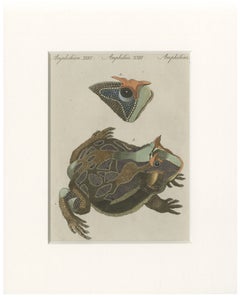
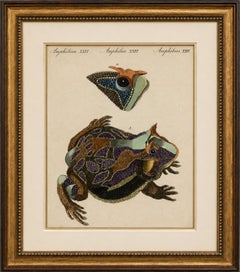
Antique South American Horned Frog Engraving – Bertuch, c. 1807

Antique South American Horned Frog Engraving – Bertuch, c. 1807

Located in Langweer, NL

Antique South American Horned Frog Engraving – Bertuch, c. 1807 Original antique hand-colored copper engraving depicting an extraordinary South American horned frog, published in Fr...

Category

Late 18th Century Neoclassical Antique German Prints

Materials

Paper

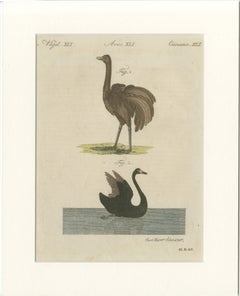
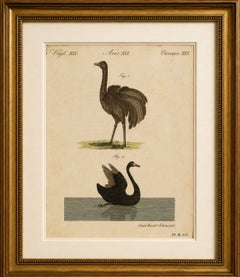
Antique Greater Rhea & Black Swan Engraving – Bertuch, 1798

Antique Greater Rhea & Black Swan Engraving – Bertuch, 1798

Located in Langweer, NL

Antique Greater Rhea & Black Swan Engraving – Bertuch, 1798 Original antique hand-colored copper engraving depicting the Greater Rhea of South America and the Black Swan of Aust...

Category

Late 18th Century Neoclassical Antique German Prints

Materials

Paper

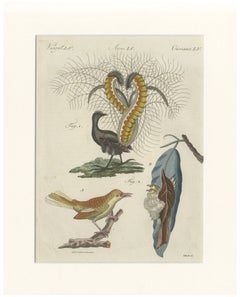
Antique Lyrebird & Tailorbird Engraving – Bertuch, 1796

Antique Lyrebird & Tailorbird Engraving – Bertuch, 1796

Located in Langweer, NL

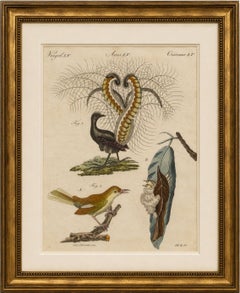
Title: Antique Lyrebird & Tailorbird Engraving – Bertuch, 1796 Original antique hand-colored copper engraving depicting the Superb Lyrebird and the Common Tailorbird, published in F...

Category

Late 18th Century Neoclassical Antique German Prints

Materials

Paper

Antique Hand-Colored Bird Engraving – Swallow & Nightjars – Bertuch, c.1800

Antique Hand-Colored Bird Engraving – Swallow & Nightjars – Bertuch, c.1800

Located in Langweer, NL

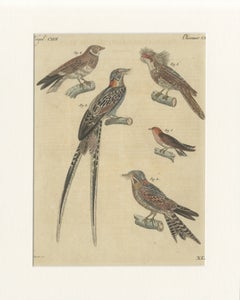
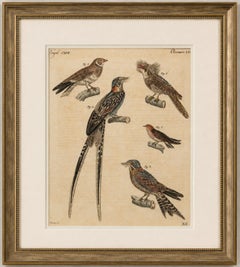
Title: Antique Hand-Colored Bird Engraving – Swallow & Nightjars – Bertuch, c. 1800 Original antique hand-colored copper engraving depicting five swallow- and nightjar-type birds, p...

Category

Early 19th Century Neoclassical Antique German Prints

Materials

Paper

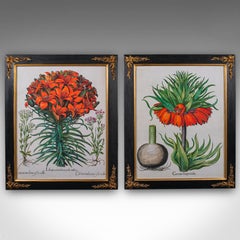
Pair of Vintage Botanical Pictures, Framed Print, After Besler, Art, Circa 1980

Pair of Vintage Botanical Pictures, Framed Print, After Besler, Art, Circa 1980

Located in Hele, Devon, GB

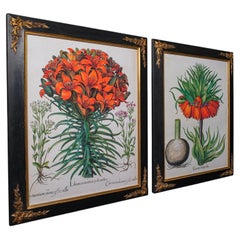
This is a pair of vintage botanical pictures. A Continental, framed print in the manner of botanist Basilius Besler, dating to the late 20th century, circa 1980. In the manner of Ba...

Category

1980s Other Vintage German Prints

Materials

Paper, Glass

St. Aloysius Gonzaga, Chromolithograph with Crown, Skull and Crucifix, 1899

St. Aloysius Gonzaga, Chromolithograph with Crown, Skull and Crucifix, 1899

Located in Langweer, NL

Adoration of the Magi, c.1900 German Chromolithograph (Printed in Germany) This beautiful early 20th-century German chromolithograph depicts the Adoration of the Magi, one of the most cherished subjects in Christian art. Printed around 1900–1920 by a major German devotional press, the work displays the hallmarks of high-quality chromolithographic craftsmanship: deep, luminous color; soft tonal transitions; richly layered stone-based pigments; and a gentle atmosphere that recalls late 19th-century academic religious painting. The composition presents the Virgin Mary seated with the Christ Child, Joseph beside her, and the Three Kings kneeling in reverence as they present their gifts of gold, frankincense, and myrrh. A young attendant appears in the doorway holding another offering. The figures are rendered with delicately modeled expressions, soft haloes, and meticulously detailed robes—particularly the embroidered white garment of the kneeling king and the golden cloak of the standing monarch. These chromatic effects were achieved through multiple lithographic stones, a technique that reached its peak among German devotional publishers during this period. The multilingual caption along the lower margin identifies the print for international Catholic distribution: “Anbetung der Könige. Adoration of the Three Kings. L’adoration des rois mages. L’adorazione dei Magi. La adoración de los Reyes Magos. Pokłon Trzech Króli.” This reflects the broad export networks of German publishers who supplied churches, monasteries, and private devotional homes throughout Europe and the Americas. The note “Printed in Germany” confirms its origin, consistent with presses in Munich, Dresden, Cologne, and Limburg, known for producing richly colored religious chromolithographs from the late 19th to early 20th century. This work is unquestionably an original chromolithograph, not a modern reproduction. The image shows true stone-layered color rather than digital or offset dots, and the paper retains the matte texture, subtle toning, and characteristic stippled pigment structure associated with genuine early 20th-century chromolithography. The presence of the multilingual caption, period typography, and the “Printed in Germany” imprint further authenticate the piece. Condition Report: Very good condition. Colors vivid and unfaded. Minor age toning to outer margins and small handling marks consistent with age. No tears, losses, or repairs observed. The bottom title and imprint text are sharp and fully legible. Tips for Framing: Ideal for framing in a gilded or walnut frame to complement the warm palette and ceremonial richness of the scene. A cream or ivory mat enhances the devotional character and highlights the luminous tones of the garments. A darker frame with a wide mat can also create a refined, museum-style presentation. Technique: Chromolithograph Maker: German Devotional Press, printed in Germany, c.1900 Keyword Block: adoration of the magi three kings epiphany art christ child holy family mary and jesus st joseph devotional art catholic art religious art chromolithograph german chromolithograph printed in germany antique lithograph german devotional print early 20th century religious print nativity scene christian iconography epiphany print anbetung der könige fine chromolitho religious ephemera magi kings christmas art holy family scene antique christian art...

Category

Late 19th Century Antique German Prints

Materials

Paper

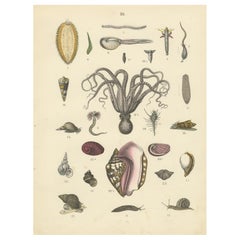
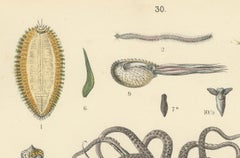
Molluscs & Marine Invertebrates Print: Octopus, Slug, Snails, Conch – 1867

Molluscs & Marine Invertebrates Print: Octopus, Slug, Snails, Conch – 1867

Located in Langweer, NL

Molluscs & Marine Invertebrates Print: Octopus, Slug, Snails, Conch – Antique 1867 This detailed antique print depicts a wide range of molluscs and marine invertebrates, including o...

Category

1860s Antique German Prints

Materials

Paper

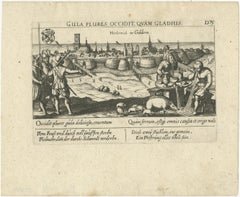
Gluttony Kills More Than the Sword, Harderwijk Engraving, c.1625

Gluttony Kills More Than the Sword, Harderwijk Engraving, c.1625

Located in Langweer, NL

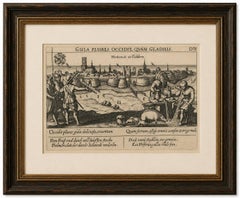
Gluttony Kills More Than the Sword, Harderwijk Engraving, c.1625 Description This rare emblematic city view depicts the fortified Dutch city of Harderwijk in Gelderland and origina...

Category

Early 17th Century Antique German Prints

Materials

Paper

Dardanelles Strait, Ottoman Turkey – Probst Optical View with Ships, c.1770

Dardanelles Strait, Ottoman Turkey – Probst Optical View with Ships, c.1770

Located in Langweer, NL

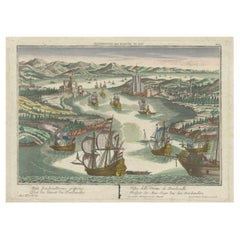
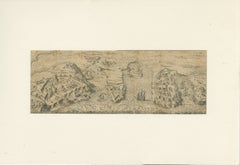
Dardanelles Strait, Ottoman Turkey – Probst Optical View with Ships, c.1770 This highly decorative hand-colored optical view depicts the Strait of the Dardanelles (Çanakkale Boğazı)...

Category

1770s Antique German Prints

Materials

Paper

Wildcat and Domestic Cat – Original Antique 1660 Copper Engraving

Wildcat and Domestic Cat – Original Antique 1660 Copper Engraving

Located in Langweer, NL

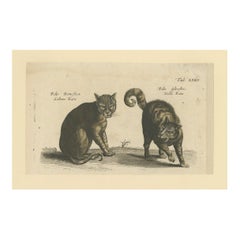
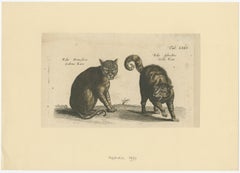
Antique Copper Engraving – Domestic and Wild Cats (Felis domestica, Felis sylvestris), 1660 This charming and historically significant 17th-century copper engraving presents two cat...

Category

Mid-17th Century Antique German Prints

Materials

Paper

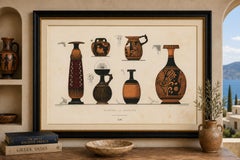
Antique Greek Jugs with Classical Figures Color Lithograph, 1883

Antique Greek Jugs with Classical Figures Color Lithograph, 1883

Located in Langweer, NL

Antique Greek Jugs with Classical Figures Color Lithograph, 1883 Original antique color lithograph depicting four ancient Greek jugs and pouring vessels decorated with classical fig...

Category

Late 19th Century Neoclassical Antique German Prints

Materials

Paper

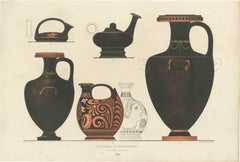
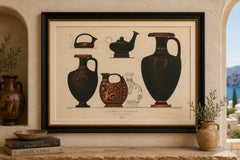
Antique Greek Bottles & Jugs with Classical Figures Lithograph, 1883

Antique Greek Bottles & Jugs with Classical Figures Lithograph, 1883

Located in Langweer, NL

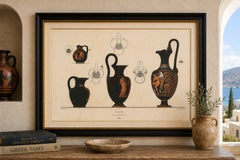
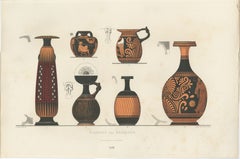
Antique Greek Bottles & Jugs with Classical Figures Lithograph, 1883 Original antique color lithograph depicting a varied collection of ancient Greek bottles and small jugs decorated with classical figures, geometric patterns and elaborate vegetal ornament, published in Berlin in 1883 as part of Albert Genick’s monumental work on Greek ceramics. This impressive landscape-format archaeological plate is titled “Flaschen und Kännchen” and presents six different examples of ancient Greek bottles, jugs and related vessels, accompanied by technical studies of their construction and decorative details. The tall, slender vessel at left has an especially elegant architectural form. Its elongated body is decorated with vertical fluting, geometric borders and a prominent Greek-key meander pattern in black, terracotta, cream and muted red. The large bottle at right is the most decorative vessel on the plate. Its broad body is covered with luxuriant scrolling palmette and vegetal ornament, while a standing draped classical figure occupies the right side of the composition. The restrained black-and-terracotta palette gives the vessel particularly strong graphic impact. Several smaller vessels occupy the center of the plate. These include a small figural vessel with a seated classical figure, a richly ornamented jug with scrolling decoration, a dark ribbed vessel and an elegant bottle decorated with a geometric lattice pattern. Genick supplements the vessels with precise archaeological line drawings documenting details of their rims, handles and construction. These technical studies emphasize the scholarly character of the publication while adding further visual interest to the composition. The combination of six contrasting vessel forms, classical figural imagery, Greek-key decoration and elaborate palmettes makes this an attractive survey of ancient Greek ceramic design. The print originates from the second edition of Albert Genick’s important publication on Greek ceramics, published by Ernst Wasmuth in Berlin in 1883. The complete work comprised 36 color lithographic plates, including four double-page plates, illustrating amphorae, kraters, hydriae, kantharoi, kylikes, jugs, bottles, bowls, rhyta and other examples of ancient Greek ceramic art. The lithographs were produced by the Berlin printing establishment Hein & Mosler. Albert Genick (1837–1906), a Berlin-trained architect, became particularly known for his precise graphic documentation of ancient ceramics. This publication is regarded as his principal work. Complete examples are rare, and individual plates from the series are increasingly difficult to find. Creator: Albert Genick (1837–1906) Publisher: Ernst Wasmuth, Berlin Printer: Hein & Mosler, Berlin Plate: XXXVII Title on plate: Flaschen und Kännchen Date: 1883 Edition: Second edition Technique: Color lithograph Origin: Germany Sheet size: Approximately 46 x 68 cm (18.1 x 26.8 inches) Orientation: Landscape Period: Late 19th Century Style: Neoclassical / Archaeological Revival Condition: Good antique condition. The black, terracotta, cream and muted-red coloring remains strong and well preserved. Age-related toning with scattered foxing and spotting, more noticeable in the lower and right portions of the sheet. Minor edge wear and slight irregularities consistent with age. Please study the photographs carefully as they form part of the condition description. An original antique lithograph printed in 1883, not a modern reproduction. The print is offered unframed. Any framed or interior images, if shown, are for presentation and inspiration only. Additional companion plates from Albert Genick’s series are available separately. Reference: Brand/Evers 597. Keywords: Albert Genick, Greek bottles, Greek jugs...

Category

Late 19th Century Neoclassical Antique German Prints

Materials

Paper

Antique Greek Hydriae & Pouring Vessels Color Lithograph, 1883

Antique Greek Hydriae & Pouring Vessels Color Lithograph, 1883

Located in Langweer, NL

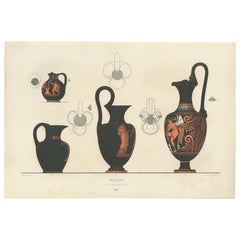
Antique Greek Hydriae & Pouring Vessels Color Lithograph, 1883 Original antique color lithograph depicting a varied collection of ancient Greek hydriae and pouring vessels, publishe...

Category

Late 19th Century Neoclassical Antique German Prints

Materials

Paper

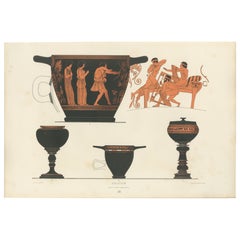
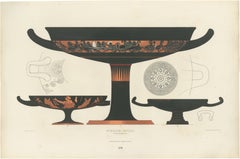
Antique Greek Kylix with Chariot & Warrior Procession Lithograph, 1883

Antique Greek Kylix with Chariot & Warrior Procession Lithograph, 1883

Located in Langweer, NL

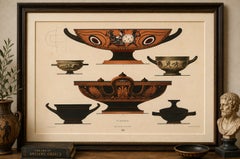
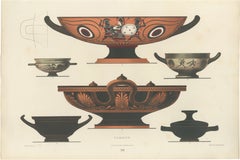
Antique Greek Kylix with Chariot & Warrior Procession Lithograph, 1883 Original antique color lithograph depicting three ancient Greek kylikes, including a monumental drinking cup decorated with an extensive chariot and warrior procession, published in Berlin in 1883 as part of Albert Genick’s important work on Greek ceramics. This impressive landscape-format archaeological plate is titled “Schalen (Kylix.) – Museum Berlin” and presents three examples of the kylix, the characteristic shallow, stemmed drinking cup of ancient Greece. Dominating the composition is a spectacular large kylix with an exceptionally broad, shallow bowl raised on a tall central stem. A continuous narrative frieze runs around the exterior, populated by numerous warriors, horses and chariots. The densely arranged figures create a dramatic procession across the terracotta-red field, contrasting strongly with the predominantly black body of the vessel. The tall stem is decorated with radiating terracotta ornament and terminates in a broad foot, emphasizing the monumental proportions of the cup. Below are two additional kylikes of contrasting form. The example at lower left carries a red-figure scene with several classical figures arranged around the shallow bowl, while the vessel at lower right is presented primarily for its elegant silhouette and construction. Genick supplements the vessels with precise archaeological studies, including detailed drawings of the handles and a circular ornamental design associated with the pottery. These technical drawings emphasize the scholarly archaeological purpose of the original publication. The combination of monumental scale, chariot imagery, warriors and elegant vessel forms makes this one of the particularly striking kylix plates from the series. The inscription “Museum Berlin” on the plate records the museum association of the illustrated material at the time of publication. The print originates from the second edition of Albert Genick’s important publication on Greek ceramics, published by Ernst Wasmuth in Berlin in 1883. The complete work comprised 36 color lithographic plates, including four double-page plates, illustrating amphorae, kraters, kantharoi, kylikes, bowls, rhyta and other examples of ancient Greek ceramic art. The lithographs were produced by the Berlin printing establishment Hein & Mosler. Albert Genick (1837–1906), a Berlin-trained architect, became particularly known for his precise graphic documentation of ancient ceramics. This publication is regarded as his principal work. Complete examples are rare, and individual plates from the series are increasingly difficult to find. Creator: Albert Genick (1837–1906) Publisher: Ernst Wasmuth, Berlin Printer: Hein & Mosler, Berlin Plate: XXVIII Title on plate: Schalen (Kylix.) – Museum Berlin Date: 1883 Edition: Second edition Technique: Color lithograph Origin: Germany Sheet size: Approximately 46 x 68 cm (18.1 x 26.8 inches) Orientation: Landscape Period: Late 19th Century Style: Neoclassical / Archaeological Revival Condition: Very good antique condition. Strong black and terracotta coloring with the detailed chariot, horse and warrior imagery remaining well preserved. Light age-related toning with scattered minor foxing and spotting, principally visible in the surrounding background and margins. Minor wear and slight irregularity along the sheet edges consistent with age. Please study the photographs carefully as they form part of the condition description. An original antique lithograph printed in 1883, not a modern reproduction. The print is offered unframed. Any framed or interior images, if shown, are for presentation and inspiration only. Additional companion plates from Albert Genick’s series are available separately. Keywords: Albert Genick, Greek kylix, ancient Greek kylix, Greek drinking cup...

Category

Late 19th Century Neoclassical Antique German Prints

Materials

Paper

Antique Greek Kylix, Bowls & Warriors Color Lithograph, 1883

Antique Greek Kylix, Bowls & Warriors Color Lithograph, 1883

Located in Langweer, NL

Antique Greek Kylix, Bowls & Warriors Color Lithograph, 1883 Original antique color lithograph depicting a collection of ancient Greek kylikes, bowls and covered vessels, published ...

Category

Late 19th Century Neoclassical Antique German Prints

Materials

Paper

Antique Greek Sphinx & Ceremonial Vessels Color Lithograph, 1883

Antique Greek Sphinx & Ceremonial Vessels Color Lithograph, 1883

Located in Langweer, NL

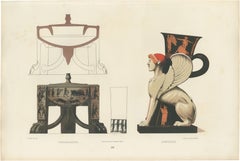
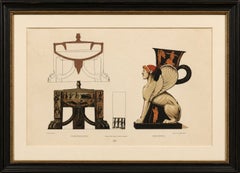
Antique Greek Sphinx-Shaped Vessel & Pottery Lithograph, 1883 Original antique color lithograph depicting two remarkable examples of ancient Greek ceramic art, including an extraord...

Category

Late 19th Century Neoclassical Antique German Prints

Materials

Paper

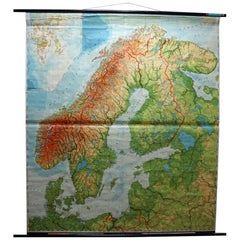
Vintage Rollable Mural Map Wall Chart Print Scandinavia Norway Sweden Finland

Vintage Rollable Mural Map Wall Chart Print Scandinavia Norway Sweden Finland

Located in Berghuelen, DE

A great impressive cottagecore map illustrating Scandinavia (Norway, Sweden, Finland, Denmark and bordering Baltic Sea countries). Colorful print on paper reinforced with canvas. Mea...

Category

Mid-20th Century Country German Prints

Materials

Canvas, Wood, Paper

Antique Greek Kraters & Classical Figures Color Lithograph, 1883

Antique Greek Kraters & Classical Figures Color Lithograph, 1883

Located in Langweer, NL

Antique Greek Lidded Amphora with Classical Figures Lithograph, 1883 Original antique color lithograph depicting an elaborate ancient Greek lidded amphora with classical figures and...

Category

Late 19th Century Neoclassical Antique German Prints

Materials

Paper

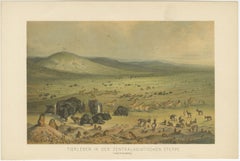
Wildlife of the Central Asian Steppe – Antique Natural History Lithograph, 1883

Wildlife of the Central Asian Steppe – Antique Natural History Lithograph, 1883

Located in Langweer, NL

Wildlife of the Central Asian Steppe – Antique Natural History Lithograph, c.1883 This beautifully atmospheric antique print titled Tierleben in der Zentralasiatischen Steppe (“Anim...

Category

Late 19th Century Antique German Prints

Materials

Paper

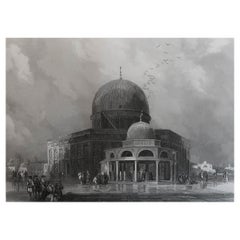
Original Antique Print of Mosque of Omar, Jerusalem, After David Roberts, C.1840

Original Antique Print of Mosque of Omar, Jerusalem, After David Roberts, C.1840

Located in St Annes, Lancashire

Wonderful image of The Mosque of Omar Fine steel engraving after David Roberts Published C.1840 The measurement is the paper size Unframed.

Category

1840s Moorish Antique German Prints

Materials

Paper

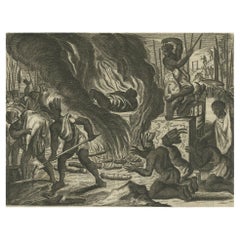
Engraving of Rituals and Cremation Ceremonies in New Spain by Montanus, 1673

Engraving of Rituals and Cremation Ceremonies in New Spain by Montanus, 1673

Located in Langweer, NL

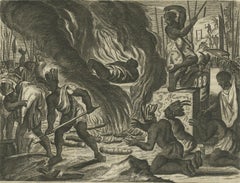
Title: "Rituals and Ceremonies in New Spain" Description: This striking copper engraving is extracted from Arnoldus Montanus' seminal work, "Die Unbekannte Neue Welt oder Beschreibu...

Category

1670s Antique German Prints

Materials

Paper

Antique Chromolithograph of Tea Harvesting and Processing in China, circa 1890

Antique Chromolithograph of Tea Harvesting and Processing in China, circa 1890

Located in Langweer, NL

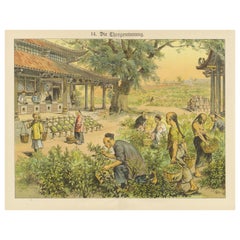
Antique Chromolithograph of Tea Harvesting and Processing in China, circa 1890 This beautifully detailed chromolithograph, titled “Die Theegewinnung” (Tea Production), dates from ar...

Category

Late 19th Century Antique German Prints

Materials

Paper

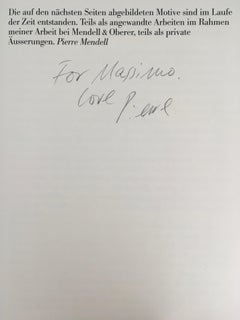
Pierre Mendell LTD ED Heart Portfolio Inscribed to Massimo Vignelli

Pierre Mendell LTD ED Heart Portfolio Inscribed to Massimo Vignelli

By Massimo and Lella Vignelli

Located in New York, NY

A portfolio of 12 offset-printed heart designs by noted German graphic designer Pierre Mendell (1929-2008) assembled from his work at Mendell & Oberer -...

Category

1990s Minimalist German Prints

Materials

Paper

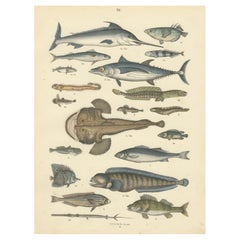
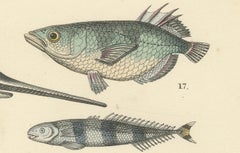
Marine Fish Print: Swordfish, Anglerfish, Tuna & Pipefish – Antique 1867

Marine Fish Print: Swordfish, Anglerfish, Tuna & Pipefish – Antique 1867

Located in Langweer, NL

Marine Fish Print: Swordfish, Anglerfish, Tuna & Pipefish – Antique 1867 This striking antique print depicts a wide variety of marine fish, including swordfish, anglerfish, tuna, pi...

Category

1860s Antique German Prints

Materials

Paper