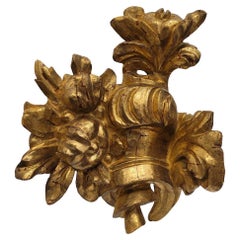
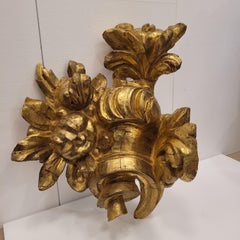
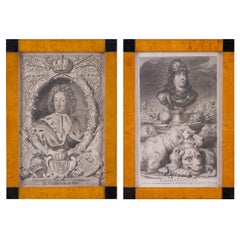
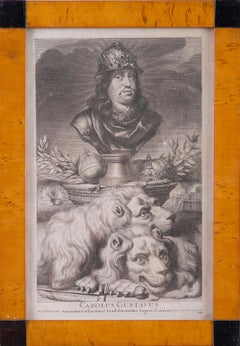
Baroque Wall Decorations

BAROQUE STYLE

The decadence of the Baroque style, in which ornate furnishings were layered against paneled walls, painted ceilings, stately chandeliers and, above all, gilding, expressed the power of the church and monarchy through design that celebrated excess. And its influence was omnipresent — antique Baroque furniture was created in the first design style that truly had a global impact.

Theatrical and lavish, Baroque was prevalent across Europe from the 17th to mid-18th century and spread around the world through colonialism, including in Asia, Africa and the Americas. While Baroque originated in Italy and achieved some of its most fantastic forms in the late-period Roman Baroque, it was adapted to meet the tastes and materials in each region. French Baroque furniture informed Louis XIV style and added drama to Versailles. In Spain, the Baroque movement influenced the elaborate Churrigueresque style in which architecture was dripping with ornamental details. In South German Baroque, furniture was made with bold geometric patterns.

Compared to Renaissance furniture, which was more subdued in its proportions, Baroque furniture was extravagant in all aspects, from its shape to its materials.

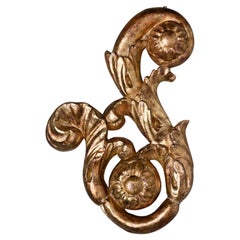
Allegorical and mythical figures were often sculpted in the wood, along with motifs like scrolling floral forms and acanthus leaves that gave the impression of tangles of dense foliage. Novel techniques and materials such as marquetry, gesso and lacquer — which were used with exotic woods and were employed by cabinetmakers such as André-Charles Boulle, Gerrit Jensen and James Moore — reflected the growth of international trade. Baroque furniture characteristics include a range of decorative elements — a single furnishing could feature everything from carved gilded wood to gilt bronze, lending chairs, mirrors, console tables and other pieces a sense of motion.

Find a collection of authentic antique Baroque tables, lighting, decorative objects and other furniture on 1stDibs.

to
151
487
392
904
4
3
Height
to
Width
to
8,219
6,977
2,188
1,592
1,063
730
585
553
318
313
291
288
203
198
172
164
144
574
191
139
7
52
29
30
12
4
9
3
1
7
4
3
2
350
321
251
220
107
851
326
157
66
62
911
908
908
15
7
6
3
3
Style: Baroque
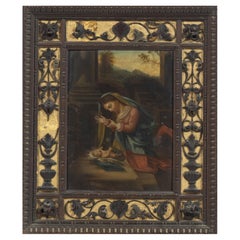
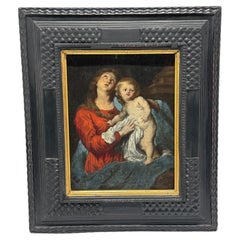
17th C. Italian Old Master Painting Madonna, Child, St. Anne, John the Baptist

17th C. Italian Old Master Painting Madonna, Child, St. Anne, John the Baptist

Located in Vero Beach, FL

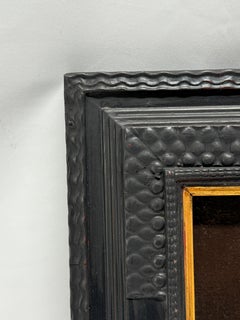
17th century Italian old master painting Madonna and Child with St. Anne and St. John the Baptist. Important Tuscan School Old Master painting in oil on a hand shaved wood panel. ...

Category

Late 17th Century Italian Antique Baroque Wall Decorations

Materials

Wood, Paint

Edgar Brandt Inspired Wrought Iron Screen or Room Divider

Edgar Brandt Inspired Wrought Iron Screen or Room Divider

By Paul Kiss, Gilbert Poillerat, Addison Mizner, Edgar Brandt

Located in Houston, TX

Edgar Brandt inspired wrought iron screen or room divider. Fabulous one of a kind antique three-panel hand forged heavy weight wrought iron screen or room divider, possibly Italian. ...

Category

20th Century Unknown Baroque Wall Decorations

Materials

Wrought Iron

17th Century Old Master Oil Painting Saint Bernard of Clairvaux, Spanish School

17th Century Old Master Oil Painting Saint Bernard of Clairvaux, Spanish School

Located in Vero Beach, FL

17th century old master oil painting of Saint Bernard of Clairvaux. Spanish school. Dramatic expression and perfect use of chiaroscuro, the art of light and shadow effects, makes th...

Category

17th Century Spanish Antique Baroque Wall Decorations

Materials

Canvas

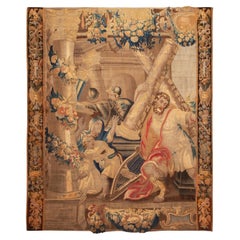
Magnificent 17th-Century French Aubusson Tapestry – Alexander the Great

Magnificent 17th-Century French Aubusson Tapestry – Alexander the Great

Located in Rio De Janeiro, BR

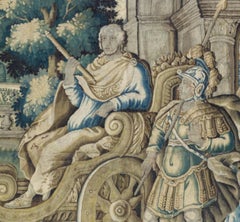
Magnificent 17th-Century French Aubusson Tapestry – Alexander the Great and Bucephalus An exceptional and rare Aubusson tapestry from the 17th century, masterfully handwoven in wool ...

Category

1680s French Antique Baroque Wall Decorations

Materials

Wool

Couple of Italian Paintings Depicting Capricci, Francesco Aviani ‘1662-1715’

Couple of Italian Paintings Depicting Capricci, Francesco Aviani ‘1662-1715’

Located in IT

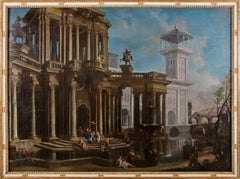
Francesco Aviani (Italy - Venice, 25-11-1662 / 1715) att. Couple of paintings depicting Capricci Oil on canvas, 135 x 183 cm, without frame The two large and fine paintings depict two illusionistic architectural renderings, with views of colonnades and arched buildings, animated by figures. The compositions are characterized by the harmony with which the painter introduces the sumptuous architectural monuments, the mirrors of water, the buildings in the distance and the views of the landscape. Dominates with a color on the tones of brown and ochre that stands out on the blue sky, marked by some cloud of steam. The insertion of the figures to enliven the architectural views also balances with the set. The Capriccio, an artistic genre that has made its way into Italian painting since the 17th Century, is characterized by the representation of fantastic architectures or prospective inventions, sometimes combined with elements drawn freely from reality. The two paintings are an example of this type and they are a very interesting and Fine artwork. The remarkable pictorial quality emerges both from the composition of the ensemble and from the way in which the artist describes the views with great attention to detail, highlights and refined, perfectly realistic, chiaroscuro. The same must be recognized for the figures: these are described with a wise brushstroke, quick and quick touches give the dynamism of the moment that is captured, as if time had stopped to show and narrate what is happening. The painting on the right represents a large Baroque building in stone and paved with marbles, two floors, with moving façade, large columns with corinthian columns, a large portal with a staircase with large footsteps, a balustrade with string, from which some figures appear, and two equestrian monuments in bronze. The sumptuous building overlooks a large POOL of water, with a gushing fountain, around which some characters sit. In the second floor is described a white palace from which rises a tower crowned by a structure with wrought iron loggia. In addition there is a bridge and some architectural ruins behind which some mountainous reliefs fade towards the horizon. On the staircase is described a particular scene. The people seem to be part of a very precise story. A woman, in the shadow of a parasol supported by a servant, would seem to drive out of the palace a man, who, taken under his arm by two maidens with a determined attitude, is led to a boat. The scene could be identified with the biblical episode of the parable of the prodigal son (Luke 15,11-32), at the moment when the prodigal son is robbed and driven away by the harlots. The episode tells of a man with two children. The youngest said to his father: “Father, give me the part of my inheritance”. And the father divided the substances. After not many days, the youngest son, collected his things, left for a far country and there he lost his substances with prostitutes and living as a debaucher. When he had spent everything, there came a great famine in that country and he began to find himself in need. Reduced to hunger, he was forced to be a pig herder to survive. He therefore meditated in his heart to go to his father and ask for his forgiveness and to be welcomed anew, even as a servant. While still on the road, however, the father saw him and ran towards him, receiving him with open arms. He then ordered his servants to prepare a great feast for the occasion, killing for the purpose the "fatty calf". The firstborn did not understand why his brother was given such treatment, and reminded the parent that he, who had always obeyed him, had never received a single kid to celebrate with his friends. The father answered him: «Son, you are always with me and everything that is mine is yours; but it was necessary to celebrate and rejoice, because this brother of yours was dead and came back to life, was lost and was found». The parable of the prodigal son was often portrayed in painting and the scene he finds most is certainly that of returning home in his father’s arms. Among the many is a canvas by the famous painter Giovanni Paolo Pannini (or Panini) (Italy – Piacenza, 1691– Rome, 1765) kept at the Hallsborough Gallery in London. Rather rare, however, is the scene of the prodigal son driven and robbed by harlots. There is an engraving by Hans Collaert II (1561-1620) in which this moment is described in the background compared to the moment, narratively later, in which he is penitent among the pigs. The second painting, certainly pendant of the first, represents a similar palace, with some characters overlooking the balustrade marcapiano and other figures around the large bathtub quadrilobata. In the foreground is described a monument with two large stone sculptures. In the distance some architectural elements and, beyond, the mountains are lost on the horizon. The studies related to the numerous painters of architectural views and caprices, active in Italy, and the archival documents found, which could better clarify commissions, biographies and certain works, are scarce and sporadic. Therefore there are still many difficulties in reconstructing a catalogue of autograph works for each author. Through paintings in private collections, in museums and paintings passed on the antique market it is however possible to advance some attributions in order to better delineate the various artistic figures. The style of the works studied here leads to a dating that runs between the 17th and 18th Centuries, with obvious influences dictated by the perspectives of the brothers Galli Bibiena. The analysis of the architectures and the chromatic palette suggests that we are in the presence of a northern Italian and Venetian author. Observing the decorations and the volutes, the brightness and the perspective disposition in fact, we find several analogies with those used by the Vicenza painter Francesco Aviani, excellent in pictorial perspective and architectural views. The biographical profile of Francesco Aviani (Italy - Vicenza, 1662-1715) was essentially traced in 1956 by Andreina Ballarin, then re-visited by Federica Spadotto in 2014 and Giancarlo Sestieri in 2015. Certain documents about his life are scarce, as are the documented works. He was born in Venice, probably on 25 November 1662, to Bernardo and a Magdalene whose surname is unknown, and was baptized on 3 December 1662. Between 1701 and 1703 he worked, together with his brother MarCo, sculptor, for the fresco decoration (now illegible) of the church villa in Soella (Vicenza). On October 16, 1703 he married Isabella Carcano. On March 26, 1715 he made a will and died on April 3 of the same year, in Vicenza. The frescoes in the refectory of the sanctuary of Monte Berico in Vicenza are considered authentic works by Aviani, probably made in 1708; the paintings preserved in the Civic Museum of Vicenza: “Landscape with Lazzaro and the rich Epulone”; “Christ among the doctors”; “The miraculous fishing”, works not datable but with attribution corroborated by style. In addition, the frescoes in the east and west corridors of the Villa La Rotonda, near Vicenza; the fresco in the apse basin of the chapel of the church S. Croce, Vicenza, now destroyed; the frescoes of the central hall of Villa Camerini a Montruglio (1714) and a painting of a “Porto Regio”, of which we have a print engraved by Dall'Acqua. From his works emerges the artistic background that animated the Venetian culture in the early eighteenth century. The scenic grandeur with which Aviani treats the architecture also suggests a stay in Emilia of the painter, in which he could have come into contact with the environment of the Bibiena. These contacts would be confirmed by the press of Cristoforo Dall'Acqua (Vicenza 1734-1787), “Il porto regio”, after a painting of Aviani. The press was part of a group of engravings, representing royal buildings, reproducing paintings of the Bibiena. In the eyes of Dall’Acqua, therefore, Aviani’s work was not foreign among those of the Emilians. Inside the sumptuous architectural whims, Aviani often depicts biblical scenes, in which the characters share the space and the narrative rhythm, along with figures drawn from everyday scenes, memories of the Veronese and Bassano heritage. Also in the works covered by this study the author does not seem to want to give up a biblical subject, though the purpose of the paintings appears to be clearly a staging scenography-architectural within which the characters are relegated to the role of extras. From the examination of the architectural Capriccio gathered under the name of Aviani then emerge common elements. The comparison between these works and the works in question highlights the proximity of the compositions. The imposing and scenic architectures are in fact equally characterized by the perspective-scenographic ability diffused in emilian “quadraturisti” and in Bibiena work. In fact, you can see the spectacular slender architecture in the lower part, the loggias that create chiaroscuro games with arches and binate columns placed on massive bases and overhung by projecting cornices. Significant also the comparison with two paintings with architectural whims in a night vision attributed to Francesco Aviani. In Aviani’s works it is possible to find a certain knowledge of the Roman Codazzi paint nd its early development of the eighteenth century, developed with the Locatelli, the Pannini and the less known Domenico Roberti. To Roberti have been recently attributed two works that have some compositional affinity with the canvases in question. The same can be done for a work on the antique market, attributed to Pietro Francesco...

Category

Late 17th Century Italian Antique Baroque Wall Decorations
Materials

Canvas

After Raffaello Sanzio 1483-1520 Raphael La Madonna Della Seggiola Oil on Canvas

After Raffaello Sanzio 1483-1520 Raphael La Madonna Della Seggiola Oil on Canvas

A fine Italian 19th century oil painting on canvas "La Madonna della Seggiola" after Raphael (Raffaello Sanzio da Urbino 1483-1520). The circular painted canvas depicting a seated Ma...

Category

Late 19th Century Italian Antique Baroque Wall Decorations
Materials

Canvas, Giltwood

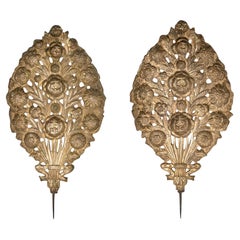
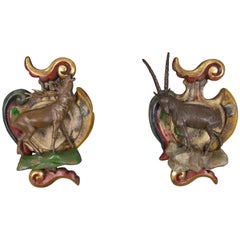
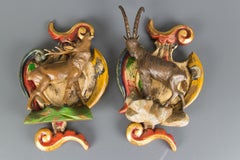
Pair of Italian 18th Century Baroque Carved Mecca Decorative Wall Decor

Pair of Italian 18th Century Baroque Carved Mecca Decorative Wall Decor

Located in West Palm Beach, FL

A beautiful pair of Italian 18th century Baroque carved Mecca decorative wall decor. Each wall decor is in the shape of a family crest and displays wonderful richly scrolled designs ...

Category

18th Century Italian Antique Baroque Wall Decorations
Materials

Wood

Tapestry   Royal Manufacture of Aubusson, Louis XVI period 1738 at the Gobelins

Tapestry Royal Manufacture of Aubusson, Louis XVI period 1738 at the Gobelins

By Aubusson Manufacture

Located in Madrid, ES

Tapestry from the Royal Manufacture of Aubusson, Louis XVI period , made in 1738 at the Gobelins One panel from a series of Gobelins tapestries depicting the History of Esther, illustrating Esther seated and attended by handmaidens, one washing her feet in golden basin, another fastening a bracelet, another offering a mirror, all observed by Mordecai, woven in the workshop of Michele Audran after a design by J. F. de Troy. The Toilet of Esther c.1778-85.Royal Collection Trust-Queens Audience Chamber Windsor Castle The Sketches for the Esther Cycle by Jean-François de Troy (1736) “and the maid was fair and beautiful; whom Mor’decai, ..., took for his own daughter.” (Est. 2:7) A supple and undulating genius, both a flattering portraitist and a prolix history painter, as well as a brilliant genre painter, in a gallant or worldly vein, Jean-François de Troy (Paris, 1679 – Rome, 1752), solicited, although he had passed the threshold of old age, a new royal commission up to his ambitions. To obtain it, he submitted – successfully - for the approval of the Bâtiments du roi (administration), seven modelli painted in 1736 with his usual alacrity. Inspired by one of the most novelistic texts of the Old Testament, the Book of Esther, these sketches in a rapid and virtuoso manner were transformed by the artist, between 1737 and 1740 into large cartoons intended to serve as models for the weavers of the Gobelins factory. Showing undeniable ease and skill in the composition in perfect harmony with the sensitivities of the times, the tapestry set met with great success. The Story of Esther perfectly corresponded to the plan of the Bâtiments du roi to renew the repertoire of tapestry models used for the weavers of the royal factories while it also conformed to the tastes of Louis XV’s subjects for a fantastical Orient, the set for a dramatic tale in which splendour, love and death were combined. Indeed, no tapestry set was woven in France during the 18th century as often as that of Esther. The series of modelli painted by de Troy during the year 1736 looks to the history of French painting and decoration under Louis XV as much as it does the history of the Gobelins. It probably counts among the most important rococo pictorial groups to have remained in private hands. First the Biblical source illustrated by De Troy which constitutes the base of one of the richest iconographical traditions of Western art will be considered. Then the circumstances and specific character of French civilisation during the reigns of Louis XIV and Louis XV which contributed to making the theme of Esther a relevant subject, both attractive to contemporaries and remarkably in line with the sensitivities of the time will be elucidated. An examination of the exceptional series of sketches united here, the cartoons and the tapestries that they anticipate as well as a study of their reception will close this essay. The Book of Esther: A scriptural source at the source of rich iconography. The origin of the Esther tapestry set by Jean-François de Troy – origin and creation of a masterpiece According to the evidence of one of the artist’s early biographers, the chevalier de Valory, author of a posthumous elegy of the master, read at the Académie royale de peinture et de sculpture on 6 February 1762, it was apparently due to early16 rivalry with François Lemoyne (1688-1737), his younger colleague who had precisely just been appointed First Painter to the King in 1736, that had encouraged François de Troy to seek a commission allowing him to show off his ease and his promptitude at the expense of a rival who was notoriously laborious: “M. De Troy, retaining some resentment of the kind of disadvantage which he believed to have suffered compared with his emulator looked to regain some territory by making use of the facility his rival did not possess. Lemoyne was excessively long in the creation of his works,and M. De Troy of a rare celerity: consequently, with this particular talent, the latter offered to the court to make paintings appropriate to be executed at the Gobelins Factory; and it is to this circumstance that we owe the beautiful series of the Story of Esther, which would be sufficient alone to give him a great reputation.”17 Beyond the suspicion inspired by the topos, which still constitutes, more or less, a tale of rivalries between artists in ancient literature, there is probably some truth in what Valory reports although A.-J. Dezalier d’Argenville (who indicates rather spitefully that de Troy did not hesitate to “cut prices” to impose himself, benefitting from the productivity assured by the unlikely rapidity of his brush)18 proves to be more evasive: “As he looked to busy himself, he had offered to make the paintings that serve as models for the King’s tapestries cheaply: which did not please his colleagues. He was given a choice of two tapestry series to be made and he took the Story of Esther and that of Jason”.19 Whether or not the choice was actually left to de Troy (which would appear rather casual on the royal administration’s part all the same), it seems likely that the artist, whose contemporaries extol his “fire”, as the faculty of invention was then called, must have ardently aspired to the possibility of using on a very large scale the “creative genius” with which Dezallier d’Argenville credits him. The decoration of the private apartments, the fashion for which Louis XV had promoted at Versailles and Fontainebleau, offered little opportunity to excel in this area. Other than painting for altarpieces, only tapestries could allow comparison with Lemoyne who had been granted – unfortunately for him – a major decoration: the enormous ceiling of the Hercules Room at Versailles. Favoured by the recent improvement in France’s financial situation, the revival of patronage offered de Troy a commission fitting for him, in a field in which, however, he had hardly any experience. Anxious to renew the repertoire of models available to the Gobelins factory, the Duc d’Antin, surintendant des Bâtiments du roi from 1708 to 1736 followed by his successor, Philibert Orry comte de Vignory, gave him the task of producing seven large cartoons inspired by the Book of Esther corresponding to the brilliant sketches or modelli which de Troy had produced in one go, or almost (very few preparatory drawings can in fact be linked to the Esther cycle and all seem to be at the execution stage of the cartoons).20 Subjected to the approval of the Administration des Bâtiments according to the procedure in use for projects being planned for the Gobelins, sketches made rapidly during 1736 were approved and the project launched immediately. Thereupon came the news of François Lemoyne’s death, who, ground down by work and a victim of his private torment, committed suicide on 4 June 1737. Against all expectations, de Troy did not replace his rival in the position of First Painter (which remained vacant until the appointment of Charles Coypel in January 1747), which would perhaps have made him too obviously the beneficiary of the drama. The awarding of the position of Director of the French Academy in Rome came to console him while he had already produced (or he was in the process of finishing), in Paris, three of the seven cartoons of the cycle (The Fainting of Esther finished in 1737 and the Toilet and Coronation of Esther, both finished in 1738). De Troy, we can see, did not follow the order of the narrative but began with the subjects which apparently offered the least difficulty because he had already depicted them, or because they fall into a strong pictorial tradition (such is the case especially for the Fainting of Esther). He had hardly settled at the Palazzo Mancini in August 1738, when his first task which awaited the new director of the French Academy naturally consisted of honouring the royal commission and finishing without delay the final cartoons of the Story of Esther after the sketches he must have taken with him. As prompt as ever, de Troy discharged himself of the execution of the four remaining cartoons in only two years, by beginning with the largest format which allowed him to strike the imagination and to impose himself as soon as he arrived on the Roman stage: the Triumph of Mor’decai which was finished in 1739 (like Esther’s Banquet). The following year, the Mor’decai's Disdain and The Sentencing of Haman were brought to an end in the same Neo-Venetian style, obviously tributary to Veronese with its choice of “open” monumental architecture which is characteristic of the entire cycle.21 The series, it should be noted, was almost augmented with some additional scenes in the mid 1740s. Indeed, the first tapestry set finished at the Gobelins in 1744 proved to be unsuitable for the arrangement of the Dauphine’s apartments at Versailles for which it had been intended to decorate the walls the following year (cf infra). Informed of this, de Troy, considering that the story of Esther offered “several good subjects,” immediately offered to illustrate one or new subject among those “which could appear to be the most interesting”. The directeur des Bâtiments Orry, who managed the State’s accounts, obviously judged it less costly to have one of the tapestries widened to fill in the end of the Dauphine’s bedroom,22 which has probably deprived us of very original compositions, because de Troy had already illustrated the most famous themes, those that benefitted from a strongly established iconographical tradition and from which it was not easy to deviate The Tapestry Set of the Story of Esther Placed on the tapestry looms of the Gobelins at the end of the 1730s in Michel Audran’s workshop, the cycle created by de Troy aroused true infatuation. The few hundred tapestries made between 1738 and 1797 – all in high-warp tapestry and woven in wool and silk except for four in low-warp made in Neilson’s workshop – show the impressive success of a tapestry set that was without any doubt the most frequently woven of the 18th century in France. 29 Only three cartoons had been delivered by de Troy in 1738 when the first tapestry set was begun by Audran under the expert eye of Jean-Baptiste Oudry to whom the Directeur général des bâtiments, Philibert Orry had assigned the (weekly) supervision of the weaving. During the summer of 1738, the piece of the Fainting of Esther, which Oudry judged to be admirable, was finished. During the winter of 1742, Oudry informed Orry that about two ells of the Triumph of Mor’decai had been made “with no faults”,that the Coronation of Esther was finished and that the Esther at her Toilet “a very gracious tapestry” was “a little over half” finished. Exhibited at Versailles in 1743, these two last pieces were admired by Louis XV and the Court. On 3 December 1744, the set of seven tapestries was finally delivered to the Garde Meuble. It was intended, the honour was not slight, to decorate the apartments of the Infanta Maria Teresa Rafaela of Spain whose marriage to the young Dauphin Louis-Ferdinand had been fixed for the following year (it took place on 23 February 1745). Apparently it was thought that the theme of Esther the biblical heroine and wife of a foreign sovereign was appropriate for the apartments of the Spanish Dauphine. As early as the month of March, the architect Ange-Jacques Gabriel informed de Troy that her grand cabinet was decorated with the “Esther tapestry set” specifying however that “for lack of two small or one large piece, we have not been able to decorate the end of the room”. This difficulty led immediately to the Banquet episode being woven a second time in two parts (they were delivered to the Garde-Meuble on 30 December 1746) to garnish the panels on each side of the bed of the Dauphine who would hardly enjoy them (she died on 22 July 1746 and the decoration was installed for the new Dauphine Maria Josepha of Saxony). The appearance of the set’s remarkable border, which imitated a richly sculpted wooden frame, should be mentioned. Conceived in 1738 by the ornamentalist Pierre Josse-Perrot and used in the later weavings until 1768, it tended to reinforce the resolutely painterly appearance of the tapestry set which, in this regard, pushed the art of tapestry as far as its ultimate mimetic possibilities. With the exception of Mor’decai's Disdain which had been removed earlier, the “editio princeps” of the story of Esther (from then on in nine pieces) remained at Versailles until the Revolution. Of the eight surviving tapestries, four are at the chateau of Compiègne and four belong today to the Mobilier National. No less than seven tapestry sets reputed to be complete (one of them in fact only had six tapestries) would be produced officially at the Gobelins up to 1772. Literature: 1- The Œuvres mêlées of an emulator of Racine, the Abbé Augustin NADAL thus include an Esther. Divertissement spiritual which is exactly contemporary with Jean François de Troy’s cycle since it was performed in 1735 and published in Paris three years later. 2-Le Siècle de Louis XIV, 1751, 1785 ed., p. 96-97 for French ed. 3- Lemoyne and de Troy had been obliged to share the First Prize in the competition organised in 1727 between the most prominent history painters of the Académie Royale. 4- Mémoires…, pub. L. DUSSIEUX et al., 1854, II, p.265. 5-The fact that de Troy, at the risk of falling out with his colleagues, did not hesitate to make use of prices in order to convince the new directeur des Bâtiments Philibert Orry, is confirmed by Mariette who adds tersely “it caused much shouting” (pub. 1851-1860, II, p. 103). 6- Abrégé de la vie des plus fameux peintres…, ed. 1762, IV, p. 368-369 20 Early comments on the painter are inclined to present him as a kind of “pure painter”, doing without the medium of drawing, a few intermediary studies between the Esther sketches and the large cartoons at the Louvre nevertheless show that de Troy used red chalk (see in the catalogue, the notice for the Meal of Esther and Ahasuerus under the entry drawing) to change one or other figure. 7-C. GASTINEL-COURAL (cat. exp. PARIS, 1985, p. 9-13) as well as the article by J. VITTET, exh. cat. LA ROCHE-GUYON, 2001, p. 51-55. 8-The Hermitage in St. Petersburg conserves five tapestries of these two royal gifts whose provenance still awaits elucidation (as far as we are aware). In 1766, the Grand Marshal of Russia, Count Razumovski (or Razamowski), acquired the Fainting and the Banquet extracted from the sixth weaving (J. VITTET, 2001, p. 53). 9- Lettres écrites de Suisse, d’Italie…,quoted by J. VITTET, op. cit., p. 54. 10-The tapestry set remained in the hands of a branch of the Hapsburg-Lorraine family until 1933 (ibid. P. 54). 11-Quoted by Chr. LERIBAULT, 2002, p. 97, note 269. 12-Y. CANTAREL-BESSON, 1992, p. 241. Catalogue The Esther at her Toilet Oil on canvas, 57 x 51 cm Provenance: Painted in 1736 at the same time as the six other modelli of the Story of Esther intended to be presented, for approval, to the direction des Bâtiments du Roi; perhaps identifiable among a lot of sketches by Jean-François de Troy in the post mortem inventory of the amateur, historian and critic Claude-Henri Watelet (1718-1786) drawn up on 13 January 1786 and following days (A.N. T 978, n° 30) then in the sale of the property of the deceased, Paris, 12 June 1786, n° 33; Paris, François Marcille Collection (who owned a series of six sketches from which the Triumph of Mor’decai was missing, see infra); Paris, Marcille Sale, Hôtel Drouot, 12-13 January 1857, n° 36; Asnières, Mme de Chavanne de Palmassy ( ?) collection; Paris, Galerie Cailleux; Paris, Humbert de Wendel collection (acquired from the Galerie Cailleux in 1928); by inheritance in the same family; Paris, Sotheby’s, 23 June 2011, n° 61. In order not to add unnecessarily to the technical commentary on each work, the catalogue raisonné by Chr. Leribault which contains a substantial bibliography on the series should be referred to. The other bibliographical references only concern the publications and exhibitions to have appeared and been presented more recently. Bibliography and Exhibitions: Chr. LERIBAULT, 2002, n° P. 247 (repr.); E. LIMARDO DATURI, 2004, p. 28; Exh. cat. NANTES, 2011, p. 138, n° 34, referred to in note 1; Sotheby’s catalogue, Tableaux anciens et du XIXe siècle, 23 June 2011, n° 61 (repr.). Related Works: Tapestry cartoon: The cartoon (oil on canvas, 329 x 320 cm), the third made by the artist in Paris after the sketches had been approved by the direction des Bâtiments, is in the Louvre (Inv. 8315). It previously bore the painter’s signature and the date 1738 (inscriptions which are found on the tapestries). The royal administration paid 1600 livres for it on 21 June 1738 and it was exhibited at the Salon in the year of its creation. Summary Biography 1679 (27 January): Baptism in Paris (Parish of St. Nicolas du Chardonnet) of Jean-François de Troy, son of the painter François de Troy and Jeanne Cotelle, sister of the painter Jean II Cotelle. 1696-1698: Studies (apparently rather turbulent) at the Académie royale de peinture et de sculpture. 1698-1708: First trip to Italy. Is obliged to leave Rome in January 1711 after a tempestuous affair (a duel?), de Troy extends the traditional Roman experience as a pensionnaire at the Académie de France by also visiting Tuscany where he stays for a long time, Venice (his art in face has a strongly Venetian character) and Genoa. 1708: De Troy (whose father had been elected Director of the Académie royale de peinture et de sculpture on 7 July) is agréé and immediately received at the Académie with Apollo and Diana Piercing with their Arrows the Children of Niobe (Montpellier, Musée Fabre) on 28 July. 1710: First royal commission, paid for on 10 May (a sketch representing “the Promotion of the Order of the Holy Spirit” for the tapestry series of the History of the King). 1716: Jean-François de Troy is elected Assistant Professor at the Academy. 1720: He is appointed Professor. 1723: The artist creates the double portrait of Louis XV...

Category

Early 18th Century French Antique Baroque Wall Decorations

Materials

Wool, Silk

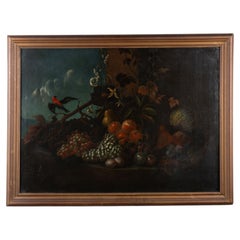
19th Century Italian Still Life Oil on Canvas Painting with Fruits and Bird

19th Century Italian Still Life Oil on Canvas Painting with Fruits and Bird

Located in Round Top, TX

19th century Italian still life painting executed in oil on canvas. The composition features fruit, gourds, and a bird arranged in a traditional still life format. The painting shows...

Category

Early 19th Century Italian Antique Baroque Wall Decorations

Materials

Canvas, Wood, Paint

Flemish 18th century framed religious oil on wood painting Adoration of the Magi

Flemish 18th century framed religious oil on wood painting Adoration of the Magi

Located in Meulebeke, BE

Belgium / 18th century / Painting / wood / Antique / Religious A 18th century painting on wood after a Rubens painting “Adoration of the Magi”. Elegantly encased in a stunning blac...

Category

18th Century Belgian Antique Baroque Wall Decorations
Materials

Wood

After Raffaello Sanzio 1483-1520 Raphael La Madonna della Seggiola Oil on Canvas

After Raffaello Sanzio 1483-1520 Raphael La Madonna della Seggiola Oil on Canvas

By Raphael (Raffaello Sanzio da Urbino)

Located in Los Angeles, CA

A fine Italian 19th century oil painting on canvas "La Madonna della Seggiola" after Raphael (Raffaello Sanzio da Urbino 1483-1520) The circular canvas depicting a seated Madonna holding an infant Jesus Christ next to a child Saint John the Baptist, all within a massive carved gilt wood and gesso frame (all high quality gilt is original) which is identical to the frame on Raphael's original artwork. This painting is a 19th Century copy of Raphael's Madonna della Seggiola painted in 1514 and currently exhibited and part of the permanent collection at the Palazzo Pitti, Galleria Palatina, Florence, Italy. The bodies of the Virgin, Christ, and the boy Baptist fill the whole picture. The tender, natural looking embrace of the Mother and Child, and the harmonious grouping of the figures in the round, have made this one of Raphael's most popular Madonnas. The isolated chair leg is reminiscent of papal furniture, which has led to the assumption that Leo X himself commissioned the painting, circa 1890-1900. Subject: Religious painting Measures: Canvas height: 29 1/4 inches (74.3 cm) Canvas width: 29 1/4 inches (74.3 cm) Painting diameter: 28 1/4 inches (71.8 cm) Frame height: 57 7/8 inches (147 cm) Frame width: 45 1/2 inches (115.6 cm) Frame depth: 5 1/8 inches (13 cm).   Raffaello Sanzio da Urbino (Italian, March 28 or April 6, 1483 - April 6, 1520), known as Raphael, was an Italian painter and architect of the High Renaissance. His work is admired for its clarity of form, ease of composition, and visual achievement of the Neoplatonic ideal of human grandeur. Together with Michelangelo and Leonardo da Vinci, he forms the traditional trinity of great masters of that period. Raphael was enormously productive, running an unusually large workshop and, despite his death at 37, leaving a large body of work. Many of his works are found in the Vatican Palace, where the frescoed Raphael Rooms were the central, and the largest, work of his career. The best known work is The School of Athens in the Vatican Stanza della Segnatura. After his early years in Rome much of his work was executed by his workshop from his drawings, with considerable loss of quality. He was extremely influential in his lifetime, though outside Rome his work was mostly known from his collaborative printmaking. After his death, the influence of his great rival Michelangelo was more widespread until the 18th and 19th centuries, when Raphael's more serene and harmonious qualities were again regarded as the highest models. His career falls naturally into three phases and three styles, first described by Giorgio Vasari: his early years in Umbria, then a period of about four years (1504–1508) absorbing the artistic traditions of Florence, followed by his last hectic and triumphant twelve years in Rome, working for two Popes and their close associates. Raphael was born in the small but artistically significant central Italian city of Urbino in the Marche region, where his father Giovanni Santi was court painter to the Duke. The reputation of the court had been established by Federico III da Montefeltro, a highly successful condottiere who had been created Duke of Urbino by the Pope - Urbino formed part of the Papal States - and who died the year before Raphael was born. The emphasis of Federico's court was rather more literary than artistic, but Giovanni Santi was a poet of sorts as well as a painter, and had written a rhymed chronicle of the life of Federico, and both wrote the texts and produced the decor for masque-like court entertainments. His poem to Federico shows him as keen to show awareness of the most advanced North Italian painters, and Early Netherlandish artists as well. In the very small court of Urbino he was probably more integrated into the central circle of the ruling family than most court painters. Federico was succeeded by his son Guidobaldo da Montefeltro, who married Elisabetta Gonzaga, daughter of the ruler of Mantua, the most brilliant of the smaller Italian courts for both music and the visual arts. Under them, the court continued as a centre for literary culture. Growing up in the circle of this small court gave Raphael the excellent manners and social skills stressed by Vasari. Court life in Urbino at just after this period was to become set as the model of the virtues of the Italian humanist court through Baldassare Castiglione's depiction of it in his classic work The Book of the Courtier, published in 1528. Castiglione moved to Urbino in 1504, when Raphael was no longer based there but frequently visited, and they became good friends. He became close to other regular visitors to the court: Pietro Bibbiena and Pietro Bembo, both later cardinals, were already becoming well known as writers, and would be in Rome during Raphael's period there. Raphael mixed easily in the highest circles throughout his life, one of the factors that tended to give a misleading impression of effortlessness to his career. He did not receive a full humanistic education however; it is unclear how easily he read Latin. Early Life and Works His mother Màgia died in 1491 when Raphael was eight, followed on August 1, 1494 by his father, who had already remarried. Raphael was thus orphaned at eleven; his formal guardian became his only paternal uncle Bartolomeo, a priest, who subsequently engaged in litigation with his stepmother. He probably continued to live with his stepmother when not staying as an apprentice with a master. He had already shown talent, according to Vasari, who says that Raphael had been "a great help to his father". A self-portrait drawing from his teenage years shows his precocity. His father's workshop continued and, probably together with his stepmother, Raphael evidently played a part in managing it from a very early age. In Urbino, he came into contact with the works of Paolo Uccello, previously the court painter (d. 1475), and Luca Signorelli, who until 1498 was based in nearby Città di Castello. According to Vasari, his father placed him in the workshop of the Umbrian master Pietro Perugino as an apprentice "despite the tears of his mother". The evidence of an apprenticeship comes only from Vasari and another source, and has been disputed—eight was very early for an apprenticeship to begin. An alternative theory is that he received at least some training from Timoteo Viti, who acted as court painter in Urbino from 1495.Most modern historians agree that Raphael at least worked as an assistant to Perugino from around 1500; the influence of Perugino on Raphael's early work is very clear: "probably no other pupil of genius has ever absorbed so much of his master's teaching as Raphael did", according to Wölfflin. Vasari wrote that it was impossible to distinguish between their hands at this period, but many modern art historians claim to do better and detect his hand in specific areas of works by Perugino or his workshop. Apart from stylistic closeness, their techniques are very similar as well, for example having paint applied thickly, using an oil varnish medium, in shadows and darker garments, but very thinly on flesh areas. An excess of resin in the varnish often causes cracking of areas of paint in the works of both masters. The Perugino workshop was active in both Perugia and Florence, perhaps maintaining two permanent branches. Raphael is described as a "master", that is to say fully trained, in December 1500. His first documented work was the Baronci altarpiece for the church of Saint Nicholas of Tolentino in Città di Castello, a town halfway between Perugia and Urbino. Evangelista da Pian di Meleto, who had worked for his father, was also named in the commission. It was commissioned in 1500 and finished in 1501; now only some cut sections and a preparatory drawing remain. In the following years he painted works for other churches there, including the Mond Crucifixion (about 1503) and the Brera Wedding of the Virgin (1504), and for Perugia, such as the Oddi Altarpiece. He very probably also visited Florence in this period. These are large works, some in fresco, where Raphael confidently marshals his compositions in the somewhat static style of Perugino. He also painted many small and exquisite cabinet paintings in these years, probably mostly for the connoisseurs in the Urbino court, like the Three Graces and St. Michael, and he began to paint Madonnas and portraits. In 1502 he went to Siena at the invitation of another pupil of Perugino, Pinturicchio, "being a friend of Raphael and knowing him to be a draughtsman of the highest quality" to help with the cartoons, and very likely the designs, for a fresco series in the Piccolomini Library in Siena Cathedral. He was evidently already much in demand even at this early stage in his career. Influence of Florence Raphael led a "nomadic" life, working in various centres in Northern Italy, but spent a good deal of time in Florence, perhaps from about 1504. Although there is traditional reference to a "Florentine period...

Category

19th Century Italian Antique Baroque Wall Decorations
Materials

Gesso, Canvas, Wood

Mid-17th Century French Baroque Walnut Crucifix Corpus Wall Sculpture

Mid-17th Century French Baroque Walnut Crucifix Corpus Wall Sculpture

Located in Dallas, TX

This powerful mid-17th century French crucifix, carved in walnut circa 1650, exemplifies the raw devotional intensity and expressive realism associated with early Baroque religious s...

Category

Mid-17th Century French Antique Baroque Wall Decorations
Materials

Walnut

17th C. French School Oil on Canvas Painting of Madonna and Child with Angel

17th C. French School Oil on Canvas Painting of Madonna and Child with Angel

Located in Dallas, TX

This antique devotional oil painting was created in France circa 1680 and depicts the Madonna seated with the Christ Child across her lap, accompanied by a young angel in prayer. The...

Category

Late 17th Century French Antique Baroque Wall Decorations
Materials

Canvas, Giltwood

1681, Pair of Paintings signed Grechetto da Leone as Govaert G. VAN DER LEEUW

1681, Pair of Paintings signed Grechetto da Leone as Govaert G. VAN DER LEEUW

Located in IT

1681, Pair of Paintings signed Grechetto da Leone as Govaert G. VAN DER LEEUW Oil on Canvas Dimensions: cm W 91 x H 123 x D 6; canvas: cm W 72 x H 103.5 This pair of fine paintings,...

Category

1680s Italian Antique Baroque Wall Decorations
Materials

Canvas

18th C. Set of 3 Etchings of Harbor Scenes in Gilt Frames

18th C. Set of 3 Etchings of Harbor Scenes in Gilt Frames

By Pieter Schenk the Elder, Pierre Mortier

Located in Haddonfield, NJ

A set of three antique Dutch engravings and etchings from the 18th Century. This set has been professionally framed in newer gilt frames and feature acid-free paper to protect these...

Category

18th Century Dutch Antique Baroque Wall Decorations
Materials

Paper, Boxwood, Paint

Dipinto Fiammingo su Rame 1650 circa Scena di Genere con Commedia delle Arti

Dipinto Fiammingo su Rame 1650 circa Scena di Genere con Commedia delle Arti

Located in Milano, MI

Dipinto Fiammingo del 1600 a olio su rame raffigurante uno scorcio di paesaggio con figure, una scena di genere con una moltitudine di personaggi affollati in una strada con delle ar...

Category

Mid-17th Century Antique Baroque Wall Decorations
Materials

Copper

17th Century Flemish Verdue Tapestry with Exotic Birds and Landscape Scene

17th Century Flemish Verdue Tapestry with Exotic Birds and Landscape Scene

Located in Santa Barbara, CA

This 17th-century Flemish verdure tapestry is a remarkable example of Baroque textile art, celebrated for its lush naturalism and painterly detail. Handwoven in Flanders from wool an...

Category

Late 17th Century Belgian Antique Baroque Wall Decorations
Materials

Wool, Silk

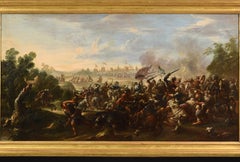
Italian 17th Century Baroque Battle Scene Oil on Canvas Painting Giltwood Frame

Italian 17th Century Baroque Battle Scene Oil on Canvas Painting Giltwood Frame

Located in Firenze, IT

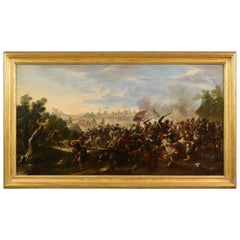
This large Italian Baroque oil on canvas, dating from the late 17th century represents an exceptionally vivid battle scene with the unusual subject of a brigand ambush on a stagecoac...

Category

17th Century Italian Antique Baroque Wall Decorations
Materials

Gold Leaf

Lovers Rococo Oil Painting After Boucher, 19th Century, Ornate & Gilt Frame

Lovers Rococo Oil Painting After Boucher, 19th Century, Ornate & Gilt Frame

Located in Lisbon, PT

This large Rococo-style oil painting, signed Zubriczky, is a refined homage to the romantic compositions of François Boucher (1703–1770), one of the most celebrated artists of 18th-c...

Category

19th Century French Antique Baroque Wall Decorations
Materials

Canvas

Bloemaert Style Figure Study – Man with Jug, 18thC Dutch Etching, Van den Bosch

Bloemaert Style Figure Study – Man with Jug, 18thC Dutch Etching, Van den Bosch

Located in Langweer, NL

Bloemaert Style Figure Study – Man with Jug, 18thC Dutch Etching, Van den Bosch Etching by Anthonie van den Bosch after Abraham Bloemaert, not to be confused with the chiaroscuro wo...

Category

Late 18th Century Dutch Antique Baroque Wall Decorations
Materials

Paper

Antique 18th Square Century Flemish Verdure Green Landscape Tapestry with Birds

Antique 18th Square Century Flemish Verdure Green Landscape Tapestry with Birds

Located in New York, NY

This is a gorgeous antique square 18th century flemish verdure landscape tapestry with birds depicting a beautiful and rich summer scene of a countryside with lush trees and vegetati...

Category

18th Century Dutch Antique Baroque Wall Decorations
Materials

Tapestry, Wool

Barthelemy Roger Marie Antoinette of France

Barthelemy Roger Marie Antoinette of France

Located in Doha, QA

Barthelemy Roger (Ladeve 1767- 1841 Saulx-les-Chartreux) “Marie Antoinette de Lorraine-d’Autriche, Reine de France”, after Elisabeth Louise Vigée-Le Brun, 1828, engraving, inscribed “Peint par Rossline de Suédois / Dessiné par Monanteuil / Gravé par B. Roger 1828” This engraving of Marie Antoinette was wonderfully done by Barthemely Roger in 1828. It is beautifully framed in the original 19th century gold gilded frame.

Category

19th Century French Antique Baroque Wall Decorations
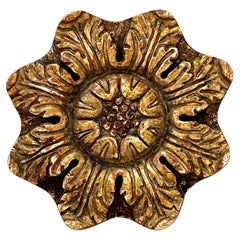
Materials

Gold

18th Century, Painting Architectural Capriccio, att. to Isaac De Moucheron

18th Century, Painting Architectural Capriccio, att. to Isaac De Moucheron

Located in IT

18th Century, Painting with Architectural Capriccio with figures, attributed to Isaac De Moucheron Measures: canvas cm H 108 x L 152; with frame cm H 132 x L 176 x 8 The painting i...

Category

18th Century Dutch Antique Baroque Wall Decorations
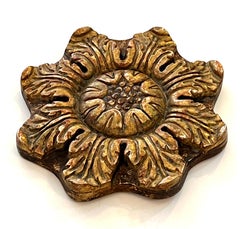
Materials

Canvas

3 Antique Italian Ink Drawings of Venice, Baroque, Circa 1770s

3 Antique Italian Ink Drawings of Venice, Baroque, Circa 1770s

Located in Boca Raton, FL

3 antique 18 th c Italian ink drawings on paper of views of Venice- Dougaba and Santa Maria church, Piazza San Marco with Campanile, Venice fort. framed later. Inscribed and dated.

Category

1770s Italian Antique Baroque Wall Decorations
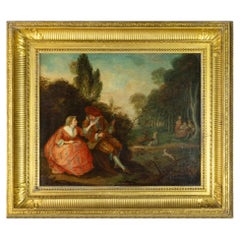
Materials

Paper

Antique French Tapestry Verdure Noblemen Royalty Verdure 5x9 158cm x 272cm 1920

Antique French Tapestry Verdure Noblemen Royalty Verdure 5x9 158cm x 272cm 1920

Located in New York, NY

A magnificent antique French tapestry depicting a scene of noblemen amongst incredible, exotic verdure and flowers, dating to circa 1920 and showcasing elegant artistry and fine craf...

Category

1920s French Vintage Baroque Wall Decorations
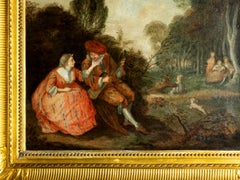
Materials

Wool

17th-18th Century Venetian Painting

17th-18th Century Venetian Painting

$9,500Sale Price|39% Off

17th-18th Century Venetian Painting

Located in Pembroke, MA

Venetian School painting of four angels, allegorically depicting the variable winds of change and time. Unsigned, believed to be by a follower of Pietro Li...

Category

17th Century Italian Antique Baroque Wall Decorations
Materials

Giltwood, Canvas

Blue Hand Painted Baroque Cherub or Angel Portuguese Ceramic Tile or Azulejo

Blue Hand Painted Baroque Cherub or Angel Portuguese Ceramic Tile or Azulejo

Located in Coimbra, PT

Gorgeous blue hand painted Baroque cherub or angel 18th century style Portuguese ceramic tile/azulejo The tile painted in cobalt blue over white in typical 18th century Portugal set ...

Category

Late 20th Century Portuguese Baroque Wall Decorations
Materials

Delft, Faience, Terracotta

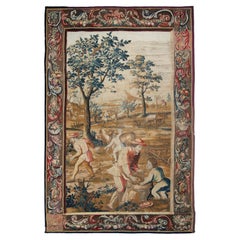
Early 18th century Flemish tapestry "Children’s Bacchanal"

Early 18th century Flemish tapestry "Children’s Bacchanal"

Located in New York, NY

This beautifully preserved Flemish tapestry depicts a charming bacchanale of children at play, a favorite theme in Brussels workshops at the end of the 17th century. Five putti anima...

Category

Early 18th Century Belgian Antique Baroque Wall Decorations
Materials

Wool, Silk

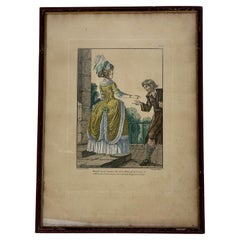
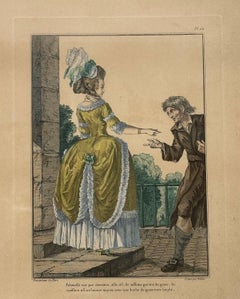
Framed German Hand Colored Stealing Engraving Portrait of a Noble Lady, 1840s

Framed German Hand Colored Stealing Engraving Portrait of a Noble Lady, 1840s

Located in Nuernberg, DE

An extraordinary Original stealing engraving of the royal gallery in Munich and Schleissheim, hand-colored. Beautiful hand crafted gilded Frame. Dated at the backside with a label fr...

Category

1840s German Antique Baroque Wall Decorations
Materials

Glass, Wood

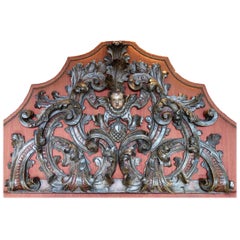
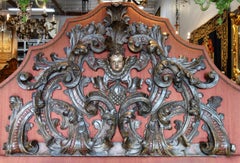
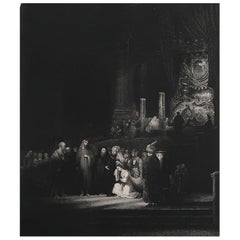
17th Century Italian Baroque Carved & Polychrome Painted Putto Lintel Headboard

17th Century Italian Baroque Carved & Polychrome Painted Putto Lintel Headboard

Located in Encinitas, CA

Late 17th century Italian Baroque lintel carved in triangular shape with acanthus scrolls, centered by a winged cherub face. Polychrome painted. Superb Italian craftsmanship. Previously refinished. Currently mounted to an upholstered headboard panel; could be remounted professionally to another substrate. Carved lintel...

Category

Late 17th Century Italian Antique Baroque Wall Decorations
Materials

Wood

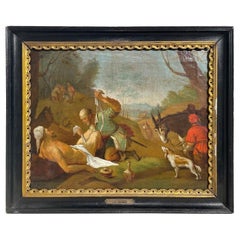
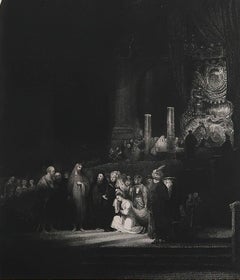
Wounded Man Oil on Canvas Painting, Austrian Baroque, Circa 1800

Wounded Man Oil on Canvas Painting, Austrian Baroque, Circa 1800

By Franz Xaver Hornöck

Located in West Palm Beach, FL

A light-brown, green antique Austrian Baroque oil on canvas painting by Franz Xaver Hornöck in a hand crafted original black, partly gilded wooden frame, in good condition. The vinta...

Category

18th Century Austrian Antique Baroque Wall Decorations
Materials

Canvas, Wood

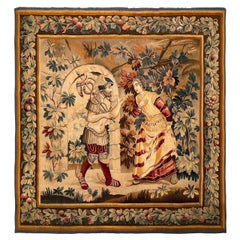
Antique Late 17th Century Square Flemish Verdure Landscape Tapestry

Antique Late 17th Century Square Flemish Verdure Landscape Tapestry

Located in New York, NY

This is a gorgeous antique late 17th century Flemish verdure landscape tapestry depicting a beautiful and rich summer scene of a countryside with lush trees and vegetation, with two ...

Category

17th Century Belgian Antique Baroque Wall Decorations
Materials

Tapestry, Wool

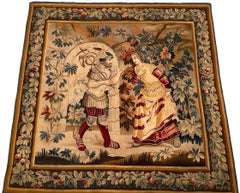
Antique 17th Century Green Flemish Verdure Landscape Tapestry with Birds

Antique 17th Century Green Flemish Verdure Landscape Tapestry with Birds

Located in New York, NY

This is a gorgeous full color antique 17th century Flemish Verdure landscape tapestry depicting a beautiful and rich summer scene of a countryside with lush trees and vegetation, and...

Category

17th Century Belgian Antique Baroque Wall Decorations
Materials

Wool

Antiqued Landscape Oil Painting After Watteau, Baroque Style, 19th Century

Antiqued Landscape Oil Painting After Watteau, Baroque Style, 19th Century

Located in Lisbon, PT

A large antiqued reproduction oil painting after Antoine Watteau. Features an antiqued canvas. Frame: 75.5 cm (29.72 inches) x 66.5 cm (26.18 inches) Canvas: 55.5 cm (21.85 inches) ...

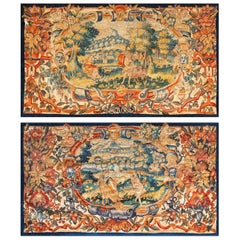
Category

19th Century French Antique Baroque Wall Decorations
Materials

Canvas

Flemish 18th-19th Century Verdure Landscape Tapestry Panel Centered with a Tree

Flemish 18th-19th Century Verdure Landscape Tapestry Panel Centered with a Tree

Located in Los Angeles, CA

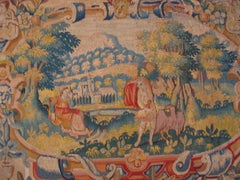
A fine flemish 18th-19th century Verdure landscape tapestry, the wool and silk tapestry centered by a scene of a tall tree within a forest background and a foliage border. Circa: 180...

Category

Early 19th Century Belgian Antique Baroque Wall Decorations
Materials

Wool, Silk

Italian Baroque Period  Drawing of the Head of John The Baptist

Italian Baroque Period Drawing of the Head of John The Baptist

Located in Hudson, NY

This very fine drawing from the early Baroque period is in Sanguine on laid paper. this Italian drawing in a rich brown-red is framed in a fine old gilded frame...

Category

Early 18th Century Italian Antique Baroque Wall Decorations

Materials

Paper, Wood

Matteo Lovatti (Italian, 1861-1909) 19th-Century Oil on Canvas "Church V State"

Matteo Lovatti (Italian, 1861-1909) 19th-Century Oil on Canvas "Church V State"

By Matteo Lovatti 1

Located in Los Angeles, CA

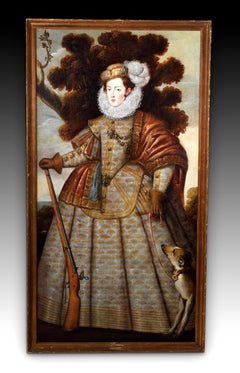
Matteo Lovatti (Italian, 1861-1909) A Fine 19th-Century Oil on Canvas Titled 'Church V. State - The Fencing Lesson'. The finely detailed artwork depicting an interior tavern scene, f...

Category

19th Century Italian Antique Baroque Wall Decorations
Materials

Canvas, Giltwood

Venetian Capriccio, Santa Maria della Salute - Italian School, 18th century

Venetian Capriccio, Santa Maria della Salute - Italian School, 18th century

Located in TEYJAT, FR

Venetian Capriccio with Santa Maria della Salute and Figures Italian School, 18th Century Oil on Oak Panel Dimensions: Panel – 16 x 21.5 cm (6.3 x 8.5 in). Provenance: Private Europe...

Category

Late 18th Century Italian Antique Baroque Wall Decorations

Materials

Oak

Antique Rare Louis XVI Velvet Gold Embroidery Pants Display Paris 18th Century

Antique Rare Louis XVI Velvet Gold Embroidery Pants Display Paris 18th Century

Located in Doha, QA

Extremely rare and unique beautifully designed artistic display of Louis XVI period velvet gold embroidery pants. This unique item has been framed and displayed on the antique velvet...

Category

18th Century French Antique Baroque Wall Decorations
Materials

Gold

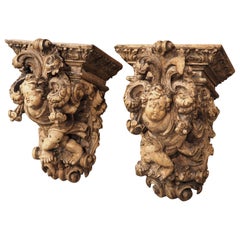
Italian Baroque Style Late 19th Century Fruitwood Wall Bracket with Carved Putto

Italian Baroque Style Late 19th Century Fruitwood Wall Bracket with Carved Putto

Located in Atlanta, GA

An Italian Baroque style fruitwood wall bracket from the late 19th century, with carved putto figure. Born in Italy during the later years of the 19th century, this fruitwood bracket...

Category

19th Century Italian Antique Baroque Wall Decorations
Materials

Fruitwood

18th Century Antique Baroque Sandstone Wall Reliefs and Ornaments

18th Century Antique Baroque Sandstone Wall Reliefs and Ornaments

Located in West Palm Beach, FL

A rectangular, antique pair of similar German Baroque wall reliefs with centered cartouche, made of hand carved sandstone in good condition. The large detailed panels are particulari...

Category

18th Century German Antique Baroque Wall Decorations
Materials

Sandstone

Italian Baroque Allegorical Painting of “Erminia Among The Shepherds” 18 Cent

Italian Baroque Allegorical Painting of “Erminia Among The Shepherds” 18 Cent

By Giovanni Francesco Barbieri (Il Guercino)

Located in Vancouver, British Columbia

An Italian Baroque painting on canvas that may have been painted as a study, (or what is referred to as a bozzetto to a larger commissioned pa...

Category

Early 18th Century Italian Antique Baroque Wall Decorations
Materials

Canvas

Flemish 17th C Genre Painting Circle of David Teniers the Younger (1610-1690).

Flemish 17th C Genre Painting Circle of David Teniers the Younger (1610-1690).

By David Teniers the Younger

Located in Vero Beach, FL

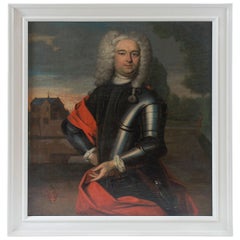
Flemish 17th Century Genre Painting Circle of David Teniers the Younger (1610-1690). This cabinet painting depicting a woman shelling peas is from the Flemish School of the 17th ...

Category

17th Century Dutch Antique Baroque Wall Decorations
Materials
Wood

European School Oil on Canvas of 20th Century

European School Oil on Canvas of 20th Century

Located in Madrid, ES

European school oil on canvas of 20th century Measures: 72 x 62 cm and 39 x 30 cm Good condition.

Category

20th Century Spanish Baroque Wall Decorations

Materials

Paint

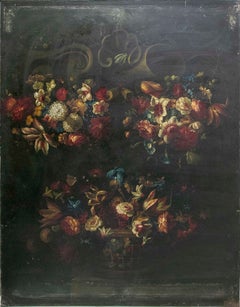
Italian 17th Century Still Life Painting in Period Carved Gilt Frame

Italian 17th Century Still Life Painting in Period Carved Gilt Frame

Located in Vero Beach, FL

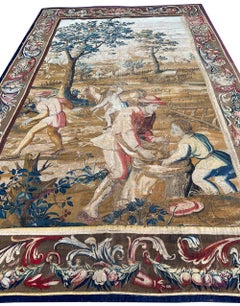
Italian 17th century still life painting in period carved gilt frame Italian school still life painting from the workshop of a great master. The 17th century Baroque painting in oil...

Category

17th Century Italian Antique Baroque Wall Decorations
Materials

Canvas, Giltwood

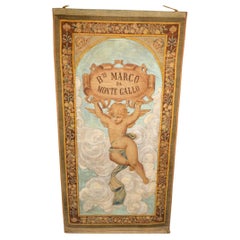
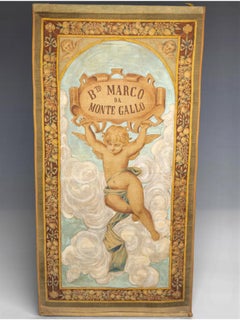
Vintage Italian Wall Tapestry. Size: 11 ft x 19 ft

Vintage Italian Wall Tapestry. Size: 11 ft x 19 ft

Located in New York, NY

Large Italian Tapestry, Country of Origin / Rug Type: Italian Rugs, Circa Date: Late 20th Century – Size: 11 ft x 19 ft (3.35 m x 5.79 m)

Category

Late 20th Century Italian Baroque Wall Decorations

Materials

Wool

17th Century French Baroque Tapestry

17th Century French Baroque Tapestry

Located in Allerum, SE

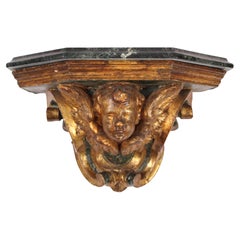
17th century French Baroque wool and silk tapestry. Work of Felletin, ca 1690 France.

Category

17th Century French Antique Baroque Wall Decorations
Materials

Wool, Silk

Blue Hand Painted Baroque Cherub or Angel Portuguese Ceramic Tile or Azulejo

Blue Hand Painted Baroque Cherub or Angel Portuguese Ceramic Tile or Azulejo

Located in Coimbra, PT

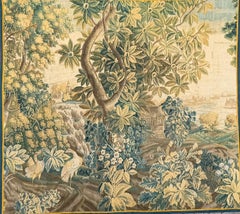
Gorgeous blue hand painted Baroque cherub or angel 18th century style Portuguese ceramic tile or azulejo This tile painted in blue over white in typical 18th century Portugal set the...

Category

Late 20th Century Portuguese Baroque Wall Decorations
Materials

Delft, Faience, Terracotta

Baroque wall decorations for sale on 1stDibs.
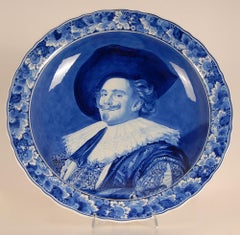
Find a broad range of unique Baroque wall decorations for sale on 1stDibs. Many of these items were first offered in the 21st Century and Contemporary, but contemporary artisans have continued to produce works inspired by this style. If you’re looking to add vintage wall decorations created in this style to your space, the works available on 1stDibs include wall decorations, more furniture and collectibles, decorative objects and other home furnishings, frequently crafted with fabric, wood and other materials. If you’re shopping for used Baroque wall decorations made in a specific country, there are Europe, Italy, and France pieces for sale on 1stDibs. While there are many designers and brands associated with original wall decorations, popular names associated with this style include Europa Antiques, Rembrandt van Rijn, Basilius Besler, and Flemish. It’s true that these talented designers have at times inspired knockoffs, but our experienced specialists have partnered with only top vetted sellers to offer authentic pieces that come with a buyer protection guarantee. Prices for wall decorations differ depending upon multiple factors, including designer, materials, construction methods, condition and provenance. On 1stDibs, the price for these items starts at $30 and tops out at $495,000 while the average work can sell for $4,328.