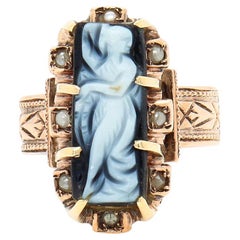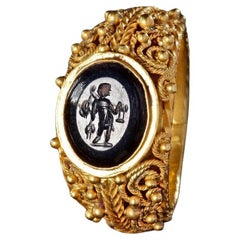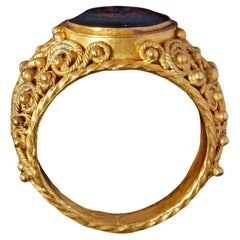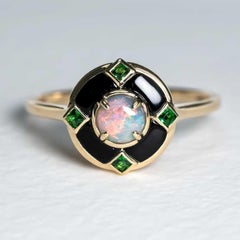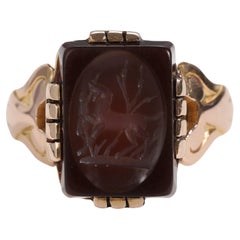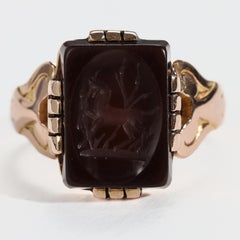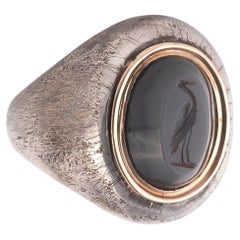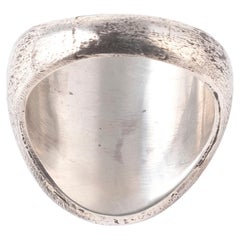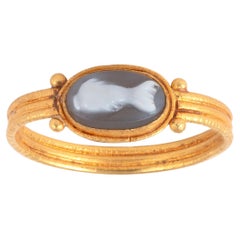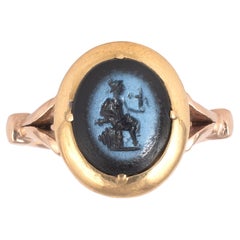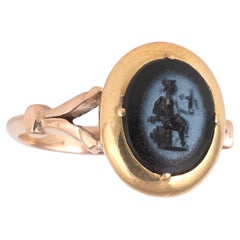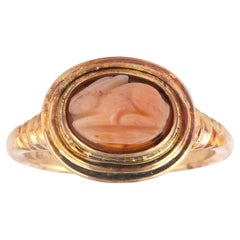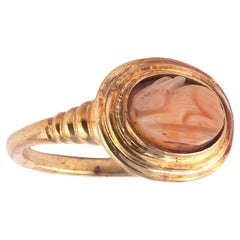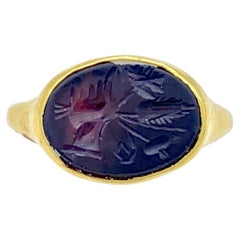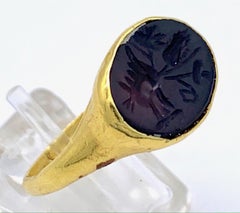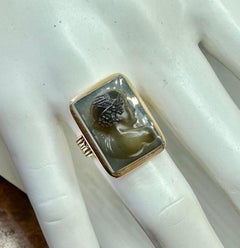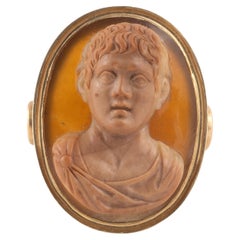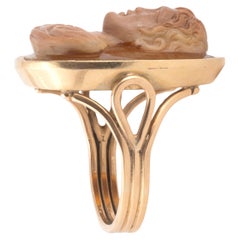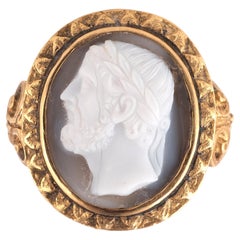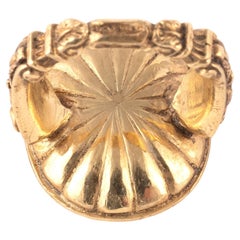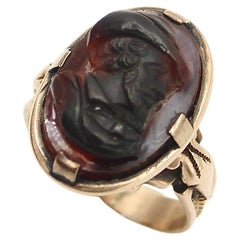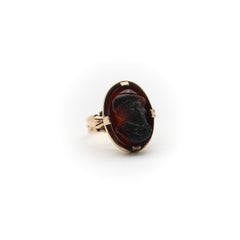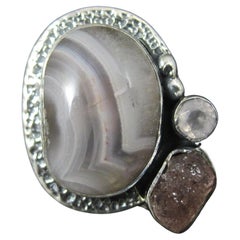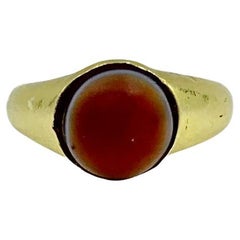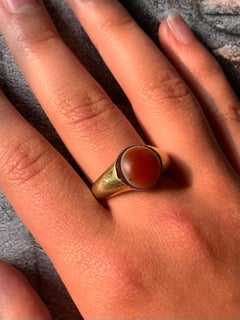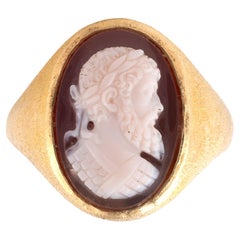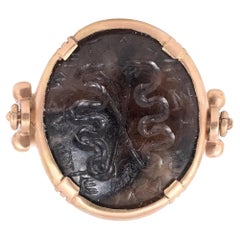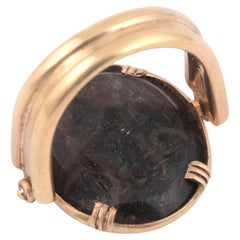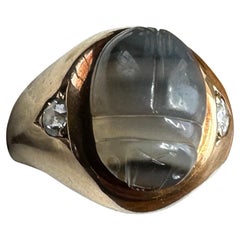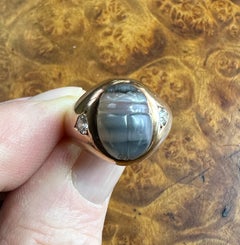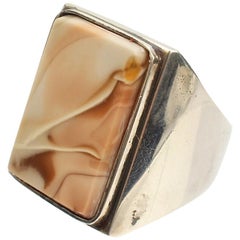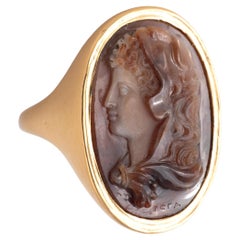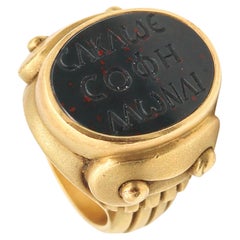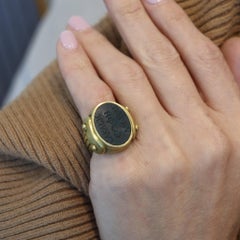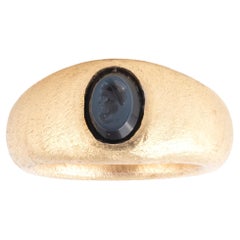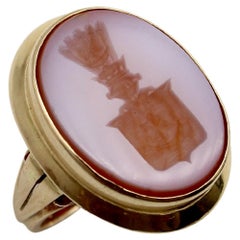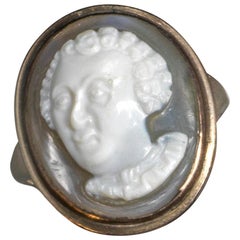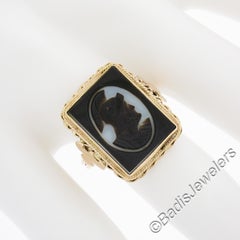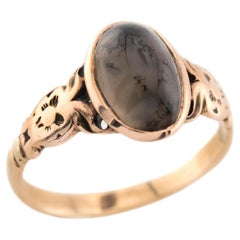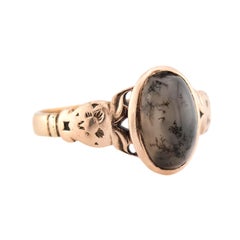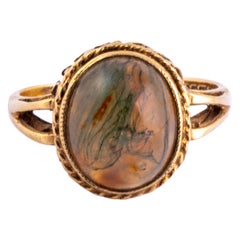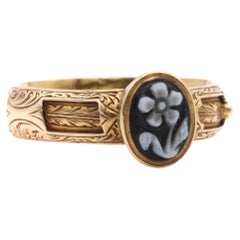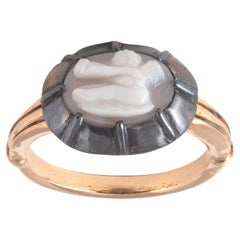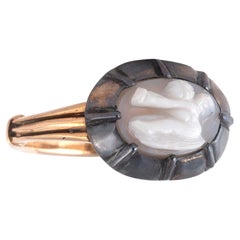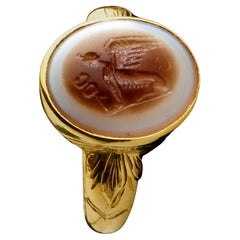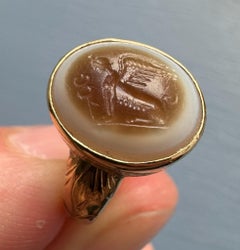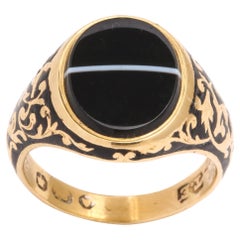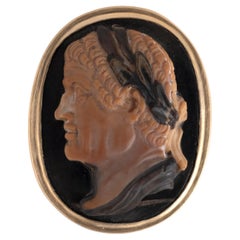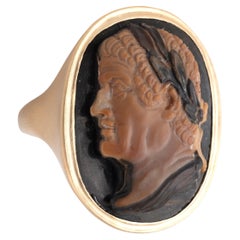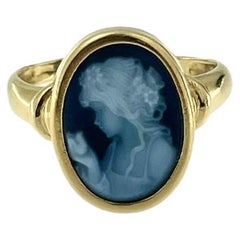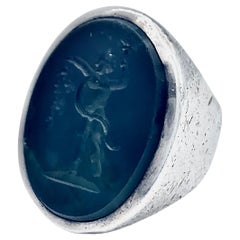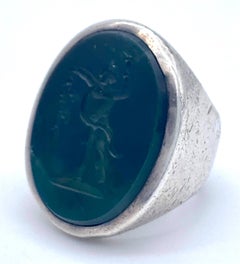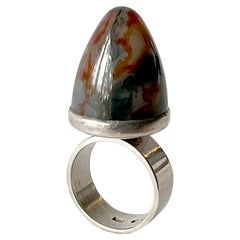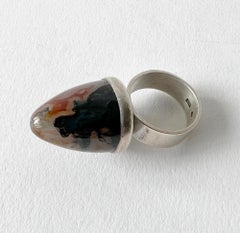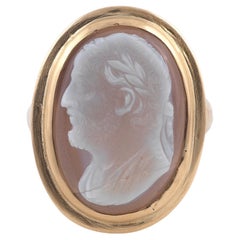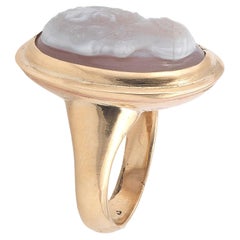
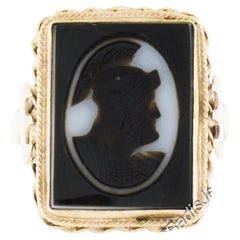


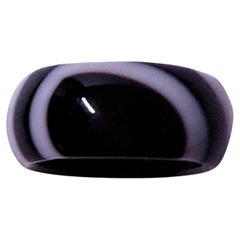

A superb ancient Roman agate intaglio ring. The high-karat gold signet ring is set with an engraved gemstone, known as an ‘intaglio’. It dates from between the 2nd to 3rd century AD and is a fine example of a Romano-British intaglio.
The conical-shaped agate gemstone displays various bands of colour ranging from honey brown to greyish-blue. The engraving depicts the bust of a man wearing a helmet, possibly winged which would depict Mercury, the Roman god of commerce, financial gain and communication. In Roman times, people would wear rings with the intaglio of Mercury in hope that the he would protect them and bless them with good financial fortune in their lives.
A number of referenced examples of similar ancient Roman conical shaped intaglios reside in notable museums all across the world, from the British Museum to the Louvre. A page with these examples and their sources can be found in the final photos of the listing. Similar examples can also be found in the extensive Alice and Louis Koch collection (items: 234, 235, 241, 301). Again see final images for reference.
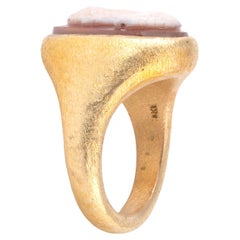
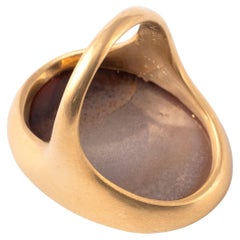
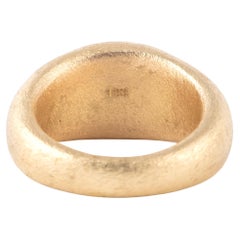
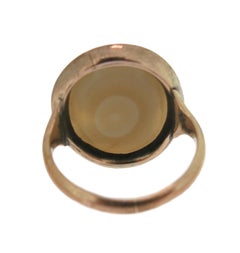
The gold ring mount is of D-shaped cross-section and a hollow 22K gold construction. The ring has a fantastic smooth silk-like texture when worn. It remains in good overall condition and the intaglio is very secure in the mount. The gold mount dates to the late 18th to early 19th century, and the shape is inspired by ancient Roman ring...
Category
15th Century and Earlier Antique Agate Rings