Florida - Art

to
2,543
4,621
3,602
4,023
3,390
6,920
Overall Width
to
Overall Height
to
146
514
10,186
11,697
157
168
264
293
316
445
990
1,604
1,404
1,329
113
6,291
3,756
1,921
1,473
864
797
689
533
441
240
174
124
101
7
10,214
8,596
2,160
7,257
3,954
2,322
2,131
2,031
1,205
1,092
1,023
1,018
1,011
830
816
766
725
642
547
509
466
466
463
8,975
6,029
3,742
3,656
3,616
1,118
254
208
200
165
5,533
1,809
22,557
231,464
157,696
Item Ships From: Florida
Marina Large Pink Oil Painting With Woman and Sail Boats

Marina Large Pink Oil Painting With Woman and Sail Boats

By Felix Mas

Located in Lake Worth Beach, FL

Marina large pink oil painting with woman and sail boats. Artist signed, dated and titled, floater frame. Ethereal oil on canvas figural painting, titled Playa Amarillo (Yellow Beach...

Category

1980s Realist Florida - Art

Materials

Cotton Canvas, Oil

Untitled- Penis. Aquacolor Crayon on archival paper

Untitled- Penis. Aquacolor Crayon on archival paper

By Celso José Castro Daza

Located in Miami Beach, FL

Drawing on paper is his basic work tool, some are sketches of his surviving works, others are sketches of moments he documents. Undefined by medium, Celso Castro’s works each carry...

Category

2010s Contemporary Florida - Art

Materials

Crayon, Watercolor, Paper

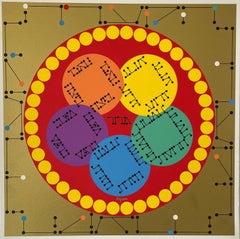
16 Green Circles from the Eight Variants series, 1970

16 Green Circles from the Eight Variants series, 1970

By Julian Stanczak

Located in Lake Worth Beach, FL

16 Green Circles from the Eight Variants series, 1970 This work is number 51 from the edition of 165 printed by Hans Mayer, Krefeld, Germany. screenprint 28"x28" Julian Stanczak American/Polish, 1928-2017. explores the visual, psychological, and emotional resonance of color in his Op art paintings, through which he aims to induce a “color meltdown,” as he describes: “I want to fuse many colorants and their gradations into a single color experience.” Influenced by Josef Albers and Russian...

Category

1970s Op Art Florida - Art

Materials

Screen

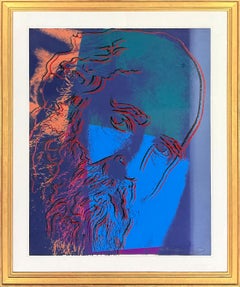
Martin Buber FS II.228 (hand signed screen print)

Martin Buber FS II.228 (hand signed screen print)

By Andy Warhol

Located in Aventura, FL

Screen print on Lenox Museum Board. Hand signed lower right by Andy Warhol. Hand numbered 94/200 on lower right (there are also 30 APs, 5 PPs, and 3 HCs). Artwork size: 40 x 32 in...

Category

1980s Pop Art Florida - Art

Materials

Board, Screen

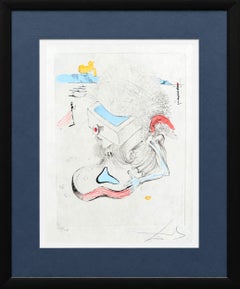
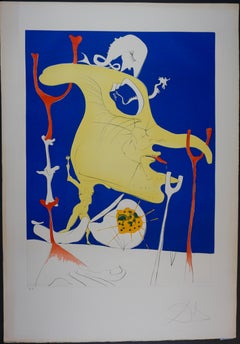
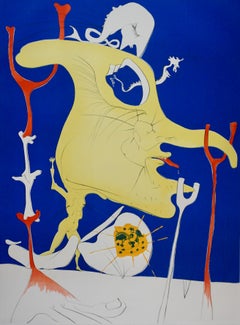
Gala, mon seul desir

Gala, mon seul desir

By Salvador Dalí­

Located in Hollywood, FL

ARTIST: Salvador Dali TITLE: Gala, mon seul desir MEDIUM: Etching SIGNED: Hand Signed by Salvador Dali PUBLISHER: Jean Schneider, Basel EDITION NUMBER: EA MEASUREMENTS: 20.9" ...

Category

1960s Surrealist Florida - Art

Materials

Etching

Broadway Costume Design Illustration

Broadway Costume Design Illustration

Located in Wilton Manors, FL

Fabulous illustration depicts a costume for Broadway production. Gouache on illustration board, image measures 10.5 x 16.5 inches; 15 x 22 inches framed. Excellent condition in ori...

Category

1960s Realist Florida - Art

Materials

Gouache, Illustration Board

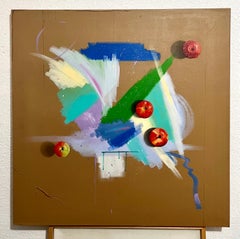
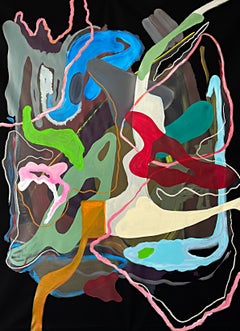
Mixed Media Painting titled “Chasing Picasso”  36 x 48

Mixed Media Painting titled “Chasing Picasso” 36 x 48

Located in West Palm Beach, FL

BORN JULY 31, 1979 IN NEW JERSEY, USA CURRENTLY LIVES AND WORKS IN WEST PALM BEACH, FLORIDA BIO: As an artist based in the vibrant community of West Palm Beach, my work is an explor...

Category

2010s Abstract Expressionist Florida - Art

Materials

Oil, Acrylic

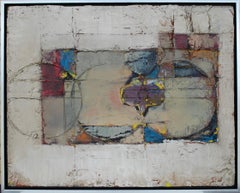
Untitled No. 63  Abstract Composition Mixed Media

Untitled No. 63 Abstract Composition Mixed Media

By Michael David

Located in Lake Worth Beach, FL

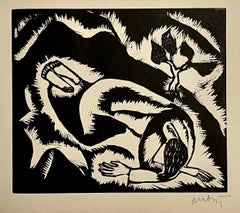
Untitled No 63,​ abstract composition 1987 Mixed media on wood panel, wax, oil, paper. signed with initials, gallery label. Abstract painter Michael David is best known for his use of encaustic, a technique that incorporates heated beeswax and pigment. Considered an inheritor of Abstract Expressionism, David’s abstract work primarily centers on the use of a densely layered surface to facilitate a direct and immediate spiritual experience. He often incorporates religious iconography and symbolism, art historical themes such as the nude, and contemporary politics into his paintings resulting in a critical dialogue between the layered abstraction of the surface and the integrated representational imagery. Alongside his work on canvas, David has developed a body of studio photography that recreates paintings by Caravaggio, Manet, and Mantegna, among others, in works that confront racism, homophobia, and sexism. David also works in mixed media and environmental sculpture...

Category

1980s Abstract Florida - Art
Materials

Oil, Paper, Wax, Wood Panel

Alexander Calder Circus Reproduction Lithograph After a Drawing

Alexander Calder Circus Reproduction Lithograph After a Drawing

By (after) Alexander Calder

Located in Surfside, FL

(after) Alexander Calder "Calder's Circus" offset lithograph on wove paper after drawings by the artist Published by Art in America and Perls gallery in 1964 (from drawings done in t...

Category

1930s American Modern Florida - Art

Materials

Lithograph

I am fleeting #12. From I am fleeting Series

I am fleeting #12. From I am fleeting Series

By Javier Rey

Located in Miami Beach, FL

Is a project that debates through the photographic image, the importance that humans have assigned to ourselves, and proposes a reconciliation with the reality of our own insignifica...

Category

21st Century and Contemporary Contemporary Florida - Art

Materials

Color, Archival Pigment

Brutalist Hand Forged Iron Mosaic Sculpture Menorah Israeli David Palombo

Brutalist Hand Forged Iron Mosaic Sculpture Menorah Israeli David Palombo

By David Palombo

Located in Surfside, FL

Hand Forged Iron Stone Mosaic Hanukah Menorah Candelabra David Palombo was an Israeli sculptor and painter. He was born in Turkey to a traditional family and immigrated to the Land of Israel with his parents in 1923. They lived in the Nahalat Shiva neighborhood of Jerusalem. In 1940 he began his studies at Bezalel Academy of Arts and Design, and from 1942 was a student of sculptor Ze’ev Ben-Zvi. For a period of time, Palombo was an assistant at Ben-Zvi’s studio and also taught at Bezalel. During this period he was also a member of the “Histadrut HaNoar HaOved VeHaLomed” (The General Federation of Students and Young Workers in Israel). In the 1940s he took art lessons at night. In 1948 he went to Paris, where he visited the studio of the sculptor Constantin Brancusi whose work influenced him. Around 1958 he married the artist Shulamit Sirota. In 1960 he quit his job to devote himself to art. In 1964 he married for the second time to the artist Yona Palombo. The two of them went to live in an abandoned home on Mount Zion in Jerusalem. In 1966 he was killed when the motorcycle on which he was riding ran into a chain stretched across the street to prevent the desecration of Shabbat. His widow opened a museum in their home that was active until the year 2000. Work by Palombo is included in the Judaic collection of the Jewish Museum (a well known Hanukkah menora). Palombo executed the impressive metal gates of the Tent of Remembrance at the Yad Vashem, the memorial to the martyrs of the holocaust, as well as the gates to the Knesset Building the United Nations Educational Scientific and Cultural Organization (Unesco award) awarded him a scholarship for study in Japan. He worked in marble, granite, bronze, iron and steel. as well as with glass mosaic tiles. Palombo’s early works, in the 1950s, were influenced by modernist sculptors such as Brancusi. These works were composed of abstract images from nature and were carved out of stone or wood. At the end of the 1950s he began making metal sculptors, using the technique of welding. His work took on a more abstract and expressive character. Education 1940 Painting with Isidor Ascheim, New Bezalel School for Arts and Crafts, Jerusalem 1942 Sculpture with Zeev Ben Zvi, Jerusalem 1956 Mosaic, Ravenna, Italy 1958 Welding Course Awards And Prizes 1966 UNESCO Award Exhibitions: Sculpture in Israel, 1948-1958 Mishkan Museum of Art, Kibbutz Ein Harod Artists: Zvi Aldouby, Yitzhak Danziger, Arieh Merzer, Dov Feigin, Aaron Priver, David Palumbo, Menashe Kadishman, Kosso Eloul, Yehiel Shemi, Zahara Schatz. The Spring Exhibition of Jerusalem Artists, Artists' House, Jerusalem Artists: Palombo, David Bezalel Schatz, Mordechai Levanon, Fima, Ludwig Blum 12 Artists, The Bezalel National Museum, Jerusalem Avraham Ofek, Aviva Uri, Avigdor Arikha, Yosl Bergner, Lea Nikel, Palombo, Ruth Zarfati...

Category

Mid-20th Century Arte Povera Florida - Art

Materials

Stone, Iron

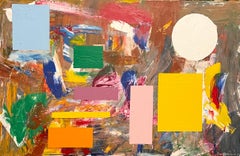
Abstract Expressionist Painting (Mid-century Modern action composition)

Abstract Expressionist Painting (Mid-century Modern action composition)

Located in Wilton Manors, FL

Untitled Abstract Expressionist painting, 1957 Oil on canvas measuring 18 x 30 inches. Signed with monogram and dated lower right. Two repair patches on back on painting. Artist...

Category

1950s Abstract Expressionist Florida - Art

Materials

Oil, Canvas

Cloris
Cloris

Cloris

Located in Palm Beach, FL

Color pencil on acrylic-coated canvas.

Category

21st Century and Contemporary Contemporary Florida - Art

Materials

Acrylic, Color Pencil

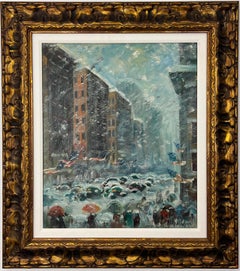
Patched Front. Original Urban American Street Scene Painting.

Patched Front. Original Urban American Street Scene Painting.

Located in Marco Island, FL

American city scene of a man on the sidewalk with an umbrella in front of storefronts with a geometric facade. American life is captured in this Clyde Singer painting, Patched Fron...

Category

1970s American Realist Florida - Art

Materials

Canvas, Oil

Italian City (Cubist cityscape)

Italian City (Cubist cityscape)

Located in Wilton Manors, FL

Karl Drerup (1904-2000). Italian City, c.1930. Oil on masonite panel, 24 x 32 inches; 34 x 42 in custom frame. Signed lower right. Minor conservation to loss in margins. Price on request Biography: Born in Borghorst, Germany in 1904, Karl Drerup earned a Master’s Degree in graphic arts working under Hans Meid...

Category

1930s Cubist Florida - Art

Materials

Oil, Panel

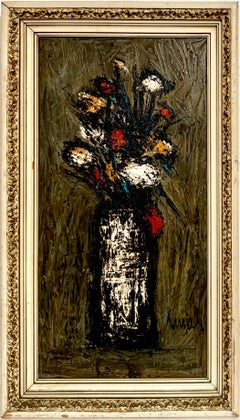
Paolo Buggiani Mid Century Modern Abstract

Paolo Buggiani Mid Century Modern Abstract

By Paolo Buggiani

Located in San Francisco, CA

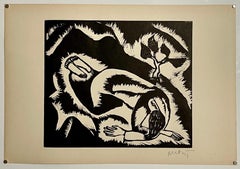
magnificent abstract, painting by the well listed Italian artist Paolo Buggiani relationship relationship. Born in Italy in 1933, but worked in America from the 1950s. He has auction...

Category

1960s Abstract Florida - Art
Materials

Oil

THE CAT'S DEBUT - DIPTYCH

THE CAT'S DEBUT - DIPTYCH

By (after) Dr. Seuss (Theodore Geisel)

Located in Pembroke Pines, FL

Dr Seuss THEODOR GEISEL "THE CAT'S DEBUT - DIPTYCH" Limited Edition - Serigraph on Coventry Paper Authorized Estate Edition Edition Size: 850 Arabic Numbers 99 Patrons’ Collection 15...

Category

2010s Pop Art Florida - Art

Materials

Screen

R. Poch Square Big. 112. aire. 120x120. acrylic painting

R. Poch Square Big. 112. aire. 120x120. acrylic painting

By Ramon Poch

Located in CORAL GABLES - MIAMI, FL

112. AIRE 120 x 120 cm acrylic painting Born in Badalona (Barcelona). Photographer and advertising film director. Founding partner of the advertising production company La Cosa de...

Category

2010s Abstract Expressionist Florida - Art

Materials

Acrylic

Western Scene (Cowboy on Horseback)

Western Scene (Cowboy on Horseback)

By Denes de Holesch

Located in Surfside, FL

This is an oil on artist board (unframed) by the important Hungarian-born and internationally celebrated Denes de Holesch (1910-1983). Denes de Holesch was an international equestrian artist. His works have been exhibited all over the world, including in New York, Beverly Hills, Boston, Chicago, Paris, Mexico City, Montreal, Tokyo, Sydney, and Madrid. His horse paintings fall into one of seven themes, including polo, cowboys, circus, rodeo, hunt, bull-fight, race-course and running free. His mastery of the subject has been compared to that of Picasso, Delacroix and Franc Marc. 1910 Denes Dezo George de Holesch was born on 9 February, 1910 at Banska-Bystrica, Northern Hungary. He was the third child and youngest son of Hugo de Holesch, an architect and Margit, nee Wagner. Many generations of the de Holesch family had worked as professional architects. He studied at the Hungarian Academy of Fine Arts in Budapest on a scholarship. Early in his career he traveled to China, Japan, Philippines, Java, Bali and Australia, where his reputation grew rapidly. Here he produced portraits in oils, and lithographs of the Chinese, as well as landscape works in oils,depicting the local countryside, and canal, street and city scenes. His exposure to the arts of the Chinese, with their simplicity of line, greatly influenced his later works. In 1939 he established a studio at Lavender Bay near Sydney. In 1940 he exhibited at the Macquarie Galleries in Sydney. In 1944 he married Joyce Greer, the Melbourne concert pianist. In 1945 the couple moved to New York where his interest in horses grew. He held exhibitions at Gallery Wildenstein, Herve, and FAR Gallery. In 1946 Holesch moved to Montreal where he exhibited at the National Gallery of Montreal. In 1947 he moved to Boston where he continued painting portraits and horses. He exhibited there at the Ehrmann and Vose galleries. Later in the year he moved to San Francisco where he was invited to participate in the "Renoir to Picasso" Exhibition held at the Maxwell Gallery.1946 He moved to Montreal, Canada and exhibited at the National Gallery of Montreal. (Frederic Remington and Charles Russell) 1947 Early in the year he moved to Boston and continued painting portraits and horses. In June, he painted the portrait of Harvard Law School Dean, Erwin N. Griswold, and in October his works were exhibited at Margaret Brown's Galerie Intime, Newbury Street, Boston. 1948 He produced a clay sculpture head of Egon Petri, one of a number of clay sculptures that he produced. He also produced a number of wood carvings. His paintings were chosen for inclusion in a Group Exhibition in the National Gallery of San Francisco, and in the important and prestigious 'Renoir to Picasso' Exhibition held at Maxwell's Galleries, 372 Sutter Street, San Francisco. 1953 His works were included in a Group Impressionists Exhibition held at the Ohana Gallery, London 1954 He travelled to New York, where he was commissioned to paint Herbert Gasser, Nobel Prize Winner in Biochemistry. 1955 He returned to England, and then travelled to Paris to exhibit works in the Galerie Marcel Lenoir. 1956 He again returned to New York to work on portrait commissions and for exhibitions of his works, mainly of horses. These exhibitions were held in New York, Boston, San Francisco and late in the year at the Galleries of Frank J. Oehlschlaeger at 107 East Oak Street, Chicago. During this year, visits with his family to Ringling Circus and to a rodeo in Tucson, Arizona must have impressed him greatly, for images of these events soon appeared on his canvases. His work was greatly admired by Hollywood film- stars, such as Ann Rutherford and Burt Lancaster, and David Niven purchased one of the horse paintings to give as his wedding present to Grace Kelly on her marriage to Sovereign Prince Rainier III of Monaco. 1959 The prints of 'Courtship' and 'Chargers' were produced. It has been estimated that close to a million copies of his prints were sold over the next ten years, with 'Courtship' being advertised by Stern's Book Dpt. on 5th Avenue, New York along with prints by Picasso...

Category

20th Century American Realist Florida - Art

Materials

Oil, Board

Original California Figurative Abstract Still Life Ink Drawing Joyce Treiman

Original California Figurative Abstract Still Life Ink Drawing Joyce Treiman

By Joyce Treiman

Located in Surfside, FL

Joyce Treiman Ink on paper, framed under glass; signed in pencil lower right; Dimensions: 16 1/2 x 13 3/4 inches; 18 3/4 x 14 3/4 inches frame. Joyce Wahl Treiman was an American p...

Category

Mid-20th Century American Modern Florida - Art

Materials

Paper, India Ink

Rare Israeli Naive Art Oil Painting Jerusalem Israel Old City Landscape Folk Art

Rare Israeli Naive Art Oil Painting Jerusalem Israel Old City Landscape Folk Art

Located in Surfside, FL

JERUSALEM, Vielle du David, (City of David) Oil painting on canvas Hand signed in Hebrew (Perlman, Pearlman or Perelman. There are numerous artists with this name. we are unsure wh...

Category

20th Century Folk Art Florida - Art

Materials

Canvas, Oil

Life Magazine Satirical Society Cartoon Illustration

Life Magazine Satirical Society Cartoon Illustration

Located in Wilton Manors, FL

Barbara Shermund (1899-1978). Society Satirical Cartoon, ca. 1940s. Gouache on heavy illustration paper, image measures 17 x 14 inches; 23 x 20 inches in matting. Signed lower left. Very good condition but matting panel should be replaced. Unframed. Provenance: Ethel Maud Mott Herman, artist (1883-1984), West Orange NJ. For two decades, she drew almost 600 cartoons for The New Yorker with female characters that commented on life with wit, intelligence and irony. In the mid-1920s, Harold Ross, the founder of a new magazine called The New Yorker, was looking for cartoonists who could create sardonic, highbrow illustrations accompanied by witty captions that would function as social critiques. He found that talent in Barbara Shermund. For about two decades, until the 1940s, Shermund helped Ross and his first art editor, Rea Irvin, realize their vision by contributing almost 600 cartoons and sassy captions with a fresh, feminist voice. Her cartoons commented on life with wit, intelligence and irony, using female characters who critiqued the patriarchy and celebrated speakeasies, cafes, spunky women and leisure. They spoke directly to flapper women of the era who defied convention with a new sense of political, social and economic independence. “Shermund’s women spoke their minds about sex, marriage and society; smoked cigarettes and drank; and poked fun at everything in an era when it was not common to see young women doing so,” Caitlin A. McGurk wrote in 2020 for the Art Students League. In one Shermund cartoon, published in The New Yorker in 1928, two forlorn women sit and chat on couches. “Yeah,” one says, “I guess the best thing to do is to just get married and forget about love.” “While for many, the idea of a New Yorker cartoon conjures a highbrow, dry non sequitur — often more alienating than familiar — Shermund’s cartoons are the antithesis,” wrote McGurk, who is an associate curator and assistant professor at Ohio State University’s Billy Ireland Cartoon Library & Museum. “They are about human nature, relationships, youth and age.” (McGurk is writing a book about Shermund. And yet by the 1940s and ’50s, as America’s postwar focus shifted to domestic life, Shermund’s feminist voice and cool critique of society fell out of vogue. Her last cartoon appeared in The New Yorker in 1944, and much of her life and career after that remains unclear. No major newspaper wrote about her death in 1978 — The New York Times was on strike then, along with The Daily News and The New York Post — and her ashes sat in a New Jersey funeral...

Category

1940s Realist Florida - Art

Materials

Gouache

Pair of Oil on Canvas Early 19th Century Portraits of a Man and Woman

Pair of Oil on Canvas Early 19th Century Portraits of a Man and Woman

Located in Palm Beach, FL

A pair of early 19th century French oil on canvas paintings of a man and woman, probably husband and wife. Neoclassical and Napoleonic in style, these paintings are very well execute...

Category

19th Century Romantic Florida - Art

Materials

Oil

Roy Lichtenstein Screen Print on Waxed Paper Plate, 1969, 10x10 inches

Roy Lichtenstein Screen Print on Waxed Paper Plate, 1969, 10x10 inches

By Roy Lichtenstein

Located in Aventura, FL

Screen print on waxed paper plate. Unsigned from an unknown edition. Published by Bert Stern, New York. Plate size 10 x 10 inches. Frame size approx 17 x 17 inches. Stamped "Ro...

Category

1960s Pop Art Florida - Art

Materials

Paper, Screen

Large Israeli Lithograph Moses with the Ten Commandments Reuven Rubin Mourlot

Large Israeli Lithograph Moses with the Ten Commandments Reuven Rubin Mourlot

By Reuven Rubin

Located in Surfside, FL

Lithograph printed by Mourlot, Paris on Arches France paper. limited edition of 150. Pencil signed. Biblical themed Lithograph by Israeli Master. Reuven Rubin 1893 -1974 was a Roman...

Category

1970s Florida - Art

Materials

Archival Paper, Lithograph

Bayou Teche

Bayou Teche

By Hunt Slonem

Located in Fort Lauderdale, FL

Hunt Slonem Bayou Teche, 2025 Oil on Wood 22 x 34 in (55.88 x 86.36 cm) Framed: 26 x 38 in

Category

2010s Contemporary Florida - Art

Materials

Oil

Architectural Gelatin SIlver Print Vellum Photograph Mark Citret Vintage Photo

Architectural Gelatin SIlver Print Vellum Photograph Mark Citret Vintage Photo

By Mark Citret

Located in Surfside, FL

Mark Citret, American, b. 1949. "Third Story Arches", Fort Point, 1998 Silver gelatin print hand signed and editioned 1/45 in pencil along lower edge. Published: "Along the Way" Mark...

Category

1990s American Modern Florida - Art

Materials

Vellum, Silver Gelatin

Girl & Rooster Enamel Glazed Ceramic Plaque Israeli Artist Awret Naive Folk Art

Girl & Rooster Enamel Glazed Ceramic Plaque Israeli Artist Awret Naive Folk Art

By Irene Awret

Located in Surfside, FL

This is a rare ceramic plaque painted with enamel glaze by famed Israeli German artist Irene Awret is signed Awret Safed on the verso. the actual glazed ceramic is 10X15 inches. Irèn...

Category

1950s Expressionist Florida - Art

Materials

Enamel

Colorful Russian French Judaica Jewish Shtetl Wedding Lithograph Mourlot Paris

Colorful Russian French Judaica Jewish Shtetl Wedding Lithograph Mourlot Paris

By Mane Katz

Located in Surfside, FL

Mane-Katz (1894-1962) Original Lithograph published by Andre Sauret, Monte Carlo, 1966, printed in France, by Mourlot. The ouvrage sheet is not included. this is from a limited editi...

Category

1960s Modern Florida - Art

Materials

Lithograph

SILENCE - original large blue female nude by Paula Craioveanu 39x27.5in

SILENCE - original large blue female nude by Paula Craioveanu 39x27.5in

By Paula Craioveanu

Located in Forest Hills, NY

"Silence", pencil and ultramarine tempera on paper, inspired by Matisse. Part of Nude in Interior series. Large drawing. Shipped rolled in a tube. Size 39x27.5in /100x70cm Free shi...

Category

2010s Contemporary Florida - Art

Materials

Pencil, Archival Paper, Tempera

“Mother and Child in the Garden”

“Mother and Child in the Garden”

By Edward Percy Moran

Located in Southampton, NY

Original oil on canvas painting of a young woman with child in a garden in the moon light. The artist is the well known American painter, Edward Percy Moran. Signed by the artist low...

Category

1890s Academic Florida - Art

Materials

Canvas, Oil

Portrait of Man in Trench Coat

Portrait of Man in Trench Coat

Located in Wilton Manors, FL

Joseph Kardonne (1911-1985). Portrait of Man in Trench Coat, 1950. Ink on paper, measuring 8 x 12 inches. Signed, dated and titled lower right. Unframe...

Category

Mid-20th Century American Realist Florida - Art

Materials

Paper, Ink

King Alphonso (large estate signed screen print)

King Alphonso (large estate signed screen print)

By Jean-Michel Basquiat

Located in Aventura, FL

King Alphonso, conceived in 1982-1983 and printed in 2025 as a limited edition screen print in colors on Somerset Velvet paper, is a Jean-Michel Basquiat artwork, originally created ...

Category

2010s Street Art Florida - Art

Materials

Screen

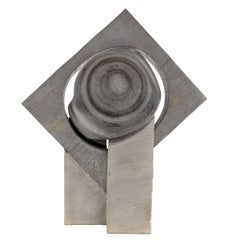
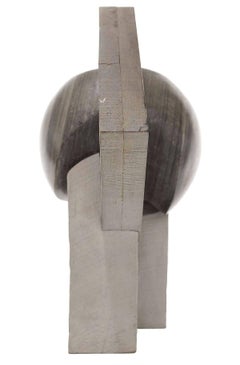
Abstract Minimalist Geometric Sculpture

Abstract Minimalist Geometric Sculpture

By Adolph Dioda

Located in Surfside, FL

Adolph T. DIODA (1915-1991) Birth place: Aliquippa, PA Lived in West Aliquippa, PA; Detroit, MI; Phila. & Jenkintown, PA Profession: Sculptor, educator Studied: Carnegie Inst ...

Category

1970s Minimalist Florida - Art

Materials

Stone, Marble

Fauvist Israeli Landscape, Going to Synagogue Judaica Oil Painting

Fauvist Israeli Landscape, Going to Synagogue Judaica Oil Painting

By Melitta Schiffer

Located in Surfside, FL

Melitta Schiffer, painter. b. Trieste, Italy. In her youth, moved to Weimar, Germany with her parents. Studied at Art Academy, Weimar, Germany; Advanced studies with artist Mildan; 1...

Category

20th Century Modern Florida - Art

Materials

Oil

Sagrada Dualidad I. Oil on canvas

Sagrada Dualidad I. Oil on canvas

Located in Miami Beach, FL

The works produced under the name Sacred Duality are inspired by recognizing the impermanent nature of all things and being aware that nothing is static. Appreciating that continuous...

Category

2010s Abstract Florida - Art
Materials

Canvas, Oil

WPA Era Subway Scene Mother & Child

WPA Era Subway Scene Mother & Child

Located in Wilton Manors, FL

Beautiful WPA era NYC subway scene by American artist, Albert Sway (b.1913). ca. 1935. Lithograph on paper, image measures 9.75 x 7.75 inches. Full sheet measuring 12.5 x 9.5 inche...

Category

1930s American Realist Florida - Art

Materials

Paper, Ink

Rare 1922 German Jewish Judaica Zion Woodcut Woodblock Print Hermann Fechenbach

Rare 1922 German Jewish Judaica Zion Woodcut Woodblock Print Hermann Fechenbach

By Hermann Israel Fechenbach

Located in Surfside, FL

Title: Zion Subject: Various biblical images depicting Creation and prayer 1922 Medium: woodcut Frame: 14" x 18" Image: 12.5" x 16.75" Provenance: owned and signed verso by Peter Keil. Central panel shows the Jewish star over a crown, with inscription in Hebrew: "When God comforts Zion, He will comfort all its ruins and make its deserts look like Eden," and "You have sanctified the seventh day, the goal of creation of Heaven and Earth." This is flanked by a Palestinian farmer pioneer on the left and a Jew praying on the right. The lower tier shows six vignettes of the days of creation from Genesis. Hermann Fechenbach was born in 1897 in Württemberg, Germany. He grew up in Bad Mergentheim where his parents had an inn, which served as a meeting place for the local Jewish community. He left school early and through family connections with clothing retailers received training in window dressing. His skill with brush writing was quickly recognised by a big firm in Dortmund where he was responsible for the displays in 10 large windows. He received his conscription papers in 1916 and recalls “being as patriotic as any other fool”. In August 1917 he was involved in a grenade attack in which he was the sole survivor. With serious injuries to both legs he struggled to safety and was eventually transported to a front line “slaughterhouse” where the first of a series of amputations was performed which led to the loss of his left leg. As a result of his injuries his father dropped his opposition to him becoming an artist. His formal art education started in 1918 with training at a Stuttgart handcraft school for invalids. He attended the Academies in Stuttgart and Munich to learn painting and restoration for 3 years. He was influenced at this time by Max Liebermann. He has been compared to Kathe Kollwitz and was a contemporary of Jakob Steinhardt and hermann Struck. In 1923 he went to Florence for a year. While in Florence he started to produce a series of miniature wood engravings to illustrate the stories of Genesis. This was followed by periods in Pisa, Venice, Vienna and Amsterdam. In 1924 he returned to Stuttgart to paint in the contemporary style “Die Neue Sachlichkeit”. (The New Objectivity was a movement in German art that arose during the 1920s Weimar republic as a reaction against expressionism. The term was coined by Gustav Friedrich Hartlaub, the director of the Kunsthalle in Mannheim, who used it as the title of an art exhibition staged in 1925 to showcase artists who were working in a post-expressionist spirit. These artists—who included Max Beckmann, Otto Dix, George Grosz, Christian Schad, Rudolf Schlichter and Jeanne Mammen) Every spring and autumn he exhibited at the “Kunstgebit” which served as the showcase for all serious artists of the period. His professional status “Kunstmaler und Grafiker” was recognised by Berlin in 1926. Practically all his work from this period was sold following exhibition. In 1926 he collaborated with an architect friend to build a bungalow in Hohenheim, a non-Jewish area and a suburb of Stuttgart. Hermann alternately lived in his country bungalow and his town studio, producing portraits for sale or barter and wood engravings for his own pleasure. In 1930 he married a non-Jewish professional photographer – Greta Batze. They had a studio in Stuttgart, which was used to teach art to a group of 12 students. In 1933 the Nazi influence removed his name from the official state register together with the right to exhibit. By spending most of his time in his bungalow out of the Jewish quarter the Fechenbachs escaped being registered by the Nazis for some years. They were ostracised and abused by their non-Jewish neighbours. Hermann made weekly visits to friends in town to teach them the practical skills they would need assuming they were to escape from Germany. His energies were directed towards protection and survival. Ultimately the Nazi persecution forced the Fechenbachs to flee their homeland. They moved to Palestine for 3 months in 1938, but found the political and physical environment unsustainable. Greta arrived in England penniless in January 1939 to work as a domestic servant and to find a guarantor for her husband. Hermann arrived in May 1939. They moved to Blackheath a few months later. Hermann resumed his painting and engraving as a means of earning a living. He raised enough money to get his parents out of Germany to join his brothers in Argentina but was unable to save his twin sister Rosa who died in a Nazi concentration camp. In 1940 Hermann was interned in Bury as a suspect alien. He protested about his treatment by starting a hunger strike. Because of his persistence he was moved to a prison in Liverpool. From Liverpool he was moved to the Hutchinson Camp in the Isle of Man with fellow artist Kurt Schwitters. Arrangements were made for Greta to be accommodated near by. While interned he commenced work on “Refugee Impressions”, a series of linocut prints (no wood was available). In 1941 when released from internment the Fechenbachs came under the sponsorship of Dr. Bela Horovitz, the Austrian art publisher who in turn made an introduction to Professor Tancred Borenius. They were offered lodgings with a family in Oxford. Hermann had his first public exhibition for many years in a small gallery in Oxford in 1942. A second exhibition of oils, pencil drawings, coloured linocut and woodblock prints held later in the year was opened by the mayor of Oxford and critically acclaimed. In 1944 the first London exhibition took place at the Anglo-Palestinian club in Piccadilly. There were two exhibitions at the Ben Uri Art gallery during this period. In 1948 a second exhibition at the Anglo Palestinian club was inaugurated by a member of the Rothschild family and several members of Parliament. This was a great success. In 1944 the Fechenbachs moved to a top floor studio flat in Colet Gardens. Open exhibitions were held each Spring at the Embankment from 1946 to 1951. Movietone News produced a short feature on the artist, which was shown in cinemas in England and Germany. In 1969 he published the Genesis story in a hard back volume containing 137 prints. He started to research the fate of the entire Jewish community of Bad Mergentheim during the period of the second world war, liaising with historian Dr. Paul Sauer and Professor Max Miller, historian and theologian. In 1972 Kohlhammer published his partly autobiographical book “The last Jews of Mergentheim”. He exhibited at the Anglo-Palestinian Club & the Ben Uri Gallery in the 1940s. His works only came to prominence during the last year of his life when he exhibited at Blond Fine Art. Peter Keil part of the Junge Wilde. In 1978, the Junge Wilde painting style arose in the German-speaking world in opposition to established avant garde, minimal art and conceptual art. It was linked to the similar Transavanguardia movement in Italy, USA (neo-expressionism) and France (Figuration Libre). They were also known as the Neue Wilde. Artists included; Austria: Siegfried Anzinger, Erwin Bohatsch, Herbert Brandl, Gunter Damisch, Hubert Scheibl, Hubert Schmalix...

Category

1980s Impressionist Florida - Art

Materials

Woodcut

Marc Chagall 'Bezaleel and his Two Golden Cherubim, 1966' original lithograph

Marc Chagall 'Bezaleel and his Two Golden Cherubim, 1966' original lithograph

By Marc Chagall

Located in Pembroke Pines, FL

Artist: MARC CHAGALL Title: BAZALEEL AND HIS TWO GOLDEN CHERUBINS (FROM STORY OF THE EXODUS) Medium: LITHOGRAPH Image Size: 18.50x13.50 inches paper size: 20 x 15 inches Released: 19...

Category

1960s Modern Florida - Art

Materials

Lithograph

Duchándome. Nude watercolor on paper

Duchándome. Nude watercolor on paper

By Celso José Castro Daza

Located in Miami Beach, FL

Drawing on paper is his basic work tool, some are sketches of his surviving works, and others are sketches of moments he documents. Throughout his artistic career, Castro has exalted the figure and genitality of the Latin American man, putting into tension the limits imposed by the sex/gender system that are part of an unquestionable patriarchal and phallocentric order. The majority of those portrayed are inhabitants of the Colombian coast, also constructing alternative ways of conceiving Latin American identity. By breaking taboos about corporality and male sexuality, his work has been censored on numerous occasions due to public accusations of immorality and pornography. Celso Castro’s work is a bare-bulb erotic photo...

Category

2010s Contemporary Florida - Art

Materials

Pastel, Watercolor, Paper, Ink

Tennis Player
Tennis Player

Tennis Player

By Elisabeth Sabala

Located in Lake Worth Beach, FL

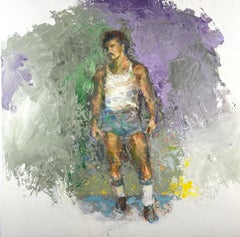
Tennis Player heavy oil impasto on canvas framed. Elisabeth Sabala Abelló (Barcelona, 1956). She studied industrial design at the School of Arts and Crafts in Barcelona ​and has a degree in Fine Arts, a specialty in painting, from the Central University of the same city. Sabala is a convinced figurative who has given all the prominence of her work to the representation of the human being in its most trivial aspects. At a time when the artistic landscape extols abstract and conceptual art focused on the great universal themes, Sabala continues to focus on the small defects that bring us closer to the collective and the human. The artistic progression of Sabala takes place, at first, from a bleak period to another vitalist and, later, from the representation of isolated characters (In the super, Reading the stories of​ the paintings) to the recreation of great concentrations of its peculiar individuals characterized in an endless number of situations (The Great Dance, The Girls of the Choir). Sabala's work is vital and touching, as well as scathing and satirical: it confronts its characters in the most varied situations, capturing, at the same time, the viewer's attention with an unusual juxtaposition of colors that do not seek chromatic harmony, but expression and movement through matter. In 1980 she won the first prize of a painting of the City of Castelldefels, and the following year she debuted individually in the Caixa Catalunya room, in Barcelona. In 1984, she was selected for the XXIII Joan Miró Drawing Prize, taking part in a traveling exhibition in Japan. He won the first prize of the International Painting Competition of Pollença (Mallorca) in 1985, and the following year he took part in a collective held at the Martano gallery in Turin. That same year of 1986 she obtained the Scholarship of Plastic Arts of the Generalitat de Catalunya. Sabala continues to hold personal shows in Barcelona, ​​Mallorca, Madrid, and Italy, and in 1989 she debuted in New York with an individual exhibition held at the Scott Alan Gallery. Since then she will reiterate his presence both in that city and in Paris, Berlin, Monaco, Amsterdam, Los Angeles, Mexico City, Hong Kong, etc. His works have been present at Interactive, ARCO, Art Forum, Art Jonction and New Art, as well as in various Spanish museums. • Studies: Fine Arts, University of Barcelona • Industrial Design, School of Arts and Crafts, Barcelona Main exhibitions Spain: • Barcelona: ◦ Arcs & Cracks​, 1990, 1992, Anna Benach 1993, Helena Ramos 1993 ◦ Maria Jose Castellvi 1996, 1997, 1999, 2001 “a wedding is a wedding” + Performance “Ella” ◦ 2004, 2006 “Fashion satisfaction” + Performance ◦ 2008 “Women's weapons” • Girona: ◦ Helena Ramos 1990, 1991, 1993, 1995 ◦ Cyprus Art...

Category

1980s Surrealist Florida - Art

Materials

Cotton Canvas, Oil

Hand Signed Dated 2001 Colorful Acrylic Vasa Laminated Lucite Triangle Sculpture

Hand Signed Dated 2001 Colorful Acrylic Vasa Laminated Lucite Triangle Sculpture

By Vasa Velizar Mihich

Located in Surfside, FL

Rhomboid, 2001 Laminated acrylic Signed and dated: Vasa / 2001 9.5" H x 4.5" W x 2.5" D (size is approximate) Vasa Velizar Mihich (born 1933), known as Vasa, is an American artist b...

Category

Early 2000s Abstract Geometric Florida - Art

Materials

Plastic, Lucite

FIGURA DE HOMBRE EN AZUL CON FONDO GRIS

FIGURA DE HOMBRE EN AZUL CON FONDO GRIS

By Rufino Tamayo

Located in Aventura, FL

Figura de Hombre en Azul con Fondo Gris / Figure of a Man in Blue with Gray Background. Carborundum etching on paper. Hand signed lower right by Ruffino Tamayo. Hand numbered HC 3...

Category

1970s Expressionist Florida - Art

Materials

Paper, Etching

Vintage Original Maritime Oil Painting – Signed, Rocky Coast Waves Seascape

Vintage Original Maritime Oil Painting – Signed, Rocky Coast Waves Seascape

Located in Palm Coast, FL

A dramatic original seascape oil painting on canvas, capturing powerful waves crashing against a rugged rocky shoreline under a wide, cloud-filled sky. The artist builds the motion o...

Category

Late 20th Century Impressionist Florida - Art

Materials

Oil

Brutalist Ceramic Abstract Expressionist Lamp Base or Vase Form

Brutalist Ceramic Abstract Expressionist Lamp Base or Vase Form

Located in Wilton Manors, FL

Raymond Gallucci (1923-2005) Lamp Base, ca. 1970. Glazed ceramic. 15 " h, 7 3/8" w, 6" d. Opening for lamp post measures 11/16 inch. While the piece would make a lovely lamp, we...

Category

1970s Abstract Expressionist Florida - Art

Materials

Ceramic

Umbra series 16, Abstract Wall Sculpture

Umbra series 16, Abstract Wall Sculpture

Located in Miami Beach, FL

Fear and insecurity came uninvited to keep the artist company. Suddenly it became necessary to release the sensations that surrounded him day and night. At times the artist felt as i...

Category

2010s Abstract Florida - Art
Materials

Brass

Oil on Canvas Painting Titled “AbEx Whitewash IV”  48 x 48

Oil on Canvas Painting Titled “AbEx Whitewash IV” 48 x 48

By Mirtha Moreno

Located in West Palm Beach, FL

Born in Havana, Cuba, in the late 70s during a well-documented time of religious and political oppression, abstract expressionist artist Mirtha Moreno, immigrated to the United State...

Category

2010s Abstract Expressionist Florida - Art
Materials

Oil, Acrylic

"Feeding the Fish"
"Feeding the Fish"

"Feeding the Fish"

Located in Boca Raton, FL

"Feeding the Fish" is an original oil painting by Contemporary realist Megan Eisenberg about snorkeling in the beautiful tropical water of the Cayman I...

Category

2010s Contemporary Florida - Art
Materials

Oil

“The Lobstermen”
“The Lobstermen”

“The Lobstermen”

By Gordon Grant

Located in Southampton, NY

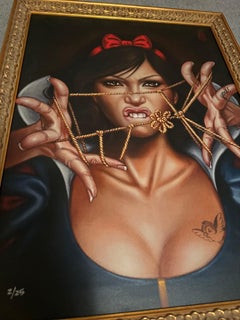
Beautiful original watercolor and gouache on archival paper by the famous American marine artist, Gordon Grant. The artwork depicts two rugged lobstermen bringing their catch ashore...

Category

1930s American Realist Florida - Art
Materials

Watercolor, Gouache, Archival Paper

Relining Nude (WG6)
Relining Nude (WG6)

Relining Nude (WG6)

By Waylande Gregory

Located in Wilton Manors, FL

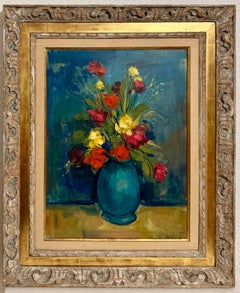
Waylande Gregory (1905-1971). Nude Reclining, ca. 1950's. Painted composite cast from original sculpted in 1930's. Casting sanctioned and approved by the artist during his lifetime in partnership with MPI, Museum Pieces Incorporated. Very few examples were produced and even fewer survive. Waylande Gregory was considered a major American sculptor during the 1930's, although he worked in ceramics, rather than in the more traditional bronze or marble. Exhibiting his ceramic works at such significant American venues for sculpture as the Whitney Museum of American Art in New York City and at the venerable Pennsylvania Academy of the Fine Arts in Philadelphia, he also showed his ceramic sculptures at leading New York City galleries. Gregory was the first modern ceramist to create large scale ceramic sculptures, some measuring more than 70 inches in height. Similar to the technique developed by the ancient Etruscans, he fired his monumental ceramic sculptures only once. Gregory was born in 1905 in Baxter Springs, Kansas and was something of a prodigy. Growing up on a ranch near a Cherokee reservation, Gregory first became interested in ceramics as a child during a native American burial that he had witnessed. He was also musically inclined. In fact, his mother had been a concert pianist and had given her son lessons. At eleven, he was enrolled as a student at the Kansas State Teacher's College, where he studied carpentry and crafts, including ceramics. Gregory's early development as a sculptor was shaped by the encouragement and instruction of Lorado Taft, who was considered both a major American sculptor as well as a leading American sculpture instructor. In fact, Taft's earlier students included such significant sculptors as Bessie Potter Vonnoh and Janet Scudder. But, Taft and his students had primarily worked in bronze or stone, not in clay; and, Gregory's earliest sculptural works were also not in ceramics. In 1924, Gregory moved to Chicago where he caught the attention of Taft. Gregory was invited by Taft to study with him privately for 18 months and to live and work with him at his famed "Midway Studios." The elegant studio was a complex of 13 rooms that overlooked a courtyard. Taft may have been responsible for getting the young man interested in creating large scale sculpture. However, by the 1920's, Taft's brand of academic sculpture was no longer considered progressive. Instead, Gregory was attracted to the latest trends appearing in the United States and Europe. In 1928 he visited Europe with Taft and other students. "Kid Gregory," as he was called, was soon hired by Guy Cowan, the founder of the Cowan Pottery in Cleveland, Ohio, to become the company's only full time employee. From 1928 to 1932, Gregory served as the chief designer and sculptor at the Cowan Pottery. Just as Gregory learned about the process of creating sculpture from Taft, he literally learned about ceramics from Cowan. Cowan was one of the first graduates of Alfred, the New York School of Clayworking and Ceramics. Alfred had one of the first programs in production pottery. Cowan may have known about pottery production, but he had limited sculptural skills, as he was lacking training in sculpture. The focus of the Cowan Pottery would be on limited edition, table top or mantle sculptures. Two of the most successful of these were Gregory's Nautch Dancer, and his Burlesque Dancer. He based both sculptures on the dancing of Gilda Gray, a Ziegfield Follies girl. Gilda Gray was of Polish origin and came to the United States as a child. By 1922, she would become one of the most popular stars in the Follies. After losing her assets in the stock market crash of 1929, she accepted other bookings outside of New York, including Cleveland, which was where Gregory first saw her onstage. She allowed Gregory to make sketches of her performances from the wings of the theatre. She explained to Gregory, "I'm too restless to pose." Gray became noted for her nautch dance, an East Indian folk dance. A nautch is a tight, fitted dress that would curl at the bottom and act like a hoop. This sculpture does not focus on Gray's face at all, but is more of a portrait of her nautch dance. It is very curvilinear, really made of a series of arches that connect in a most feminine way. Gregory created his Burlesque Dancer at about the same time as Nautch Dancer. As with the Nautch Dancer, he focused on the movements of the body rather than on a facial portrait of Gray. Although Gregory never revealed the identity of his model for Burlesque Dancer, a clue to her identity is revealed in the sculpture's earlier title, Shimmy Dance. The dancer who was credited for creating the shimmy dance was also Gilda Gray. According to dance legend, Gray introduced the shimmy when she sang the Star Spangled Banner and forgot some of the lyrics, so, in her embarrassment, started shaking her shoulders and hips but she did not move her legs. Such movement seems to relate to the Burlesque Dancer sculpture, where repeated triangular forms extend from the upper torso and hips. This rapid movement suggests the influence of Italian Futurism, as well as the planar motion of Alexander Archipenko, a sculptor whom Gregory much admired. The Cowan Pottery was a victim of the great depression, and in 1932, Gregory changed careers as a sculptor in the ceramics industry to that of an instructor at the Cranbrook Academy in Bloomfield Hills, Michigan. Cranbrook was perhaps the most prestigious place to study modern design in America. Its faculty included the architect Eliel Saarinen and sculptor Carl Milles. Although Gregory was only at Cranbrook for one and one half years, he created some of his finest works there, including his Kansas Madonna. But, after arriving at Cranbrook, the Gregory's had to face emerging financial pressures. Although Gregory and his wife were provided with complimentary lodgings, all other income had to stem from the sale of artworks and tuition from students that he, himself, had to solicit. Gregory had many people assisting him with production methods at the Cowan Pottery, but now worked largely by himself. And although he still used molds, especially in creating porcelain works, many of his major new sculptures would be unique and sculpted by hand, as is true of Kansas Madonna. The scale of Gregory's works were getting notably larger at Cranbrook than at Cowan. Gregory left the surface of Kansas Madonna totally unglazed. Although some might object to using a religious title to depict a horse nursing its colt, it was considered one of Gregory's most successful works. In fact, it had a whole color page illustration in an article about ceramic sculpture titled, "The Art with the Inferiority Complex," Fortune Magazine, December, 1937. The article notes the sculpture was romantic and expressive and the sculpture was priced at $1,500.00; the most expensive sculpture...

Category

1950s Art Deco Florida - Art
Materials

Plaster

"Cardiff by the Sea" Oil Painting

"Cardiff by the Sea" Oil Painting

Located in Boca Raton, FL

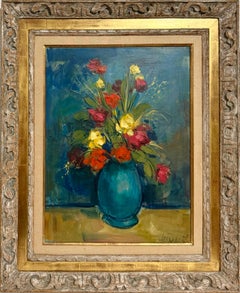
This serene coastal landscape of an overcast surfing day is quintessential Encinitas, CA. Surfers dot the distance under cool gray skies. A mix of blues and greens create the stage ...

Category

2010s Contemporary Florida - Art
Materials

Oil