Art by Medium: Tempera

to
168
559
259
286
114
129
Overall Width
to
Overall Height
to
32
37
650
629
20
6
29
38
50
54
80
76
65
56
20
348
274
191
38
38
12
12
11
6
5
2
2
741
526
71
611
397
222
187
177
138
100
90
85
62
54
52
50
45
40
36
32
27
27
25
1,348
187,206
99,658
81,688
79,100
35
28
26
24
22
430
386
723
495
Medium: Tempera
Pair of Italian 18th Century Tempera on Canvas Classical Paintings "Capriccio"

Pair of Italian 18th Century Tempera on Canvas Classical Paintings "Capriccio"

By Pietro Paltronieri

Located in Rome, IT

A fine pair of huge Italian 18' century Capriccio with Classical ruins, tempera oil on canvas . Atr.Pietro Paltronieri, il Mirandolese (Mirandola 1673-1741 Bologna). Measurements ...

Category

Mid-18th Century Old Masters Art by Medium: Tempera

Materials

Tempera

Pretenders - Mixed Media by M. Maccari - 1960s

Pretenders - Mixed Media by M. Maccari - 1960s

By Mino Maccari

Located in Roma, IT

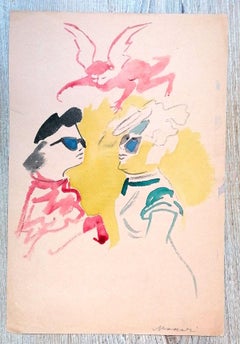
Pretenders is an original artwork realized by Mino Maccari in the 1960's. Watercolor and pastel drawing. Hand-signed by the artist on the lower margin. Includes frame (80.5 x 3.5...

Category

1960s Contemporary Art by Medium: Tempera

Materials

Charcoal, Watercolor, Tempera

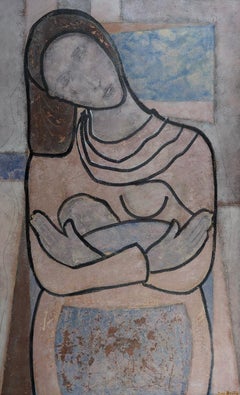
Madonna with Child - Tempera on Paper and Cardboard - 1962

Madonna with Child - Tempera on Paper and Cardboard - 1962

Located in Roma, IT

Madonna with Child is an original painting in tempera on paper, applied on the cardboard, realized in 1962 by an Anonymous artist of the XX century, signed with monogram of artist" E...

Category

1960s Art by Medium: Tempera

Materials

Paper, Tempera, Cardboard

Prince - Original Ink and Tempera on Paper by Esy Beluzzi - 1956

Prince - Original Ink and Tempera on Paper by Esy Beluzzi - 1956

By Esy Beluzzi

Located in Roma, IT

Image dimensions: 23.5 x 17 cm. Prince is an original artwork realized by Esy Beluzzi in 1956 Original painting on paper. Hand-signed and dated in blue pen on the lower right corner: Esy 56. Mint conditions. Beautiful artwork presenting the incipit of a story. The writing, similar to an ancient...

Category

1950s Contemporary Art by Medium: Tempera

Materials

Tempera

Shtetl Klezmer Musician painting and drawing

Shtetl Klezmer Musician painting and drawing

By Anatoli Lvovich Kaplan

Located in Surfside, FL

Pastel or Tempera on paper. Judaica Shtetl scene of village. This one depicts a Klezmer musician fiddler playing his violin. Anatoli Lwowitch Kaplan was a Russian painter, sculptor a...

Category

20th Century Modern Art by Medium: Tempera

Materials

Pastel, Tempera

Charles March Gere - Tuscan Vintage - Early 20th Century Cotswold Group tempera

Charles March Gere - Tuscan Vintage - Early 20th Century Cotswold Group tempera

By Charles March Gere, RA, RWS

Located in London, GB

CHARLES MARCH GERE, RA, RWS (1884-1963) Tuscan Vintage Signed with monogram l.lr, signed again with monogram and dated 1912 on the overlap; signed and inscribed with title on the b...

Category

Early 20th Century Pre-Raphaelite Art by Medium: Tempera

Materials

Egg Tempera

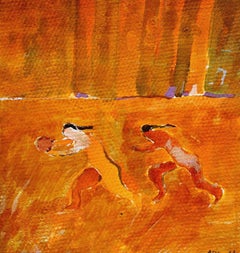
The game. 1973, paper, tempera, 19x18 cm

The game. 1973, paper, tempera, 19x18 cm

By Atis Ievins

Located in Riga, LV

Touch 1974, photo screen printing, 53x49 cm Atis Ievins (1946) The exhibition by artist Atis Ieviņš reminds the very origins of serigraphy technique in Latvian art in the time of t...

Category

1970s Contemporary Art by Medium: Tempera

Materials

Paper, Tempera

Finestra
Finestra

Finestra

By Tano Festa

Located in Roma, RM

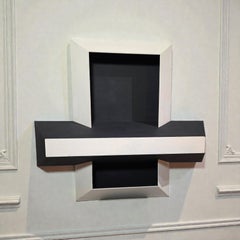
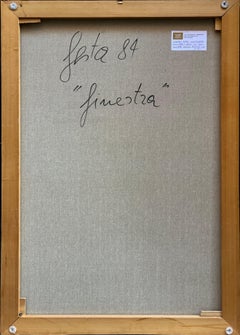
Tano Festa (Roma 1938 – 1988), Finestra (1984) Spray, tempera e legno su tela di cm 100×70, firmato, intitolato e datato al retro. Opera registrata presso l’Archivio Tano Festa, a ...

Category

1980s Pop Art Art by Medium: Tempera

Materials

Wood, Spray Paint, Tempera

Changing Time
Changing Time

Changing Time

Located in Los Angeles, CA

A mixed media on heavy paper. Signed lower right. The artwork can be exhibited vertically or horizontally. Image measures 24.75 x 29.75 inches Framed size is 25.5 x 30.5 inches. Bor...

Category

1950s Cubist Art by Medium: Tempera

Materials

India Ink, Casein, Watercolor

Kibbutz Abstract Jerusalem Nightscape Israeli Tempera Collage Painting Judaica

Kibbutz Abstract Jerusalem Nightscape Israeli Tempera Collage Painting Judaica

Located in Surfside, FL

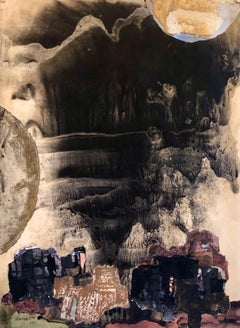
Abstract Expressionist cityscape of Old City of Jerusalem in moody blues and gold. Yitzhak Greenfield, painter, born 1932, Brooklyn, New York His focus is on the heavenly and the terrestrial Jerusalem; on the Hebrew alphabet; and on central themes in Jewish tradition and culture. He deals with the tension between figurative and abstract. Education 1946 Educational Alliance Art School, New York City, with Abba Ostrowsky, Chaim Gross, and Louis Lozowick. 1948 Thomas Jefferson High School, Brooklyn, New York, Art 1953 Drawing and Drawing Wall Murals,Seminar at Givat Haviva with P. Pelzig, Yohanan Simon, and Naftali Bezem. 1960 Printmaking with the artist and printmaker Borin, Venice, Italy 1979-1981 Morris Blackburn Print Workshop, New York City, U.S.A. Teaching Art Kibbutz Gal-On and Gat 1961-1963 Arts, regional school at Mateh-Yehuda Regional school, Mate-Yehuda Anglican school, Jerusalem 1965–70 Bet Ha'am, Popular University Outreach Program, Jerusalem Ruth Youth Wing, Israel Museum, Jerusalem Shira Mushkin: Majestic scenes in blue, gold and indigo, radiating spheres and grand expanses hover above architectural forms and clusters of Hebrew letters, revealing dreamlike realities. These are the creations of the artist Yitzhak Greenfield who works in watercolor and acrylic paints layered with collages of painted papers, discarded book materials, and fragments of his own prints. Applying parts of broken furniture, clock springs, iron locks and keys, the artist forms assemblages that hint at familiar settings, resonating the past. For Brooklyn born, Israeli artist Yitzhak Greenfield, these visions are the essence of the Jerusalem landscape, inspired by the city’s ever-changing magical scenery. For generations, Jerusalem has been a focal point for the Jewish people. It is the center of Jewish life, faith, hope, history, and consciousness. Jerusalem holds a particular significance for Greenfield, who moved to Ein Kerem, Jerusalem over fifty years ago, after living on a kibbutz. Greenfield is a Jerusalem artist, and he remarks: “Living and working in Jerusalem is a special journey for me. My works are visionary landscapes, which are reconstructions of Jerusalem, not always relating to specific sites.” The artist has always been intrigued by the historical and dynamic nature of the city, as he constantly explores his own connection to the traditional and spiritual forms of Judaism. Greenfield’s art is linked to Jewish and Israeli history and symbols, such as the Hebrew letters, Jewish amulets, and the Ten Sephirot (Kabbalah emanations), containing aesthetic qualities of the material and the spiritual. Working in a distinctive modernist method, Greenfield’s artwork lends itself to rich possibilities of expression. The exhibition Yitzhak Greenfield: Exploring Jerusalem comprises three main series from the artist’s career, which span over the course of many years and continue to this day; Jerusalem Visions, Jerusalem Assemblages, and Landscape and Meditation on the Hebrew Letter. These artworks portray timeless dream-landscapes of Jerusalem. The hidden secrets of the city are locked away in assemblage constructions, and prints depicting Hebrew letters illuminate into mystical meanings. The spectator travels along with Greenfield through his creations, exploring Jerusalem and experiencing a spiritual and living Judaism, in which the artist constantly searches for the expression of his cultural and spiritual legacy as he reconstructs Jerusalem. 1966 General Exhibition - Jerusalem Artists' House Artists: Hirszenberg, Samuel Boris Schatz, Lilien, Ephraim Moses, Joseph Budko, Leopold Krakauer, Meir Gur Arie, Jacob Eisenberg, Ben Zvi, Zeev Palombo...

Category

1960s Abstract Expressionist Art by Medium: Tempera

Materials

Mixed Media, Tempera
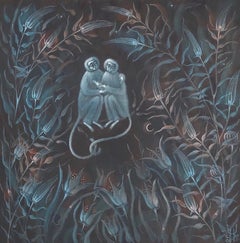
Rebecca at the Well

Rebecca at the Well

Located in New York, NY

Provenance: Dr. James Henry Lancashire, Manchester-by-the-Sea, Massachusetts, by 1925; probably by descent to: Private Collection, Cumberland Foreside, Maine, until 2018 This unpublished panel is a characteristic work of the Master of the Apollo and Daphne Legend, an anonymous Florentine painter in the circle of Bartolommeo di Giovanni, Domenico Ghirlandaio, and Sandro Botticelli. The artistic personality of the Master of the Apollo and Daphne Legend was independently recognized by Everett Fahy and Federico Zeri at roughly the same moment in time. Fahy originally dubbed this artist the Master of the Ryerson Panels but later adopted Zeri’s name for the artist, which derives from his eponymous works from the Samuel H. Kress collection (Figs. 1-2). Fahy posited that the artist was most likely a pupil of Ghirlandaio active from roughly 1480 to 1510, and that he may be identifiable with one of Ghirlandaio’s documented pupils to whom no works have been securely attributed, such as Niccolò Cieco, Jacopo dell’Indaco, or Baldino Baldinetti. The present painting was first attributed to this master by Everett Fahy in 1989, who became aware of its existence only after publishing his definitive studies on the artist. The surviving body of work by the Master of the Apollo and Daphne Legend is largely composed of series of panels treating the same theme. In addition to the works illustrating the legend of Apollo and Daphne, there are also series on the themes of Susanna and the Elders and the story of Saint Joseph, among others. The subject of the present panel is drawn from Genesis 24, the story of Isaac. It is possible that our painting relates to another work by the artist depicting the Sacrifice of Isaac formerly in the collection of E. A. McGuire in Dublin, Ireland (Fig. 3), and that these two panels were originally part of a decorative scheme based on the story of Isaac. Although the Master’s paintings of this type have traditionally been considered painted fronts of wedding chests, known as cassoni, the scale of these paintings and the fact that they are often part of a series indicates that they are more likely spalliera panels—paintings set into furniture or the wainscoting of a room. The biblical episode depicted in this painting centers on the theme of marriage, which suggests that this work was likely commissioned for the domestic interior of a newly married couple. The Master has transcribed into paint even the minute details of this Old Testament story, in which Abraham sends a servant to travel by camel to the land of his father and seek out a wife for his son Isaac. The servant is here shown at the well...

Category

15th Century and Earlier Old Masters Art by Medium: Tempera

Materials

Oil, Tempera, Wood Panel

Vintage Swedish Original Still Life Landscape Painting - Surrealist Still Life

Vintage Swedish Original Still Life Landscape Painting - Surrealist Still Life

By Eric Cederberg

Located in Bristol, GB

SURREALIST STILL LIFE Size: 29.5 x 34 cm (including frame) Tempera on board A brilliantly executed and characterful surrealist still life composition, executed in tempera on board, ...

Category

Mid-20th Century Surrealist Art by Medium: Tempera

Materials

Tempera, Board

La Conquête du Ciel Conquest of the Skies Surrealism Contemporary Space Creature

La Conquête du Ciel Conquest of the Skies Surrealism Contemporary Space Creature

By Gérard Willemenot

Located in Utrecht, NL

La Conquête du Ciel Conquest of the Skies Surrealism Contemporary Space Creature Gérard Willemenot was born on February 11, 1943. World War II and his father's deportation to Mautha...

Category

21st Century and Contemporary Surrealist Art by Medium: Tempera

Materials

Panel, Tempera

Skyscrapers
Skyscrapers

Skyscrapers

Located in Los Angeles, CA

A mixed media on paper. Signed lower right. Image measures 24.75 x 29.75 inches Framed size is 25.5 x 30.5 inches. Born in Dnipro, Ukraine (Yekaterinoslav, when previously controlle...

Category

1950s Cubist Art by Medium: Tempera

Materials

India Ink, Casein, Watercolor

Conversation
Conversation

Conversation

By Thomas Hart Benton

Located in New York, NY

A leading figure of American Modern Regionalism and also a musician, Thomas Hart Benton conceived sound as a vital expressive force, embedding auditory resonance into the visual rhyt...

Category

20th Century Art by Medium: Tempera

Materials

Oil, Tempera, Board

Shunga I - Contemporary Erotic Gold Leaf Painting with Japanese Influence

Shunga I - Contemporary Erotic Gold Leaf Painting with Japanese Influence

By Konstantinos Papamichalopoulos

Located in Dallas, TX

Blending Japanese ukiyo-e influences with contemporary figurative abstraction, Shunga I by Greek artist Konstantinos Papamichalopoulos is a visually arresting work that explores inti...

Category

2010s Contemporary Art by Medium: Tempera

Materials

Gold Leaf

Saint Cosmas And Saint Damian Attributed To Bonifacio Bembo

Saint Cosmas And Saint Damian Attributed To Bonifacio Bembo

By Bonifacio Bembo

Located in New Orleans, LA

Attributed to Bonifacio Bembo c.1444-1477 Italy Saint Cosmas and Saint Damian Tempera on panel These exceptionally rare early Renaissance panels of Saint Cosmas and Saint Damian are an extraordinary new discovery. Based on the research of art historians Marco Tanzi and Andrea de Marchi, it is believed that these represent the missing panels from the famed polyptych formerly displayed on the altar of the Chapel of San Nicola da Tolentino in the Church of Sant’Agostino in Cremona, Italy. To find two matching early Renaissance panels outside of a museum or church, particularly in such remarkable condition, is an extraordinary rarity. The central and left-sided panels of the original five-part polyptych are currently in the collection of the Museo Civico Ala Ponzone in Cremona. These panels have luckily remained intact, and respectively portray the Madonna and Child Enthroned with Angels and Donor, Saint Nicholas of Tolentino (the chapel’s namesake) and Saint George. While the present panels have since been reduced, that they belong to the Cremonese altarpiece is confirmed by a number of stylistic elements. All five panels contain the same rich decorative arabesque pattern on their stamped gold background, while the figures’ knurled haloes are identical in both their fineness of line and use of perspective. The proportions of the figures coincide perfectly; Saints Cosmas and Damian would have originally also been depicted as full-length figures, fitting into the vertical, Gothic style of the altarpiece. According to the Christian religion, Saint Cosmas and Saint Damian were 3rd century physicians born in Arabia. Little is known about their lives except that they were reputedly twin brothers and that they were martyred in Syria during the persecution of Emperor Diocletian. It was believed that the saints were skilled in healing, and when their medicines failed, their faith and prayers could always perform miracles. Thus, the saints are often depicted with their medical equipment while wearing the traditional medieval doctor’s garb of crimson robes and distinctive round red hats. The saints are similarly depicted in the present panels, though considering the manner in which they have been cut, their medical tools are not immediately evident. The saints were highly popular as patrons of wealthy families during the Gothic and Renaissance eras, particularly the Medici, and thus they occur frequently in art from the era. The twins, for instance, are found in the famed San Marco Altarpiece by Fra Angelico in the San Marco Museum (Florence), as well as in a set of Medici panels crafted by Filippo Lippi...

Category

15th Century and Earlier Renaissance Art by Medium: Tempera

Materials

Tempera, Panel

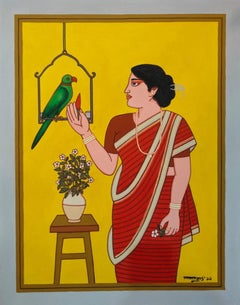
Bibi & Babu, Tempera on Board, (Set of 2) Artist Lalu Prasad Shaw "In Stock"

Bibi & Babu, Tempera on Board, (Set of 2) Artist Lalu Prasad Shaw "In Stock"

By Lalu Prasad Shaw

Located in Kolkata, West Bengal

Lalu Prasad Shaw Untitled (Bibi) Untitled (Babu on the Hookah) 28 x 22 Inches Tempera on Board, 2016 ( Set of 2 works ) ( Framed & Delivered in a teak frame ) Style : Known widely f...

Category

2010s Modern Art by Medium: Tempera

Materials

Mixed Media, Tempera, Board

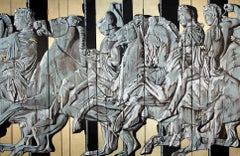
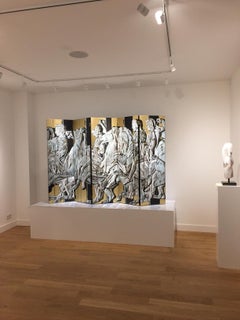
Victory One Timeless Heroes of the Parthenon Room Divider Tempera Gold In Stock

Victory One Timeless Heroes of the Parthenon Room Divider Tempera Gold In Stock

By Gerti Bierenbroodspot

Located in Utrecht, NL

Victory One Timeless Heroes of the Parthenon Room Divider Tempera Gold on Cypress Wood In Stock Gerti Bierenbroodspot is a leading Dutch painter, sculpto...

Category

21st Century and Contemporary Contemporary Art by Medium: Tempera

Materials

Gold Leaf

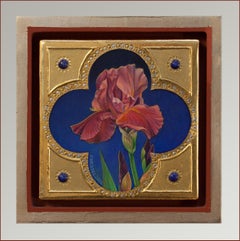
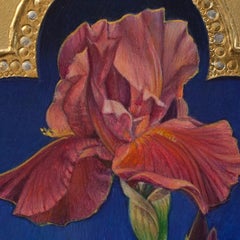
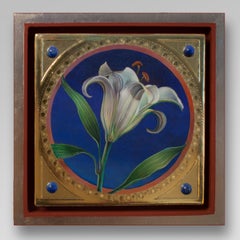
Blue Flower in Tower, Ink, egg tempera and gold leaf, illustrated architectural

Blue Flower in Tower, Ink, egg tempera and gold leaf, illustrated architectural

By Konstantinos Papamichalopoulos

Located in Dallas, TX

"Blue Flower in Tower" is an enchanting creation by Konstantinos Papamichalopoulos, of an illustrated, dancing blue flower growing out of an architectural structure. The background i...

Category

2010s Contemporary Art by Medium: Tempera

Materials

Gold Leaf

Dream of flying dandelions

Dream of flying dandelions

By Evgeniy Monahov

Located in Zofingen, AG

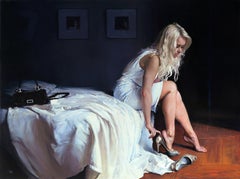
This live sketch was made on the same day as the first sketch for the painting “Passion for Color”, which later became famous. The posing session was difficult, Polina was tired and ...

Category

2010s Realist Art by Medium: Tempera

Materials

Paper, Tempera, Permanent Marker

Krishna, Mythology, Acrylic, Tempera, Green, Yellow by Indian Artist "In Stock"

Krishna, Mythology, Acrylic, Tempera, Green, Yellow by Indian Artist "In Stock"

By Aditya Basak

Located in Kolkata, West Bengal

Aditya Basak - Untitled - 36 x 30 inches (unframed size) Acrylic & Tempera on Canvas ** This work will be shipped in a roll form. "Through the medium of the fantasy, Basak probes...

Category

2010s Conceptual Art by Medium: Tempera

Materials

Canvas, Acrylic, Tempera

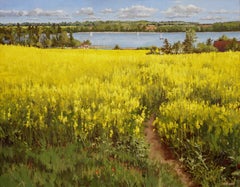
High Line Yellow Flowers

High Line Yellow Flowers

By Susan Cohen

Located in Fairfield, CT

About the artist: Susan Cohen’s paintings are exhibited with New York City galleries: George Billis, Garvey Simon, First Street,The Painting Center; and the Cynthia Winings Gallery...

Category

2010s American Modern Art by Medium: Tempera

Materials

Egg Tempera

The Magician oil and tempera painting by Julio de Diego

The Magician oil and tempera painting by Julio de Diego

By Julio de Diego

Located in Hudson, NY

Julio De Diego’s Atomic Series paintings made an extraordinary statement regarding the shock and fear that accompanied the dawn of the nuclear age. In the artist’s own words, “Scientists were working secretly to develop formidable powers taken from the mysterious depths of the earth - with the power to make the earth useless! Then, the EXPLOSION! . . . we entered the Atomic Age, and from there the neo-Atomic war begins. Explosions fell everywhere and man kept on fighting, discovering he could fight without flesh.” To execute these works, De Diego developed a technique of using tempera underpainting before applying layer upon layer of pigmented oil glazes. The result is paintings with surfaces which were described as “bonelike” in quality. The forms seem to float freely, creating a three-dimensional visual effect. In the 1954 book The Modern Renaissance in American Art, author Ralph Pearson summarizes the series as “a fantastic interpretation of a weighty theme. Perhaps it is well to let fantasy and irony appear to lighten the devastating impact. By inverse action, they may in fact increase its weight.” Exhibited 1964 Marion Koogler McNay Art Institute, San Antonio, Texas This work retains its original frame which measures 54" x 42" x 2" About this artist: Julio De Diego crafted a formidable persona within the artistic developments and political struggles of his time. The artist characterized his own work as “lyrical,” explaining, “through the years, the surrealists, the social-conscious painters and the others tried to adopt me, but I went my own way, good, bad or indifferent.” [1] His independence manifested early in life when de Diego left his parent’s home in Madrid, Spain, in adolescence following his father’s attempts to curtail his artistic aspirations. At the age of fifteen he held his first exhibition, set up within a gambling casino. He managed to acquire an apprenticeship in a studio producing scenery for Madrid’s operas, but moved from behind the curtains to the stage, trying his hand at acting and performing as an extra in the Ballet Russes’ Petrouchka with Nijinsky. He spent several years in the Spanish army, including a six-month stretch in the Rif War of 1920 in Northern Africa. His artistic career pushed ahead as he set off for Paris and became familiar with modernism’s forays into abstraction, surrealism, and cubism. The artist arrived in the U.S. in 1924 and settled in Chicago two years later. He established himself with a commission for the decoration of two chapels in St. Gregory’s Church. He also worked in fashion illustration, designed magazine covers and developed a popular laundry bag for the Hotel Sherman. De Diego began exhibiting through the Art Institute of Chicago in 1929, and participated in the annual Chicago Artists Exhibitions, Annual American Exhibitions, and International Water Color Exhibitions. He held a solo exhibition at the Art Institute of Chicago in the summer of 1935. Though the artist’s career was advancing, his family life had deteriorated. In 1932 his first marriage dissolved, and the couple’s young daughter Kiriki was sent to live with friend Paul Hoffman. De Diego continued to develop his artistic vocabulary with a growing interest in Mexican art. He traveled throughout the country acquainting himself with the works of muralists such as Carlos Merida, and also began a collection of small native artifacts...

Category

1940s American Modern Art by Medium: Tempera

Materials

Masonite, Oil, Tempera

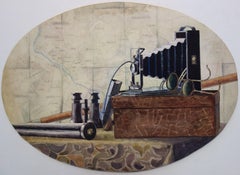
German painter - 18th century trompe l'oeil with engravings and still life

German painter - 18th century trompe l'oeil with engravings and still life

Located in Varmo, IT

German painter (18th–19th century) - Trompe l'oeil with documents, engravings and still life. 38 x 53 cm (without frame) - 41.5 x 56.5 cm (with frame). Tempera on paper, in a gilt ...

Category

Late 18th Century Romantic Art by Medium: Tempera

Materials

Paper, Tempera

SENTINEL
SENTINEL

SENTINEL

By Phillip Shore

Located in Three Oaks, MI

Phillip Shore's artwork is informed and influenced by his travels to and the study of the archeological artifacts from Ancient Greece and the relationship between humans and the env...

Category

2010s Contemporary Art by Medium: Tempera

Materials

Steel, Iron

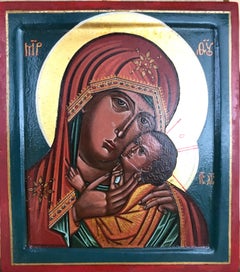
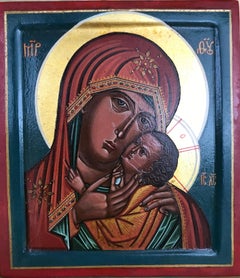
Virgin of Tijvin, after a Russian icon of the 17th Century.

Virgin of Tijvin, after a Russian icon of the 17th Century.

Located in Segovia, ES

Virgin of Tijvin, after a Russian icon of the 17th century. Egg tempera, gold leaf on gesso over a wooden board. Measurements in centimeters: 44 x 33 x 3 cm / In inches: 17.32 x 12.99 x 1.18 " Author: Oliver Samsinger...

Category

1990s Byzantine Art by Medium: Tempera

Materials

Gold Leaf

Radha, Tempera Coloured Conte on Pastel on Paper by Artist Suhas Roy "In Stock"
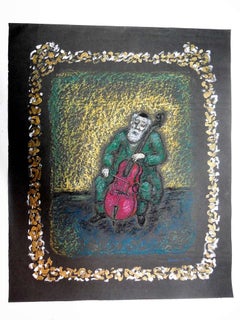
Radha, Tempera Coloured Conte on Pastel on Paper by Artist Suhas Roy "In Stock"
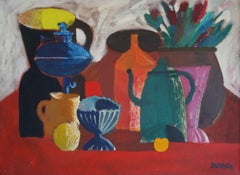
By Suhas Roy

Located in Kolkata, West Bengal

Suhas Roy - Radha - 20 x 20 inches ( unframed size) Tempera Coloured Conte on Pastel on Paper , 2005 Suhas Roy 's mystic woman which he calls 'Radha', either Oil on canvas or sof...
Category

Early 2000s Modern Art by Medium: Tempera
Materials

Pastel, Board, Paper, Conté, Tempera
Abstraction About Subtle

Abstraction About Subtle

By Krzysztof Sokolovski

Located in Lake Worth Beach, FL

Abstraction About Subtle Royal blue with gold leaf on carved wood panel. Krzysztof (Chris) Sokolovski born in 1985 in Eisiskes in Lithuania. Visual artist creating neosacral art: pa...

Category

2010s Conceptual Art by Medium: Tempera
Materials

Gold Leaf

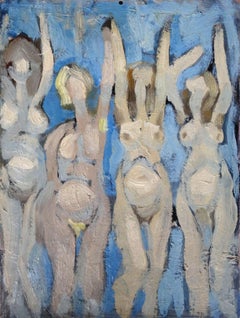
In work/Four figures. Double-sided, cardboard, tempera, 56x47 cm

In work/Four figures. Double-sided, cardboard, tempera, 56x47 cm

By Vladimir Glushenkov

Located in Riga, LV

In work/Four figures. Double-sided, cardboard, tempera, 56x47 cm Vladimir Borisovich Glushenkov (May 21, 1948, Riga - December 26, 2009, Riga.) - painter, graphic artist, poet, translator. Born in Riga in a Russian-Polish-German family. Vladimir Glushenkov...

Category

1970s Surrealist Art by Medium: Tempera
Materials

Mixed Media, Cardboard, Tempera
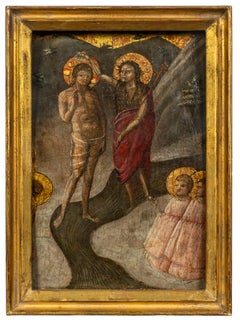
Illusion - Tempera Painting and by Lis Art - 2020
Illusion - Tempera Painting and by Lis Art - 2020

By Lis Art

Located in Roma, IT

Illusion is one of the best tempera paintings on paper realized by LisArtventure in 2020. Art is illusion. The illusion of witnessing a precipitous fall of an ethereal vortex made w...

Category

2010s Contemporary Art by Medium: Tempera

Materials

Tempera

Abstract Composition

Abstract Composition

Located in Sheffield, MA

Andre Lanskoy Russian, 1902-1976 Abstract Composition Pastel and tempera on paper 18 ¼ by 25 ¾ in, w/ frame 26 by 33 ½ in Signed lower right Inventory Number: 01777 Andre Lanskoy ...

Category

Mid-20th Century Abstract Art by Medium: Tempera

Materials

Paper, Pastel, Tempera

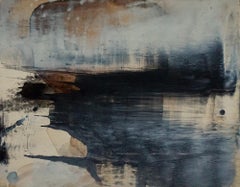
Blair Hughes-Stanton 'Reclining Nude' abstract oil painting British Surrealism

Blair Hughes-Stanton 'Reclining Nude' abstract oil painting British Surrealism

By Blair Hughes-Stanton

Located in London, GB

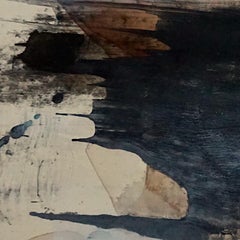
To see our other Modern British Art, scroll down to "More from this Seller" and below it click on "See all from this Seller" - or send us a message if you cannot find the artist you want. Blair Hughes-Stanton (1902-1981) Reclining Nude, c. 1936 Tempera on canvas 76.5 x 102 cm Signed lower right 'Blair H S'. Provenance: The estate of the artist. A magnificent abstract nude rendered in a dynamic colour palette. This is probably Hughes-Stanton's most important work, and belongs to the nation's great, if brief, period of British Surrealism. The three major elements are distinct: the pastel tones of the window view and wall, the sensual curvatures of the pale nude, and the bold foreground featuring a fantastically accomplished still life of a fruit bowl (which could be a painting in and of itself) and the impressively phallic chair back. This is a brilliant example of erotic modernist abstraction. Blair Hughes-Stanton, son of the artist Sir Herbert Hughes-Stanton, was a noted British artist of the interwar period. At the age of 13 he joined the Royal Navy training ship HMS Coway, but at 19 - advised by his father - he abandoned the sea for his paintbox. He studied art at Byam Shaw School (1919-1922) where he was influenced by Leon Underwood (who was a major influence throughout his studying), Royal Academy Schools (1922-23), and Leon Underwood's School (1923-25). He was celebrated mostly for his skills as an engraver, and was a founding member of the English Wood Engraving Society when it was established in 1925. His first wife was the printmaker Gertrude Hermes...
Category

Early 20th Century Modern Art by Medium: Tempera
Materials

Canvas, Tempera
Scared - Mixed Media by Sergio Barletta - 1960s

Scared - Mixed Media by Sergio Barletta - 1960s

By Sergio Barletta

Located in Roma, IT

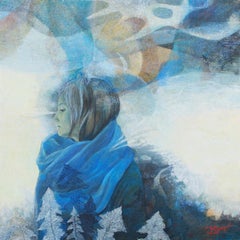
Scared is an original painting realized by Sergio Barletta. Applied on passepartout: 65 x 50 cm. Hand-signed on the lower left. In very good conditions, except for small ripping a...

Category

1960s Contemporary Art by Medium: Tempera
Materials

Mixed Media, Ink, Tempera

St. Atomic oil and tempera painting by Julio de Diego
St. Atomic oil and tempera painting by Julio de Diego

By Julio de Diego

Located in Hudson, NY

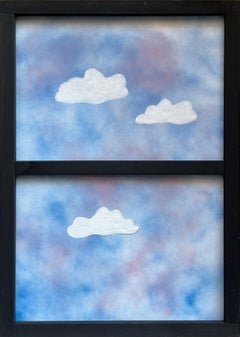
Julio De Diego’s Atomic Series paintings made an extraordinary statement regarding the shock and fear that accompanied the dawn of the nuclear age. In the artist’s own words, “Scientists were working secretly to develop formidable powers taken from the mysterious depths of the earth - with the power to make the earth useless! Then, the EXPLOSION! . . . we entered the Atomic Age, and from there the neo-Atomic war begins. Explosions fell everywhere and man kept on fighting, discovering he could fight without flesh.” To execute these works, De Diego developed a technique of using tempera underpainting before applying layer upon layer of pigmented oil glazes. The result is paintings with surfaces which were described as “bonelike” in quality. The forms seem to float freely, creating a three-dimensional visual effect. In the 1954 book The Modern Renaissance in American Art, author Ralph Pearson summarizes the series as “a fantastic interpretation of a weighty theme. Perhaps it is well to let fantasy and irony appear to lighten the devastating impact. By inverse action, they may in fact increase its weight.” Exhibited 1950 University of Illinois at Urbana "Contemporary American Painting" 1964 Marion Koogler McNay Art Institute, San Antonio, Texas This work retains its original frame which measures 54" x 36" x 2". About this artist: Julio De Diego crafted a formidable persona within the artistic developments and political struggles of his time. The artist characterized his own work as “lyrical,” explaining, “through the years, the surrealists, the social-conscious painters and the others tried to adopt me, but I went my own way, good, bad or indifferent.” [1] His independence manifested early in life when de Diego left his parent’s home in Madrid, Spain, in adolescence following his father’s attempts to curtail his artistic aspirations. At the age of fifteen he held his first exhibition, set up within a gambling casino. He managed to acquire an apprenticeship in a studio producing scenery for Madrid’s operas, but moved from behind the curtains to the stage, trying his hand at acting and performing as an extra in the Ballet Russes’ Petrouchka with Nijinsky. He spent several years in the Spanish army, including a six-month stretch in the Rif War of 1920 in Northern Africa. His artistic career pushed ahead as he set off for Paris and became familiar with modernism’s forays into abstraction, surrealism, and cubism. The artist arrived in the U.S. in 1924 and settled in Chicago two years later. He established himself with a commission for the decoration of two chapels in St. Gregory’s Church. He also worked in fashion illustration, designed magazine covers and developed a popular laundry bag for the Hotel Sherman. De Diego began exhibiting through the Art Institute of Chicago in 1929, and participated in the annual Chicago Artists Exhibitions, Annual American Exhibitions, and International Water Color Exhibitions. He held a solo exhibition at the Art Institute of Chicago in the summer of 1935. Though the artist’s career was advancing, his family life had deteriorated. In 1932 his first marriage dissolved, and the couple’s young daughter Kiriki was sent to live with friend Paul Hoffman. De Diego continued to develop his artistic vocabulary with a growing interest in Mexican art. He traveled throughout the country acquainting himself with the works of muralists such as Carlos Merida, and also began a collection of small native artifacts...

Category

1940s American Modern Art by Medium: Tempera

Materials

Masonite, Oil, Tempera

Tempera art for sale on 1stDibs.

Find a wide variety of authentic Tempera art available on 1stDibs. While artists have worked in this medium across a range of time periods, art made with this material during the 21st Century is especially popular. If you’re looking to add art created with this material to introduce a provocative pop of color and texture to an otherwise neutral space in your home, the works available on 1stDibs include elements of blue, green, orange and other colors. There are many well-known artists whose body of work includes ceramic sculptures. Popular artists on 1stDibs associated with pieces like this include Kory Twaddle, Sergio Barletta, Leo Guida, and Anastasia Kurakina. Frequently made by artists working in the Abstract, Contemporary, all of these pieces for sale are unique and many will draw the attention of guests in your home. Not every interior allows for large Tempera art, so small editions measuring 7.88 inches across are also available Prices for art made by famous or emerging artists can differ depending on medium, time period and other attributes. On 1stDibs, the price for these items starts at $220 and tops out at $5,013, while the average work can sell for $1,253.